Song of the Wednesday Volunteers (with apologies to Jumblies everywhere)

They went to work in FP, they did,

In FP they went to work:

In spite of all their friends could say,

Each Wednesday morn and throughout the day

In FP they went to work.

And tho' they said "we don't like to dig.

We don't care a button! We don't care a fig!

In FP we'll go to work".


Quaint to view, quaint to view

Is the Bothy where the volunteers lurk,

With mugs all mildewed green, and sometimes blue,

In FP they went to work.
 

Each morning to the barrow they'd go

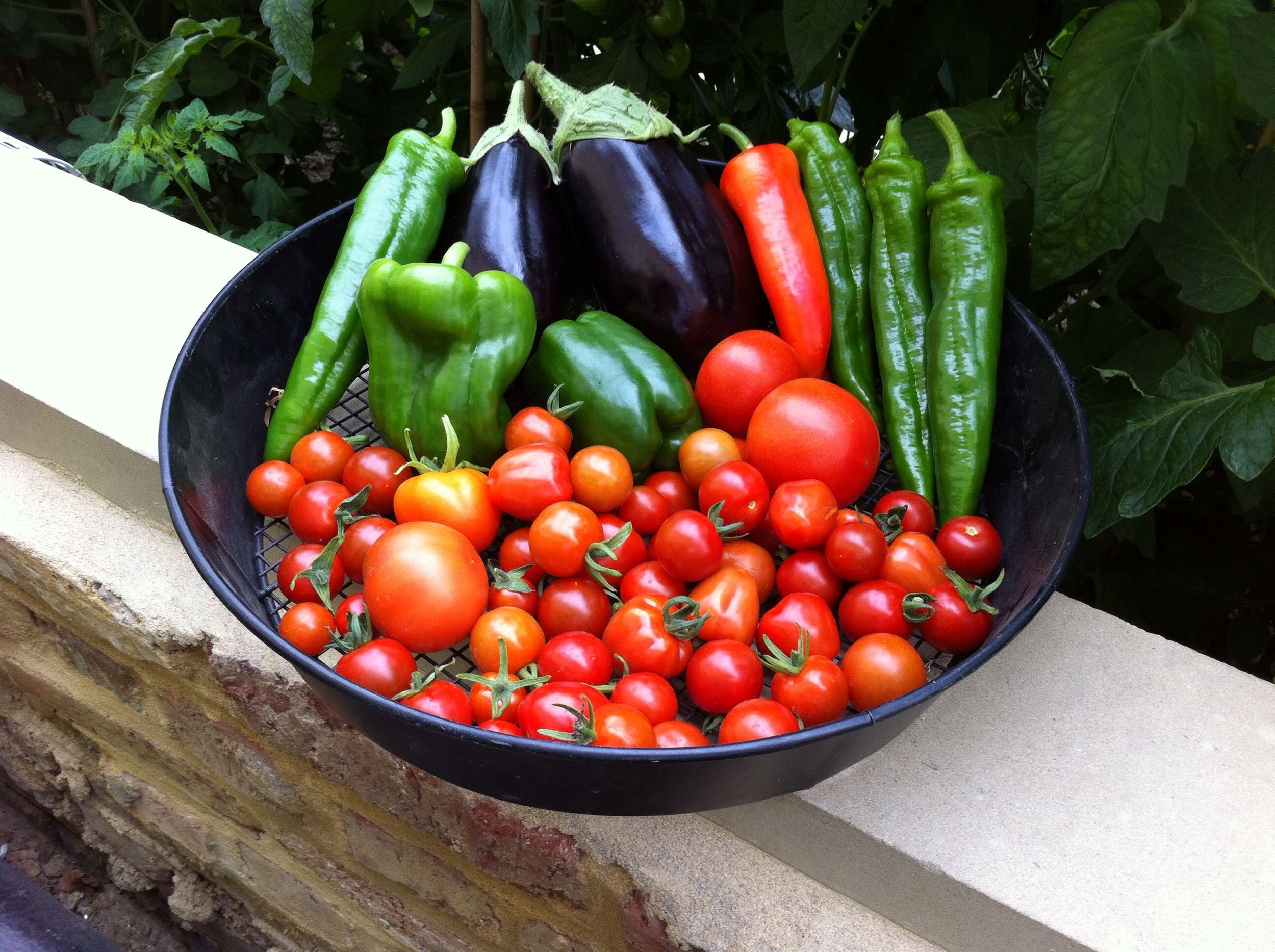
With plants and veg to put on a show -

Courgettes, zinnias and cosmos tall -

Anything to have Joe Public in thrall

To buying readily.

And once they'd counted all the cash

To the Eight Bells Inn they all would dash

And drink the takings eagerly.


Quaint to view, quaint to view

Is the Bothy where the volunteers lurk,

With mugs al mildewed green, and sometimes blue,

In KP they went to work.
 

Their favourite task is washing pots,

Or failing which then lots and lots

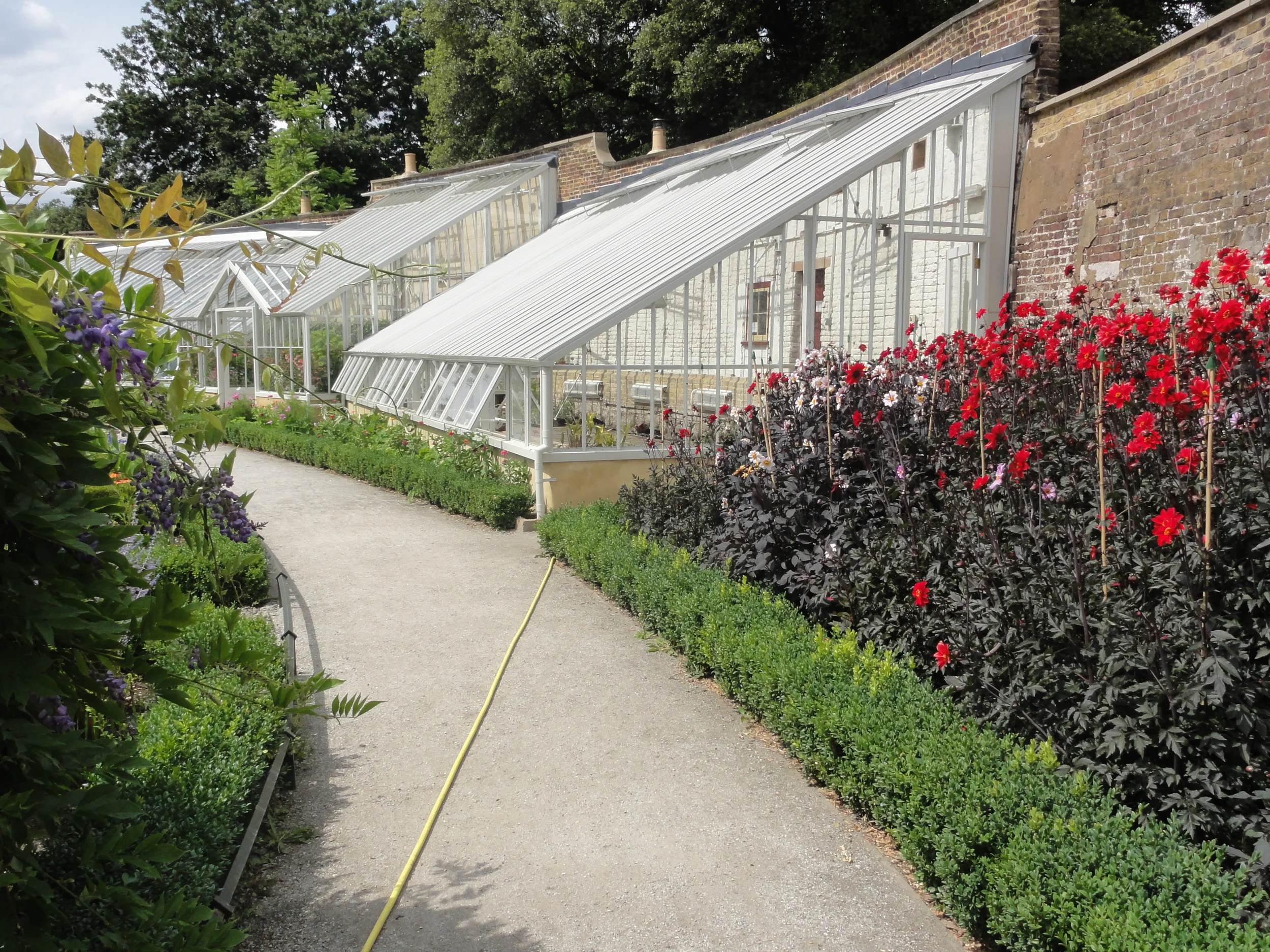
Of edging in the garden walled

With hoes, long handles and half-moons (so called)

To keep all neat and trim.

And at ten to twelve when the church bell sounds

They'd pause and survey all the grounds,

And ease each aching limb.


Quaint to view, quaint to view

Is the Bothy where the volunteers lurk,

With mugs all mildewed green, and sometimes blue,

In FP they went to work.


When FP's byways they would ramble

And come across a hideous bramble,

They'd bare their teeth and snarl with rage,

Regardless of its sex or age,

And hack it to the ground.

In a bag they'd throw it (plus the root) -

About good compost they couldn't give a hoot -

And dump it on the mound.


Quaint to view, quaint to view

Is the Bothy where the volunteers lurk,

With mugs all mildewed green, and sometimes blue,

In FP they went to work.


And at the ending of another day

They'd say goodbye to Sophie, Josh and Faye

(Not forgetting Chrises A and R)

And head for their dwellings near and far.

Each one can feel they've played a part

In maintaining such a glorious spot

(As a venue FP really is red hot)

A triumph for Lucy Hart!


Quaint to view, quaint to view

Is the Bothy where the volunteers lurk,

With mugs all mildewed green, and sometimes blue,

Which really is a special perk.

Jamie Atwell
 

You're Never Too Old to Learn

I am writing this by the shores of Loch Muick which is on the fringe of the Balmoral Estate. (Incidentally, my offer to give the Royal Gardeners a lesson in edgeing was, rather surprisingly, turned down.) When not fighting off deer, red squirrels, midges etc I have had the opportunity to reflect on some further lessons I have learned as a volunteer gardener at Fulham Palace over the last couple of months:-

Lesson 1: Nail Varnish Remover

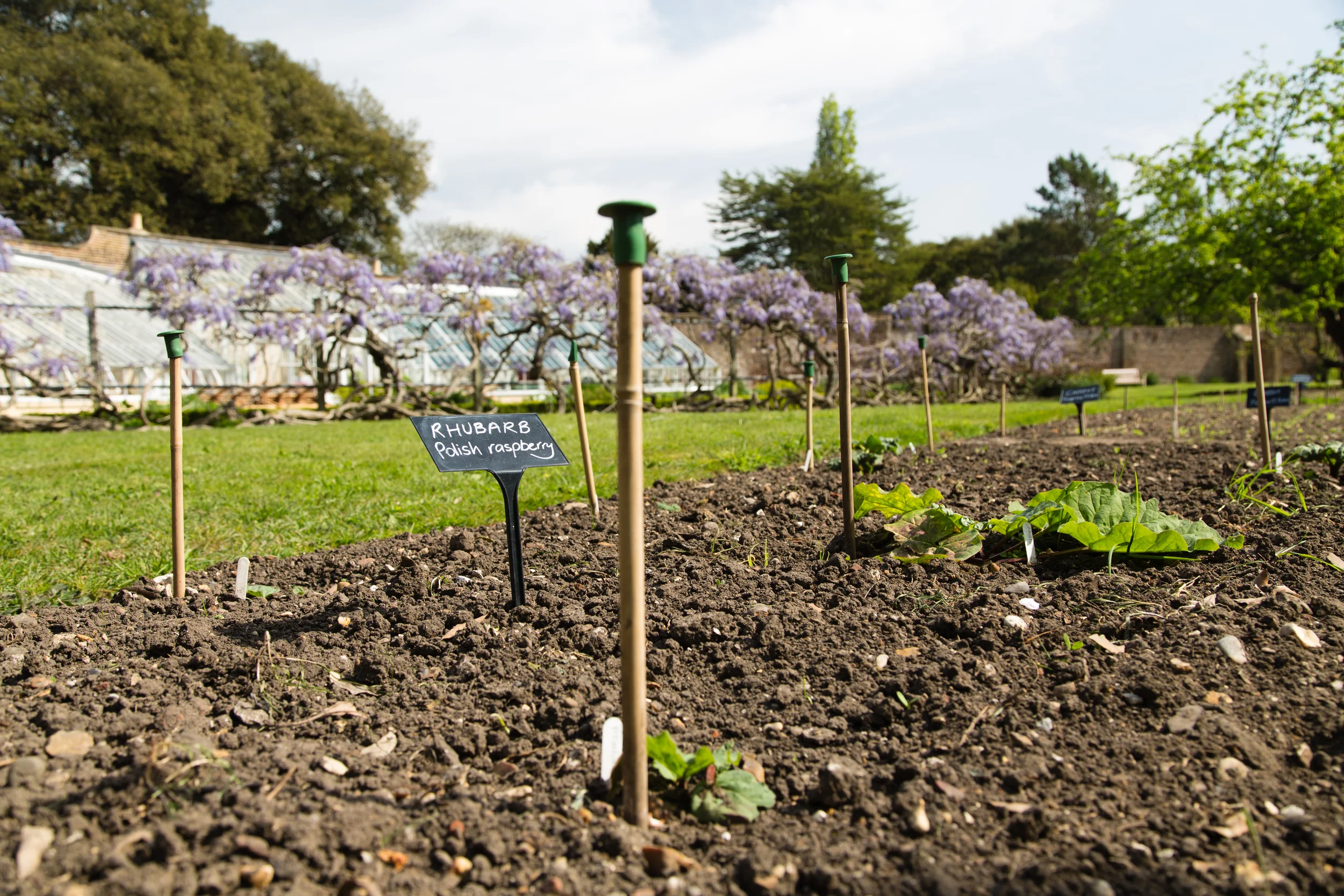
Did you know this was an essential bit of gardening kit? No, I didn't either. However, one very wet Wednesday a few weeks ago we were set to work in the Vinery cleaning the black plastic signs often placed beside plants. Guess what you clean them with?!

beautifully legible signage

beautifully legible signage

Lesson 2: The Nursery

If you are sweeping up leaves, having a general tidy round you must ensure that this is completed before break time. My recent efforts in tidying the playground, with several piles of leaves orderly sited prior to bagging up were thwarted when the bell went for break and hordes of children immediately came out and started a new game - much to my chagrin.

Lesson 3: Circles or Squares?

Why are the beds of some trees in the shape of squares and some in circles? (All to do with root growth apparently). My suggestion that some beds could perhaps be triangular or possibly figures of eight was not overly well received.

Lesson 4: Good Bucket, Bad Bucket

When weeding, brambling etc always make sure you have two buckets with you - one for the good stuff that Chris A is happy to have in his compost and one for the bad boys, such as nettle roots and couch grass. How the latter is subsequently disposed of remains a mystery.

Lesson 5: Try and Disguise Your Ignorance

The Wednesday Team has recently been augmented by two marvellous new recruits - Alice and Mary. Their friendliness, enthusiasm and hard work are a real stimulus. However, some of their questions have been, to put it mildly, a bit tricksome. When asked what one particular tree (smothered in blossom) was, I replied it was either an apple or a quince (turned out to be a pear).

also not a pear tree

also not a pear tree

Lesson 6: Careful with that Fork, Eugene (apologies to Pink Floyd)

Whilst doing some heavy digging not long ago, I managed to break the tine off a fork. My punishment (imposed by the apprentices no less!) was to be banned from having biscuits for an entire week. Well, really!!

Lesson 7: Let's be Friends

I've recently joined the Friends of Fulham Palace - an independent charity dedicated to supporting Fulham Palace and all its works (both in the Palace itself and the garden). I know that all us hard working volunteers already invest a good deal of time and effort as it is, but for an annual subscription of £25 this seems to me like a pretty good wheeze.

Jamie Atwell

Share your volunteering stories in June

'Volunteers Week 2016' is coming up in June, and we here at the Volunteers Portal will be sharing stories of some of Fulham Palace's 190-plus volunteers. That means you! Tell us what brought you to Fulham Palace when you first started out, or what keeps you coming back now.

We want to hear about why you volunteer at the Palace, and if you've got any interesting pictures or anecdotes please do send them along to volunteerwebsite@fulhampalace.org , or drop by and have a chat with us on Monday or Tuesday. Video and audio clips also welcome (we can help with that). No story is too short!

If you come along to the Volunteer Summer Party in July you might get a chance to meet some of the lovely people featured here on the Portal. Don't forget to RSVP, which you can do here.

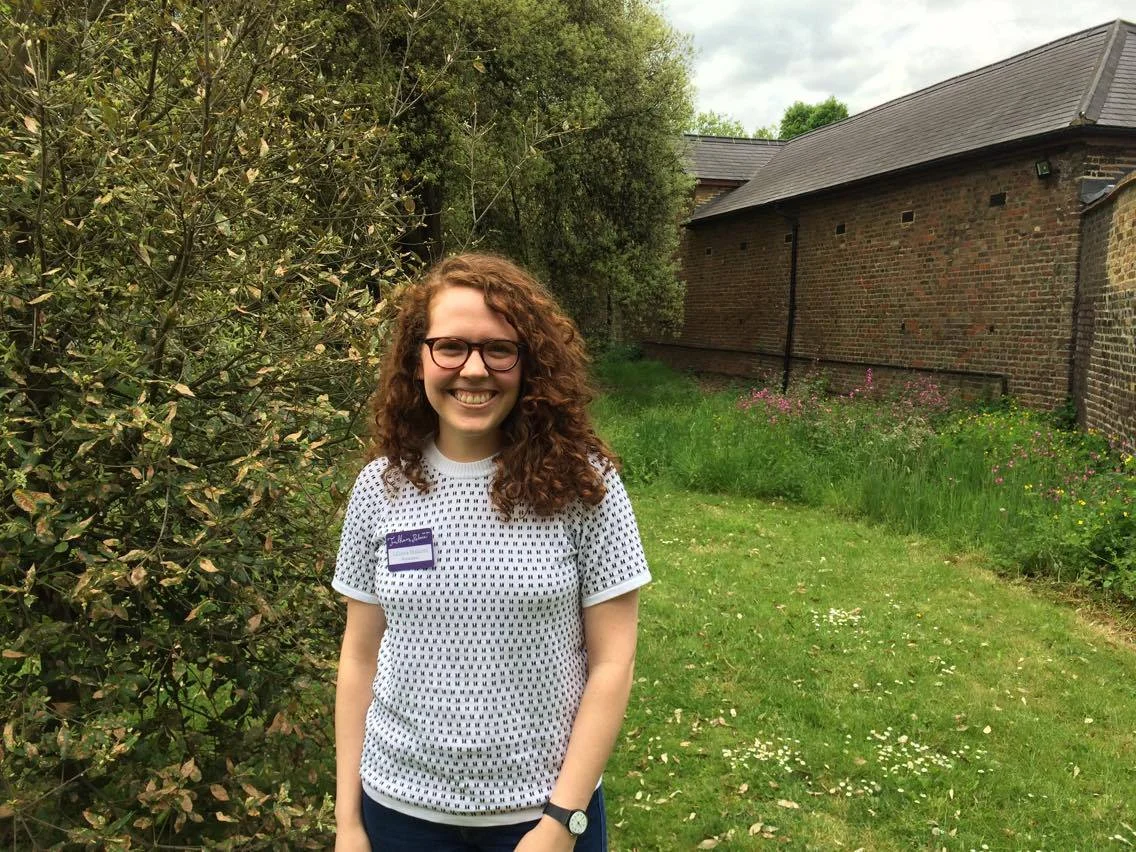
To help us get started I'll tell you a little bit about myself. I'm Juliana, one of the Communication Assistant volunteers. You can find me at the computer in the Education Centre on Tuesday mornings. I started volunteering at Fulham Palace to learn more about the museum and heritage sector, and am looking forward to meeting lots of interesting new people. Volunteering at such a beautiful site is a treat, I look forward to seeing how the garden changes over the coming months. I have also heard tales of the Bothy Biscuits. I'll come check them out if the Learning Centre ever runs out of cake -- unlikely!

Juliana Malzoni
Volunteer Communication Assistant

Mrs Creighton: “a woman of strong personality”

Mrs Creighton

Mrs Creighton

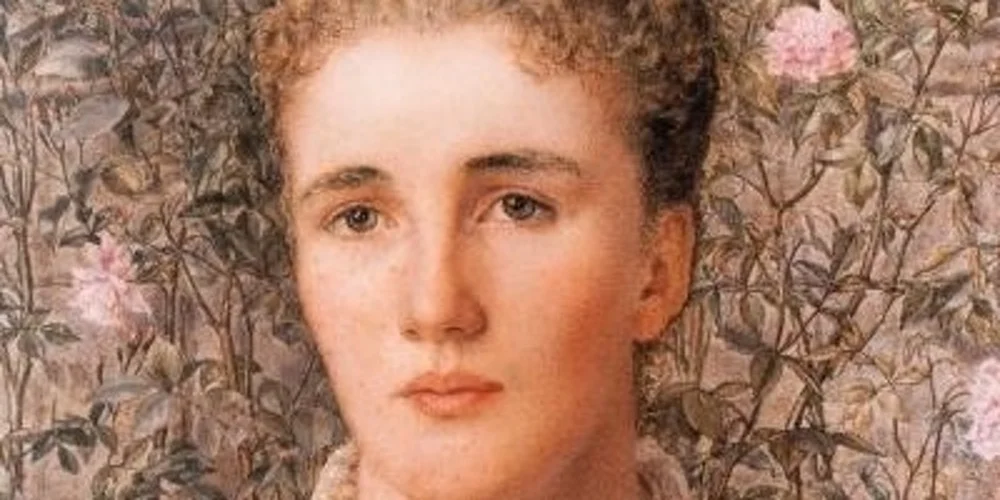
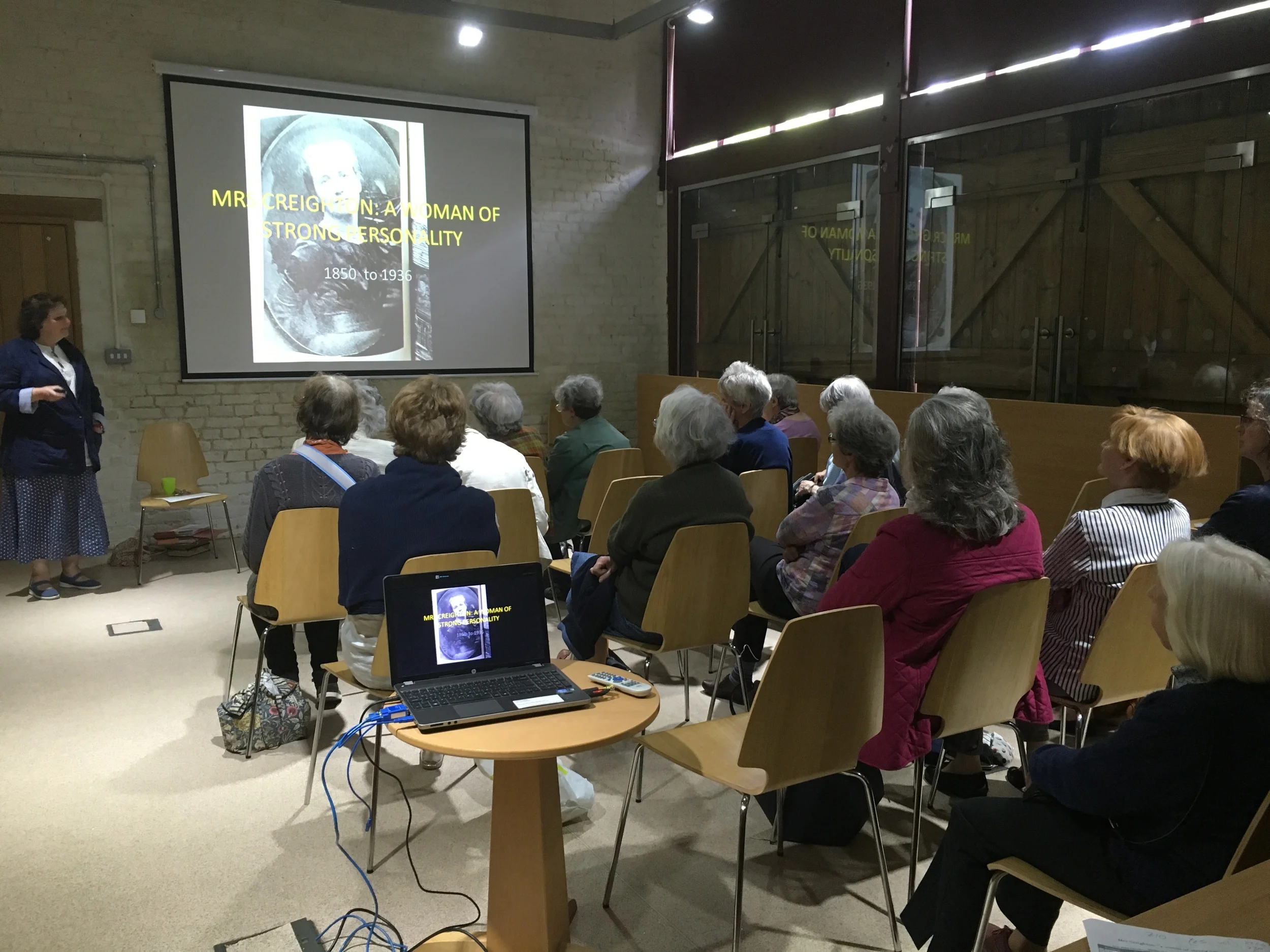
Fulham Palace Curator Miranda Poliakoff gave an illustrated talk about Mrs Louise Creighton, wife of Bishop Mandell Creighton (Bishop of London, 1897-1901) on Monday, 16 May 2016, in the Jessie Mylne Education Centre.  I was joined by about 20 others – all women, which was appropriate.  Miranda explored the life of Mrs Creighton at Fulham Palace, and elsewhere, eighty years after her death.  I now realise that she was a remarkable woman, in her own right.

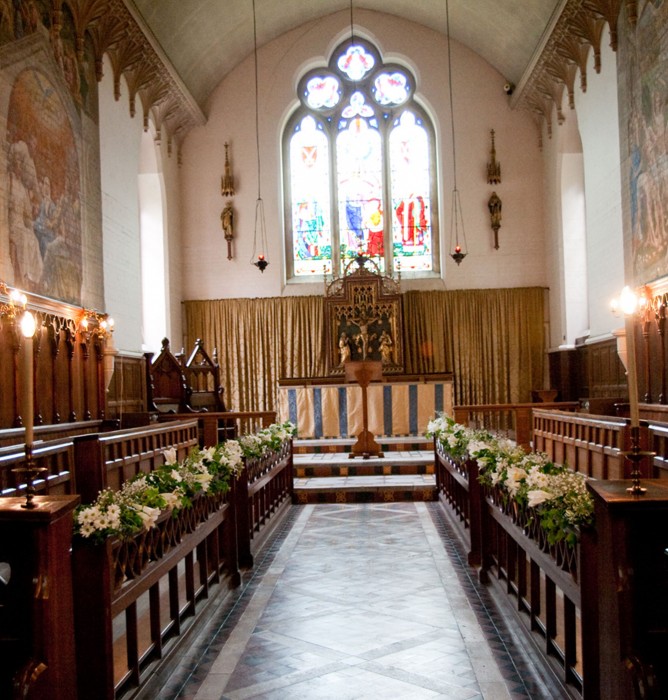
A local history interest article in this month’s issue of the Fulham Residents’ Journal had described the editor’s interview with Miranda, and invited readers to “find out more about this admirable woman” at the talk.  Also, as a Volunteer Guide at Fulham Palace with an interest in architecture, I had come to admire the Chapel designed by William Butterfield in 1866-67 for Bishop Tait in the Tudor revival style.  Butterfield’s original Victorian-gothic interior had used “a full orchestra of coloured bricks, marbles and encaustic tiles”.  But Mrs Creighton on arriving at Fulham in early 1897 declared “nothing can make that Chapel beautiful”.

inside the Chapel

inside the Chapel

Very quickly, Bishop and Mrs Creighton (they were very much a team) displayed their different taste and camouflaged the Chapel’s east wall and the original 'reredos', a mosaic depicting the Adoration of the Magi, with a curtain.  In front, they placed the present altarpiece of the Crucifixion, which they had bought in Oberammergau, Germany.

The original mosaic, now uncovered and placed on the west wall – at the opposite end of the Chapel, was designed by Butterfield (his first use of the medium) and made by Salviati of Venice.  Incidentally, Salviati glass mosaics also adorn the Albert Memorial any many other Victorian monuments.  I had not forgiven Mrs Creighton for her artistic ‘camouflaging’, and also for being a fervent temperance campaigner around Fulham!

Education Centre

Education Centre

However, Miranda’s talk made my views more nuanced.  Louise von Glehn, the 10th of 12 children, was born in 1850 and grew up in Sydenham.  Her frugal father – in trade – was an immigrant from the Baltic.  Louise lacked formal schooling, but she started a self-help essay group, and in her late teens took an early University of London course for women.  Invited to visit Oxford in 1871, the story goes that she daringly wore a bright yellow scarf, which Mandell Creighton spotted.  They were engaged within three weeks.

Rev. Creighton was a notable scholar – an ecclesiastical editor and historian, but his wife was not to be outdone.  Each of them published over 20 books. After Rev. Creighton was appointed to a living in Northumberland, his wife initially found life in the remote vicarage difficult.  But in time, she showed her frugal, practical and energetic side and came to relish gardening, and long walks.  The couple had seven children.

Mandell Creighton became Bishop of Peterborough before taking on the role of Bishop of London.  The family moved into Fulham Palace in deep snow.  Mrs Creighton managed to run the Bishop’s household, bring up the children, and re-launch the Women’s Diocesan Association in 1897.

Her husband died suddenly in 1901, aged only 57, but by 1904 Mrs Creighton had published her two-volume Life and Letters of Bishop Mandell Creighton, Sometime Bishop of London, a copy of which is in the Fulham Palace Library.  Despite her loss, Mrs Creighton remained a champion for women workers, and women’s education.  Although she had been against women’s suffrage (as the Bishop of London’s wife, she had to be cautious, as Miranda explained) in 1906 she changed her mind and publically supported votes for women.

Finally, Maya Donelan MBE of both the Fulham and Victorian Societies, who was in Miranda’s audience, told us about Bishop Creighton House on Lillie Road, which was founded by Mrs Creighton in memory of her late husband, and is still a Community Centre today. I had enjoyed an informative and interesting talk: thank you.

Jane Bowden-Dan

18 May 2016

A (Very Early) Letter to Father Christmas

Dear Santa,

I'm sure you don't get many letters at this time of year, but I thought if I wrote to you now that it would give you plenty of time to assemble the items on my wish list. They are all (well nearly all) designed to assist those toiling in the garden at Fulham Palace. I perhaps should preface the list by saying that I've been a very good boy so far this year - for example, when brambling or digging up nettles I ALWAYS ensure that the roots are left on as, I have learnt, this helps the composting process immeasurably. So, here is the list:-

A Chipper
The full time staff at FP have been bashing on about this for ages. When I first heard about this I must have misunderstood as when I appeared on the following Wednesday with a chip pan I was prepared to donate, my offering was met with howls of derision.

A Cat
There is apparently a gang of fiendishly cunning mouse-surgeons at large in both the Bothy and the Vinery (there's even a notice in the Bothy warning us that "mice operate in this area"). The solution is obvious.

A Knife Grinder
For keeping all those lovely long handles razor-sharp. I appreciate this is probably not a full time occupation - perhaps he/she could spend the rest of their time looking after the cat?

A Launch
Probably not of benefit to everyone I admit, but if instead of making the long and wearisome journey from Putney on foot I could be whisked across the river in a matter of minutes then my timekeeping (and productivity) would improve no end.

A Kettle
The one currently in the Bothy seems to have a life of its own - turning itself off and on as the mood takes it.

An Unlimited Supply of Freshly Laundered Tea Towels
Probably not high on most gardeners' lists, but have you seen the objects presently in situ ?

A Calculator
For working out the takings from the barrow each day and, incidentally, determining the amount of my commission (I always have trouble with calculating 17.29%).

A Gigantic Stocking
For putting all the above mentioned presents in.

Yours in hopeful anticipation,

Jamie Atwell

P.S. It goes without saying that FP would be delighted to supply you in December with as much holly and ivy as you could possibly want!

Exhibition Update and Call for Volunteers


Fulham Palace has secured phase one funding from the Heritage Lottery Fund. This is exciting news as we can begin to plan for restoration of the Palace and create a new exhibition Discovering the Bishop of London's Palace at Fulham.

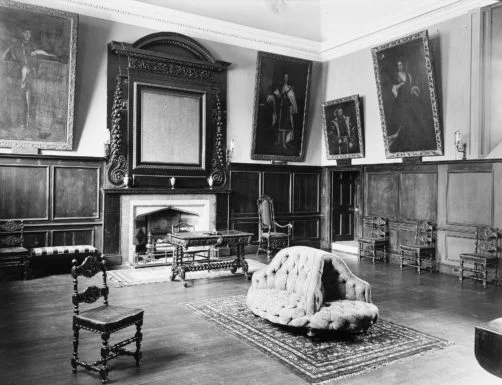
The project will focus on bringing the iconic Tudor Quadrangle and key historic rooms, such as the Great Hall, back to life by conserving the building and dressing the rooms to show how the Bishops of London would have lived and worked here across the centuries.  We’ll also enhance the botanical gardens, including re-establishing some of the exotic species that were first introduced to Europe by the botanist and bishop Henry Compton in the late 17th and early 18th century.

Discovering the Bishop of London’s Palace at Fulham

Discovering the Bishop of London’s Palace at Fulham

Please find the Exhibition Update and Q&A for Volunteers in the Resources section of the portal here.

There will be a special free showcase for visitors and local residents to find out more about the project.

Susan Speece Project Manager for the HLF Restoration is looking for volunteers to help staff the exhibition showcase, being available to speak with visitors and promote this exciting project  from Monday 12 until Sunday 19 June.

Volunteer sessions are in two hour slots from 9.30am to 5pm.

If you're interested in giving some time to this exciting project contact Susan directly at :-

susan.speece@fulhampalace.org

7th Century Dating Results at Fulham Palace Foreshore

Becoming a trained member of the Thames Discovery Programme has given me and many other non-academically trained volunteers the opportunity to observe, monitor and record a much overlooked area of great archaeological importance – The Thames Foreshore.

The Timbers

Having first come across a couple of parallel recumbent timbers on the Fulham Palace Foreshore in July 2010, the Fulham Foreshore Recording and Observation Group (FROG) have kept a record of their visibility and progress of erosion. Situated just upstream of Putney Bridge, they were sited in an E/W direction following the line of the shore on a long raised bank and visible at medium to low tides. The first one that became apparent was 15cm wide and the second one 28cm wide and placed 2.70 metres apart. They were then flush with the foreshore surface with just their ends visible. Although there was quite a difference in size, the fact they were parallel made me curious.

Site of Timbers looking towards the East. Timber 2# in foreground. Timber I# is mid left of picture.

Site of Timbers looking towards the East. Timber 2# in foreground. Timber I# is mid left of picture.

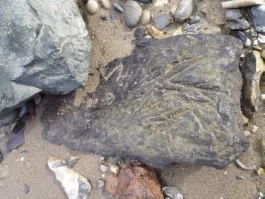
In November 2014, a third parallel timber (timber 3#) was located towards the east with interesting chop-marks on it, and two plainer ones running immediately south of it which appeared to be part of the same structure. On showing a photo of this to ancient wood expert Damian Goodburn (MOLA) at the Foreshore Forum that year he suggested it was of suitable size for dating. (11cm x3.5cm depth).

Timber #3

Timber #3

So in January 2015 a sample was taken of the chop-marked timber and thus revealed an underlying timber which had a wooden peg that had been hammered through it. Maybe this plank was intended to remain flat on the shore. A bonus find! The intriguing chop-marks however suggest to me that the associated timbers could have been cut and formed in-situ. It has been suggested that this site could have been a mooring feature for boats or maybe it is part of a revetment.

April 2015 was the last time timbers 1# and 2# were visible but the remainder of 3# 4# and 5# are still intact, although submerged.

Results for Timber 3#      AD608    +/- 27 years
The radiocarbon dating of the sample from Timber 3# places this structure in the early/mid Saxon period. This predates the earliest documentary reference to Fulham which dates from AD 704 when the manor or land at ‘Fulanham’ was granted from Tyrtilus, Bishop of Hereford to Wealdhere, Bishop of London.

Across the river at Putney an early Saxon fish trap was identified in the early 1970’s by the Wandsworth Historical Society (dated 5th-7th Century in the 1990’s) and also one at Hammersmith and Barn Elms.

The Wattle

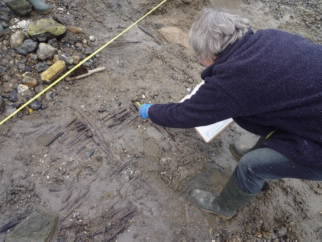
On a FROG Monitoring event in August 2011 we were observing the vicinity of the aforementioned parallel timbers when our Project Director and Head of Community Archaeology, Natalie Cohen pointed out a fair amount of shell incorporated in the gravel. Scraping just below the surface she revealed some wattle.

Uncovering the Wattle

Uncovering the Wattle

Situated just South of the site of the parallel timbers, aligned E/W, parallel yet on a lower level, it was suggested that the wattle was not probably not related.

It had remained covered until September 2013 when members of the FROG recorded it.                             

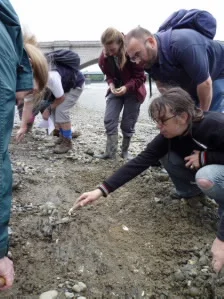
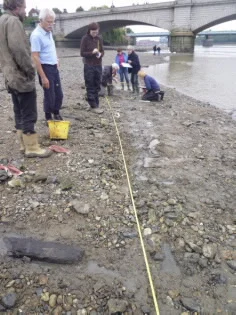
With tight time restraints as there was a lot to draw before the tide came in, we revealed it to be 7.50 metres x 70cm wide. A large pinkish boulder seemed to mark its eastern end. We covered the area as best we could to prevent further erosion.

Recording the Wattle

Recording the Wattle

The length of the site. Timber 1# on  left

The length of the site. Timber 1# on  left

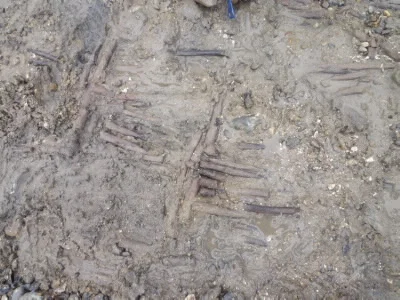
The shell layer has now eroded out but the wattle is still sometimes visible in parts only at lower tides. The whole area is becoming less accessible at medium tides as the foreshore is flattening out a lot behind it.

Remains of Wattle

Remains of Wattle

Results for the Wattle        AD 951  +/-26 years
The wattle is likely to be a hurdle from a fish trap which was created in the Late Saxon period.

Finding intact wattle on the foreshore is very rare. Getting results from the sample was a great surprise for us as it is normally difficult to get a reading from a sample due to its size and structure. The results confirm that they are not contemporary with the timber structure but give us a chance to view two different horizons in a close area.

Thanks to the Thames Discovery Programme and FROG Volunteers, we have been able to give Fulham another couple of stories to add to its timeline.

And as erosion progresses, more will follow.


Julia Mahon