History

The Hammersmith and Fulham Archive and Local Studies

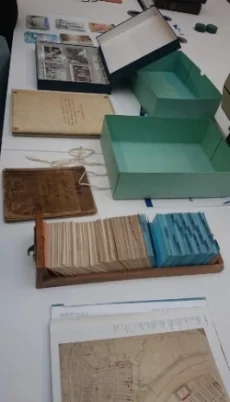
Postcards, books, maps and other items relating to Fulham Palace.

Postcards, books, maps and other items relating to Fulham Palace.

After the IT training session a few of us took the opportunity to visit the Hammersmith and Fulham Archive and Local Studies centre. The Archive is based on the first floor of the Hammersmith Library, which is a 5 minute walk from the Hammersmith underground/bus station.

This is a really useful resource for anyone researching Fulham Palace. The archive holds the local history collections for Hammersmith and Fulham including documents, books, maps, photographs and paintings, old newspapers and other sources for family and local history. These records come from the council and its predecessor bodies, local institutions such as churches and schools, and from members of the local community. Whether it’s genealogical, architectural, infrastructure or social history research, the Archivist and research volunteers are available to assist, in person or through email.

The Archive and Local Studies is open during normal library hours. Anything on display can be used, but photographs and other material held away from the Reading Room is only available during the archive opening times when the Archivist and research volunteers are there. Since a number of items are stored off-site, access to archive material is by appointment only and places are limited. You may want to allow at least a week.
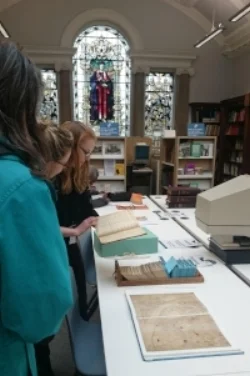
The Archivist or research volunteers are available to help.

The Archivist or research volunteers are available to help.

Also, prior to going take note of the Reading Room rules (which differ from the library): no bags are allowed in the room (lockers are available), no pens can be used (only pencils), and no food or drink can be brought into the room. Some documents cannot be photocopied for preservation reasons but you can bring a camera. There is a cost of £5 cash per day to take photos.

To reserve a seat call 020 8753 3850 or email archives@lbhf.gov.uk.

Visit the Hammersmith and Fulham Archive and Local Studies webpage for opening hours and more details.


Nancy

Communications Assistant
Remembering the Somme

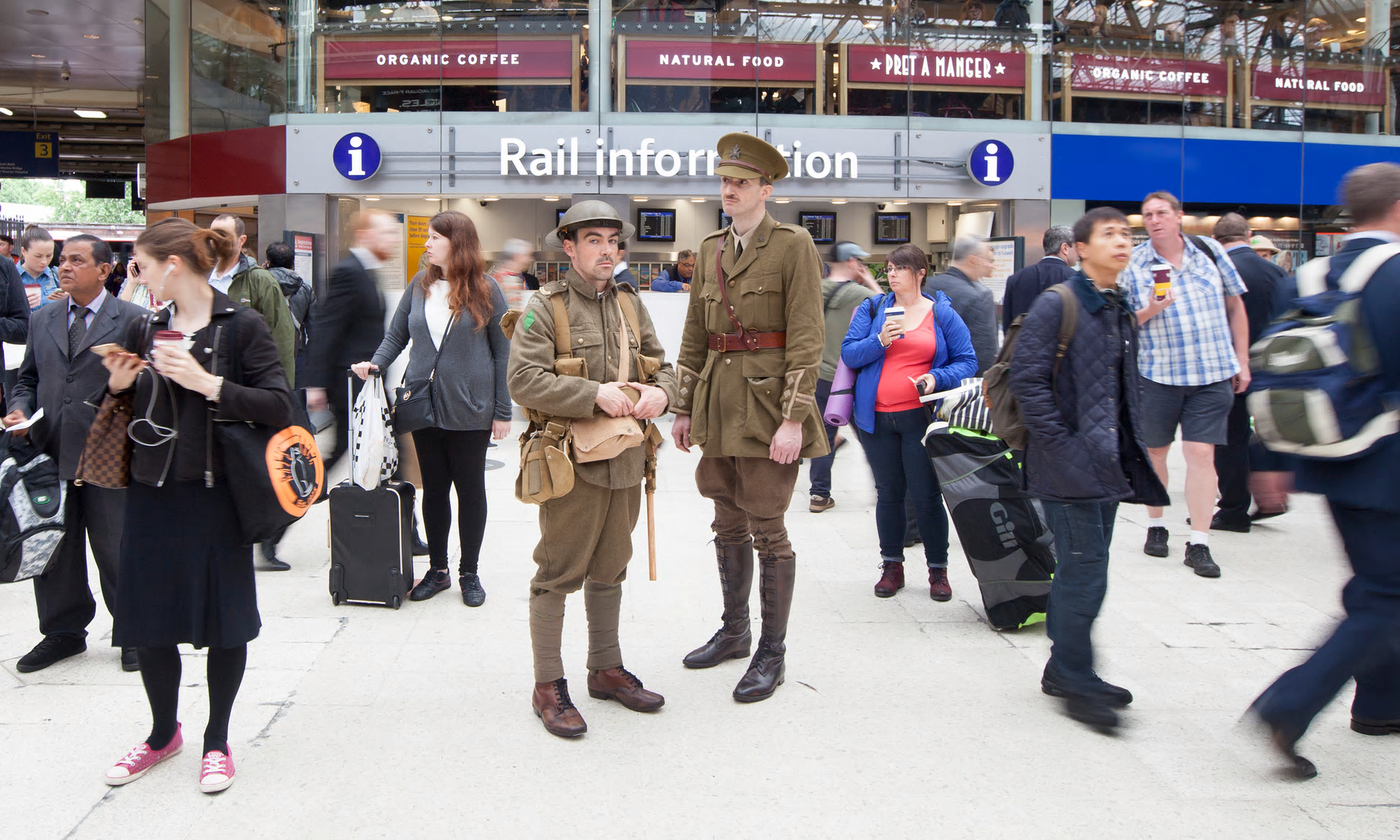
On Friday morning thousands of people throughout the UK were surprised by the ghostly sight of World War One soldiers, as they made their morning commute.

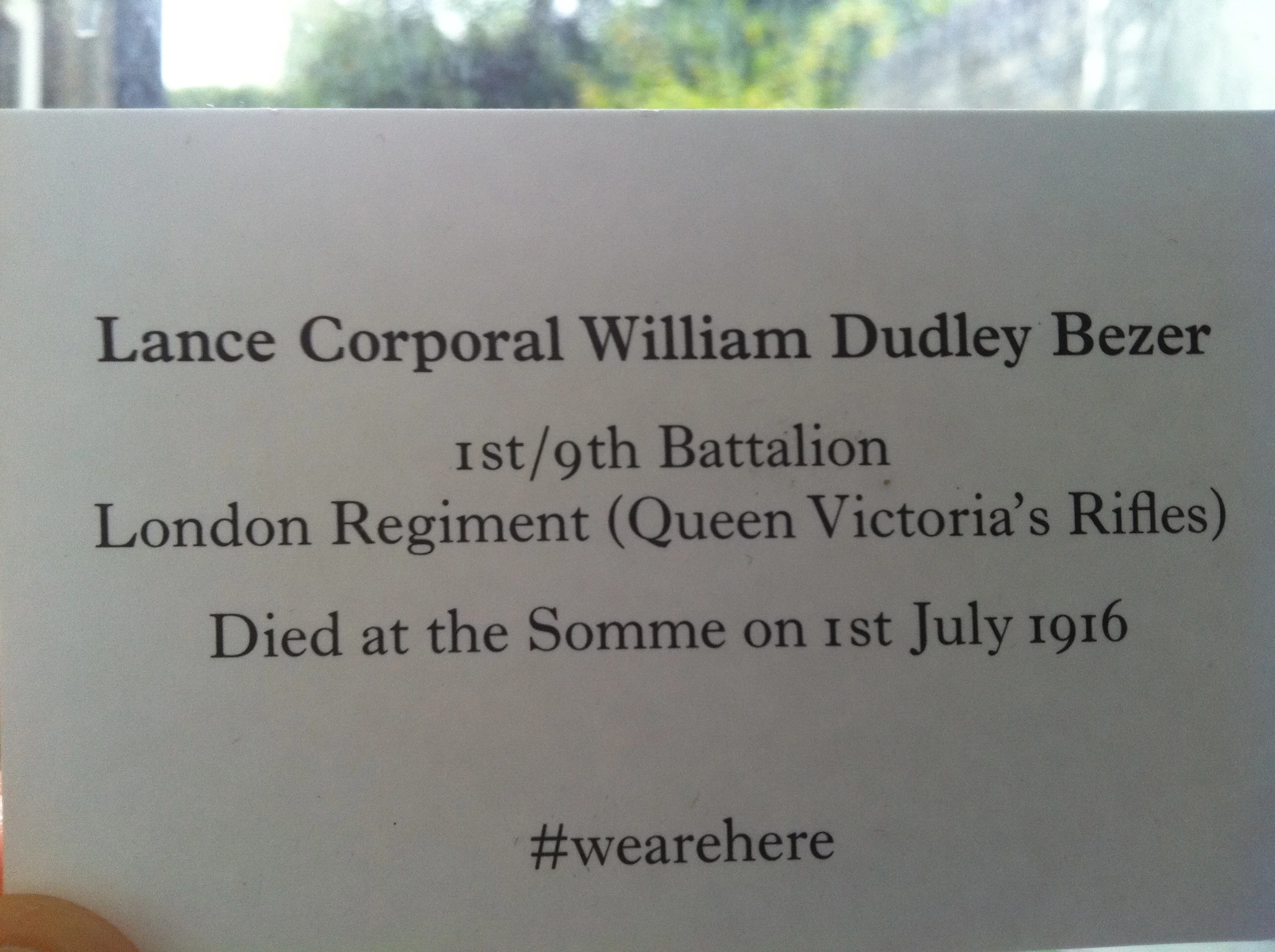
The soldiers made for an eerie sight. Sometimes seen waiting, sometimes walking. Often caught through the corner of the eye before vanishing. If approached by members of the public, the soldiers simply handed out a card with the name of a soldier they were representing.

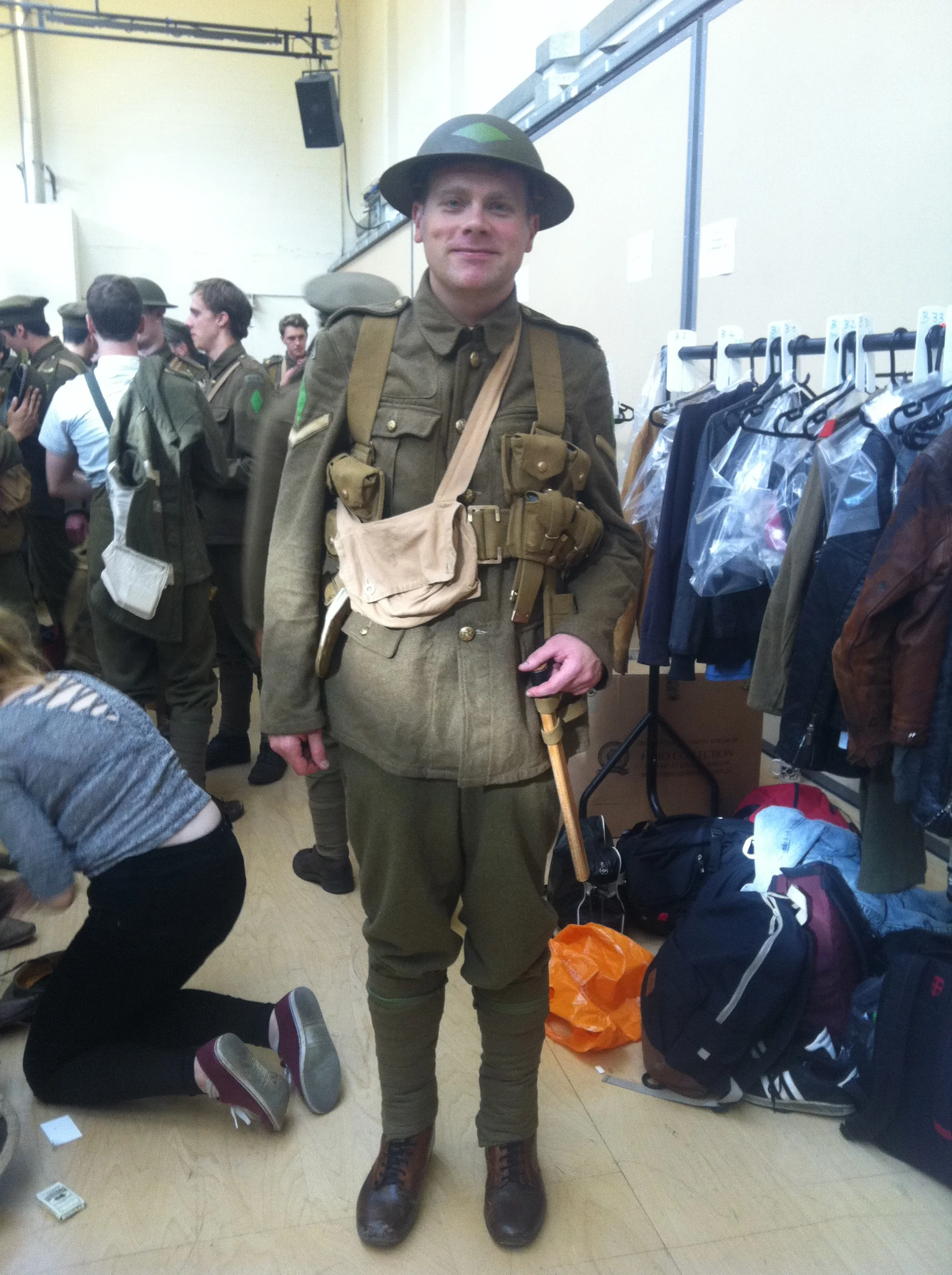
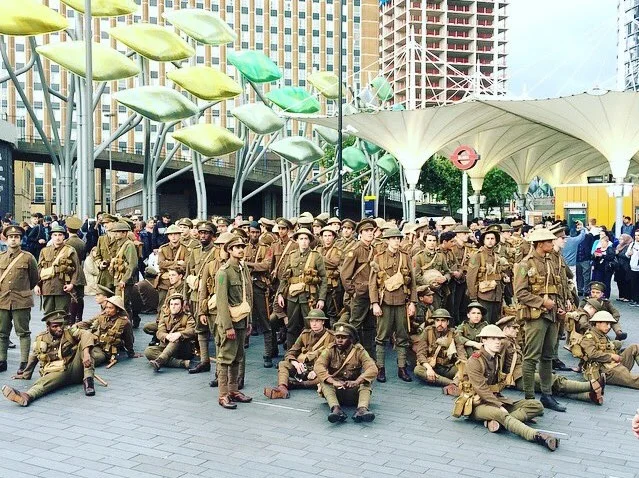
I was proud to be among 1400 men taking part in what was a living memorial to all who fought and died in that dreadful conflict. We Are Here was named for the song sung by soldiers on their ways to the trenches, and was a piece of artwork created by Jeremy Deller and the Royal National Theatre.

Somme3.JPG

I was representing Lance Corporal William Dudley Bezer, a volunteer recruit of the London regiment to which Bishop of London Winnington-Ingram was chaplain. A South Londoner, William was just 31 years old and had been married for less than a year to his wife Agnes when he died on the first day of the Somme. A story repeated tens of thousands of times over on that first fateful day.

My day took in Waterloo, Liverpool Street, Fenchurch Street, London Bridge, The Tower of London and even Basildon as we weaved our way through alleys and streets, before a finale to surprised shoppers at Stratford. It was a memorable day for many reasons, not least the emotional response from members of the public.

I hope it was a fitting tribute to the courage and stoicism of the many who gave their lives for the peace we now take for granted.

Steve Lee


Communications Assitant Explores the Foreshore at Fulham

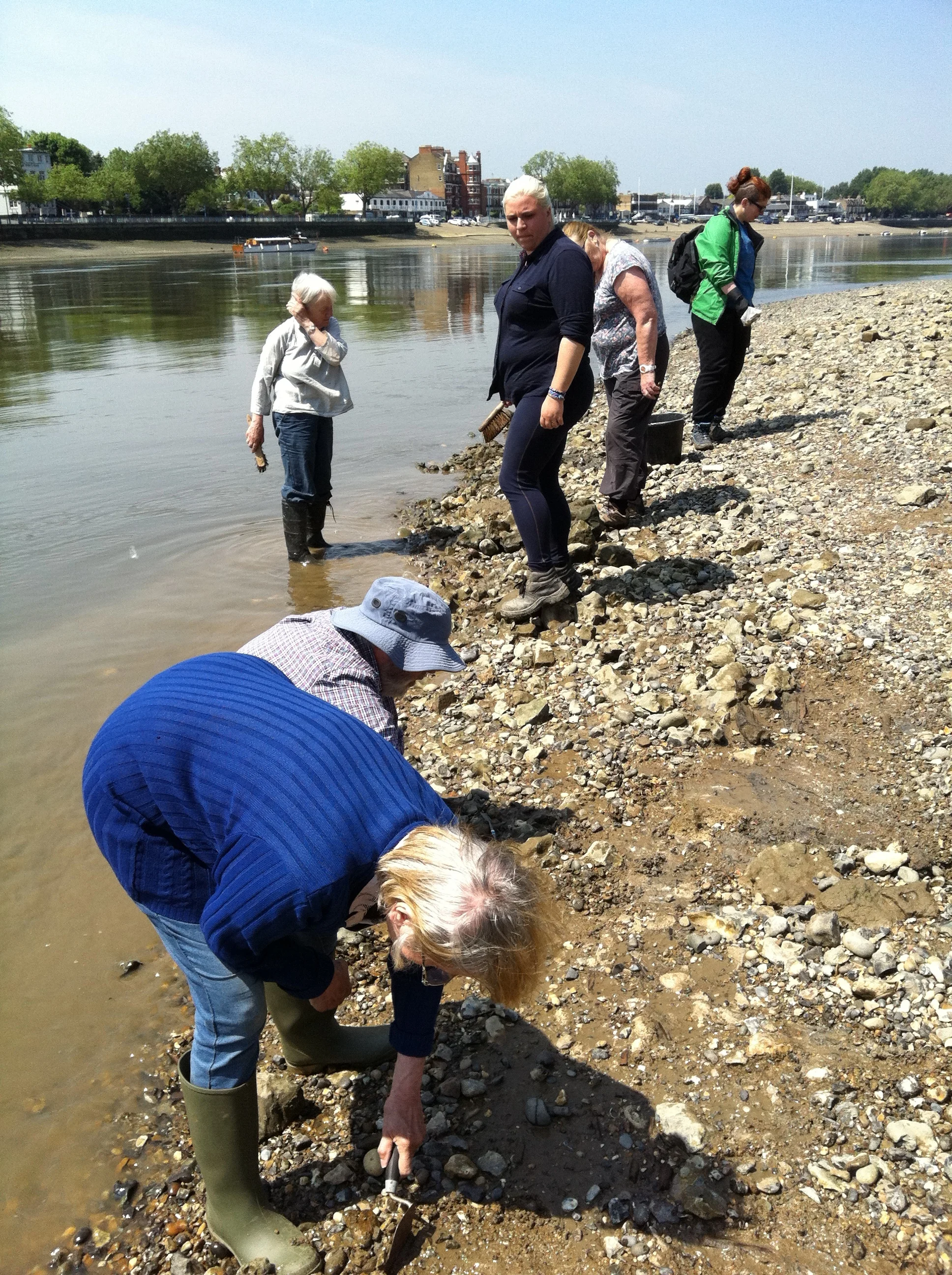
As well as my duties with the communications team at Fulham Palace, I have also been moonlighting as a volunteer FROG with Thames Discovery Programme. FROG stands for Foreshore Recording and Observation Group, a crack team of passionate amateur archaeologists who are responsible for recording finds of historical importance along the length of the Thames.

After my training in Greenwich in April it was time at last to be unleashed onto the river. Thursday 9 June was my first session with veteran FROGs and I have to say how welcoming and friendly I found the group which includes our very own Julia Mahon. They were kind to a newbie, taking me under their wings and showing me the ropes.

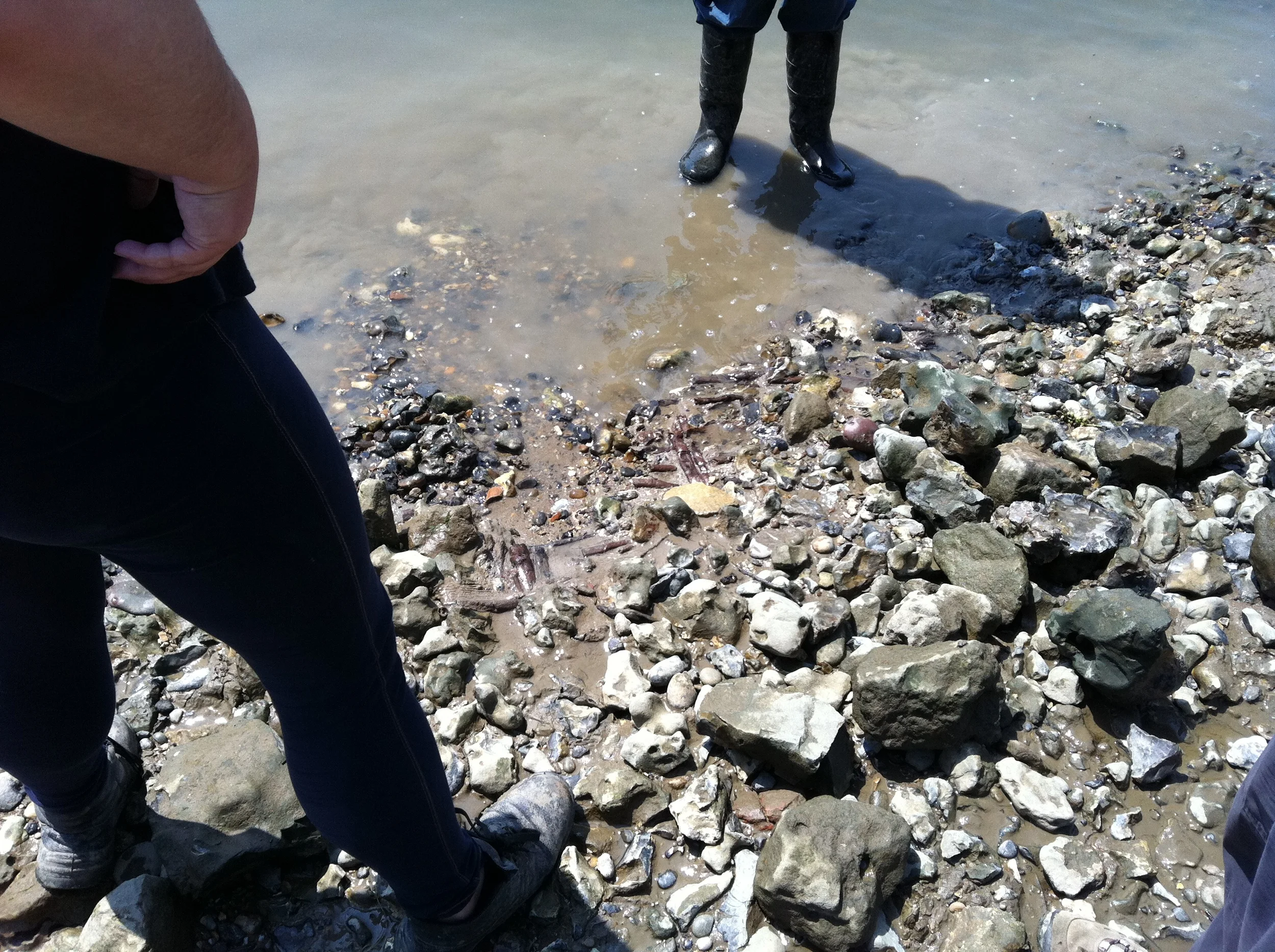
Thames Foreshore at Fulham

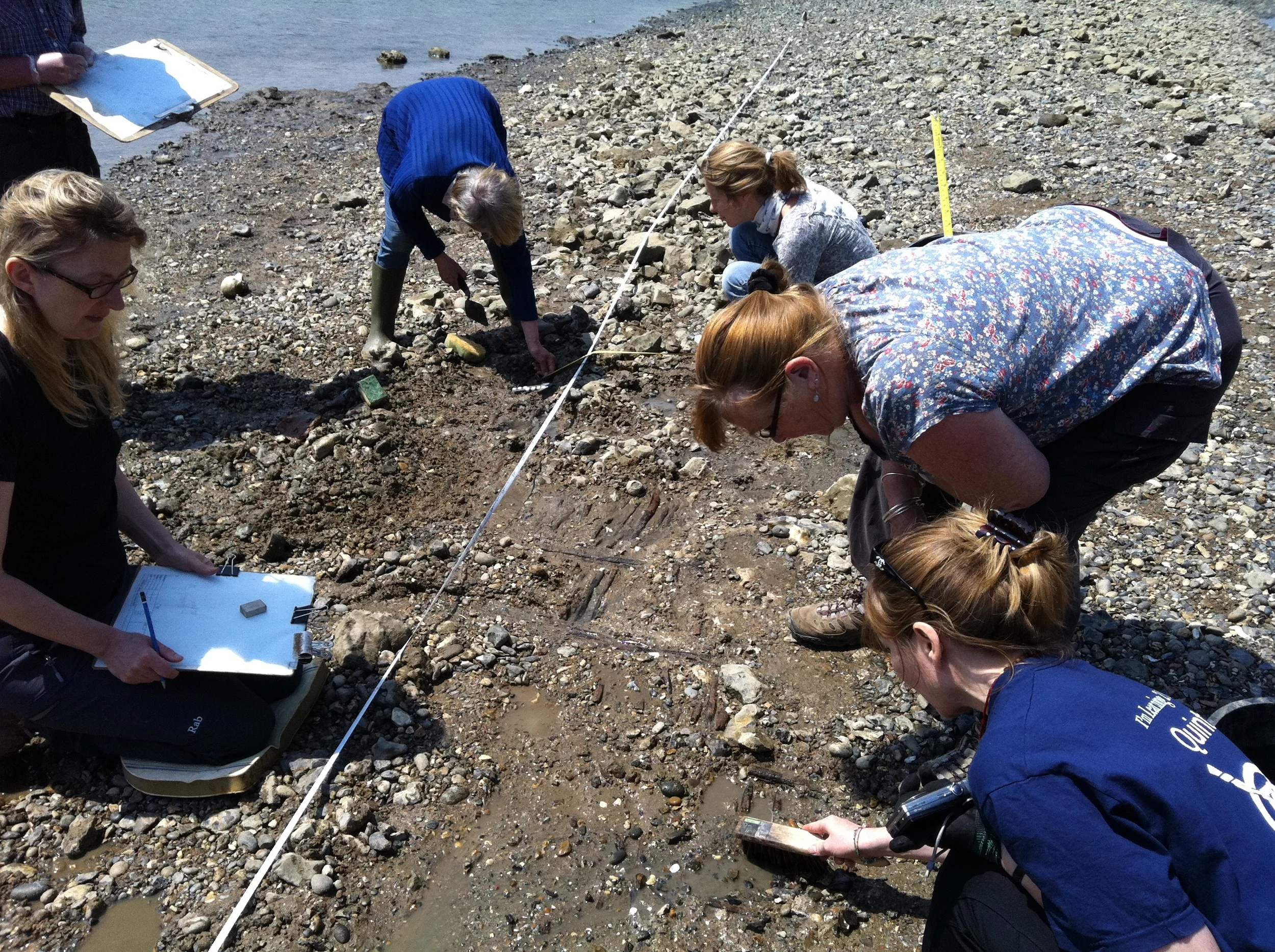
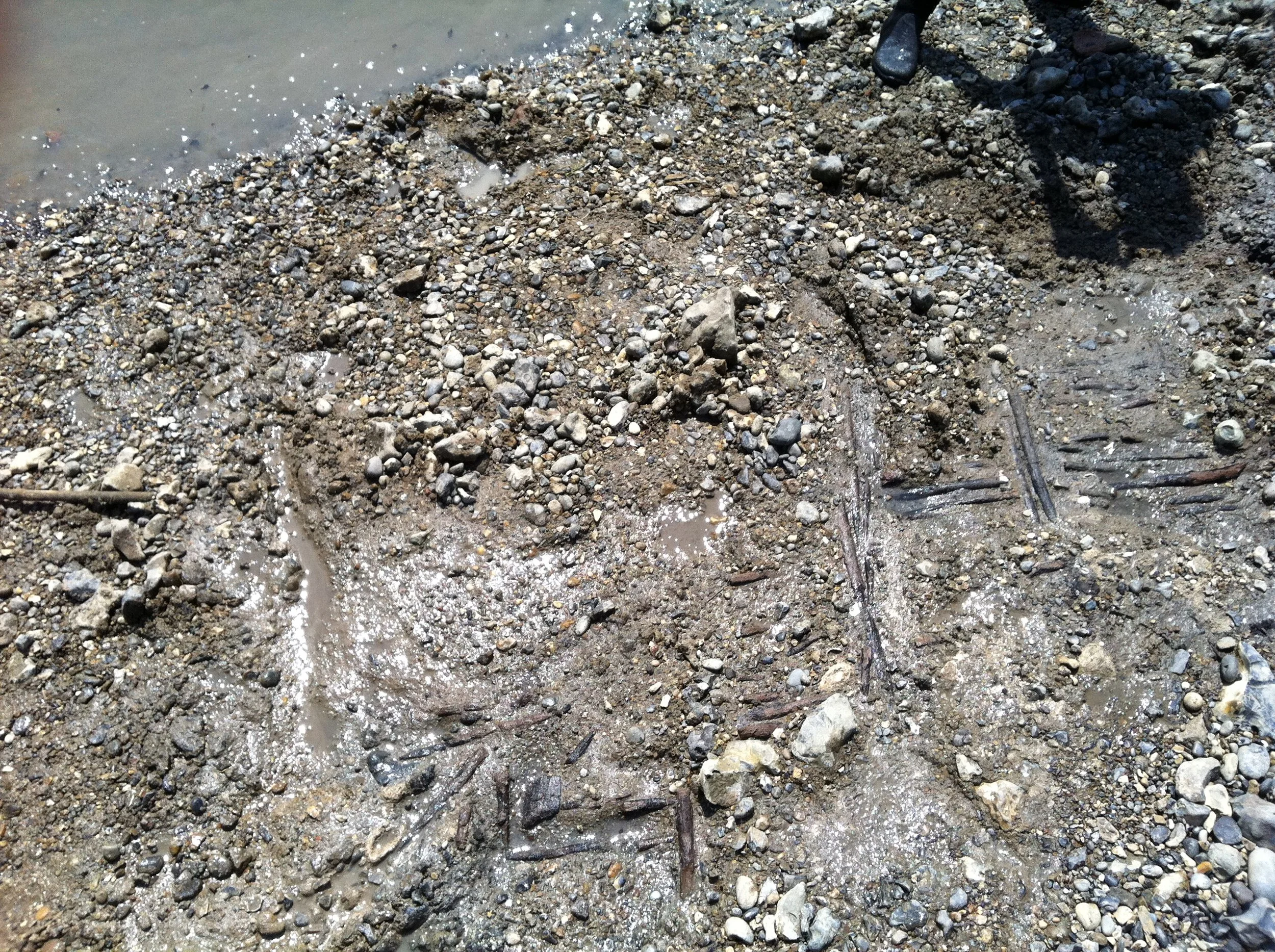
Our main task was to clean and then record any changes to a 7th century fish trap or Wattle, that was discovered on the foreshore near Fulham Palace last year (Do read Julia's excellent blog post).

After introductions we waited to head down to the foreshore. And we waited. And we waited some more. First of all its important to know the tide times. These are not always entirely accurate. The day before had seen torrential rain and the river was higher than we had expected. Much higher. To make matters worse there is a sewage outflow on the Putney side which releases effluent into the river at these times. Whoever said the life of the archaeologist was glamorous?

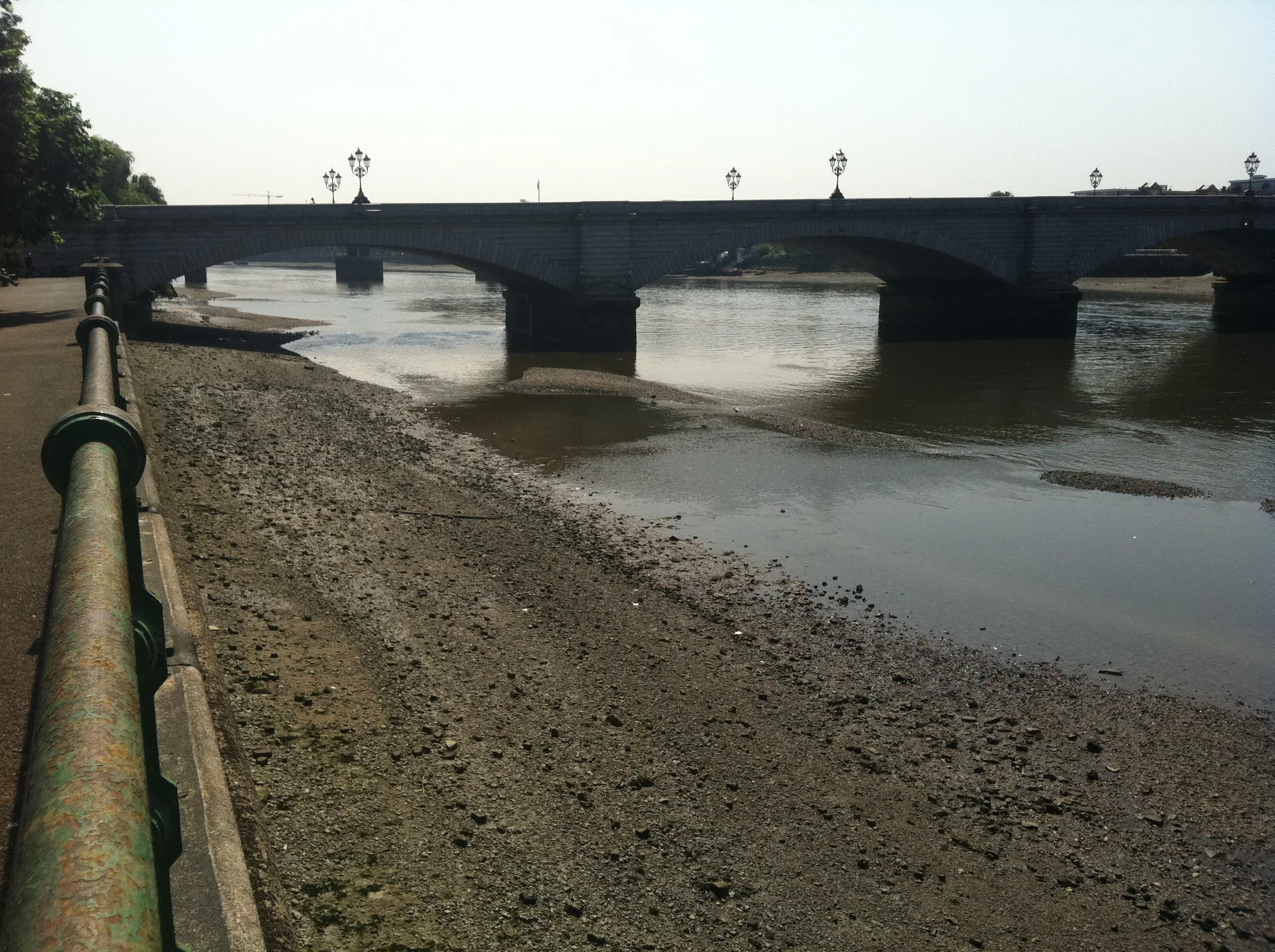
Low Tide?

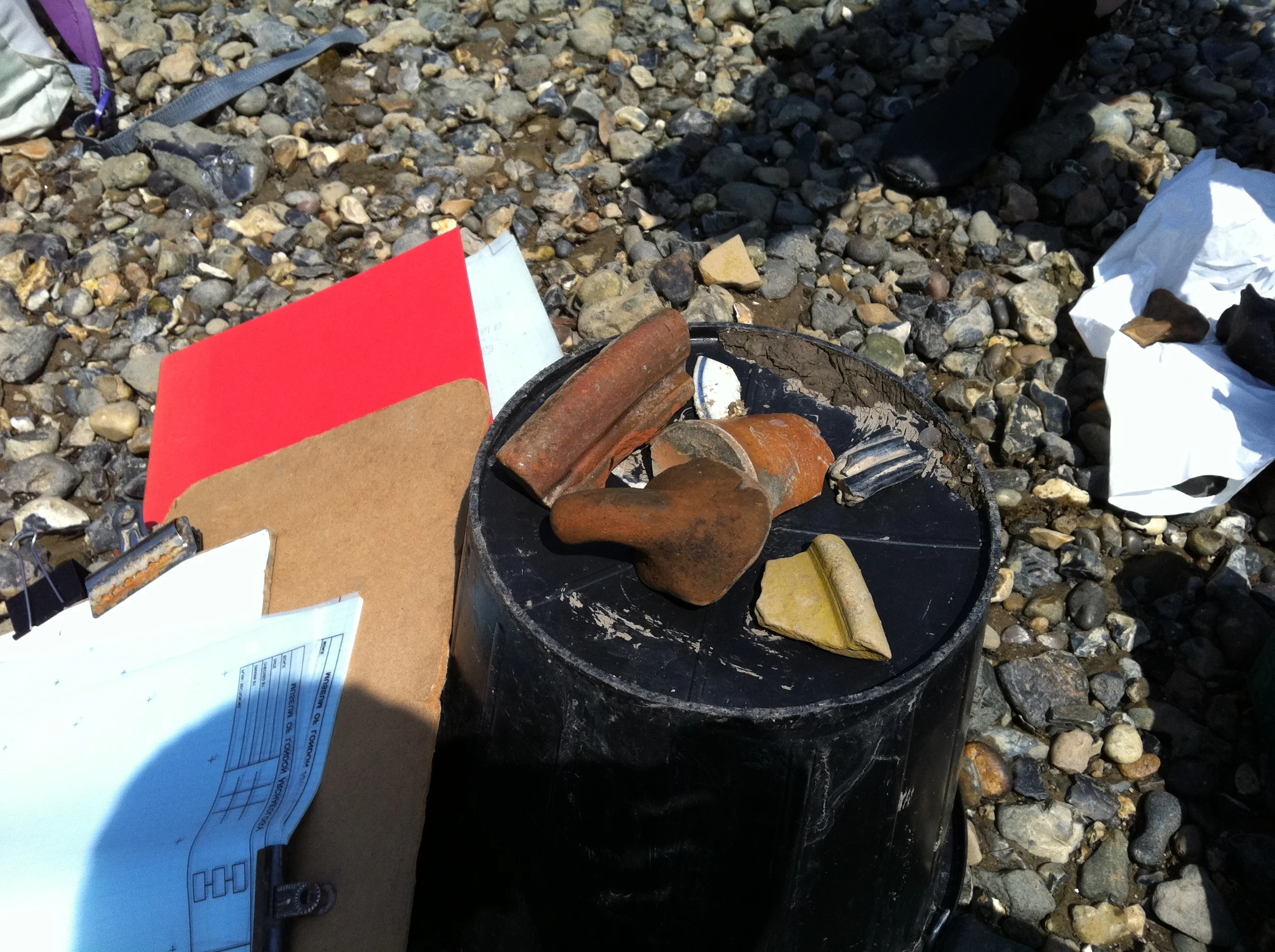
We used the free time to mudlark, named for the age old profession of men and women, and quite often children who would search the river foreshore for anything of value that could be salvaged. I managed a small haul of mainly Victorian pottery (Fulham was famous for its potteries) and some prehistoric flint.

Mudlarking Finds

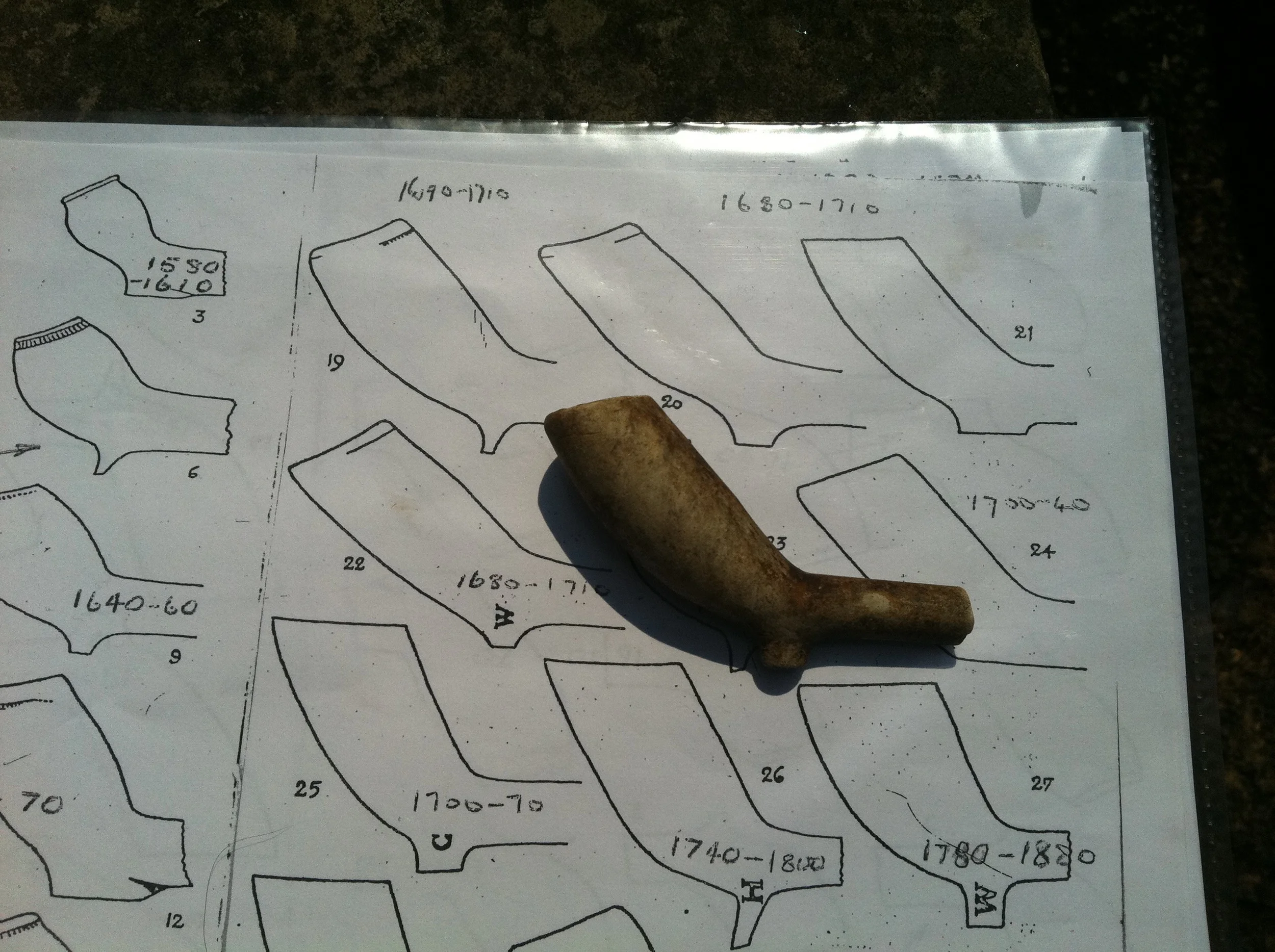
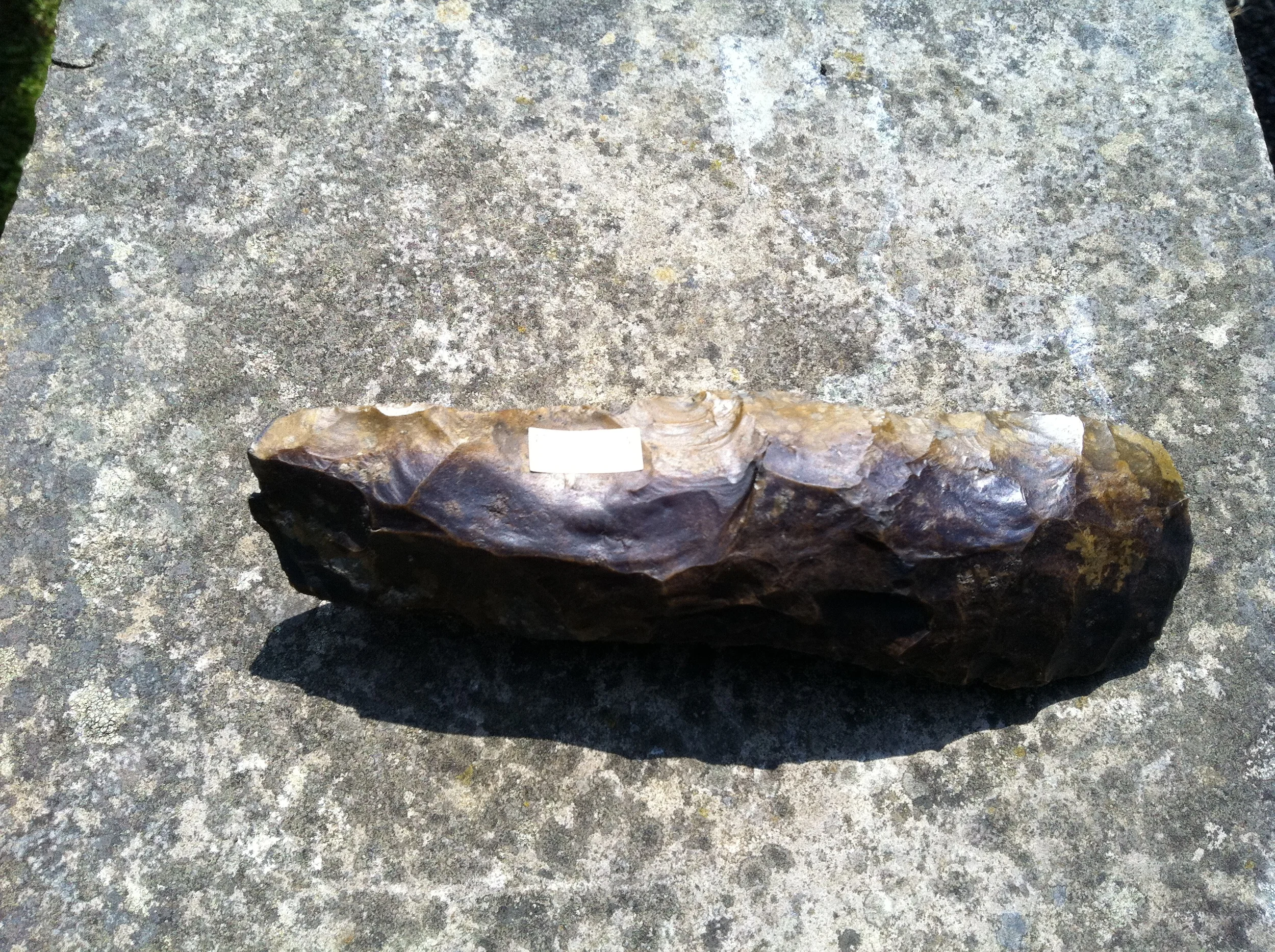
A veteran FROG was kind enough to bring in some previous finds for me to see which included a 17th century clay pipe and a neolithic axe-head all found on the foreshore within metres of the palace.

Clay Pipe
Neolithic Flint 4500-2000 BC

After a wait of almost an hour we were finally able to get to the archaeology. I must say it was truly breathtaking to see something so old and hand made. I felt a real connection with the people who lived at Fulham, our ancestors, in what seems such a far off time. It was like a hand reaching across the centuries. We could see the trap was used to feed them and their families. The trap had been amazingly well preserved for over a thousand years by being trapped in the anaerobic environment of the river mud. We could also make out a line of peat that would have made up the ancient vegetation on the edge of the river.

The Fulham FROG team

We got to work measuring and recording what we could.

The Thames finally reveals the Wattle

What I found shocking was how much the trap had eroded over the last year. It was literally crumbling in our hands. The foreshore is being eroded at an ever increasing rate, mostly due to increased river usage. I'll never look at the Thames Clippers in the same light. This small, but incredible link to our local history will soon be gone and I realised how vital it was that we should record its presence. It felt like we were documenting the very lives of the people who used it.

The Wattle or Early Saxon Fish Trap

If you would like to be kept informed and even get involved with volunteer archaeology and learning events at Fulham Palace please do contact volunteer@fulhampalace.org .

An important note about River Etiquette and Hygiene.

It's important never to visit the foreshore alone. Always go with someone, preferably an insured and well trained group such as a qualified tour guide. Take a mobile phone. Also as we heard earlier although the river is now one of the cleanest in Europe, sewage is still regularly pumped into the river. There is a small risk of contracting Weil's disease from rat's urine. so as well as wellies, always wear gloves. Never eat or smoke on the foreshore and make sure you thoroughly wash your hands at the first opportunity. Never dig on the foreshore. Wherever you are remember someone owns the land, so be respectful. It is also important to register any significant finds with the Portable Antiquities Scheme. 

My personal advice would also be to wear sunscreen and a hat in hot weather, and take some plastic bags for any mudlarking finds you may find.

Steve Lee

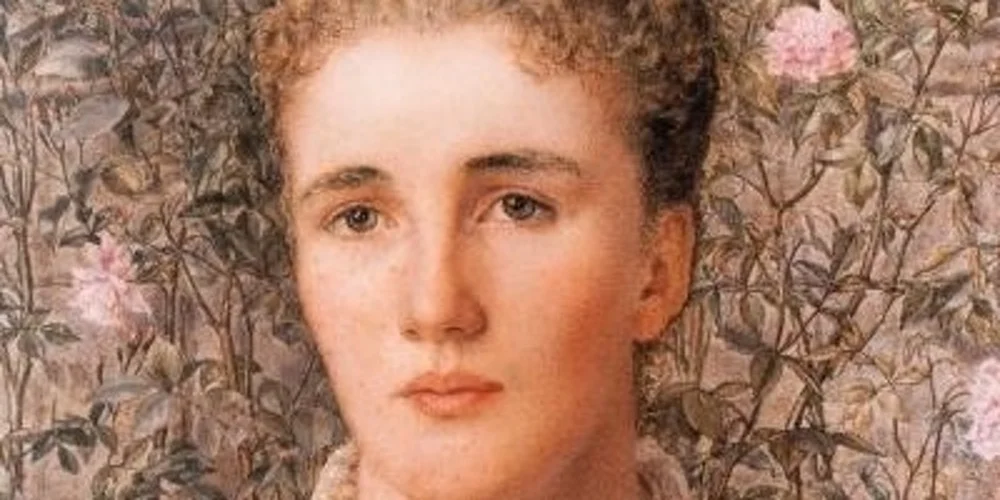
Mrs Creighton: “a woman of strong personality”

Mrs Creighton

Mrs Creighton

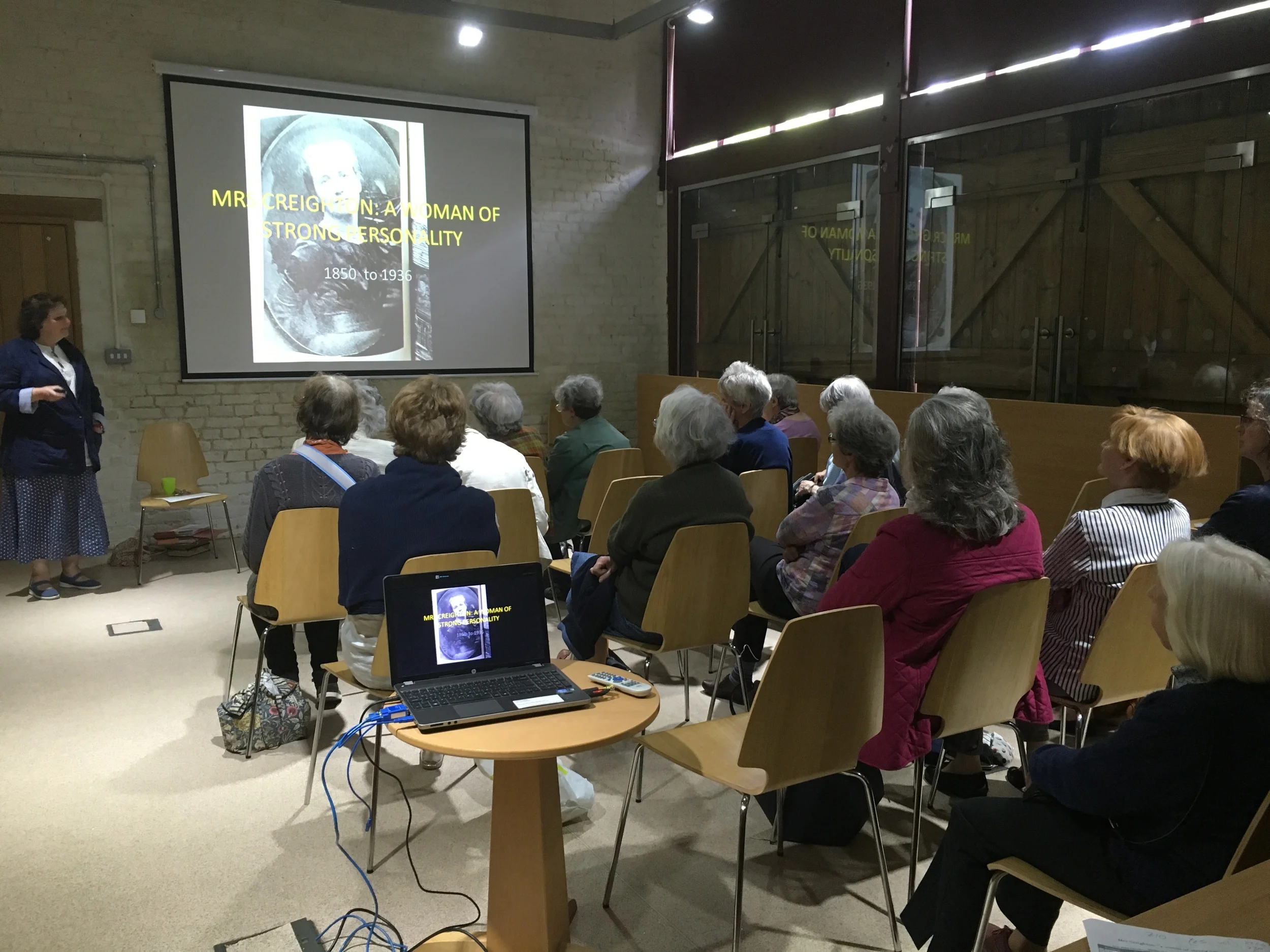
Fulham Palace Curator Miranda Poliakoff gave an illustrated talk about Mrs Louise Creighton, wife of Bishop Mandell Creighton (Bishop of London, 1897-1901) on Monday, 16 May 2016, in the Jessie Mylne Education Centre.  I was joined by about 20 others – all women, which was appropriate.  Miranda explored the life of Mrs Creighton at Fulham Palace, and elsewhere, eighty years after her death.  I now realise that she was a remarkable woman, in her own right.

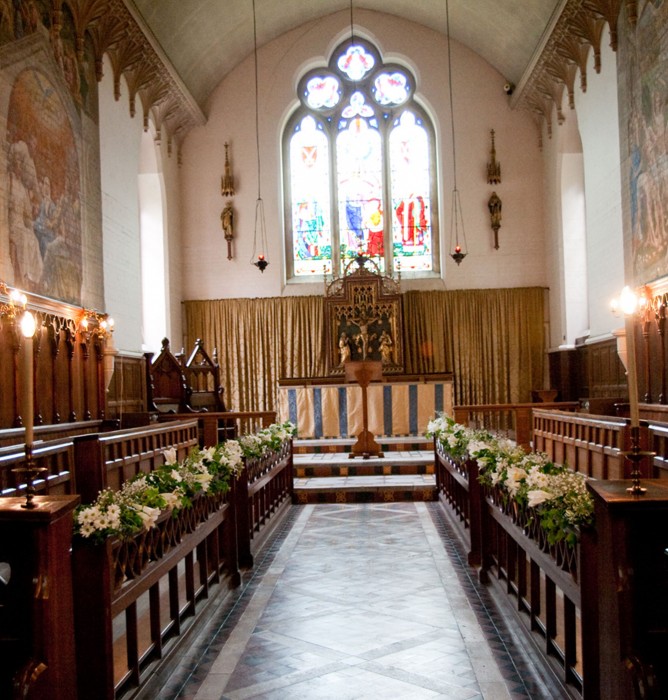
A local history interest article in this month’s issue of the Fulham Residents’ Journal had described the editor’s interview with Miranda, and invited readers to “find out more about this admirable woman” at the talk.  Also, as a Volunteer Guide at Fulham Palace with an interest in architecture, I had come to admire the Chapel designed by William Butterfield in 1866-67 for Bishop Tait in the Tudor revival style.  Butterfield’s original Victorian-gothic interior had used “a full orchestra of coloured bricks, marbles and encaustic tiles”.  But Mrs Creighton on arriving at Fulham in early 1897 declared “nothing can make that Chapel beautiful”.

inside the Chapel

inside the Chapel

Very quickly, Bishop and Mrs Creighton (they were very much a team) displayed their different taste and camouflaged the Chapel’s east wall and the original 'reredos', a mosaic depicting the Adoration of the Magi, with a curtain.  In front, they placed the present altarpiece of the Crucifixion, which they had bought in Oberammergau, Germany.

The original mosaic, now uncovered and placed on the west wall – at the opposite end of the Chapel, was designed by Butterfield (his first use of the medium) and made by Salviati of Venice.  Incidentally, Salviati glass mosaics also adorn the Albert Memorial any many other Victorian monuments.  I had not forgiven Mrs Creighton for her artistic ‘camouflaging’, and also for being a fervent temperance campaigner around Fulham!

Education Centre

Education Centre

However, Miranda’s talk made my views more nuanced.  Louise von Glehn, the 10th of 12 children, was born in 1850 and grew up in Sydenham.  Her frugal father – in trade – was an immigrant from the Baltic.  Louise lacked formal schooling, but she started a self-help essay group, and in her late teens took an early University of London course for women.  Invited to visit Oxford in 1871, the story goes that she daringly wore a bright yellow scarf, which Mandell Creighton spotted.  They were engaged within three weeks.

Rev. Creighton was a notable scholar – an ecclesiastical editor and historian, but his wife was not to be outdone.  Each of them published over 20 books. After Rev. Creighton was appointed to a living in Northumberland, his wife initially found life in the remote vicarage difficult.  But in time, she showed her frugal, practical and energetic side and came to relish gardening, and long walks.  The couple had seven children.

Mandell Creighton became Bishop of Peterborough before taking on the role of Bishop of London.  The family moved into Fulham Palace in deep snow.  Mrs Creighton managed to run the Bishop’s household, bring up the children, and re-launch the Women’s Diocesan Association in 1897.

Her husband died suddenly in 1901, aged only 57, but by 1904 Mrs Creighton had published her two-volume Life and Letters of Bishop Mandell Creighton, Sometime Bishop of London, a copy of which is in the Fulham Palace Library.  Despite her loss, Mrs Creighton remained a champion for women workers, and women’s education.  Although she had been against women’s suffrage (as the Bishop of London’s wife, she had to be cautious, as Miranda explained) in 1906 she changed her mind and publically supported votes for women.

Finally, Maya Donelan MBE of both the Fulham and Victorian Societies, who was in Miranda’s audience, told us about Bishop Creighton House on Lillie Road, which was founded by Mrs Creighton in memory of her late husband, and is still a Community Centre today. I had enjoyed an informative and interesting talk: thank you.

Jane Bowden-Dan

18 May 2016

Volunteer Trip to Chartwell

We are planning our annual volunteer trip to Chartwell House in Kent for September. 

Chartwell is a beautiful National Trust property famous for being the family home of prime minister Winston Churchill. This will be a great opportunity to see the historic house, find out what they offer visitors and meet other volunteers.

You may have already taken part in a poll to find a date, however due to staff changes we are having to move the trip a bit later in the year.

The new proposed date will be one of:

 Sunday 11 September

 Sunday 18 September

 Sunday 25 September

Please follow the link to the doodle poll to let us know which dates you can do, before Wednesday 18 May. We'll pick the day most volunteers can make.

Talk - A Peep Behind the Scenes: Servant Life at Fulham Palace

Households such as Fulham Palace could not run without a large staff of servants. Yet often little is known about these hard-working people. Join Curator Miranda Poliakoff as she gives an insight into their lives on Monday 30th November 2pm. 

fulham_palace_peep_behind_the_scenes.jpg

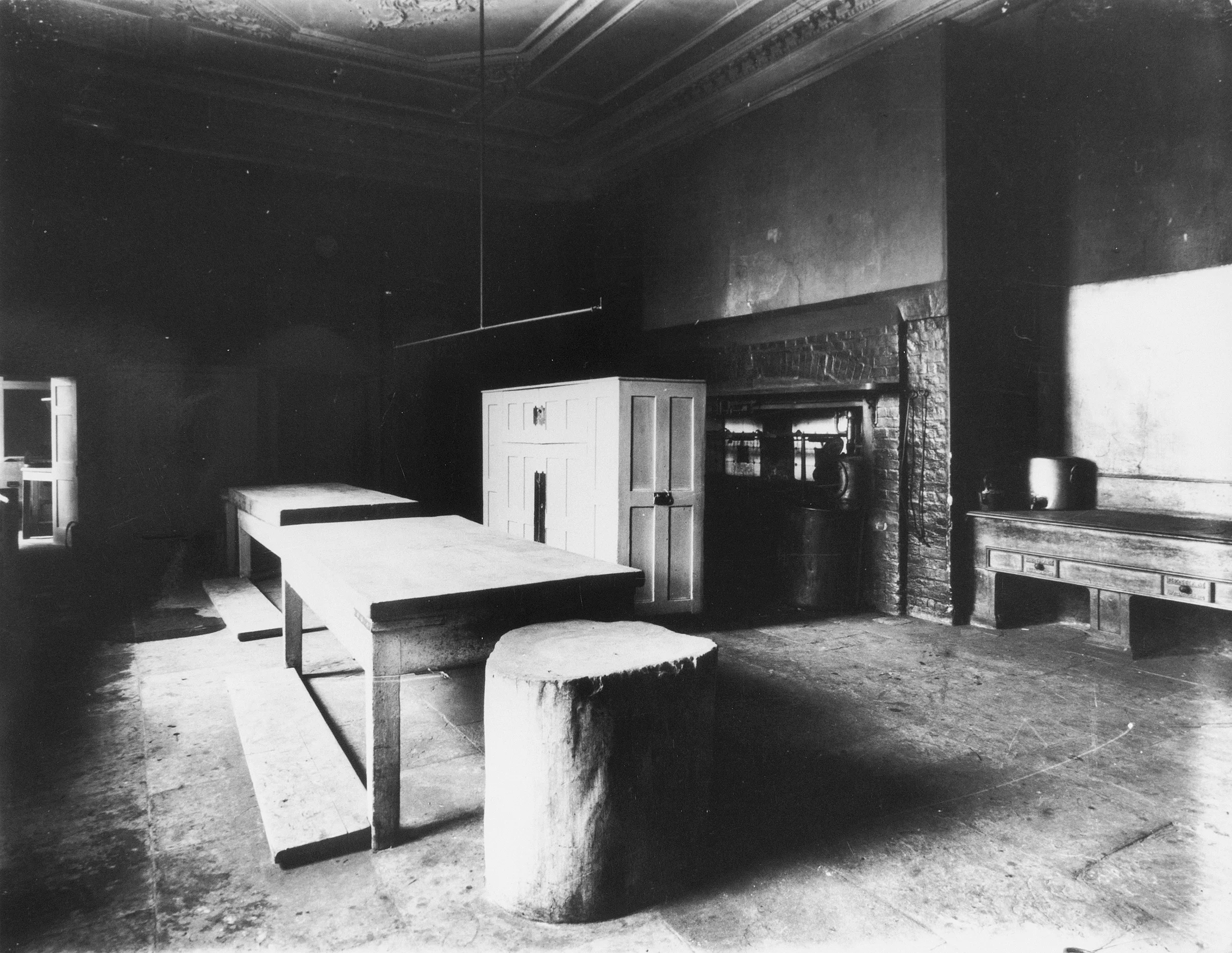
We know from the 1911 census that there were 20 resident servants at the Bishop’s two homes; Fulham Palace and 32 St James’s Square, ranging in age from the 67 year old caretaker Joseph Seneschal to William Black, the 15 year old Hall Boy.  At the time of the census the Bishop was “in town” at St James’s Square, so 10 of the servants including  2 footmen, 2 kitchenmaids and 3 housemaids were there as well.  As the Bishop was a bachelor, there were fewer servants required than if a family was in residence as there was no need of a ladies maid, nurse or governess.

Monday 30 November, 2pm

This talk has a special price of £5 for volunteers, you can get your tickets by clicking here. 


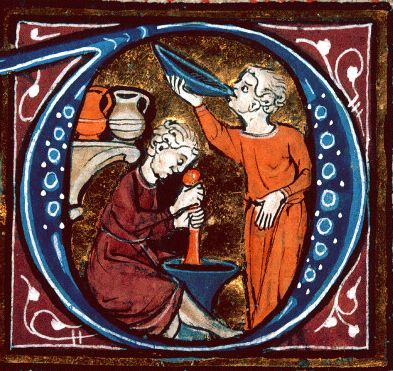
Medicine and the Bishop in Medieval England

I enjoyed last Thursday evening's talk by Dr Katherine Harvey, as did my guest, who has just started her Diploma Course in the History of Medicine with the Worshipful Society of Apothecaries in Blackfriars. We both found the beautifully-illustrated talk most informative.

Katherine has a PhD from King's College London, and since last year, has been a Wellcome Trust Research Fellow at Birkbeck College. Her project is Medicine and the Bishop in Medieval England, c.1100-c.1400, and when speaking to us at Fulham Palace (a home of the Bishop of London for at least 800 years) she aptly focused on the Bishop as patient. I was expecting to hear that there were tensions between medical and Christian religious understandings of health and well-being in late medieval England. But, instead we learnt that the Bishop embraced medical ideas based on the ancient Greek system of the four humours, originally devised by Hippocrates and Galen. A patient's four humours had to be kept in balance. Accordingly, Bishop readily employed the 'art' of the Barber Surgeons to be bled at the right season and time of, for example, the lunar cycle.

Medieval medicine was as much about prevention as cure, and it was thought that an individual's health was greatly influenced by six 'non-natural' factors, which included air, travel and emotions. Bishops were aware of the dangers of travel, which would be required of them as members of the educated elite who were often also Lord Chancellors or Ambassadors of State. The stress of being a Bishop would need to be reduced by a relaxing regimen...

Life in the Middle Ages - at least for senior cleric - was not as unhygienic as we might have imagined! However, we also learn that some Bishops feared being poisoned, and we saw a picture of an exquisite table ornament used by Bishop Robert de Sigillo to counter this danger. It was a so-called 'serpents' tongue tree', in fact made of polished sharks' teeth. This intrigued me and other Fulham Palace Guides, who well know that the ornamental did not prevent Bishop de Sigillo being arrested in 1141 at Fulham Palace, and held for ransom!

Thanks are due to Dr Harvey for a fascinating talk.


Jane Bowden-Dan

Volunteer Museum Steward and Historical Tour Guide


Next talk will be today Wednesday, 23 September at 7pm. The Great Encourager: Bishop Compton and his Garden at Fulham Palace. Click here to book.