Volunteer blog: Doing Masters placement at Fulham Palace- Eleanor

Volunteer blog: Doing Masters placement at Fulham Palace - Eleanor

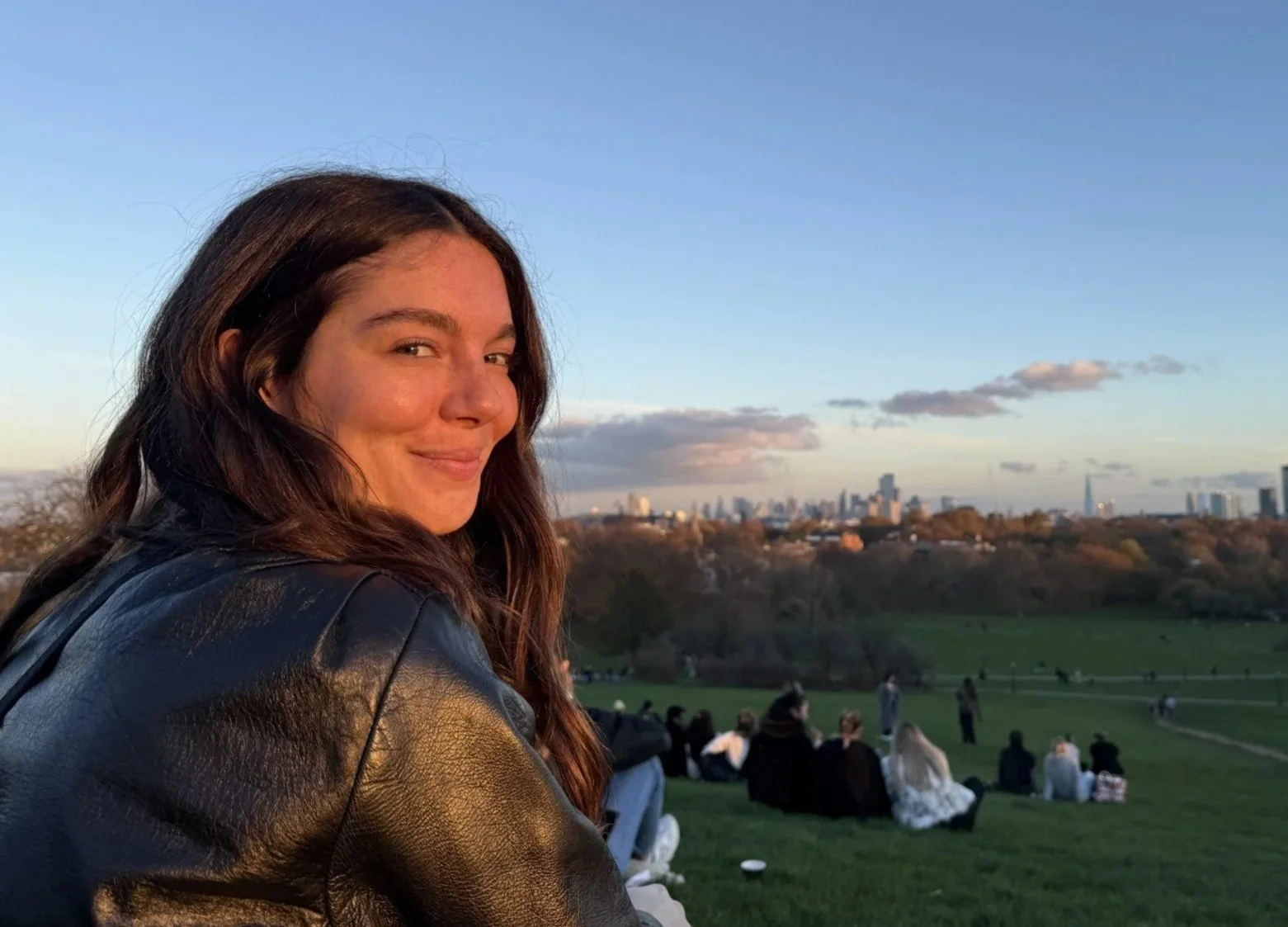
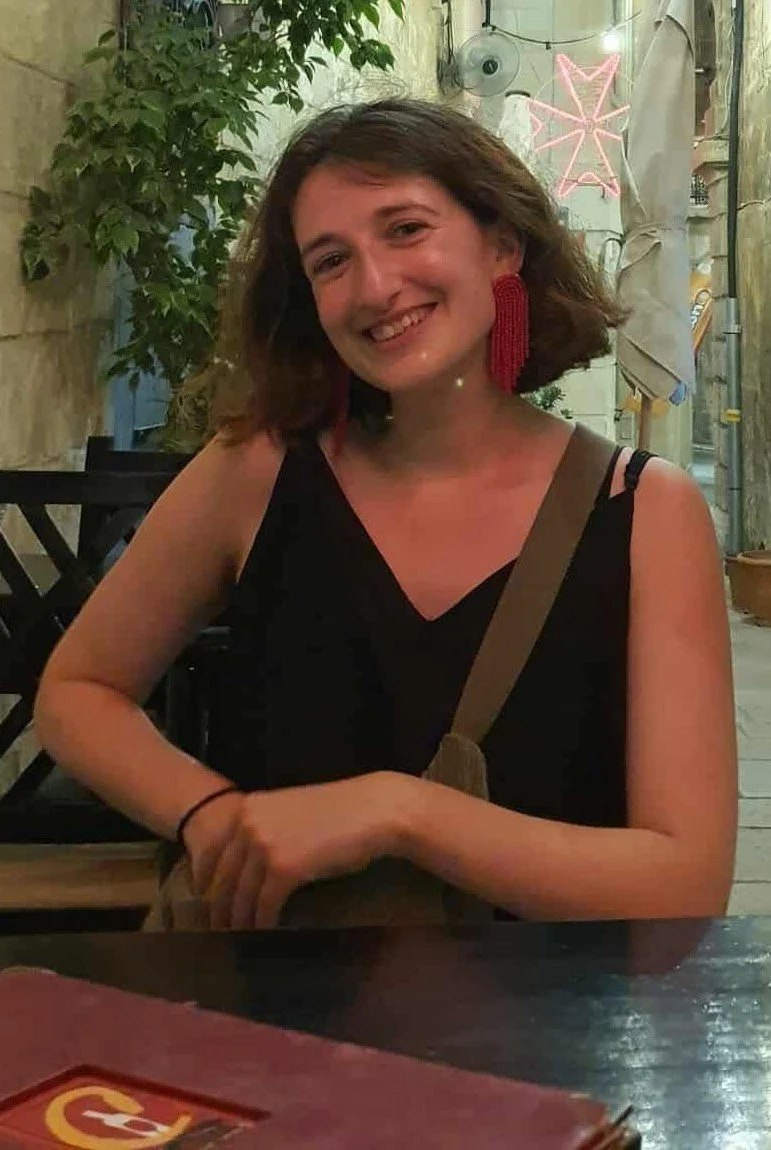
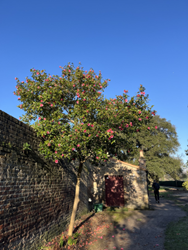
Photo of me opposite the walled wisteria, near the chapel. Purple is my favourite colour.

Hello, my name is Eleanor, and I am completing a heritage engagement placement here at Fulham Palace as part of my MA in Museum Studies at UCL. I started on 7 April and am nearly halfway through my seven weeks at the Palace.

I have worked in museums and places of historical significance for much of my working life. I have previously worked at the Fitzwilliam Museum in Cambridge (my home city), and Shakespeare’s New Place in Stratford Upon Avon. The most memorable moment from working at New Place was meeting renowned actor James Norton.

When I saw via the UCL Museum Studies placement module that there was an opportunity to do a work placement at Fulham Palace, I jumped at the chance to put forward an application. I was excited by the chance to work at such a renowned heritage institution as Fulham Palace. I felt a placement at the Palace could give me opportunities to upskill myself. Before, I did not have experience of working in volunteer development and/or education. I am very glad that Kate, upon examining my CV and application, felt I was a right fit to join the team.


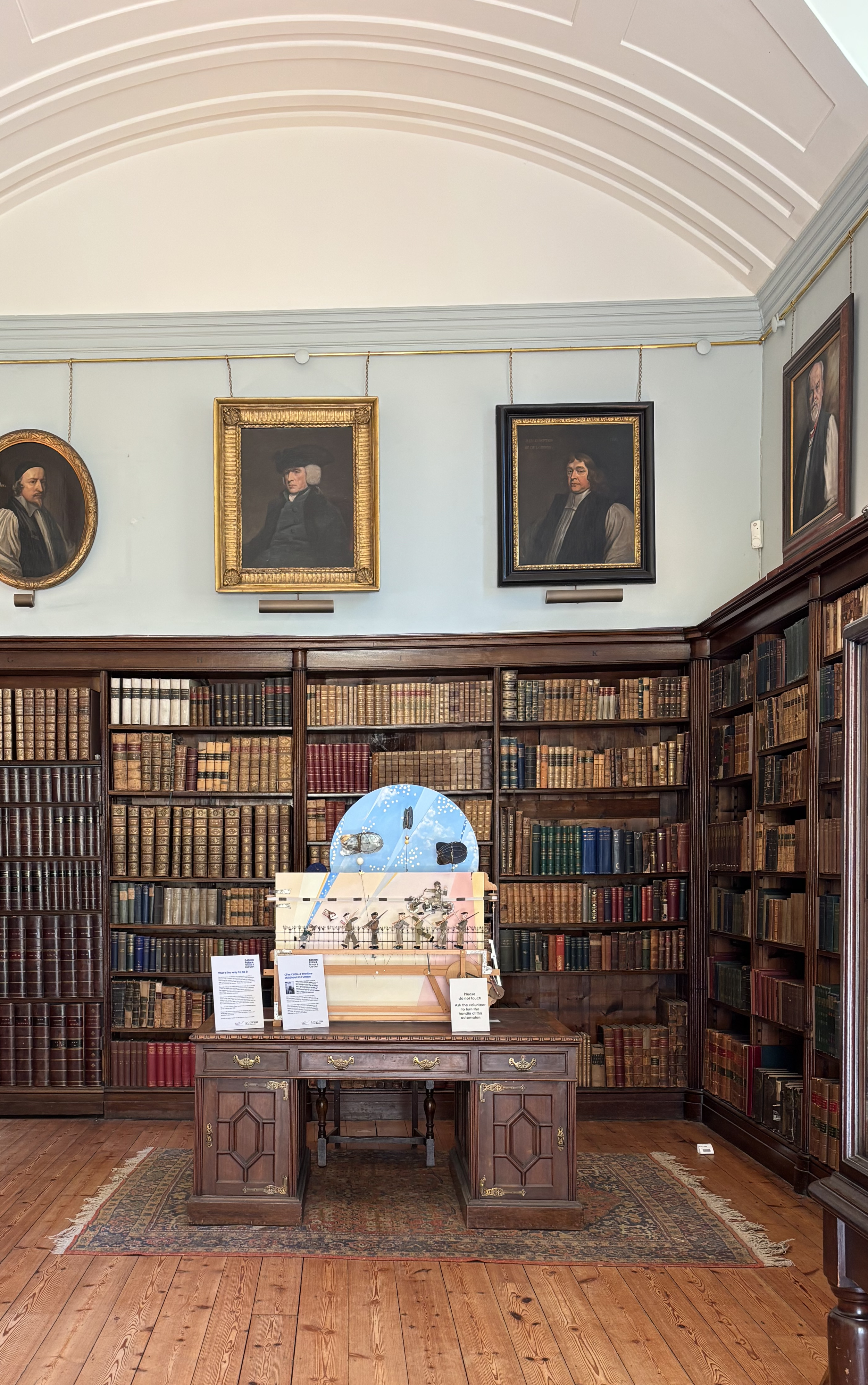
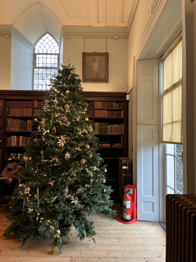
Photo taken inside the Porteus library.

Upskilling myself has been very important to me, and I am very happy to have been learning new skills with the support of the volunteer and education teams. I have been learning how to manage databases and mailing lists on the systems used by the Palace, as well as how to edit websites. Before then, my only encounter with the website provider used by the Palace was seeing adverts for the software on YouTube. Doing this admin work has felt very satisfying. I have also learnt how to do reports and to create tables and pie charts on Microsoft Excel for education. It has also been wonderful to be a small part of school visits and to see the joy and wonder on participants’ faces.

I have developed two favourite areas during my time at Fulham Palace so far. First, the library. I have loved seeing the different book titles on the shelves and seeing how important literature and learning was to Bishop Porteus. I have also found it very interesting to learn about his complex views on the abolition of the slave trade through the museum interpretation and in the context of the ‘Resistance’ exhibition. I am planning to write about addressing abolition and legacies in my upcoming Masters dissertation.

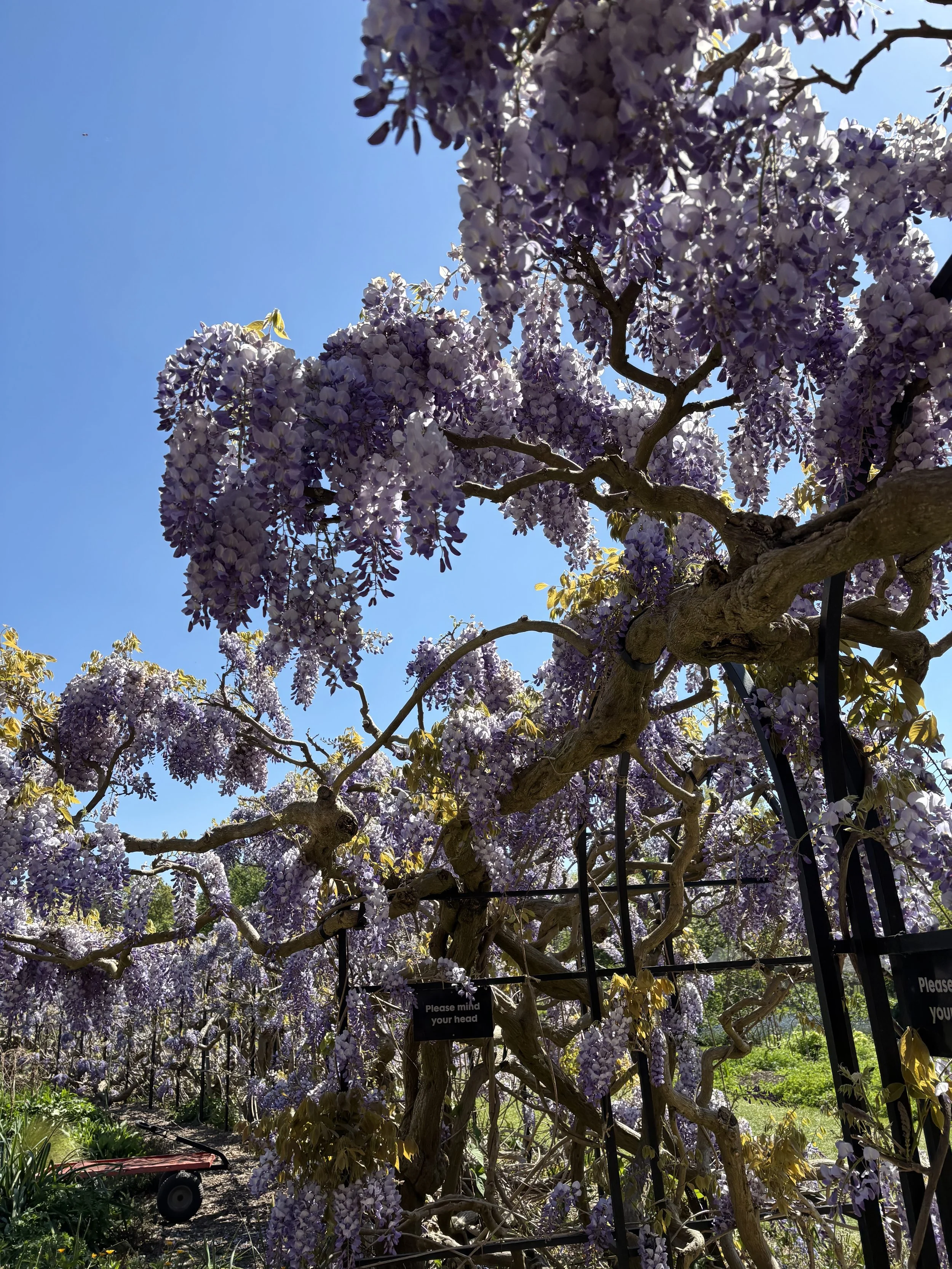
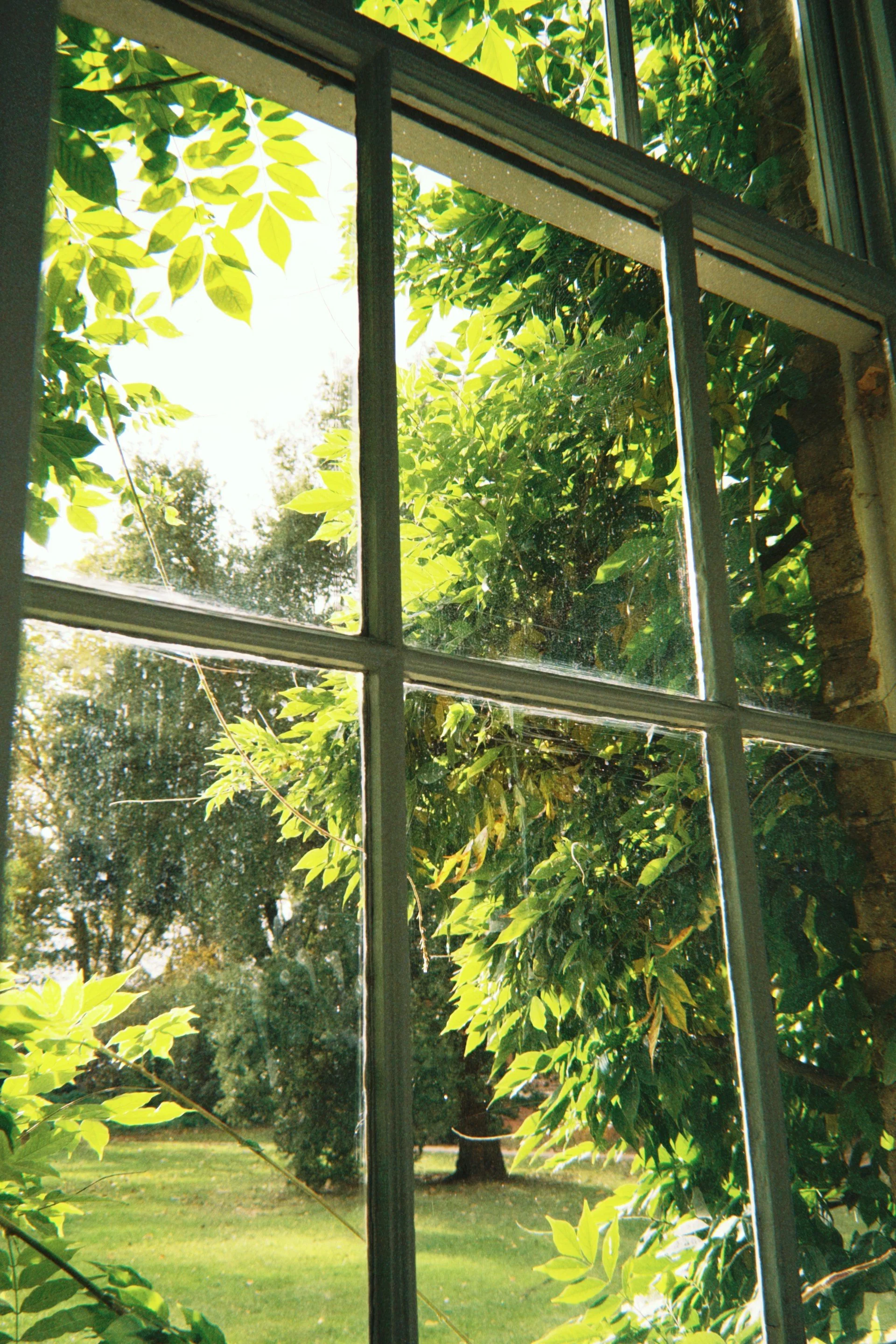
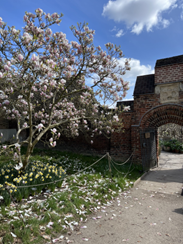
The lovely wisteria in the walled garden.


Second, the walled garden. I have had my lunch in the walled garden on many occasions and have loved being amongst the beautiful plants and flowers that are being grown, especially the wisteria. It is wonderful to see how important nature and horticulture is to the Palace and to see the gardeners put so much care into maintaining the space.


I look forward to seeing what else I get up to over the course of the coming weeks of my placement at the Palace.


Volunteer blog: A living, breathing Palace

Heritage and Engagement placement Makenna shares her thoughts on the Palace and its importance.

Mount Timpanogos in Utah


We're slowly but surely moving through the seasons! Most of the leaves have fallen and some flurries of snow have been rolling through. I have only been here since September, but I have seen this first-hand where I come from in Utah, where the mountains outside the window turn from green to bright orange, red and yellow, and then back to brown before receiving a dusting (and later a dumping) of snow as we move toward the end of the year. But, as Katherine noted so well in her blog, one of the greatest joys has been witnessing the passing of each season in a location as beautiful as Fulham Palace. I feel very lucky to have done my placement/internship in a place that I feel is equally as beautiful as my home, albeit a completely different landscape than what I am used to! All of the changing colours and new beginnings have made me ponder on the Palace, specifically because so many aspects and features of it are significantly older than the United States, I have found myself wondering about how the Palace was able to sustain and survive throughout all of the changes and eras it has witnessed.

A quick introduction: My name is, and like I said earlier, I am from Utah in the states. I'm a uni student at a university, also in Utah, where I am studying the humanities as well as tourism, so being here at the Palace has been a perfect fit! I'm not a total stranger to the UK: my grandmother was born and raised in Kent, my mom was born in Scotland, and my dad lived for a couple years in the UK, too, so I have felt very much at home here, but especially thanks to all of you, I have felt even more welcome!


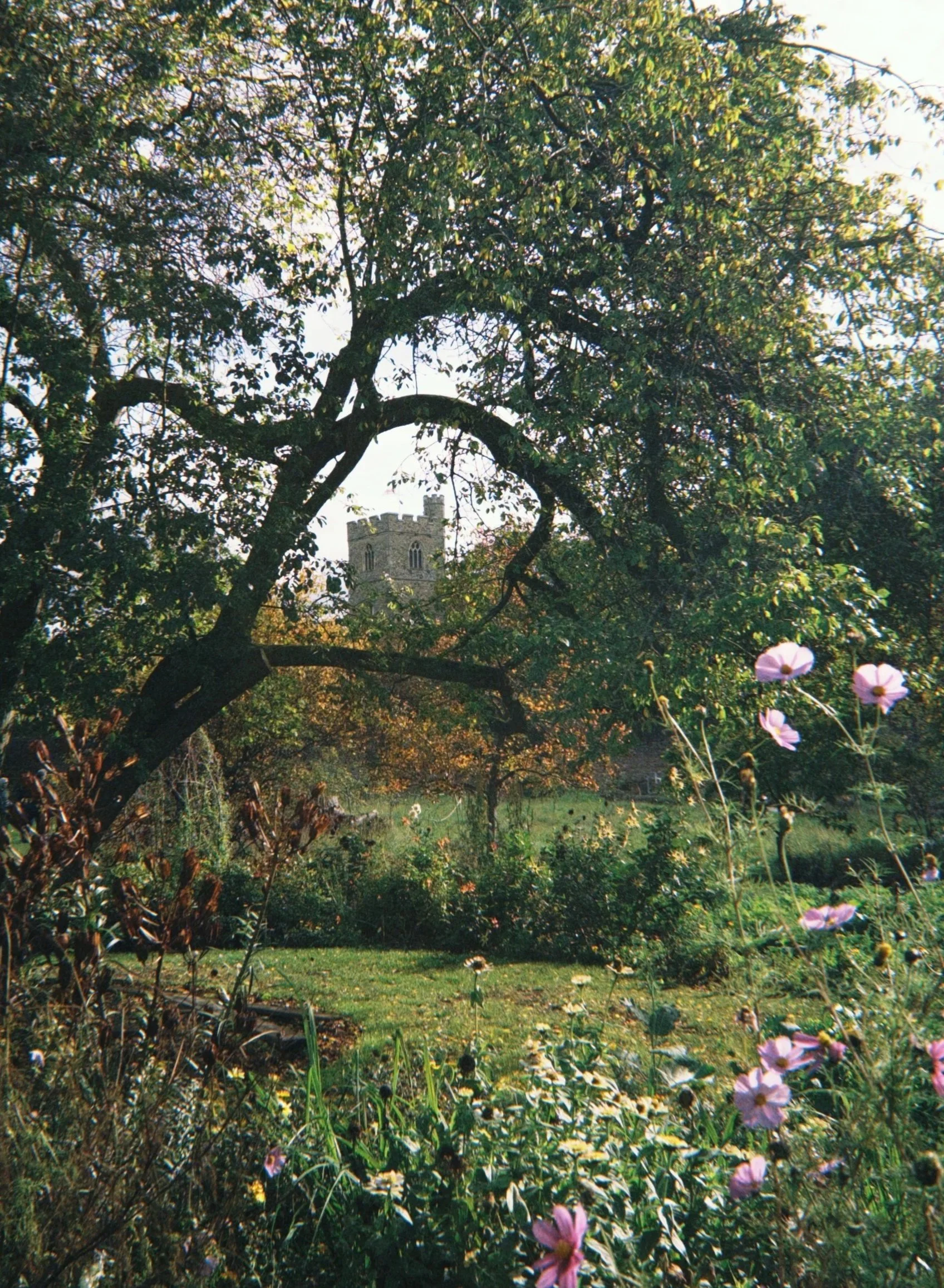
A view of All Saints from the Walled garden, one of my favorite spots at the Palace.

In my placement at the Palace, I get to rotate around to different areas. I love helping to support the volunteer program, seeing and aiding in the education sessions (they're amazing), and chatting with guests in the front of house as well. Luckily, through those rotations, I have discovered why the Palace has lasted so long and has had such a persistent influence on the surrounding area. It has adapted, it has been supported, and it will continue to do so. 

When I first got to the Palace, there was so much history to learn, so it was quite the adjustment (a 1300 year adjustment!). In fact, going through my rotations required a fair bit of adaptation on my part to be able to stay on my feet and be as helpful as possible. That was the key: adaptability. In my learning about the Palace & the estate, I noted that the Bishops moved things around and "edited" the Palace according to their wants and needs. This meant that the chapel moved several times, the library was also in different places, or even didn't exist altogether. Even the Palace itself is a conglomeration of different architectural styles. The Bishops themselves also had to adjust to things that were happening in the country, the diocese, and even the role itself as there was added responsibility.

All of this constant change reminded me of something called liminal spaces. These are places where things are constantly shifting and nothing stands still except for the building. Think airports, malls or art classrooms. These spaces consist of persistent change, with everyone going every which way. Airports are just vessels in which people get to different destinations, but there's little about them (other than the building) that is permanent. Fulham Palace sometimes has so many guests and school groups coming in that it almost feel like an airport, making it a liminal space at times. In fact, museums in general could probably classify as liminal spaces, but I would argue that Fulham Palace is unique because of the building’s capacity to morph alongside those changes. Of course, it is a protected building now, and the changes that will happen in the future are mostly related to repairs or maintenance, but even still, this adaptation has been a key factor as to the Palace has survived and stayed relevant for so long. It is a living and breathing entity that has withstood immense amounts of time, which has moulded and physically altered the Palace in a number of ways.


Happy Christmas!

While the Palace is unique in this way, I know you must be thinking, "I come for my shift and nothing really does seem to change. We've done the same thing for years." I would partially agree with you. I frequently follow the same routines when I help in my rotations. I see many of the same volunteers and I see some visitors that frequent the cafe often. There's also annual events like Apple day and the Christmas markets that are yearly staples. However, because the guests are never the same and because the world continues to change, along with the community in Fulham & Hammersmith, I would note that the Palace actually changes a lot. You are, in fact, a part of that change! Fulham Palace has withstood countless issues, events and eras, but it didn't do it by adaptation alone. It was substantially supported by so many people! Those that lived, visited, and ran the Palace had stewardship over its survival. That is still the case! In fact, I think that responsibility is even more important now, as Fulham Palace is still very much a part of the history that is continuing to be written about the Thames, about modern history, about education, about Greater London, about the Church, about England, and frankly, about the world as well. It has taught and will continue to teach and inspire so many people, as long as we continue our stewardship of it.

Ultimately, thank you for letting me be a part of it! I have so greatly loved my time here, as well as everyone I have met. Also, thank you for being a part of the Palace. It needs its stewards. Happy holidays, here’s to many more years of the Palace!!

Volunteer blog: A year round look at the Palace

Learning and education volunteer Katherine Wills shares her thoughts on the beauty and adventure of her year at the Palace.

Hello, my name is Katherine and I’ve been volunteering with the Palace’s learning and education team for about a year now - and wow, has it gone fast!

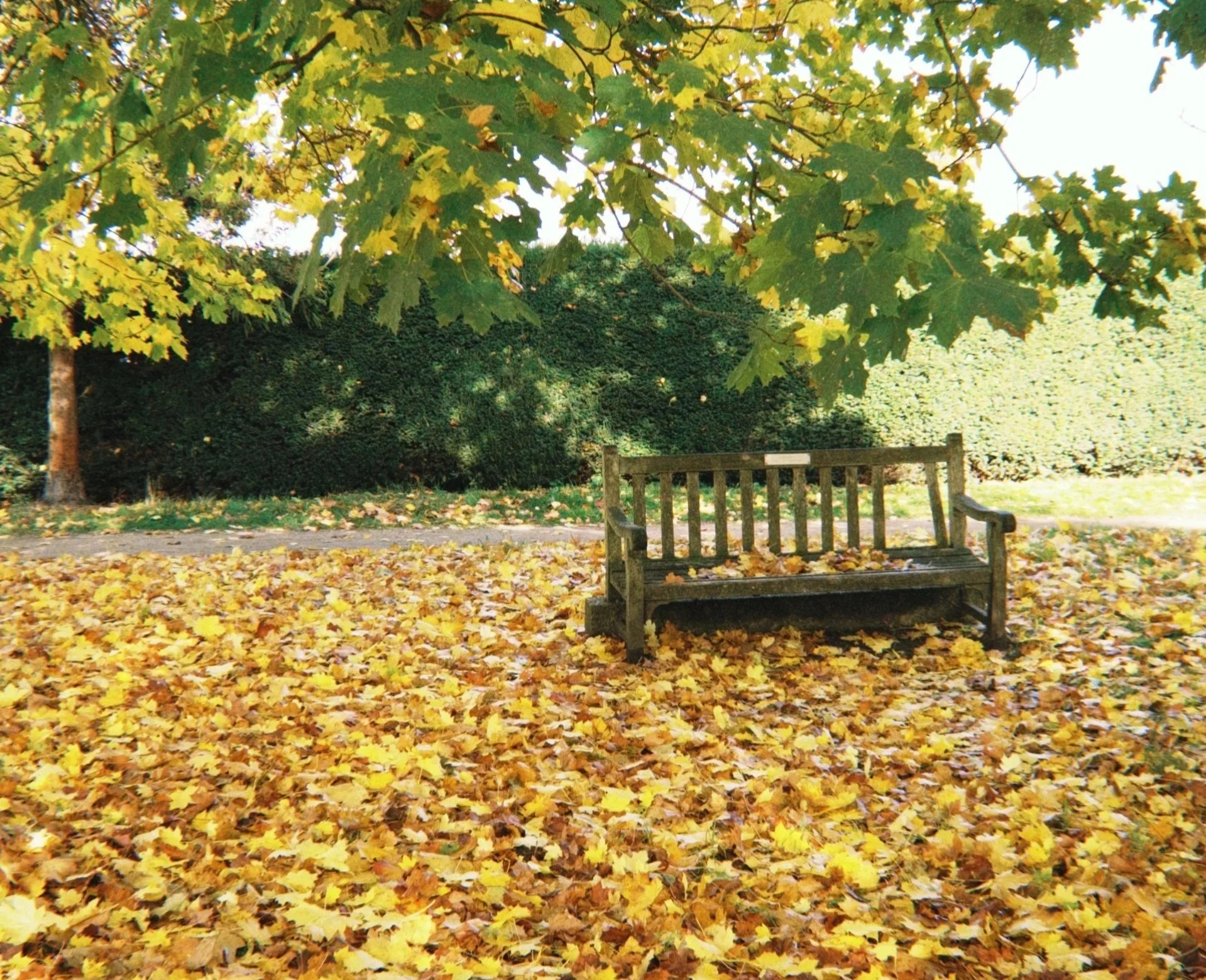
Reflecting on a year of volunteering, I have to say one of the greatest joys has been witnessing the passing of each season in such a beautiful location.

From admiring the Christmas decorations


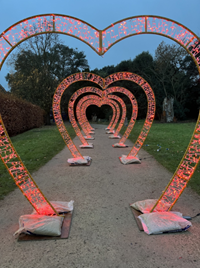
and illuminated light trail (accompanied by a very generous mountain of whipped cream from the cafe - thanks Vlady!), to celebrating the bloom of the first flowers as we entered Spring, I’m now getting to admire once more the rich oranges and yellows of the falling leaves as I enter my second autumn volunteering at the Palace.

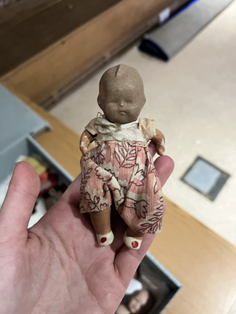
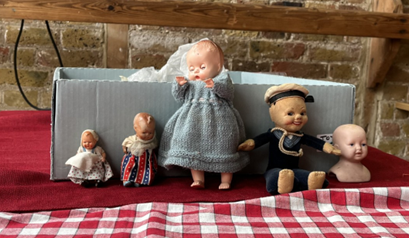
I volunteer with the school membership scheme, a programme that began last year and offers facilitated workshops across the Palace and garden, additional learning resources and professional development sessions to teachers. My favourite part about supporting this scheme is how varied each task is: I’ve done a number of activities from designing pre-visit welcome packs, photography, sorting historical costumes, hand-delivering materials to local schools, to supporting public events. I have time-travelled from the Romans to Victorians, helped replant vegetable beds in the garden and handled some mildly disturbing toys from the past. In the summer, I was also lucky to attend an incredible training session for teachers where we had the walled garden to ourselves, practising sensory learning activities (which may or may not have included a variant of hide-and-seek) and creating our own poetry zines.

As a PhD student, who often spends large amounts of time on my own either in libraries or archives, getting the opportunity to share my love for all things historical with children and young people - as well as the amazing adults who support them - has been a really special opportunity. When Alex, the learning producer, suggested I could create an education resource with material from the archives, I also naturally became very excited! I decided to focus on Pocahontas’s (Amonute, as she was called by the Mattaponi tribe) meeting with the Bishop of London in 1617, as it was recorded by Samuel Purchas (a complicated seventeenth century travel writer and editor that I look at in my own research). Intersecting with the Palace’s timeline of resistance work, and comparing seventeenth century English accounts of the visit to Mattaponi oral histories, I wanted to encourage secondary school students to reflect on what kinds of sources we can use to learn about the past, and ask whose stories we get to tell.

As I go into my second year volunteering at the Palace, I am excited to see where the role will take me next, and keep sharing and exploring the rich, layered history of Fulham Palace (with hopefully some more whipped cream along the way).


Volunteer Summer Garden Party 2025 Quiz

General Fulham Palace knowledge

In case you missed the party, here’s the quiz that tested our knowledge of the Palace. Have a go and see what you know! You can find the answers below.

1.    What did Bishop Compton use as an alternative to pepper?

2.    Which Bishop’s son stated of his father’s horticultural tendencies ‘his only fault was that he did not use the axe with sufficient freedom’?

3.    Which Bishop built the walled garden?

4.    Which magazine did our rising garden superstar Ellis Lewis recently appear in?

5.    Name 4 types of tomato grown in the vinery (there are 14 in total)

6.     

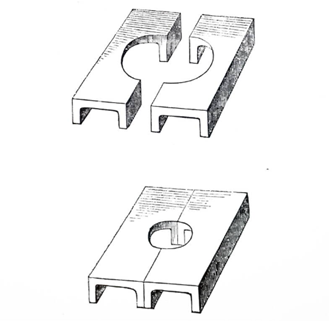
These tiles stamped:

‘REGISTERED 23RD OCT 1848

BY JOHN ROBERTS

34 EASTCHEAP LONDON’

were recovered during archaeological excavations in the vinery in 2024. What were they used to grow?

Answers

1.    What did Bishop Compton use as an alternative to pepper? - Richard Bradley (1688-1732), the University of Cambridge’s first professor of botany, in his work New Improvements of Planting and Gardening (1719-20) commented when describing ‘Guinea Pepper’ (Capsicum frutescens) that ‘the common people in Italy pulverise the yellow seeds contain’d within the pods of this plant, and use it instead of pepper; and Dr Compton late Bishop of London, frequently eat of it in the same way’. Capsicum frutescens is the Tabasco pepper, so he obviously liked a bit of spice!

2.    Which Bishop’s son stated of his father’s horticultural tendencies ‘his only fault was that he did not use the axe with sufficient freedom’? Alfred Blomfield – son of Bishop Blomfield.

3.    Which Bishop built the walled garden? – Bishop Terick in 1766

4.    Which magazine did our rising garden superstar Ellis Lewis recently appear in? – ‘Kitchen Garden’

5.    Name 4 types of tomato grown in the vinery. – There are 14 in total: Tomatoes: 'Alicante', 'Artisan Bumble Bee Mix', 'Gardeners Delight', 'Golden Sunrise', ‘Rosella’, 'Rubylicious', 'Sungold', 'Sweet Aperitif', 'Sweet Million', 'Red Zebra', 'Burlesque' (beefsteak), 'Crimson Plum', 'indigo Rose', 'Shirley'

6.   

These tiles stamped:

‘REGISTERED 23RD OCT 1848

BY JOHN ROBERTS

34 EASTCHEAP LONDON’

were recovered during archaeological excavations in the vinery. What were used to grow? - Strawberries

Volunteer blog: What history does the walled garden have to tell us?

Discover one of the largest botanical gardens in London. A blog written by front-of-house volunteer Ivelina Nikolova.


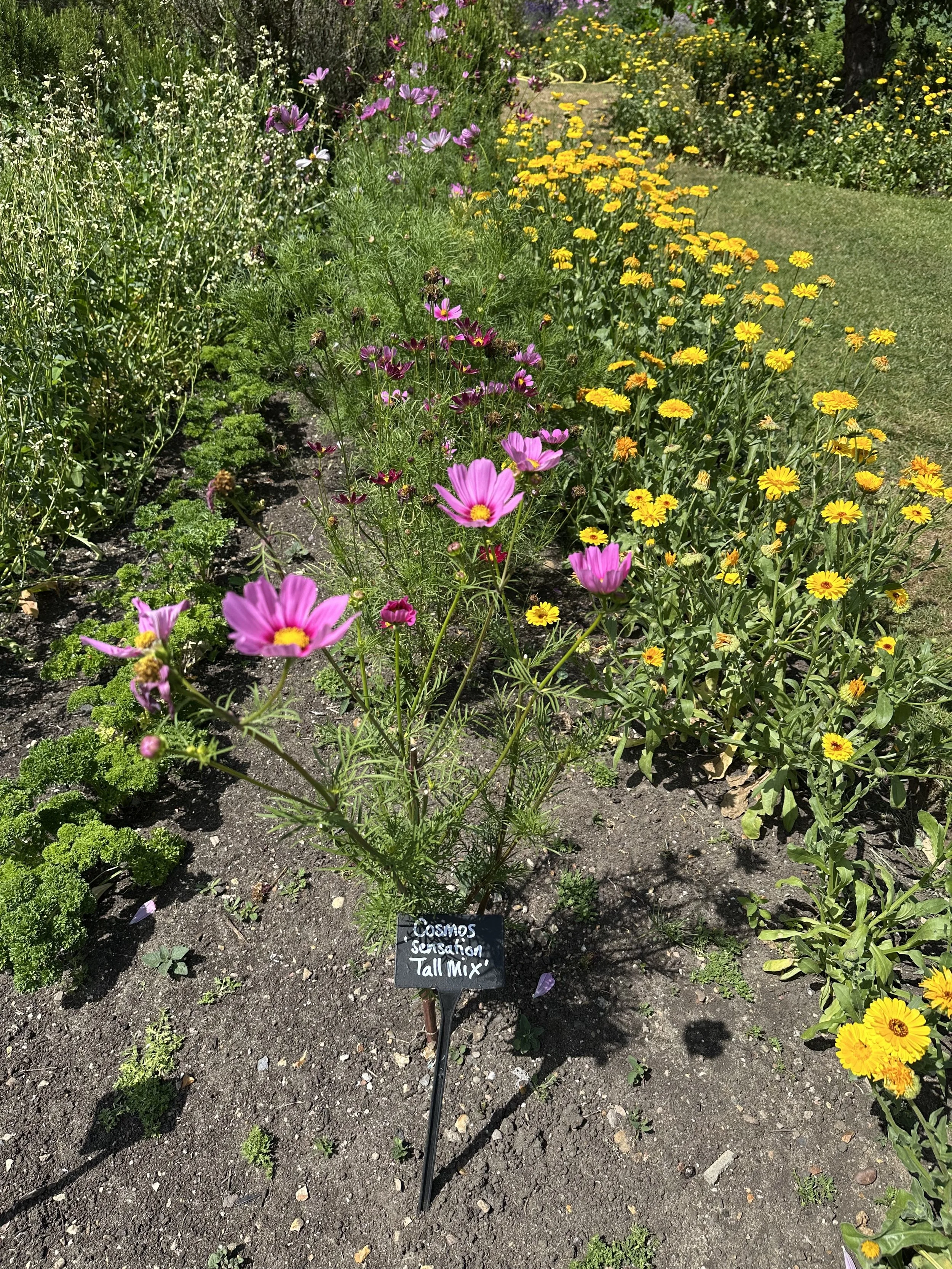
Cosmos, Walled garden of Fulham Palace, by Ivelina Nikolova, 1 July 2025

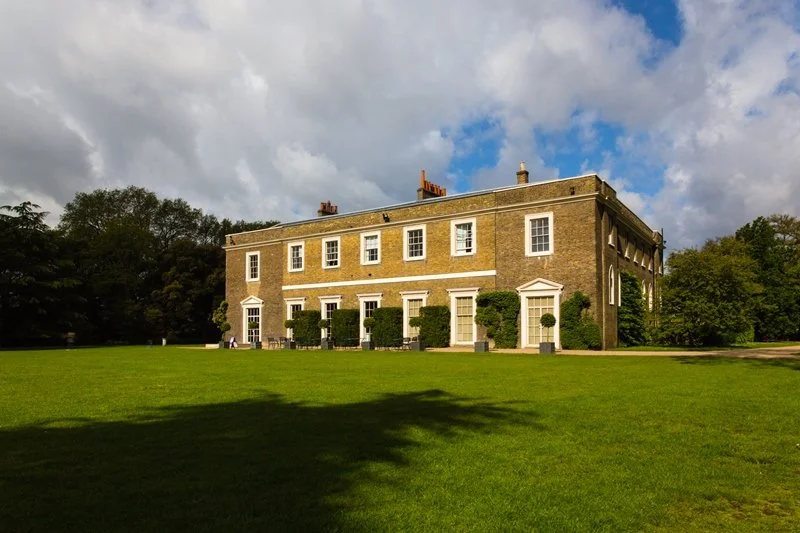
I am excited to share how grateful I feel being at Fulham Palace- a historic and beautiful site, a home in the past of the Bishops of London. My contribution to this fascinating place is by volunteering at the front-of-house and their little eclectic shop. What I find impressive is the enormous botanic garden, including the walled garden located on the main lawn. Visitors are welcome to discover all the plants and flowers grown there.


The history of the Palace hides interesting facts about the walled garden that wait to be discovered. It is important to note that some of the Bishops of London were garden enthusiasts who were once a year sending Grapes to Queen Elizabeth I. Bishop Grindal brought a plant called tamarisk on his way back from Switzerland in 1559. In September 1969 the grapes were sent with a delay, and Bishop Grindal was blamed for spreading a plague within the court, leading to the death of one of his servants. Bishop Compton was a passionate botany student who planted many exotic flowers and vegetables. Compton, a committed botanist, was well-connected within the botanical community. He corresponded with prominent figures like Robert Morison (Oxford's Professor of Botany) and Leonard Plukenet, whom he recommended for the role of Regius Professor of Botany to the King and who managed the Hampton Court gardens. Compton also knew collector James Petiver. Additionally, Compton and his head gardener, George London, were active members of the Temple Bar Coffee House Botany Club.


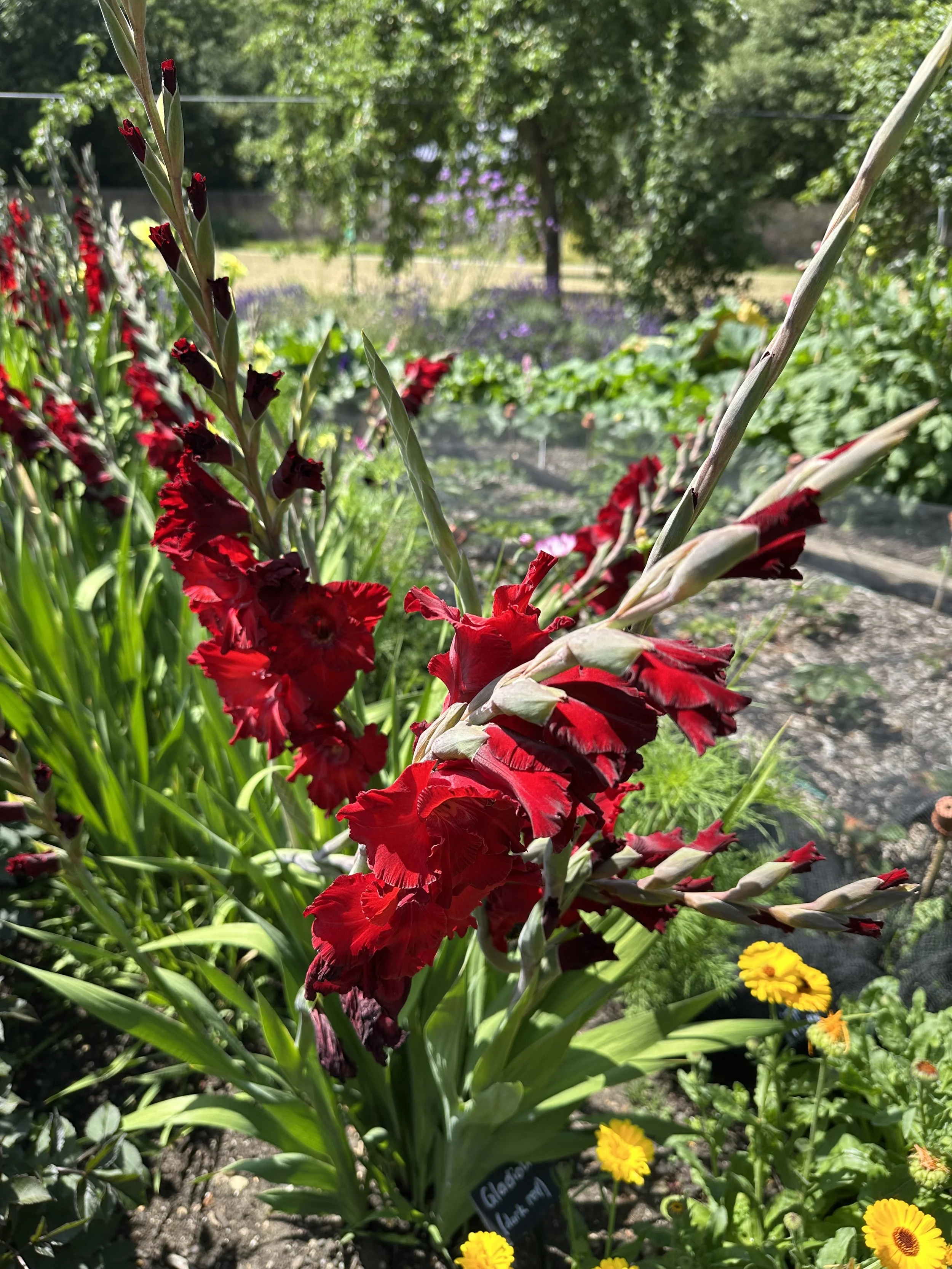
Gladioli, Walled garden of Fulham Palace, by Ivelina Nikolova, 1 July 2025

The land was also used for growing varieties of vegetables consumed by the residents of the Fulham Palace- the Bishops and their wives. Another purpose of the fascinating walled garden was for relaxation and a space for both recreation and hospitality as well as for hosting garden parties organised by Bishop Tait’s wife Catherine in 1860s. Thanks to Bishop Compton the Palace’s garden gained a worldwide recognition. He was passionate about rare plants. As Bishop of London and a head of church in American colonies, he sent Reverend Banister, an experienced botanist, to Virginia to provide his exceptional botanic service. In return, Reverend Banister sent seeds of sweetgum magnolia and box elder to be grown at Fulham Palace. Compton had a high recognition among his fellow botanists and at the time of his residence he collected a great deal of lasting exotic trees and shrubs that ever have been grown in England.


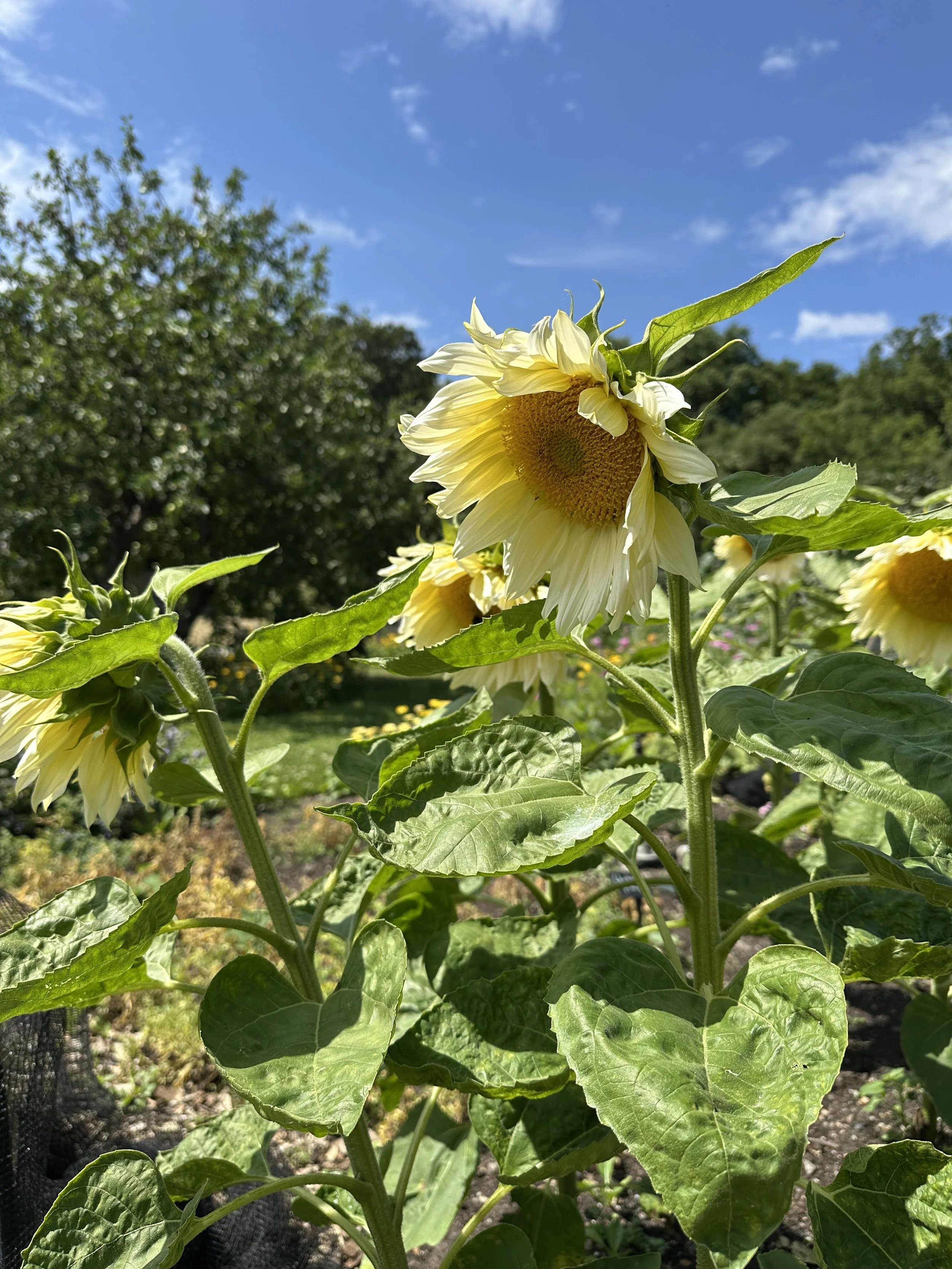
Sunflowers, Walled garden of Fulham Palace, by Ivelina Nikolova, 1 July 2025

As you enter the walled garden, to your left you can find the vinery, originally built in the 1820s. It was rebuilt by Alitex between 2010-2012, based on archaeological findings and updated with aluminium for maintenance. Historically, it was highly productive, with head gardener Samuel Hay cultivating two annual grape crops (including Black Hamburgh) and pineapples in 1851, alongside other produce like mushrooms, melons, and strawberries, some of which supplied the Bishop's London townhouse.


Fulham Palace gardens were historically productive, growing fruits (including award-winning varieties like the Fulham Pippin apple), vegetables, and flowers. The knot garden, possibly from the 1830s, has seen various plantings, from irises and roses to herbs, and was replanted in 2011 based on old maps, also featuring an ancient wisteria. Recent archaeological work has guided the restoration of pathways and vegetable beds, and today the garden once again cultivates fruits and vegetables, including a heritage apple orchard and espaliered trees. Nearby, the bothies, visible upon exiting the garden, served multiple purposes like tool sheds and living quarters, with a junior gardener noted as residing there in 1907.

Beyond the garden's boundary hedge lie the allotments, historically known as The Warren and later the Fulham Palace meadow, an area once used for haymaking and, in 1902, a campsite for the Indian Army before Edward VII's coronation.

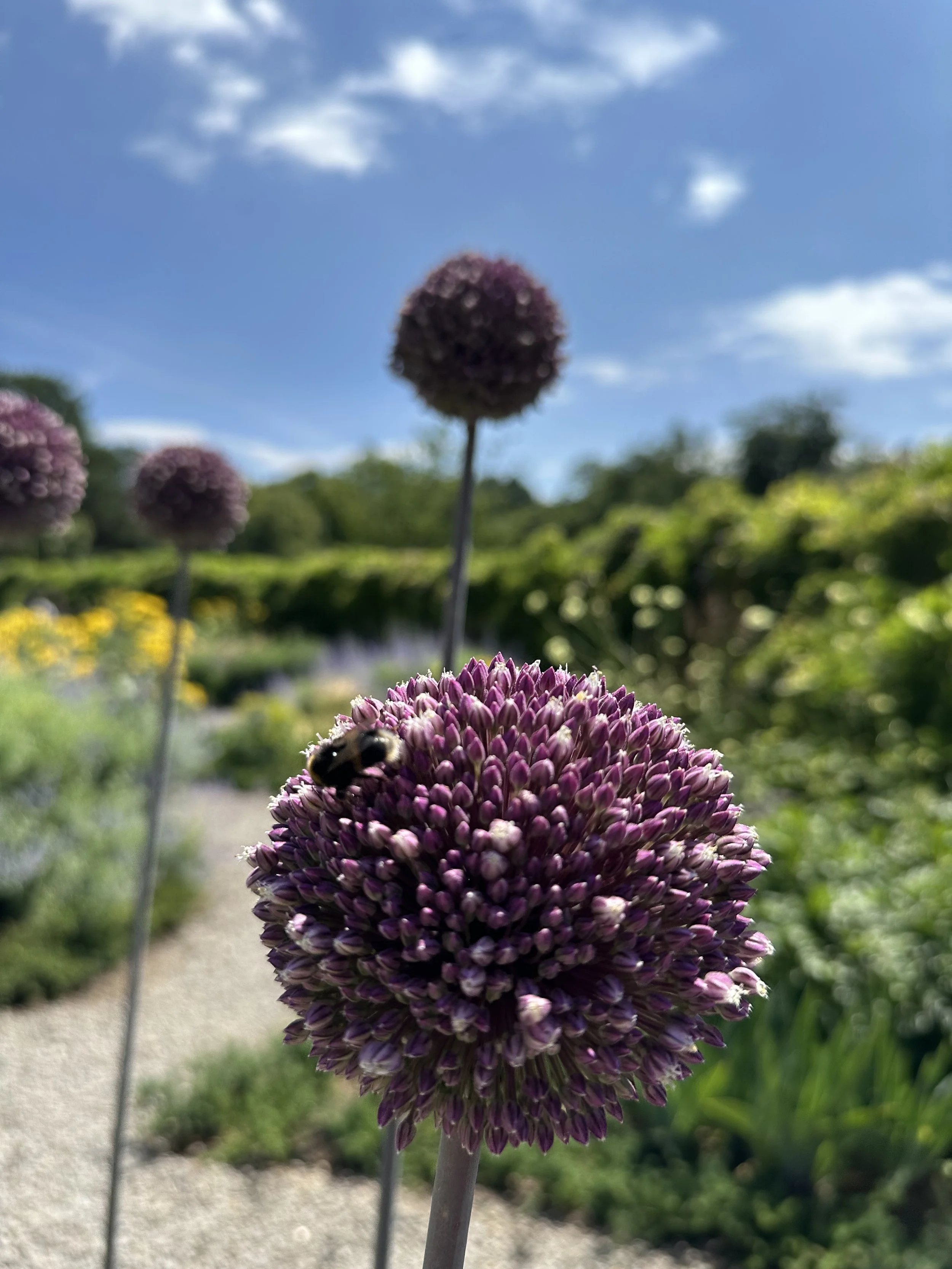
Alliums, Walled garden of Fulham Palace, by Ivelina Nikolova, 1 July 2025

To the right, a path leads to All Saints Church, the burial place of 11 Bishops of London, and on to Putney Bridge. Following the path around the walled garden, you'll discover the Bishop Compton beds, planted in 2019. These beds showcase plants first cultivated here by Bishop Compton between 1675 and 1713, notably swamp bay (Magnolia virginiana), which marked its first cultivation in Europe at this site.

As you walk through the magnificent botanic garden, you will be amazed by the great array of plants, fruit trees and pretty-as-a-picture seasonal flowers including for example: alliums, dahlias, gladioli, sunflowers, cosmos, a long-established wisteria and many more. Bishop Compton had a huge contribution to the development and maintenance of the land. Whilst you contemplate its beauty, you will familiarise yourself with a variety of names of flower species and vegetables. As time passed by, their collection expanded, and new plant arrivals can be seen. If you wish to purchase them and transform your home into a living colourful garden, our friendly staff at the barrow would be happy to assist you. Remember, each alley or path was a witness to a great history and to the dedicated work of the Bishops of Fulham Palace, London.

Volunteer blog: Grass in the moat

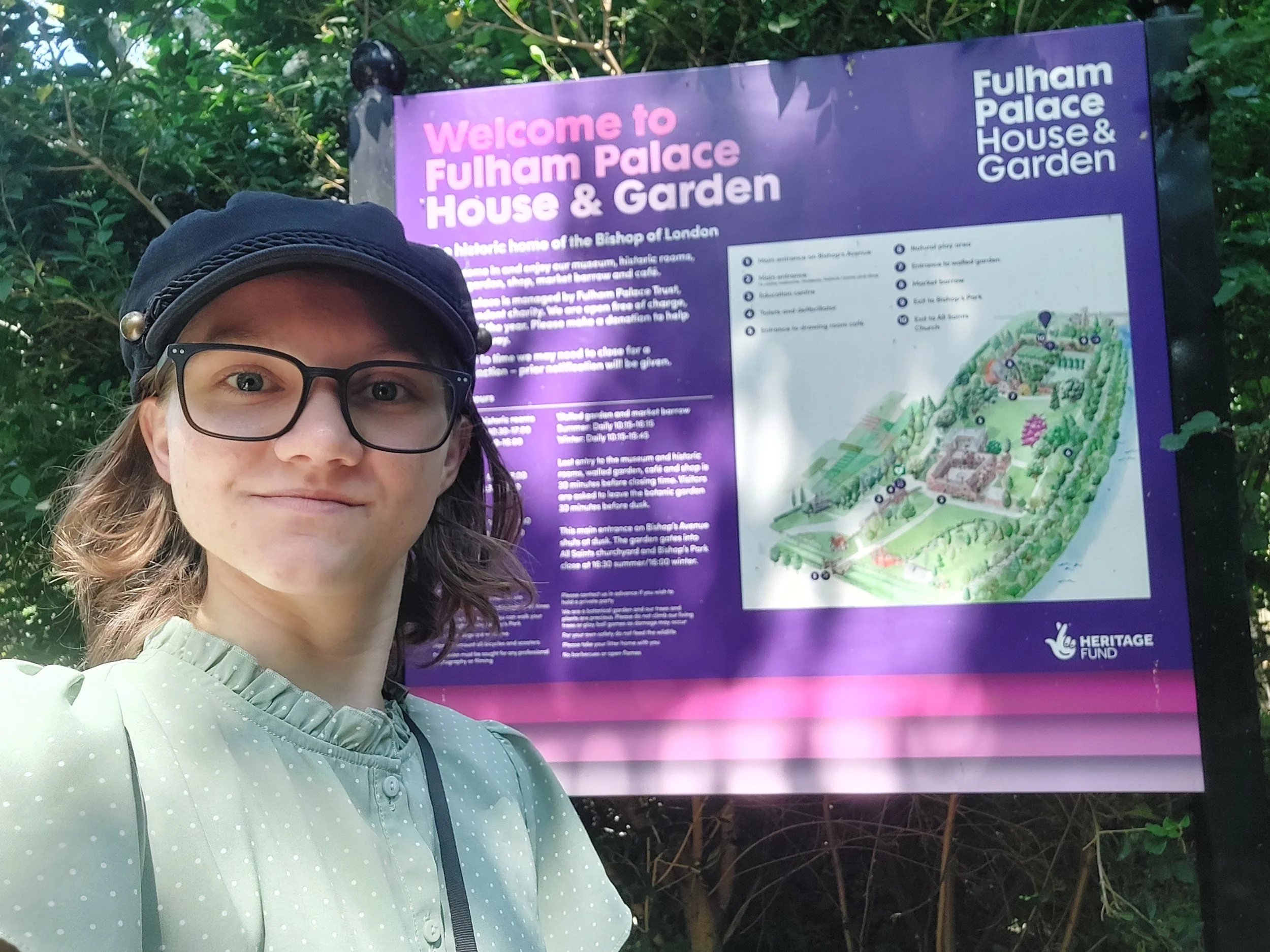
Beth next to Fulham Palace sign.

Visitor engagement placement volunteer Beth Nielsen shares her thoughts on the evolution of the Palace’s moat over time.

Hello! I’m Beth, an intern from the United States. That’s a pretty big place, so to narrow it down, I’m from a very small desert town in northern California, but I’m studying at a university in Utah. I started working here at Fulham Palace a month ago now as another volunteer with the front of house department.

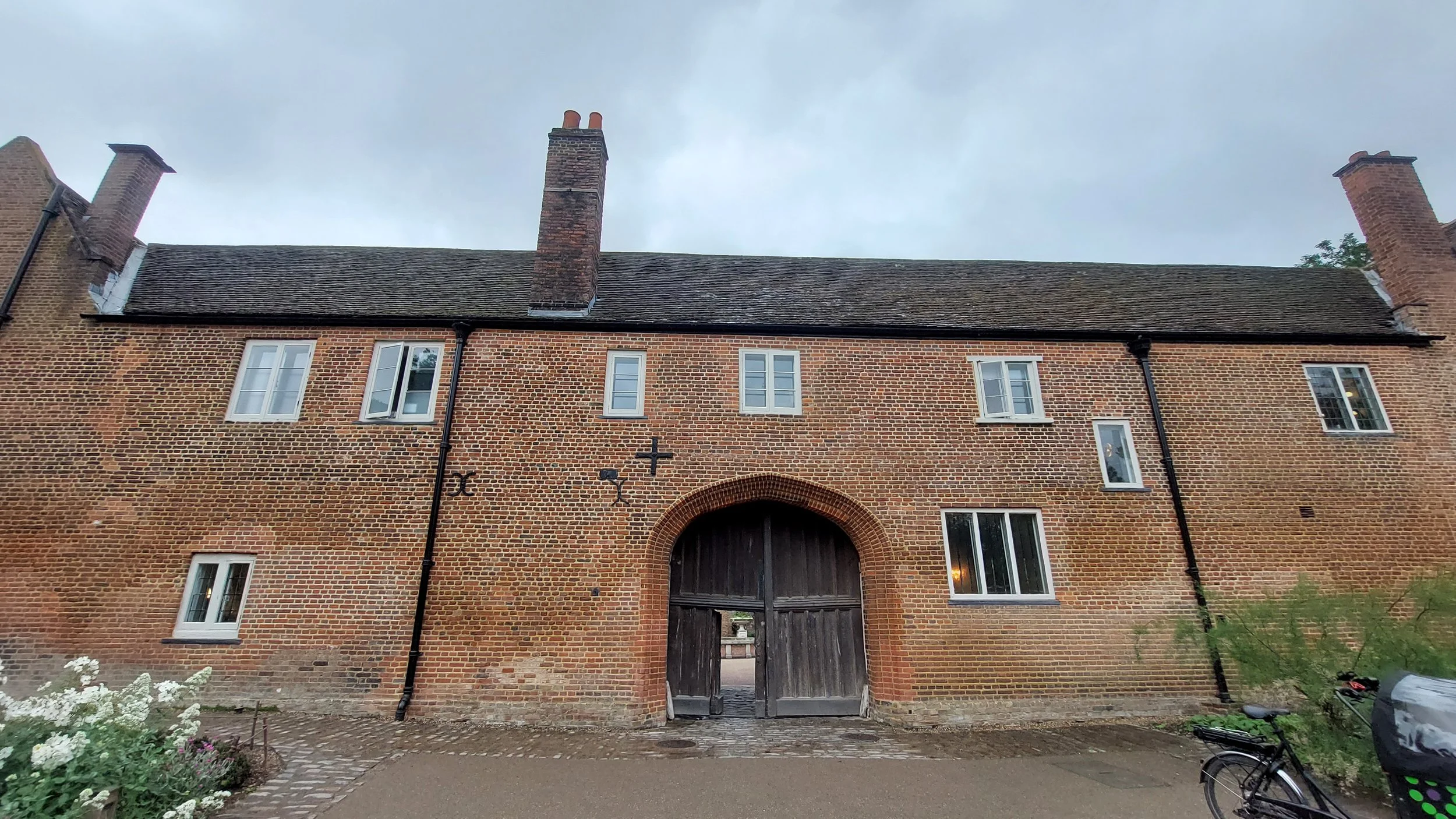
So far, my favourite place in the house is the library, followed closely by the lesser-known east courtyard. The latter is rather small, and no one goes there, but I like the smallness of it, and I like the open air surrounded by old building. The ‘old buildings’ in my hometown are nothing like the handsome brick I keep encountering in my time in London; this place is a beautiful treasure wherever I look. Yet even more exciting to me than secret library doors and encompassed courtyards is the Palace’s moat.

I suppose I am somewhat of a child for my fondness of moats. To be fair, they are an excellent defence system, but mostly, I think they’re cool. Coming to Fulham Palace - coming to the UK, really - was exciting for me so many times, and in so many ways, but one memory that stands out was learning about the moat.

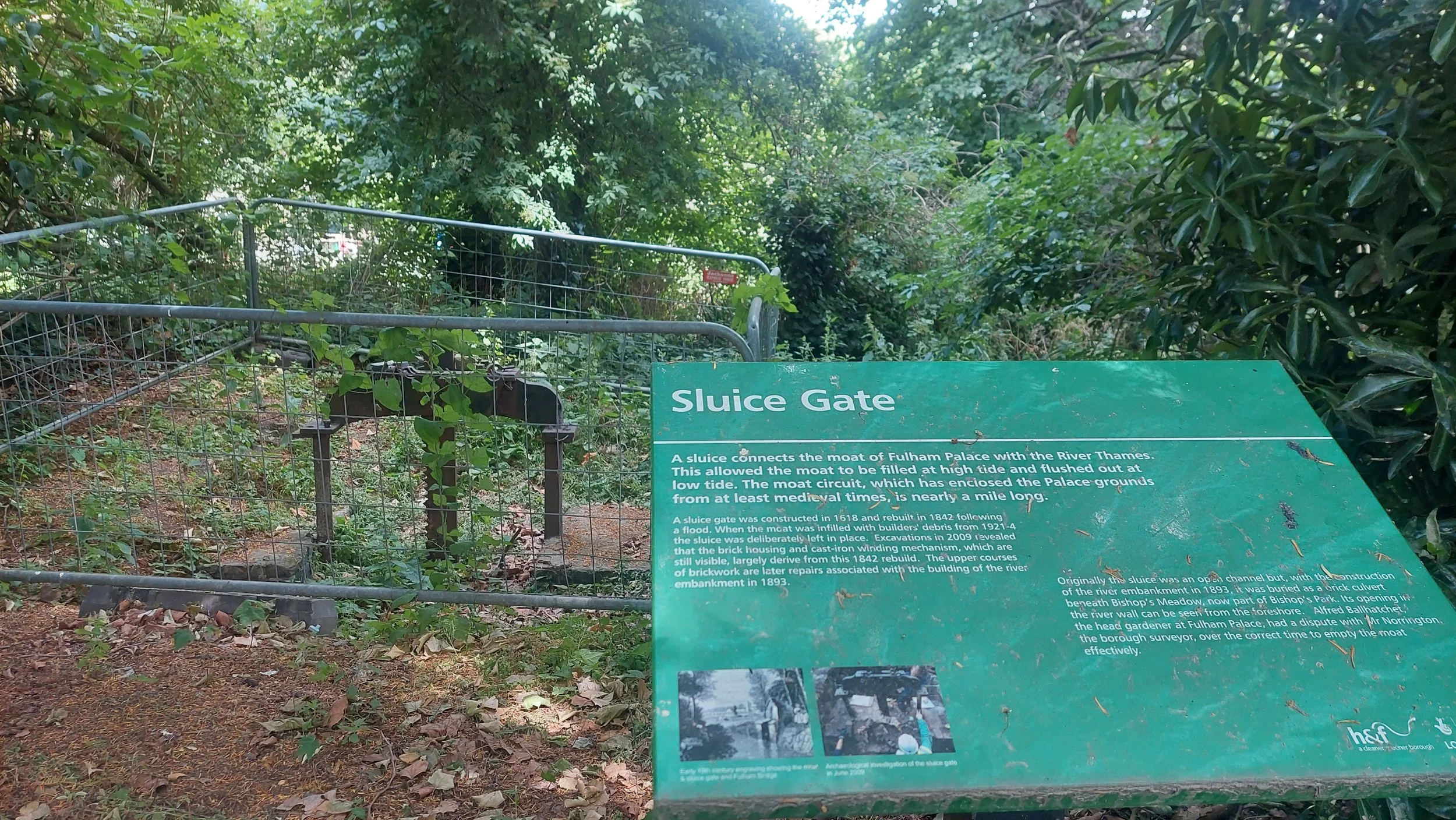
We know the trivia. It was England’s longest domestic moat, over a mile long and encompassing 36 acres. It has sluices so as to be filled at high tide or drained at low tide. Not living terribly near a great body of water myself, the concept of the Thames as a tidal river is just as intriguing as a moat, and learning about the sluices left me grinning at the genius of it all. Entirely man-made and in need of filling, the moat simply had doors (of sorts) to open and either let in or let out water - sluices that depended on the tide of the river. Where I’m from, we don’t have tidal rivers, and I had perhaps twice in my life seen a river big enough to even try to be a moat.

The old sluice gate of the Fulham Palace moat, with accompnying signage.

So, of course, after my first shift, when I needed to leave the front way rather than the back way, I was giddy to cross over an actual moat. I peered over the edge to see it, down there. It’s filled with grasses and greenery, now, instead of the contained power of the Thames. Only a bit of a ditch. Still, it was once a moat.

As a work placement student from the United States, I wanted to make the most of my time in London, and was recently able to visit the Tower of London. There, too, is a moat, somewhere around 50 metres wide and surrounding about 12 acres. Like our moat at Fulham Palace, the Tower’s moat was also filled by the River Thames - of course it was, as incredible as that river is. Most of all, just like the moat of Fulham Palace, the Tower of London’s moat is devoid of deep water now, filled instead with green.

How mighty a thing, a moat! You dig a ditch so deep you can’t climb out of it, then fill it with water. Intruders are forced to use the designated points of entry you have established, or to attempt the swim - only to find themselves facing an insurmountable wall, if they have the luck to not be shot by archers (or, in cartoons, eaten by alligators). Now, the moat at Fulham isn’t quite all that, and we technically don’t know what its original purpose was. It could date as far back as the late Anglo-Saxons; we suspect the land Fulham Palace now stands on was once an encampment or part of a trading route. Could the moat have been to deter others, or to aid in the movement of goods? Regardless, the moat is an obstacle for any unwelcome guests.

There is a feeling of power of some kind, standing in what once was a moat and now is a field of flowers. It is a power that chose peace. It is the power of choice; choosing to be a field of flowers for people to walk through instead of an angry wall of water to stop them.

After an excavation in 2011, we have been able to showcase a part of the moat again, after it had been filled in by generations past. The moat is deep. It was dug deep purposefully, a long time ago, meant to stop others. And now…? It lets others in. In Fulham, we have the Moat Trail, a beautiful part of nature that I’ve enjoyed following after my shift at the Palace. I was once a moat, the trail says, but now I provide for you. Now I show you the wonders that I previously experienced alone. Let me show you the Thames, it says. Let me show you the trees. Let me show you the other people who have come to experience joy with me.

Wide shot of the moat with white flowers.

Main entrance to Fulham Palace, just past the moat.

And at the front of the Palace, where the moat runs deep? The moat says, let me show you what I once was, and let me show you the way in. We are no longer enemies. Come and see the treasures on the other side. Come see the Palace and the Garden I protected. I want to share them with you, now.

We found treasure in the moat. Archaeological digs uncovered ancient wonders now on display in the museum of Fulham Palace. But if you cross the moat, and peer over and look in, you can still find treasure there. For the flowers are in bloom and the grass is green, and the moat now welcomes visitors, exclaiming, All is well!

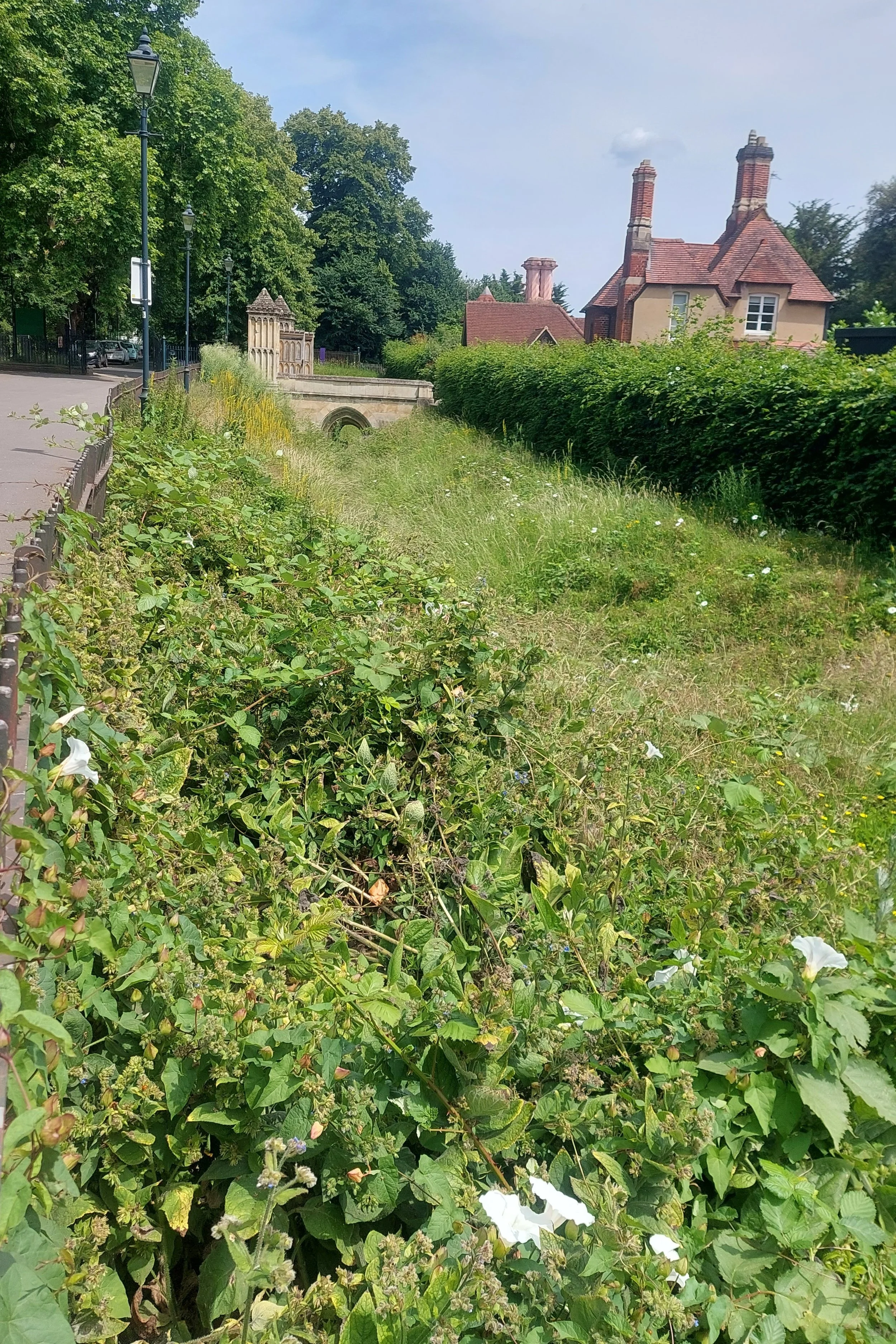
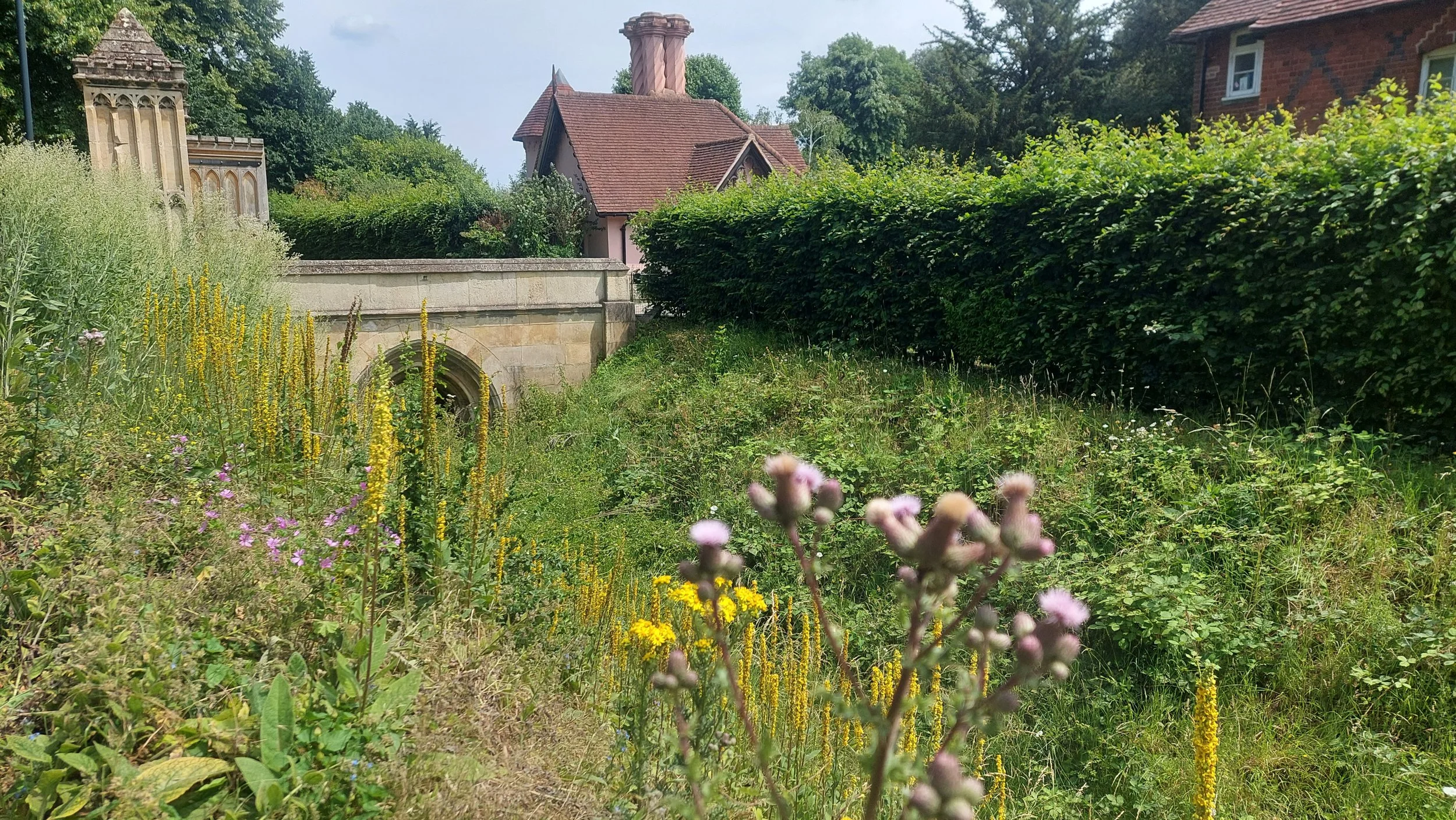
Moat and bridge outside Fulham Palace, filled with green plants and yellow and purple flowers.

Herbs of Fulham Palace - volunteer blog by Tricia Kern from the learning team

Tricia shares her experience as learning volunteer at the Fulham Palace Spring fair family fun day in April, where she helped organise and deliver fun educational activities, with a herbal twist!

Herbs of Fulham Palace

Over the Easter holidays, Fulham Palace welcomed museums from around West London to participate in a vibrant family fun day – the Spring Fair.  Staff and volunteers from the Palace had various activities running in the great hall, such as sewing, weaving and examples of headwear through the ages, medallion making, decorating herbal pebbles and on display, a wonderful array of items that could be purchased from the shop.  This free event was made possible by funding from The John Lyons Charity. 

It was my job to facilitate the herbal pebble decorating, mainly with children but also with six, gamely adults!  The activity was very popular and there was often a queue of children waiting to join in. 

Herbal pebble examples of: Rosehips, Viola, Bergamot, Lugwort and Lavender

You, too, can decorate your head with Bay, Lavender, Rosemary and Marjoram in your hair!

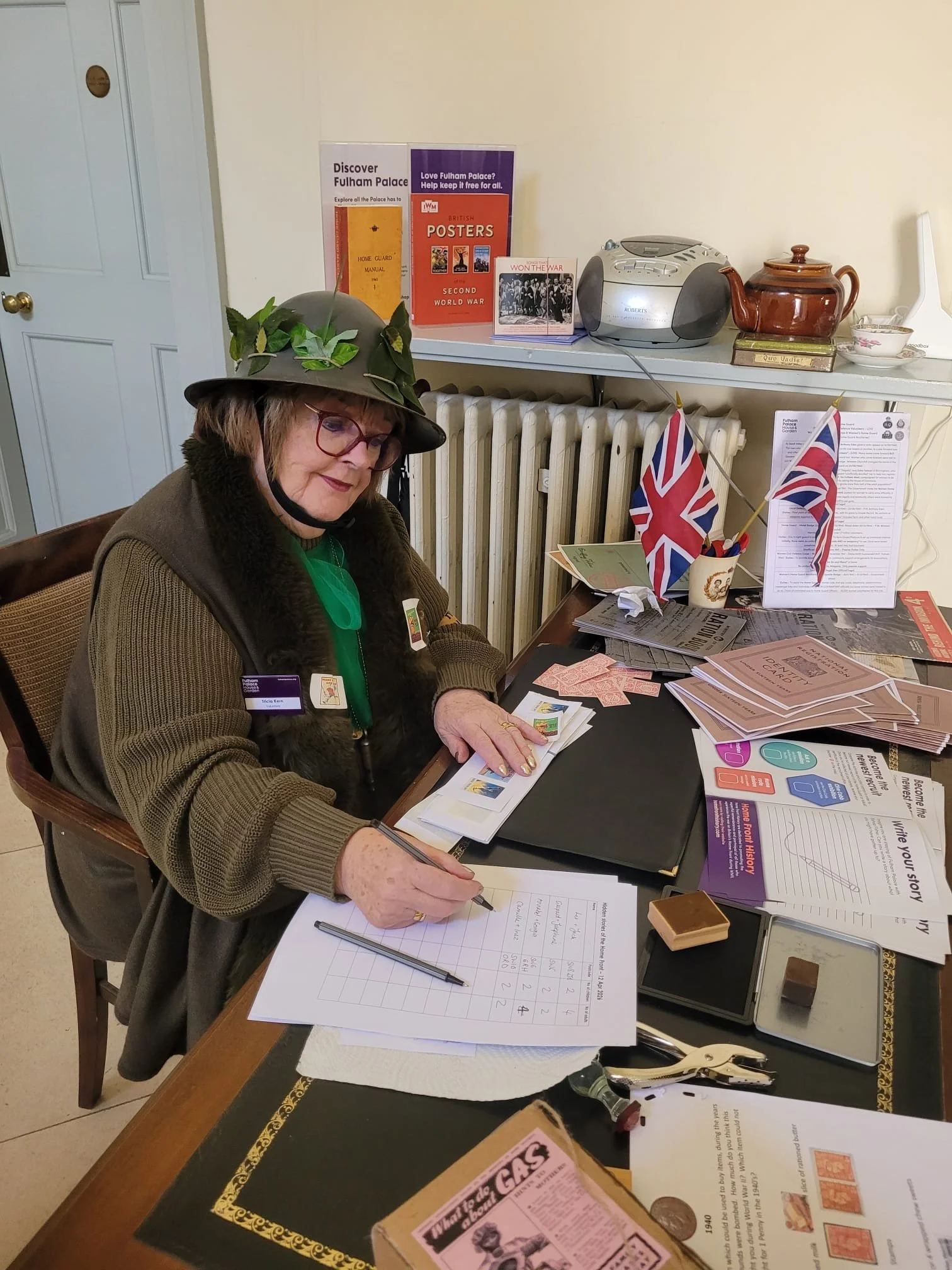
Volunteer Tricia looked the part for the event.

Tacca chantrieri - Black Bat Plant

Whilst most children took part in the herbal theme, some went off-piste and wanted to draw a bat, a dragon and a cat.  This required some thinking on the spot to bring us back to the plant theme.  With the young person who drew a bat, I chatted about what bats eat on the wing and how all those insects they eat have had the chance to pollinate the herbs in the garden and how important it is to have insects in the world, after all, we are all cogs in the big world that is nature.  We also talked about there being a plant, whose common name is Bat plant.

Moldavian Dragonhead - Dracocephalum moldavica

The young person who drew her family pet, a black cat, we talked about the herb, cat mint/ cat nip and how much felines love to play with cat nip bags and balls.  With the young person who drew the dragon on the pebble, we talked about some types of New Zealand flax that has a common name of “dragon”, due to the wonderful colouring of the spiked leaves; we also talked about how flax can be made into string and rope.  There is also a herb Moldovian Dragonhead, which is a form of mint. 

However, there was one young person who had just returned from Venice and he drew The Bridge of Sighs.  He so wanted to talk about his holiday and having the same enthusiasm for the place, we had quite a long chat.  Eventually we talked about the herbs that can be put on pizza, so in a round about way, we got back to the day’s theme!

Volunteering with the learning team is a very interesting and a most rewarding post and I would encourage anyone, who is interested in this role, to give it a go.  My role is mainly sitting down supervisory, information giving and a chatting one.  When I attend events, which is about once or twice a year, I prepare information sheets and a quiz for adults but this is not essential to the volunteer role at all and just something I find fun to do at home.  The chance for some children to engage with an adult outside their own sphere, can be informative, interesting and I never fail to learn something from the participants every time I attend and I hope they learn something from me, too.   I can really recommend this role as great fun.

I would be very pleased to talk to anyone who is interested in becoming a learning volunteer but whom has concerns before putting his/her/their name forward.  You can also reach out to the learning team for more information at learning@fulhampalace.org

Tricia Kern, learning volunteer

A young visitor hard at work creating a decorated pebble at the Spring Fair.