Archaeology

Communications Assitant Explores the Foreshore at Fulham

As well as my duties with the communications team at Fulham Palace, I have also been moonlighting as a volunteer FROG with Thames Discovery Programme. FROG stands for Foreshore Recording and Observation Group, a crack team of passionate amateur archaeologists who are responsible for recording finds of historical importance along the length of the Thames.

After my training in Greenwich in April it was time at last to be unleashed onto the river. Thursday 9 June was my first session with veteran FROGs and I have to say how welcoming and friendly I found the group which includes our very own Julia Mahon. They were kind to a newbie, taking me under their wings and showing me the ropes.
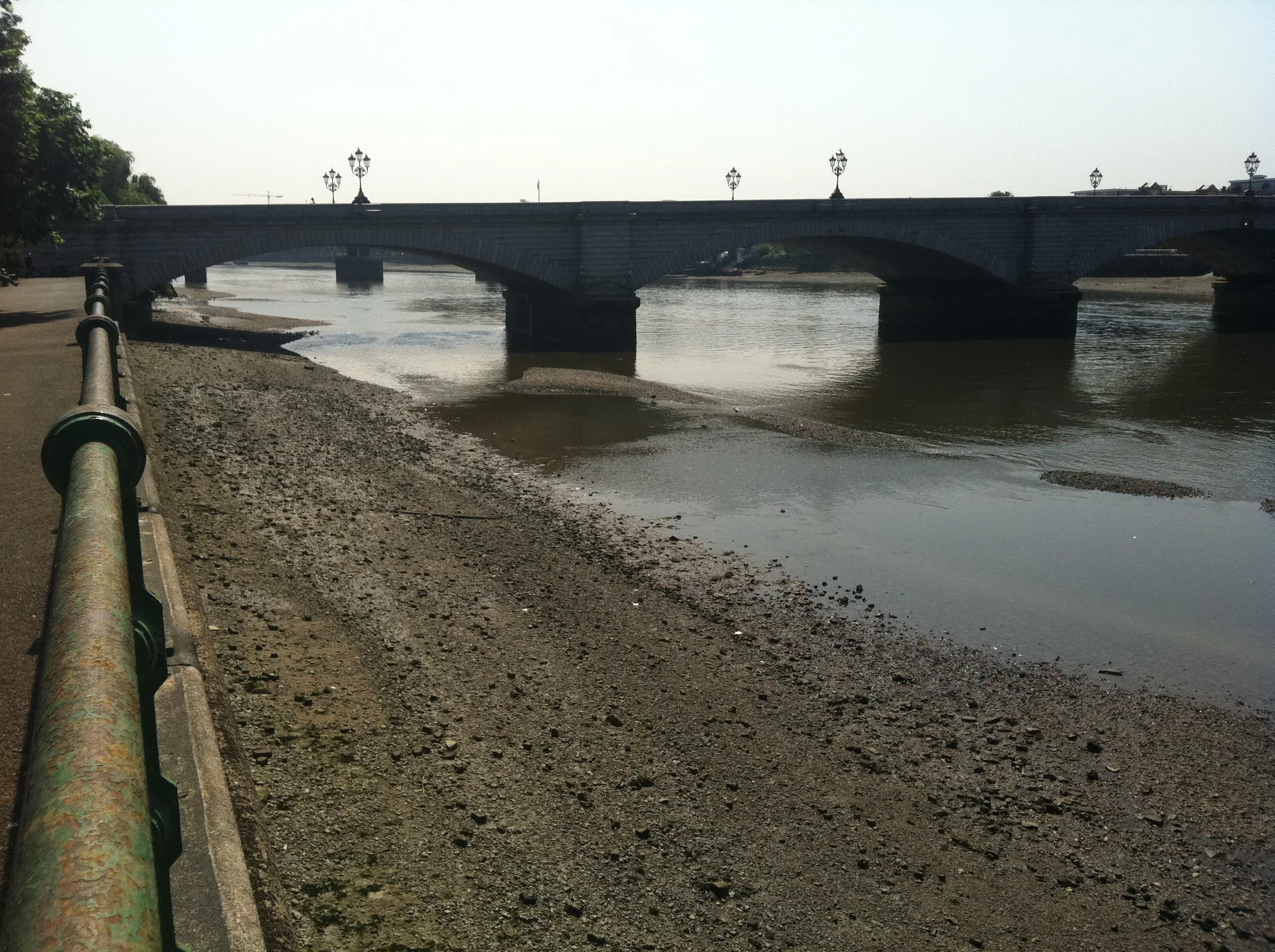
Thames Foreshore at Fulham

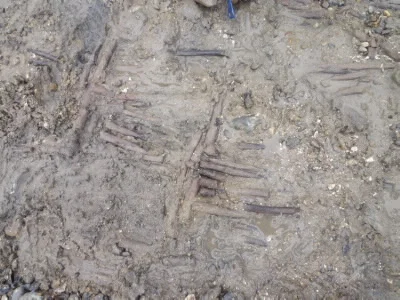
Our main task was to clean and then record any changes to a 7th century fish trap or Wattle, that was discovered on the foreshore near Fulham Palace last year (Do read Julia's excellent blog post).

After introductions we waited to head down to the foreshore. And we waited. And we waited some more. First of all its important to know the tide times. These are not always entirely accurate. The day before had seen torrential rain and the river was higher than we had expected. Much higher. To make matters worse there is a sewage outflow on the Putney side which releases effluent into the river at these times. Whoever said the life of the archaeologist was glamorous?
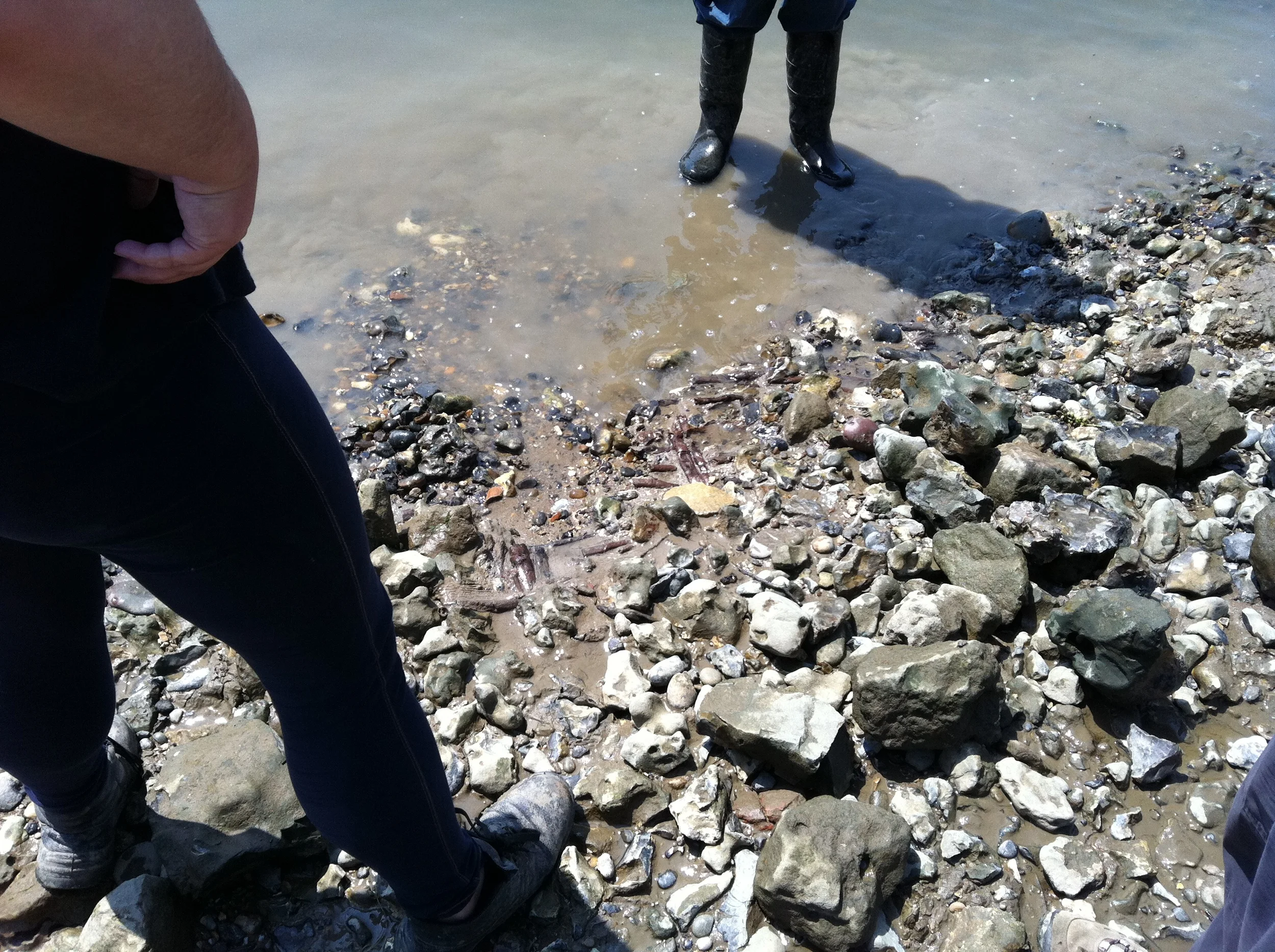
Low Tide?

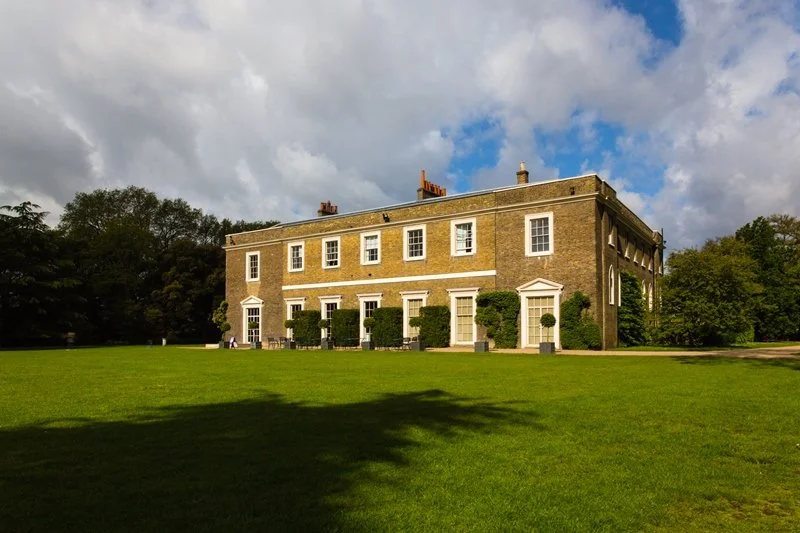
We used the free time to mudlark, named for the age old profession of men and women, and quite often children who would search the river foreshore for anything of value that could be salvaged. I managed a small haul of mainly Victorian pottery (Fulham was famous for its potteries) and some prehistoric flint.
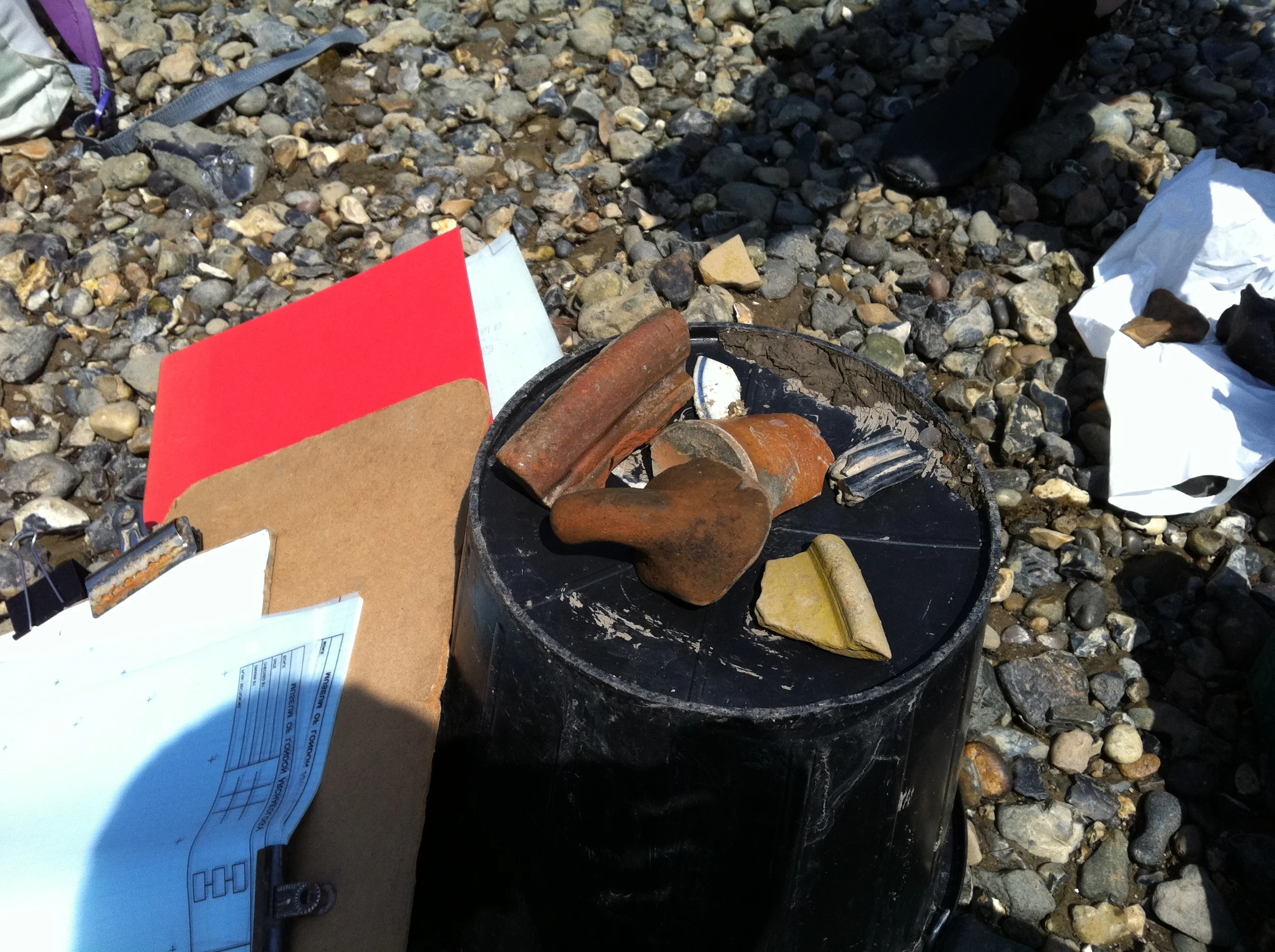
Mudlarking Finds

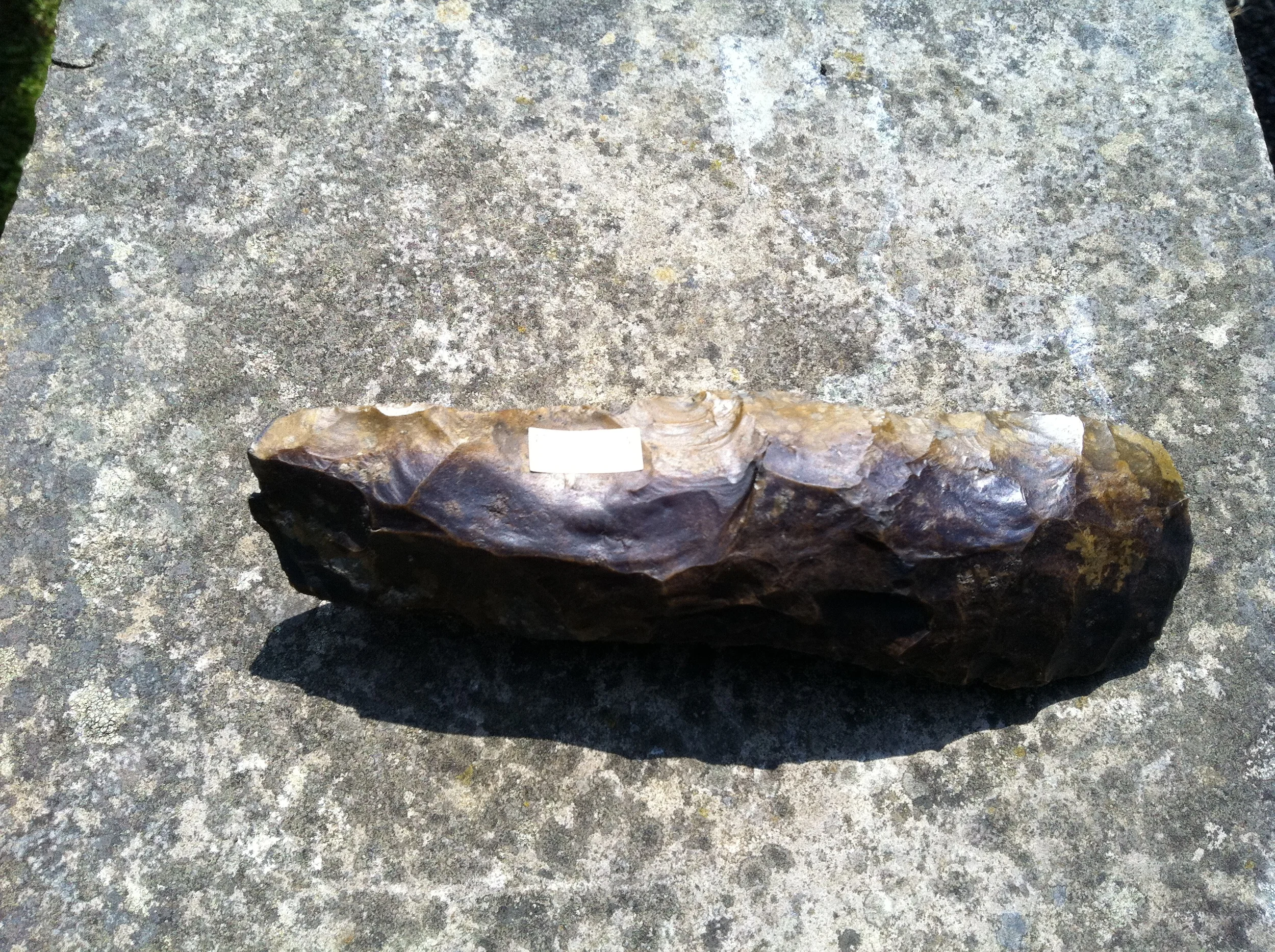
A veteran FROG was kind enough to bring in some previous finds for me to see which included a 17th century clay pipe and a neolithic axe-head all found on the foreshore within metres of the palace.
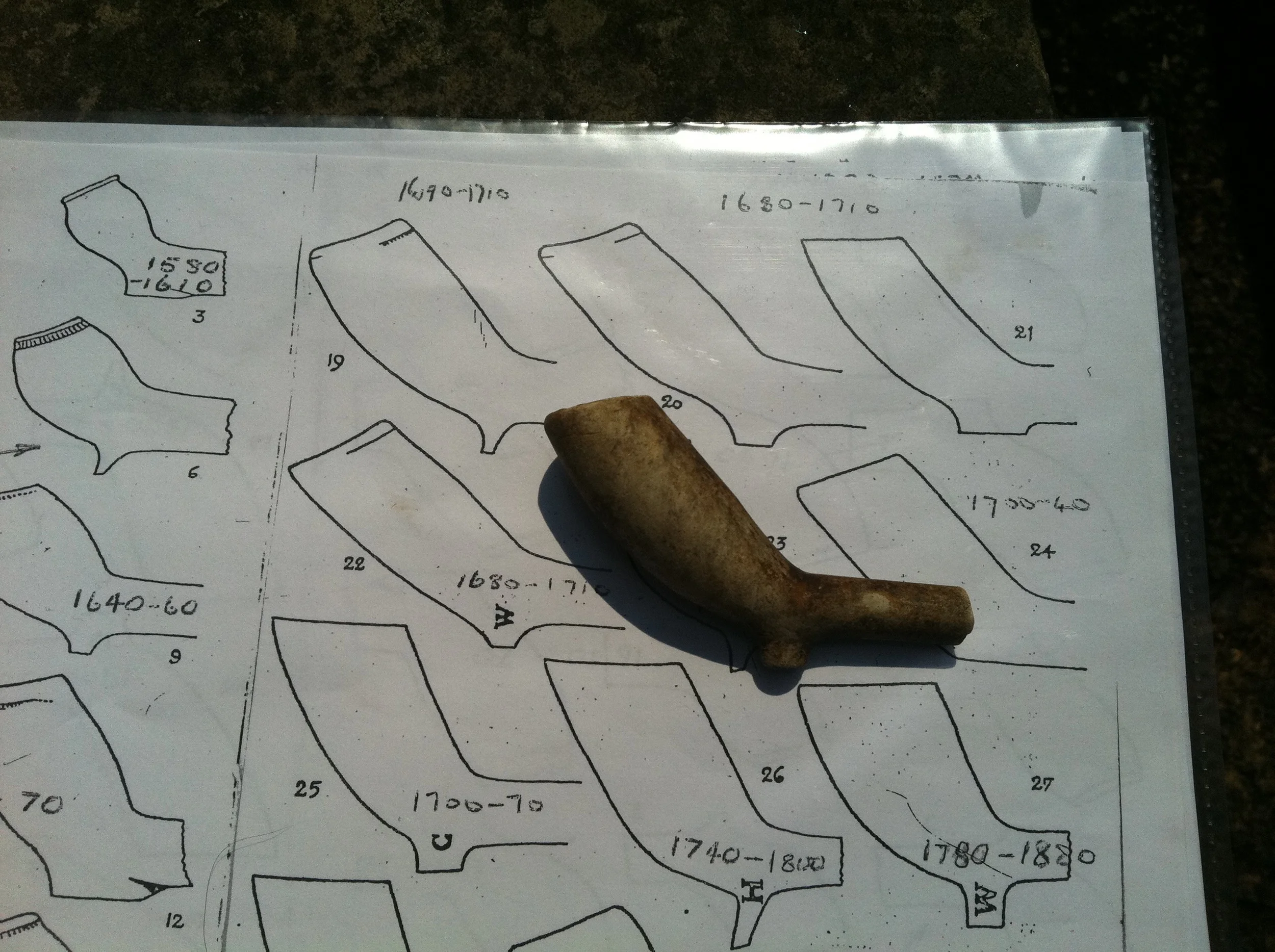
Clay Pipe
Neolithic Flint 4500-2000 BC

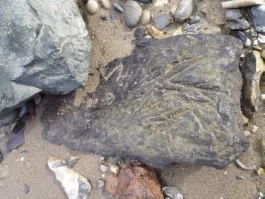
After a wait of almost an hour we were finally able to get to the archaeology. I must say it was truly breathtaking to see something so old and hand made. I felt a real connection with the people who lived at Fulham, our ancestors, in what seems such a far off time. It was like a hand reaching across the centuries. We could see the trap was used to feed them and their families. The trap had been amazingly well preserved for over a thousand years by being trapped in the anaerobic environment of the river mud. We could also make out a line of peat that would have made up the ancient vegetation on the edge of the river.
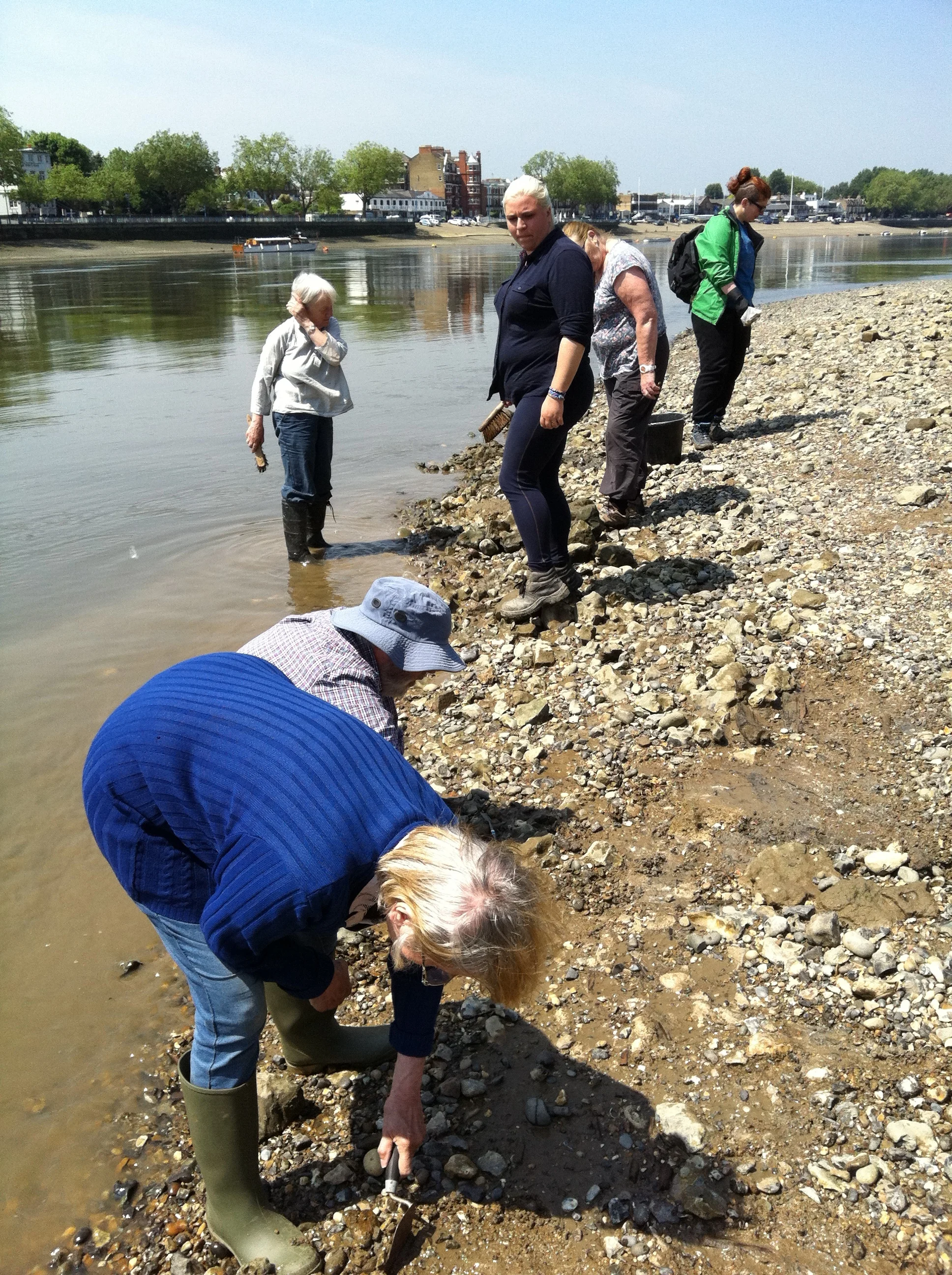
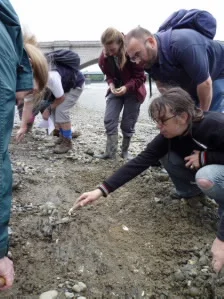
The Fulham FROG team

We got to work measuring and recording what we could.
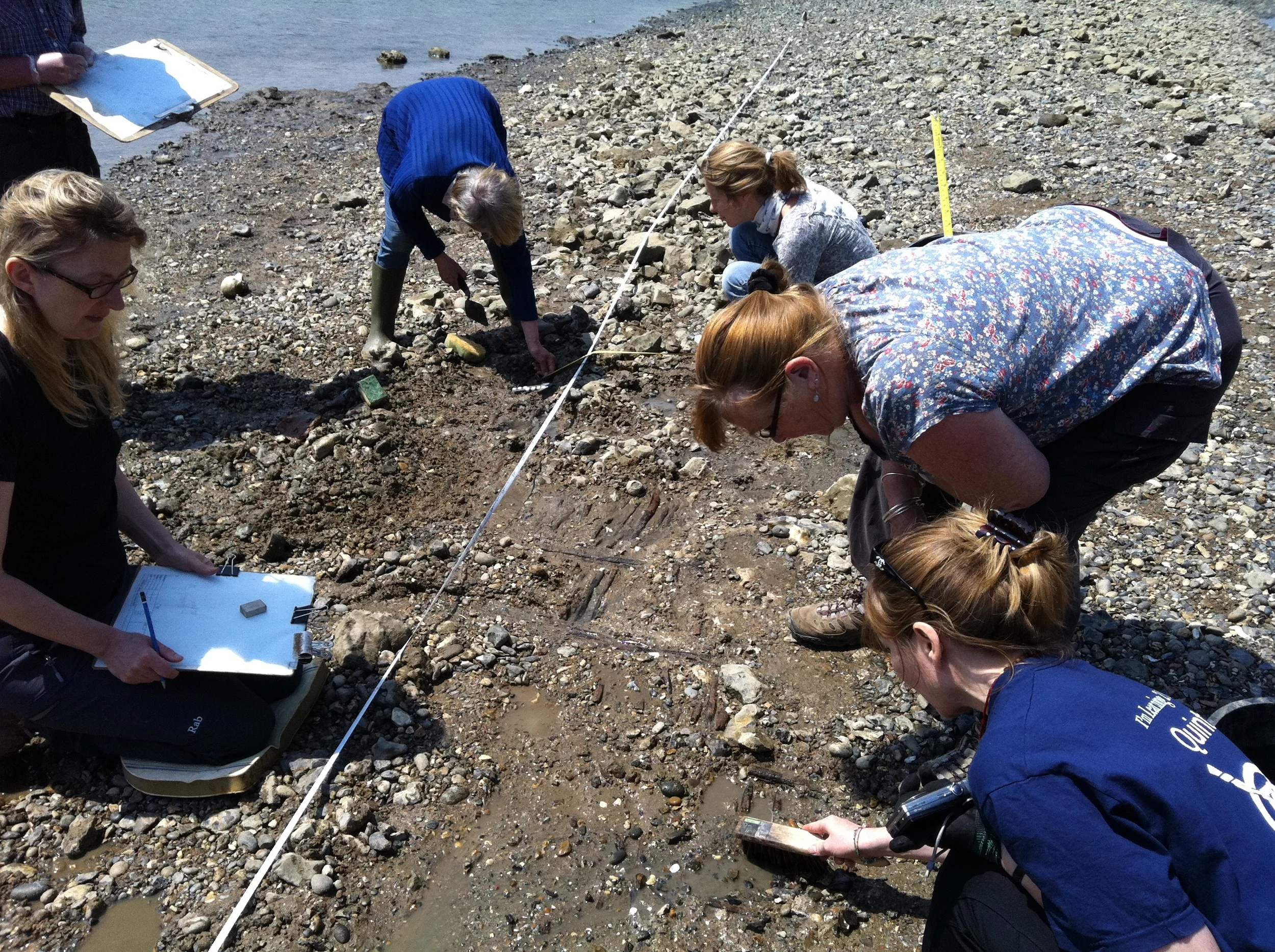
The Thames finally reveals the Wattle

What I found shocking was how much the trap had eroded over the last year. It was literally crumbling in our hands. The foreshore is being eroded at an ever increasing rate, mostly due to increased river usage. I'll never look at the Thames Clippers in the same light. This small, but incredible link to our local history will soon be gone and I realised how vital it was that we should record its presence. It felt like we were documenting the very lives of the people who used it.
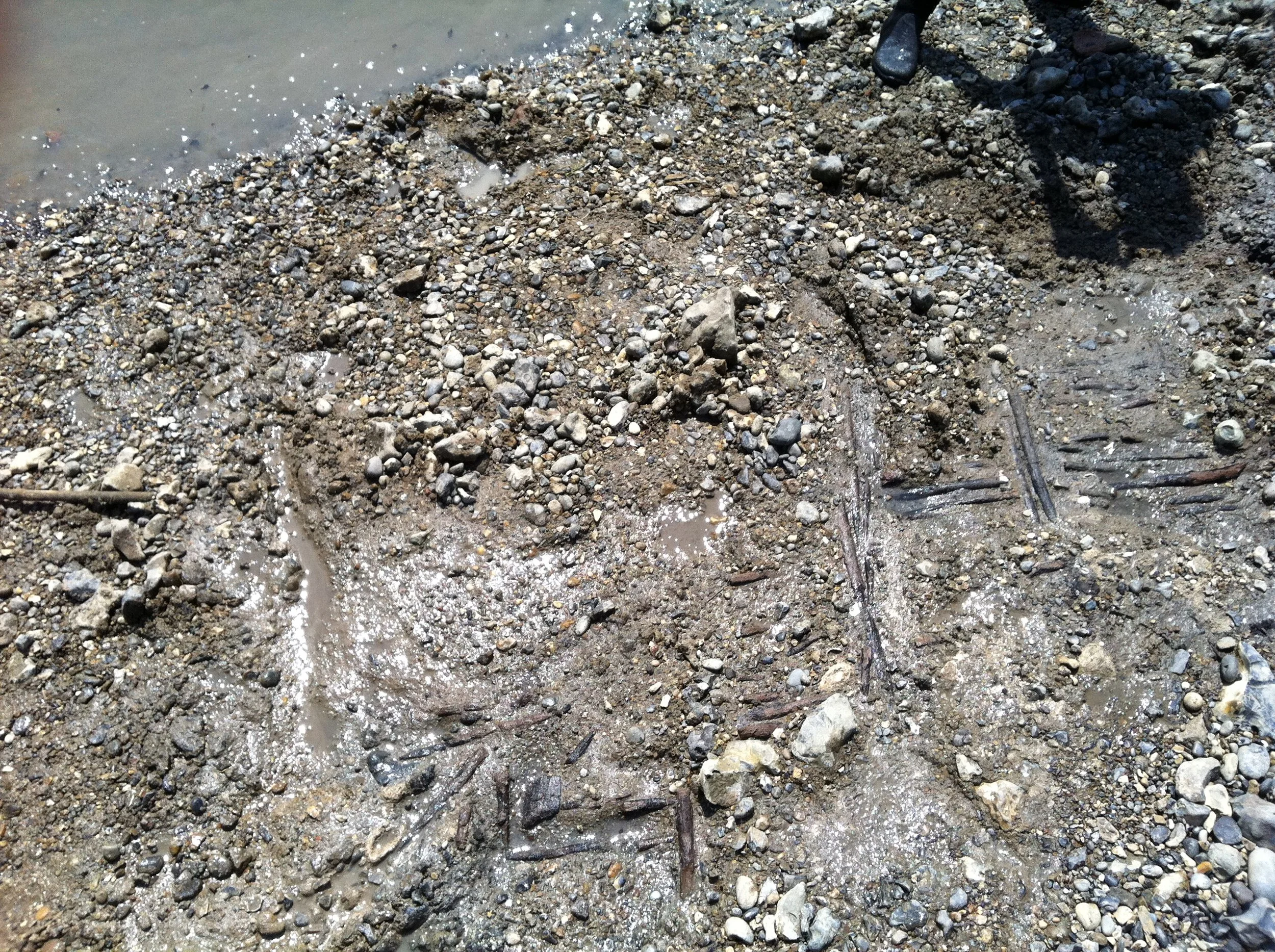
The Wattle or Early Saxon Fish Trap

If you would like to be kept informed and even get involved with volunteer archaeology and learning events at Fulham Palace please do contact volunteer@fulhampalace.org .

An important note about River Etiquette and Hygiene.

It's important never to visit the foreshore alone. Always go with someone, preferably an insured and well trained group such as a qualified tour guide. Take a mobile phone. Also as we heard earlier although the river is now one of the cleanest in Europe, sewage is still regularly pumped into the river. There is a small risk of contracting Weil's disease from rat's urine. so as well as wellies, always wear gloves. Never eat or smoke on the foreshore and make sure you thoroughly wash your hands at the first opportunity. Never dig on the foreshore. Wherever you are remember someone owns the land, so be respectful. It is also important to register any significant finds with the Portable Antiquities Scheme. 

My personal advice would also be to wear sunscreen and a hat in hot weather, and take some plastic bags for any mudlarking finds you may find.

Steve Lee

7th Century Dating Results at Fulham Palace Foreshore

Becoming a trained member of the Thames Discovery Programme has given me and many other non-academically trained volunteers the opportunity to observe, monitor and record a much overlooked area of great archaeological importance – The Thames Foreshore.

The Timbers

Having first come across a couple of parallel recumbent timbers on the Fulham Palace Foreshore in July 2010, the Fulham Foreshore Recording and Observation Group (FROG) have kept a record of their visibility and progress of erosion. Situated just upstream of Putney Bridge, they were sited in an E/W direction following the line of the shore on a long raised bank and visible at medium to low tides. The first one that became apparent was 15cm wide and the second one 28cm wide and placed 2.70 metres apart. They were then flush with the foreshore surface with just their ends visible. Although there was quite a difference in size, the fact they were parallel made me curious.

Site of Timbers looking towards the East. Timber 2# in foreground. Timber I# is mid left of picture.

Site of Timbers looking towards the East. Timber 2# in foreground. Timber I# is mid left of picture.

In November 2014, a third parallel timber (timber 3#) was located towards the east with interesting chop-marks on it, and two plainer ones running immediately south of it which appeared to be part of the same structure. On showing a photo of this to ancient wood expert Damian Goodburn (MOLA) at the Foreshore Forum that year he suggested it was of suitable size for dating. (11cm x3.5cm depth).

Timber #3

Timber #3

So in January 2015 a sample was taken of the chop-marked timber and thus revealed an underlying timber which had a wooden peg that had been hammered through it. Maybe this plank was intended to remain flat on the shore. A bonus find! The intriguing chop-marks however suggest to me that the associated timbers could have been cut and formed in-situ. It has been suggested that this site could have been a mooring feature for boats or maybe it is part of a revetment.

April 2015 was the last time timbers 1# and 2# were visible but the remainder of 3# 4# and 5# are still intact, although submerged.

Results for Timber 3#      AD608    +/- 27 years
The radiocarbon dating of the sample from Timber 3# places this structure in the early/mid Saxon period. This predates the earliest documentary reference to Fulham which dates from AD 704 when the manor or land at ‘Fulanham’ was granted from Tyrtilus, Bishop of Hereford to Wealdhere, Bishop of London.

Across the river at Putney an early Saxon fish trap was identified in the early 1970’s by the Wandsworth Historical Society (dated 5th-7th Century in the 1990’s) and also one at Hammersmith and Barn Elms.

The Wattle

On a FROG Monitoring event in August 2011 we were observing the vicinity of the aforementioned parallel timbers when our Project Director and Head of Community Archaeology, Natalie Cohen pointed out a fair amount of shell incorporated in the gravel. Scraping just below the surface she revealed some wattle.

Uncovering the Wattle

Uncovering the Wattle

Situated just South of the site of the parallel timbers, aligned E/W, parallel yet on a lower level, it was suggested that the wattle was not probably not related.

It had remained covered until September 2013 when members of the FROG recorded it.                             

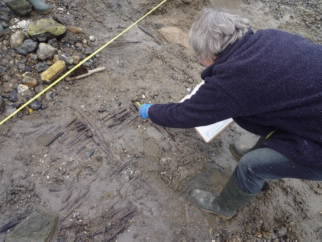
With tight time restraints as there was a lot to draw before the tide came in, we revealed it to be 7.50 metres x 70cm wide. A large pinkish boulder seemed to mark its eastern end. We covered the area as best we could to prevent further erosion.

Recording the Wattle

Recording the Wattle

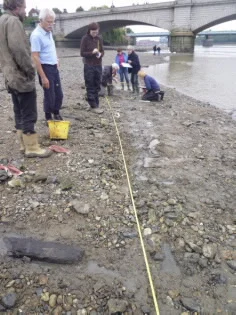
The length of the site. Timber 1# on  left

The length of the site. Timber 1# on  left

The shell layer has now eroded out but the wattle is still sometimes visible in parts only at lower tides. The whole area is becoming less accessible at medium tides as the foreshore is flattening out a lot behind it.

Remains of Wattle

Remains of Wattle

Results for the Wattle        AD 951  +/-26 years
The wattle is likely to be a hurdle from a fish trap which was created in the Late Saxon period.

Finding intact wattle on the foreshore is very rare. Getting results from the sample was a great surprise for us as it is normally difficult to get a reading from a sample due to its size and structure. The results confirm that they are not contemporary with the timber structure but give us a chance to view two different horizons in a close area.

Thanks to the Thames Discovery Programme and FROG Volunteers, we have been able to give Fulham another couple of stories to add to its timeline.

And as erosion progresses, more will follow.


Julia Mahon