
Like many places in London, Fulham Palace was part of the history of World War II. At the time of WWII, Geoffrey Fisher had just been made Bishop of London, replacing the long serving Arthur Foley Winnington-Ingram. The Palace was soon equipped with a barrage balloon, as well as a contingent of the WAAFs who lived in rooms above the arch to the Tudor courtyard and dined within Gothic Lodge. During the blitz, the area surrounding the Palace was heavily bombed and whilst the main Palace building was never directly hit, Bishop Geoffrey Fisher, the successor of Bishop Winnington-Ingram, noted 12 bombs that had landed within the estate.
To commemorate the WWII and all the people who were at the Palace at the time, Fulham Palace and Hammersmith and Fulham Council held a WWII day in April 2026. Full of activities, like learning how to be WAAF or home guard member, and with re-enactors around to talk about life and experiences during WWII.
Tricia, one of the Palace’s learning volunteers, supported the team at the event and shares her experience of what went on during the day, from her role to what people where talking about:
‘It was my job to ‘register’ young visitors to the event by offering a ration book programme, clothing coupons, identify leaflet and a ‘Government Generated, Information Billboard’ sticker to each child who wished to participate. There were many older children, who wished to see the displays in their own way. For this event, I had more engagement with adult visitors, who were very interested in the information on offer, which made my role rewarding. Some visitors remarked upon the music playing, being welcoming and ‘getting them in the mood’ for enjoying the displays. I had a small display for Morse Code in my area of the event and the older children and adults engaged in this. The ‘how much could you buy for 1 penny in 1940?’ quiz for the adults, whose children were talking to me whilst ‘being registered’, seemed popular.
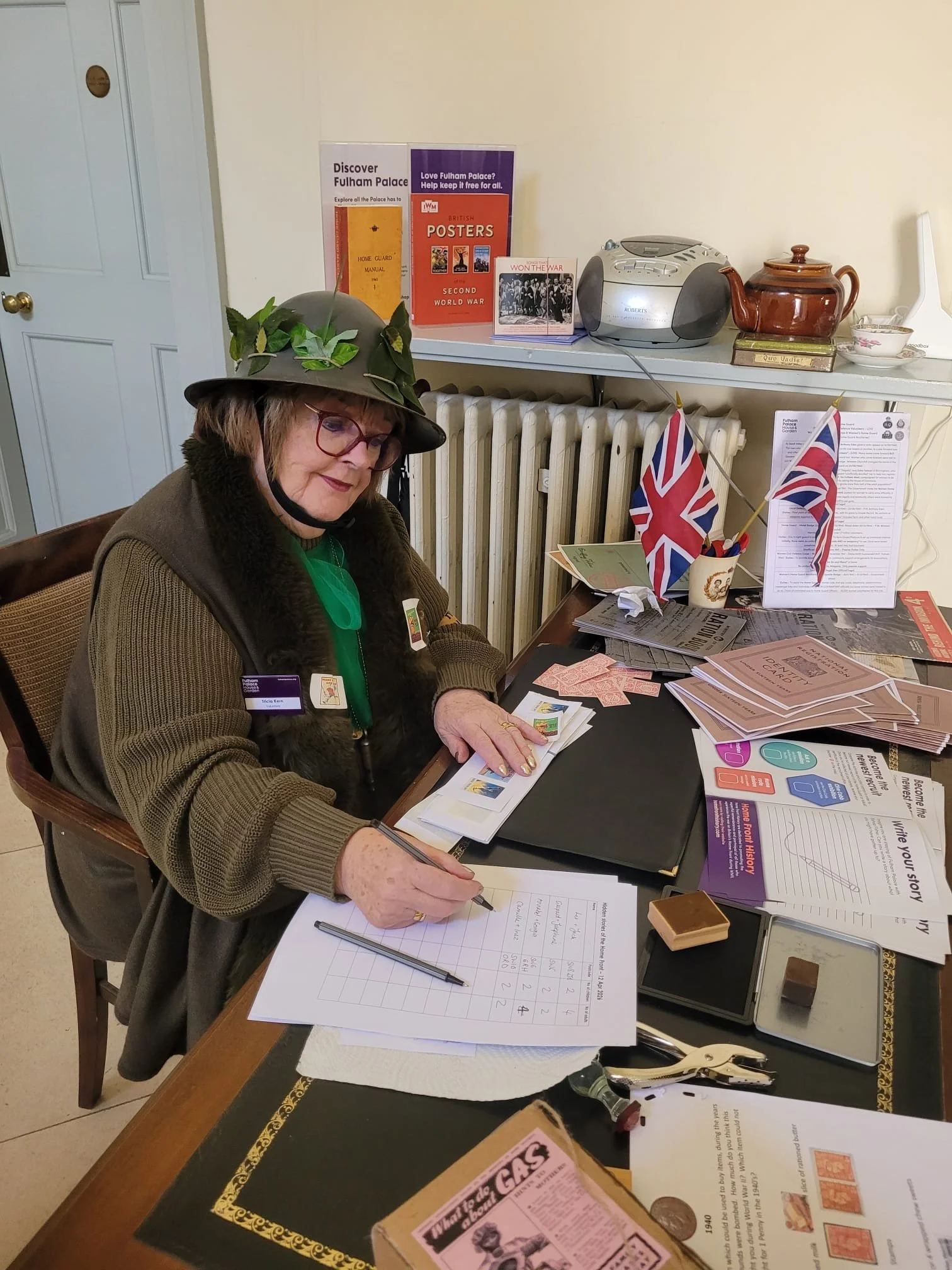
Tricia Kern, one of our learning volunteers, helping out by giving out hand outs to all the visitors.
Many visitors did not know that Fulham Palace grounds were bombed in WWII and this helped them to understand why the event was being run. Other adult visitors had ‘heard the gardens were lovely’ but they did not know about the important status of Fulham Palace garden in relation to hierarchy of other well-known gardens, such as Kew and Chelsea. Sadly, there were several visitors, who were younger adults, who said to me, ‘What has been learnt from the past?’ or ‘Will humanity never learn?’ Some talked of the possibility of conscription and they were unaware there were ‘protected status jobs’ during WWII. Others talked of the irony of the Artemis II space mission and how peaceful the world looked from space. These conversations seemed very poignant.
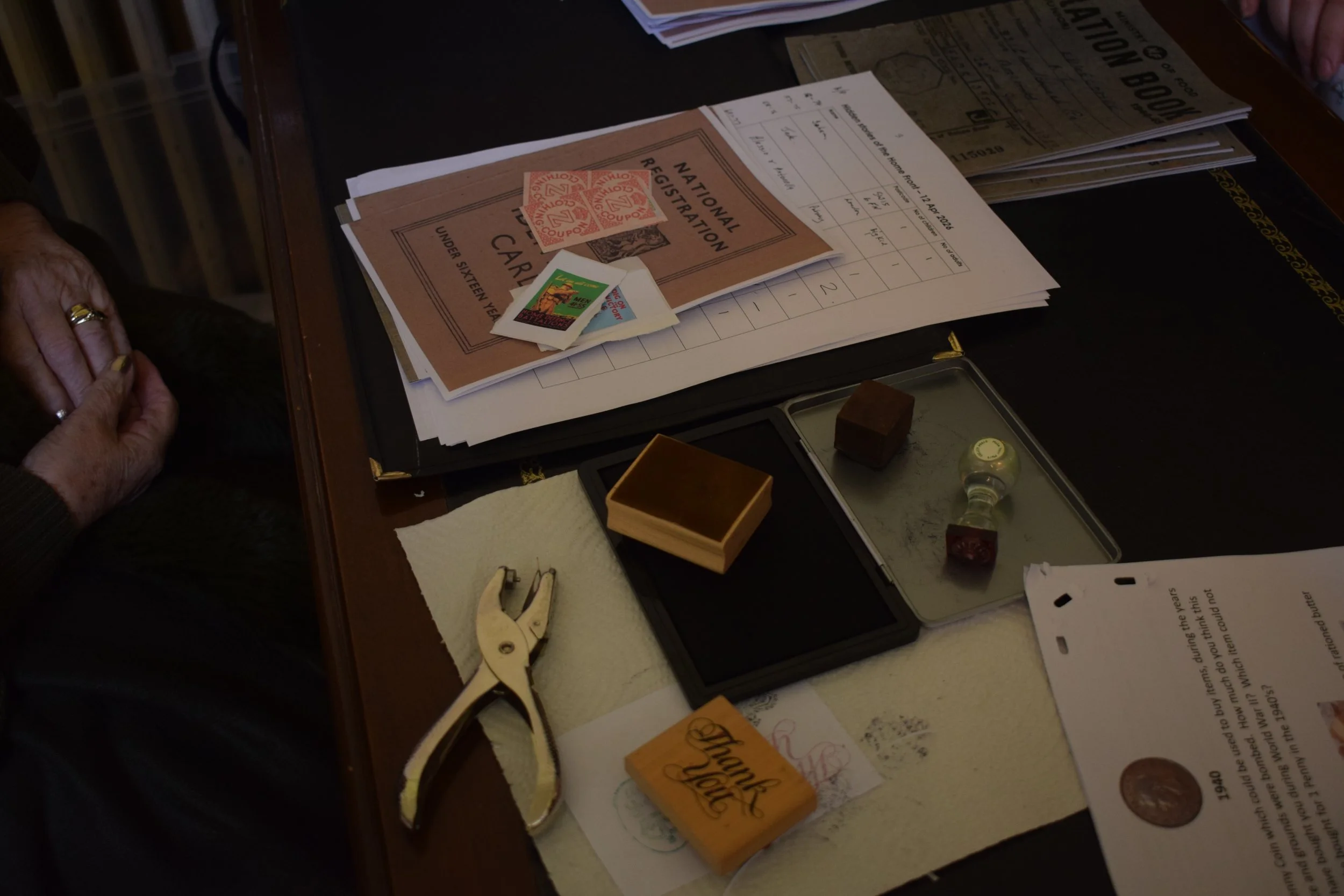
Closer look at some of the items Tricia was giving out
The re-enactors who did attend the event seemed to lift the level of interest for the visitors and they worked hard in acting out their individual roles. The re-enactors remarked on how well they are looked after at Fulham Palace events and told me that the buffet lunch was splendid and they looked forward to helping again in the future.
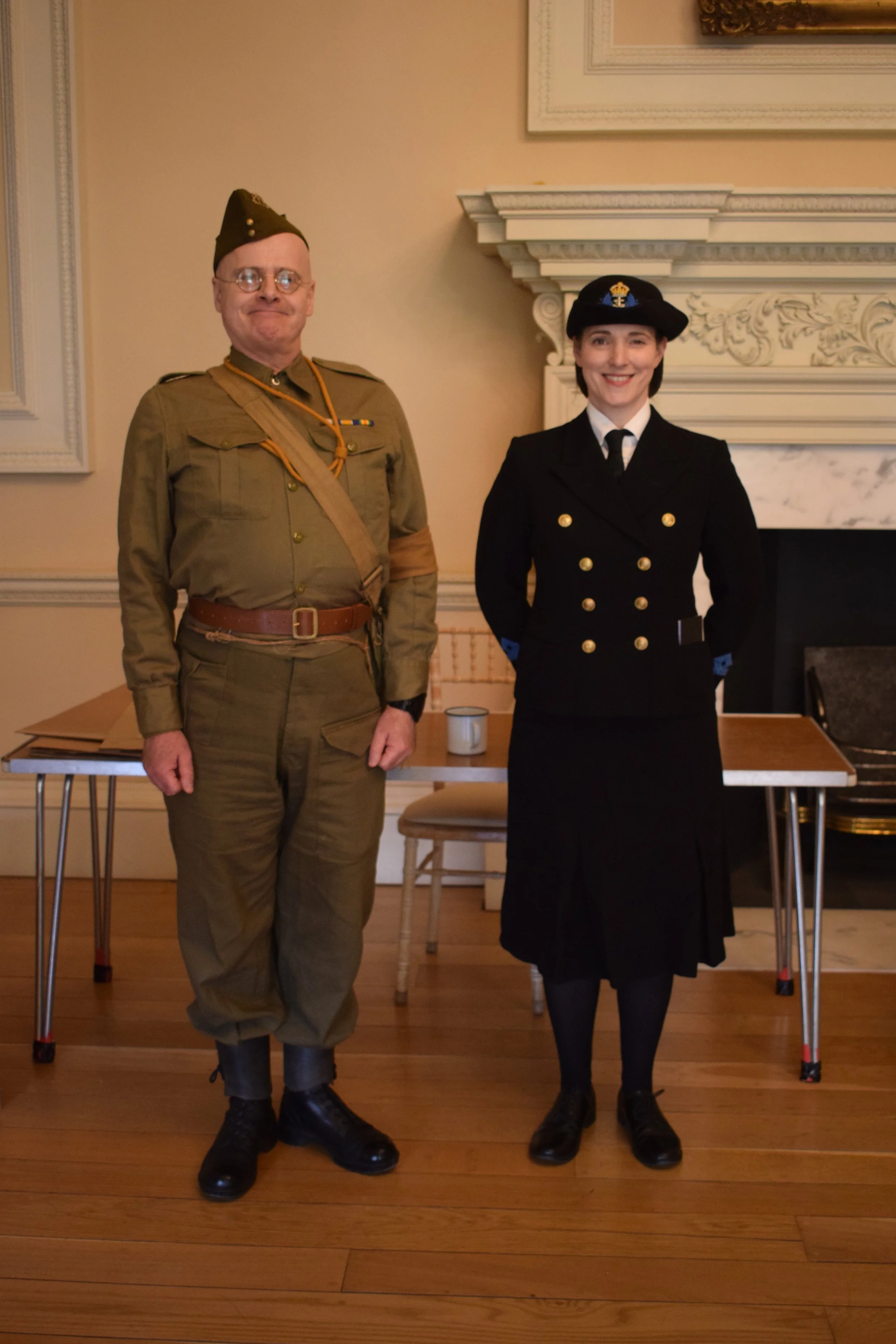
A look at some of the re-enactors
On balance, the children who attended this event seemed younger, so less informed about WWII. Many of the children who took part appeared shyer and quieter than I have experienced in the past, so there were not many questions from them for me to answer. However, they liked the stickers, and the accompanying dinosaur, dolly and Teddy also got a sticker! There were visitors from Ukraine, Italy and Canada who engaged with the event. I was told the most popular displays were the Morse Code and dressing up ones. After taking part in the event, the children (and some adults) returned to me to get their certificates. The certificates were very well received by all and were very popular! It was an engaging and interesting event.’