Apples

Recipe of the Month - October

Apples - some favourite, traditional recipes

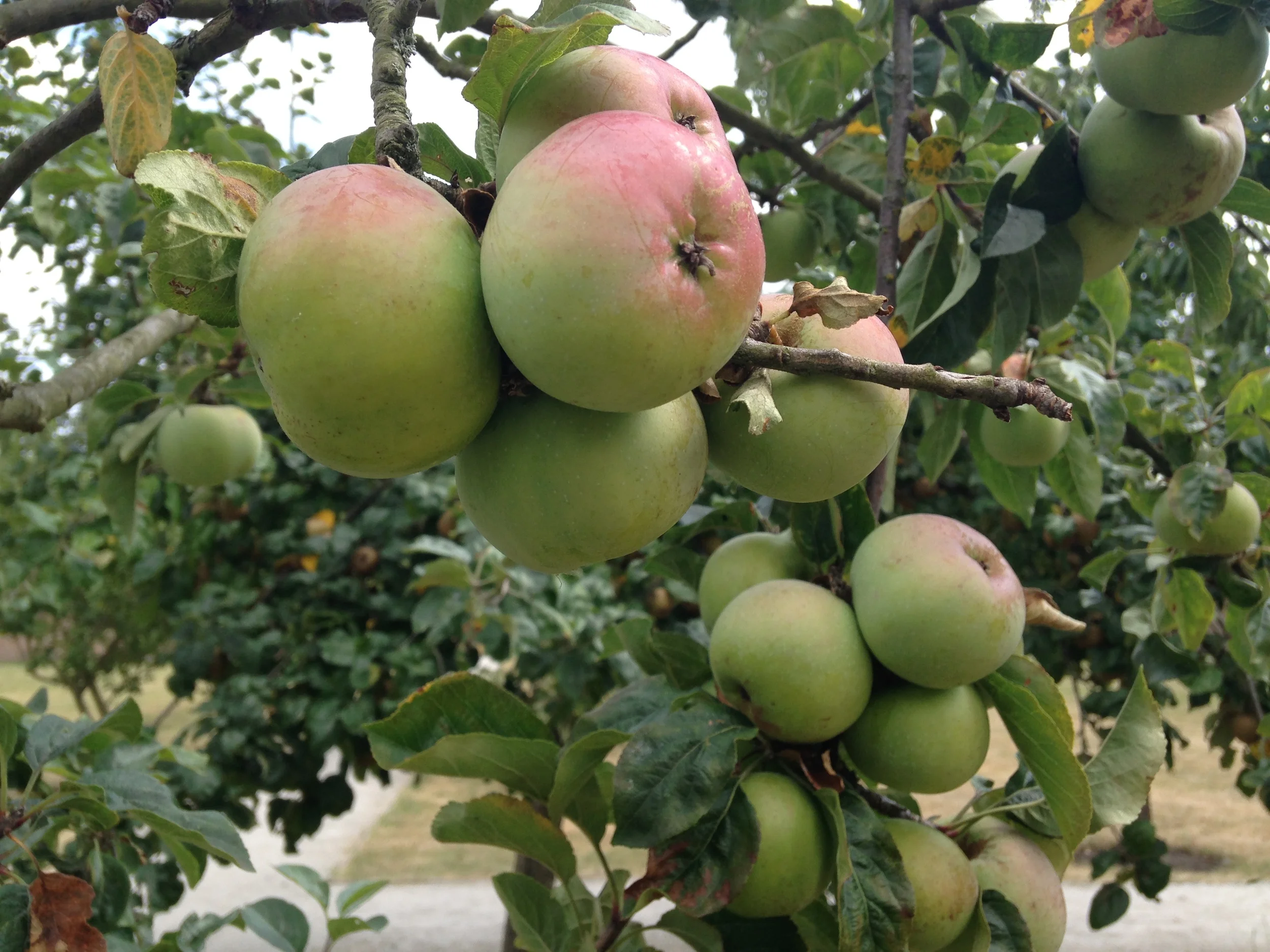
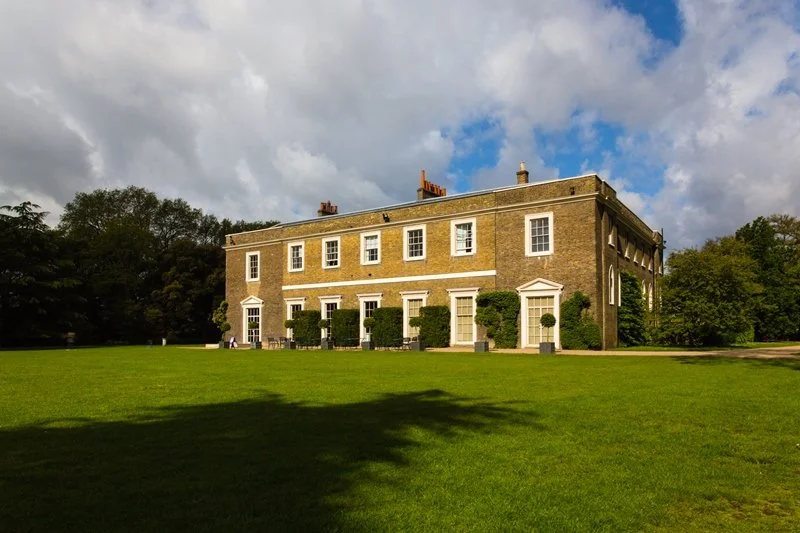
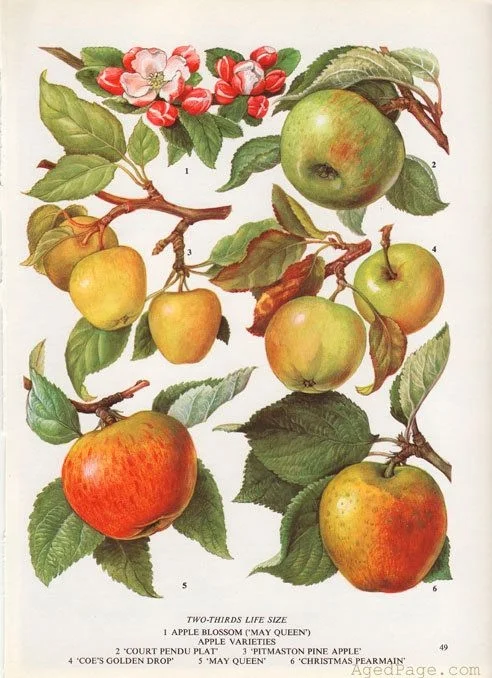
The Fulham Palace garden has an interesting mix of apple varieties, some of which are quite rare, each variety has a different quality and most have been chosen because of their links with the Palace or with former Bishops of London. Future years will see the fruit trees coming to prominence in the Walled Garden as those along the arches grow and the espaliered trees mature and become more of a feature. We can look forward to a great variety of apples available on the barrow.
47e1ee27b826edd85d2ac56620c47ce3--apple-illustration-botanical-illustration.jpg


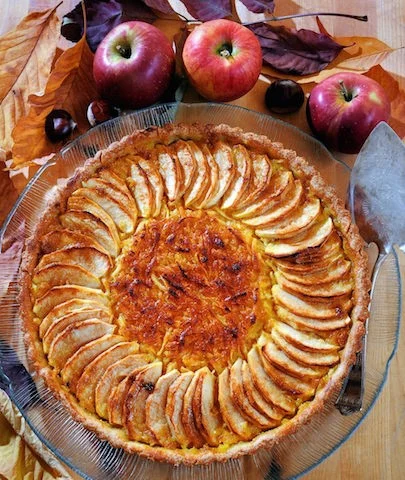
Canterbury Tart

This Tart is not as well known as many other forms of apple tart - it is slightly more complicated but is very delicious. The recipe uses both sweet and cooking apples. The history of this tart is not clear, there are those who would like to trace it back to Chaucer but there is no real evidence for that. This is a Mary Berry recipe.

Ingredients

For the pastry

  • 100g/4oz butter, cubed
  • 200g/8oz plain flour
  • 25g/1oz icing sugar, sifted
  • 1 egg, beaten
  • or a sheet of readymade dessert pastry or shortcrust pastry

For the filling

  • 4 eggs
  • 200g/8oz caster sugar
  • 2 lemons, rind and juice only, grated
  • 100g/4oz butter, melted
  • 2 large Bramley apples (about 350g/12oz in weight), peeled 
  • 2 dessert apples, peeled and thinly sliced
  • 25g/1oz demerara sugar

Method

  1. If making the pastry by hand, rub the butter into the flour and icing sugar until it resembles fine breadcrumbs.

  2. Stir in the beaten egg and bring together to form a dough. This can also be done in a food processor. 

  3. Chill for about 30 minutes. Roll the dough out on a floured surface and line a round 28cm/11in (3.5cm/1½in deep) flan tin. Form a lip around the edge. Chill for a further 30 minutes while making the filling.

  4. Preheat the oven to 200C/400F/Gas 6.

  5. To make the filling, beat the eggs, caster sugar, lemon rind and juice together in a large mixing bowl. 

  6. Stir in the warm melted butter.

  7. Coarsely grate the Bramley apples directly into the mixture and mix well.

  8. Remove the tart from the fridge and spread the runny lemon mixture over the base. 

  9. Level the surface with the back of a spoon and arrange the dessert apple slices around the edge, overlapping. 

  10. Sprinkle over the demerara sugar.

  11. Put on a heavy baking tray and bake in the oven for about 40-50 minutes until the centre feels firm to the touch and the apples are tinged brown.

  12. Serve warm with some cream, it is also good cold.
DSC_5306-nx2.jpg

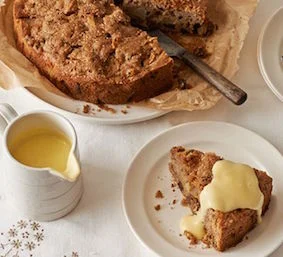
Dorset Apple Cake

This is a traditional, rustic cake with a lovely crunchy top and moist chunks of fruit in the cake, there are lots of versions of this recipe. Thin slices of apple or flaked almonds can be used to decorate the the top of the cake.

Ingredients

  • 225g self-raising flour
  • 2 tsp ground cinnamon
  • 115g unsalted butter, diced and chilled, plus extra for greasing
  • 115g light brown sugar
  • 1 large egg, beaten
  • 6-8 tbsp milk
  • 225g Bramley or Granny Smith apple, peeled, cored and diced
  • 100g sultana (optional)
  • 2 tbsp demerara sugar (optional)

Method

  1. Heat the oven to 180C/160C fan/ gas 4. Grease and line a deep 20cm cake tin with baking parchment.

  2. Mix the flour and cinnamon together in a large bowl. Add the butter and rub into the flour using your fingers, until it resembles fine breadcrumbs. Stir in the light brown sugar. Beat in the egg followed by 6 - 8 tbsp of milk – you want to achieve a smooth, thick batter.

  3. Add the apples and sultanas and mix to combine. Scrape the batter into your prepared tin and gently level out. Sprinkle over the demerara sugar and bake in the oven for 30-40 minutes or until golden and a skewer inserted into the middle comes out clean.

  4. Allow to cool in the tin for 15 minutes and then carefully turn out onto a wire rack to cool further. Best served still warm with a little custard.
dorset-apple-cake.jpg

Apple Tree Arches at Fulham Palace

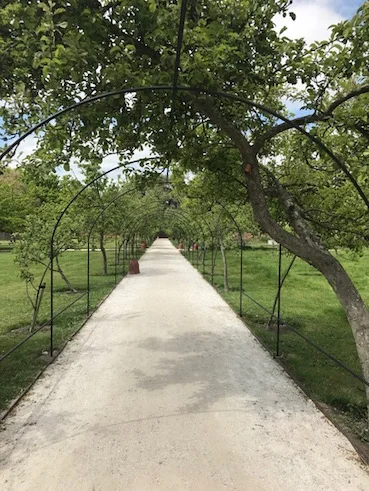
Garden volunteers have worked hard, alongside the gardening staff, over the winter months, widening and resurfacing the paths in the garden and installing the apple tree arches. This blog, written by Head Gardener, Lucy Hart, outlines the thinking behind the installation of the arches and tells us what we can look forward to over the coming years.

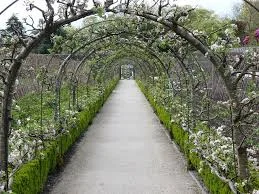
As part of the ongoing horticultural development in the walled garden, an 80m apple arch tunnel has been built along the west-east central path and apple and pear trees will be planted to train over the arches this coming autumn/winter.

The Walled Garden was built as a kitchen garden in the late 18th century in the grounds of Fulham Palace.  At that time, kitchen gardens were often located away from the main building as they would have been viewed as a garden of production and not necessarily of beauty.  Traditionally, paths through working gardens were made more appealing for the proprietor by visually blocking off the productive beds by borders backed with espaliered fruit trees.  A series of fruit tree arches to make a tunnel would also have the same affect.

The apple tree arch at The Lost Gardens of Heligan

The apple tree arch at The Lost Gardens of Heligan


Other highly regarded gardens in Britain such as Heligan, West Dean and Eythrope have fruit arches and tunnels within their historic walled gardens, making them popular visitor attractions as well as continuing productivity.  Heligan’s apple arch represents the custom garden method of growing apple trees to provide the owner and his guests with a more pleasurable tour of the gardens.   An apple arch in the walled garden at Fulham Palace, along the central west-east axis is wonderful horticultural feature, offering visitors the chance to walk through something beautiful and home grown.  It celebrates the walk that the Bishops of London, such as the keen horticulturist Bishop Bloomfield (1828-56), would have made to All Saints Church each day. 

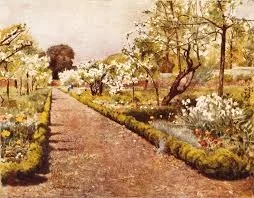
Although there are no records of the Walled Garden at Fulham Palace having apple arches along the central axis, trees have lined these paths since at least 1869, as shown in the Ordnance Survey Map.  A painting by Jessie McGregor in 1915 shows beautifully the trees planted along the path on both sides.  In the 1990s, 22 pairs of apple trees were planted along the west-east central path lining up with the gateway on the west wall (now referred to as the Meadow Gate).  The apple trees were donated by East Malling Research centre.  They are a collection of fine heritage varieties some of which are now quite rare in cultivation.

Normal
0


false
false
false

EN-GB
JA
X-NONE


 <w:LatentStyles DefLockedState="false" DefUnhideWhenUsed="true"
DefSemiHidden="true" DefQFormat="false" DefPriority="99"
LatentStyleCount="276">
<…

Painting by Jessie Macgregor, 1915

These East Malling trees are now in poor condition having not been properly maintained for many years.  Many are very one sided and leaning over.  They lack the open centred habit that encourages good cropping and tree health.  The trees are also growing into the path, making some parts very narrow for visitors.  In order not to lose our valuable apple collection, the trees have been propagated and will be replanted on the arch.  

The trees have been grafted on to dwarf rootstock M26, in house.  It has given the garden apprentices and volunteers a fantastic opportunity to learn and gain practical experience on how to graft fruit trees and then to see their successfully grafted trees grow.  Material from new varieties was also donated by RHS Wisley and then grafted in-house, giving us the opportunity to grow more pears (on a semi dwarf rootstock, Quince C), the traditional choice of fruit tree for an arch. 

By training the trees onto an arch, the tree canopies will remain small and not risk blocking the historical view to All Saints Church Tower.  The tree canopies will also not infringe on the productive beds of the vegetable garden and orchard and, being tightly pruned, would lessen the risk of injury to visitors by eliminating eye height branches along a walkway.  The trees will be supported by the arch and subsequently generate a less extensive root system which ultimately would have less impact on any possible archaeology. 

Growing the grafted trees as an arch allows us to keep the old existing trees for a few more years until the arch trained trees become established.  This means there will still be apples ready for harvesting for Apple Day and visitors will not have a bare central path whilst they wait for the new trees to grow.

Fulham Palace celebrates the apple annually at its well-attended Autumn Garden Event, Apple Day. Within the garden we grow many fruit trees.  The orchard was planted in 2014 and wall trained apples and other fruit trees were planted in March 2016.  Apple arches along the central path will provide another wonderful example of how to grow apples for visitors to admire.  With multiple seasons of interest, the apple arches should attract crowds throughout the year.  There would be the wonderful spectacle of blossom in the spring and then fruit from summer to autumn.  In late autumn the leaves will be changing colour.  In winter the fascinating trained framework will be revealed and continue to provide interest when other parts of the garden have died down. The arch will make walking through the walled garden an exciting and pleasurable experience for children, adults and private event guests alike.

This is an important new initiative for the walled garden – one that will allow us to continue to educate our garden apprentices, our volunteers, and most importantly, our public in traditional features of a walled garden and fruit tree production. 

Lucy Hart

The Apple Arches at Fulham Palace, May 2017

The Apple Arches at Fulham Palace, May 2017


You're Never Too Old to Learn

I am writing this by the shores of Loch Muick which is on the fringe of the Balmoral Estate. (Incidentally, my offer to give the Royal Gardeners a lesson in edgeing was, rather surprisingly, turned down.) When not fighting off deer, red squirrels, midges etc I have had the opportunity to reflect on some further lessons I have learned as a volunteer gardener at Fulham Palace over the last couple of months:-

Lesson 1: Nail Varnish Remover

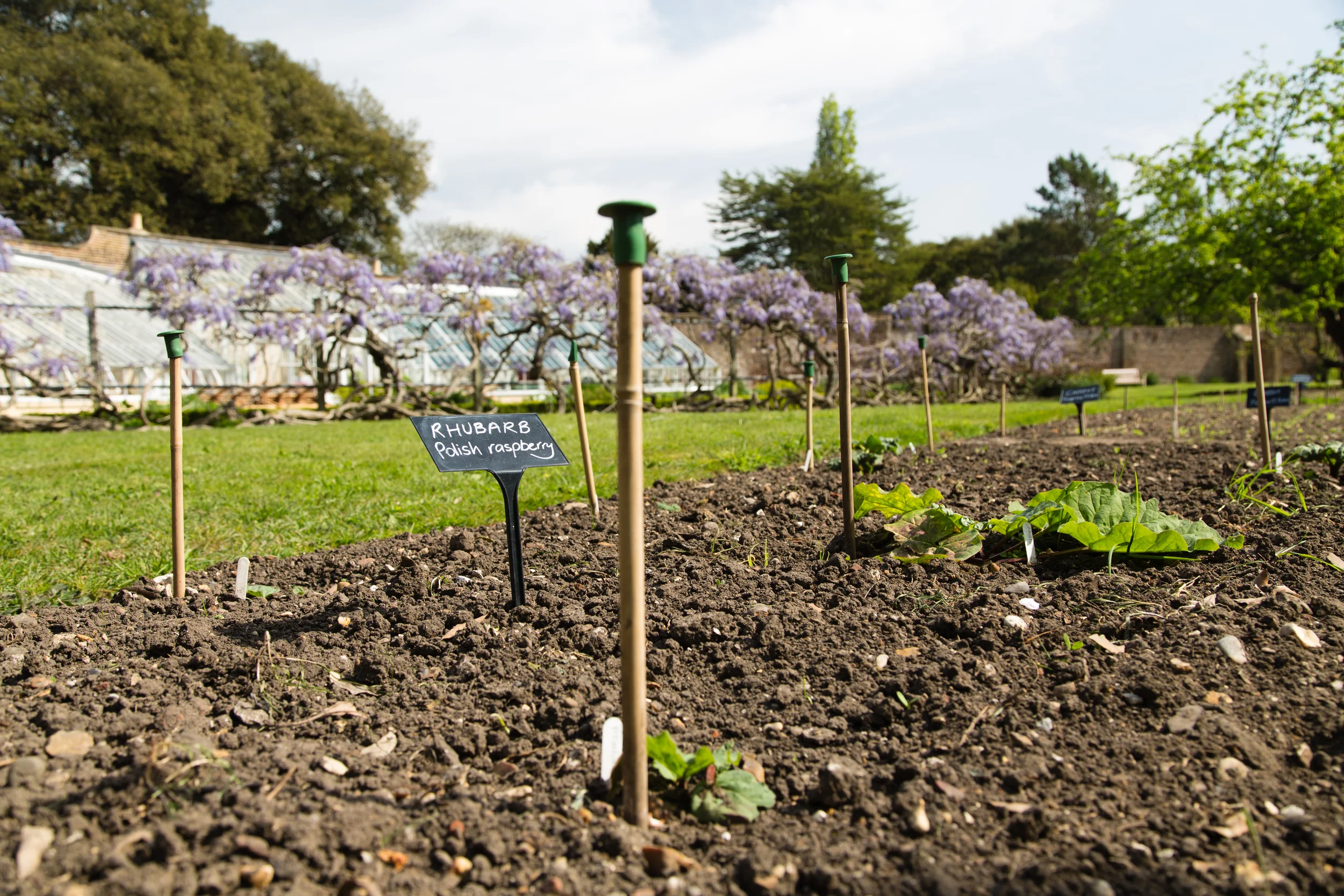
Did you know this was an essential bit of gardening kit? No, I didn't either. However, one very wet Wednesday a few weeks ago we were set to work in the Vinery cleaning the black plastic signs often placed beside plants. Guess what you clean them with?!

beautifully legible signage

beautifully legible signage

Lesson 2: The Nursery

If you are sweeping up leaves, having a general tidy round you must ensure that this is completed before break time. My recent efforts in tidying the playground, with several piles of leaves orderly sited prior to bagging up were thwarted when the bell went for break and hordes of children immediately came out and started a new game - much to my chagrin.

Lesson 3: Circles or Squares?

Why are the beds of some trees in the shape of squares and some in circles? (All to do with root growth apparently). My suggestion that some beds could perhaps be triangular or possibly figures of eight was not overly well received.

Lesson 4: Good Bucket, Bad Bucket

When weeding, brambling etc always make sure you have two buckets with you - one for the good stuff that Chris A is happy to have in his compost and one for the bad boys, such as nettle roots and couch grass. How the latter is subsequently disposed of remains a mystery.

Lesson 5: Try and Disguise Your Ignorance

The Wednesday Team has recently been augmented by two marvellous new recruits - Alice and Mary. Their friendliness, enthusiasm and hard work are a real stimulus. However, some of their questions have been, to put it mildly, a bit tricksome. When asked what one particular tree (smothered in blossom) was, I replied it was either an apple or a quince (turned out to be a pear).

also not a pear tree

also not a pear tree

Lesson 6: Careful with that Fork, Eugene (apologies to Pink Floyd)

Whilst doing some heavy digging not long ago, I managed to break the tine off a fork. My punishment (imposed by the apprentices no less!) was to be banned from having biscuits for an entire week. Well, really!!

Lesson 7: Let's be Friends

I've recently joined the Friends of Fulham Palace - an independent charity dedicated to supporting Fulham Palace and all its works (both in the Palace itself and the garden). I know that all us hard working volunteers already invest a good deal of time and effort as it is, but for an annual subscription of £25 this seems to me like a pretty good wheeze.

Jamie Atwell