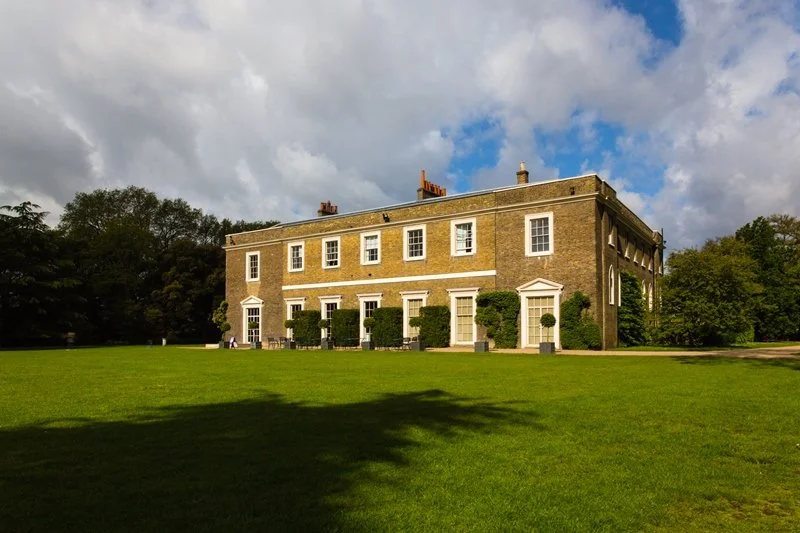
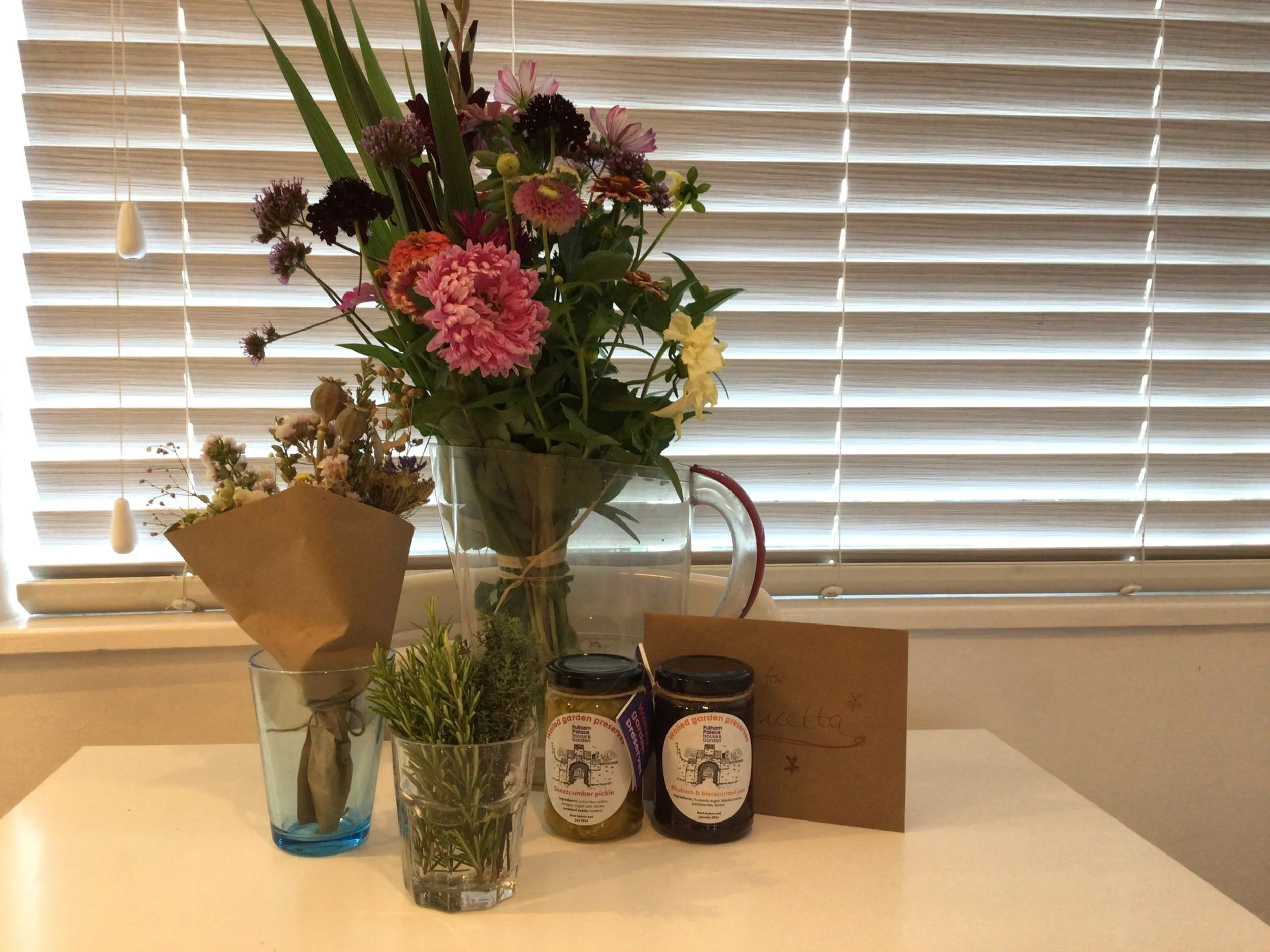
A letter from Lucetta

Garden volunteer Lucetta has a beautiful message for us all about her experience of volunteering in the garden at Fulham Palace.

Dear all,

I do think that everyone has a happy place. A place where you feel at peace with yourself. It doesn’t matter when or how you have found it, it’s where you feel fine and even its memory can help you to ride the storm when you are faraway. For me this is Fulham Palace. To be precise, its walled garden. I have already told you how I came to know about the Palace many years ago and what my first visit meant to me. The purple dahlias, the ancient dark bricks, the secluded benches have been so captivating for me because they were and they still are very different from my ordinary life. The perfect match between Nature and History. I’m a teacher and I am more than happy to work with my students, nevertheless the routine of the school year in the low lands of Pianura Padana is lacking in bright colours. But the dahlias, the lavander, the marigolds, the gladioli, the calendulas, the cosmos, they have vivid colours, as well as the tomatoes, the grapes, the rhubarb, the spinach, the kale, the chard, the radish and my favourite, the pink potatoes. Beyond the history, the colours and the scent, it’s the people I met.

I strongly believe that I am very rich because of the people I have met and the relationships I have forged over the years. My experience at Fulham Palace proves my theory. In a troubled world where the pandemic, the war, the economic crisis, the environmental issues make us worried and sometimes feel alone, we need people with whom we can share our ideas: language and nationality cannot be a barrier. For me they were not at Fulham Palace, thanks to Lucy, Pete, Franziska, Patricia, Lewis, Sophie, Nada and all the volunteers who had lunch with me, talked to me, worked with me. I would like to underline this word, because gardening is a wonderful pastime but it requires hard work and passion; it’s at the same time ancestral and contemporary if you think about our ancient farmers or about the green philosophy which many of us embrace nowadays. Working the soil is really rewarding when you look at the vegetables growing or you pick your own produce; it’s something I keep on recommending to my students, who usually live indoors all the time. What makes it so special at Fulham Palace are the people who work together for the maintenance of the garden, the group’s spirit they have built. The gardeners and the volunteers are a team whose aim is to take care and to enhance the garden to the best of everybody’s ability.

And taking care should be the key word for this Christmas: taking care of the planet, of each other, of ourselves.

My best wishes for a peaceful Christmas and a sparkling New Year.

Lucetta
A Fulham Palace conundrum. Whodunit and why? The Steyning screen

Learning volunteer Tricia Kern tell us about the mystery of the Steyning screen and how it travelled from Fulham Palace to Steyning’s Parish Church in West Sussex.

The history behind the superbly, carved panel screen, which were commissioned in celebration of the marriage of Henry VIII and Catherine of Aragon, once were owned by Fulham Palace; but are now in situ at Steyning Parish Church, has until recently years been a conundrum.  How did the Steyning screen get to where it is now and who took part in their removal from Fulham Palace and why?

Remote volunteering

I am a remote learning volunteer, and on the 27 October, I attended the 500-year anniversary celebration of the oak panels in St Andrew and St Cuthman’s Parish Church of Steyning, undertaking a crafting activity with the children and adults.  The reason I was volunteering so far from the Palace is because Alexis, our community archaeologist found out that the oak panels had been rehoused in West Sussex and I live nearby.

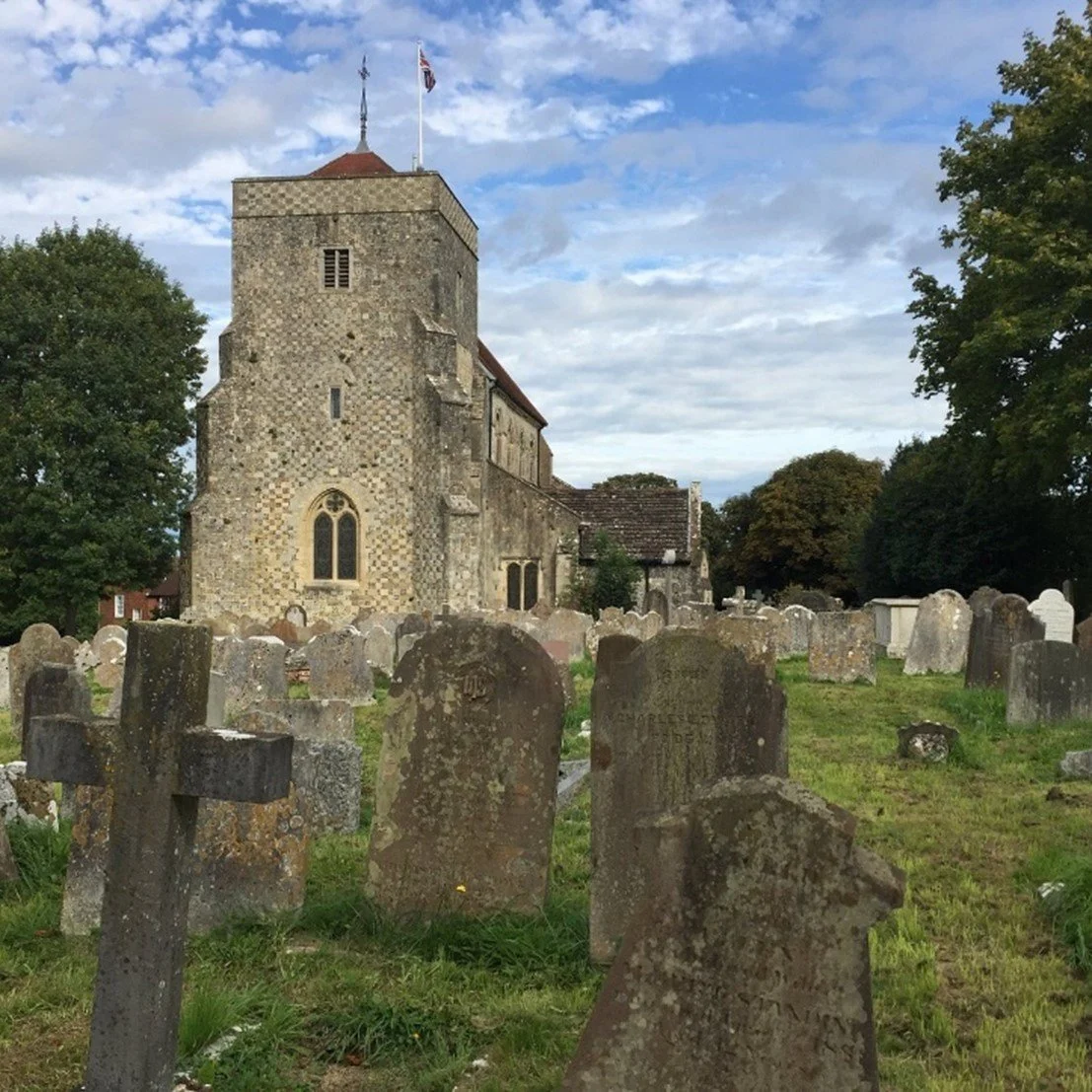
St Andrew and St Cuthman’s Church, Steyning

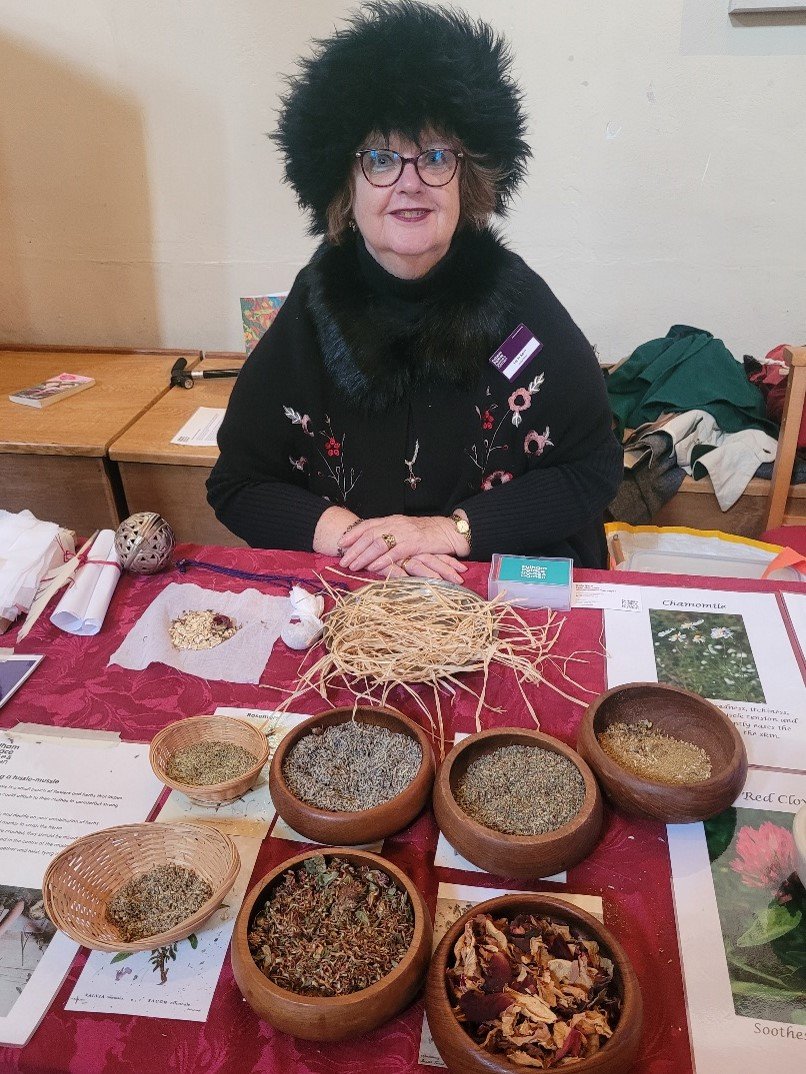
Volunteer Tricia Kern at the tussie mussie station

Richard Fitz James, Bishop of London (A 1506 - 1522)

It is thought the panels (dated from 1522) were at Fulham Palace during the time of Richard Fitz James, Bishop of London.  Bishop Fitz James had escorted Catherine of Aragon when she first came to Britain to marry Henry’s older brother, Prince Arthur, Prince of Wales.  Bishop Fitz James officiated at the couple’s wedding. Upon Prince Arthur’s death at Ludlow Castle, months after the Prince and Princess were married, Richard Fitz James remained a supporter of Catherine throughout her time of troubles, in these lands.  It is known the Bishop of London housed Catherine of Aragon after prince Arthur’s death, during 1506, at Fulham Palace when she was recovering from an unknown illness.  Bishop Fitz James pulled down the old Fulham Palace and built a new one in the “Tudor style”.  It is thought Bishop Fitz James commissioned the wonderfully carved panels to adorn the chapel at the Palace.  The carvings survived the confusing spiritual years of the Reformation.  Bishop Fitz James was the last Roman Catholic Bishop of London. 

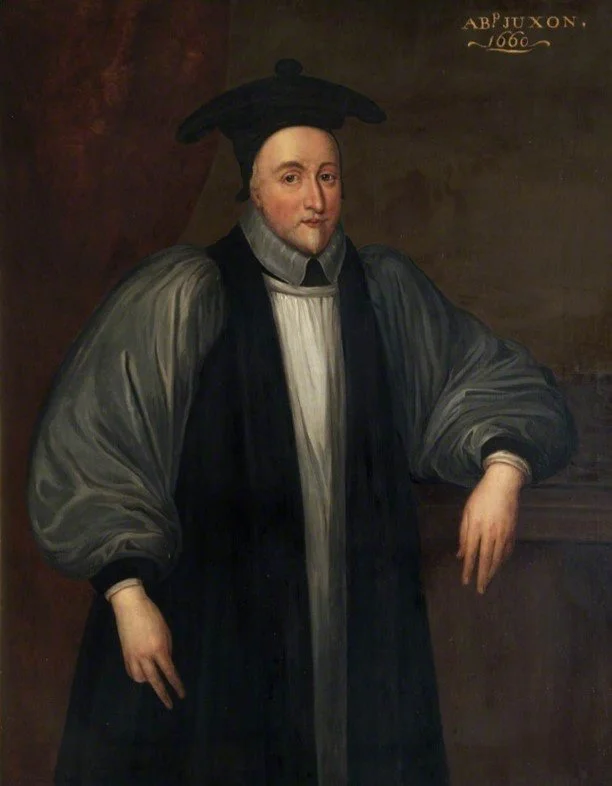
William Juxon, Bishop of London (A 1633 - 1649) Archbishop of Canterbury (A1660 – 1663)

William Juxon – 1660 (Photo credit, Lambeth Palace)

During the turbulent years of the civil war, Bishop Juxon had to be careful in how he carried out any sacred duties as the parliamentarians were in charge of the country.   Bishop Juxon, whom had been retired by parliament members in 1646, was the only priest to attend to King Charles I’s last rites, on the scaffold in Whitehall, in January 1649.  The Bishop, also oversaw King Charles I last offices, which was not an easy task to fulfil given the views of the parliament members of the late King; and the argument over where he should be buried.   Bishop Juxon retired for 10 years at his home in Gloucestershire during the ruling time of The Lord Protectors, Oliver and Richard Cromwell.  

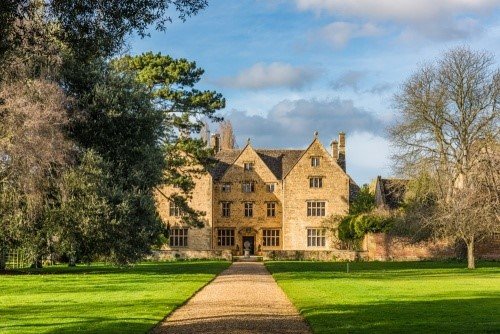
Little Compton Manor House – Juxon’s country home

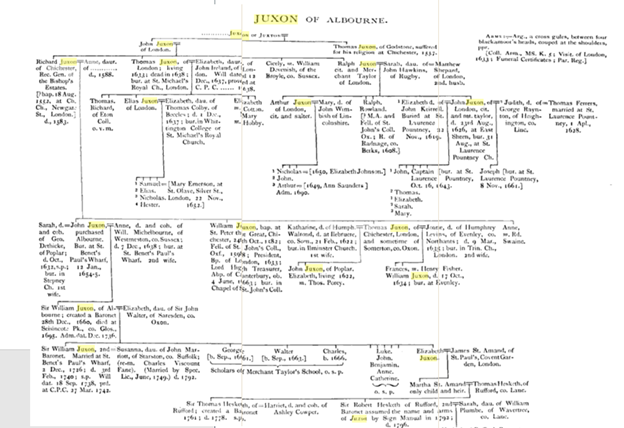
At the Restoration in 1660, it came to light that many treasures from Fulham Palace had been stored at Bishop Juxon’s brother John’s home in West Sussex as well as at the Bishop’s home in Gloucestershire.  The securing of the treasures from Fulham Palace became a family affair as other Juxon family members are known to have held various items such as chairs and candlesticks.  The link between Fulham Palace and Steyning became clearer when Bishop Juxon’s great-niece Elizabeth, married James St Amand, whom had inherited the lay rectorship of Steyning Church from his father. 

Juxon family tree

James St Amand lived at Steyning Rectory and had an artist called S.H. Grimm visit, whom recorded the presence of the Tudor Rose ceiling and noted that the carved ceiling was similar to that of those on the Steyning screen. It is thought the panels were also at the vicarage at this time in the 1700s but had been covered up in some way, so frustratingly Mr Grimm did not make a likeness of the screen whilst at the Parsonage.  The screen was given to St Andrew and St Cuthman’s Parish Church in 1983, as it looked so out of place in the new Rectory building.  The Steyning screen can be seen at the north east end of St Andrew and St Cuthman’s Parish Church and is well worth a visit just to see all the imagery and important meaning behind this finely carved screen.

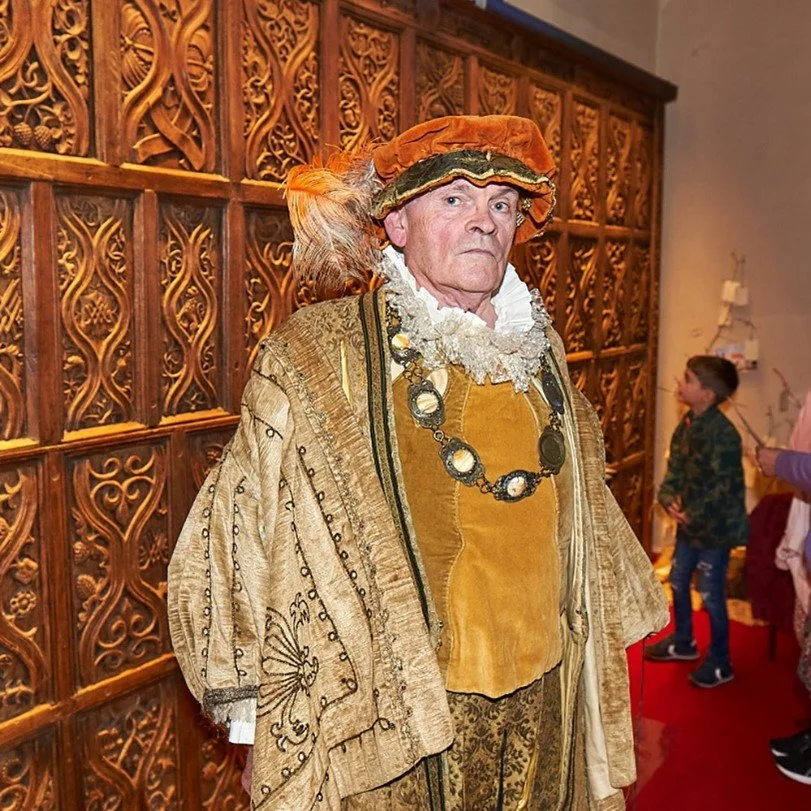
Henry VIII in front of the Steyning screen

Interested in the screen?  Read volunteer Susan Richard’s blog analysing the iconography of the screen here - https://www.fulhampalacevolunteers.org/blog/2022/6/8/the-steyning-screen?rq=steyning

 Acknowledgements

Mark Heather - Vicar of St. Andrew and St Cuthman’s Parish Church and Parishioners https://steyningparishchurch.org

Lynda Denyer, Chris Tod, David Thompson, Doug Thompson, Museum/Library researchers and authors of an illustrated booklet, for sale about the Steyning screen.  http://www.steyningmuseum.org.uk/

Alexis Haslam - Community archaeologist

Kate Kern - Learning and engagement manager

Wash-day blues: doing the washing at the public laundry in Lime Grove

A welcome return to the wash-houses of Hammersmith and Fulham, front of house volunteer Anne Connaughton shares her research on doing the washing at the public laundry in Lime Grove.

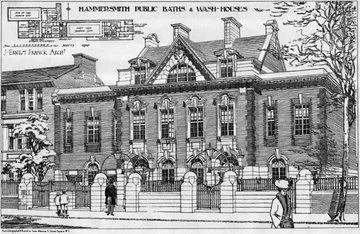
Some readers might remember taking the family laundry to the Hammersmith Public Wash-house in Lime Grove. The entrance was actually in Scotts Road. People walking past that site today could be unaware of the history of the immediate locality. Hence the timeliness of this blog.

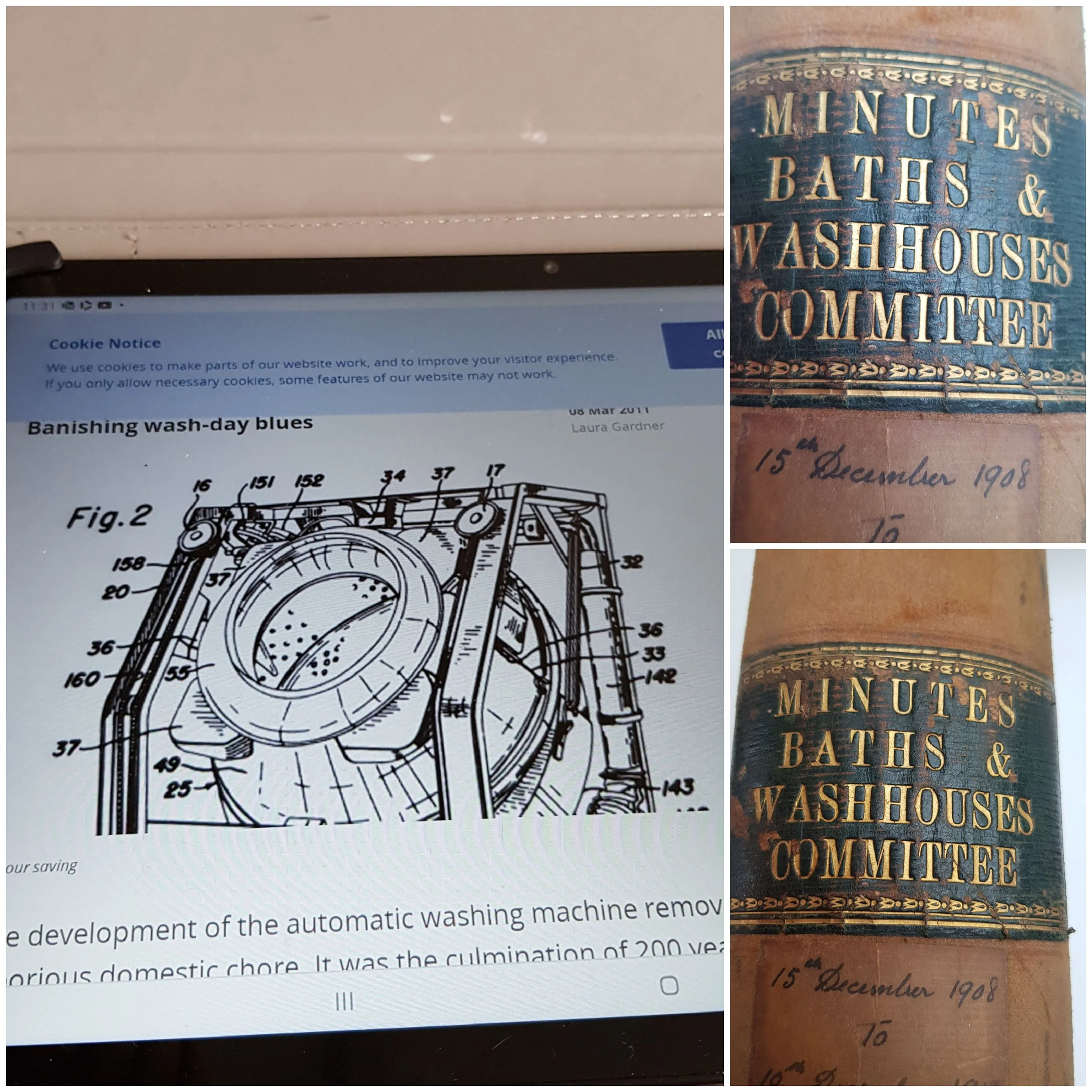
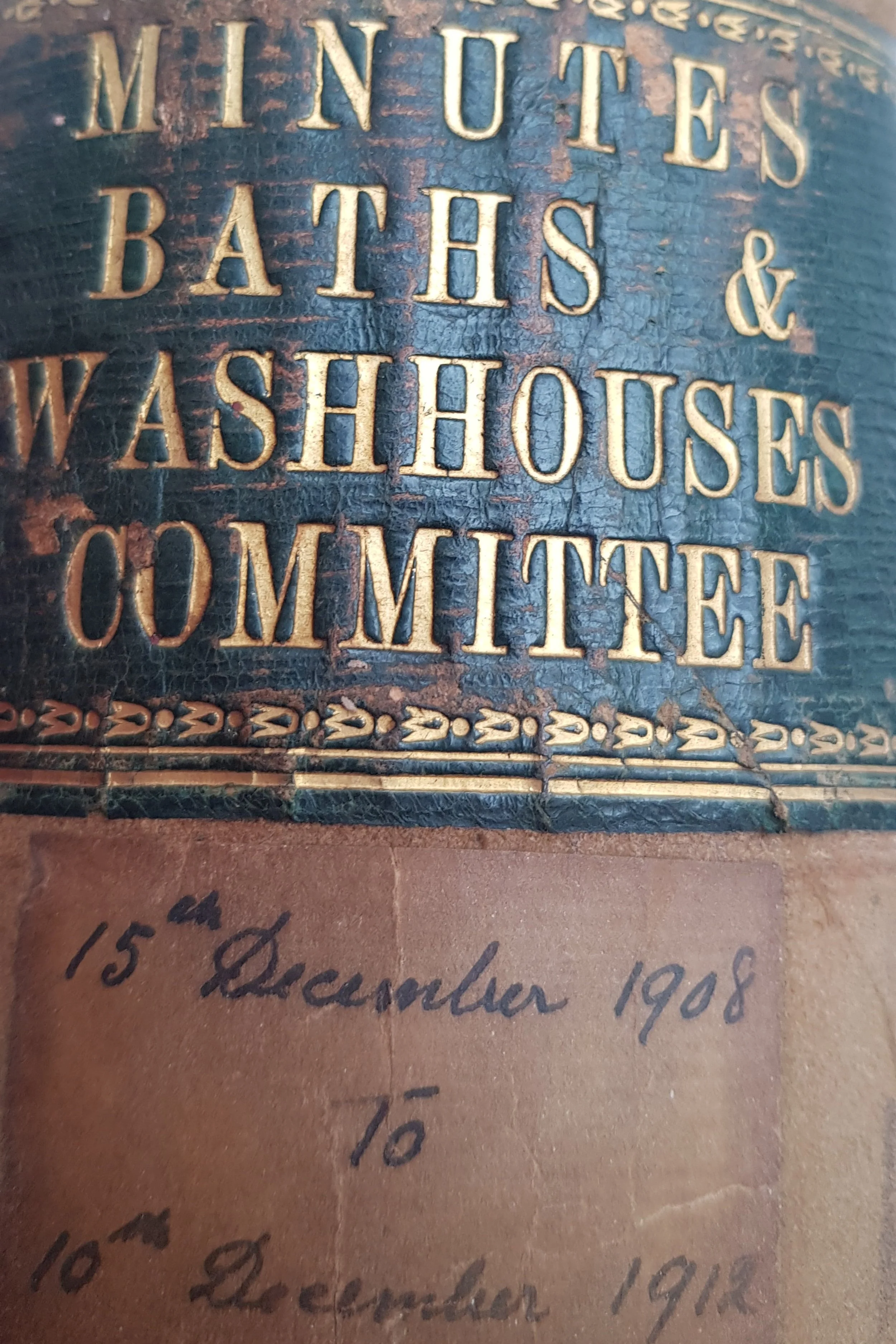
The records of the Baths and Wash-houses Committee (B&WC) give a fulsome account of the establishment of the Hammersmith Public Baths and Wash-House. Lime Grove like similar places,  would have enjoyed regular patronage. They became popular meeting points for customers, who could also use an in-house cafe and place their children in a creche, while they got down to business.

Records show how some northern cities stole a March on London, vis a vis the provision of public wash-houses. By the mid-19th century, some London parishes had opened public washing facilities. Cleanliness campaigners set their sights on buildings “where all the conveniences for washing and drying clothes should be provided free of charge or at a trifling cost per hour...gladly accepted by the classes requiring such conveniences “. They advocated that such buildings “should be arranged as to be capable of enlargement......with its machinery and fittings, should be constructed with the best materials and workmanship, plain but strong, suited to the classes it is intended to accommodate, and with due regard to ventilation, light and order”.

The first electric machines appeared at the start of the 20th century. Early models were produced by adding an electric motor to existing wooden tubs. The first customers  of the laundry on the Scotts Road site may well have used machinery based on this design. Users ran the risk of electrocution, so wooden tubs were replaced with metal tubs in enameled cabinets,  with waterproof motors. Water was heated separately and added to the tub. By the 1950s it was possible to heat the water electrically.

In its early years, the Hammersmith Public Baths and Wash-house were coal-fired, so  for many years, supplies were delivered from the coal fields in South Wales. There was some unoccupied land, with direct access to Scotts Road. The B&WC, subject to council approval, considered a proposal from the Cartage Committee, to purchase this land, on the grounds that it was a suitable site for a deposit, and stabling accommodation for four horses. That tells us that the coal, having reached London,  was conveyed to the site by horses. Given what Hammersmith Metropolitan Borough Council had paid for this land, £30* was deemed a fair annual rent.

If anyone recollects the old public wash-houses in either Hammersmith or Fulham, contributory blogs are welcome.

Useful Sources (including italicised extracts)

Hammersmith Metropolitan Borough Council: Minutes of The Baths and Wash-houses Committee (Hammersmith and Fulham Local History Archives)

Baths and Wash-houses for the Labouring Classes (1852) : P, Pritchard Baly (Wellcome Collection)

 Baths and Wash-houses Historical Archive

Banishing Wash-Day Blues (2011) : Institute of Mechanical Engineers

London Wash-house (1970-1979) : YouTube

Liverpool 1960s – Public Wash-house: YouTube

The Victorian Wash House  - Dickens  Museum : YouTube

*£30 in 1907, when Hammersmith Public Baths and Wash-House opened, was the approximate equivalent of £2,781,73 in August 2022 (Bank of England Inflation Calculator)

A note for remembrance day

A thought about remembrance day by volunteer development officer, Sharda Rozena.

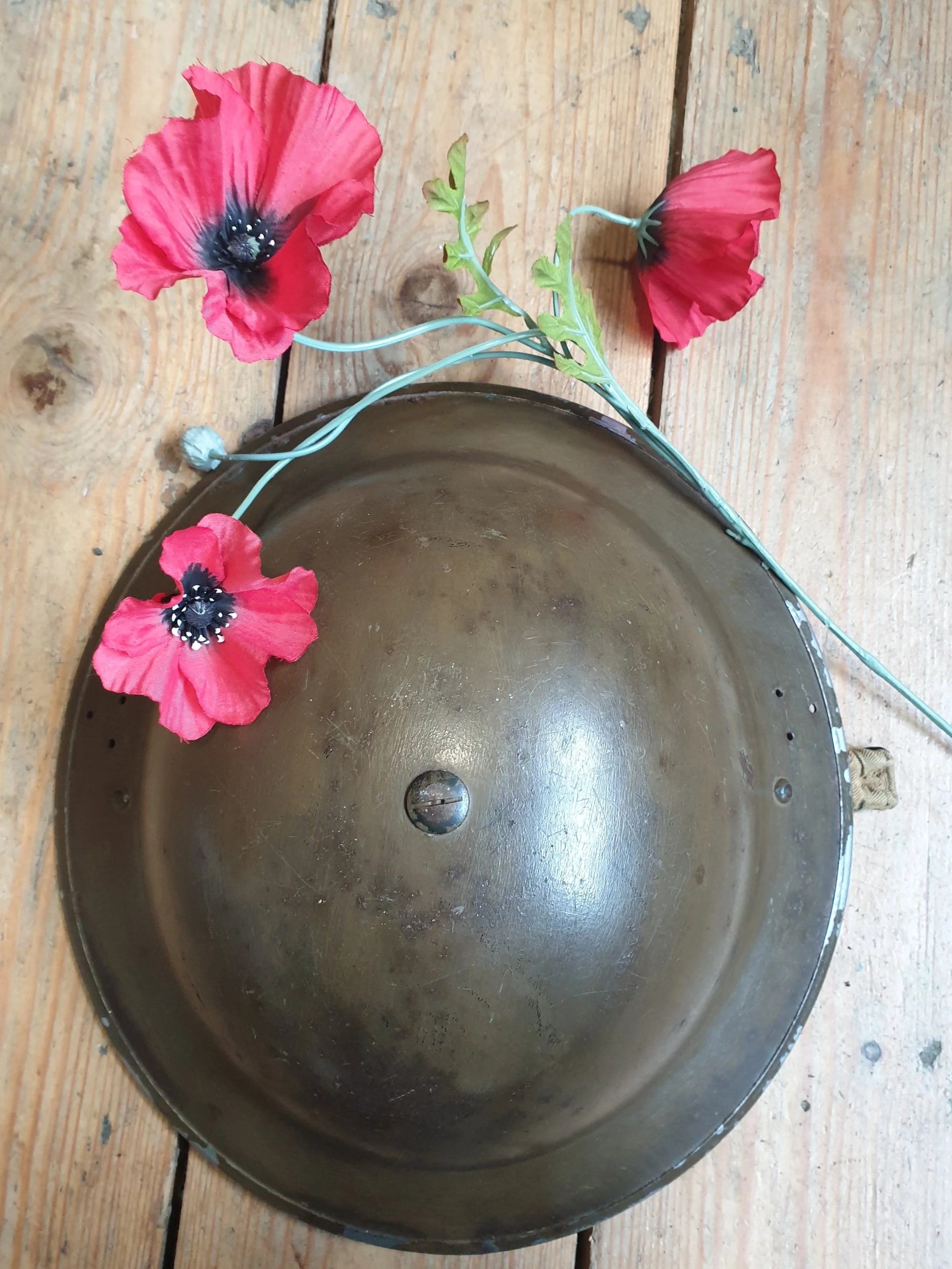
In 1914 when the First World War started, most people thought it would be short-lived and very few soldiers had any idea of the reality of trench warfare until years into the war when the term ‘shell shock’ was coined to describe the post-traumatic stress disorders that many suffered. We often celebrate war heroes with commemorative statues but its equally important to remember all those who had to live through those apprehensive times and did suffer physically, mentally and economically.

Many women supported the front line as nurses, doctors, ambulance drivers and translators; they joined manufacturing factories and managed agricultural work. For some women this was the first time they were allowed to join the workforce but when the war ended in 1918 many were told to leave. Indeed it was only after the war in 1918 that women over 30 and who owned property were allowed to vote for the first time. But it was not until 1928 that women had equal suffrage to that of men.

Of course, Fulham Palace was one of thousands of places that played its part in the First World War. The Palace was formally opened as the Freemasons Hospital No. 2 on the 31 May 1918. The hospital was able to house 100 patients, mostly convalescing from injuries. The great hall was used as the dining room and the drawing room (now café) was one of the wards. You can learn lots more about Fulham Palace and the First World War by watching community archaeologist Alexis’s brilliant lecture, ‘Freemasons hospital no. 2 at Fulham Palace’ here: https://www.youtube.com/watch?v=uqrjjg-gVTo.

Being my birthday, the 11 November is a celebratory day for me, but I will take a moment to remember the resilience, bravery and hard work of all those who lived and fought during the First World War.

Volunteers as re-narrators of colonial histories present at Fulham Palace

Laurence Maidment-Blundell tells us more about his doctoral research on the contribution of volunteers towards the de-colonisation of British cultural institutions, including Fulham Palace.

Over the last few years, there has been mounting pressure for cultural institutions to acknowledge, engage with, and research their colonial and imperial history and heritage and the contemporary legacies of these. This is because cultural institutions and individuals connected to them have been linked to justifying, legitimising, or profiteering from colonial and imperial activity, e.g., Bishop Compton and his use of enslaved labour to locate ‘exotic’ plants for his garden. Consequently, there have been calls for cultural institutions to ‘de-colonise’ themselves by acknowledging the colonial/imperial connections of their organisation; by recognising the presence of those that have been written out of history; and by dismantling the infrastructure that (re)produces colonial inequalities and legacies in the present.

So where do volunteers fit in? Any organisation that wants to ‘de-colonise’ itself requires the involvement of their volunteers. This is because volunteers not only play a key role in communicating the institution’s histories and stories to various publics, but they are also often the public face of an organisation and act as its ambassadors, whether as a friendly face as a front of house volunteer or as an insightful and knowledgeable tour guide volunteer. As a result, there are three fundamental questions that I am grappling with as part of my PhD:

  1. How do volunteers respond to their institution’s ‘de-colonisation’ efforts?

  2. How should institutions engage with volunteers as they ‘de-colonise’ their collections, properties, and parklands?

  3. How can institutions support their volunteers in communicating ‘de-colonised’ histories to various publics in an appropriate, concise, and critical manner?

I am also sure that Fulham Palace is a place that holds a lot of meaning and significance to all volunteers. It is a place that some of you may have grown up with, a place where you can experience the historic home museum and gardens, or a place to socialise and spend time with fellow volunteers. Consequently, I want to know what your opinion is concerning the Palace’s decision to acknowledge and research the connections of the Bishops of London and Fulham Palace itself to Trans-Atlantic Slavery and historic colonialism, and how you think this may impact your volunteering experience.

 If you would like to be interviewed, feel free to email me at laurence.maidment-blundell.15@ucl.ac.uk  

Cleanliness and godliness- The heyday of Hammersmith Public Baths

Anne Connaughton, front of house volunteer, tells us about the history of Hammersmith Public Baths after Bishop Blomfield’s all-important support for this institution.

Readers will remember the Hammersmith Public Baths in Lime Grove as a hub for sporting and recreational activities, including swimming galas and wrestling tournaments. The Public Baths and Wash-houses Act (1843) and Bishop Blomfield’s support may have been the springboard for such institutions, but it took considerable organisational nous to make it happen.

Local records tell us that the Hammersmith Baths and Wash-houses Committee (B&WC) was instrumental in the purchase of land from the Governors of the Latymer Foundation, for the joint purposes of Baths and a Wash-house, and a technical institute (which now houses the University of The Arts) at a price of £8,500, current value approximately £721,609.88*, and bearing in mind that building work started in 1905, and the Baths opened to the public in 1906. Part of the land was conveyed to the Metropolitan Borough of Hammersmith Council and the remainder to the London County Council, reflecting an accommodation between the two bodies.

The ensuing enquiry undertaken by the Local Government Board examined the application from Hammersmith Metropolitan Borough Council for the purchase of land in Scotts Road as a potential site for public baths and a washhouse. Major features would include two swimming baths, both 105 feet long and 30 feet wide. The deep end would plunge to 8 feet, and there would be a four-tiered diving stage.

A major contributory factor in the venue’s developing success stemmed from the decision of the B&WC to adapt the site of the first class swimming Baths for use as a space for public events and entertainments during the winter. The architect for the overall scheme was asked to submit an estimate of the cost of providing a floor and letting the space. He decided to invite tenders from other contractors, in order to reach a definite figure. What became known as the Large Hall staged cinematographic entertainments. The Hammersmith Central Labour Party hired the space for whist drives. The Union of Post Office Workers convened a mass meeting of postal workers at the venue.

In February 1920, the B&WC decided to let the Large Hall on Sundays. In 1920s, the venue staged dances in aid of the Shepherds Bush Kiddies Country Fund. The Hammersmith Conservative Party held Cinderella dances there. The Irish Exile Social Club and the West London Branch of the National Federation of Retail Newsagents hosted dances there. To celebrate the end of World War Two, Hammersmith Boy Scouts held a victory party.

Records also reveal how the premises served as a public food kitchen during World War One. The B&WC decided to extend facilities for mixed bathing. The War Pensions Committee had a private line attached to the telephone at the Baths and Wash-House. Another responsibility of the B&WC was to consider tenders for the supply of coal and soap for the baths and washhouse, and providing window cleaning facilities.

My next blog will tell the story of how the Hammersmith Wash-House transformed the experience of wash day.

Useful sources include:

Baths and Wash-houses Historical Website

*Inflation Calculator (bankofengland.co.uk)

Lime Grove Baths (lostlidos.co.uk)

Minutes of The Hammersmith Baths and Wash-houses Committee ( Hammersmith and Fulham Local History Archives)

The Public Bath and Wash-house as a Focus for Victorian Social Reform (The Victorian Web)

West London Observer (British Newspaper Archive)

An insight into some of Anne’s research

Pocahontas and Bishop John King

Sandra Faulkner, front of house and events volunteer, has done some research on the connection between Pocahontas, Bishop John King and Fulham Palace.

 A chance remark by Lee about the Palace and Pocahontas sent me to the internet in search of more information and I was interested in what I found when digging. 

In 1617 Rebecca Rolfe (aka Pocahontas) was visiting London with her second husband John, a Virginian tobacco farmer.  She was received at Court and was entertained in London by the then Bishop of London.  John King ‘with festival state and pomp beyond what I have seen in his greate hospitalite afforded to other ladies’, this according to Samuel Purchas an English cleric at the time.’

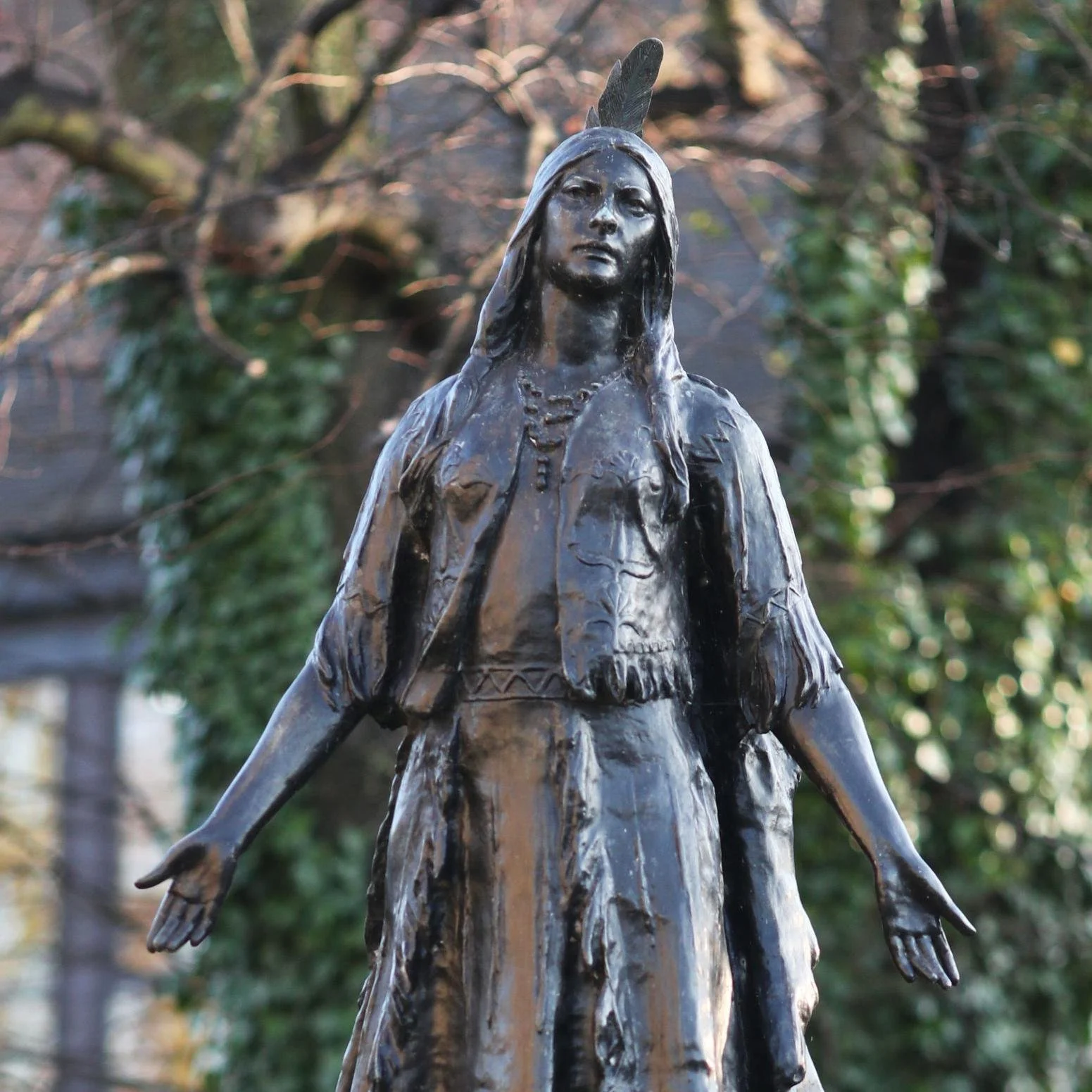
Pocahontas converted to Christianity in 1614 and in 1616 arrived in London to promote and recruit new settlers for Jamestown.  However, the polluted London air did not agree with her so, although unable to find any evidence of her visiting Fulham Palace.  Sadly Pocahontas died, possibly of tuberculosis on the ship ‘The George’ at Gravesend in March 1617 on her return to Virginia.  Aged approximately 21 years she is buried at St George’s Church, Gravesend where there is a statue and stained glass window in her memory.  Her Anglicised name Rebecca means ‘mother of two peoples’ and she left a legacy of breaking down walls of interracial inequality and religious freedoms. 

John King was born in Buckinghamshire, studied at Westminster School and matriculated at Christ Church Oxford.  After many senior clerical positions he was consecrated Bishop of London on 11 September 1611.  He was Royal Chaplain under Queen Elizabeth I and James I, who styled him ‘the King of Preachers’.  Bishop King died on Good Friday 30 March 1621 and was buried at St Pauls.  There is a fine portrait of him in the National Gallery.  With his wife Joan Freeman he had eight children, one of whom, Henry, was Bishop of Chichester.  I grew up in Hammersmith and never realised that its main street was named after him.  Bishop John King also left a great legacy in a bequest in his will for a charity got the poor of Fulham and Hammersmith and that charity which bears his name is still in existence today.  I will continue to dig in the hope that there is a connection with Fulham Palace. 

Pocahontas status in Gravesend