
Learning volunteer Tricia Kern tell us about the mystery of the Steyning screen and how it travelled from Fulham Palace to Steyning’s Parish Church in West Sussex.
The history behind the superbly, carved panel screen, which were commissioned in celebration of the marriage of Henry VIII and Catherine of Aragon, once were owned by Fulham Palace; but are now in situ at Steyning Parish Church, has until recently years been a conundrum. How did the Steyning screen get to where it is now and who took part in their removal from Fulham Palace and why?
Remote volunteering
I am a remote learning volunteer, and on the 27 October, I attended the 500-year anniversary celebration of the oak panels in St Andrew and St Cuthman’s Parish Church of Steyning, undertaking a crafting activity with the children and adults. The reason I was volunteering so far from the Palace is because Alexis, our community archaeologist found out that the oak panels had been rehoused in West Sussex and I live nearby.
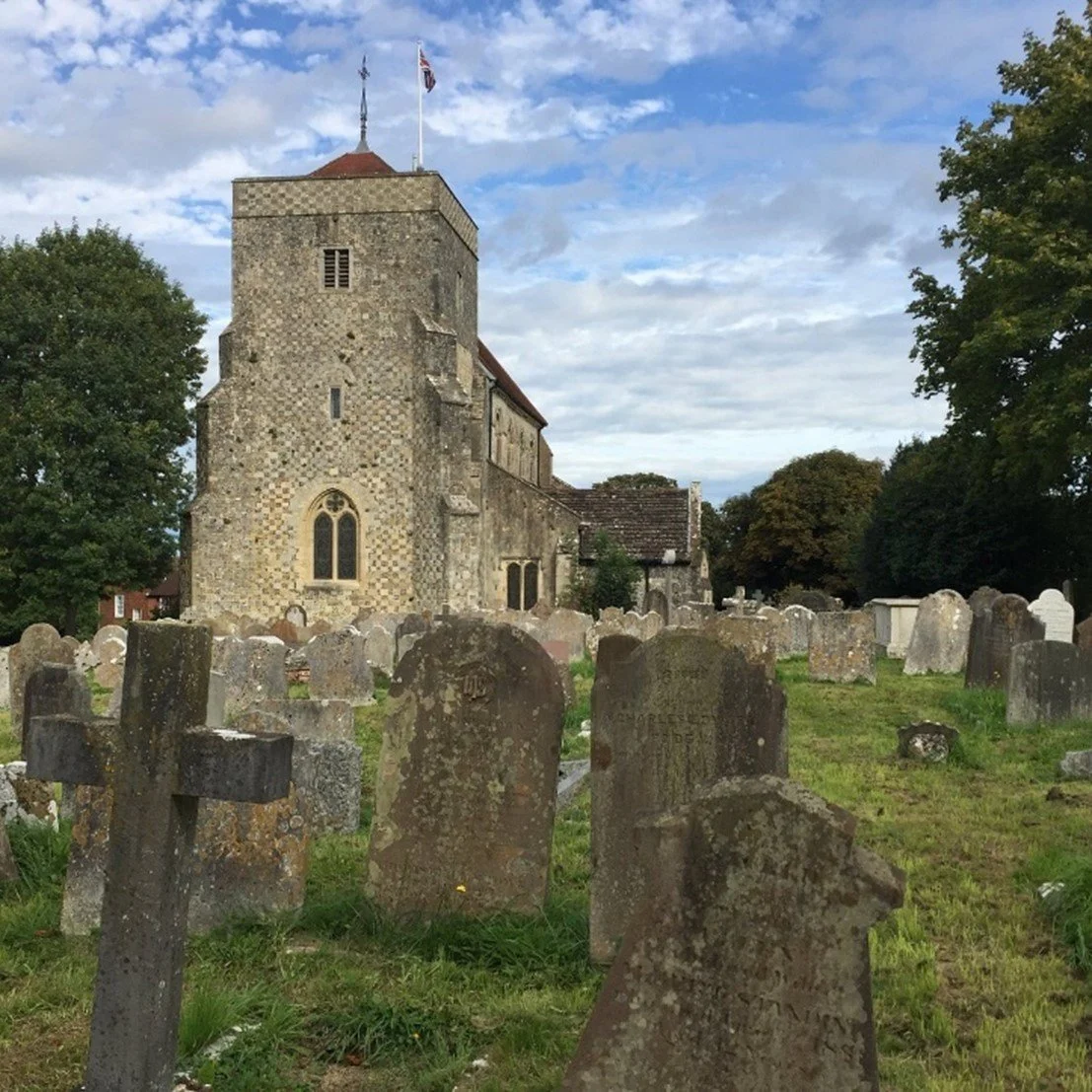
St Andrew and St Cuthman’s Church, Steyning
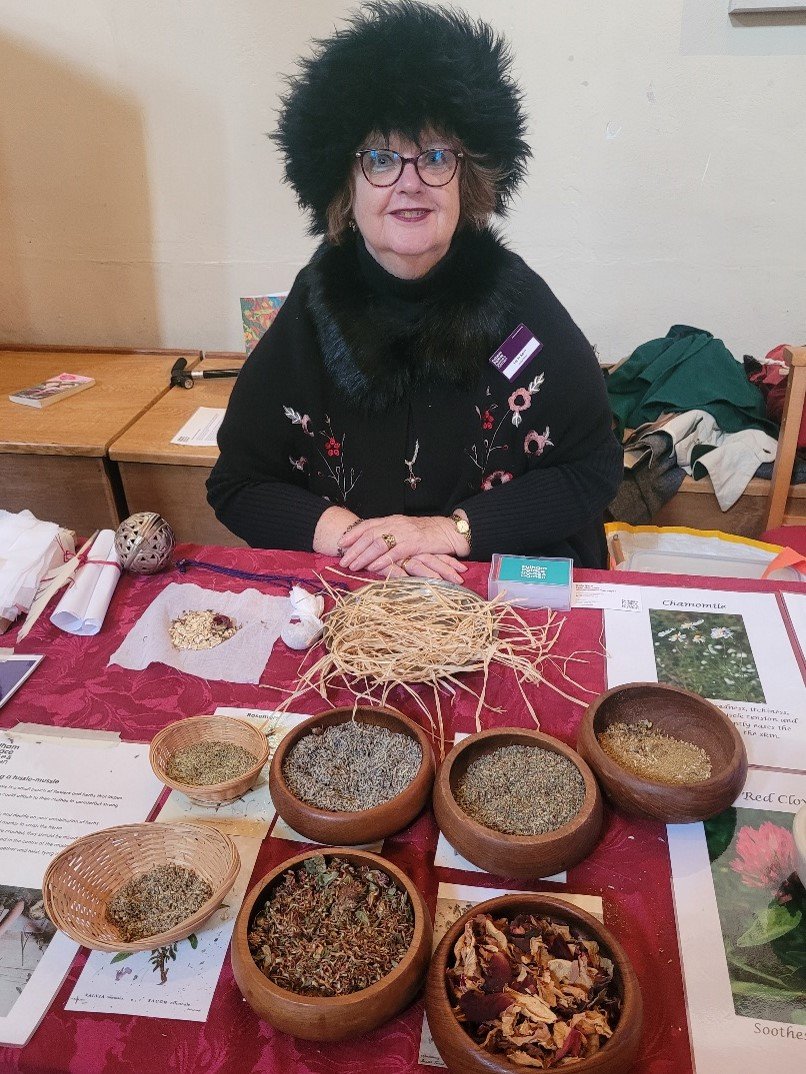
Volunteer Tricia Kern at the tussie mussie station
Richard Fitz James, Bishop of London (A 1506 - 1522)
It is thought the panels (dated from 1522) were at Fulham Palace during the time of Richard Fitz James, Bishop of London. Bishop Fitz James had escorted Catherine of Aragon when she first came to Britain to marry Henry’s older brother, Prince Arthur, Prince of Wales. Bishop Fitz James officiated at the couple’s wedding. Upon Prince Arthur’s death at Ludlow Castle, months after the Prince and Princess were married, Richard Fitz James remained a supporter of Catherine throughout her time of troubles, in these lands. It is known the Bishop of London housed Catherine of Aragon after prince Arthur’s death, during 1506, at Fulham Palace when she was recovering from an unknown illness. Bishop Fitz James pulled down the old Fulham Palace and built a new one in the “Tudor style”. It is thought Bishop Fitz James commissioned the wonderfully carved panels to adorn the chapel at the Palace. The carvings survived the confusing spiritual years of the Reformation. Bishop Fitz James was the last Roman Catholic Bishop of London.
William Juxon, Bishop of London (A 1633 - 1649) Archbishop of Canterbury (A1660 – 1663)
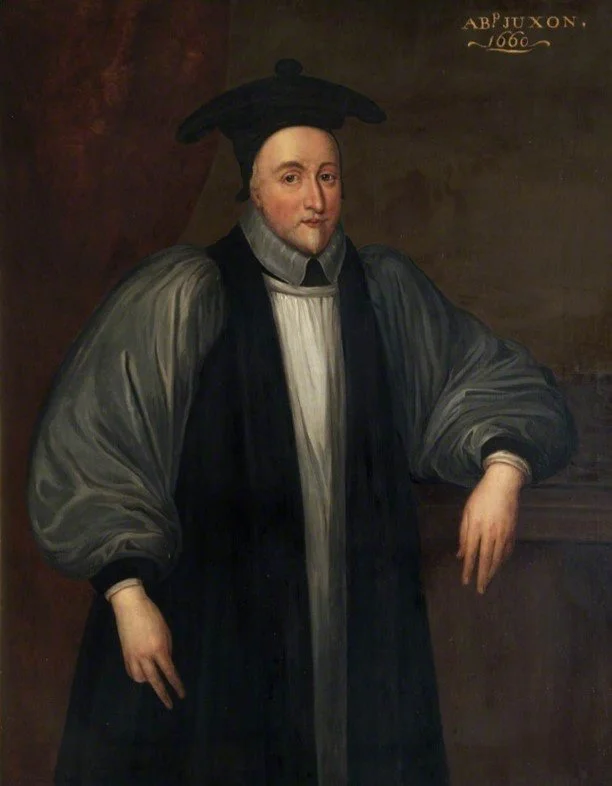
William Juxon – 1660 (Photo credit, Lambeth Palace)
During the turbulent years of the civil war, Bishop Juxon had to be careful in how he carried out any sacred duties as the parliamentarians were in charge of the country. Bishop Juxon, whom had been retired by parliament members in 1646, was the only priest to attend to King Charles I’s last rites, on the scaffold in Whitehall, in January 1649. The Bishop, also oversaw King Charles I last offices, which was not an easy task to fulfil given the views of the parliament members of the late King; and the argument over where he should be buried. Bishop Juxon retired for 10 years at his home in Gloucestershire during the ruling time of The Lord Protectors, Oliver and Richard Cromwell.
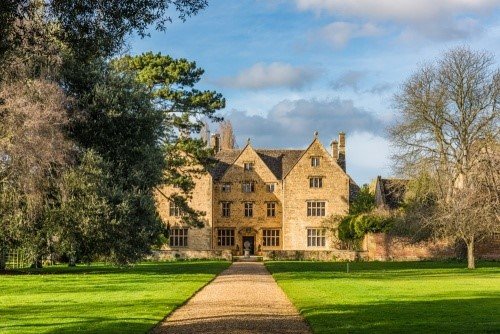
Little Compton Manor House – Juxon’s country home
At the Restoration in 1660, it came to light that many treasures from Fulham Palace had been stored at Bishop Juxon’s brother John’s home in West Sussex as well as at the Bishop’s home in Gloucestershire. The securing of the treasures from Fulham Palace became a family affair as other Juxon family members are known to have held various items such as chairs and candlesticks. The link between Fulham Palace and Steyning became clearer when Bishop Juxon’s great-niece Elizabeth, married James St Amand, whom had inherited the lay rectorship of Steyning Church from his father.
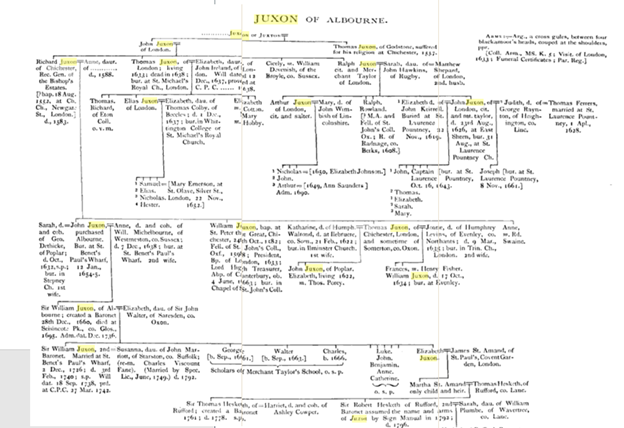
Juxon family tree
James St Amand lived at Steyning Rectory and had an artist called S.H. Grimm visit, whom recorded the presence of the Tudor Rose ceiling and noted that the carved ceiling was similar to that of those on the Steyning screen. It is thought the panels were also at the vicarage at this time in the 1700s but had been covered up in some way, so frustratingly Mr Grimm did not make a likeness of the screen whilst at the Parsonage. The screen was given to St Andrew and St Cuthman’s Parish Church in 1983, as it looked so out of place in the new Rectory building. The Steyning screen can be seen at the north east end of St Andrew and St Cuthman’s Parish Church and is well worth a visit just to see all the imagery and important meaning behind this finely carved screen.
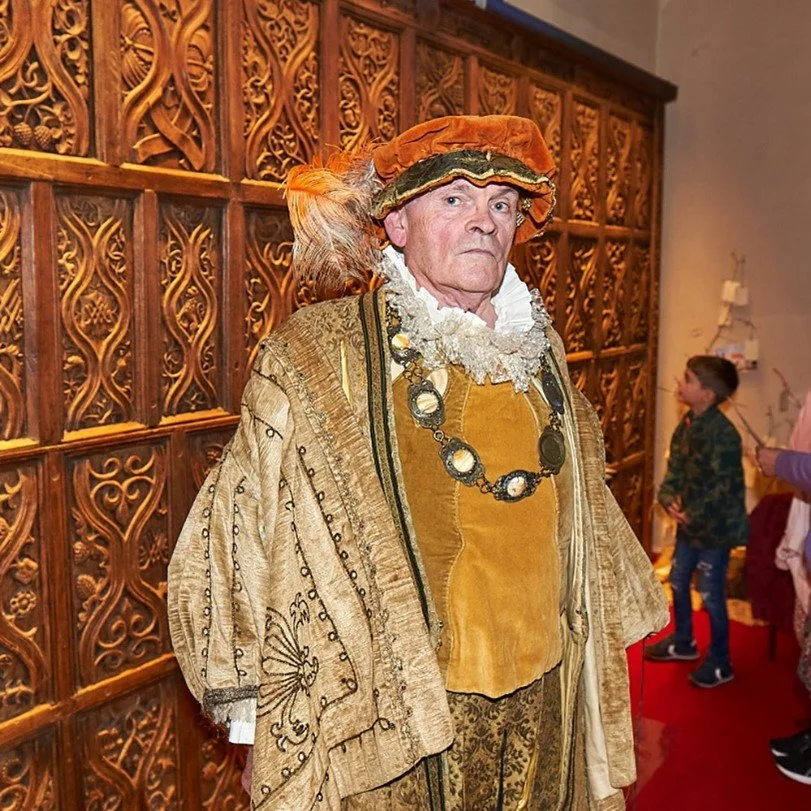
Henry VIII in front of the Steyning screen
Interested in the screen? Read volunteer Susan Richard’s blog analysing the iconography of the screen here - https://www.fulhampalacevolunteers.org/blog/2022/6/8/the-steyning-screen?rq=steyning
Acknowledgements
Mark Heather - Vicar of St. Andrew and St Cuthman’s Parish Church and Parishioners https://steyningparishchurch.org
Lynda Denyer, Chris Tod, David Thompson, Doug Thompson, Museum/Library researchers and authors of an illustrated booklet, for sale about the Steyning screen. http://www.steyningmuseum.org.uk/
Alexis Haslam - Community archaeologist
Kate Kern - Learning and engagement manager