
Sandra Faulkner, front of house and events volunteer, has done some research on the connection between Pocahontas, Bishop John King and Fulham Palace.
A chance remark by Lee about the Palace and Pocahontas sent me to the internet in search of more information and I was interested in what I found when digging.
In 1617 Rebecca Rolfe (aka Pocahontas) was visiting London with her second husband John, a Virginian tobacco farmer. She was received at Court and was entertained in London by the then Bishop of London. John King ‘with festival state and pomp beyond what I have seen in his greate hospitalite afforded to other ladies’, this according to Samuel Purchas an English cleric at the time.’
Pocahontas converted to Christianity in 1614 and in 1616 arrived in London to promote and recruit new settlers for Jamestown. However, the polluted London air did not agree with her so, although unable to find any evidence of her visiting Fulham Palace. Sadly Pocahontas died, possibly of tuberculosis on the ship ‘The George’ at Gravesend in March 1617 on her return to Virginia. Aged approximately 21 years she is buried at St George’s Church, Gravesend where there is a statue and stained glass window in her memory. Her Anglicised name Rebecca means ‘mother of two peoples’ and she left a legacy of breaking down walls of interracial inequality and religious freedoms.
John King was born in Buckinghamshire, studied at Westminster School and matriculated at Christ Church Oxford. After many senior clerical positions he was consecrated Bishop of London on 11 September 1611. He was Royal Chaplain under Queen Elizabeth I and James I, who styled him ‘the King of Preachers’. Bishop King died on Good Friday 30 March 1621 and was buried at St Pauls. There is a fine portrait of him in the National Gallery. With his wife Joan Freeman he had eight children, one of whom, Henry, was Bishop of Chichester. I grew up in Hammersmith and never realised that its main street was named after him. Bishop John King also left a great legacy in a bequest in his will for a charity got the poor of Fulham and Hammersmith and that charity which bears his name is still in existence today. I will continue to dig in the hope that there is a connection with Fulham Palace.
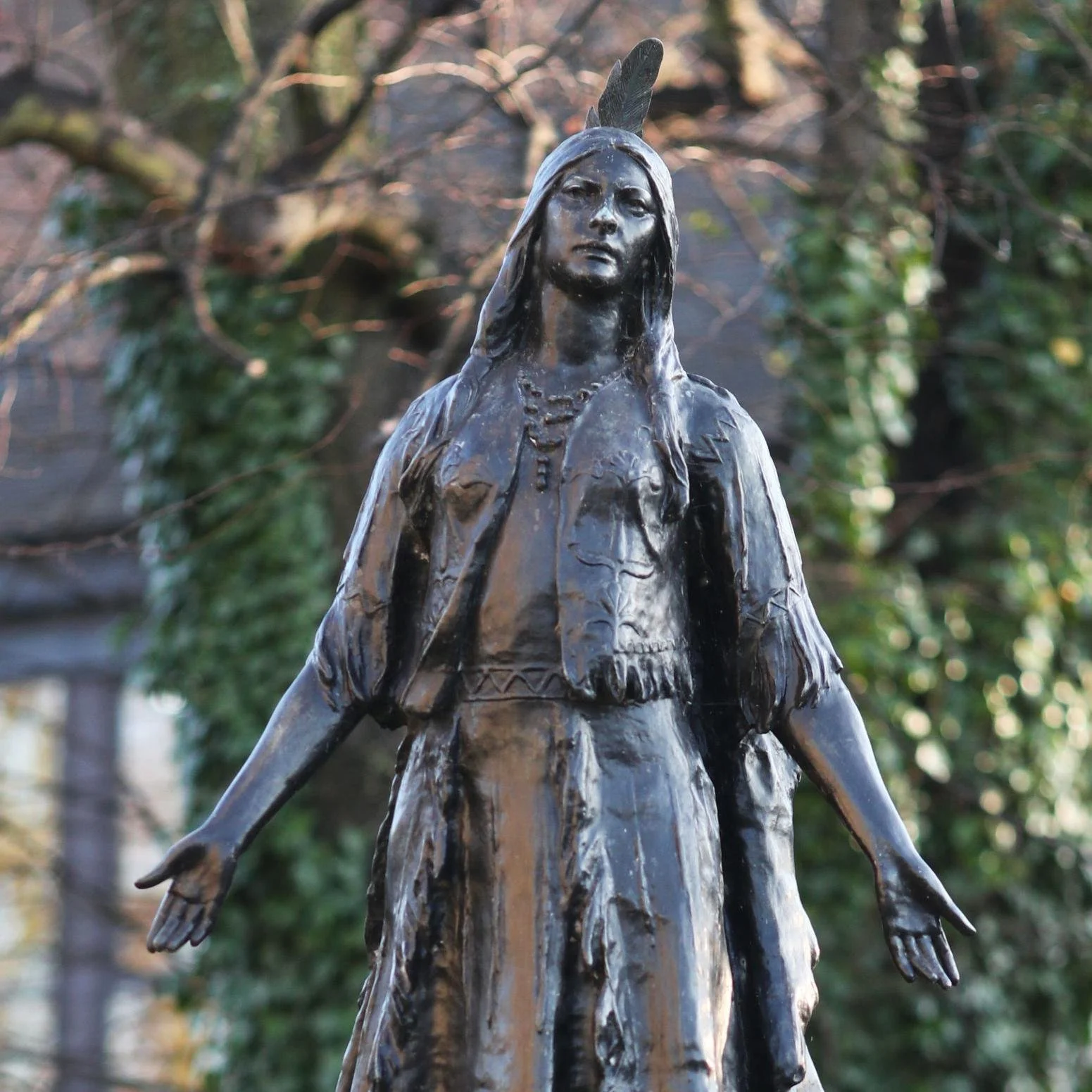
Pocahontas status in Gravesend