
Anne Connaughton, front of house volunteer, tells us about the history of Hammersmith Public Baths after Bishop Blomfield’s all-important support for this institution.
Readers will remember the Hammersmith Public Baths in Lime Grove as a hub for sporting and recreational activities, including swimming galas and wrestling tournaments. The Public Baths and Wash-houses Act (1843) and Bishop Blomfield’s support may have been the springboard for such institutions, but it took considerable organisational nous to make it happen.
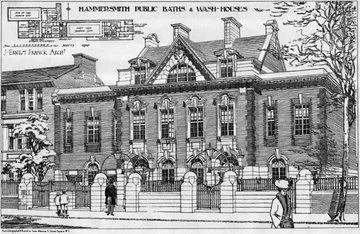
Local records tell us that the Hammersmith Baths and Wash-houses Committee (B&WC) was instrumental in the purchase of land from the Governors of the Latymer Foundation, for the joint purposes of Baths and a Wash-house, and a technical institute (which now houses the University of The Arts) at a price of £8,500, current value approximately £721,609.88*, and bearing in mind that building work started in 1905, and the Baths opened to the public in 1906. Part of the land was conveyed to the Metropolitan Borough of Hammersmith Council and the remainder to the London County Council, reflecting an accommodation between the two bodies.
The ensuing enquiry undertaken by the Local Government Board examined the application from Hammersmith Metropolitan Borough Council for the purchase of land in Scotts Road as a potential site for public baths and a washhouse. Major features would include two swimming baths, both 105 feet long and 30 feet wide. The deep end would plunge to 8 feet, and there would be a four-tiered diving stage.
A major contributory factor in the venue’s developing success stemmed from the decision of the B&WC to adapt the site of the first class swimming Baths for use as a space for public events and entertainments during the winter. The architect for the overall scheme was asked to submit an estimate of the cost of providing a floor and letting the space. He decided to invite tenders from other contractors, in order to reach a definite figure. What became known as the Large Hall staged cinematographic entertainments. The Hammersmith Central Labour Party hired the space for whist drives. The Union of Post Office Workers convened a mass meeting of postal workers at the venue.
In February 1920, the B&WC decided to let the Large Hall on Sundays. In 1920s, the venue staged dances in aid of the Shepherds Bush Kiddies Country Fund. The Hammersmith Conservative Party held Cinderella dances there. The Irish Exile Social Club and the West London Branch of the National Federation of Retail Newsagents hosted dances there. To celebrate the end of World War Two, Hammersmith Boy Scouts held a victory party.
Records also reveal how the premises served as a public food kitchen during World War One. The B&WC decided to extend facilities for mixed bathing. The War Pensions Committee had a private line attached to the telephone at the Baths and Wash-House. Another responsibility of the B&WC was to consider tenders for the supply of coal and soap for the baths and washhouse, and providing window cleaning facilities.
My next blog will tell the story of how the Hammersmith Wash-House transformed the experience of wash day.
Useful sources include:
Baths and Wash-houses Historical Website
*Inflation Calculator (bankofengland.co.uk)
Lime Grove Baths (lostlidos.co.uk)
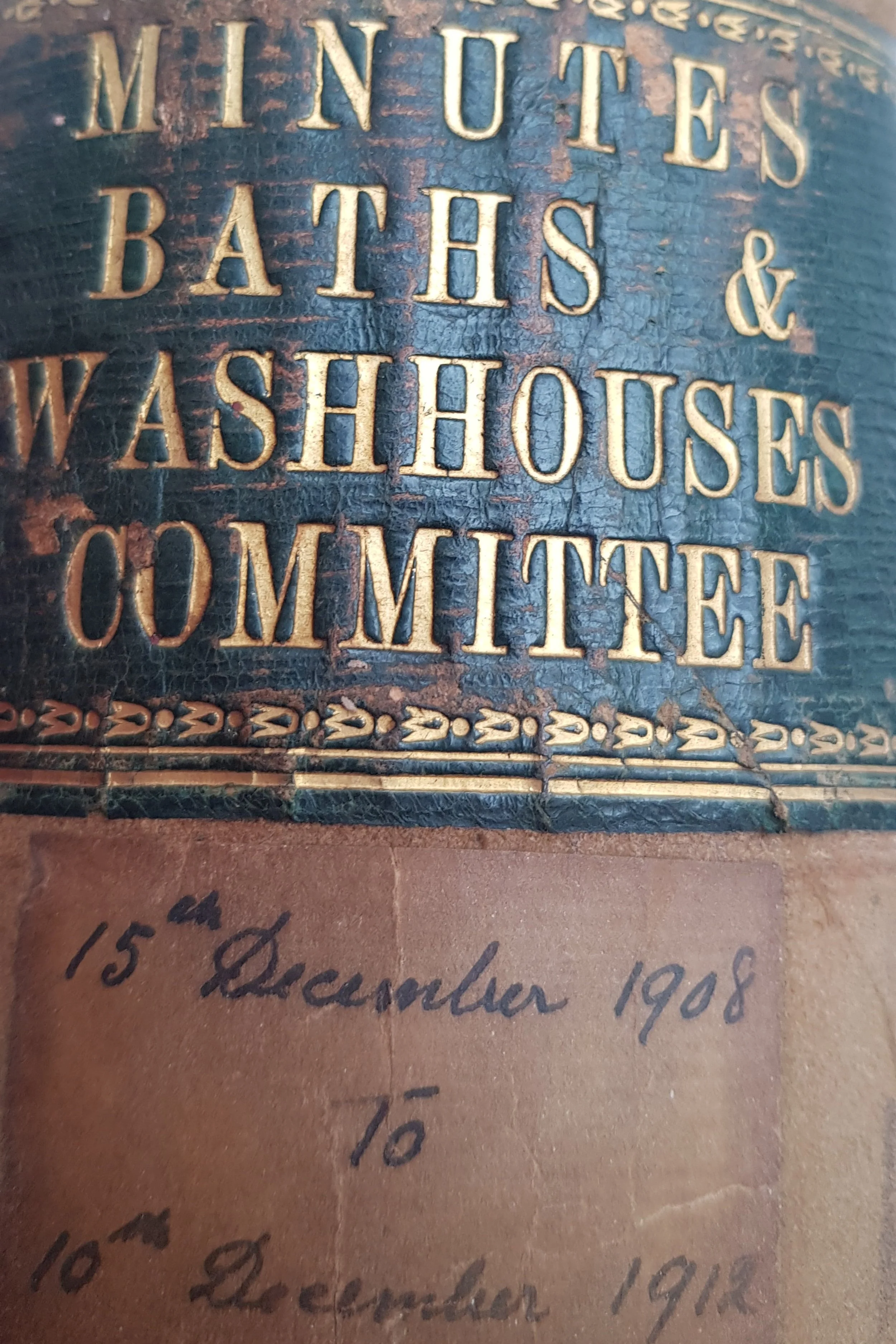
Minutes of The Hammersmith Baths and Wash-houses Committee ( Hammersmith and Fulham Local History Archives)
The Public Bath and Wash-house as a Focus for Victorian Social Reform (The Victorian Web)
West London Observer (British Newspaper Archive)
An insight into some of Anne’s research