The salvation of the labouring classes - early initiatives from The Metropolitan Borough of Fulham Baths and Wash-houses Committee

Anne Connaughton bring us a follow-up piece on public baths and wash-houses in Fulham

My previous blog highlighted the campaign to promote public baths and washhouses for use by “the labouring classes”. Once the Public Baths and Wash-houses Act 1846 became law, northern cities such as Liverpool and Manchester, having already set the pace, continued to build public washing establishments. The London Metropolitan Borough of Fulham had formed its Baths and Wash-houses Committee (B&WC) in the late 19th century.  Cleanliness; godliness and pervading views on  hygiene and disease, where it concerned the “burgeoning ranks of the urban poor “,  continued to shape public policy. However,  by now, political priorities had firmly entered the mix. The work of the Fulham B&WC became part of the wider pattern of municipal provision of  facilities, including recreational facilities.

The Committee’s brief overlapped  with conclusions drawn by the researcher Charles Booth, who  identified relatively low levels of poverty in Fulham, but where existing poverty was “extremely concentrated.” Booth fears that parts of Fulham “were becoming a dumping ground for the poor.” A contemporary report from the Medical Officer of Health for Fulham revealed that 25% of its population lived in poverty. Infant mortality stood at 116.3 per thousand births, the tenth highest figure in London. These factors, along with encroaching suburbanisation, created the requirement for better coordinated and more responsive public services.

The Fulham B&WC first met in July 1899. Its early mission was to search for suitable local premises, and to bring to life plans for a public bath(s) and wash-house. By November 1896, a site in Lillie Road was under consideration. The Committee eventually agreed upon a site for the baths in in Melmoth Place. As a  public enquiry followed, the sale proceeded and a loan was secured with the London County Council.

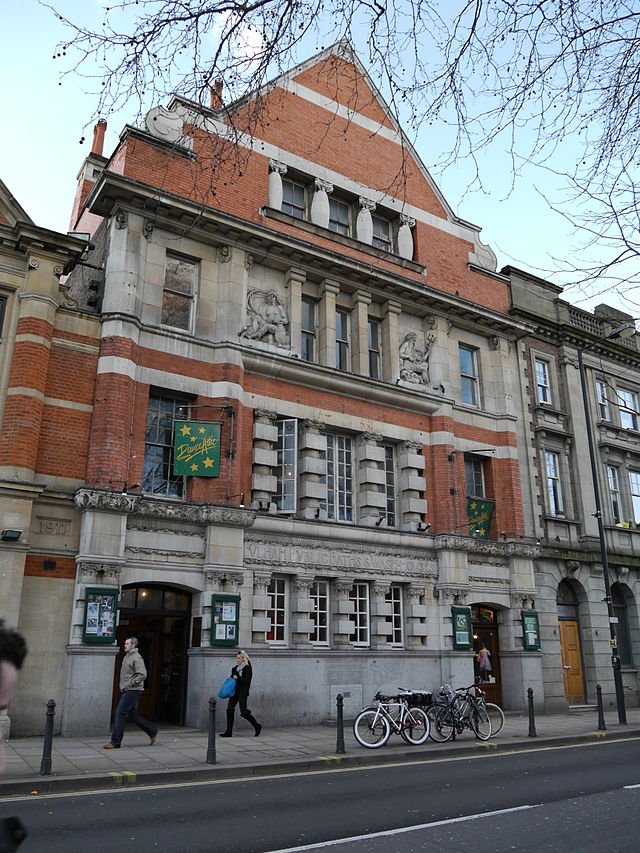
Fulham Public Baths and Wash-house scheduled a special opening for  14th April, 1902, when the programme included high diving; water polo and life saving. The B&WC had agreed that the Baths would feature “excellently contrived slipper baths for ladies.....all modern contrivances for the comfort of those who wished to swim”. Facilities in public baths were graded and priced accordingly. Fulham’s “magnificent first class swimming bath” was more than 100’ long, and about 40’ wide – giving us some idea of what customers could expect for their money, and especially if they could afford the higher  charges.

The wash-house, which entrance was in Hartismere Road, would supply paying customers with “stalls for 66 washers and a like number of drying horses and four hydro extractors “. In the large ironing room, the floor “will be of concrete, finished with wood blocks, while the walls would be salt-glazed and plastered”.

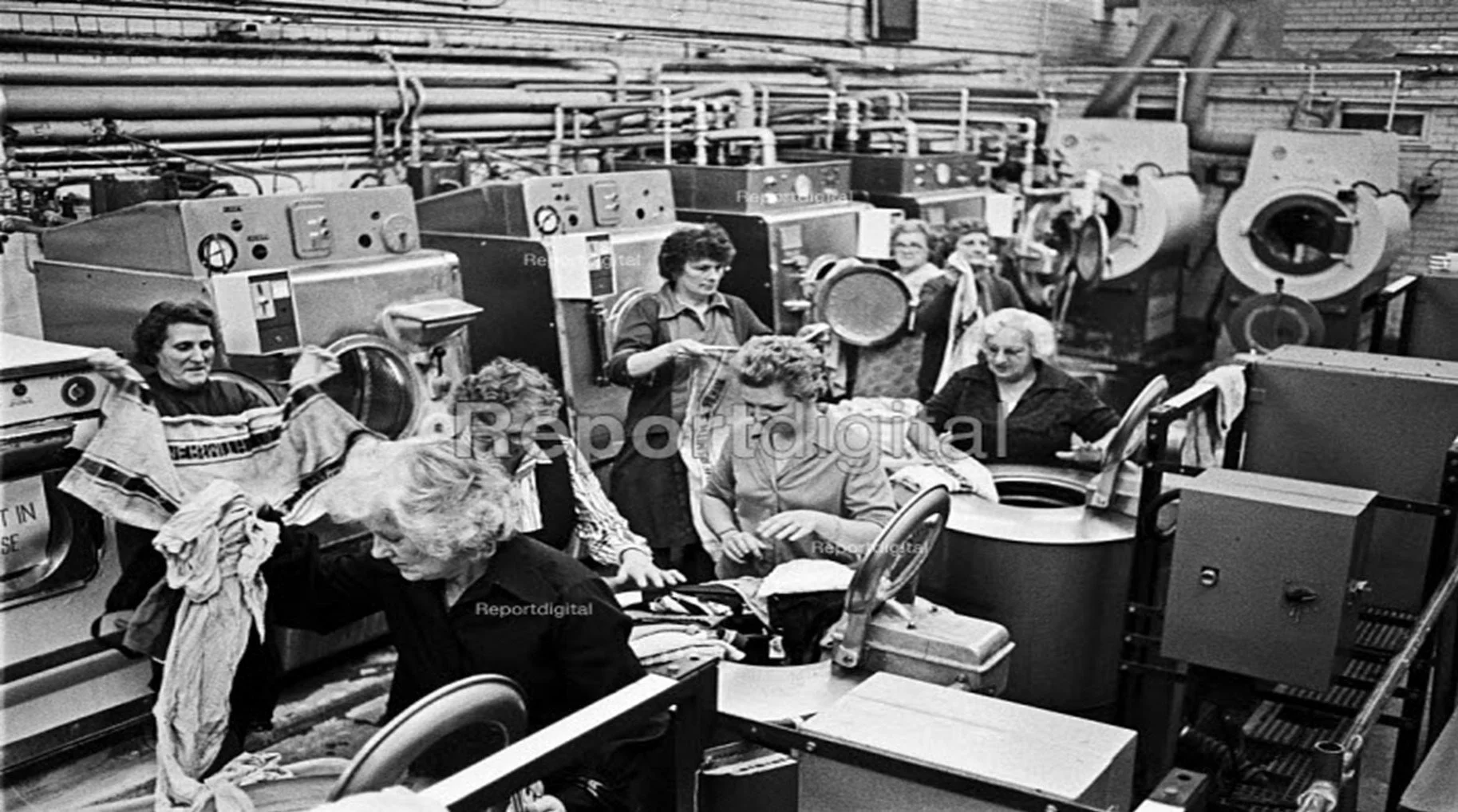
The type of washing machine used in many washhouses would have been based on an updated design from 1851, including a   drum and manually operated turner.

All baths and wash-houses came under the authority of a Superintendent and a Matron. That day, over 2,000 people attended the Fulham establishment.

Useful sources and italicised extracts include:

Baths and Wash-houses Historical Archive.

Metropolitan Borough of Fulham : minutes of The Baths and Wash-houses Committee, c. 1900-1910 (Hammersmith & Fulham Local History Archives).

Public Baths and Wash-houses : An Idea Whose Time Had Come (Victorian Web)

Taylor and Francis Online: Investigating Manchester’s Public Baths and Wash-houses (2021)

The Wellcome Collection

The West London Observer and Fulham Chronicle (British Newspaper Archive)

Fulham Public Baths & Wash-houses

Our team: Eleni Veltanioti

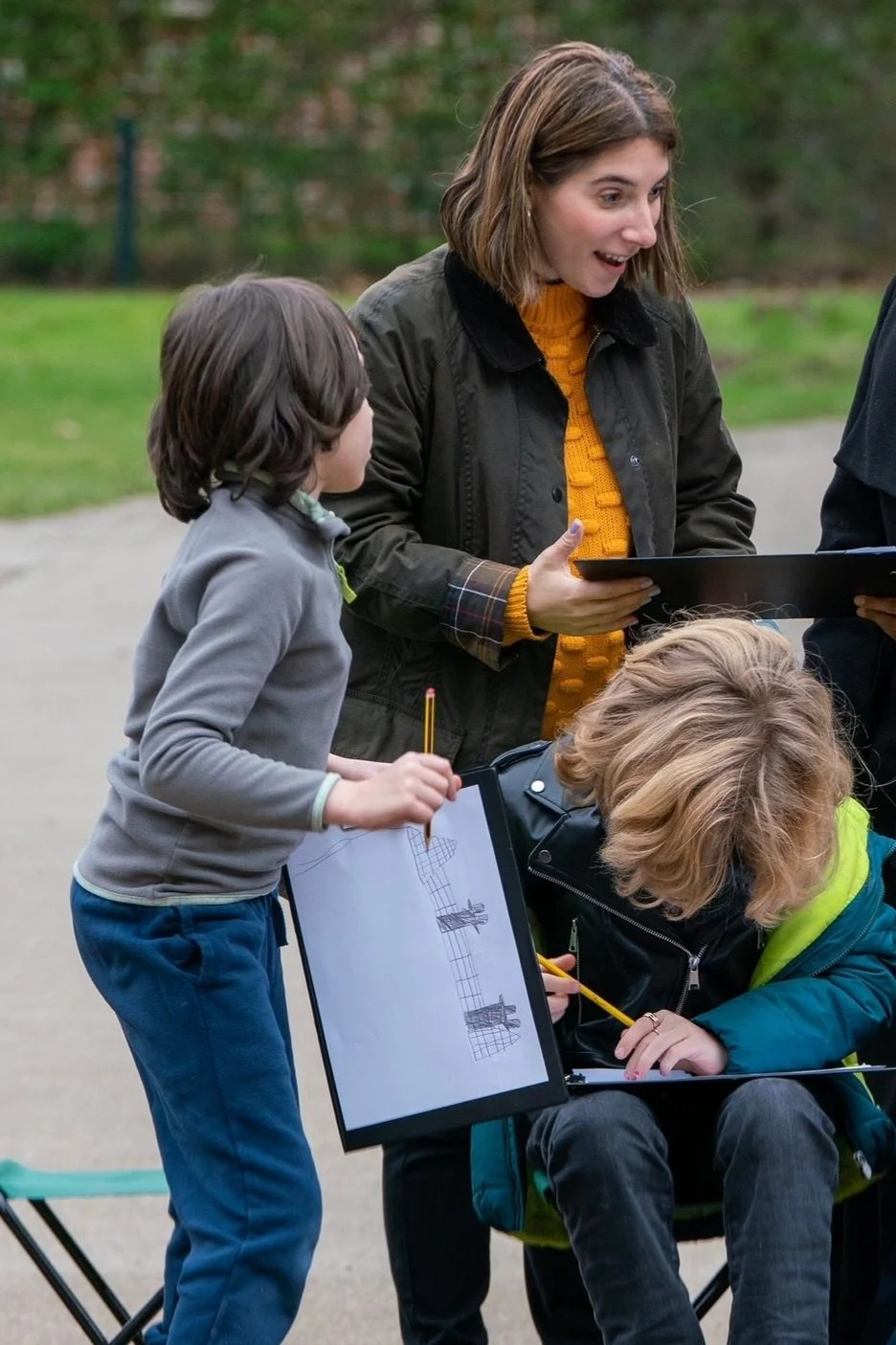
Eleni is our brilliant learning producer, who organises and helps run school and family activities alongside her wonderful team of volunteers!

What excites you most about working at Fulham Palace?

The history of the Palace itself but also staff members and volunteers are always very welcoming, especially when I first started as a freelancer.

Which is your favourite part of the Palace?

The walled garden because I feel so serene and calm when I am there. It is the best place to work, run activities, relax, take a break and celebrate!

What are the three things you cannot live without?

Creativity, cupcakes and the smell of lavender.

What dish do you love to cook?

Korean cup noodles adding lots of special ingredients from all around the world to see what works best.

What’s the one song you can’t get out of your head right now?

Il Mondo, it’s an Italian song and it means the world.

What’s your favourite film?

Documentary dedicated to Pina Bausch, a contemporary dancer from Germany. The soundtrack is amazing.

A Jubilee party!

A fantastic piece written by tour guide volunteer Lee Copeland.

 May-June 2022 saw the nation celebrate the Platinum Jubilee of Queen Elizabeth II, her long reign (beginning on 6 February 1952) and the topic of parties were very much in the news! Whether you planned or hosted a party, there was plenty to celebrate. 

After many months of lockdowns and hardship, without friendly gatherings and being unable to celebrate special occasions, getting together with family, friends and neighbours, was certainly a dose of fun… or even a party!

While volunteering at Fulham Palace, I've had the opportunity to spend some time reading up on the daily court diaries about the life of another Elizabeth, Queen Elizabeth I, another Queen whose reign was a long one. Elizabeth ruled for 44 years, from 1558 until her death in 1603.

Elizabeth I inherited a number of problems stirred up by her half-sister Mary. The country was at war with France, which proved to be a tremendous drain on the royal coffers. However, each year of her reign Elizabeth still attended many parties, and perhaps, not surprisingly taking into account the state of the royal coffers, she dined out a lot at the expense of others. With her court in attendance, she embarked on many travels (holidays!) across the nation. Her travels were in part political and her duties included giving audience to many foreign ambassadors, political leaders of states, etc. The travels (also known as Progresses) also included occasions such as weddings, birthdays, christenings (sometimes she would be asked to be godmother of the child) and funerals. Whilst traveling, Queen Elizabeth I often enjoyed a dinner party!

As we know, Queen Elizabeth I visited Fulham Palace several times. At one particular banquet held at the Palace in 1601, two men were charged at Middlesex Sessions with ‘Breaking into the Dwelling House of the Bishop of London and stealing a Silver Salt belonging to the Queen who was then at Fulham in the said House'. The verdict after the thieves were caught remains unknown.

On another occasion, Bishop Bancroft, Bishop of London at Fulham, sent a letter to the Earl of Shrewsbury stating 'Her Majesty is Merry! Long may she continue so and in good health which is our chief worldly comfort.’

But on reading the court diaries I've been fascinated to learn she visited Putney, more times than she did Fulham Palace! In particular, the home of John Lacy, which she visited 'more times than any other of her favoured subjects’. In fact, she even visited Lacy before her death in 1603, even though at the time she would have been unwell, she still managed to travel to Putney to visit this favoured man for dinner. Elizabeth visited his residence in Putney during her reign with at least 25 visits from 1578 to 1603. Her visit on 21 January 1603 would be her last visit to John Lacy before her death two months later.

Why Putney?

Putney was first recorded in the Domesday Book of 1086 as Putelei, and later, in 1279, as Puttenhuthe, taking its name from the Old English putta, meaning hawk, and hyth, landing place (Putta was also a personal name). However, archaeological evidence points to the existence of an isolated settlement here both in Roman times and indeed in prehistory.

For most of its long history, Putney was a quiet, predominantly pastoral agricultural and fishing village on the south bank of the Thames a few miles upriver from the City. In the Middle Ages, ferries connected it to Fulham on the north bank and to Westminster downriver. At this time, Putney constituted part of the Archbishop of Canterbury’s Manor of Wimbledon, alongside Mortlake and Roehampton. In the post-Medieval period, the manor passed into private hands, and a scattering of aristocratic houses were built here at this time, including John Lacy’s Putney Palace, where Elizabeth I was royally entertained.

 ‘Who was John Lacy?’ you may ask. This is what I’ve found:

 Born about 1537 [location unknown]

Son of [father unknown] and [mother unknown]

John gained his freedom from servitude to Rowland Hayward as a cloth worker in 1558, London. Assuming a seven-year apprenticeship beginning at age 12 his birth is estimated as c1537.

John married Ellin Langton [niece of Sir Rowland Hayward] on 2 July 1560 in St Mary Magdalene Milk St, Cheapside London, where their five children were also baptised.

By indenture dated 15 May 1579 the manor of Manchester was mortgaged by Sir William West Kent, Lord la Warre, alias Lord Delaware and Thomas West Esq his son and heir apparent, to John Lacy, citizen and clothworker of London for £3,000. There was a proviso in the deed that if the said Lord or his son failed to pay by 20 May 1580 the manor was to transfer to ‘John Lacy in West Chepe London’ which it did on 7 August 1581.

John was a very successful merchant, running his business from Cheapside Cripplegate paying subsidy tax from 1578 to 1600 in the St Mary Madeleine parish.

 By indenture dated 23 March 1595 - 1596 he sold the manor of Manchester for £3,500 to Sir Nicholas Moseley citizen and Alderman of London and Rowland Mosely his son. Helen [Ellin] John's wife was also mentioned.

 Below is a description of John Lacy's house in Putney.

‘On a portion of the ground now occupied by River Street and River Terrace, stood in former times a building which in its latter days became known as "the Palace," from the fact of its having been frequently honoured by the presence of royalty.’

It is described as having been a spacious redbrick mansion of the Elizabethan style of architecture, forming three sides of a square, with plate-glass windows overlooking the river, and that it possessed extensive gardens and pleasure grounds.

It was built within a courtyard and approached through iron gates. This house covered the site of the ancient mansion of the Welbecks, whose monument, dated 1477, is in the parish church close by.

The building was erected at the end of the sixteenth century by John Lacy, ‘a citizen and clothworker of London;’ and the ceilings of one of the rooms, it is stated, comprised the arms of the Cloth workers' Company among its ornamentation.

‘Progresses of Queen Elizabeth,’ says that she ‘honoured Lacy with her company more frequently than any of her subjects. Indeed, from the churchwardens' accounts at Fulham, it seems that her Majesty visited Mr Lacy at least a dozen times between the years 1579 and 1603; that she frequently dined with this highly-favoured host, and sometimes sojourned for two or three days under his hospitable roof; and that the last occasion of her visit there was only about three months before her death.’

John died at Putney Surrey on 21 August 1606 and was probably buried in the church there, but no monumental inscription is known. After his death, the house had several notable owners.

A survey of Wimbledon Manor, written in 1617, mentions the circumstance of James I having been in this house. His Majesty was himself a member of the Cloth workers' Company.  King James and his queen, we are told, ‘went from Putney to Whitehall previously to their coronation.’

A few years later the house in which the ‘maiden queen’ and ‘gentle Jamie’ had spent so many pleasant hours were occupied by General Fairfax. But, after none out of the many heirs who presented themselves and not having made good their claim to the property, it was disposed of by a clergyman. The clergyman speedily levelled to the ground all that remained of the interesting old mansion.

So, to conclude a lot of dinner parties, and visits took place at Fulham Palace and the surrounding area. But, for me, the most interesting entries are those that state Queen Elizabeth I visit to Putney for 'resting and warming'. Perhaps the need ‘to warm herself’ was not only due to travelling via barge on the Thames, but perhaps, she stopped off to warm herself, before heading to visit a colder house with a less entertaining host, for this 'Merry Queen' at Fulham Palace!

 Putney: visits to John Lacy.

1578 Feb 25-27.

1579 Jan 30: dinner.

1580 May 27: dinner.

1581 Nov 16: dinner.

1582 July 10-11.

1584 Nov 12: dinner.

1585 July 20-21.

1586 July 11-12.

1587: ‘Proposed progresses’: May 8-9.

1588 July 29: dinner.

1589 Nov 15: dinner; Dec 2: dinner.

1590 Nov 14: dinner; Nov 25: dinner.

1593 Jan 30: dinner; Feb 17: dinner.

1595 Nov 14: dinner; Nov 27: dinner.

1596 April 2: dinner; Oct 1: visit; Nov 17: dinner.

1597 Sept 19-20; Oct 20: ‘resting and warming’.

1599 Nov 13: ‘to warm herself at’; Dec 7: dinner.

1601 Oct 24: dinner.

1602 Feb 19-20; Nov 15: dinner.

1603 Jan 21: dinner.

Putney Park:

1599 Nov 10: dinner, hunt: Sir William Cornwallis.

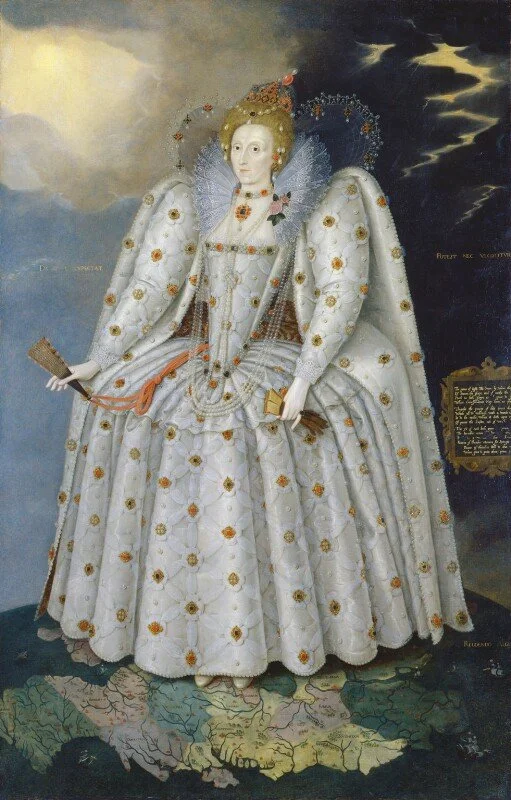
The Ditchley portrait of Queen Elizabeth, c 1592 only a few years before Queen Elizabeth I visited Fulham Palace (by Marcus Gheeraerts the Younger).

Cleanliness and godliness : Bishop Blomfield and the campaign for public baths and wash-houses

Anne Connaughton, front of house volunteer, has provided us with another well-researched and fascinating blog but this time on the campaign for public baths and wash-houses.

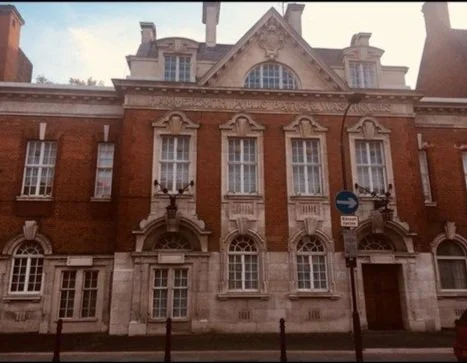
Many readers will know the old Fulham Public Baths and Wash-houses (now a grade 2 listed building) and the Hammersmith Public Baths and Wash-House in Lime Grove (now the site of supported housing). Visualise how, after they opened to the public in the early 1900s, paying customers could do their laundry, or take a bath (soap included in the price). Similar establishments were built throughout the country, under the aegis of local authorities. Their origins lie in an earlier campaign rooted in the mid-19th century, which reflected concern about the sanitary conditions of the “labouring classes “.  As a sitting member of the House of Lords, Bishop Blomfield cultivated a high profile in  highlighting  the widespread support “which all classes of society are giving to the cleanliness movement”.  Such reforms concerned the “moral as well as the physical welfare of the humbler classes of the population”.  Here is the story of the cleanliness debate and the wider campaign for sanitary reform as the driving force behind some progressive  - for the time  - legislation.

The provision of public baths and wash houses was deemed an affordable and immediate remedy to poor standards of cleanliness. The clergy and medical practitioners,  variously described as “the only members of the middle and higher classes who really know how the poor live”, were convinced of the potential for cleanliness as “a most decided influence over the moral and intellectual state of the poor .“ Among objections to the campaign for public washing establishments was that “crowds of the wives of the poor ought not be allowed to mix together in large numbers “. Other observers criticised how the programme for sanitary reform “took legal measures to enforce cleanliness for the protection of health, while they pertinaceously refused to prevent the diseases and deaths generated by their own miserable administration in starving their workhouse victims and refusing outdoor relief.” (The Times 25 November). Bishop Blomfield’s stint as a Poor Law Commissioner; the subsequent ban on outdoor relief and the requirement to enter the workhouse in order to claim relief, had not been forgotten!

The campaign gathered pace when reformers pinpointed the lack of cheap baths and laundry facilities as an impediment to better health. A public meeting held at the Mansion House in October 1844, proposed the formation of The Association for The Establishment of Baths and Wash-houses for the Labouring Classes. As its figurehead, and with the influential backing of bankers; city merchants; the London Dock Company and several parochial clergyman, Bishop Blomfield  presented  several petitions  to the House of Lords, advocating “increased facilities for cleanliness available among the masses.” The result was the Public Baths and Wash-houses Act (1846). The expectation was that these establishments would neither impinge upon the municipal purse, nor be “for the exclusive use of the poor”.

Public baths and wash-houses were very successful, although during their earliest years, the soap tax made soap an unaffordable luxury for poorer patrons. The tax was abolished in 1853. The respective establishments closed in 1980 (Lime Grove) and 1981 (Fulham).

Sources for this blog, and the italicized extracts, include:-

British Newspaper Archive; Hansard (1846);  *The Lancet (1844); *“Baths and Wash-houses for The Labouring Classes “: Daly, Price Pritchard (1852); *The Social History of Medicine (Volume 13, No.1 April 2000); “The Public Bath and Wash-house as a Focus for Victorian Social Reform “ (The Victorian Web)

(*The Wellcome Collection)

Hammersmith Public Bath and Wash Houses

Women in the wash-house at Fulham, circa 1980

The great hall and its history

Our wonderful placement students Ella Beer and Anna Mori have written a brilliant piece about the great hall and its fascinating history!

The great hall has hosted many lavish banquets and honoured guests in its time, yet has also overseen a myriad of conversions, alterations and reconstruction work too. Over time it has become a chapel, torture chamber and most recently a filming place. Yet, it is still overlooked in spite of its many historical wonders…

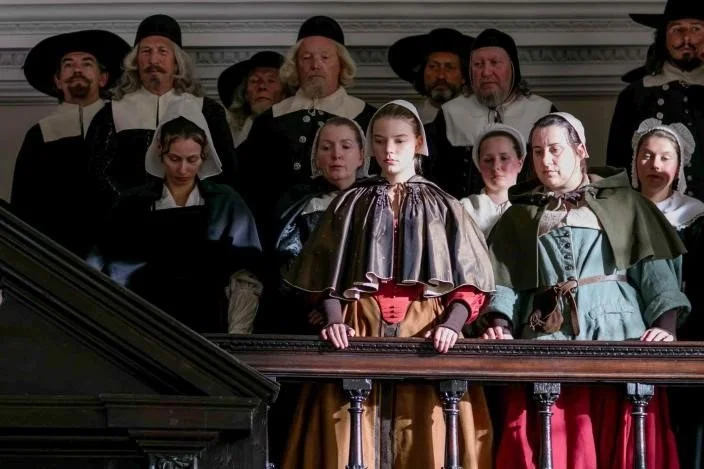
Most commonly seen in the series The Miniaturist and The Witchfinder - set in the 17th century, yet the great hall holds much more significance during the Tudor Period - when it was built. It was built during Henry VII’s rule, in the 15th century. A dendrochronology analysis of the timber used to build the great hall has dated it to being felled in 1493, whilst the Tudor entrance gate contains timber of 1495. However, Bishop Richard Hill didn’t live to see his reconstructions as he died in 1496. We can see that Tudor roots are planted all over Fulham Palace, but the great hall holds a direct link to the Tudor royalty as well.

Most commonly known is Elizabeth I’s last visit to Fulham Palace in 1601 as the guest of honour, where Bishop Richard Bancroft hosted a lavish banquet for her to enjoy. Two thieves stole her silver salt cellar. They were soon caught, but little is known of what happened to them afterwards. Other royal visits have been made too – during Bishop Bonner’s second tenure under Mary I, prisoners were kept at the Palace and Protestants were tortured in the great hall. Over 150 years later, George III would come visit and be treated to a simple breakfast. More recent royal visits include the Duchess of Cornwall’s visit in 2016 for a fundraising dinner held in the great hall, where she presented the then Bishop of London, Dr Richard Chartres, with a Bishop Compton medal recognition of support for the trust. This  ultimately launched the £3.7 million restoration project.

As one of the earliest surviving structures on the site, much of the restoration has involved the upkeeping of the hall: in the 1750’s, Bishop Sherlock covered the original timber roof and elaborate plaster ceiling with a false ceiling; in 1818 Bishop Howley converted it to a private, unconsecrated chapel; Bishop Tait would reinstate it to its former glory in the 1860s. When the whole palace went through a number of restorations starting in the 2000s, the third phase (2019) restored the brickwork in the Tudor great hall and courtyard.

Currently it holds portraits of Henry VIII (who never visited, but letters suggest a planned trip from his first wife, Catherine of Aragon); his father – Henry VII (1485-1509); Charles I (1625-49); Charles II (1649-51); George I (1714-1727); Queen Mary II (1689-1994); her husband and co-reigner - William III (1689-1702); Thomas a Becket and St Margaret Queen of Scotland.

The great hall holds so much history – Tudor to Georgian, and even now with the visit of the Duchess of Cornwall. It is grand - covered in panelling and with a wooden screen, recycled from the Doctor’s Commons (a lawyer’s society which practiced Civil Law). It is calming, a joy to enter and to be in the presence of so much history. So intricately thought out, it is a wonder the great hall has ever been overlooked as just a ‘room’.

The great hall was used in the filming of The Miniaturist although they cleverly added in a gallery for the trial scene

A skirmish at the Palace

Lucy Wagstaff, our recent learning placement, shares this incredible story of a fight in the Bishop’s study at Fulham Palace!

 The Bishop of London would not typically be someone that you would expect to engage in a physical fight! However, in 1581, a fight broke out in the Bishop’s study, right here in the Palace. This was during the reign of Elizabeth I, a period of turbulent religious change in England, and so the stakes were high for control of religious policy.

 Under Elizabeth’s father Henry VIII, England had broken free from the Papacy in Rome, establishing a new Church of England, over which the English monarch had complete control. After the turbulent reigns of her siblings Edward VI and Mary I, Elizabeth had hoped to establish peace and uniformity in the English church by enforcing Protestantism, and appointed trusted figures from the Protestant movement to the position of Bishop of London. Her first Bishop was Bishop Grindal, who was suitably firm but fair in his enactment of Elizabethan religious policies.

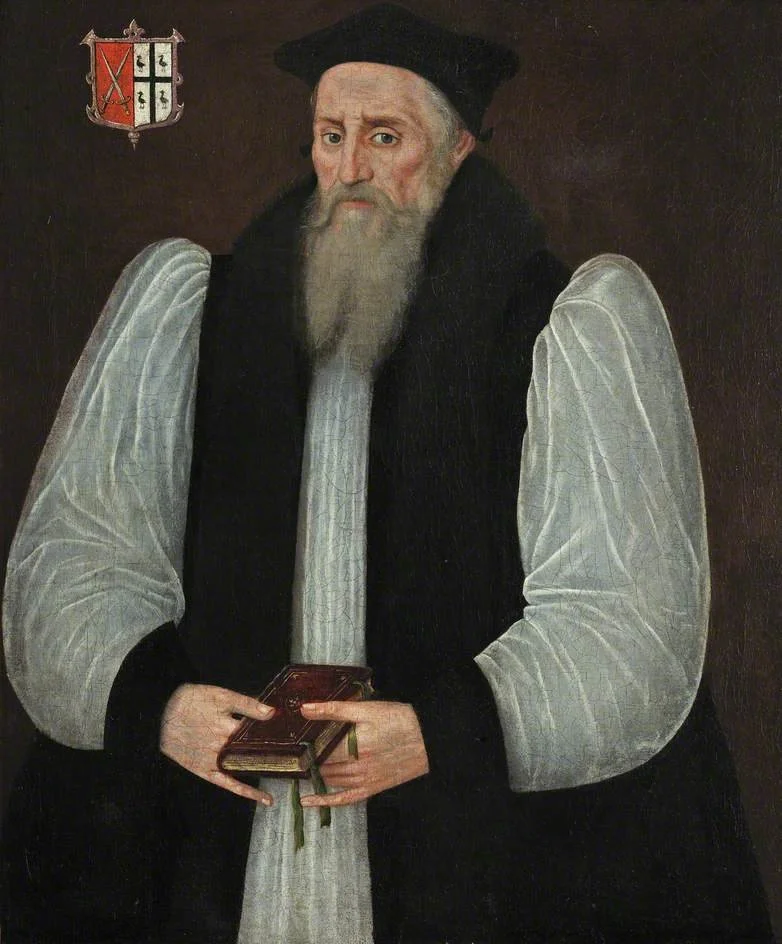
 Bishop Aylmer was her third Bishop, appointed in 1577 having previously served as chaplain to Duke Henry Grey and tutor to Lady Jane Grey (the ill-fated nine-day queen who was subsequently executed by Elizabeth’s sister Mary I). Aylmer was much harsher than Grindal in his treatment of those who disagreed with him on religious grounds and was not a particularly popular bishop. This created enemies for himself, and various efforts were made to remove him from his role as Bishop of London.

 The fight in question occurred in 1581, between Aylmer and two members of the Rich family, Richard Rich and Lord Robert Rich. The uncle and nephew visited Aylmer in his study to request a preaching licence for Robert Wright, who had just been appointed as a Presbyterian minister in Antwerp. Presbyterianism was a more radical form of Protestantism, a sect that both Elizabeth and Aylmer greatly disapproved of. Aylmer refused to grant a licence unless Wright conformed to the 39 Articles, the main doctrines of Elizabethan religion finalised by Elizabeth and her advisors in 1571. These Articles had a great lasting impact on religion in England and, later on, the United Kingdom more widely.

 When Aylmer refused to grant the licence, Richard began to beat the Bishop in his study! It’s unknown how badly the Bishop was injured, but the damage was certainly enough to have Richard imprisoned and placed on trial with Robert Wright himself. Richard was later released in line with the law, but against Elizabeth’s personal wishes.

 This tale tells us about the importance of religious doctrine to influential figures in Elizabethan England. Religion dictated almost all aspects of Elizabethan social and political life, and the granting of official permission to preach was extremely important – such preachers could be put to death if they did not follow the line of Church leaders. Whilst it seems ridiculous that men would attempt to attack the Bishop of London in his own study, they were clearly enraged enough by his refusal of a licence to try and beat him up. It seems that Richard’s subsequent imprisonment acted as a deterrent to other religious opponents – luckily no one else attempted to physically fight Aylmer for the rest of his time as Bishop!

Bishop John Aylmer was much harsher than his predecessor Bishop Grindal in his treatment of those who disagreed with him on religious grounds

Object of the month: a cartoon portrait of St Dunstan

Qiming Zhong, UCL learning and engagement placement student, tells us about 10th century Bishop St Dunstan.

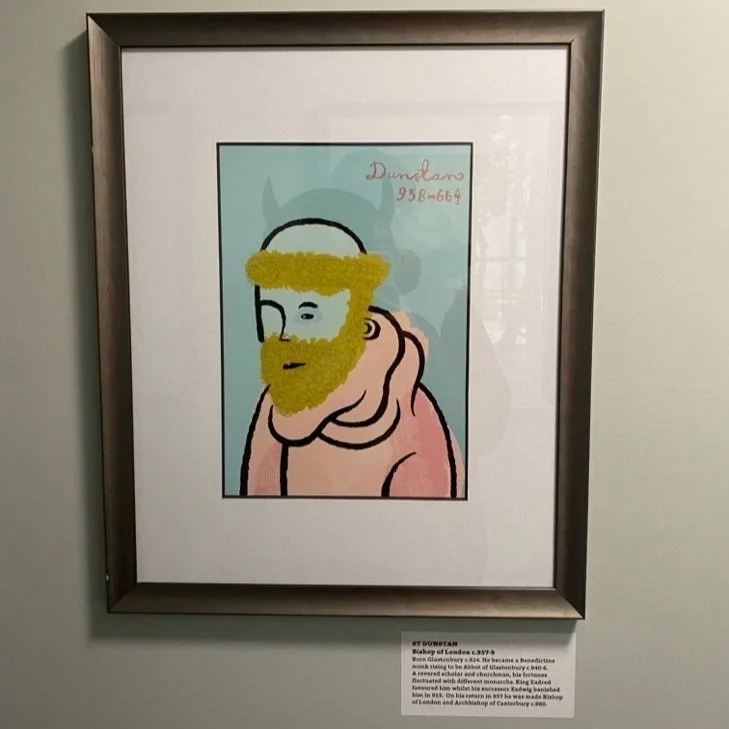
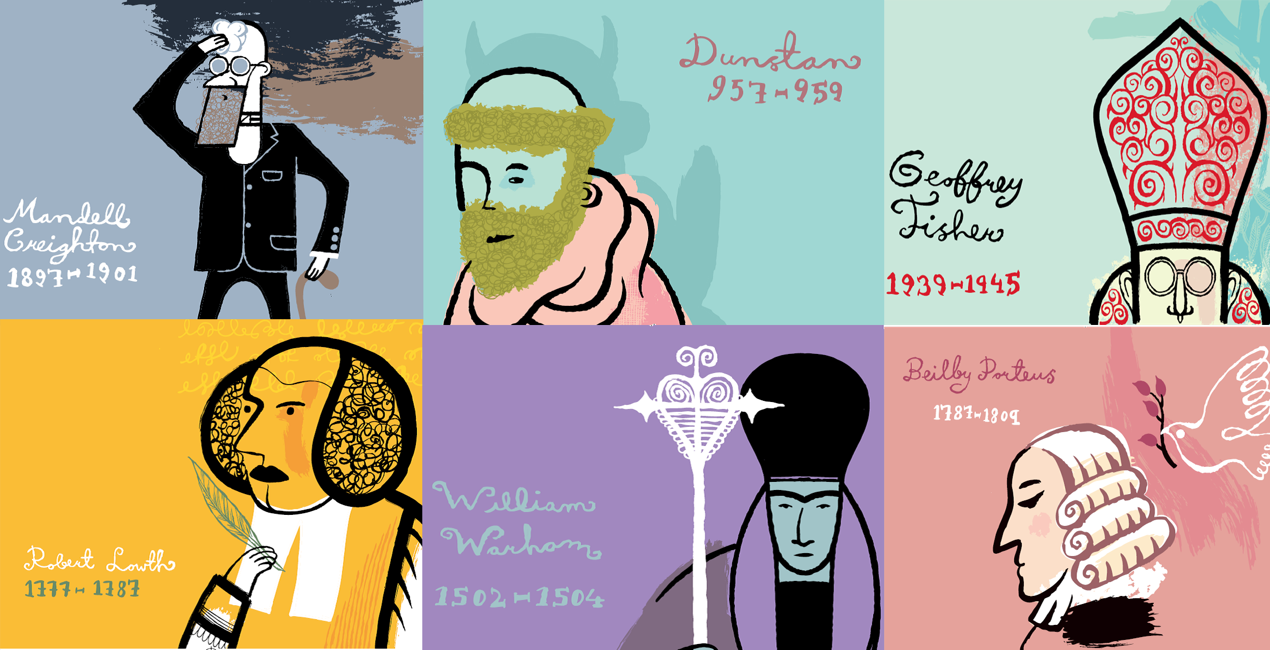
As I followed the planned route from the visitor welcome to the great hall, I first perused the museum spaces, following the smell of coffee from the café through the corridors. It was in there that I found the cartoon portraits of the Bishops of London. These were more modern than the paintings I had seen before. One of the most striking portraits was St Dunstan with his golden beard, who appears to be looking out over the Tudor courtyard.

Dunstan was a very popular man, having gained admiration because of his skill and dutiful service. Born into a noble family in 909, he became Abbot of Glastonbury in 943 and was instrumental in reviving the monastic system in England, serving as treasurer and chief counsellor to King Eadred (reigned 946-955). He was deposed and banished by King Eadwig (reigned 955-959) in about 956 and stayed in Flanders for several years. King Edgar later recalled him and he became his adviser, serving successively as Bishop of Worcester and Bishop of London. He was elevated to the rank of the archbishop of Canterbury in about 960, where he took charge of the country's religious affairs and presided over the cause of monastic reform.

As such a prominent political figure, and later a saint, Dunstan’s life is embroidered with myth. From the brief synopsis of his life above, it is easy to see that his fortunes fluctuated with the different monarchs - King Eadred was fond of him, while his successor, Eadwig, banished him, and he was later recalled by King Edgar. The reason for Dunstan's exile is a curious instance of how political maneuvers become entwined with legend. The earliest biographical account of Dunstan, composed at the end of the 10th century, states that King Eadwig, on the night of his enthronement (January 956 AD), ignored his lay nobility and ran off to dance with Aethelgifu and her daughter, at which point Dunstan and Cynesige forced the king back into the banqueting hall, causing him to incur the enmity of the lady and the king and forcing him into exile to Flanders. His exile - if not the story behind it – is confirmed by the fact that neither Dunstan nor Cynesige's names appear in a large number of charters issued by the king in the following year.

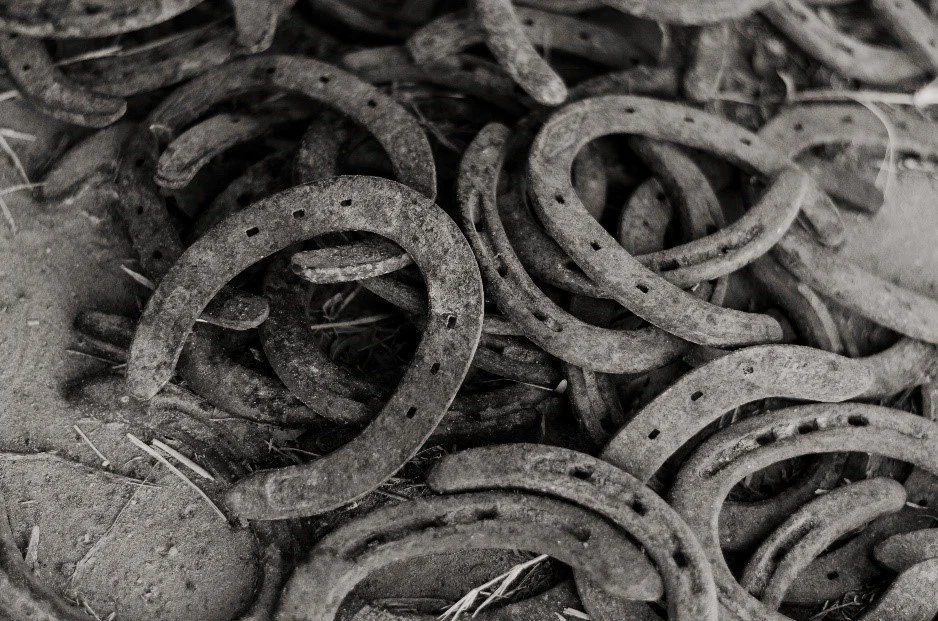
I first heard of Bishop Dunstan not due to his historical importance but through the legend of the horseshoe. In England, we know that there is a tradition of hanging a horseshoe on the door to one's house, where it is believed to guard one against evil and bring good fortune. One suggested origin for this custom is Dunstan, who worked in an ironmonger's shop before becoming a bishop. There, when visited by the Devil, he offered to shoe him, seeing him limp. The Devil agreed, but rather than find himself fitted with fine shoes, Dunstan nailed red-hot horseshoes into his cloven hooves. The demon vowed, at Dunstan’s instigation, never to go near a place hung with a horseshoe again. Thus was born the legend that you will not be bothered by evil spirits if you hang a horseshoe, and over time, it became customary to put a horseshoe over the door for good luck.  

As well as St Dunstan, there are more bishops of London drawn in lively, modern caricatures. They are well integrated into Fulham Palace, uniting history and modernity and enticing many visitors, like me, to learn more about the stories behind each portrait.