Museum

Remembering the Somme

On Friday morning thousands of people throughout the UK were surprised by the ghostly sight of World War One soldiers, as they made their morning commute.
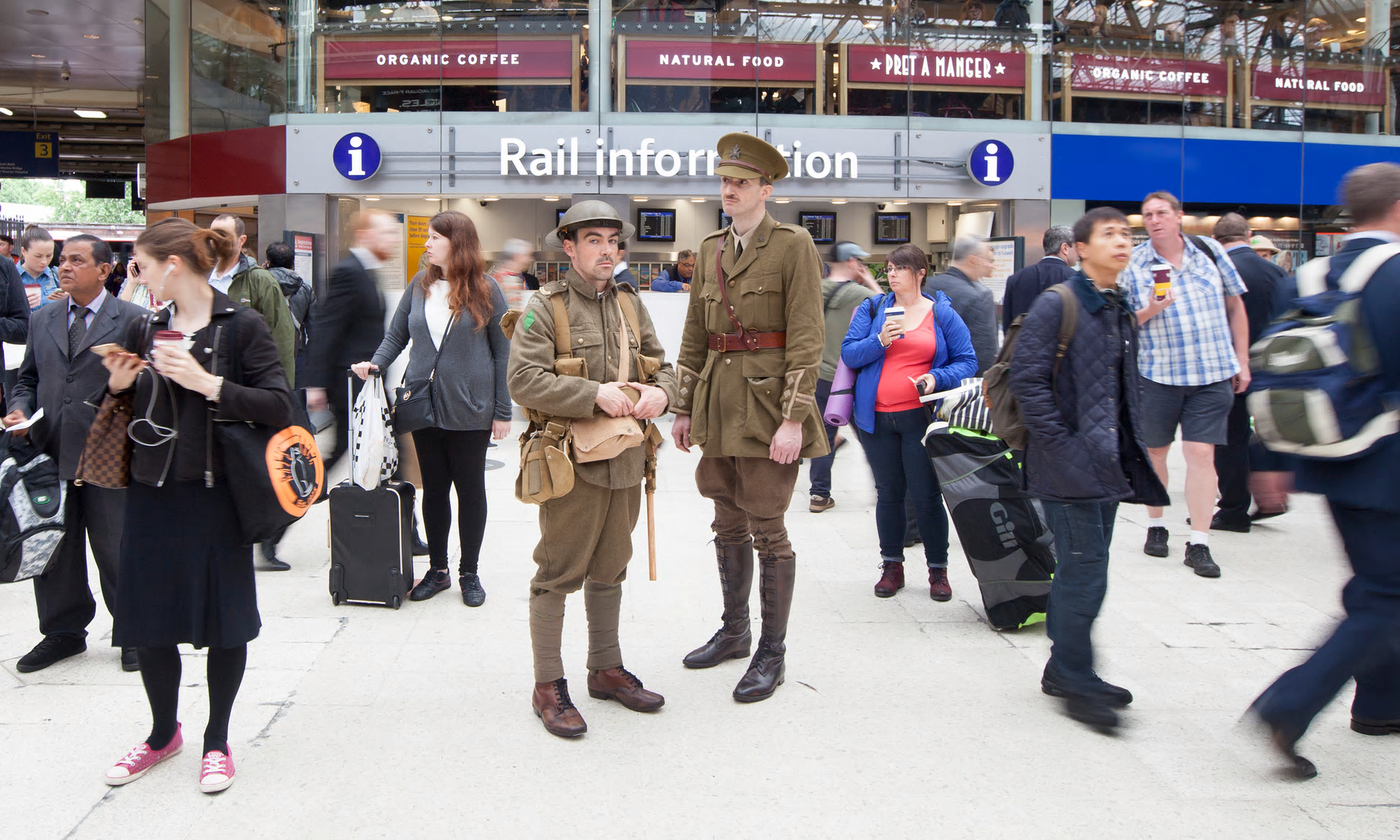
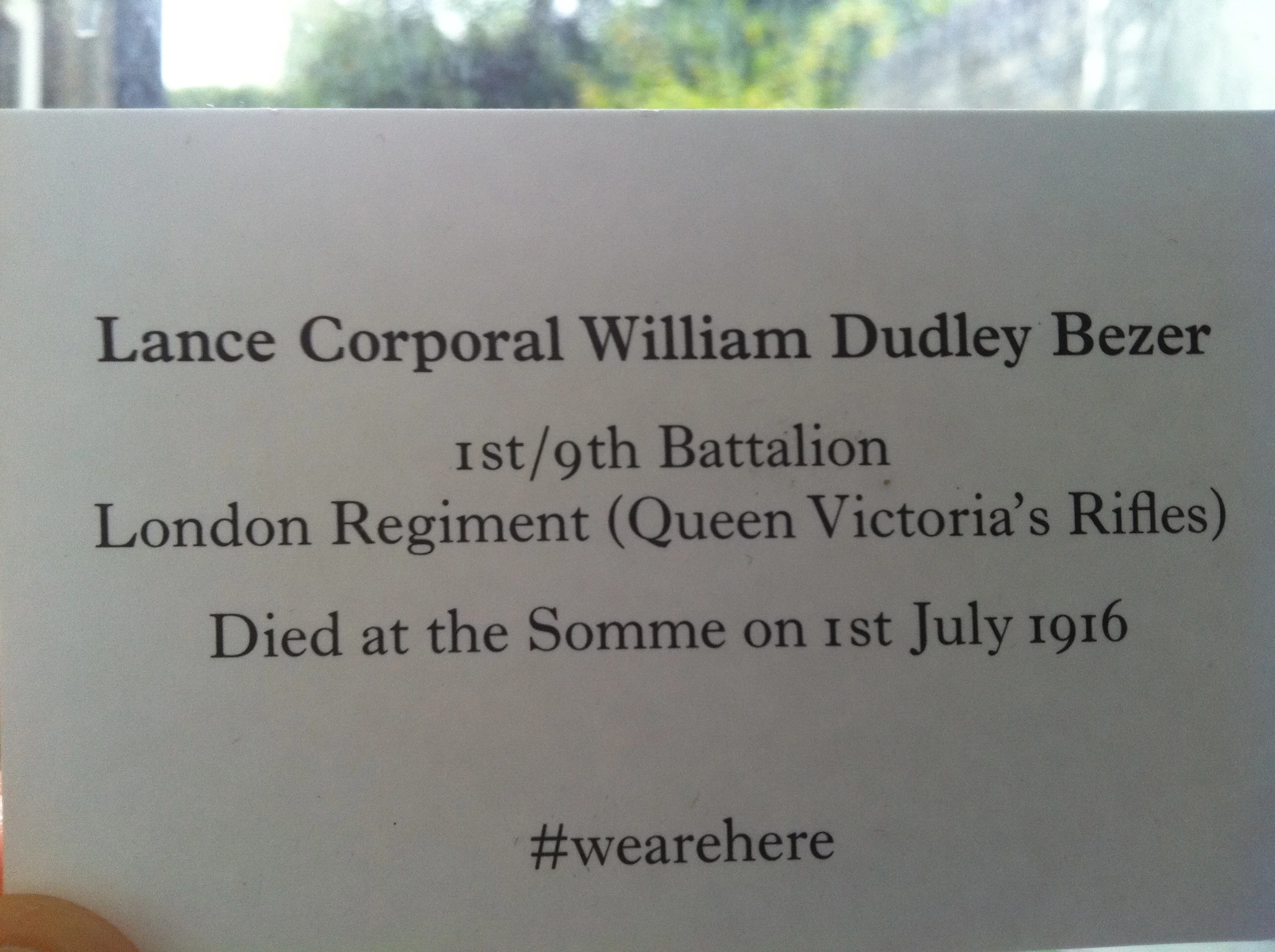
The soldiers made for an eerie sight. Sometimes seen waiting, sometimes walking. Often caught through the corner of the eye before vanishing. If approached by members of the public, the soldiers simply handed out a card with the name of a soldier they were representing.
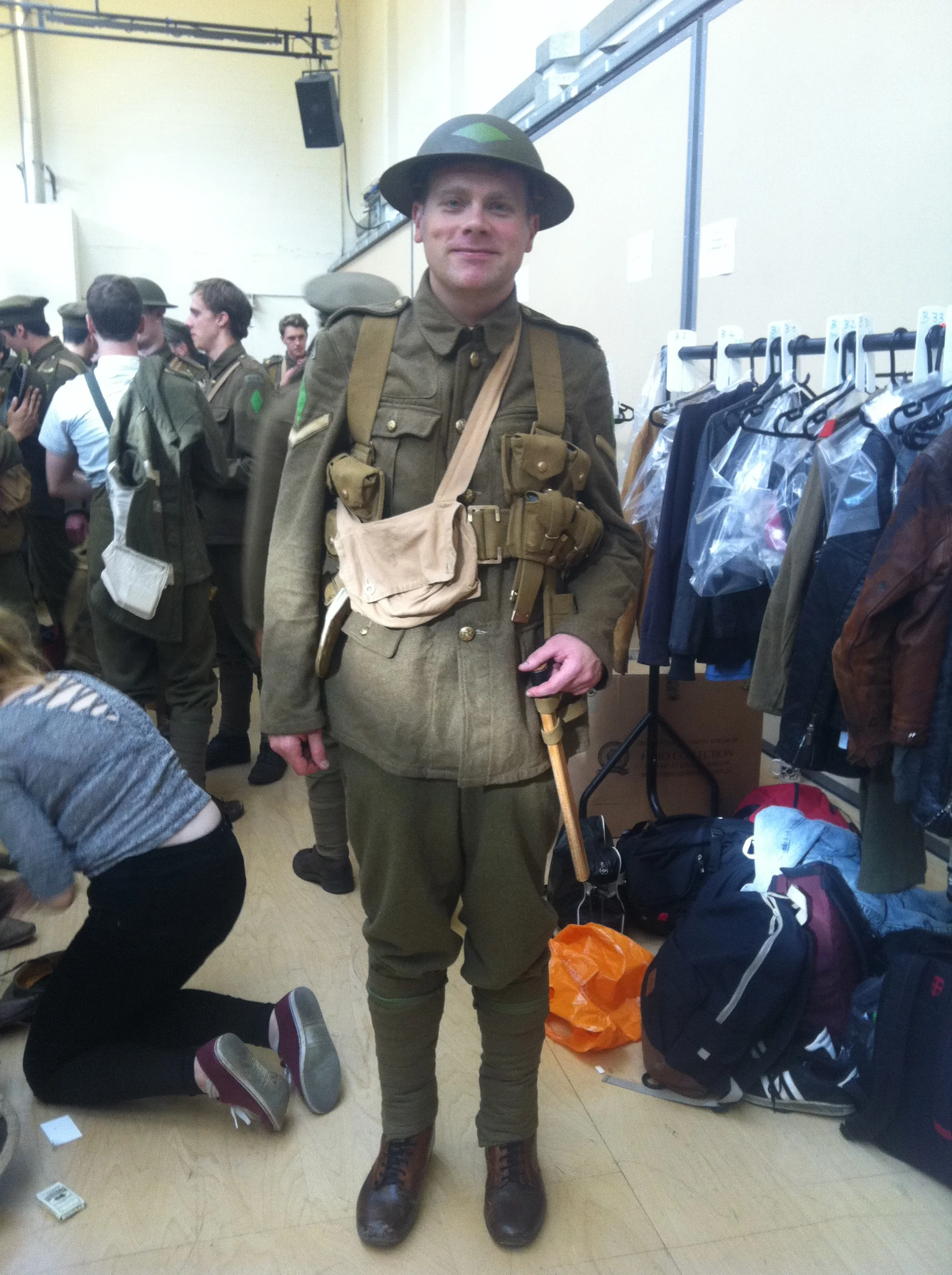
I was proud to be among 1400 men taking part in what was a living memorial to all who fought and died in that dreadful conflict. We Are Here was named for the song sung by soldiers on their ways to the trenches, and was a piece of artwork created by Jeremy Deller and the Royal National Theatre.
Somme3.JPG

I was representing Lance Corporal William Dudley Bezer, a volunteer recruit of the London regiment to which Bishop of London Winnington-Ingram was chaplain. A South Londoner, William was just 31 years old and had been married for less than a year to his wife Agnes when he died on the first day of the Somme. A story repeated tens of thousands of times over on that first fateful day.
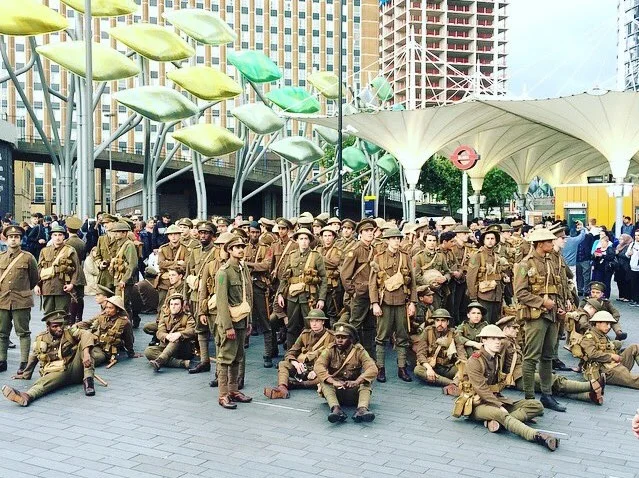
My day took in Waterloo, Liverpool Street, Fenchurch Street, London Bridge, The Tower of London and even Basildon as we weaved our way through alleys and streets, before a finale to surprised shoppers at Stratford. It was a memorable day for many reasons, not least the emotional response from members of the public.

I hope it was a fitting tribute to the courage and stoicism of the many who gave their lives for the peace we now take for granted.

Steve Lee
 

Vote for us!

Voting is open for the Connect! Competition.  

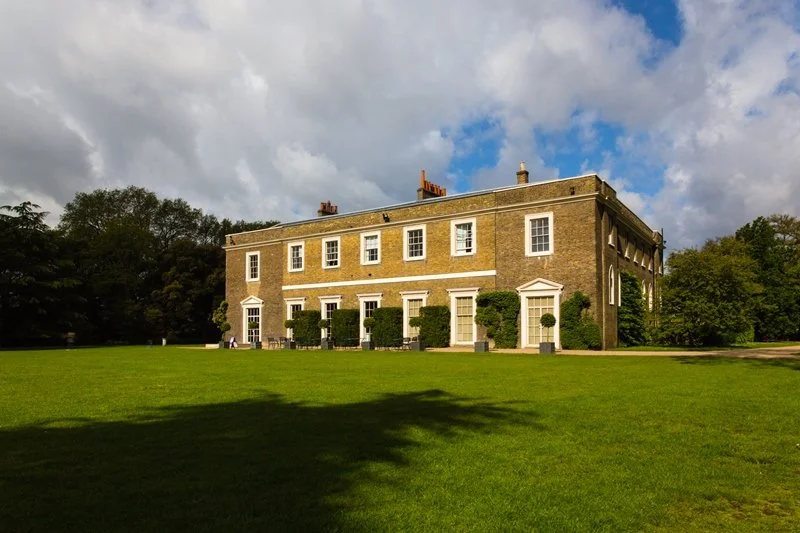
Fulham Palace has been shortlisted to host a unique event for Museums at Night in October.
Now we need your help. The venue with the most votes wins. Get all your work contacts, friends, families, neighbours…the man down the pub to vote for us too! You can only vote once from an email address, if you have more than one email use them all to vote!

Voting closes on Sat 14 May.

http://museumsatnight.org.uk/aowen-jin/#.VyMxv2H2YdX


If we win –

Artist Aowen Jin will be creating for us -


· Paintings inspired by our history that can only be viewed in darkened rooms with the use of UV torches.

· A temporary 3D installation that can also be explored with UV torches.

· Choreographed performances which challenge modern perception of beauty and aesthetics.

Aowen wrote this to inspire museums and galleries:

“Imagine a gallery that’s filled with magical figurative stories, like the Sistine Chapel, but that can only be seen using UV torches. As you move the torch around the museum in the dark, all of the paintings on the wall come to life, and they appear and disappear as your beam of light moves from one image to another. The paintings are inspired by the history and collections of the museum itself, reflected through the eyes of the viewers. I am also interested in using balloons to shape the space, painted with UV ink, which can then create a temporary 3D installation that can be explored with UV torches too."

This will be a new body of collaborative work that is not only created by the artist, but also invites the local community to take part and imprint their sensitivity of the museum onto the space they love. In a grand finale, Jin will choreograph performances which challenge modern perception of beauty and aesthetics. During the event, artist Aowen Jin will share her experiences through talks and offer a workshop in collaboration with local people to create art together for the project.


This would be an amazing opportunity for Fulham Palace.
So please vote now!

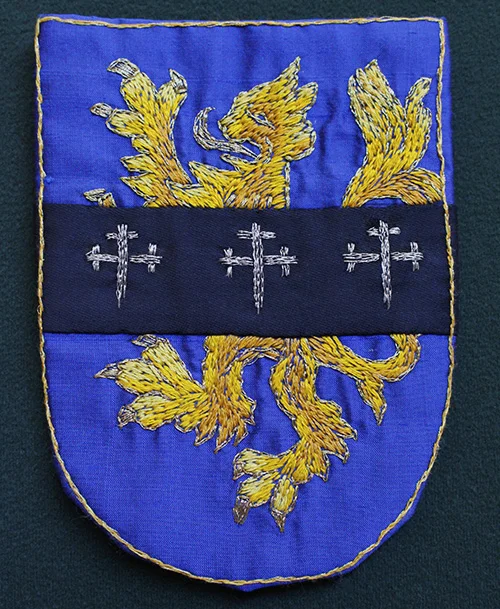
The Badges of the Bishops of London

In 2005 during the first phase of the Heritage Lottery Funding, when the Palace was entirely wrapped up in scaffolding and covered with a false roof, all the moveable objects had been packed up and were being stored in various locations across London, or were stacked high in the Great Hall.

We all, staff and volunteers, moved into temporary accommodation in Coachman’s Lodge. There was still a skeleton education service, camping out, with basic artefacts and costumes in the Museum and the Chapel. Our usual activities were on hold, sewing bee and embroidery sessions suspended. We were all in need of something creative to do.

Our education officer Jenny Kershaw came up with the brilliant idea of embroidering all the Bishops’ Badges dating back to the Norman Conquest. The project built on the skills developed from the historic embroidery sessions which Jenny had been running at the Palace for several years. It served as a way of keeping an enthusiastic group together, whilst also creating  a permanent memorial to the past history of the Palace.

It was decided that all the badges should be of a uniform size and the colours to be used as they were shown on archive portrayal of the badges. The stitches were left to the individual embroiderers own creativity. Soon practically everybody involved with the Palace was taking part and keeping track of who was doing what badge, which were already finished and whether any had been left out became a major logistic operation.

Towards the end of phase one, Bishop Howley’s Dining Room, part of the Museum, was closed for renovation and a false wall leading to the Porteus Library was installed, prior to the formal reopening of the Palace after its refurbishment. It was the perfect place to display the badges. Suitable frames had to be found, the badges mounted, the names of all the individual embroiderers acknowledged and Peter Trott came into his own, expertly hanging them. The exhibition was one of the highlights of the reopening of the Palace on 9th November 2006 when Jenny was able to show the present Bishop of London the badges and present him with an embroidery of his own badge. The exhibition ran until 17th December to great acclaim.

With the reopening of the Museum most of the badges were put into storage, although some are still on display in the Porteus Library.  Putting them on line is a way of remembering the camaraderie of the embroiderers at an exciting time for the Palace. The embroideries are a permanent memorial from the twenty first century to all the post Conquest bishops.

Click here to view the Bishop's Badges in our new online gallery.

Esther Dean
Sewing Bee, Tour Guide, Collections Assistant Volunteer

Farewell to a Familiar Face

Peter Trott is a face known to all volunteers.  As the Museum Steward he has been around for quite awhile now, having come on board in May 1992 just one week after the museum opened.  Now after a 23-year-old love affair with Fulham Palace he is retiring today, 31 March 2015.  "When you first meet Fulham Palace you just fall in love with it."  The thing he will miss most is coming in on a weekly basis and "seeing the Palace in all its glory through the seasons. It's pretty special here - like working daily in a grand country house." 

A native of Shepherds Bush and a keen advocate of local history Peter first came on board at FP after having been made redundant from a job in The City.  He decided that it was a good thing to be able to leave the rat-race behind so that he could spend more time doing things that fed his interest in local history.  He got a part time job at the Gunnersbury Park Museum and at Fulham & Hammersmith Council.  It was there he saw the FP job advertised. 

He was hired and helped with the last minute work getting ready for the official opening on 2 June 1992. When he first came to Fulham Palace there were only 2 rooms open.  The rest of the building was occupied or semi-derelict.  It has been an exciting thing for him to see the place grow and expand over the years, seeing more rooms open up, the addition of the cafe and other amenities, all of this has given him a great deal of pleasure.  Peter sees the future of FP as quite exciting and says he will of course visit from time to time. 

For our part we want to say thank you Peter for the fantastic service you have given over the years and good luck in your future endeavours. 

Museum News

The museum at Fulham Palace enjoyed an increase in visitors the past year with 17.221 people (1.628 more than in 2013) stopping by to look at the exhibitions.

For those of you who have been enjoying the BBC TV drama Wolf Hall, or indeed the books, there is a currently a small display in the Porteus Library of Tudor bishops in Cromwell’s time. Come and take a look.

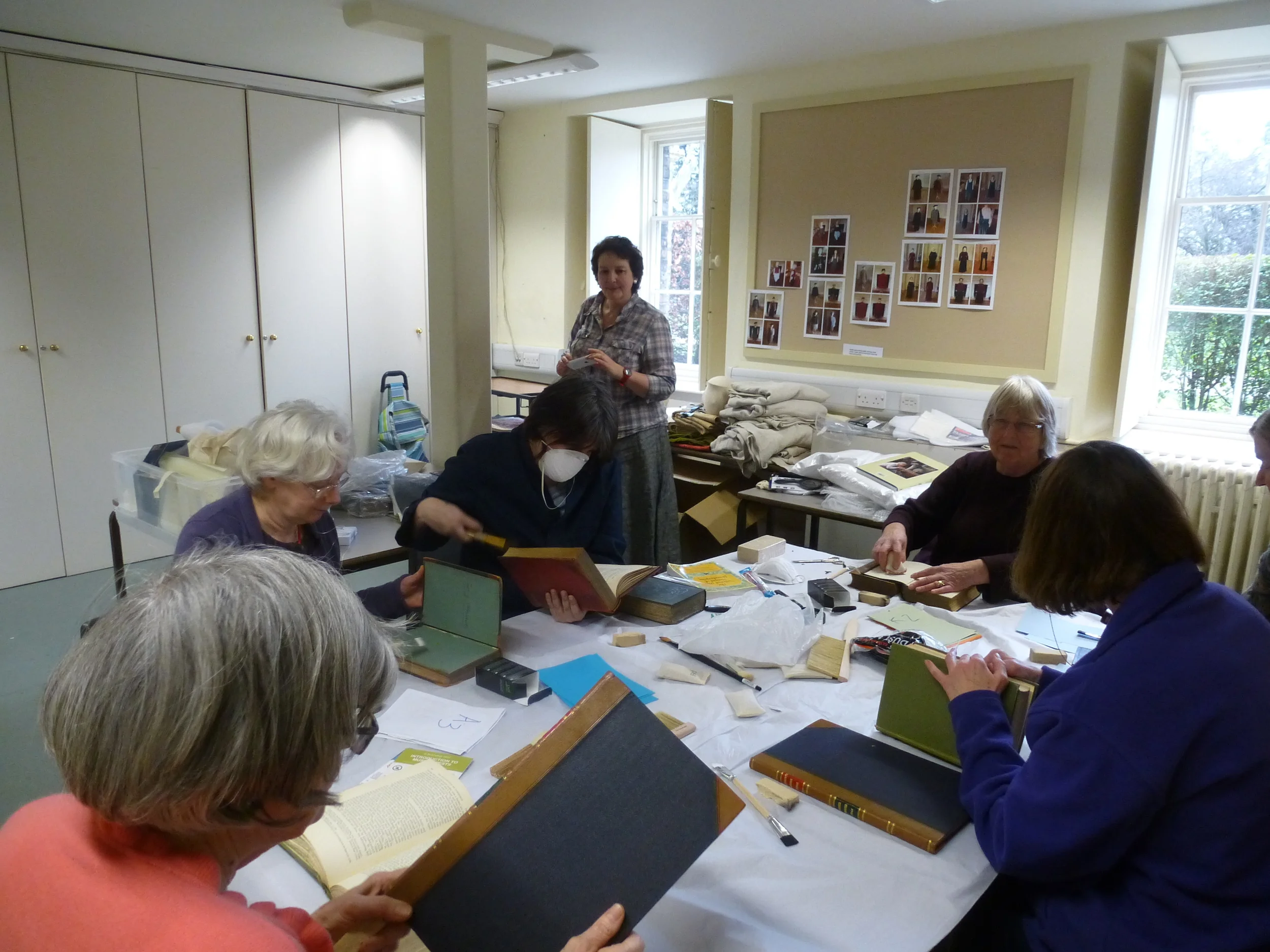
In other news, in February volunteers enjoyed two collections care courses on books and textiles led by volunteer Vicky Garrard, museum trainee Sam Lang and museum curator Miranda Poliakoff. If volunteers have ideas for future courses then please let us know.

Mind Your Own Beeswax

In recent years bees, which play such a big part in the pollination and proliferation of plant life, have been under threat and their numbers declining. So it’s a great thing that even in an enormous city like London we can play our part in the regeneration of bees and beekeeping.

Some of you will be aware that in October 2013 honey was harvested at Fulham Palace for the first time in a century. Beehives were introduced to the Walled Garden, as previously three historic bee boles in the Tudor section had been uncovered. This indicated that honey production using traditional methods had been going on since at least Tudor times, so a partnership with Groundwork London and the London Beekeepers’ Association enabled the Palace to train staff and volunteers as beekeepers.

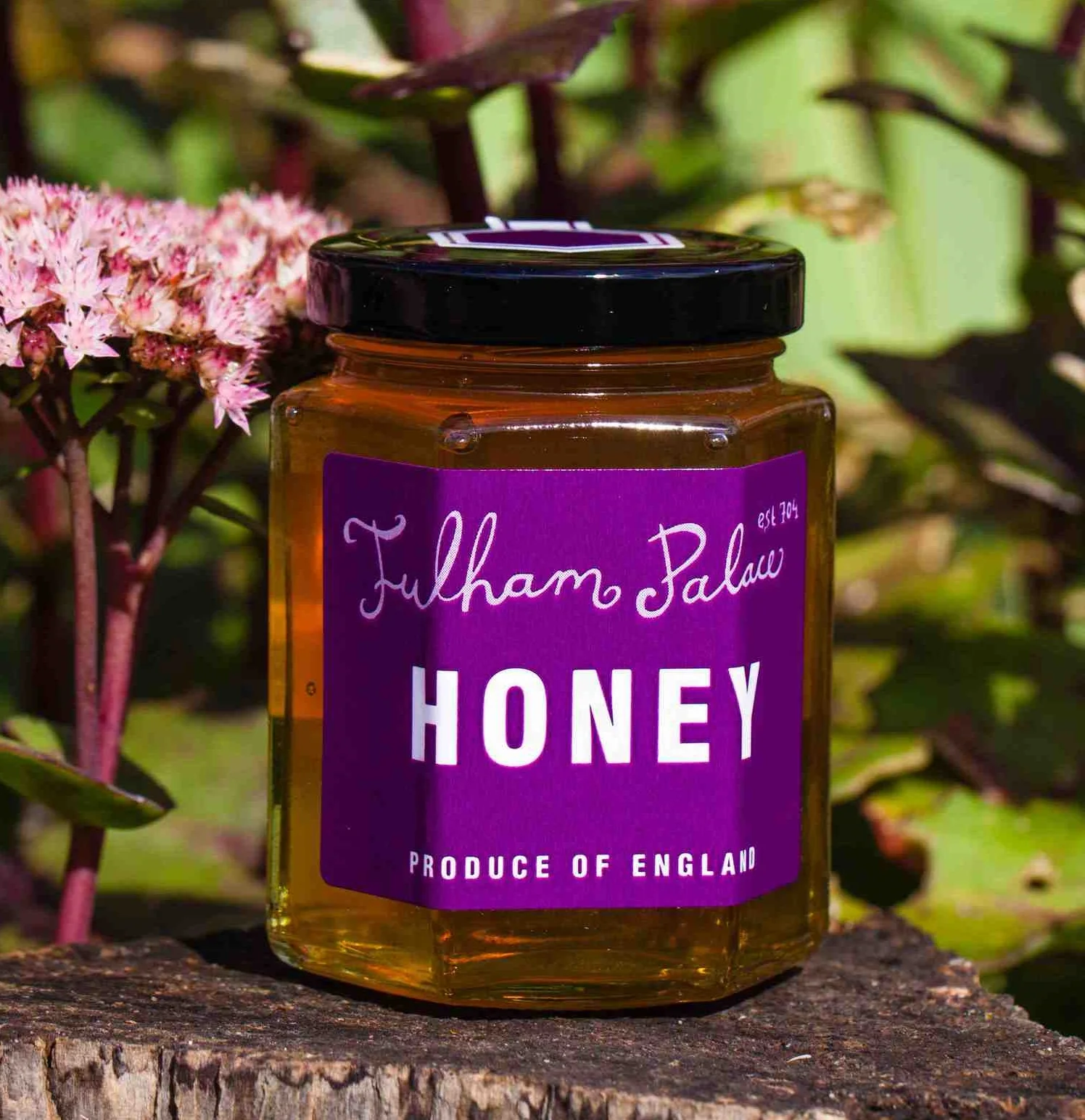
The honey produced, which has been described as ‘floral, with a strong presence of lime blossom, producing a tangy aftertaste’ had been on sale in the Museum Shop, and  proved such a great success that it quickly sold out.

So until more is available, which we hope will be later this summer, we will be selling honey produced by the LBKA hives based at East Dulwich. The Palace is a member of the Association so it is still all in the family and great for those of you who like to buy local produce.

Beeswax tables made by volunteers are now available in the Museum Shop for £1.50 each.

Museum opening hours: Monday - Thursday: 12.30pm-3.30pm Sunday: 12pm-4pm.

Museum News

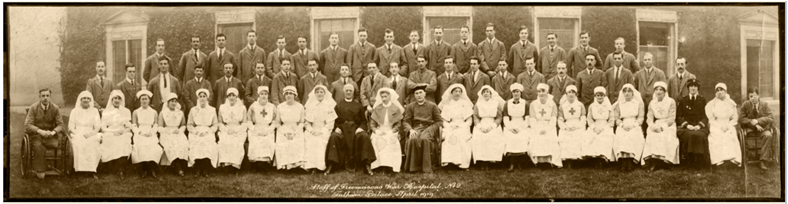
In the Museum we have mainly been concentrating on our winter exhibition “Fulham Palace through the Great War".  Amongst the exhibits is a recent acquisition; the wonderful large photograph donated by Barbara Mann showing the patients and nursing staff outside the east front in 1919.  This free exhibition is on in Bishop Sherlock’s Room during museum opening hours (Sunday 12 to 4pm; Monday to Thursday 12.30 to 3.30pm) until 16 April 2015.  We are most grateful to the wonderful team of volunteers who helped with the displays and the first of our linked events "Reflections of the Great War" which took place in the Chapel on 14 November, led by Sophie Raworth. Do look in the What's On section of the website for future talks relating to the exhibition.

Another recent addition to the collection is a newspaper article about the tea given by Bishop Winnington-Ingram to 1000 maidservants in 1902 to celebrate the Coronation of Edward VII.   This provides the context for the brooch that was acquired for the Museum earlier this year and which is on display in the Porteus Library.