
Discover one of the largest botanical gardens in London. A blog written by front-of-house volunteer Ivelina Nikolova.

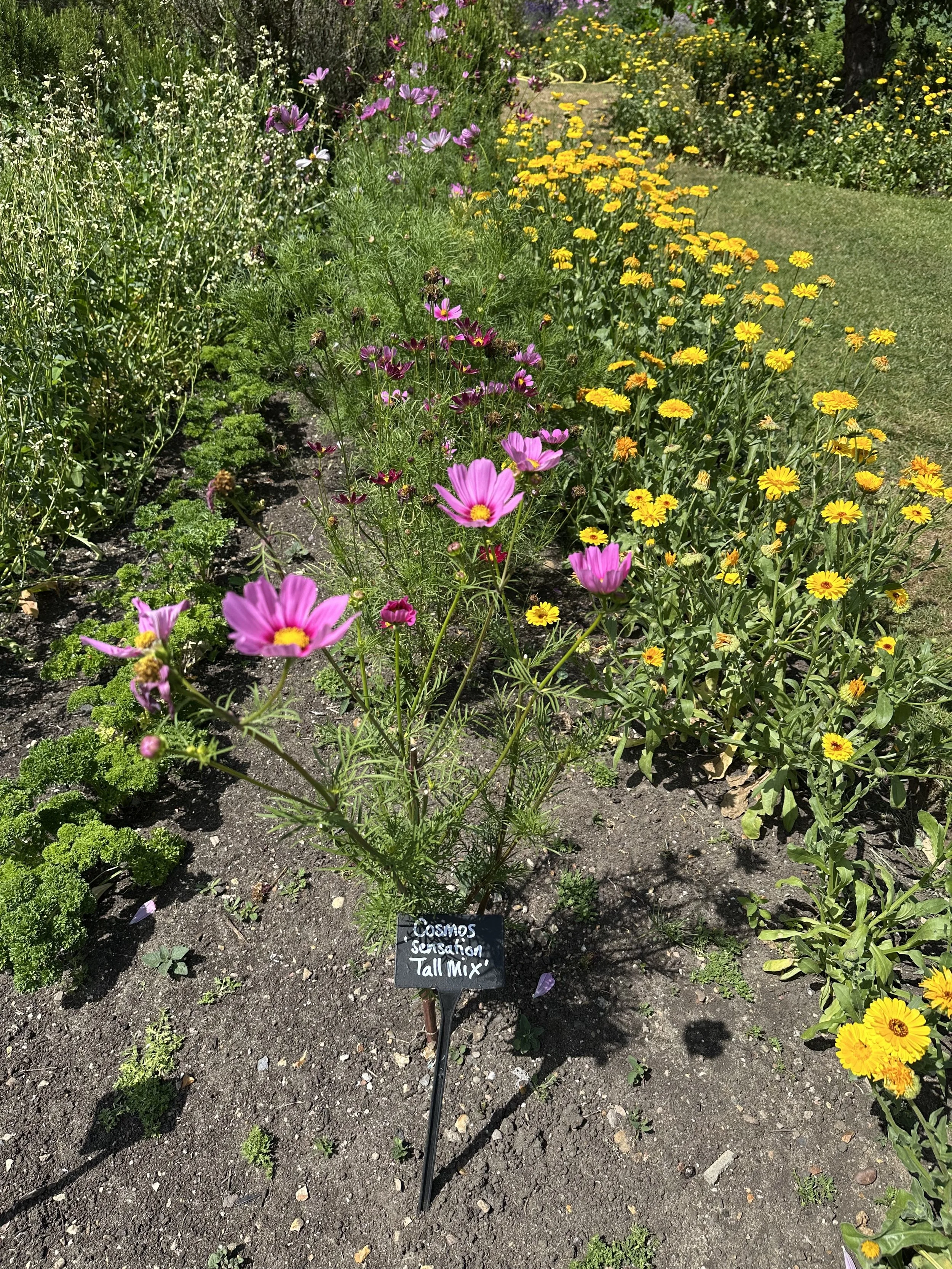
Cosmos, Walled garden of Fulham Palace, by Ivelina Nikolova, 1 July 2025
I am excited to share how grateful I feel being at Fulham Palace- a historic and beautiful site, a home in the past of the Bishops of London. My contribution to this fascinating place is by volunteering at the front-of-house and their little eclectic shop. What I find impressive is the enormous botanic garden, including the walled garden located on the main lawn. Visitors are welcome to discover all the plants and flowers grown there.
The history of the Palace hides interesting facts about the walled garden that wait to be discovered. It is important to note that some of the Bishops of London were garden enthusiasts who were once a year sending Grapes to Queen Elizabeth I. Bishop Grindal brought a plant called tamarisk on his way back from Switzerland in 1559. In September 1969 the grapes were sent with a delay, and Bishop Grindal was blamed for spreading a plague within the court, leading to the death of one of his servants. Bishop Compton was a passionate botany student who planted many exotic flowers and vegetables. Compton, a committed botanist, was well-connected within the botanical community. He corresponded with prominent figures like Robert Morison (Oxford's Professor of Botany) and Leonard Plukenet, whom he recommended for the role of Regius Professor of Botany to the King and who managed the Hampton Court gardens. Compton also knew collector James Petiver. Additionally, Compton and his head gardener, George London, were active members of the Temple Bar Coffee House Botany Club.
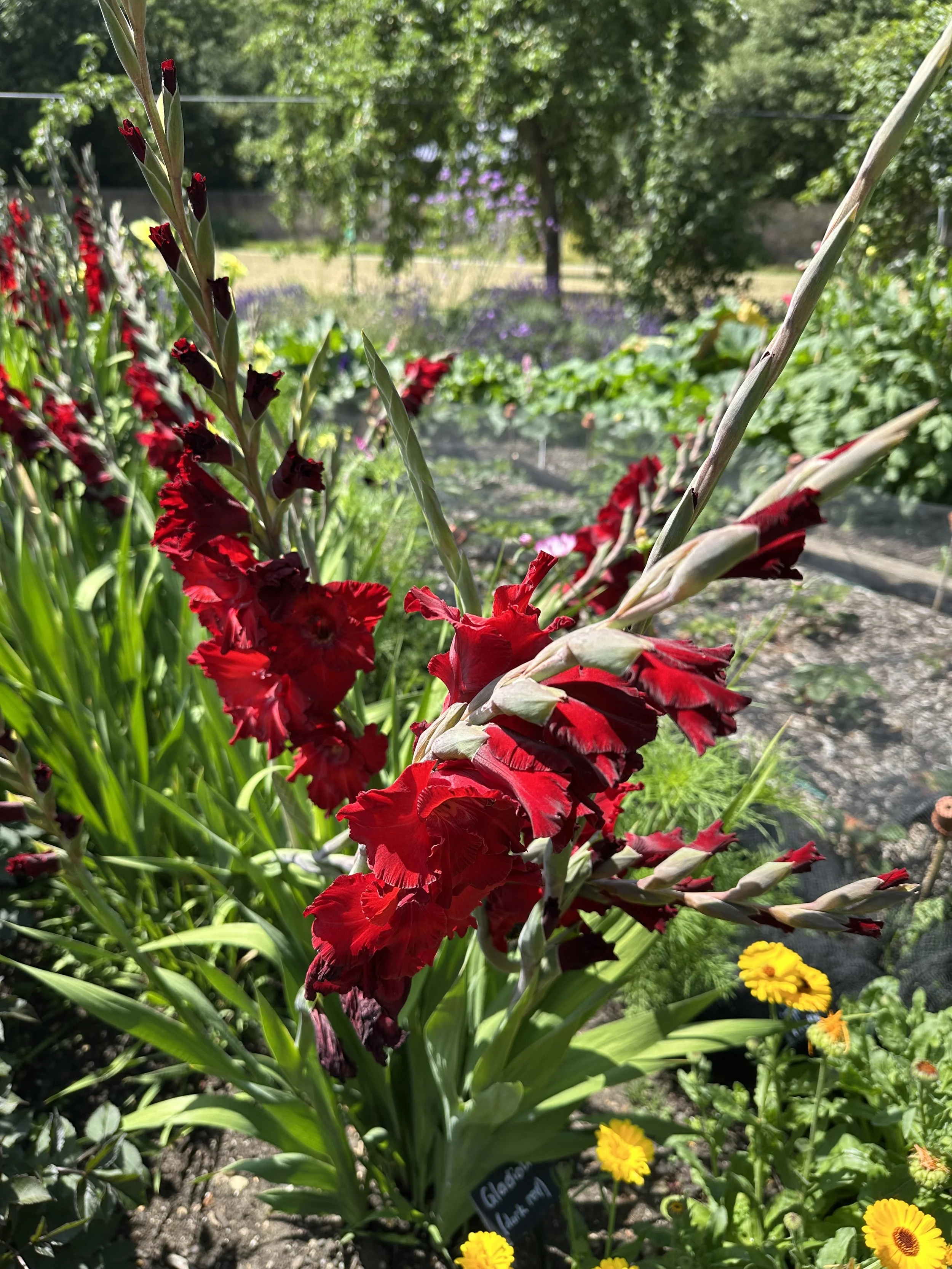
Gladioli, Walled garden of Fulham Palace, by Ivelina Nikolova, 1 July 2025
The land was also used for growing varieties of vegetables consumed by the residents of the Fulham Palace- the Bishops and their wives. Another purpose of the fascinating walled garden was for relaxation and a space for both recreation and hospitality as well as for hosting garden parties organised by Bishop Tait’s wife Catherine in 1860s. Thanks to Bishop Compton the Palace’s garden gained a worldwide recognition. He was passionate about rare plants. As Bishop of London and a head of church in American colonies, he sent Reverend Banister, an experienced botanist, to Virginia to provide his exceptional botanic service. In return, Reverend Banister sent seeds of sweetgum magnolia and box elder to be grown at Fulham Palace. Compton had a high recognition among his fellow botanists and at the time of his residence he collected a great deal of lasting exotic trees and shrubs that ever have been grown in England.
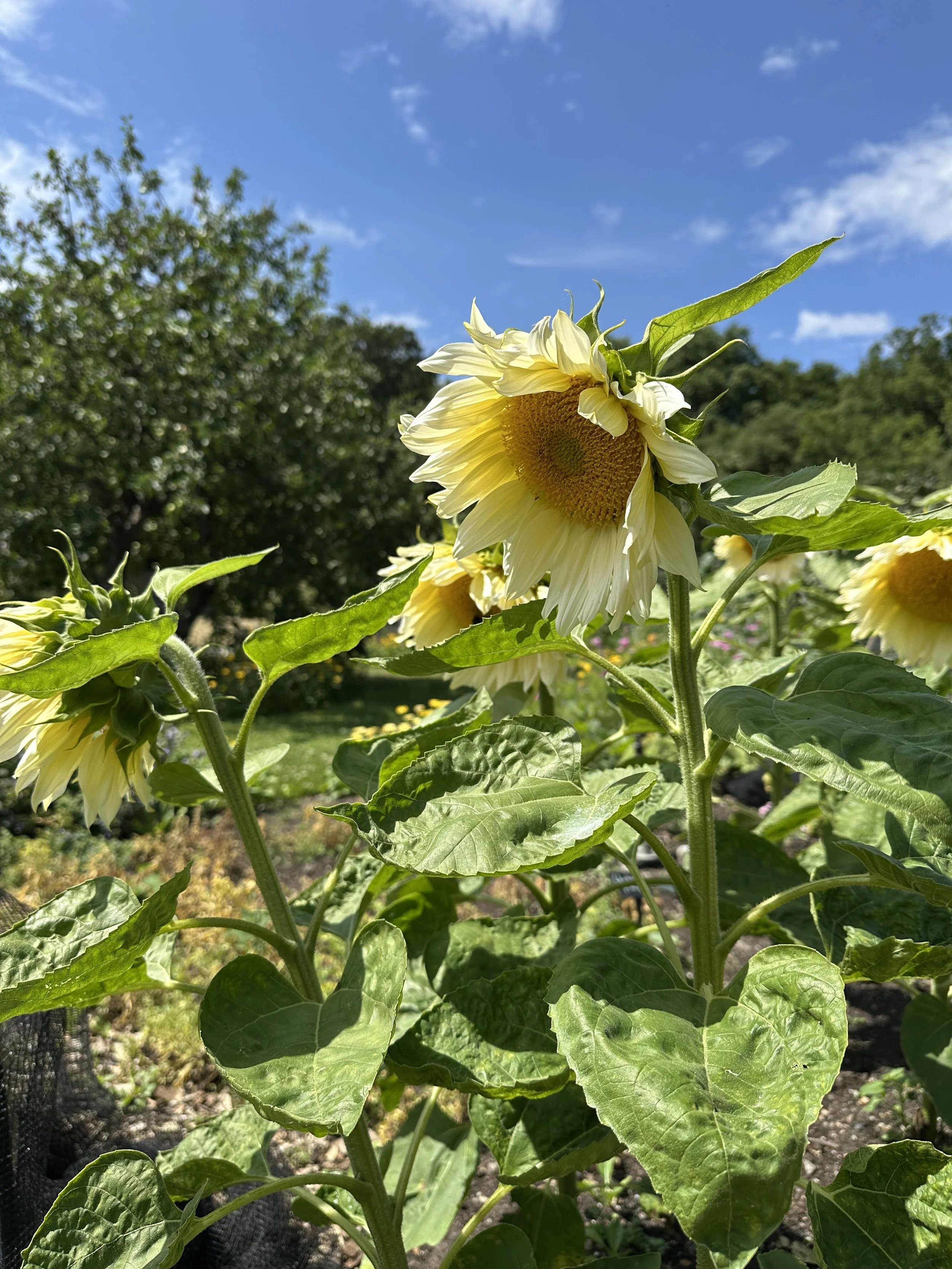
Sunflowers, Walled garden of Fulham Palace, by Ivelina Nikolova, 1 July 2025
As you enter the walled garden, to your left you can find the vinery, originally built in the 1820s. It was rebuilt by Alitex between 2010-2012, based on archaeological findings and updated with aluminium for maintenance. Historically, it was highly productive, with head gardener Samuel Hay cultivating two annual grape crops (including Black Hamburgh) and pineapples in 1851, alongside other produce like mushrooms, melons, and strawberries, some of which supplied the Bishop's London townhouse.
Fulham Palace gardens were historically productive, growing fruits (including award-winning varieties like the Fulham Pippin apple), vegetables, and flowers. The knot garden, possibly from the 1830s, has seen various plantings, from irises and roses to herbs, and was replanted in 2011 based on old maps, also featuring an ancient wisteria. Recent archaeological work has guided the restoration of pathways and vegetable beds, and today the garden once again cultivates fruits and vegetables, including a heritage apple orchard and espaliered trees. Nearby, the bothies, visible upon exiting the garden, served multiple purposes like tool sheds and living quarters, with a junior gardener noted as residing there in 1907.
Beyond the garden's boundary hedge lie the allotments, historically known as The Warren and later the Fulham Palace meadow, an area once used for haymaking and, in 1902, a campsite for the Indian Army before Edward VII's coronation.
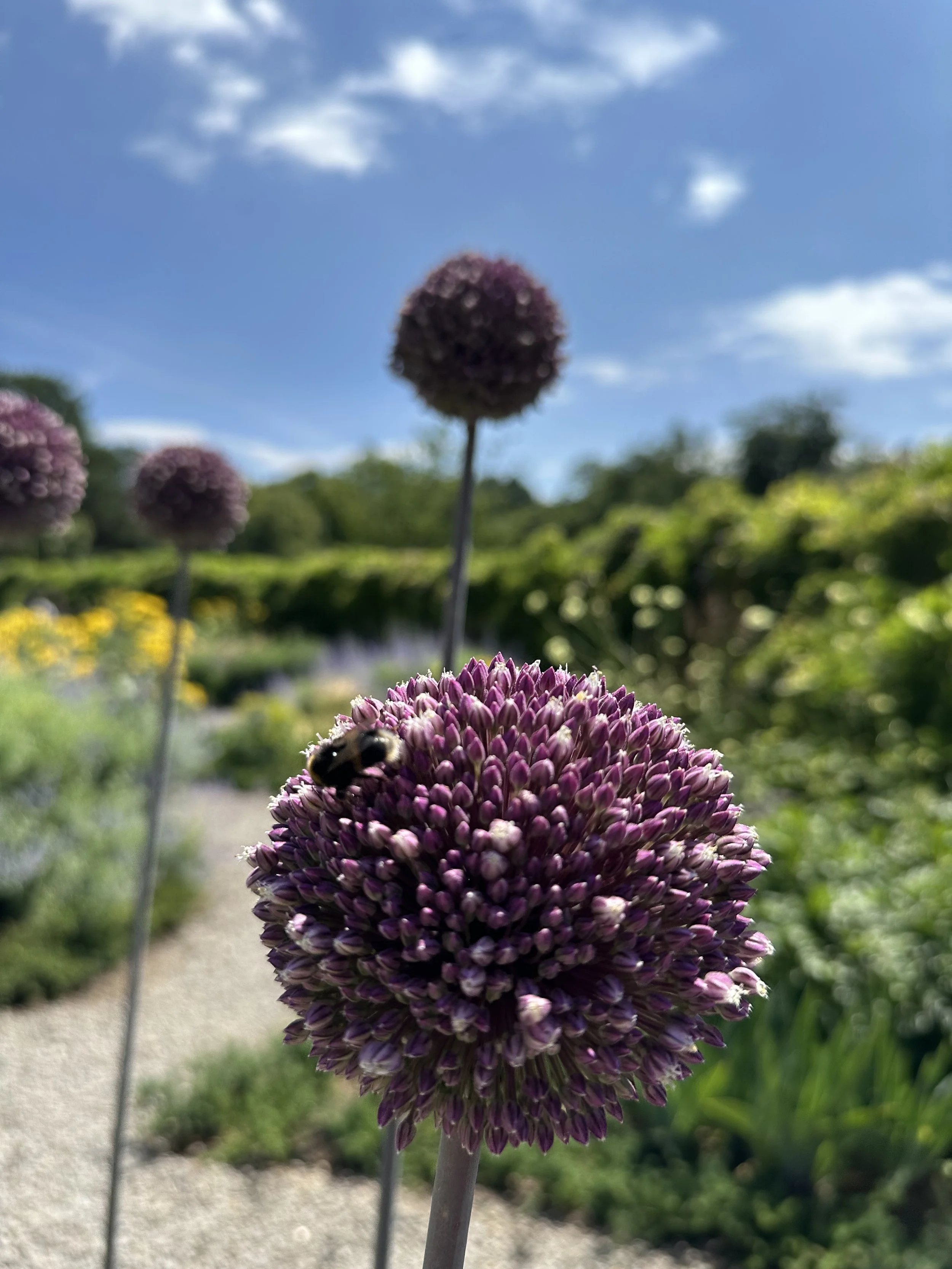
Alliums, Walled garden of Fulham Palace, by Ivelina Nikolova, 1 July 2025
To the right, a path leads to All Saints Church, the burial place of 11 Bishops of London, and on to Putney Bridge. Following the path around the walled garden, you'll discover the Bishop Compton beds, planted in 2019. These beds showcase plants first cultivated here by Bishop Compton between 1675 and 1713, notably swamp bay (Magnolia virginiana), which marked its first cultivation in Europe at this site.
As you walk through the magnificent botanic garden, you will be amazed by the great array of plants, fruit trees and pretty-as-a-picture seasonal flowers including for example: alliums, dahlias, gladioli, sunflowers, cosmos, a long-established wisteria and many more. Bishop Compton had a huge contribution to the development and maintenance of the land. Whilst you contemplate its beauty, you will familiarise yourself with a variety of names of flower species and vegetables. As time passed by, their collection expanded, and new plant arrivals can be seen. If you wish to purchase them and transform your home into a living colourful garden, our friendly staff at the barrow would be happy to assist you. Remember, each alley or path was a witness to a great history and to the dedicated work of the Bishops of Fulham Palace, London.