
Our wonderful placement students Ella Beer and Anna Mori have written a brilliant piece about the great hall and its fascinating history!
The great hall has hosted many lavish banquets and honoured guests in its time, yet has also overseen a myriad of conversions, alterations and reconstruction work too. Over time it has become a chapel, torture chamber and most recently a filming place. Yet, it is still overlooked in spite of its many historical wonders…
Most commonly seen in the series The Miniaturist and The Witchfinder - set in the 17th century, yet the great hall holds much more significance during the Tudor Period - when it was built. It was built during Henry VII’s rule, in the 15th century. A dendrochronology analysis of the timber used to build the great hall has dated it to being felled in 1493, whilst the Tudor entrance gate contains timber of 1495. However, Bishop Richard Hill didn’t live to see his reconstructions as he died in 1496. We can see that Tudor roots are planted all over Fulham Palace, but the great hall holds a direct link to the Tudor royalty as well.
Most commonly known is Elizabeth I’s last visit to Fulham Palace in 1601 as the guest of honour, where Bishop Richard Bancroft hosted a lavish banquet for her to enjoy. Two thieves stole her silver salt cellar. They were soon caught, but little is known of what happened to them afterwards. Other royal visits have been made too – during Bishop Bonner’s second tenure under Mary I, prisoners were kept at the Palace and Protestants were tortured in the great hall. Over 150 years later, George III would come visit and be treated to a simple breakfast. More recent royal visits include the Duchess of Cornwall’s visit in 2016 for a fundraising dinner held in the great hall, where she presented the then Bishop of London, Dr Richard Chartres, with a Bishop Compton medal recognition of support for the trust. This ultimately launched the £3.7 million restoration project.
As one of the earliest surviving structures on the site, much of the restoration has involved the upkeeping of the hall: in the 1750’s, Bishop Sherlock covered the original timber roof and elaborate plaster ceiling with a false ceiling; in 1818 Bishop Howley converted it to a private, unconsecrated chapel; Bishop Tait would reinstate it to its former glory in the 1860s. When the whole palace went through a number of restorations starting in the 2000s, the third phase (2019) restored the brickwork in the Tudor great hall and courtyard.
Currently it holds portraits of Henry VIII (who never visited, but letters suggest a planned trip from his first wife, Catherine of Aragon); his father – Henry VII (1485-1509); Charles I (1625-49); Charles II (1649-51); George I (1714-1727); Queen Mary II (1689-1994); her husband and co-reigner - William III (1689-1702); Thomas a Becket and St Margaret Queen of Scotland.
The great hall holds so much history – Tudor to Georgian, and even now with the visit of the Duchess of Cornwall. It is grand - covered in panelling and with a wooden screen, recycled from the Doctor’s Commons (a lawyer’s society which practiced Civil Law). It is calming, a joy to enter and to be in the presence of so much history. So intricately thought out, it is a wonder the great hall has ever been overlooked as just a ‘room’.
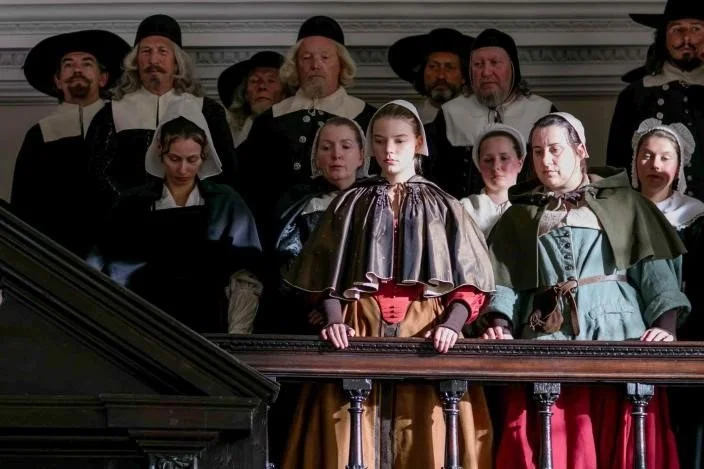
The great hall was used in the filming of The Miniaturist although they cleverly added in a gallery for the trial scene