Qiming Zhong, UCL learning and engagement placement student, tells us about 10th century Bishop St Dunstan.
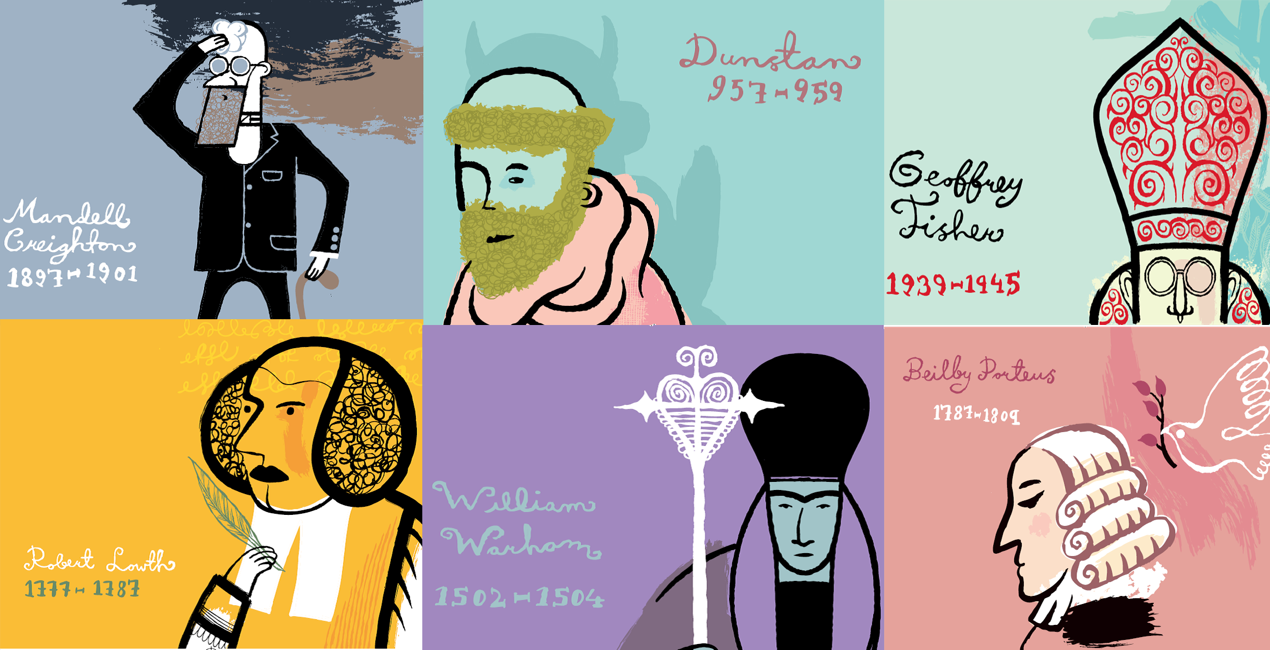
As I followed the planned route from the visitor welcome to the great hall, I first perused the museum spaces, following the smell of coffee from the café through the corridors. It was in there that I found the cartoon portraits of the Bishops of London. These were more modern than the paintings I had seen before. One of the most striking portraits was St Dunstan with his golden beard, who appears to be looking out over the Tudor courtyard.
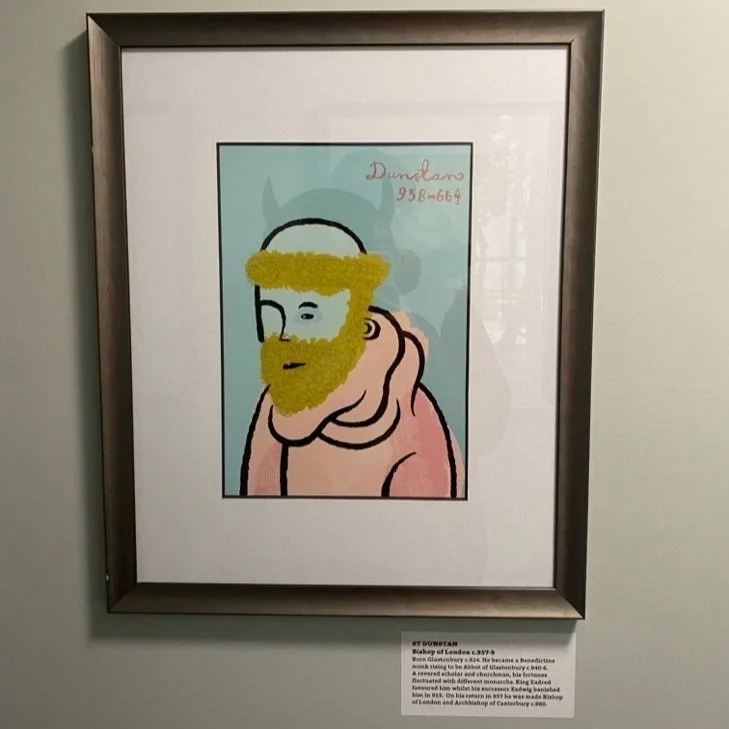
Dunstan was a very popular man, having gained admiration because of his skill and dutiful service. Born into a noble family in 909, he became Abbot of Glastonbury in 943 and was instrumental in reviving the monastic system in England, serving as treasurer and chief counsellor to King Eadred (reigned 946-955). He was deposed and banished by King Eadwig (reigned 955-959) in about 956 and stayed in Flanders for several years. King Edgar later recalled him and he became his adviser, serving successively as Bishop of Worcester and Bishop of London. He was elevated to the rank of the archbishop of Canterbury in about 960, where he took charge of the country's religious affairs and presided over the cause of monastic reform.
As such a prominent political figure, and later a saint, Dunstan’s life is embroidered with myth. From the brief synopsis of his life above, it is easy to see that his fortunes fluctuated with the different monarchs - King Eadred was fond of him, while his successor, Eadwig, banished him, and he was later recalled by King Edgar. The reason for Dunstan's exile is a curious instance of how political maneuvers become entwined with legend. The earliest biographical account of Dunstan, composed at the end of the 10th century, states that King Eadwig, on the night of his enthronement (January 956 AD), ignored his lay nobility and ran off to dance with Aethelgifu and her daughter, at which point Dunstan and Cynesige forced the king back into the banqueting hall, causing him to incur the enmity of the lady and the king and forcing him into exile to Flanders. His exile - if not the story behind it – is confirmed by the fact that neither Dunstan nor Cynesige's names appear in a large number of charters issued by the king in the following year.

I first heard of Bishop Dunstan not due to his historical importance but through the legend of the horseshoe. In England, we know that there is a tradition of hanging a horseshoe on the door to one's house, where it is believed to guard one against evil and bring good fortune. One suggested origin for this custom is Dunstan, who worked in an ironmonger's shop before becoming a bishop. There, when visited by the Devil, he offered to shoe him, seeing him limp. The Devil agreed, but rather than find himself fitted with fine shoes, Dunstan nailed red-hot horseshoes into his cloven hooves. The demon vowed, at Dunstan’s instigation, never to go near a place hung with a horseshoe again. Thus was born the legend that you will not be bothered by evil spirits if you hang a horseshoe, and over time, it became customary to put a horseshoe over the door for good luck.
As well as St Dunstan, there are more bishops of London drawn in lively, modern caricatures. They are well integrated into Fulham Palace, uniting history and modernity and enticing many visitors, like me, to learn more about the stories behind each portrait.