Daily Locking of Bishop's Park Gate

As mentioned following the mugging incident a couple of weeks ago we will start locking the gate that goes from the woodland walk to Bishop's Park on a daily basis.

It will be open daily from 7.30am – 3.45pm approx. over the autumn/winter months.  The gate will be unlocked and locked by either our staff team or the parks team.   

Therefore, from this week the shortcut through the woodland walk will not be available in the late afternoon or evening.  All will have to use the route via the main drive and either out through the park or down Bishop's Avenue.  Both of these routes are lit with street lights and therefore are much better suited to the dark evenings.  We realise that it is an inconvenience and adds 5-10 minutes to the journey at the end of the day, but given the experience we have had in recent weeks we are doing this for everyone’s safety. 

Thank you all, please get in touch if you have any questions.

Arlene Fraser, General Manager

Recipe of the Month - October

Apples - some favourite, traditional recipes

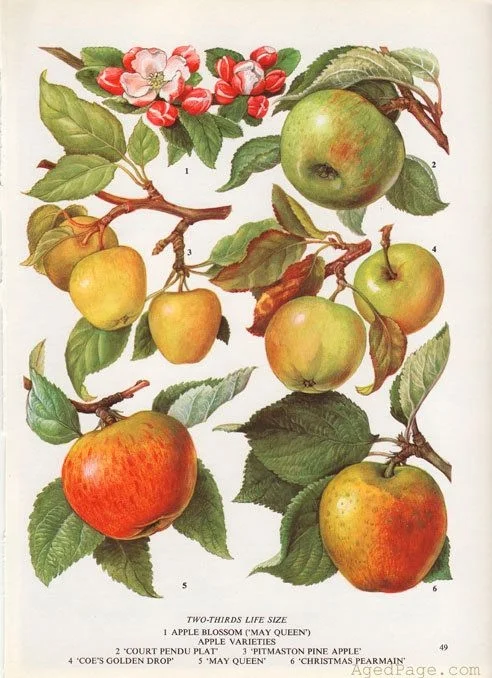
The Fulham Palace garden has an interesting mix of apple varieties, some of which are quite rare, each variety has a different quality and most have been chosen because of their links with the Palace or with former Bishops of London. Future years will see the fruit trees coming to prominence in the Walled Garden as those along the arches grow and the espaliered trees mature and become more of a feature. We can look forward to a great variety of apples available on the barrow.

47e1ee27b826edd85d2ac56620c47ce3--apple-illustration-botanical-illustration.jpg


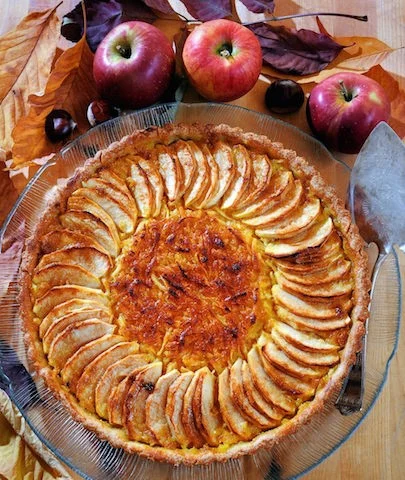
Canterbury Tart

This Tart is not as well known as many other forms of apple tart - it is slightly more complicated but is very delicious. The recipe uses both sweet and cooking apples. The history of this tart is not clear, there are those who would like to trace it back to Chaucer but there is no real evidence for that. This is a Mary Berry recipe.

Ingredients

For the pastry

  • 100g/4oz butter, cubed
  • 200g/8oz plain flour
  • 25g/1oz icing sugar, sifted
  • 1 egg, beaten
  • or a sheet of readymade dessert pastry or shortcrust pastry

For the filling

  • 4 eggs
  • 200g/8oz caster sugar
  • 2 lemons, rind and juice only, grated
  • 100g/4oz butter, melted
  • 2 large Bramley apples (about 350g/12oz in weight), peeled 
  • 2 dessert apples, peeled and thinly sliced
  • 25g/1oz demerara sugar

Method

  1. If making the pastry by hand, rub the butter into the flour and icing sugar until it resembles fine breadcrumbs.

  2. Stir in the beaten egg and bring together to form a dough. This can also be done in a food processor. 

  3. Chill for about 30 minutes. Roll the dough out on a floured surface and line a round 28cm/11in (3.5cm/1½in deep) flan tin. Form a lip around the edge. Chill for a further 30 minutes while making the filling.

  4. Preheat the oven to 200C/400F/Gas 6.

  5. To make the filling, beat the eggs, caster sugar, lemon rind and juice together in a large mixing bowl. 

  6. Stir in the warm melted butter.

  7. Coarsely grate the Bramley apples directly into the mixture and mix well.

  8. Remove the tart from the fridge and spread the runny lemon mixture over the base. 

  9. Level the surface with the back of a spoon and arrange the dessert apple slices around the edge, overlapping. 

  10. Sprinkle over the demerara sugar.

  11. Put on a heavy baking tray and bake in the oven for about 40-50 minutes until the centre feels firm to the touch and the apples are tinged brown.

  12. Serve warm with some cream, it is also good cold.

DSC_5306-nx2.jpg

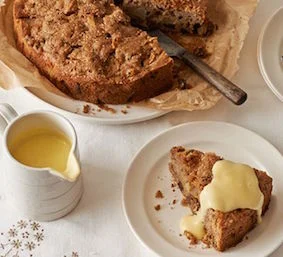
Dorset Apple Cake

This is a traditional, rustic cake with a lovely crunchy top and moist chunks of fruit in the cake, there are lots of versions of this recipe. Thin slices of apple or flaked almonds can be used to decorate the the top of the cake.

Ingredients

  • 225g self-raising flour
  • 2 tsp ground cinnamon
  • 115g unsalted butter, diced and chilled, plus extra for greasing
  • 115g light brown sugar
  • 1 large egg, beaten
  • 6-8 tbsp milk
  • 225g Bramley or Granny Smith apple, peeled, cored and diced
  • 100g sultana (optional)
  • 2 tbsp demerara sugar (optional)

Method

  1. Heat the oven to 180C/160C fan/ gas 4. Grease and line a deep 20cm cake tin with baking parchment.

  2. Mix the flour and cinnamon together in a large bowl. Add the butter and rub into the flour using your fingers, until it resembles fine breadcrumbs. Stir in the light brown sugar. Beat in the egg followed by 6 - 8 tbsp of milk – you want to achieve a smooth, thick batter.

  3. Add the apples and sultanas and mix to combine. Scrape the batter into your prepared tin and gently level out. Sprinkle over the demerara sugar and bake in the oven for 30-40 minutes or until golden and a skewer inserted into the middle comes out clean.

  4. Allow to cool in the tin for 15 minutes and then carefully turn out onto a wire rack to cool further. Best served still warm with a little custard.

dorset-apple-cake.jpg

October Object of the Month - The Salviati Mosaic

Every month we are going to feature two blogs written by volunteers, one will describe an object in the Palace and one a plant from the Garden. It is great way for us all to learn more about the Palace, if you would like to contribute there is no set format so send us your ideas!

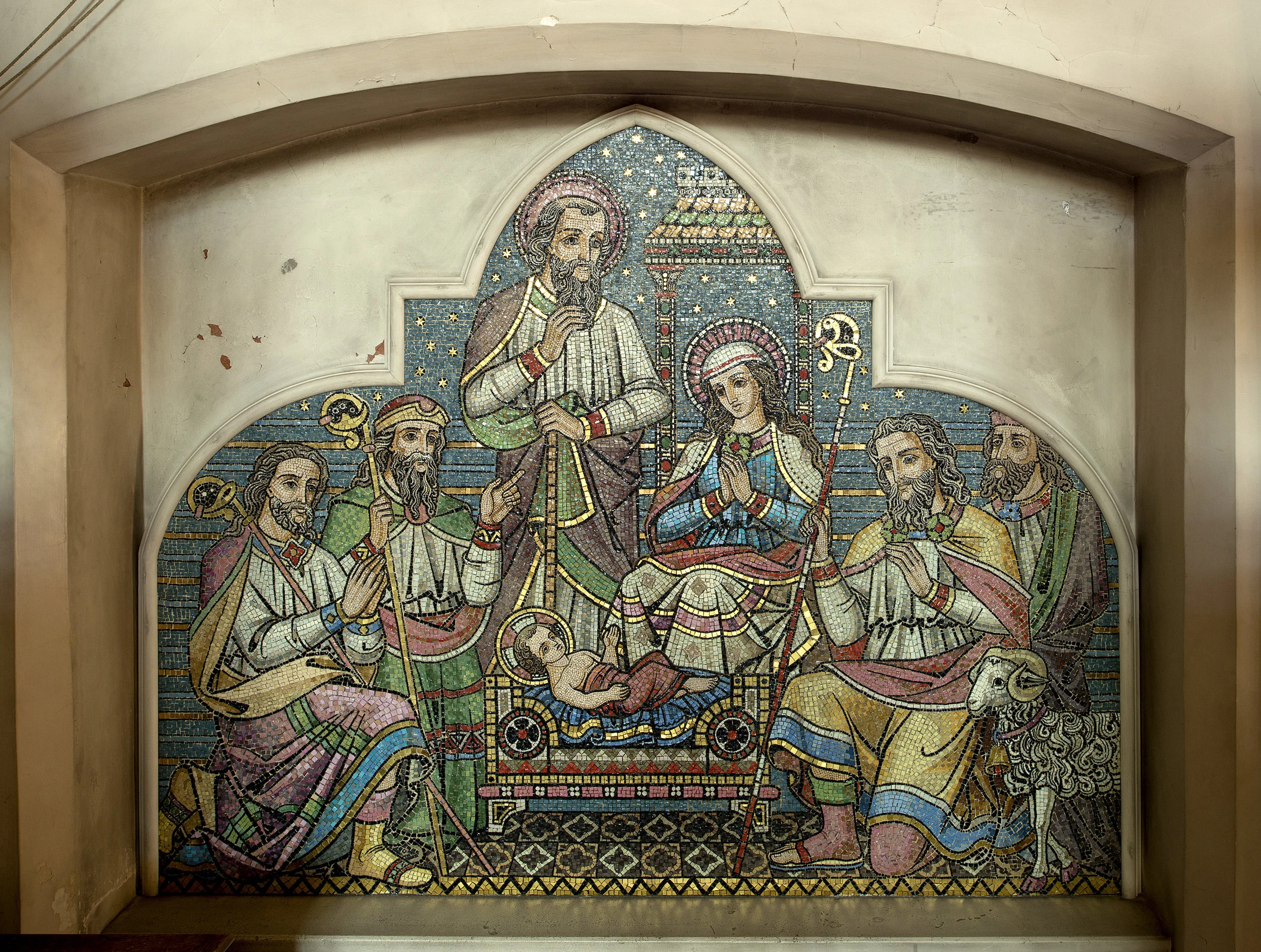
The Nativity with the Shepherds designed by William Butterfield exectued by the Salviati Company from cartoons by Alexander Gibbs.

The Nativity with the Shepherds designed by William Butterfield exectued by the Salviati Company from cartoons by Alexander Gibbs.

In 1866 Bishop Tait commissioned William Butterfield to design the new Chapel.  The mosaic was originally positioned on the east wall of the Chapel as a reredos depicting the Nativity with the Shepherds.  It was also designed by Butterfield and made with glass mosaic pieces by the Salviati company from cartoons by Alexander Gibbs.  It was moved to the west wall by Bishop Wand after the Chapel was damaged by a bomb during World War II.


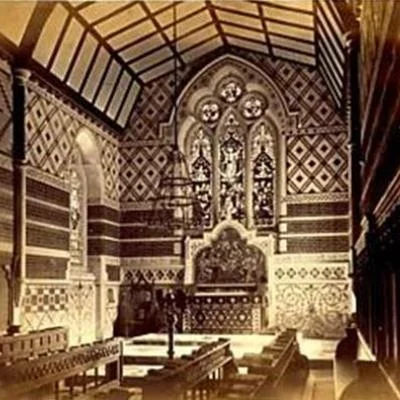
It now seems rather sadly marooned but it was originally the centrepiece of Butterfield’s design as we can see in the 1879 photograph, though sadly not in colour.  The shape of the reredos echoes the shape of the east window above and forms a focal point within the patterns of the brickwork and the tiles along the walls and floor. The elaborate patterning of the crib, the floor and roof tiles and the stripy walls echo the surrounding chapel rather than representing a humble stable and manger.  The figures and the twirly-coated sheep are stylized and geometric design takes precedence over narrative.

The Chapel in 1879 showing the Salviati mosaic in its intended location above the Altar.

The Chapel in 1879 showing the Salviati mosaic in its intended location above the Altar.


Butterfield felt that a church should be the vision of a single person and liked to control every aspect of the design.  Any figurative work had to follow the scriptures closely without distracting emotional appeal.   This was shown subsequently when there was a huge row about Keble College Chapel where the Warden had the temerity to ask Butterfield to adapt his design to accommodate Holman Hunt’s The Light of the World.  Butterfield regarded it as ‘a sentimental picture’ more suited to ‘some other room such as the Library’ and, needless to say, the painting went to the Library.

Butterfield did not do the design drawings himself but relied on others to interpret his ideas.  For the mosaic panel, he employed Alexander Gibbs, who also worked with him on All Saints, Margaret Street, and Keble College Chapel.  He quarrelled with almost all his more inspired collaborators but Gibbs understood what he wanted and did not try to bring in his own ideas.

Salviati had begun his company in Venice and was an entrepreneur with an eye for a good opportunity.  With his collaborators, he revitalized the moribund Venetian glass industry by inventing a new technique to make ‘smalti’, the glass used for mosaic, in gold and silver and a large range of different colours.  They also thought of a new way to make it easier and cheaper to transport the mosaics from Venice around the world.  They transferred the designs onto heavy paper, added the glass pieces upside-down and then covered them with a thin layer of cement.  The sections could be fitted together on arrival like a jigsaw puzzle and the paper removed, so there was no need for a craftsman to set the individual mosaic pieces in situ.

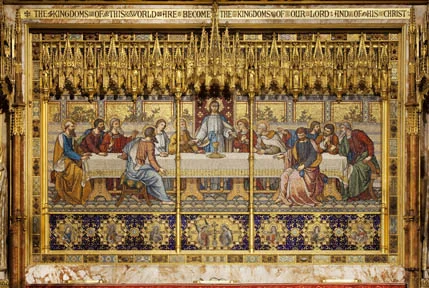
Capitalizing on the British love of Venice, Salviati exhibited to great acclaim at the 1862 Exhibition in London.  He profited greatly from the death of Prince Albert and was commissioned by Queen Victoria to make the mosaics on the Royal Mausoleum at Frogmore, the Albert Memorial Chapel at Windsor and the Albert Memorial.  Many other high profile commissions followed, including the Last Supper behind the altar at Westminster Abbey, the spandrels under the dome of St Paul’s Cathedral, and decorative panels in the South Kensington Museum (now the V & A) and the Houses of Parliament, as well as many churches, castles and private homes

The Last Supper from behind the Altar at Westminster Abbey to a design by Clayton and Bell.

The Last Supper from behind the Altar at Westminster Abbey to a design by Clayton and Bell.


By 1897 when Mandell Creighton became Bishop, tastes had changed and mosaic mania had subsided.  His wife Louise commented, ‘Nothing can make that Chapel beautiful’.  They had come from Peterborough and loved its magnificent soaring cathedral.  The mosaic was hidden behind a thick curtain and replaced with the wooden altarpiece with a relief of the Crucifixion which they had brought with them.

salviatimosaics.blogspot.co.uk/2013/06/tait-chapel

Camilla Adeane

Please send your ideas for blogs to rachel.bray@fulhampalace.org If you would like some help, let us know.

Ghostly Tale

The fast approach of Hallowe'en has got Volunteer Susie Dawson thinking over the spectres and apparitions whispered about at the Palace. This hearsay is so much part of the romance and sense of mystery surrounding Fulham Palace that we thought you'd be interested to hear a little more! These often anecdotal comments of ghosts and hazy figures in the night, are often passed on by word of mouth. We'd love to begin compiling a record of these stories and so to begin please add comments below the blog if you have any ghostly tales (historical or recent) that you'd like to share.  

Fulham Old and New, p. 143

Fulham Old and New, p. 143


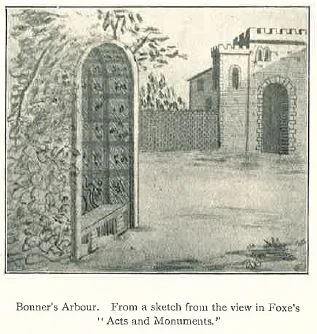
The Sixteenth Century polemic Foxe’s Book of Martyrs popularised images of Bishop ‘Bloody’ Bonner torturing Protestant prisoners in the Great Hall of Fulham Palace. 

It should be noted that Foxe’s Book of Martyrs was a Protestant propaganda document. But there are other hair-raising accounts of the persecution of Protestants.  And Bonner clearly made enemies  for what he was or stood for: one story even relates that he placed a night-time guard on his room overlooking the Tudor courtyard, though without an original source this cannot be verified. 

Presumably Bonner acted at the bidding, or presumed wish, of his monarch, the Catholic Queen Mary.  After Mary died and Elizabeth came to the throne, Bonner was sent to the Marshalsea prison where he remained until his death.  His burial was arranged at midnight, ‘for fear of riots’.   

 A Dante-esque interpretation would have Bonner as a tortured soul, not yet at rest, endlessly walking, regretting his actions…

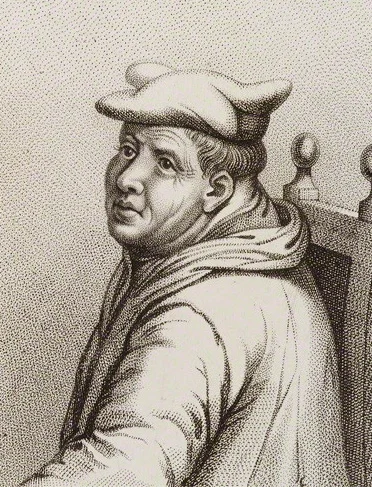
Bishop Edmund Bonner (c. 1500 – 5 September 1569) was Bishop of London from 1539–49 and again from 1553-59

Bishop Edmund Bonner (c. 1500 – 5 September 1569) was Bishop of London from 1539–49 and again from 1553-59

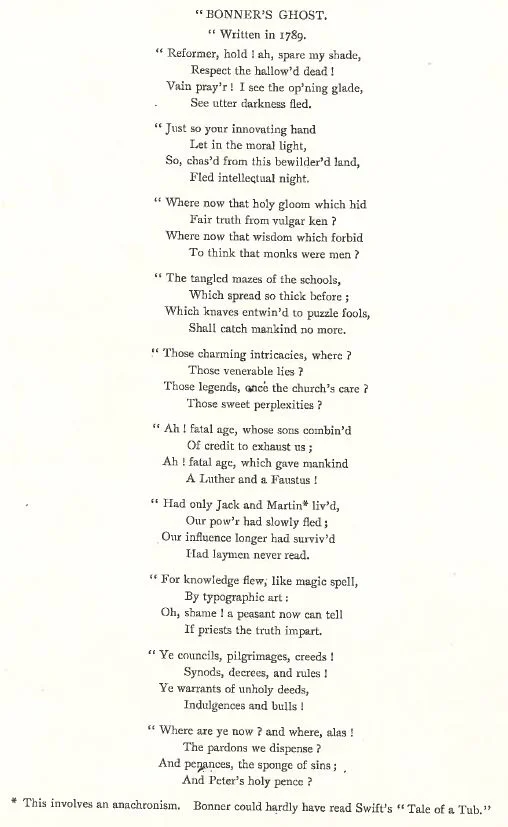
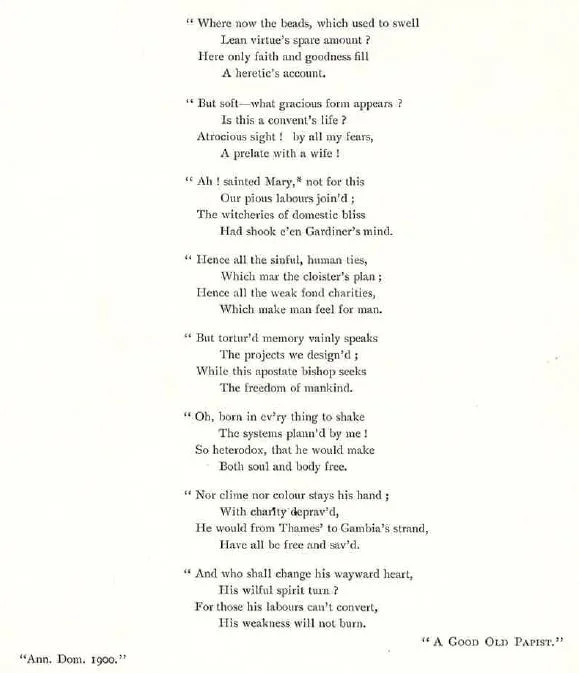
Thomas Faulkner’s Historical and Topographical Account of Fulham (T Egerton 1813) chapter V tells of Hannah More's poem Bishop Bonner’s Ghost, (1789) and the circumstances behind it.  

In 1789 Hannah More stayed with Bishop Porteus at Fulham Palace. One morning ‘just as the clock of the Gothic [Terrick] chapel struck six’,  Porteus ‘cut a path through a dark thicket’. Hannah named this the ‘Monk’s Walk’.  

Porteus made several “picturesque” improvements to the grounds. But this particular intervention gave Hannah the idea for the aforementioned poem. Horace Walpole accidentally caught sight, and resolved to publish a limited edition at his Strawberry Hill press; a few years before Walpole had ‘invented’ a genre: his ‘gothic story’ The Castle of Otranto, interwoven with supernatural events…     

Hannah was a prolific published poet, and a noted wit.  She and Porteus were both members of the Clapham Sect, an Evangelical movement opposed to the slave trade. (The first Slave Trade act was only a few years later, in 1807).

In letters exchanged the poem is described as a 'nonsense' from a ‘trifling incident'. Referred to elsewhere as a 'jeu d'esprit'.   "Poor dear bishop Bonner how little did he imagine that he should be the cause of so much [wit] in others".  

Focusing on the content, the 'ghost', we might miss the point, which was really about the form, a drollery:  a mischievous account of an imagined ‘incident'. 

Hannah More's poem Bishop Bonner’s Ghost, (1789)

Hannah More's poem Bishop Bonner’s Ghost, (1789)

Bonner's Ghost p.2.JPG

References: 

Memoir of Mrs. Hannah More: With Notices of Her Works and Sketches of Her Contemporaries, Thomas Taylor

Memoirs of the Life and Correspondence of Mrs. Hannah Moore, Volume 1, By William Roberts


Written and researched by Susie Dawson, Volunteer Tour Guide. Edited by Rachel Bray, Volunteer Development Officer


PLEASE ADD YOUR COMMENTS BELOW! (Please note you'll need to make a log in to add comments)

Upsetting Incident - Monday 2nd October

Please be aware of an incident that happened on Monday 2 October along the woodland walk. Here are the details as received from the police:

At approximately 6.15pm a female member of Blacksun staff, one of Fulham Palace's office tenants, was walking through the woodland walk on her way out from work.  She was speaking on her phone and was approached from behind by a male who snatched the bag she was carrying off her shoulder. During this she dropped her phone and when she stood up after picking it up she saw another male who was holding a knife.  Neither male spoke to the lady at all and both ran off, with nothing further happening.  They ran off in the direction of Putney Bridge.  The woman was unhurt but was shaken and upset.  Her bag, with laptop and other items, was stolen.

The description given of the men is limited – they were both black, wearing black hoodies pulled up over their heads.  One of the black hoodies had white writing on the front.

This is a serious and upsetting incident to happen in our gardens.  I have spoken with the police and they visited again on Tuesday to see the woman that this happened to.  
The advice they have given us is that we should not panic, they are not aware of other incidents of this nature happening in the area and this appears to be an opportunistic incident.  However, it is being treated seriously and we must all be aware of our surroundings and how we are conducting ourselves.

They have advised that with the weather turning and the days getting shorter that we do not walk out alone.  That we do not have valuables on show, that we all keep our eyes and ears open so we can focus on who and what is around us.  They recommend that phones, laptops, tablets should be out of sight and we do not have earphones in or up loud that we cannot hear what is going on around us. 

They also recommend that we walk out of the site in pairs, especially when it is getting to dusk or darker.  If dark, do not use the route through the garden, exit the site via the driveway and take the longer route around to Fulham Palace Road and Putney Bridge. 

This is an unusual incident to have happened at the palace. The police have reiterated that this is an incident that could happen anywhere, they believe it to be opportunistic and it is unfortunate that it has happened here this time.

We are mindful of the area and times that we live, work and volunteer in. We take this seriously and want everyone to be safe.  We ask all to please heed the advice given and follow the advice the police have given.

In terms of security we do not plan to extend our lighting nor our cctv at present. The nature of the site is that it does have some vulnerabilities. We are not able to provide lighting and cctv to all areas of our site and it would not be appropriate to do so given what our site is.  We will continue to review and seek advice from the police, in the meantime please do follow the advice given.

The police and parks police are doing additional patrols through the garden.  

If anyone is concerned and would like to speak with me I would be happy to do so, please let me know.  

Thanks
Arlene

Arlene Fraser
General Manager

Telephone: 020 7610 7163
Mobile: 07557 433327
Email: arlene.fraser@fulhampalace.org

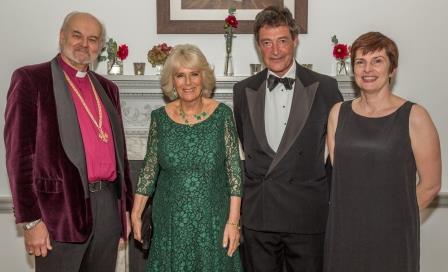
Her Royal Highness The Duchess of Cornwall to become the Patron of Fulham Palace

We are very pleased to announce that Her Royal Highness The Duchess of Cornwall is to become our Patron.

HRH The Duchess of Cornwall to become the Patron of Fulham Palace

HRH The Duchess of Cornwall to become the Patron of Fulham Palace

It was a privilege to welcome Her Royal Highness as our guest of honour at a Tudor themed dinner held in the Great Hall in October 2016 and the news of her Patronage comes at an exciting time as we embark on our £3.8m restoration project supported by the Heritage Lottery Fund.

Recipe of the Month - September

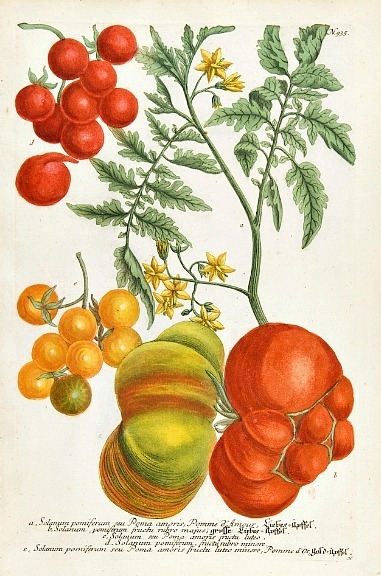
Tomatoes - Ripe and Green

tumblr_lrl8xiYckJ1qbyk5qo1_400.jpg


Here are some recipes that use tomatoes both ripe and under-ripe that may not be perfect for eating in a salad but are very tasty when cooked.

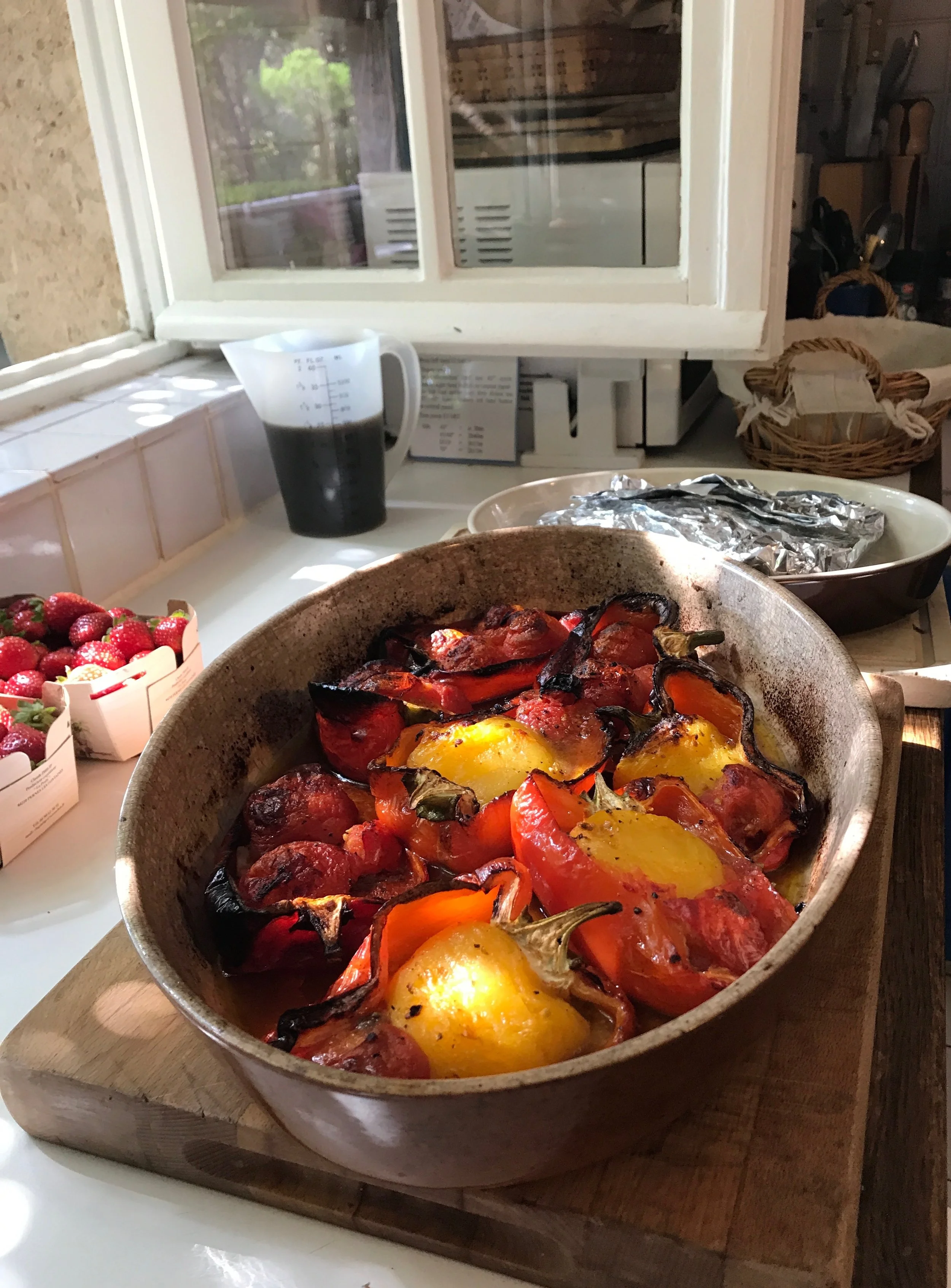
Roasted Red Peppers, Tomatoes and Anchovies

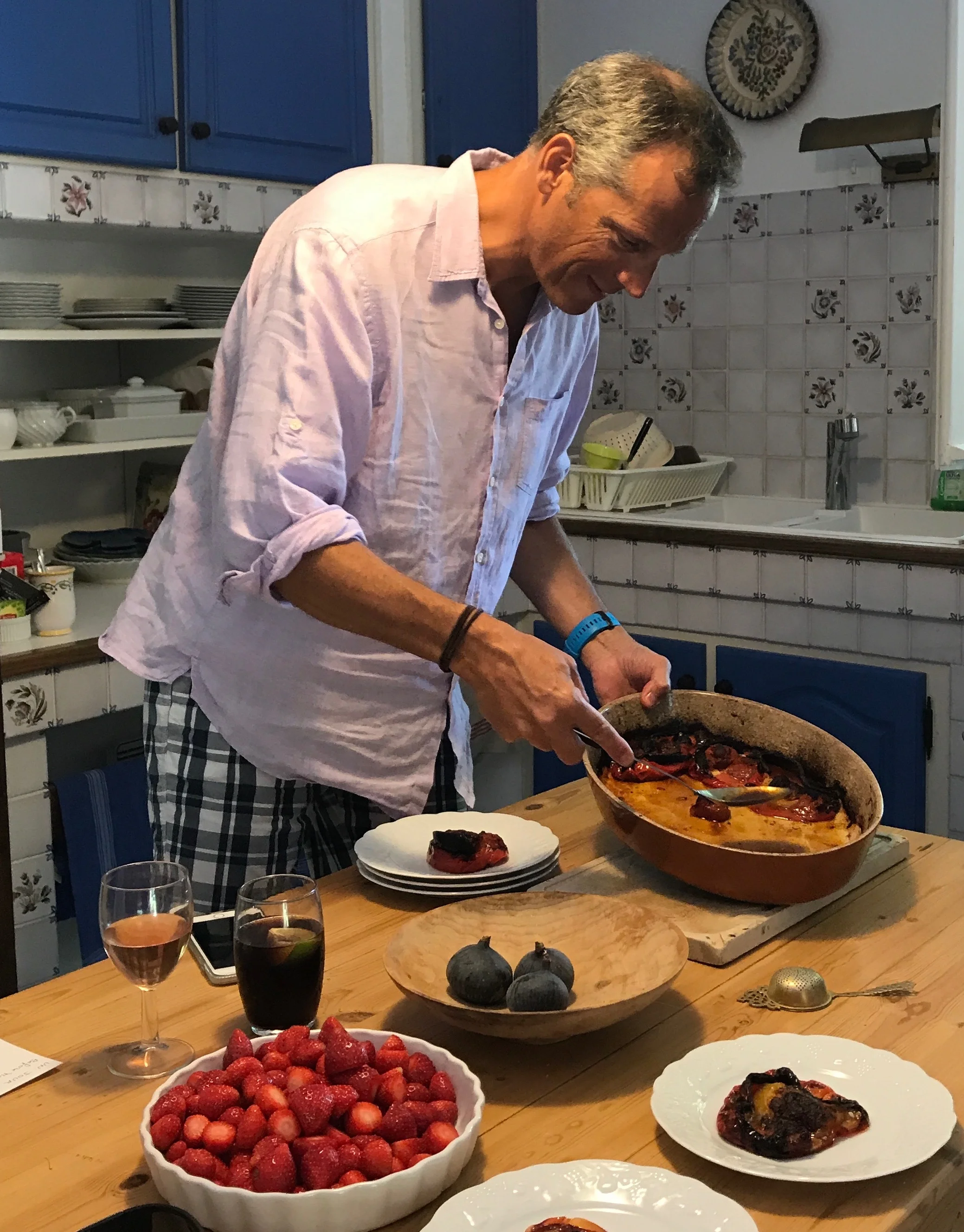
This is an all time favourite recipe and I was lucky enough to have it cooked for me over the summer by Phil Howard. This was using southern French ingredients which were particularly ripe but it is always good. 

4 red peppers, halved and deseeded
8 smallish tomatoes
50g anchovy in oil
2 garlic cloves, thinly sliced
2 rosemary sprigs
tbsp olive oil

Heat the oven to 160C/gas3.

Toss the peppers in a little of the oil from the anchovies. Roast for about 30 minutes until softened. Remove from oven.

Slice 8 anchovies in half and put 2 halves inside the pepper along with 2 tomato halves, several garlic slices and a few little rosemary sprigs. Drizzle over the olive oil and cook for a further 30 minutes or so until all nicely roasted. Allow to cool a little for the flavours to develop.

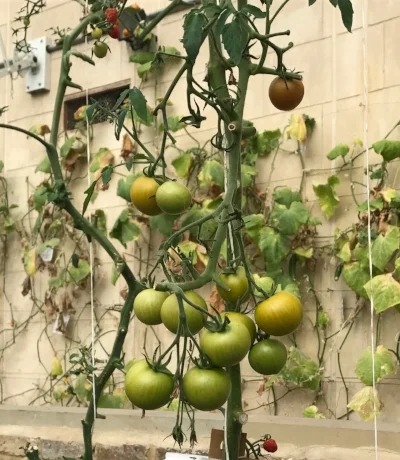
As home-grown tomatoes get towards the end of their growing season they can be super sweet or if the weather hasn’t been kind you can end up with a glut of under-ripe green tomatoes.

Green Tomato Chutney


Green tomatoes don’t have much flavour, they are rather sour and so make a great chutney ingredient alongside some spices and the sweet ingredients.

IMG_4082.jpg

This recipe makes quite a few jars so you may want to halve the quantities depending on how many green tomatoes you have.

450g/1lb cooking apples (when peeled and sliced)
225g/½ lb onions (peeled and sliced)
1.35kg/3 lb green or just under-ripe tomatoes
225g/½ lb sultanas
225g/½ soft brown sugar
Generous pinch of salt
200ml/½ pt vinegar (use whatever plain vinegar you have to hand)
2tsp ground ginger
1 tsp dry mustard powder
5-6 red chillies (finely chopped)
Pinch of nutmeg and cinnamon

Chop the apples, tomatoes and onion into smallish pieces and then put them along with all the other ingredients into a large pan with a lid.

Bring to the boil, simmer with the lid on for about 30 minutes, then take the lid off and cook until the mixture has thickened (about an hour). Stir regularly.

Taste and add more salt or spice.

This is great with Indian dishes, it can be frozen but if you want to bottle it, follow these instructions here to sterilise the jars.