
The fast approach of Hallowe'en has got Volunteer Susie Dawson thinking over the spectres and apparitions whispered about at the Palace. This hearsay is so much part of the romance and sense of mystery surrounding Fulham Palace that we thought you'd be interested to hear a little more! These often anecdotal comments of ghosts and hazy figures in the night, are often passed on by word of mouth. We'd love to begin compiling a record of these stories and so to begin please add comments below the blog if you have any ghostly tales (historical or recent) that you'd like to share.
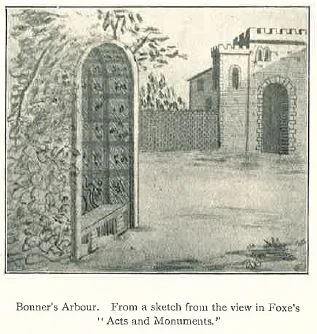
Fulham Old and New, p. 143
The Sixteenth Century polemic Foxe’s Book of Martyrs popularised images of Bishop ‘Bloody’ Bonner torturing Protestant prisoners in the Great Hall of Fulham Palace.
It should be noted that Foxe’s Book of Martyrs was a Protestant propaganda document. But there are other hair-raising accounts of the persecution of Protestants. And Bonner clearly made enemies for what he was or stood for: one story even relates that he placed a night-time guard on his room overlooking the Tudor courtyard, though without an original source this cannot be verified.
Presumably Bonner acted at the bidding, or presumed wish, of his monarch, the Catholic Queen Mary. After Mary died and Elizabeth came to the throne, Bonner was sent to the Marshalsea prison where he remained until his death. His burial was arranged at midnight, ‘for fear of riots’.
A Dante-esque interpretation would have Bonner as a tortured soul, not yet at rest, endlessly walking, regretting his actions…
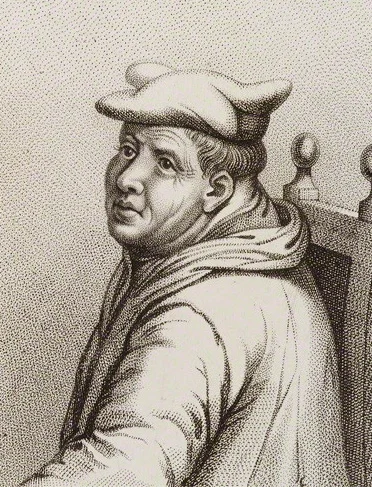
Bishop Edmund Bonner (c. 1500 – 5 September 1569) was Bishop of London from 1539–49 and again from 1553-59
Thomas Faulkner’s Historical and Topographical Account of Fulham (T Egerton 1813) chapter V tells of Hannah More's poem Bishop Bonner’s Ghost, (1789) and the circumstances behind it.
In 1789 Hannah More stayed with Bishop Porteus at Fulham Palace. One morning ‘just as the clock of the Gothic [Terrick] chapel struck six’, Porteus ‘cut a path through a dark thicket’. Hannah named this the ‘Monk’s Walk’.
Porteus made several “picturesque” improvements to the grounds. But this particular intervention gave Hannah the idea for the aforementioned poem. Horace Walpole accidentally caught sight, and resolved to publish a limited edition at his Strawberry Hill press; a few years before Walpole had ‘invented’ a genre: his ‘gothic story’ The Castle of Otranto, interwoven with supernatural events…
Hannah was a prolific published poet, and a noted wit. She and Porteus were both members of the Clapham Sect, an Evangelical movement opposed to the slave trade. (The first Slave Trade act was only a few years later, in 1807).
In letters exchanged the poem is described as a 'nonsense' from a ‘trifling incident'. Referred to elsewhere as a 'jeu d'esprit'. "Poor dear bishop Bonner how little did he imagine that he should be the cause of so much [wit] in others".
Focusing on the content, the 'ghost', we might miss the point, which was really about the form, a drollery: a mischievous account of an imagined ‘incident'.
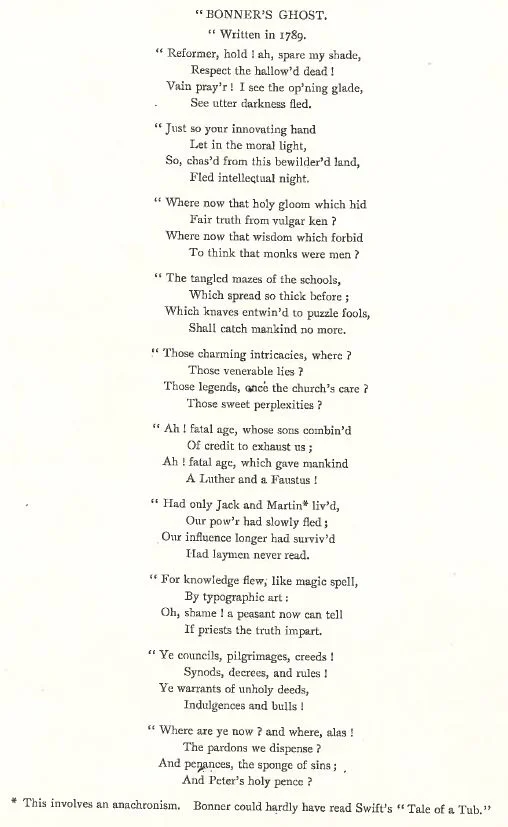
Hannah More's poem Bishop Bonner’s Ghost, (1789)
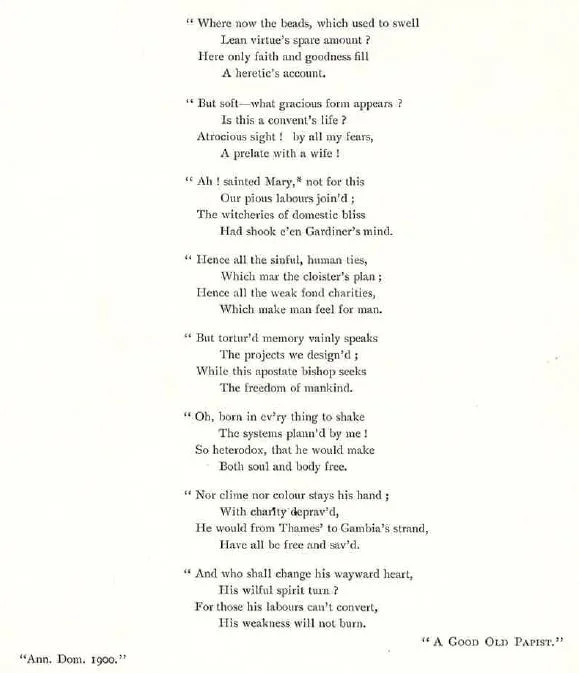
References:
Memoir of Mrs. Hannah More: With Notices of Her Works and Sketches of Her Contemporaries, Thomas Taylor
Memoirs of the Life and Correspondence of Mrs. Hannah Moore, Volume 1, By William Roberts
Written and researched by Susie Dawson, Volunteer Tour Guide. Edited by Rachel Bray, Volunteer Development Officer
PLEASE ADD YOUR COMMENTS BELOW! (Please note you'll need to make a log in to add comments)