Fulham Palace Meadows Allotments

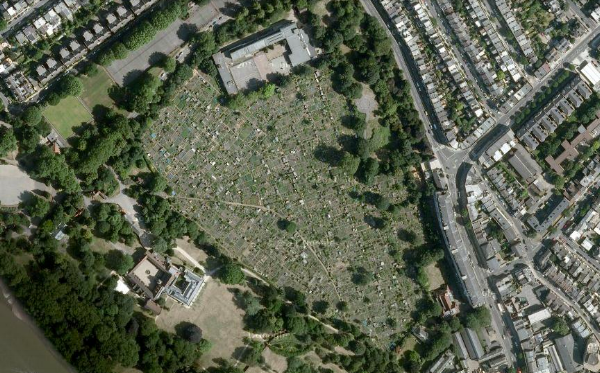
An aerial shot showing the large area occupied by Fulham Palace Meadows Allotments to the north of the Palace.

An aerial shot showing the large area occupied by Fulham Palace Meadows Allotments to the north of the Palace.

If you peer through the hedge to the north of the main lawn you will see an expanse of allotments, these are on land that was originally part of the Fulham Palace estate.  These allotments have become highly sought-after, and have featured in many articles on the joys and benefits of urban gardening, there is a long waiting list but if you are interested to find out more there is a link at the end of the blog.

The Early History

The allotments are on land that was previously called The Warren – this was farmland owned by the Palace where animals were raised and crops were grown, the Home Farm at the Palace was quite a big enterprise and in the 19th century it is recorded that 28 people were involved in haymaking on this land.  At this time Fulham was a rural area with market gardens and farms surrounding the Palace. The Palace gardens were world famous thanks to the keen horticultural interests of several of the Bishops, one notable one, Henry Compton, Bishop from 1675-1713, arranged for rare plants to be shipped back to him from the colonies of Anglican settlers he was responsible for in North America, India and Africa. The fame of the Fulham Palace gardens may be what attracted other gardeners to the area.
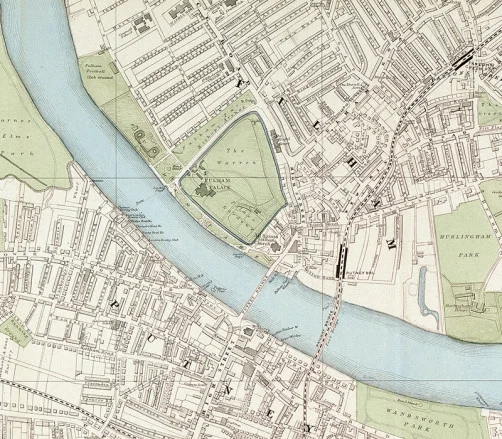
The area called The Warren is clearly marked on this early map.

The area called The Warren is clearly marked on this early map.

The land for the allotments was given by Bishop Winnington-Ingram to the people of Fulham as part of an early 'Dig for Victory' campaign during WWI in 1916. After the War, the allotment-holders were reluctant to return the land to the Palace and Bishop Winnington-Ingram agreed that they could retain the land, subject to a doubling of the rent from 5 to 10 shillings. The Bishop claimed to be the only landlord in the country who had increased the rent by 100% to the tune of “For he’s a jolly good fellow”.
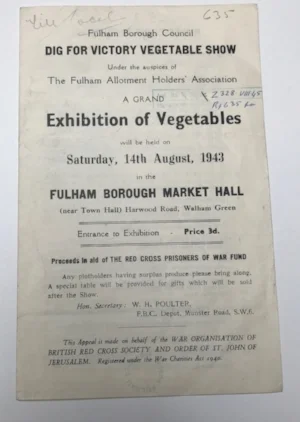
Growing vegetables was emphasised and encouraged during World War II reflecting the original intentions of Bishop Winnington-Ingram.

Growing vegetables was emphasised and encouraged during World War II reflecting the original intentions of Bishop Winnington-Ingram.


Instead of money changing hands the allotment holders could pay their rent in produce. This produce was stored in the Palace’s Tithe Barn, built in 1654 but sadly damaged in the World War II and demolished in 1953, the Head Gardener’s house was built on the site.

The Fulham Palace Meadows Allotment Association (FPMAA) was set up to administer the allotments, with the incumbent Bishop as President until 1972.
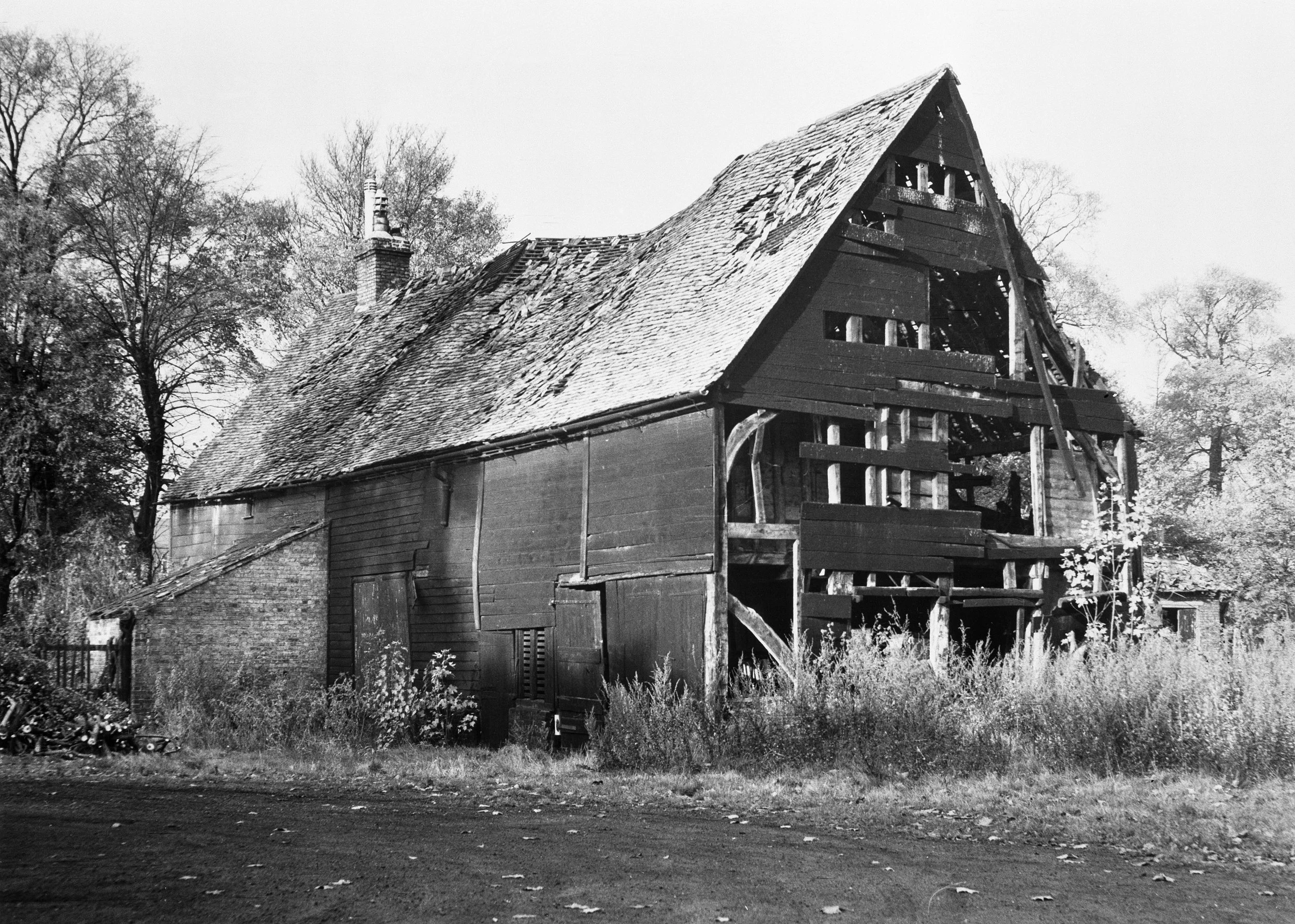
Fulham Palace 17th century tithe barn, badly damaged in World War II and demolished in 1953

Fulham Palace 17th century tithe barn, badly damaged in World War II and demolished in 1953

The Allotments today

Today there are 406 individual allotments and a huge cross-section of local residents enjoy the pleasure of gardening in this unique space. Each plot is 30m x 8m (5 rods), this is half the national average size for an allotment, Bishop Winnington-Ingram wanted to give as many people as possible the opportunity to work an allotment. Originally allotments were allocated to men only, with the first female plot holder arriving in 1970.

The allotments are sited on land that has been inhabited for centuries, with evidence of human settlement dating back 2,000 years. Because of the historical importance of the site, allotment owners are not allowed to dig below a certain depth and there are restrictions on growing trees.

There are extensive rules and regulations governing the use of the allotments and harking back to the original purpose of the allotments one states that, “The plots are for the cultivation of vegetables, fruit (but not brambles) and herbs/ flowers. A minimum of 80% of the entire plot must be under cultivation and a minimum of 50% of the entire plot must be used for growing vegetables.”

The Fulham Palace Meadows Allotment Association is now a very lively and active association, a shop is run at the allotments at the weekend and a numerous social events are arranged.

In celebration and recognition of their Centenary Year, the logo for Fulham Palace Meadows Allotment Association was redesigned by Plot Holder Jon Bartell, a local artist (see below).

If you are interested in finding out more about the allotments follow the link to visit their website.
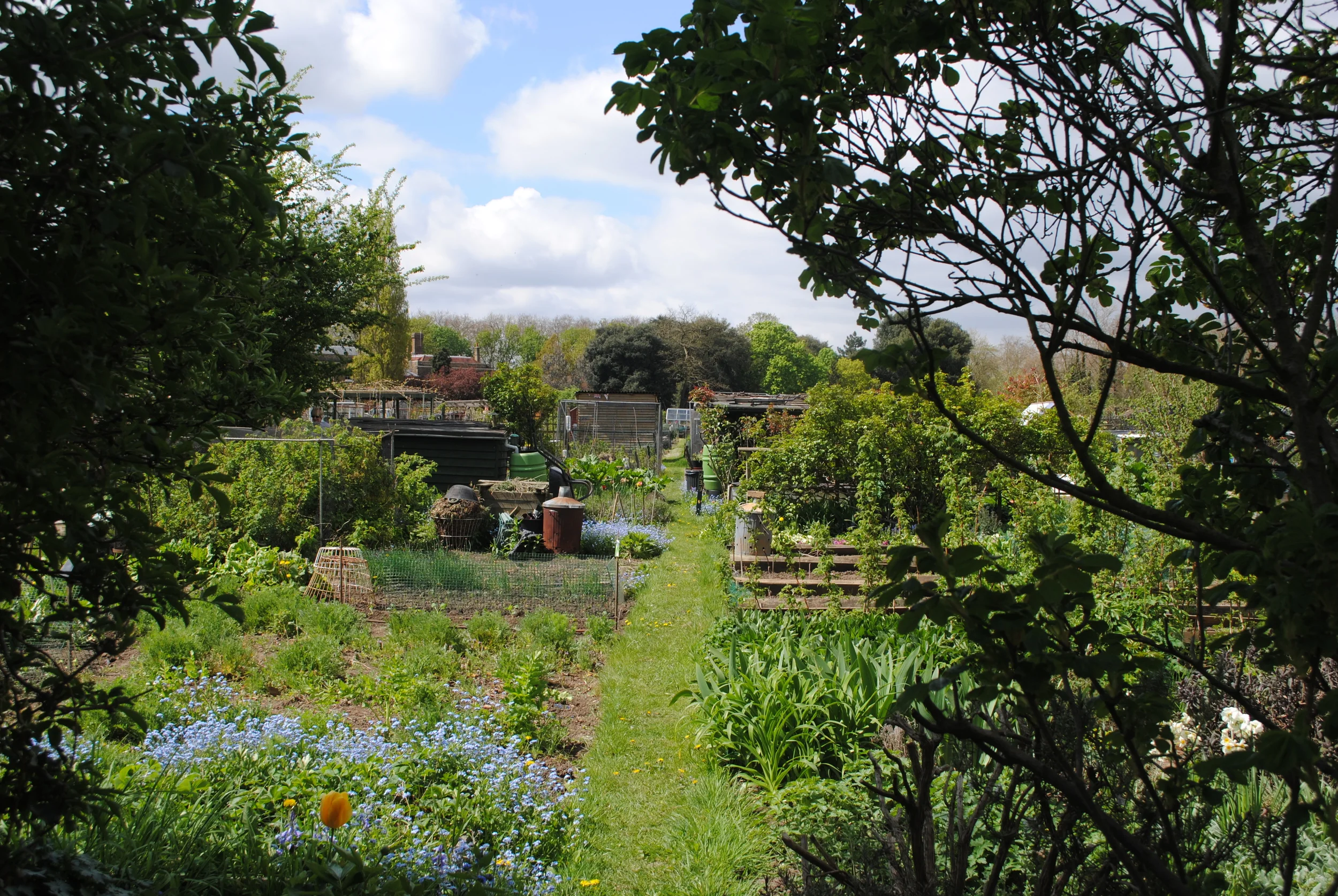
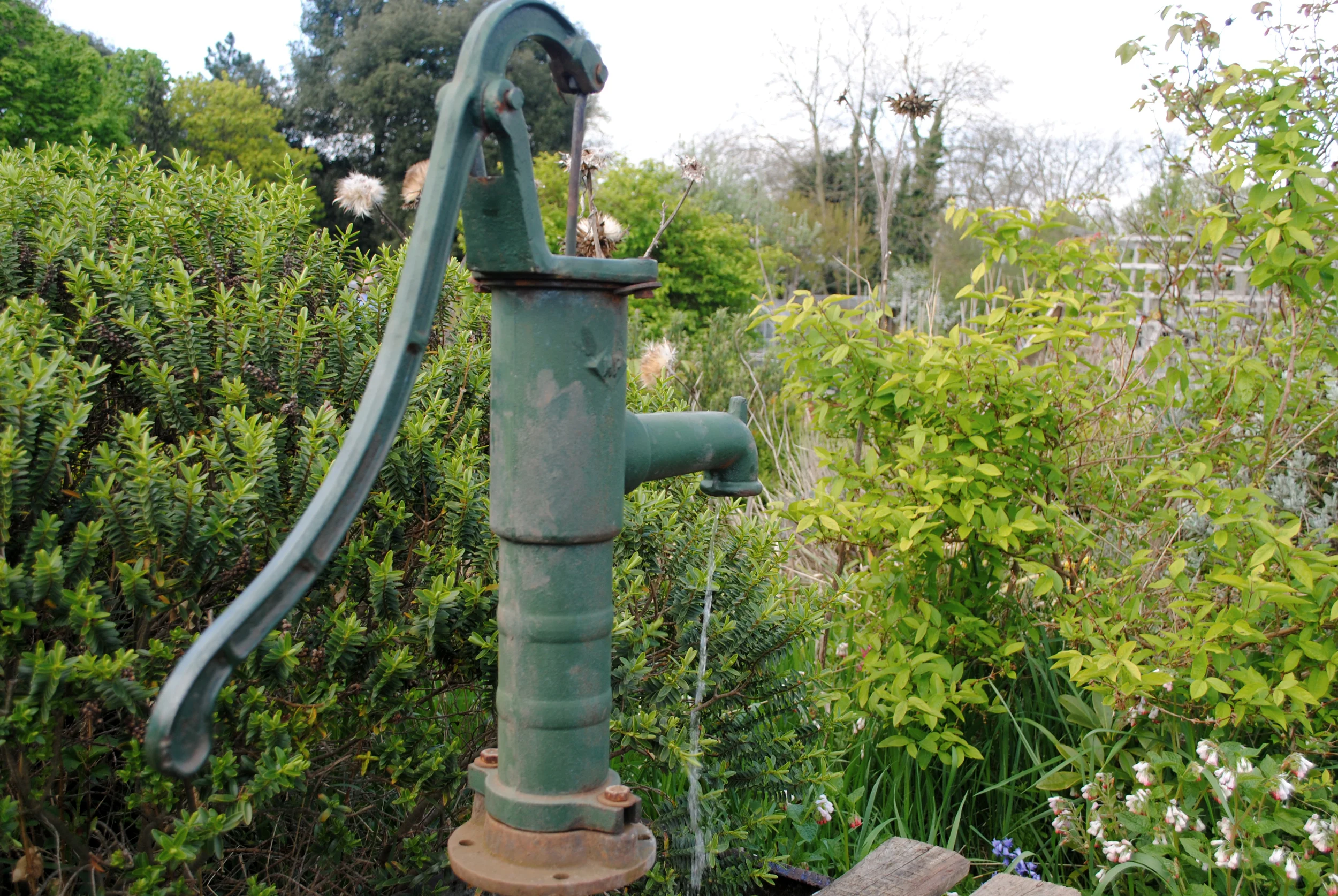
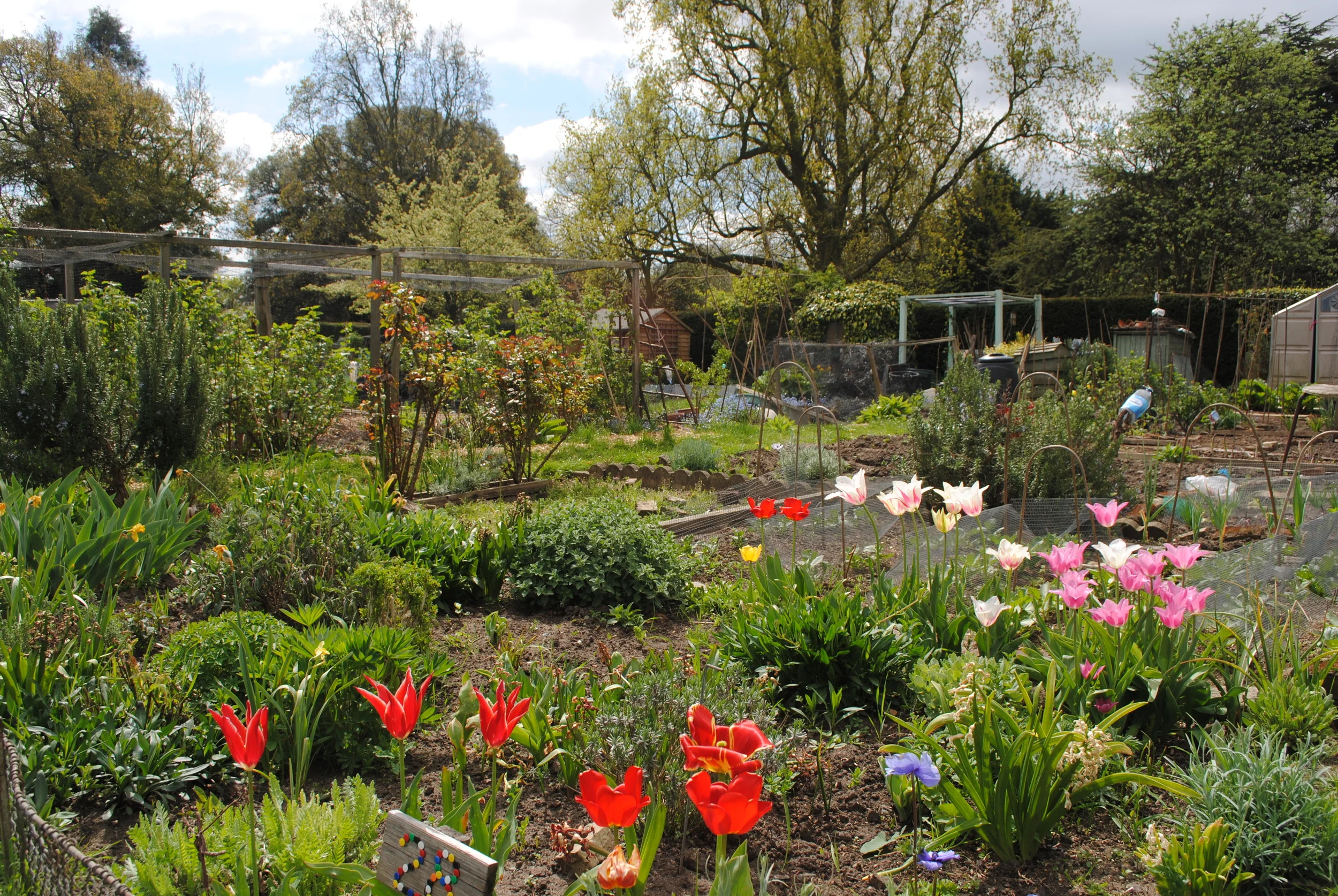
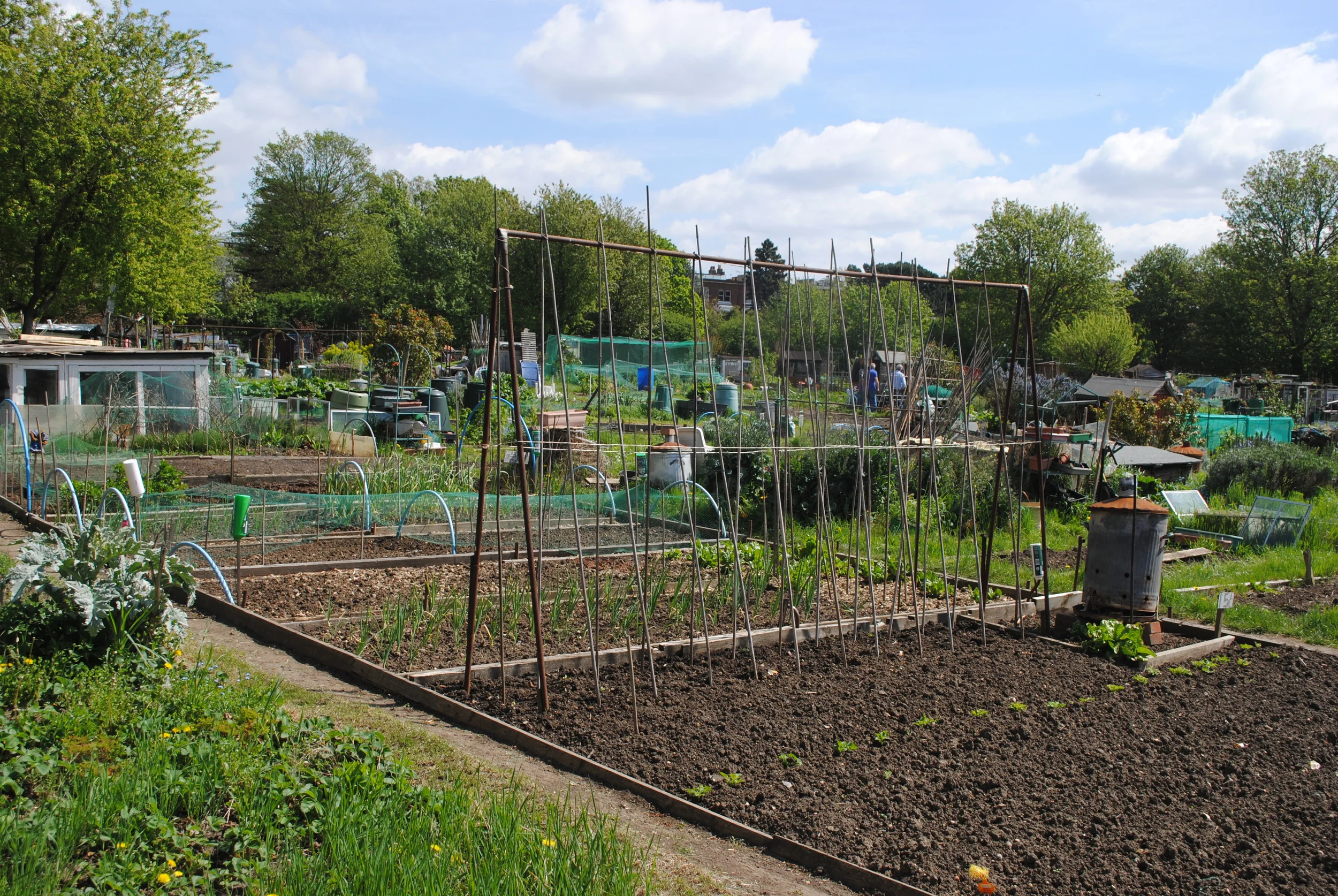
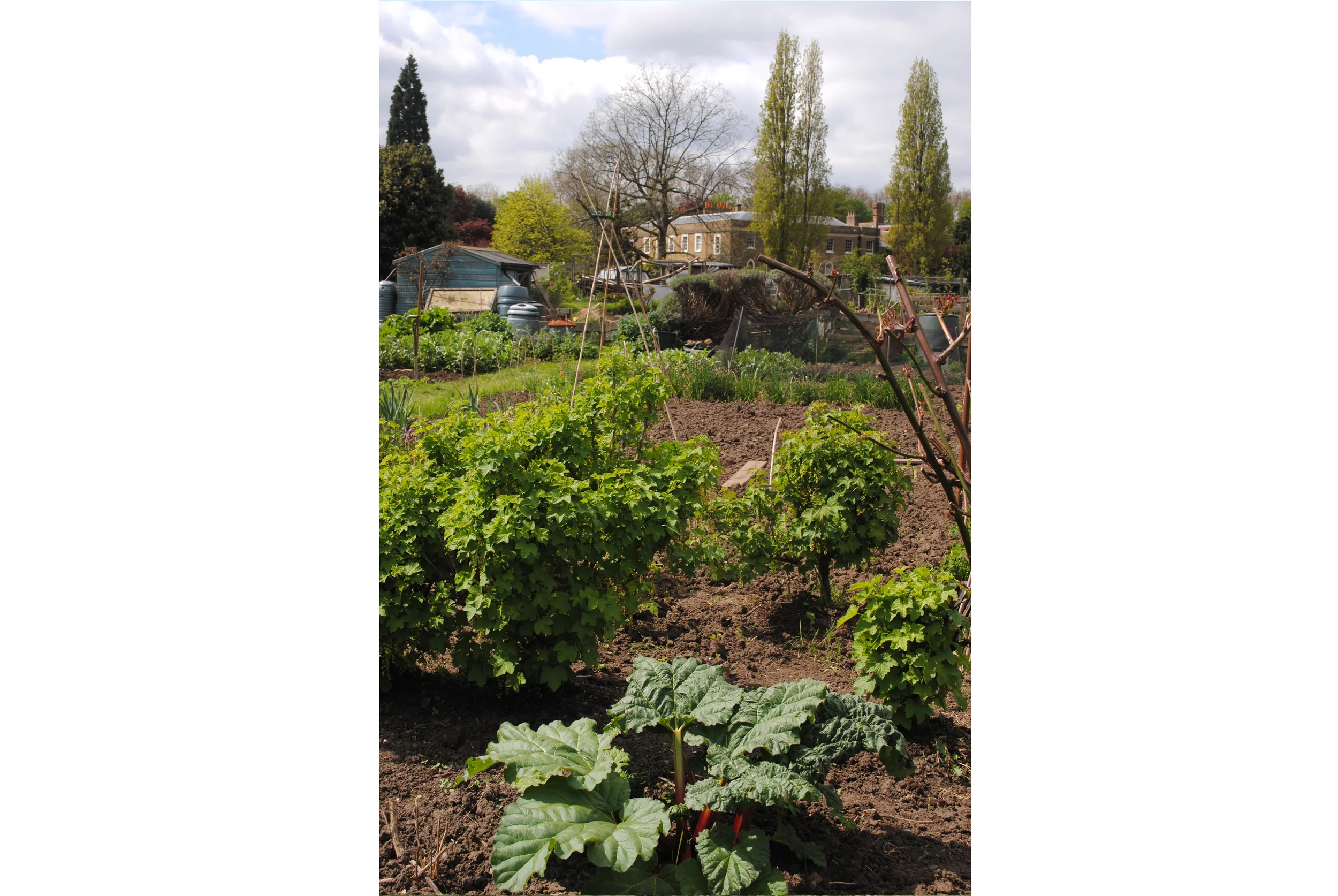
The allotments today, a wonderful diversity of vegetables, fruit and flowers are now grown.
 

Recipe of the Month - April

April is Asparagus time!

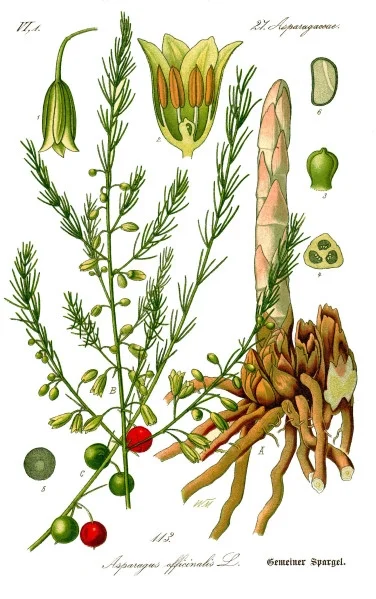
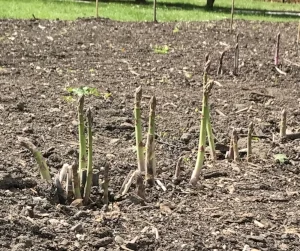
These fresh green spears are poking up through the soil in the Palace Garden, the first signs of the vegetable harvests to come. Palace grown asparagus is now being harvested and is for sale on the barrow at the moment. Traditionally the English asparagus season spans from St George’s Day (23 April) to the longest day (21 June).

First of the vegetable crops in the Palace garden.

First of the vegetable crops in the Palace garden.


Early season asparagus is a great treat but it is a delicate thing and it is easy to overcook it and end up with a sad, soggy spear. Keep cooking time short, three minutes or so if boiling or steaming should do it.

 As with many things we tend to always cook it the same way so here are some suggestions for a variety of ways of cooking this welcome spring delicacy. Fresh asparagus is so delicious that serving it in a simple way emphasises its flavour.

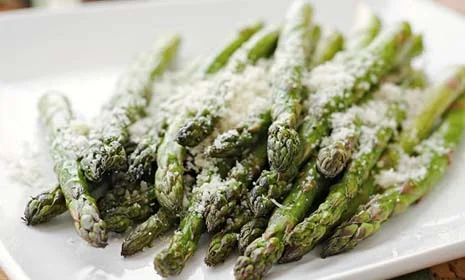
If you haven’t tried cooking asparagus on a griddle then it couldn't be easier – just heat the griddle, drizzle a little olive oil and turn the spears, the key is to char them a little as this adds a great flavour. As always with asparagus, lemon is good so squeeze over a little and serve with a nice heap of freshly grated parmesan sprinkled over.

Asparagus is best served simply.

Asparagus is best served simply.


Roasting asparagus gives it a similar, rich flavour as griddling. Heat an oven to 220 C/gas mark 7. Lay the spears on a foil-lined baking tray, drizzle with a little olive oil, tuck in a couple of cloves of garlic and some lemon zest. Roast for 20 minutes for a delicious side dish or use the tasty asparagus in a pasta dish or risotto.


The pleasure of an ingredient like asparagus is you can make something simple and delicious with minimum effort, below is a recipe that is slightly more involved but still quick and easy. It is taken from The Vegetarian Option by Simon Hopkinson

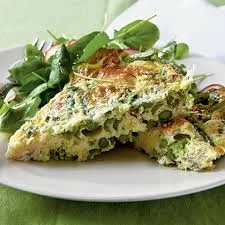
Asparagus frittata with soft cheese and chives

This is a fine dish for using asparagus spears known as "sprue", which are much thinner and consequently less expensive than more perfect specimens. Don't bother peeling them – just remove the tougher base stalks and throw the rest in the pan.

Serves 2

200g asparagus, trimmed

1 tbsp olive oil

Salt and cayenne pepper

Nutmeg, freshly grated

3 large eggs, beaten

125g soft cream cheese

30g parmesan, finely grated

2 tsp chives, chopped

Butter, for frying


1 Thinly slice the asparagus spears on the diagonal. Warm the olive oil in a nonstick frying pan, add the asparagus and season with salt, cayenne pepper and a pinch of nutmeg. Cook gently over a low heat until the asparagus is tender and lightly coloured. Tip out on to a plate, set aside and wipe out the frying pan.

2 In a mixing bowl, beat together the eggs, cream cheese, parmesan and chives until smooth. Return the frying pan to a moderate heat, add a little slice of butter and heat until it is just beginning to froth. Pour in the egg mixture, turn down the heat to low and begin bringing in the frothing edges to the liquid centre of the pan using a spatula.

3 Tip the cooked asparagus into the pan and disperse evenly. Continue to gently lift the more cooked parts of the frittata, allowing the liquid egg to slip underneath them until a happy, soft and curd-like medium has evolved. This should take around 2 minutes.

4 Slide the frittata on to a plate and allow to cool a little before serving.


A Riddle for April

Every month we are going to feature two blogs written by volunteers, one will describe an object in the Palace and one a plant from the Garden. It is great way for us all to learn more about the Palace, if you would like to contribute there is no set format so send us your ideas!

April's favourite object is a riddle with a garden theme. It is not an object of historical significance but an invaluable thing all the same.


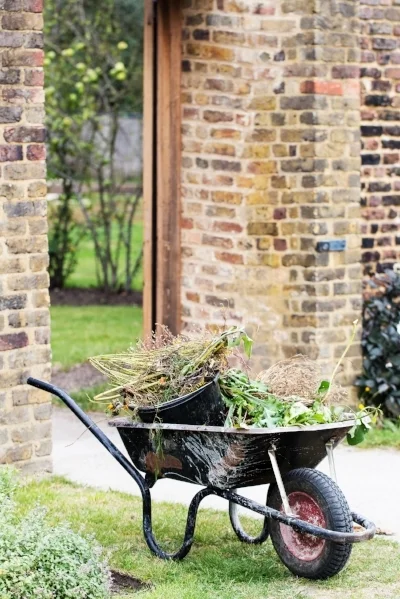
GPO_wheel_barrow.jpg


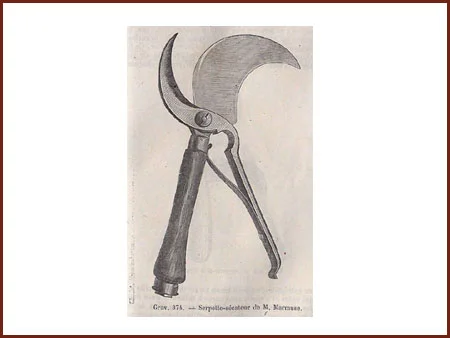
You never meet me in the singular,

Tho' sometimes am seen near Calendula,

At times of execution (a.k.a. deadheading)

And also by plants known as "bedding".

Too small for dealing with broom or furze

I am .....................


[Answer: A pair of Secateurs]

Jamie Atwell

Please send your ideas for blogs to commsvolunteer@fulhampalace.org If you would like some help, let us know.


Brandon Hales - A Maintenance Volunteer's Experience


On the 3rd October 2016, I attended my induction, I wanted to volunteer as a maintenance assistant and I was really happy to get that role and to be working at Fulham Palace.

Becoming a maintenance assistant was amazing and the experience was very good and challenging, it was a great pleasure working with the caretaker, I had a great time working with him while learning new skills, and being given advice and support. What I liked about the handyman role is the challenges I've encountered, helping others, looking after the grounds of Fulham Palace, preparing for the events and also witnessing the events. I enjoyed being a part of the events and seeing everyone and everbody enjoying themselves.

It was a privelege meeting and working with the volunteers being able to have a conversation and being part of a team made me feel more confident. For me working for Fulham Palace was a wonderful experience and I wouldn't have leaned anything or being able to meet new people if it wasn't for them, and gaining experience from the caretaker made me learn some new things which I could use in the future. Again it's been a privilege working as a volunteer maintenance assistant and I would definitely go back there and work again.

We've launched our public campaign!

This month we launched our public campaign to raise the remaining match-funding needed for our restoration project.  After securing the £1.88 million grant from the Heritage Lottery Fund (HLF) in December, and with 90% of the funds in place, we are now appealing to local residents to support the project and help close the £370,000 fundraising gap.

Hopefully you have seen the posters and banners around the Palace and Bishop’s Park, posts on our social media channels and maybe even some of the press coverage we’ve received! You can learn more about the project and ways to get involved by visiting our main website

Beth Bishop
Marketing Officer

The Dirt Beneath Your Feet

Every month we are going to feature two blogs written by volunteers, one will describe an object in the Palace and one a plant from the Garden. It is great way for us all to learn more about the Palace, if you would like to contribute there is no set format so send us your ideas!


April's Favourite Object by Kathy Stevenson


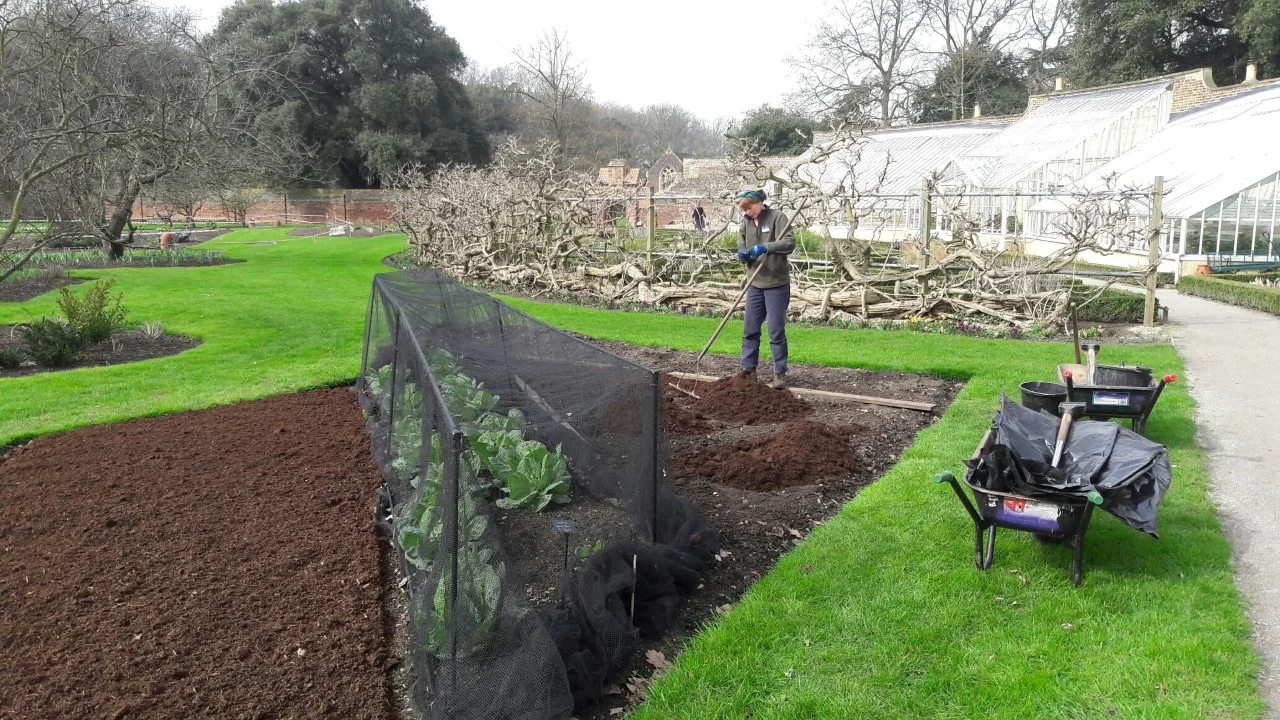
Hi, I'm Kathy, one of the garden volunteers. For the 'Choose a Favourite Object' theme for April I had the vague idea of 'A Flowering Tree' as my subject. Two days later I was spreading manure over our future vegetable beds and suddenly the soil beneath my feet became much more interesting. I already knew we produced our own mulch and compost from weeding the beds, raking leaves and emptying our bothies' kitchen compost bin, and I thought this converted into vitamins and minerals that would feed our potatoes. That's enough, right? But there I was, introducing something that came from a horse's digestive tract and that made me wonder, just what was really going on here? I did a little digging, and unearthed a mountain of information on the subject.

 Let us begin with the quality of the soil we have already. Fulham Palace has a wide distribution of well draining, alkaline soil, derived from a combination of chalk, limestone and sand. This is good for growing vegetables, although the sand content doesn't help with water retention and we need to add something to prevent moisture loss in the gardens.

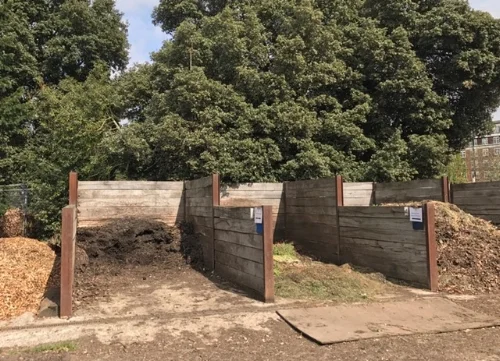
The good news at Fulham Palace is that most of our soil improvers are right here on site. Thanks to the sales of our produce and a hefty contribution from the lottery fund,  we were able to create proper composting bays and buy a tractor to work them. Grass clippings, a rich source of nitrogen (which feeds the bacteria that help vegetable roots grow well), are layered in with the compost. Chris A. turns the whole mixture weekly and in time, our Black Gold is ready to be worked into the weeded beds. We also turn leaves in to mulch and soil improver. Leaves take a long time to decompose, so there are separate bays where they are allowed to rot down undisturbed. The end result is called leaf mould.

The garden ready compost is on the left, with garden waste next along

The garden ready compost is on the left, with garden waste next along

Then there is the rotation of crops every year to ensure that no pest or disease has time to set up home in the soil. If roots are planted one year, they are followed the next year by potatoes, then onions the third year, legumes the fourth, brassicas the fifth and back to roots the sixth.

And that horse manure? It was actually mushroom compost, which is made by mushroom growers using organic materials such as straw, corn cobs and hulls, and poultry and horse manure. The manures are high in nitrogen, activating the compost. The straw adds carbon and gives the mass structure and aeration.

Here’s what the RHS say about spent mushroom compost:
"Mushroom compost is excellent on the vegetable garden, as vegetable crops usually grow best when the soil is not acid and where the soil is alkaline, brassicas (cabbage, broccoli, cauliflower, kohlrabi, Brussels sprouts and kale) are less likely to be infected by clubroot disease."

 So you see, the dirt beneath your feet is not an inert growing medium. It lives and breathes. And our vegetables love it. See you at the barrow!

Kathy Stevenson

Please send your ideas for blogs to commsvolunteer@fulhampalace.org If you would like some help, let us know.


The History of the Lodges

As requested by Kathy Stevenson, in this piece, I will take you on a century-long journey of the creation and the modernisation of the Fulham Palace lodges.

Thomas Hardwick (1752-1829) built the Gothic Porter’s Lodge in 1812 for Bishop Randolph, after roads improved on Bishop’s Avenue in the early years of the nineteenth century. Prior to that, what used to be known as simply the “Porter’s Lodge” was situated inside the archway within the west courtyard.

The Gothic Porter’s Lodge was given an extension in 1821, as the original was deemed inadequate for its size. Bishop Howley refused a proposal by Charles Cockerell to build a brand new porter’s lodge and gate piers at the opposite end of Bishop’s Avenue. Instead, he hired amateur architect, the Reverend Edward Pryce Owen (1788-1863), of Salisbury, to construct extensions to the existing Gothic Lodge. The extension included three arms attached to different sides of the lodge and its design was praised for being “of peculiar elegance”. Interestingly, in its completion in 1821, the lodge was admired for its design, which oddly was attributed to Bishop Howley’s wife. There is no evidence to suggest that there is a reason behind this incongruous connection. However, one can only assume that the awe-inspiring design of the extension reflected a woman’s beauty at the time…

Once Bishop Jackson took up residence in 1824, he obtained a loan of £650 to build a replacement lodge in the reformed Victorian Gothic style. Finally, Bishop Jackson agreed to have a better lodge constructed on the opposite side of the entrance to Bishop’s Avenue. This new oak lodge was commissioned to John Henry Hakewill and was built by P H Jones, a local firm, in 1872.

Up until 1893, this new lodge was occupied by the Gatekeeper of Fulham Palace, before it was given up to the local vestry for the park keeper. Thus, the Porter’s Lodge transformed into the Park-keeper’s Lodge and a new “Coachman’s Lodge” was built for Bishop Temple inside the Palace gates. The design for this newest lodge was commissioned to William Butterfield and it was built by Norris, using another loan.

The only time the lodge needed repairing was after real damage was induced when, during WWII, twelve bombs fell on the Palace site in 1940. One of the bombs appeared to be a time bomb that hit the lodge, injuring the men who were working on the barrage balloon site. Luckily, no one had incurred serious injuries. The lodge continued as a residence for Palace staff until 1973.

In 2012, Thomas Ford Partnership modernised both lodges. Today, these lodges are rented out by the Fulham Palace Trust.

Thanks for reading - we love your ideas for blogs so please keep them coming in the comments box below!

Ahou - Vol Comms Assistant

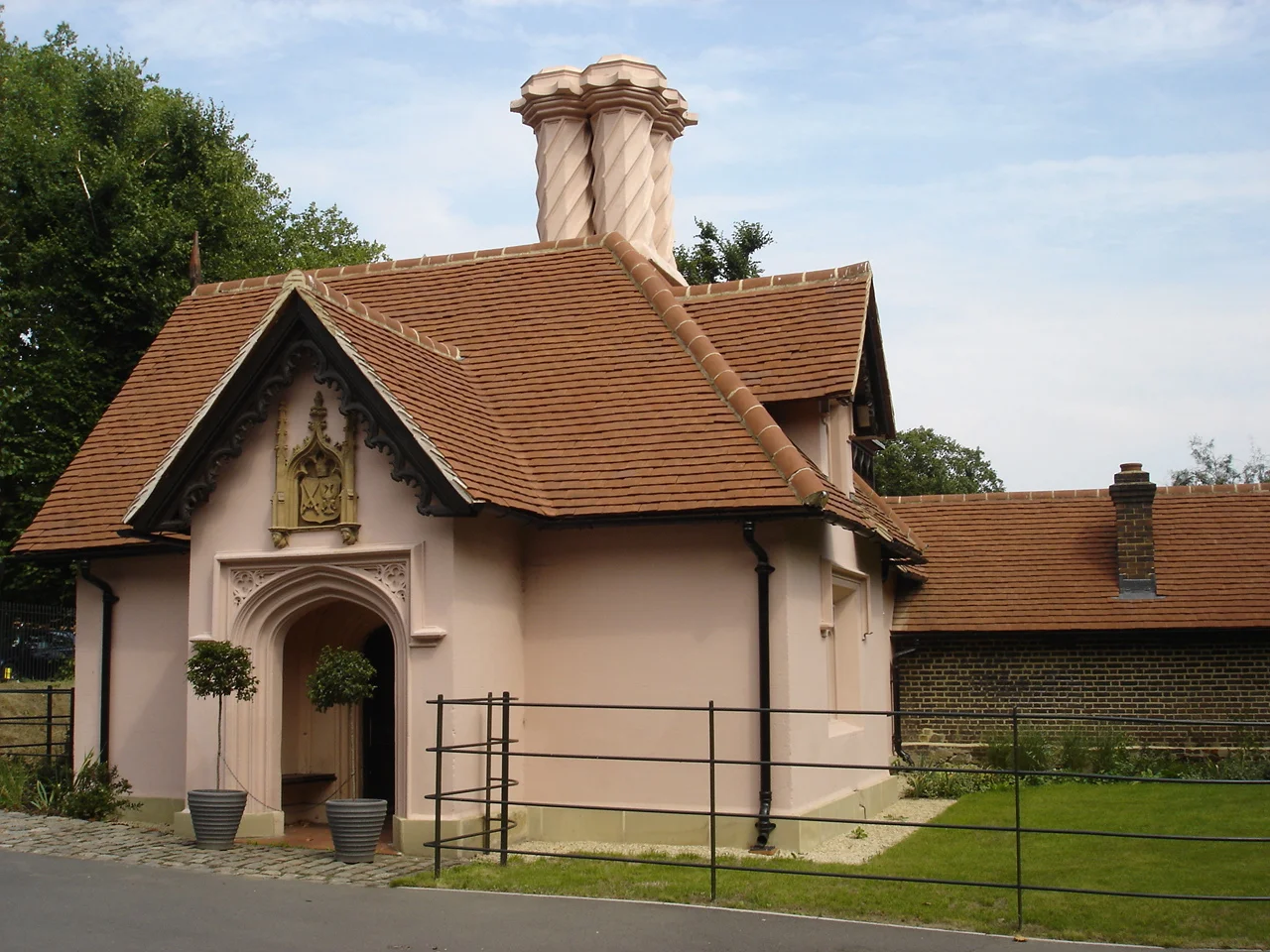
Gothic Lodge, Fulham Palace

Gothic Lodge, Fulham Palace