
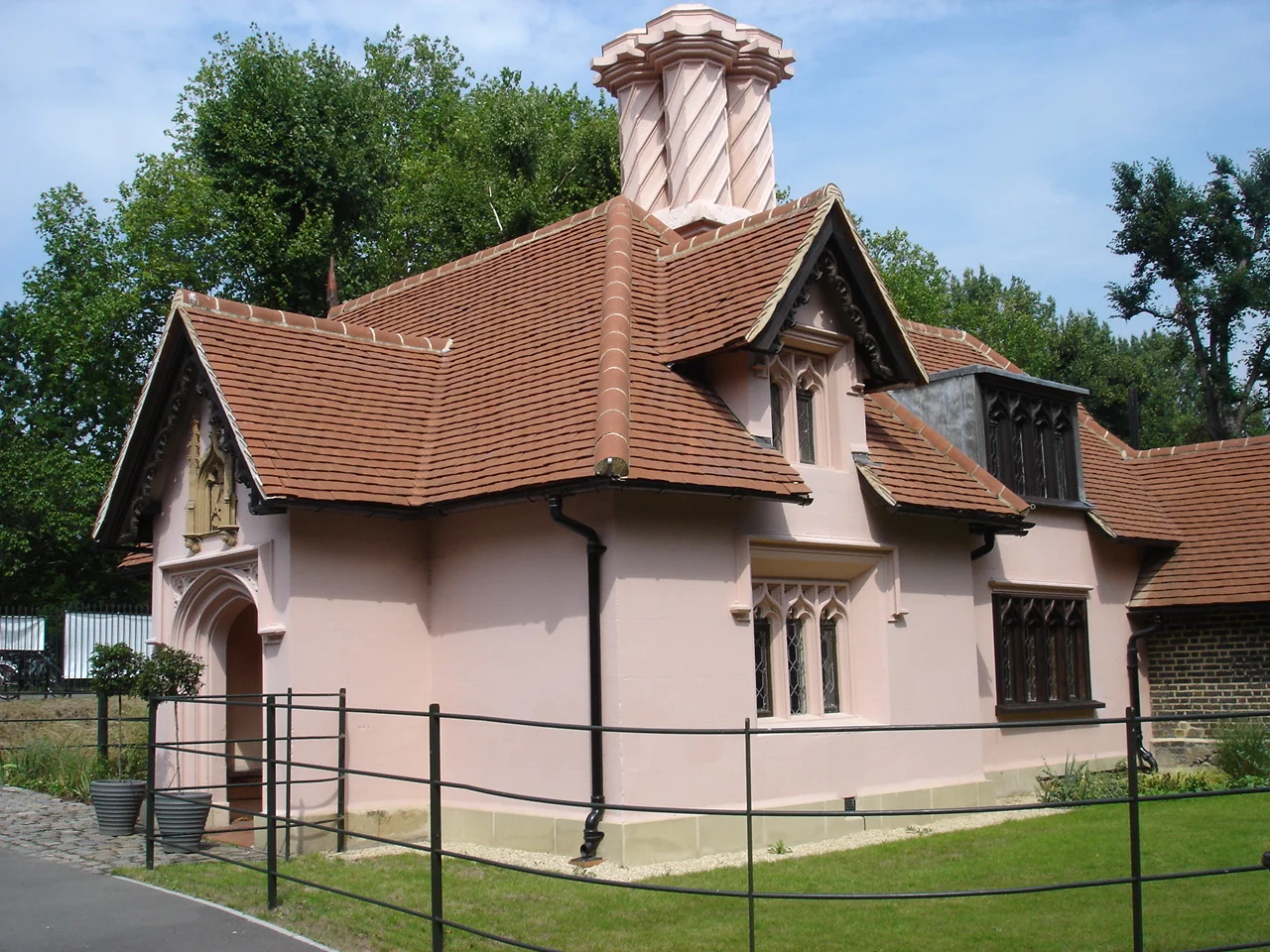
As requested by Kathy Stevenson, in this piece, I will take you on a century-long journey of the creation and the modernisation of the Fulham Palace lodges.
Thomas Hardwick (1752-1829) built the Gothic Porter’s Lodge in 1812 for Bishop Randolph, after roads improved on Bishop’s Avenue in the early years of the nineteenth century. Prior to that, what used to be known as simply the “Porter’s Lodge” was situated inside the archway within the west courtyard.
The Gothic Porter’s Lodge was given an extension in 1821, as the original was deemed inadequate for its size. Bishop Howley refused a proposal by Charles Cockerell to build a brand new porter’s lodge and gate piers at the opposite end of Bishop’s Avenue. Instead, he hired amateur architect, the Reverend Edward Pryce Owen (1788-1863), of Salisbury, to construct extensions to the existing Gothic Lodge. The extension included three arms attached to different sides of the lodge and its design was praised for being “of peculiar elegance”. Interestingly, in its completion in 1821, the lodge was admired for its design, which oddly was attributed to Bishop Howley’s wife. There is no evidence to suggest that there is a reason behind this incongruous connection. However, one can only assume that the awe-inspiring design of the extension reflected a woman’s beauty at the time…
Once Bishop Jackson took up residence in 1824, he obtained a loan of £650 to build a replacement lodge in the reformed Victorian Gothic style. Finally, Bishop Jackson agreed to have a better lodge constructed on the opposite side of the entrance to Bishop’s Avenue. This new oak lodge was commissioned to John Henry Hakewill and was built by P H Jones, a local firm, in 1872.
Up until 1893, this new lodge was occupied by the Gatekeeper of Fulham Palace, before it was given up to the local vestry for the park keeper. Thus, the Porter’s Lodge transformed into the Park-keeper’s Lodge and a new “Coachman’s Lodge” was built for Bishop Temple inside the Palace gates. The design for this newest lodge was commissioned to William Butterfield and it was built by Norris, using another loan.
The only time the lodge needed repairing was after real damage was induced when, during WWII, twelve bombs fell on the Palace site in 1940. One of the bombs appeared to be a time bomb that hit the lodge, injuring the men who were working on the barrage balloon site. Luckily, no one had incurred serious injuries. The lodge continued as a residence for Palace staff until 1973.
In 2012, Thomas Ford Partnership modernised both lodges. Today, these lodges are rented out by the Fulham Palace Trust.
Thanks for reading - we love your ideas for blogs so please keep them coming in the comments box below!
Ahou - Vol Comms Assistant
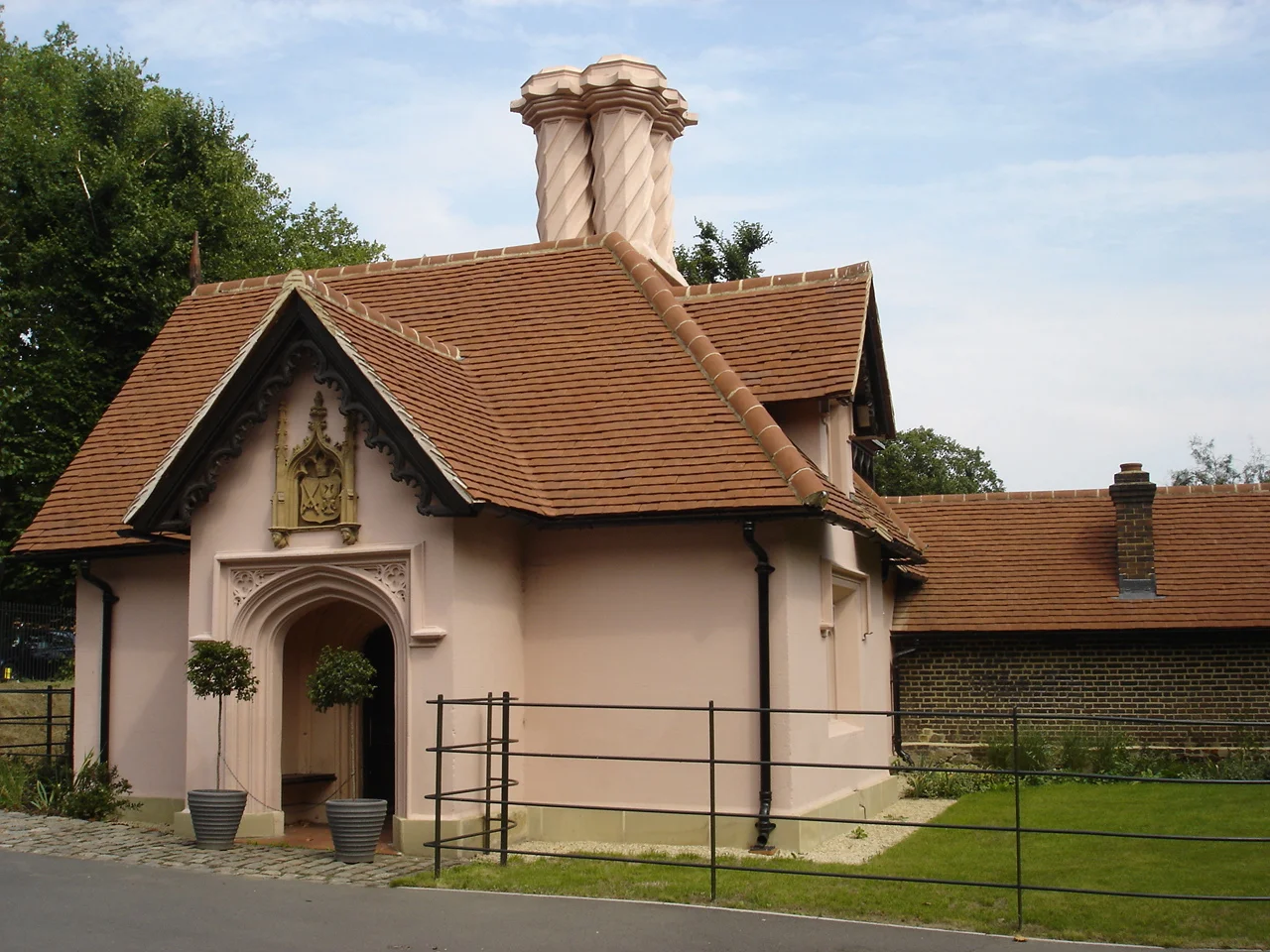
Gothic Lodge, Fulham Palace