History

Historical Tours

Do you know which plant Bishop Compton imported from Virginia and where it was grown for the first time in Europe? Have you heard how the Victorian chapel was bombed during  World War II? And what about the Neolithic, Iron Age and Roman settlers that archaeologists have found evidence of at Fulham Palace?

These are just some of the amazing insights you will receive as part of the Historical Tours at Fulham Palace, delivered by excellent volunteer guides. History tours generally start at 2pm in the Museum and (lucky for you) are free for volunteers, isn't that great?
In under an hour and a half you will learn loads about the cultural and historical importance of the Palace and find out all its secrets. What better way to enrich your experience as part of the volunteer team? Enthusiastic and well-prepared guides will share all the information with you in an enjoyable and relaxing way.

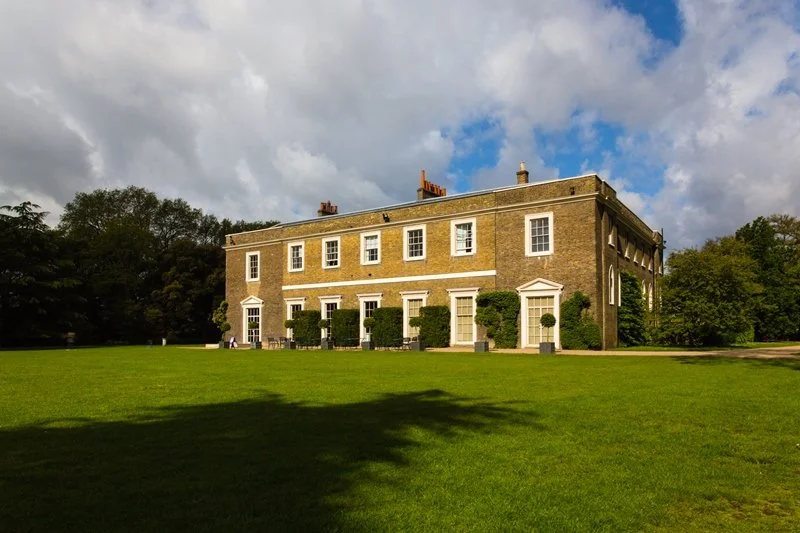
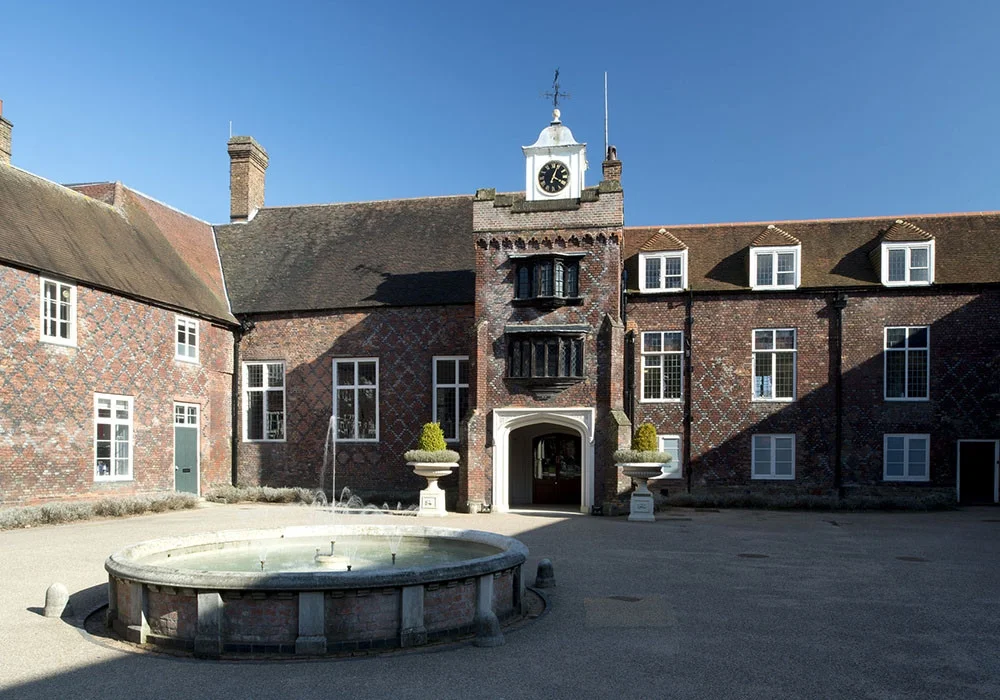
Each tour is individual to your guide, but the tour I attended began with us examining the model of the Palace displayed in the Museum, then discovering the Tudor brick pattern on the walls in the West Courtyard. Walking around the building we were able to travel through five centuries of history and architecture, while inside the oldest part of the building, the Great Hall, we were shown some pictures of the timber roof from about 1495. I was able to lose myself in the different rooms and corridors and enjoy the interiors imagining how bishops, their families and guests would have lived in this hidden palace. The last stop, before going back to the Museum, we visited the Victorian chapel restored in 1950 after being bombing during World War II.

I highly recommend these historical tours to familiarise yourself with the Palace and its history to support your volunteer experience. You can find upcoming dates in the "What's on" booklet.

By the way, magnolia was one of the species Bishop Compton imported from the other side of the Atlantic, grown here at the Palace.


Marlen Armendariz

Volunteer Communication Assistant
Portrait of a Bishop

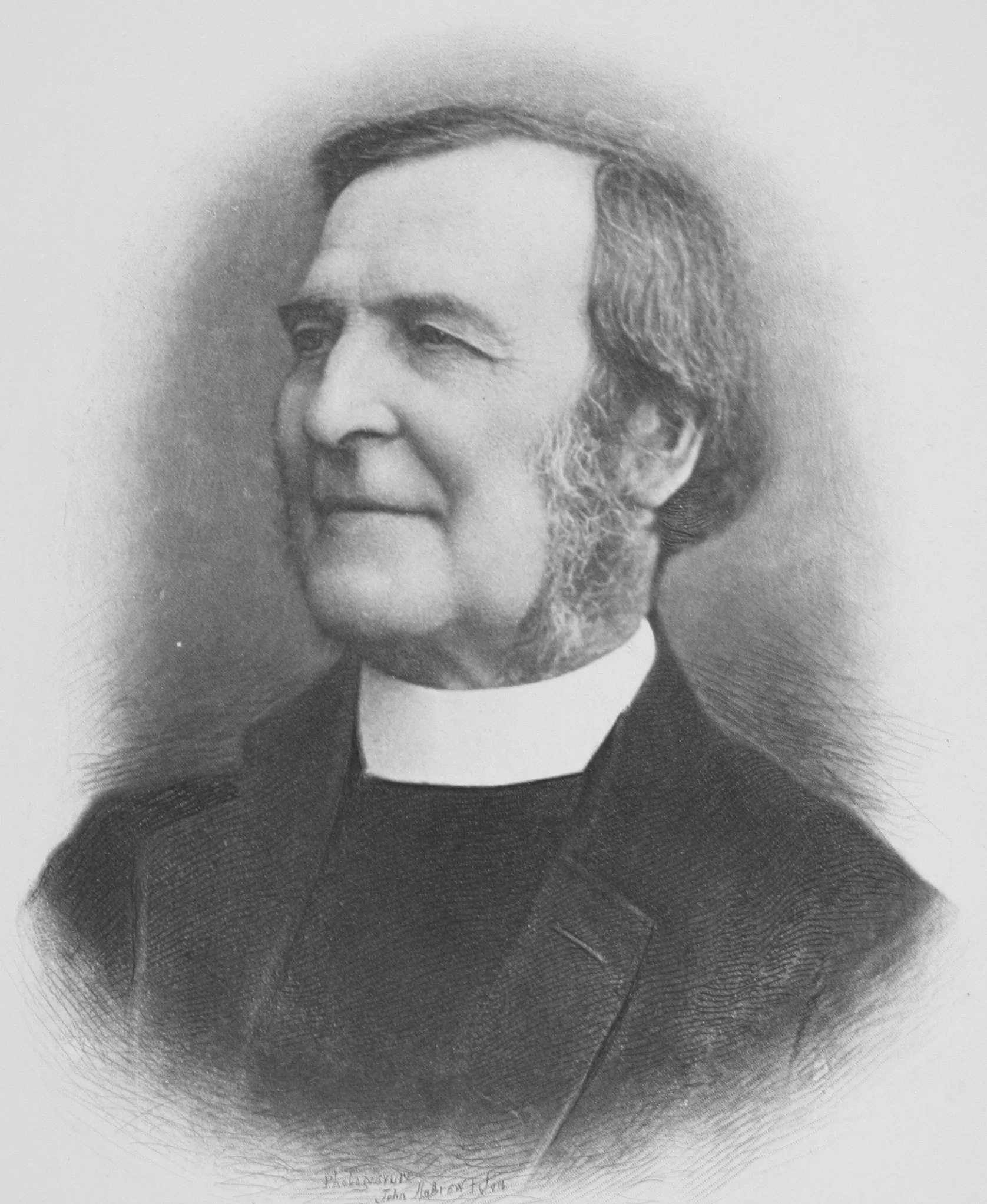
Frederick Temple - Bishop of London 1885-1896

Frederick Temple was born on the Greek island of Santa Maura in 1821 and grew up in Devon. His family was not rich and he knew early on that he would have to earn his own living. He took the first step by winning a Blundell scholarship to Balliol College Oxford. He was elected a fellow at Balliol after achieving a double first and four years later was ordained. 

The following years he held various positions including a school-inspectorship (his travelling desk is on display in the Museum) and Chaplain-in-Ordinary to Queen Victoria. In 1885 he was appointed Bishop of London and although many of his clergy criticised him for enforcing unbearable standards of accuracy, diligence and preaching efficiency, he won the hearts of many through his devotion to his work and passion for the good of the people. During his time at Fulham Palace he gave up the West Meadow to enlarge the proposed Bishop’s Park, the Bishop’s Meadow had already been given by Bishop Jackson in 1883. The new park eventually opened in 1893.

Temple worked long days, fourteen or fifteen hours, and under the strain he was rapidly going blind. Towards the end of his bishopric in London he offered to resign due to his growing blindness but was urged to reconsider. He held his position until 1896 when, upon the death of Edward White Benson, he accepted the see of Canterbury. Temple died in 1902 and is buried in Canterbury Cathedral.  William Temple, his second son, became Archbishop of Canterbury in 1942.  So far they are the only father and son to have achieved this.

Portrait of a bishop

Edmund Bonner - Bishop of London 1539-1549 and 1553-1559

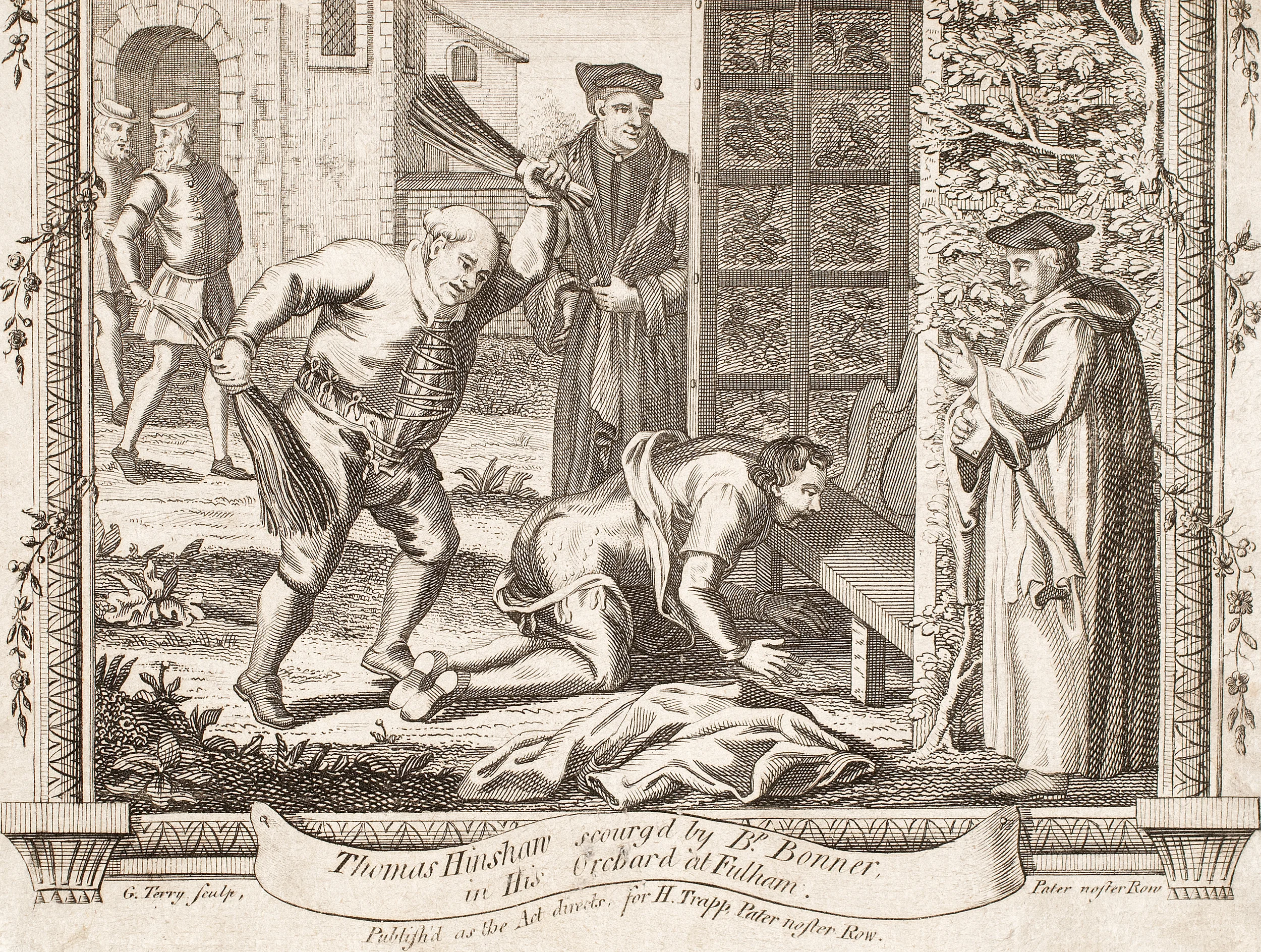
Edmund Bonner was born 1500 and educated at Pembroke College, Oxford. He graduated with a civil and canon law degree in 1519 and soon after started working as a chaplain for Thomas Wolsey until Wolsey’s arrest in 1529. He was subsequently transferred, possibly by the influence of Thomas Cromwell, to the service of King Henry VIII and in 1532 he was sent to Rome to block the juridical proceedings against Henry when the question of the king's divorce was raised. Over the following years he promoted “the cause of the Gospel”, asserting the royal supremacy and denying the papal, which delighted the Lutherans. His work impressed Cromwell and maybe also the King and in 1539 he was appointed Bishop of London. When the protestant Edward VI came to power however, Bonner, still fundamentally Catholic, began to doubt the change to “Royal Supremacy” when he saw to what uses it could be put by a Protestant council. He came into conflict with Edward’s government and was deprived of his bishopric by an ecclesiastical court and was sent to the Marshalsea prison.

When the Catholic Queen Mary came to power he was released from prison and once again reinstated to his see. He set about restoring Roman Catholicism, a task that was met with hostility and saw frequent religious disputes. The Queen’s administration thought that the Reformers would best be dealt with by the ecclesiastical tribunals, rather than by the civil power, and Bonner was given the task of stamping out religious dissent. During this time he carried out the persecutions to which he owes his notoriety among his detractors as Bloody Bonner. Foxe in his "Book of Martyrs" summed up this view in two lines: "This cannibal in three years space three hundred martyrs slew. They were his food, he loved so blood, he sparèd none he knew." However, his defenders claim his actions were merely "official", and that "he had no control" over the fate of the accused.  Under Elizabeth I’s rule he sat and voted in the parliament and convocation of 1559. In May he refused to take the Oath of Supremacy and was once again sent to the Marshalsea. He died in the Marshalsea on the 5th of September 1569, and was buried in St George's, Southwark, at midnight to avoid the risk of a riot.

America’s Lost Literary Treasure

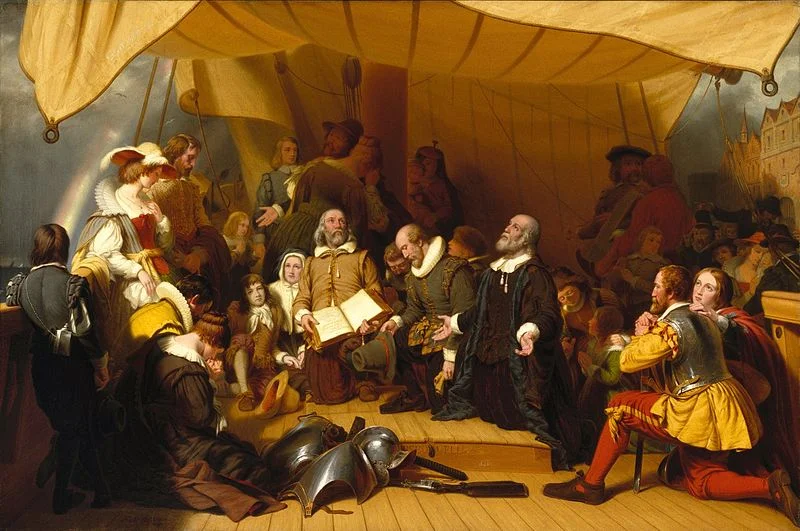
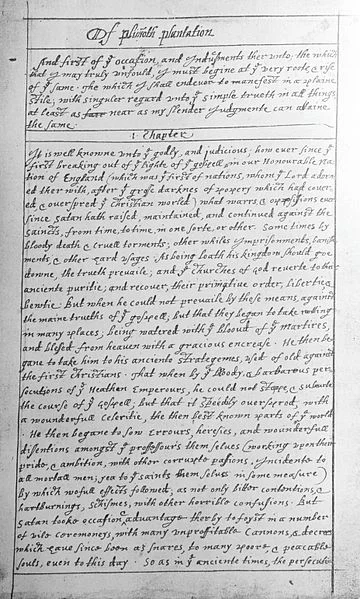
Recently, I was pleasantly surprised to learn about Fulham Palace’s links to America. I’d heard that before the Revolutionary War, the Bishop of London oversaw the spiritual welfare of British colonists in North America but was unaware of the palace’s lesser-known connection to Pilgrim William Bradford. In the mid-nineteenth century a lost manuscript of Bradford’s ‘Of Plimoth Plantation’ mysteriously turned up in the Fulham Palace library. A signatory of the Mayflower Compact and five-time governor of Plymouth (alternately spelled Plimoth) Colony, Bradford is a significant figure in early American history. Likewise, ‘Of Plimoth Plantation,’ referred to as ‘The Log of the Mayflower' by the British, is a near priceless artifact in early American history.

Plymouth Colony was the second permanent English settlement in North America. Bradford’s text is a recounting of the Pilgrim Fathers’ voyage to the ‘New World,’ and the most complete, authoritative record of the colony’s first years. Never intended for publication, after Bradford’s death the manuscript was passed-down through generations until it was acquired by Reverend Thomas Prince. He published a selection of excerpts and kept the document in his library at the Old South Church in Boston, Massachusetts. However, sometime during America’s Revolutionary War, Bradford’s manuscript of ‘Of Plimoth Plantation’ vanished. It unexpectedly reappeared in 1856, shelved in the Fulham Palace library. 

Though it’s unknown exactly how or why the book traveled from Boston, Massachusetts to London, England, there are conjectures. Two popular explanations are that it was pilfered by a British soldier or taken for safe-keeping when loyalist Governor Thomas Hutchinson fled the colony. After its discovery, the current bishop (either Charles Blomfield or Archibald Tait) granted permission for the manuscript to be copied. It was published in Boston early the following year. Finally, after years of diplomatic wrangling, the original was returned to the United States on 29 April 1897. Its celebrated return can be attributed to Bishop Creighton who, himself a historian, thought a document as significant as Bradford’s belonged in America. Today, it is treasured as an invaluable piece of early American history and has a place of prominence in the Massachusetts State House. If you’re too busy to make the transatlantic journey, a reproduction page from the manuscript can be seen on the large map panel at the Museum. To read more, check-out ‘Saints & Strangers: Lives of the Pilgrim Fathers and Their Families’ by George F. Willison and Samuel Eliot Morison’s edition of ‘Of Plymouth Plantation, 1620-1647’ by William Bradford.

History Repeats

By Sara Rogers

640px-Catherine_Parr_from_NPG.jpg

One of the joys of being a volunteer at Fulham Palace is the resonance of history that we can sometimes take for granted but, which now and again makes itself quite palpable.  I had such an experience recently, a synchronicity that made my day. 

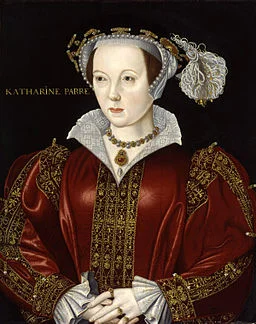
Some of you might be aware of the Shardlake series of mystery/thrillers set in Tudor times, starring a hunchbacked lawyer named Matthew Shardlake.  Shardlake solves crime and unravels mysteries for royal personages, and through his creator C.J. Sansome,  gives us a wonderful glimpse into Tudor times.   I was reading the latest one called Lamentation which revolves around a true incident in the life of Catherine Parr (though heavily fictionalised to make an exciting story), whilst on the reception desk just before Christmas.

In the summer of 1546 Henry VIII was slowly dying and his Protestant and Catholic counsellors were engaged in a power struggle to control the 8-year-old heir Prince Edward.  As heretics were hunted and burned at the stake, the Catholic party focus their attack on Henry's sixth wife.   Queen Catherine was an intellectual and religious woman who was prone to write down her thoughts, and she had written a confessional book called The Lamentations of a Sinner.  The book was regarded as so radically Protestant that if it should come to the King's attention it could bring her to the axe.

At the Palace of Whitehall, Catherine hides the controversial manuscript in a concealed coffer in her bedroom.  The book stays there for a month until she resolves to ask Archbishop Cranmer for his opinion on what to do. They meet In the Queens Presence Chamber and Cranmer advises that on no account should she make the book known.  Then a month later it is stolen,  and a complicated mystery begins with the hunt for manuscript. 

 Shardlake and the Queen have a discussion about who could possibly have known or heard about the Lamentation, as only Cranmer had been told, and that was behind closed doors made of heavy oak.  But Shardlake determines that Cranmer had urged the Queen to destroy the book quite vociferously and that their raised voices could have been easily heard outside the Chamber.

That day on the reception desk there was a memorial concert being held in the Great Hall which included some Tudor music I was most eager to hear but, at the very moment  in the book when Catherin Parr is telling Shardlake that no one could possibly have overheard her, the heavy doors in the FP Reception Hall closed and I found that I could not hear the music.  Then later,  at the moment in the text when it is revealed that the discussion between the Queen and the Archbishop was one in which raised voices could indeed have been heard outside the Chamber, I could suddenly hear the music in the Great Hall as it grew louder. 

It was a lovely moment and one which made me feel very much part of the history of Fulham Palace and glad to be a volunteer in this splendid building.  

Portrait of a Bishop

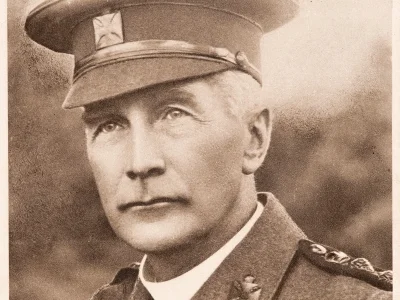
Arthur Winnington-Ingram-Bishop of London 1901-1939

Bishop Arthur Winnington-Ingram was born in Worcestershire in 1858 and read classical moderation and literae humaniores at Keble College, Oxford. He held a number of positions before being appointed Bishop of London in 1901, a post he held for 38 years. During his time as Bishop he was very vocal about the Church’s teaching on morality and opposed what he saw as birth control propaganda and spoke out against secularists. But he also highlighted the inadequate housing of the poor and the issue of unemployment. 

He is remembered today for his role during the First World War. He was Chaplain to the London Rifle Brigade and visited them in 1915 during his two weeks at the Western Front.  A year later he went to the Grand Fleet to boost their morale.  In 1917 he led the National Mission of Repentance and Hope, traveling through every diocese to stir up renewed enthusiasm for the war effort. His speeches were on occasion violent in tone, at times verging on xenophobia, something he was criticised for. Fulham Palace also played a part in the war; in 1918 the Palace was converted into a hospital funded by the Freemasons and run by the Red Cross.  The Library and Drawing Room were used as wards and the Great hall as a canteen.