What life was like in London (especially Fulham and west London) during the Second World War?

Many thanks to Dr Hamza Ahmed, learning assistant volunteer, for this brilliant piece on London during the Second World War, in preparation for our family fun day ‘Blighty, the blitz and barrage balloons’ on Sunday 26 March (if you would like to get involved please see details below).

Life in London and in Fulham and west London specifically, was greatly impacted by the Second World War. The bombing campaign known as the Blitz began in September 1940 and lasted until May 1941, during which German planes dropped bombs on London and other cities almost nightly. This resulted in significant damage to homes and buildings, as well as loss of life. The bombing was especially intense in the first few months of the campaign, with some areas of London, such as Fulham and west London, being hit particularly hard.

During the war, many Londoners were evacuated to the countryside to avoid the bombing, but many also stayed in the city and faced the dangers of air raids. Many homes and buildings were destroyed or damaged, and many people were left homeless. The bombing also disrupted daily life, as people struggled to find shelter and basic necessities like food and water.

The government implemented rationing and other measures to try to make the most of limited resources. Rationing of food, clothing, and other goods was introduced, and many people grew their own vegetables or kept chickens in their gardens to supplement their diets. People were encouraged to share resources, and neighbors helped each other out in times of need.

Despite the hardships and dangers, Londoners remained resilient and determined to carry on with their daily lives. Community spirit was strong and people came together to support one another. The war also brought a sense of unity among Londoners, as they were all working towards a common goal of defeating the enemy.

Fulham Palace, which is a historical building and former residence of the Bishop of London, was also affected during the War; it was used as a military hospital and as a shelter for bomb victims as well.

What happened in Hammersmith and Fulham, London during the Blitz?

During the Blitz, Hammersmith and Fulham, located in west London, were heavily bombed by German planes. The bombing campaign, which lasted from September 1940 to May 1941, resulted in significant damage to homes and buildings, as well as loss of life.

Many of the houses and buildings in the area were destroyed or damaged, and many residents were left homeless. The bombing also disrupted daily life, as people struggled to find shelter and basic necessities like food and water.

The Hammersmith Palais, a popular dance hall in the area, was hit by a bomb during a raid in September 1940, and was damaged beyond repair. The bombing also destroyed many shops, public buildings, and schools in the area, as well as causing damage to several churches and other places of worship. Fulham Palace, which is a historical building and former residence of the Bishop of London, was used as a military hospital and as a shelter for bomb victims.

Despite the destruction and loss of life, the people of Hammersmith and Fulham remained resilient and determined to carry on with their daily lives. Community spirit was strong, and people came together to support one another. The war also brought a sense of unity among Londoners, as they were all working towards a common goal of defeating the enemy. 

Bishop Park collapse in 1940, image from London Metropolitan Archives
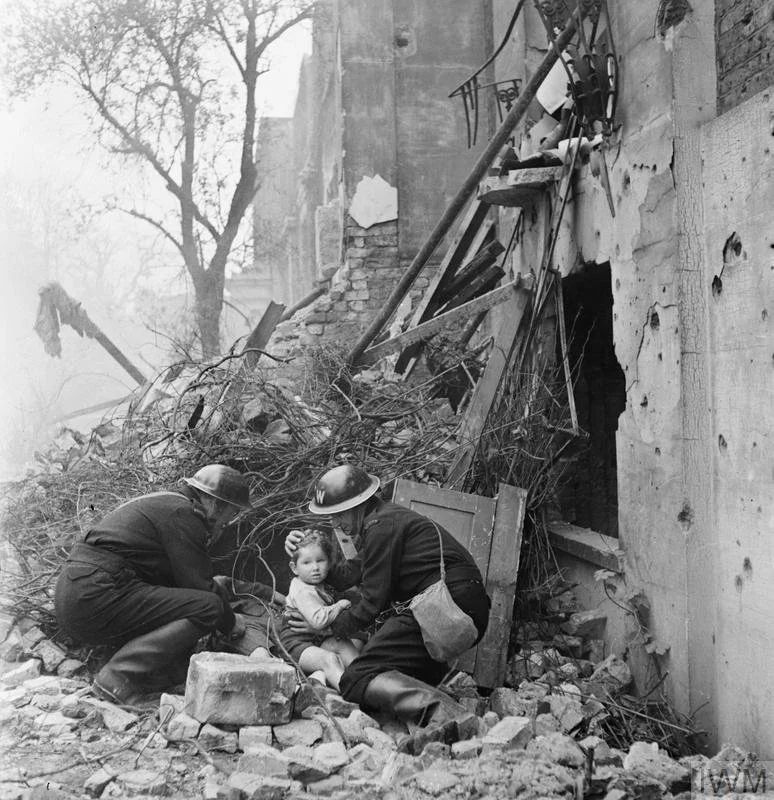
Fulham bomb damage, image from the Imperial War Museum

We will be exploring what life was like at Fulham Palace during WW2 at our free family fun day ‘Blighty, the blitz and barrage balloons’ on Sunday 26 March 2023 (11.00-15.00)

https://www.fulhampalace.org/whats-on/events/blighty-the-blitz-and-barrage-balloons-the-palace-at-war/

We are looking for volunteers to help with this event – please contact Kate at kate.kern@fulhampalace.org if you are able to spare any time. 


Useful links:

https://www.lbhf.gov.uk/life-hammersmith-fulham-wartime

https://www.lbhf.gov.uk/community/ve-day/how-second-world-war-changed-hf-forever

https://www.fulhampalacevolunteers.org/blog/2019/4/25/little-list-of-intrigue?rq=fisher
https://www.fulhampalacevolunteers.org/blog/2019/7/23/object-of-the-month-a-pair-of-world-war-ii-bookends?rq=fisher

Palace Explorers: A Banquet for Elizabeth

Placement student Ijabo tells us about Palace Explorers and how much the children enjoyed meeting Queen Elizabeth I.

Every Tuesday morning during term time, the palace’s education department runs a ‘Palace Explorers’ session, where every session is a different theme. I helped with the "A Banquet for Elizabeth" session.

At the start of the session, one of the children was incredibly shy, but once they saw the warm-up and how entertaining the other child found it, they soon joined in. The children were shown a doll of Queen Elizabeth I and were enthralled by her, by asking questions; we also showed them Tudor outfits and the status of the individual wearing each piece of clothing. They even got to try on the hats, which they really enjoyed.

The children were encouraged to help set up the table with the doll version of Queen Elizabeth at the head of the table and place all the foods that the Tudors would eat on the plate once they had identified what each item was. They also had to place the items where they thought would be fit for a Queen. They then had the banquet at the palace; this is significant because Queen Elizabeth I, had actually visited Fulham Palace for a banquet in 1601. As soon as the banquet was over, they helped tidy up the clothes, plates, and equipment out of their own volition, which was extremely helpful and considerate of them to do.

Then they were tasked with making a Tudor rose out of plasticine and sticks, which they enjoyed, using all the different coloured plasticine and receiving help from their parents to help make the petals. They even went to show their Tudor rose to the doll Queen Elizabeth I, which was funny to witness.

Towards the end of the session, we had them sit on the bug-themed carpet and read them a story about a squirrel. We had their attention in the first half of the book, but they made their own story that incorporated the Tudor roses they had made, and by then it was the end of the session. They all said their goodbyes to the Queen Elizabeth I doll and left!

This session was run by our learning producer, Eleni and learning placement, Heather Ogilby.

Our team: Celia Mill

Celia Mill is our archive research project manager. She has been busy researching and curating the new exhibition about colonisation and the Bishops at Fulham Palace.

What excites you most about working at Fulham Palace?

The layers of history and sense of community.

Which is your favourite part of the Palace?

One of the offices has a wonderful sixteenth century painted wall which I was lucky enough to see revealed during the renovations. I also love the walled garden.

What are the three things you cannot live without?

A woolly jumper, a cosy blanket, and a good book.

What dish do you love to cook? 

Mushroom risotto

What’s the one song you can’t get out of your head right now?

Leonard Cohen's Dance Me to the End of Love

What’s your favourite film?

I like the Christmas film The Bishop's Wife with Cary Grant, Loretta Young, and David Niven and Roman Holiday with Audrey Hepburn and Gregory Peck. 

Tussie mussie making at Steyning Parish Church

Learning volunteer Tricia Kern provides us with this excellent blog about the tussie mussie making at Steyning Parish Church, Steyning, West Sussex.

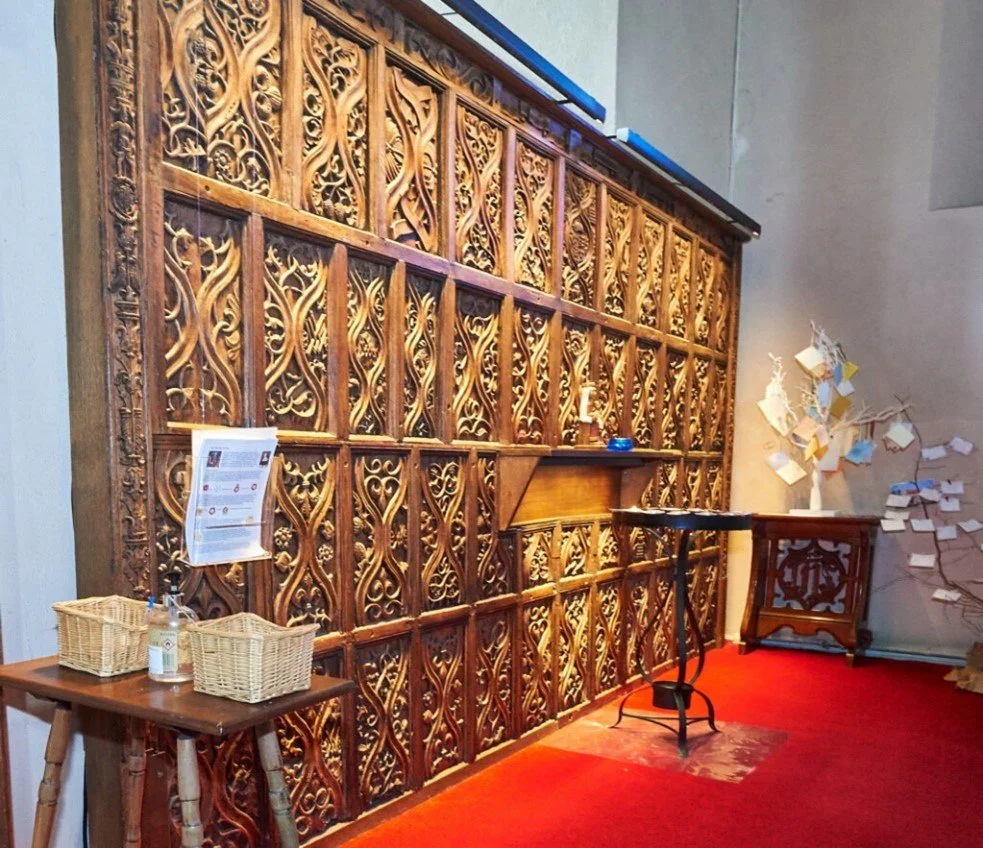
On 27 October 2022 Fulham Palace were invited to take part in the 500-year celebration of the Tudor Steyning screen.  The Screen, made up of two finely carved oak panels are dedicated to the marriage of Henry VIII to Catherine of Aragon.  When the screen was commissioned in 1522 the carved panels adorned the walls of the medieval chapel at Fulham Palace.   By the Civil War the screen was no longer at the Palace; it is unlikely it would have survived had it still been there, during that period in history. It is thought William Juxon, Bishop of London, may have hidden the wonderfully carved panels with his family members, to save them from destruction. 

The Steying screen in situ

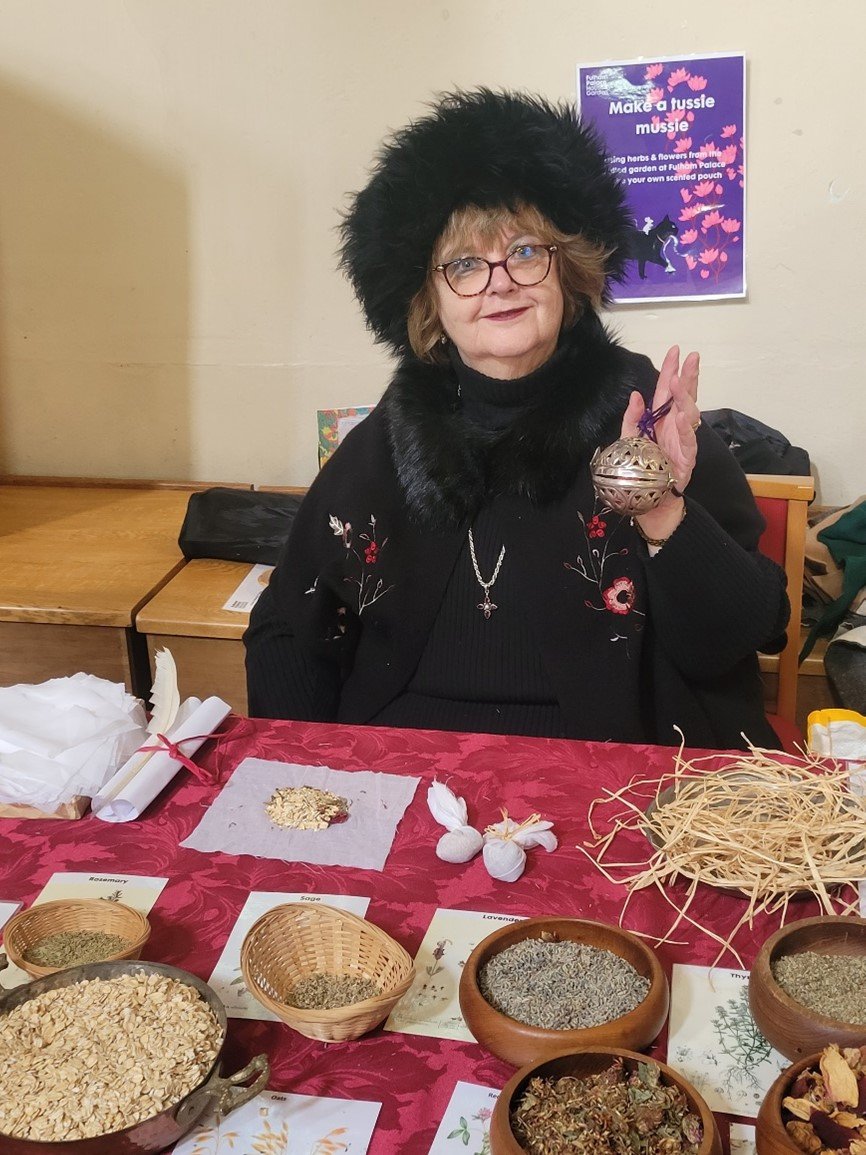
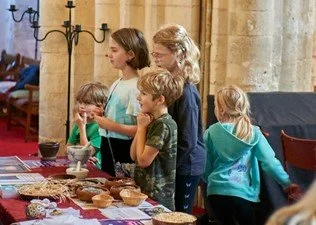
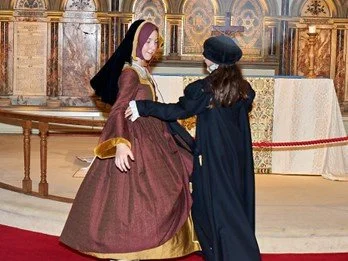
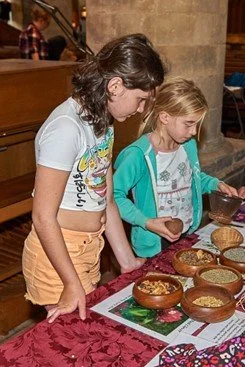
Up to 50 children with family and carers attended the event and Fulham Palace’s staff contribution was for Lucy and her colleagues to supply dried herbs and flower heads from the garden. The activity was to help the children make Tudor herbal tussie mussies with herbs from the walled garden.  Kate also arranged for Tudor style outfits to be available on the day with various other replica objects from the handling collection. 

Volunteer Tricia making tussie mussies

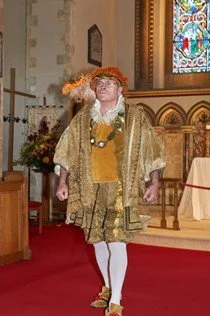
On the day, a member of the congregation dressed up as Henry VIII and set off the proceedings; explaining about the intricacy of the carved screen and why it was being celebrated.  The connection to Fulham Palace was mentioned too and Kate was invited to explain the history behind the activity we were offering.

The tussie mussie making was very popular with the children from the start until after the proposed finishing time.  Many children came back to our table to ask if they could make more for their family and friends.  

Whilst undertaking the activity, children discussed what they were doing, which herb aromas they preferred, what they had studied about the Tudors at school or found out from “King Henry VIII” who was present at the event, and how they were going on to study the Stuarts.  For the children who made more than one tussie mussie we were able to explain the aroma from each tussie mussie made would be different, due to the varying amounts of each herb or flower heads used.  There were Ukrainian families present, as they are being hosted by the village community and along with other adults present, they joined in as well.

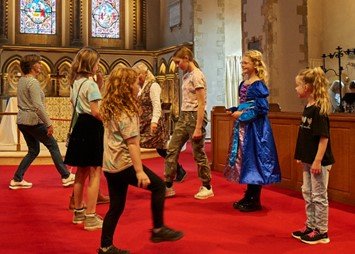
The dressing up and dancing was a great hit with the children and that too, went on for longer than expected.  It started off with the event organisers showing the children how to dance a Pavan yet by the end of the afternoon, the children were teaching adults the steps.

The interaction with the children whilst they undertake educational activities is a pleasure to experience and to have so many children come back to our table time and time again meant they were not only enjoying the activity but were getting something more from the experience to ask to have another go. 

Recently parishioners from Steyning Parish Church have visited Fulham Palace and there was lots of positive feedback on their tours with Esther and Alexis.  It is hoped, in future a group of Fulham Palace volunteers will be able to visit Steyning Church in return and have an opportunity to see the screen for yourselves.

Photos with permission from the Friends of Steyning Church

Christmas holidays at Fulham Palace

Lee Copeland, front of house and events volunteer, wishes us all a very merry Christmas in this lovely piece about the history of the festive period and the traditions at Fulham Palace though the years. We hope everyone has a wonderful Christmas holiday and we look forward to seeing you again in the new year.

Christmas holiday as we know it today is a relatively new concept, with many of its traditions taken from pagans who celebrated the harvest and worshiped many gods, idols and nature.

Roman pagans first introduced the holiday of Saturnalia, a week-long period of lawlessness celebrated between December 17-25.  During this period, Roman courts were closed, and Roman law dictated that no one could be punished for damaging property or injuring people during the week-long celebration.  The festival began when Roman authorities chose “an enemy of the Roman people ”to represent the King of Saturnalia, which has been compared to the medieval “Lord of Misrule” at the feast of fools.

Each Roman community selected a victim whom they forced to indulge in food and other physical pleasures throughout the week.  At the festival’s conclusion, December 25, Roman authorities believed they were destroying the forces of darkness.

The ancient Greeks described the festival as human sacrifice, widespread intoxication; going from house to house while singing naked; free love; and consuming human-shaped biscuits (still produced in some English and most German bakeries during the Christmas season).

In the 4 century CE, Christianity imported the Saturnalia festival hoping to take the pagan masses in with it.  Christian leaders succeeded in converting to Christianity large numbers of pagans by promising them that they could continue to celebrate the Saturnalia as Christians. The problem was that there was nothing intrinsically Christian about Saturnalia. To remedy this, these Christian leaders named Saturnalia’s concluding day, December 25, to be Jesus’ birthday.

During its long history Christmas was often celebrated at Fulham Palace.

During the Tudor period lavish banquets would be held, and if lucky the tradition of eating elaborate sugar sweets, favoured by Elizabeth I would be consumed, games were played, a form of tag, or blind man’s bluff, a favourite of Henry VIII. The Palace would be decorated from the gardens, taking inside branches, trees, berries and logs.

The Georgians would hold large gatherings, wearing their finest clothes, no expense would be spared, with musicians entertaining the bishop’s guests well into the early hours. In keeping with the long-held traditions delicious food would be consumed, there would be much dancing but by this period there was more etiquette observed with the rougher games of Tudor times left out.

The Victorian period and the industrial revolution saw many changes in Christmas traditions, but still having a nod to the Pagan festival. By this time gifts became more elaborate, children would receive such things as Toy trains, and pretty China dolls.

Victoria and Albert had made bringing the once kept outside decorated tree inside the home popular, using real candles and dried fruits to decorate and signify an abundance of harvest not unlike the pagans of old. The Palace would be adorned with brightly coloured baubles and large pine trees, the fire inside the Great Hall would be kept alight, and many parties for the local poor of the parish would be held inside the hall.

 Bishop Winnington Ingram who was Bishop of London during the First World War and served for 38 years, opened the house each Christmas and hosted a party for poorer clergy and their families, he did this regardless of the events going on in any given year. Many bishops gave to local charities around the Christmas period.

We continue many of those traditions today, we can combine the religious and spiritual with some good clean fun. And we have adapted the pagan traditions to suit. But still include a form of widespread intoxication, singing, (possibly not naked) and eating vast amounts of lovely food.

At the Palace, we host a Christmas fair and invite the public, local and from far away to join us, and of course we have a visit from Father Christmas.

We decorate the rooms, eat delicious food including mince pies, perhaps a glass of mulled wine at the volunteer Christmas party, play games, and we have been known to sing a song or two, or is that just me!

Has much changed? You decide. A very merry Christmas to you.