
Many thanks to Dr Hamza Ahmed, learning assistant volunteer, for this brilliant piece on London during the Second World War, in preparation for our family fun day ‘Blighty, the blitz and barrage balloons’ on Sunday 26 March (if you would like to get involved please see details below).
Life in London and in Fulham and west London specifically, was greatly impacted by the Second World War. The bombing campaign known as the Blitz began in September 1940 and lasted until May 1941, during which German planes dropped bombs on London and other cities almost nightly. This resulted in significant damage to homes and buildings, as well as loss of life. The bombing was especially intense in the first few months of the campaign, with some areas of London, such as Fulham and west London, being hit particularly hard.
During the war, many Londoners were evacuated to the countryside to avoid the bombing, but many also stayed in the city and faced the dangers of air raids. Many homes and buildings were destroyed or damaged, and many people were left homeless. The bombing also disrupted daily life, as people struggled to find shelter and basic necessities like food and water.
The government implemented rationing and other measures to try to make the most of limited resources. Rationing of food, clothing, and other goods was introduced, and many people grew their own vegetables or kept chickens in their gardens to supplement their diets. People were encouraged to share resources, and neighbors helped each other out in times of need.
Despite the hardships and dangers, Londoners remained resilient and determined to carry on with their daily lives. Community spirit was strong and people came together to support one another. The war also brought a sense of unity among Londoners, as they were all working towards a common goal of defeating the enemy.
Fulham Palace, which is a historical building and former residence of the Bishop of London, was also affected during the War; it was used as a military hospital and as a shelter for bomb victims as well.
What happened in Hammersmith and Fulham, London during the Blitz?
During the Blitz, Hammersmith and Fulham, located in west London, were heavily bombed by German planes. The bombing campaign, which lasted from September 1940 to May 1941, resulted in significant damage to homes and buildings, as well as loss of life.
Many of the houses and buildings in the area were destroyed or damaged, and many residents were left homeless. The bombing also disrupted daily life, as people struggled to find shelter and basic necessities like food and water.
The Hammersmith Palais, a popular dance hall in the area, was hit by a bomb during a raid in September 1940, and was damaged beyond repair. The bombing also destroyed many shops, public buildings, and schools in the area, as well as causing damage to several churches and other places of worship. Fulham Palace, which is a historical building and former residence of the Bishop of London, was used as a military hospital and as a shelter for bomb victims.
Despite the destruction and loss of life, the people of Hammersmith and Fulham remained resilient and determined to carry on with their daily lives. Community spirit was strong, and people came together to support one another. The war also brought a sense of unity among Londoners, as they were all working towards a common goal of defeating the enemy.

Bishop Park collapse in 1940, image from London Metropolitan Archives
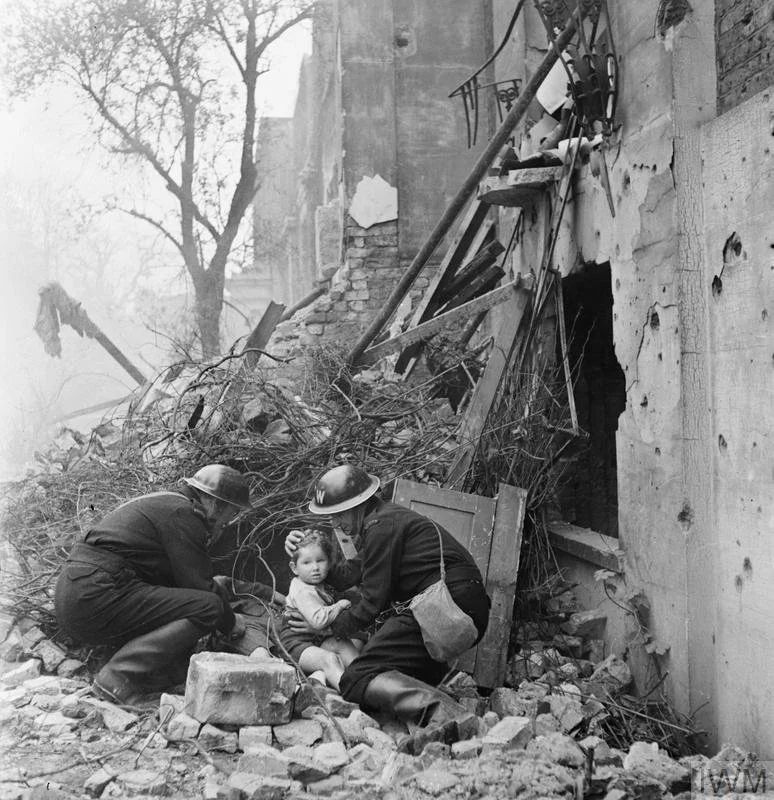
Fulham bomb damage, image from the Imperial War Museum
We will be exploring what life was like at Fulham Palace during WW2 at our free family fun day ‘Blighty, the blitz and barrage balloons’ on Sunday 26 March 2023 (11.00-15.00)
We are looking for volunteers to help with this event – please contact Kate at kate.kern@fulhampalace.org if you are able to spare any time.
Useful links:
https://www.lbhf.gov.uk/life-hammersmith-fulham-wartime
https://www.lbhf.gov.uk/community/ve-day/how-second-world-war-changed-hf-forever
https://www.fulhampalacevolunteers.org/blog/2019/4/25/little-list-of-intrigue?rq=fisher