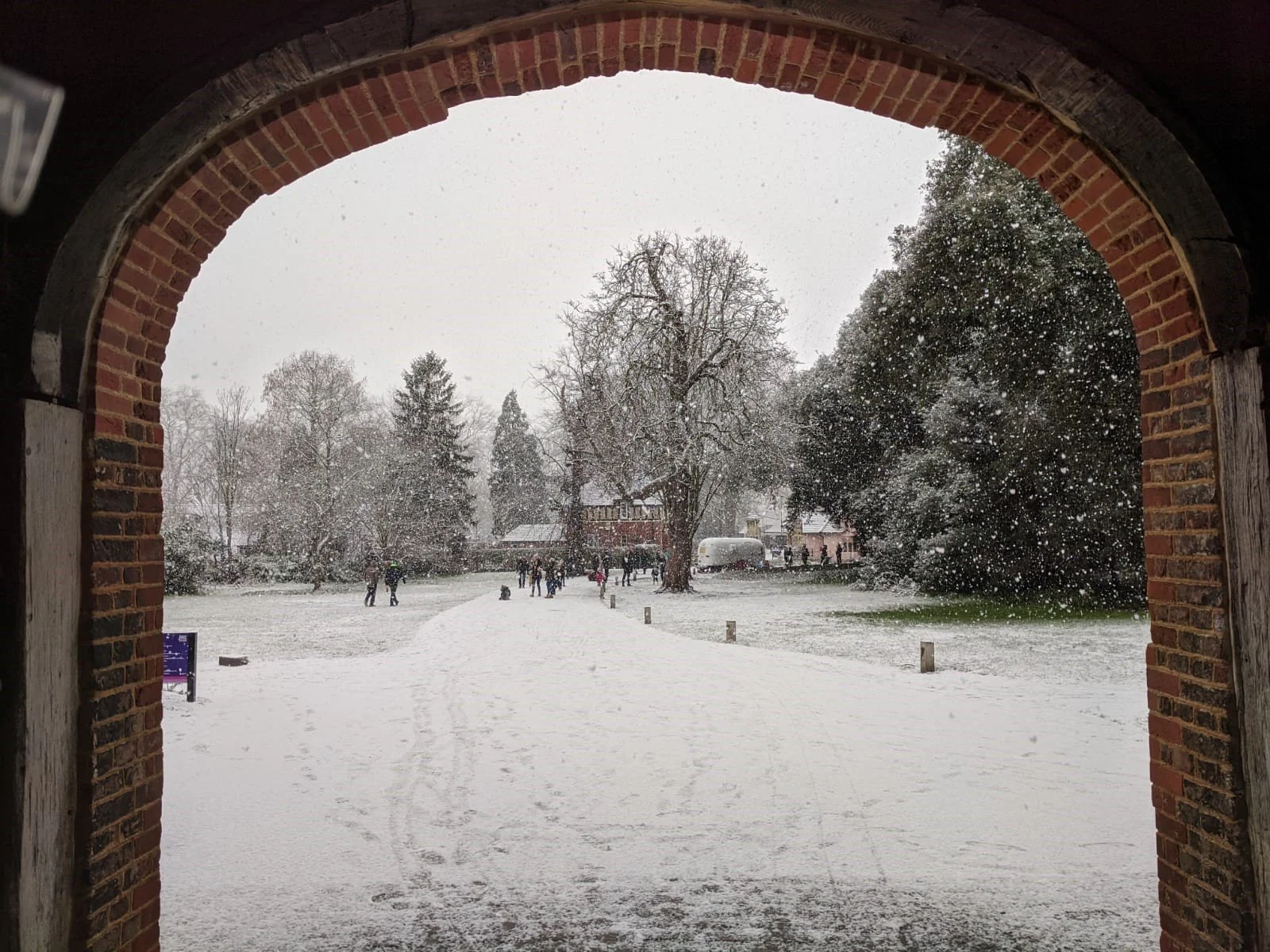
Lee Copeland, front of house and events volunteer, wishes us all a very merry Christmas in this lovely piece about the history of the festive period and the traditions at Fulham Palace though the years. We hope everyone has a wonderful Christmas holiday and we look forward to seeing you again in the new year.
Christmas holiday as we know it today is a relatively new concept, with many of its traditions taken from pagans who celebrated the harvest and worshiped many gods, idols and nature.
Roman pagans first introduced the holiday of Saturnalia, a week-long period of lawlessness celebrated between December 17-25. During this period, Roman courts were closed, and Roman law dictated that no one could be punished for damaging property or injuring people during the week-long celebration. The festival began when Roman authorities chose “an enemy of the Roman people ”to represent the King of Saturnalia, which has been compared to the medieval “Lord of Misrule” at the feast of fools.
Each Roman community selected a victim whom they forced to indulge in food and other physical pleasures throughout the week. At the festival’s conclusion, December 25, Roman authorities believed they were destroying the forces of darkness.
The ancient Greeks described the festival as human sacrifice, widespread intoxication; going from house to house while singing naked; free love; and consuming human-shaped biscuits (still produced in some English and most German bakeries during the Christmas season).
In the 4 century CE, Christianity imported the Saturnalia festival hoping to take the pagan masses in with it. Christian leaders succeeded in converting to Christianity large numbers of pagans by promising them that they could continue to celebrate the Saturnalia as Christians. The problem was that there was nothing intrinsically Christian about Saturnalia. To remedy this, these Christian leaders named Saturnalia’s concluding day, December 25, to be Jesus’ birthday.
During its long history Christmas was often celebrated at Fulham Palace.
During the Tudor period lavish banquets would be held, and if lucky the tradition of eating elaborate sugar sweets, favoured by Elizabeth I would be consumed, games were played, a form of tag, or blind man’s bluff, a favourite of Henry VIII. The Palace would be decorated from the gardens, taking inside branches, trees, berries and logs.
The Georgians would hold large gatherings, wearing their finest clothes, no expense would be spared, with musicians entertaining the bishop’s guests well into the early hours. In keeping with the long-held traditions delicious food would be consumed, there would be much dancing but by this period there was more etiquette observed with the rougher games of Tudor times left out.
The Victorian period and the industrial revolution saw many changes in Christmas traditions, but still having a nod to the Pagan festival. By this time gifts became more elaborate, children would receive such things as Toy trains, and pretty China dolls.
Victoria and Albert had made bringing the once kept outside decorated tree inside the home popular, using real candles and dried fruits to decorate and signify an abundance of harvest not unlike the pagans of old. The Palace would be adorned with brightly coloured baubles and large pine trees, the fire inside the Great Hall would be kept alight, and many parties for the local poor of the parish would be held inside the hall.
Bishop Winnington Ingram who was Bishop of London during the First World War and served for 38 years, opened the house each Christmas and hosted a party for poorer clergy and their families, he did this regardless of the events going on in any given year. Many bishops gave to local charities around the Christmas period.
We continue many of those traditions today, we can combine the religious and spiritual with some good clean fun. And we have adapted the pagan traditions to suit. But still include a form of widespread intoxication, singing, (possibly not naked) and eating vast amounts of lovely food.
At the Palace, we host a Christmas fair and invite the public, local and from far away to join us, and of course we have a visit from Father Christmas.
We decorate the rooms, eat delicious food including mince pies, perhaps a glass of mulled wine at the volunteer Christmas party, play games, and we have been known to sing a song or two, or is that just me!
Has much changed? You decide. A very merry Christmas to you.