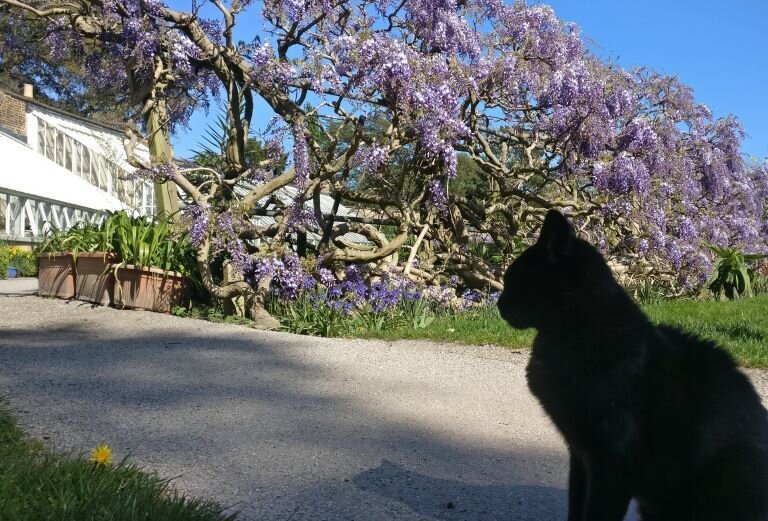
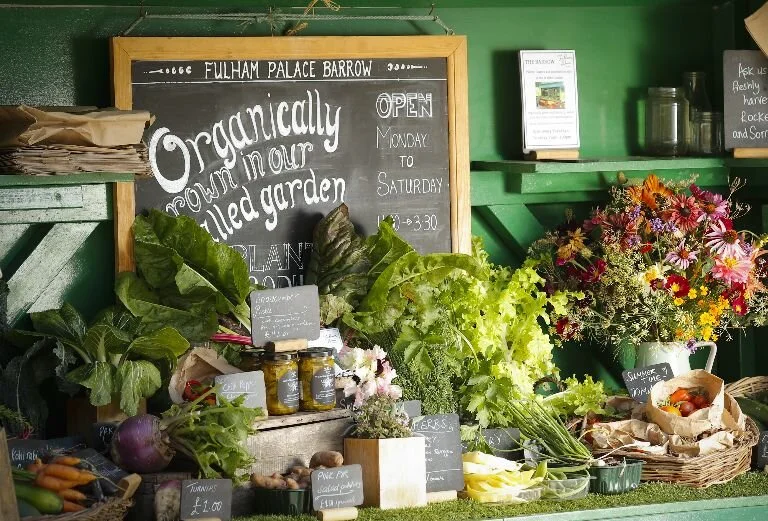
As you may or may not know, Fulham Palace is currently holding a Wisteria arch appeal, to fundraise enough money to install a new support structure for the wisteria in the Palace’s walled garden. The existing supports were installed in the 2000s and have since begun to rot, causing damage to the wisteria and the surrounding plants. The goal is to raise £20,000 in order to restore the wisteria to its former glory and ensure that generations to come can enjoy its wonder!
Crisis and Green Spaces
This blog was kindly written by Lee Copeland, one of our Front of House volunteers, Events assistants and Front of house rep.
During May when we are all enjoying the start of Spring and the First-Ever Green Meet Day was held at the Palace, at which we enjoyed many mentions of Bishop Compton and his great collection of over 1000 species of plants, the fascinating talks from the speakers on the day, from the, When, Where and best way to plant trees to Biodiversity and how we can get involved, to all things Bees, and learning we lead the way in Rooftop meadows, it led me to think how many of the Bishops of London before played their part in our green open spaces. How the past compares to the current Pandemic and why Green Spaces have always played an important role in our lives during Crisis.
We know Bishop Tait is responsible for the William Butterfield designed Chapel at Fulham Palace. He suffered much sadness in his life and lost many family members In 1856, within five weeks, five of his nine children died due to virulent scarlet fever. Two were spared and in time they were joined by another two siblings. His translation to Canterbury in 1868 (he had refused the archbishopric of York in 1862) constituted recognition of his work. His last years were interrupted by illness and saddened by the death in 1878 of his only son, Craufurd (1848–1878), and of his wife, Catharine née Spooner (1819–1878).
Bishop Tait
Scarlet Fever, which took many lives, is a disease resulting from a group A streptococcus (group A strep) infection, also known as Streptococcus pyogenes. The signs and symptoms include a sore throat, fever, headaches, swollen lymph nodes, and a characteristic rash. The rash is red and feels like sandpaper and the tongue may be red and bumpy. It most commonly affects children between five and 15 years of age.
Prevention is by frequent handwashing, not sharing personal items, and staying away from other people when sick. The disease is treatable with antibiotics, which prevent most complications. Outcomes with scarlet fever are typically good if treated. Long-term complications as a result of scarlet fever include kidney disease, rheumatic heart disease, and arthritis. In the early 20th century, before antibiotics were available, it was a leading cause of death in children. An antitoxin was produced before antibiotics; however, it was never made in sufficient quantities, and could not be used to treat any other disease as antibiotics can.
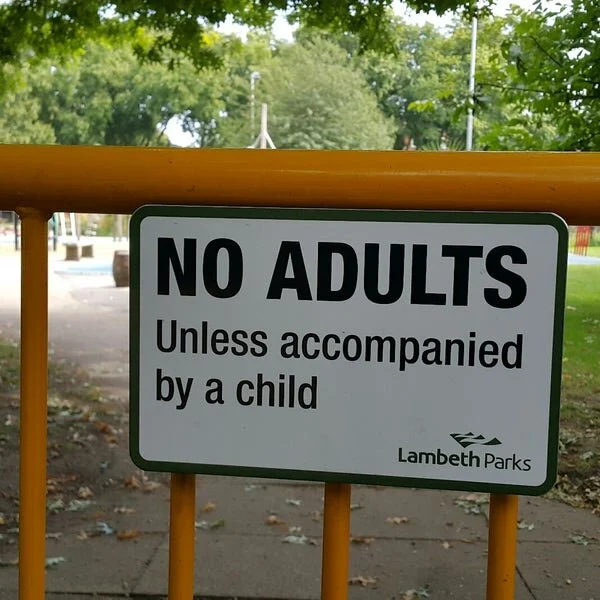
How interesting to compare our need for Green Open spaces today with the time of Bishop Tait and Scarlet fever and when he became Archbishop of Canterbury in 1869 and moved to what is now Lambeth Palace which has been the London residence of the Archbishops of Canterbury since the 13th-century. The Bishop of Carlisle held adjacent land that was then incorporated into Lambeth Palace.
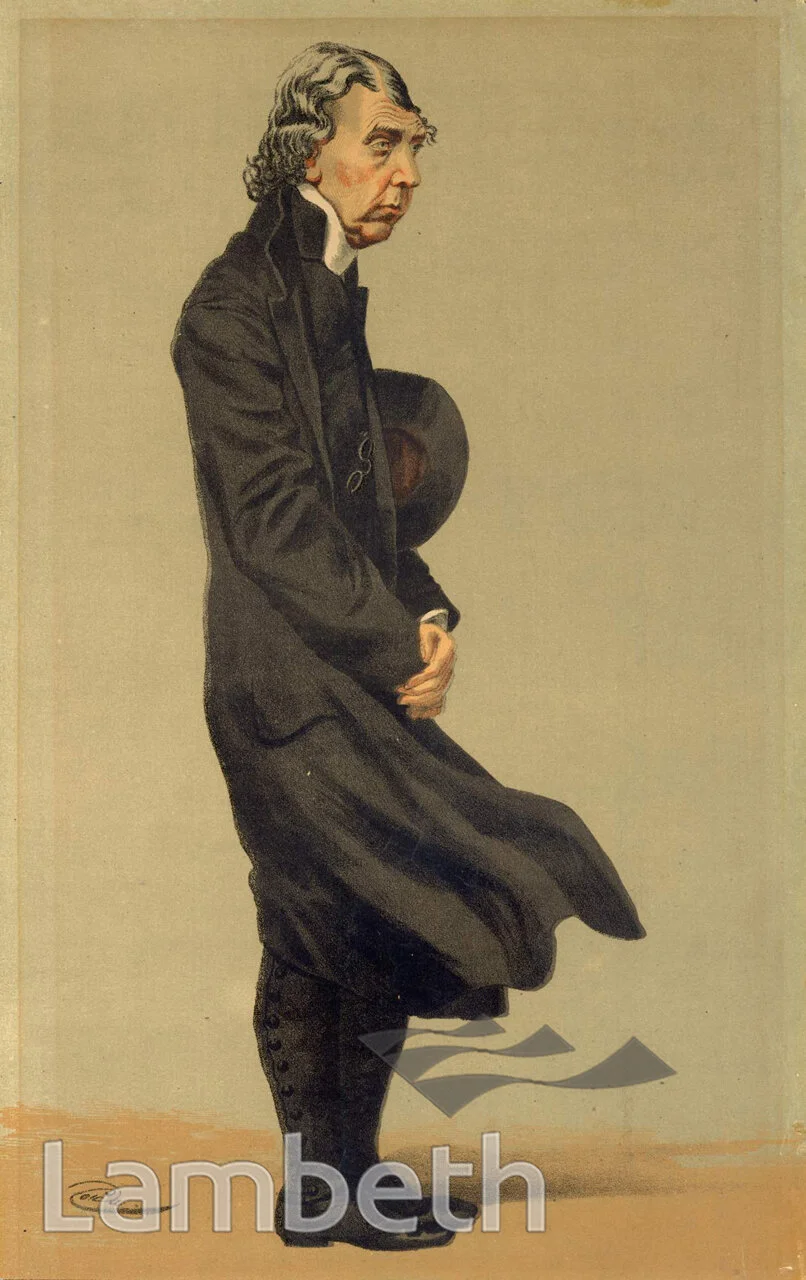
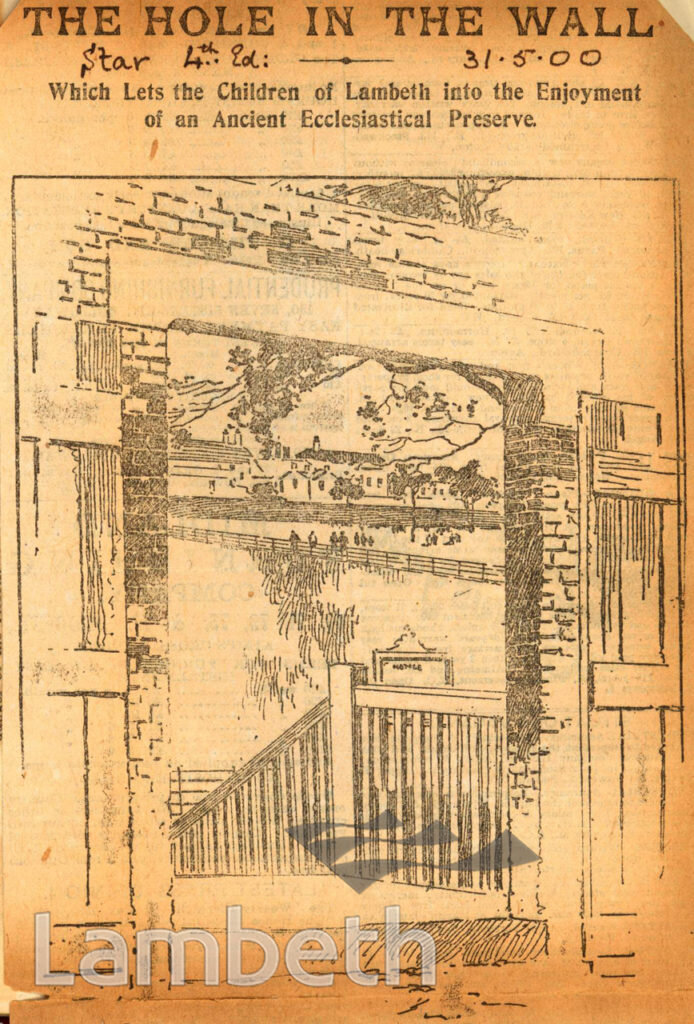
When Archibald Campbell Tait became Archbishop he was greatly concerned about the welfare of the poor in London and opened some 9 acres of the palace gardens (being the land formerly owned by the Bishop of Carlisle) for the benefit of the local poor. That area of land became known as Lambeth Palace Field. It continued to be used by the public after Tait's death in 1882, but without any permanent rights to do so. A permanent public park was first proposed in 1898 by Lt-Col Charles Ford, a Progressive member of the London County Council (1892-1901). In 1900 the Metropolitan Public Gardens Association then led a campaign for the permanent and unrestricted opening of Lambeth Palace Field. This was successful, and Archbishop's Park was laid out with lawns, a playground and sports fields, surrounded by boundary trees, and was opened in 1901.
In response to the concern that the area was now densely populated yet had no formal recreation grounds, Archbishop Temple gifted much of the Lambeth Palace parkland to the people of Lambeth. And in 1904 Archbishop Temple’s Secondary School opened.
Just as during Archbishop Tait's time of crisis when he understood the need for fresh air, green open spaces for health and wellbeing, we also understand and campaign for our Green Open Spaces during this time of crisis, to safeguard them for future generations.
Volunteering as a security guard in Lockdown
This blog post was kindly written by Alexander Ogilvie-Graham, a regular front of house volunteer at Fulham Palace.
Volunteering in March 2021 we are at the end of our third Lockdown. It feels to me that I have had training times 10 as a security in a pandemic. There is more than meets the eye. It can be tiring being constantly vigilant yet I was proud to be there for the palace during the lockdown
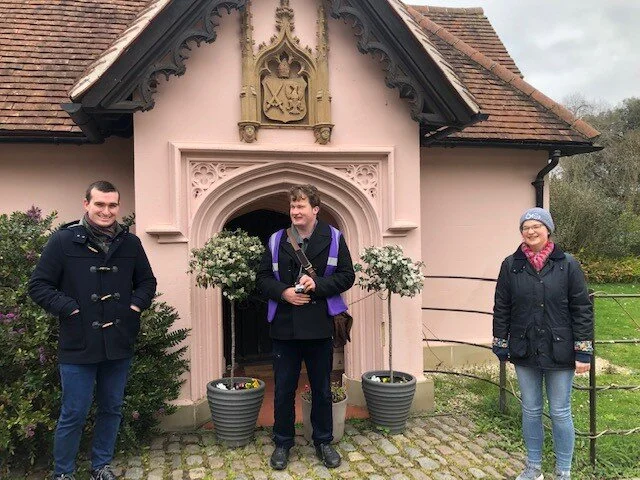
I think that Fulham palace is a hidden gem. This Cottage is the icing on the cake and reminds me of the Halloween film from Hocas pocas.
I am here at the entrance of the beautiful cottage with my two old Flatmate’s.
It is a skeleton staff during lockdown. It was just me my career and the on-site manager. It was a brilliant role that Rachel Bagnall Bray created.
Over the 2020 lockdown, Fulham palace became vital to my mental health because of the daily walks in the walled garden. Fulham palace became a home from home.
Every Sunday for two months it would become routine to waltz to the palace for my shift. In Lockdown the shift kept me alive and focused.
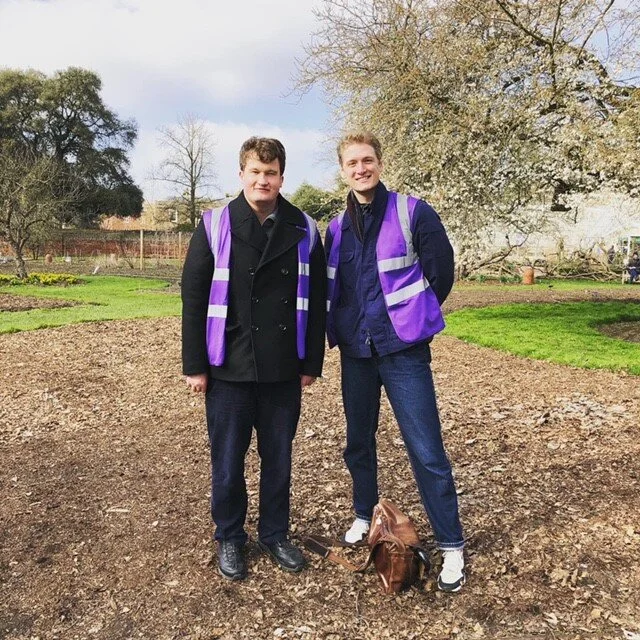
Benji Simpson and I patrolling the beautiful gardens in Lockdown.
Volunteering on Sundays and doing my general sweeping of the Grounds and the gardens.
During Lockdown 3.0 our shifts were now 2.3 half hours. My afternoon shift would start at 2.30 and finish at 5 pm. I signed up for 2 months every Sunday for volunteering at the palace.
It was a lifesaver during the last lockdown to be outside in the gardens. Or patrolling around the palace. Field marshal marshalling in the field. It was a gift from the hand of god to still feeling valuable in a time of crisis. Overall it was a privilege to guard the museum and to be there in its hour of need.
Flints, Foraging and Furs!
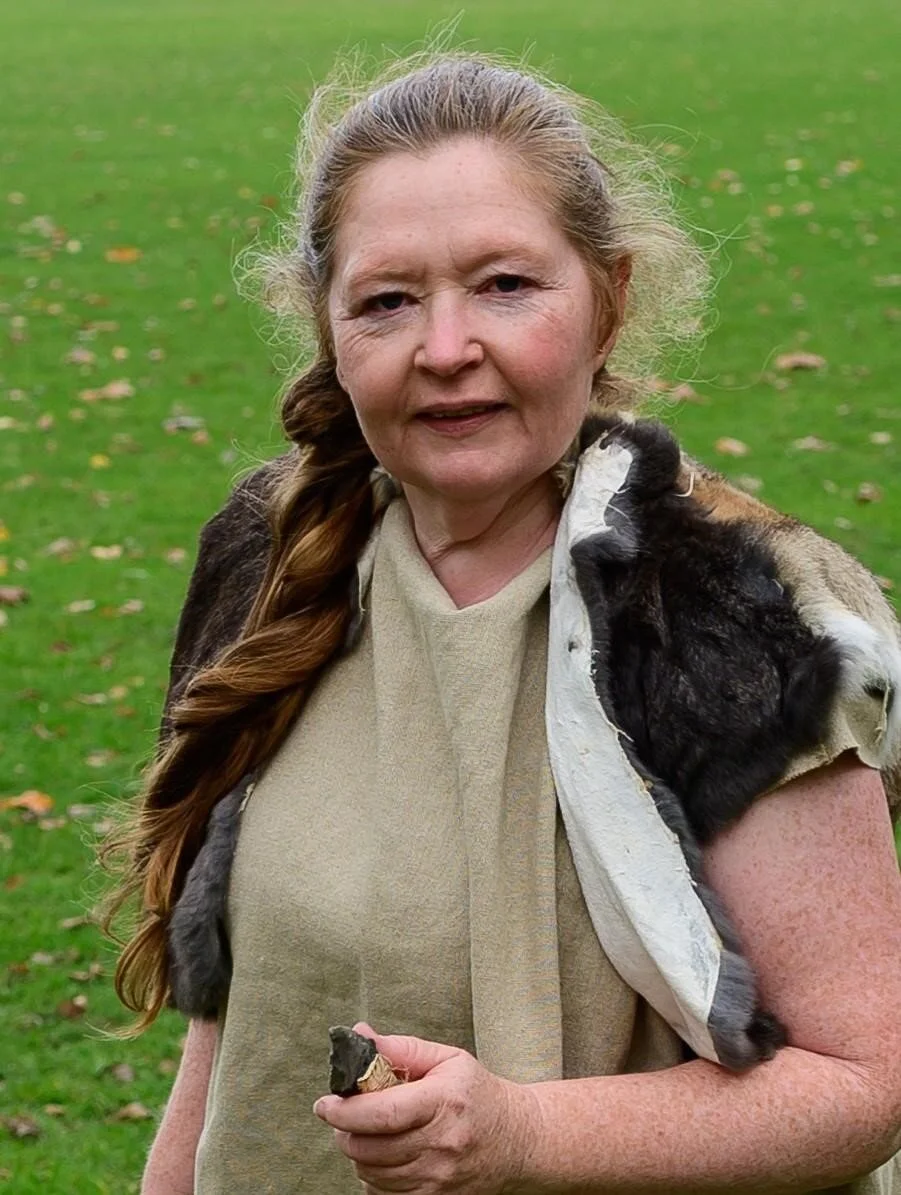
When I started my placement at Fulham Palace, I knew that I was bound to learn lots of new things but one thing I didn't expect to learn was that the site was occupied during the Stone Age! The most I knew about the Stone Age was from watching the Flintstones or Horrible Histories but since then I have learned all about “Flints, foraging and furs” - (and an axe head which was found on-site by volunteer Cathy that I can’t fail to mention!).
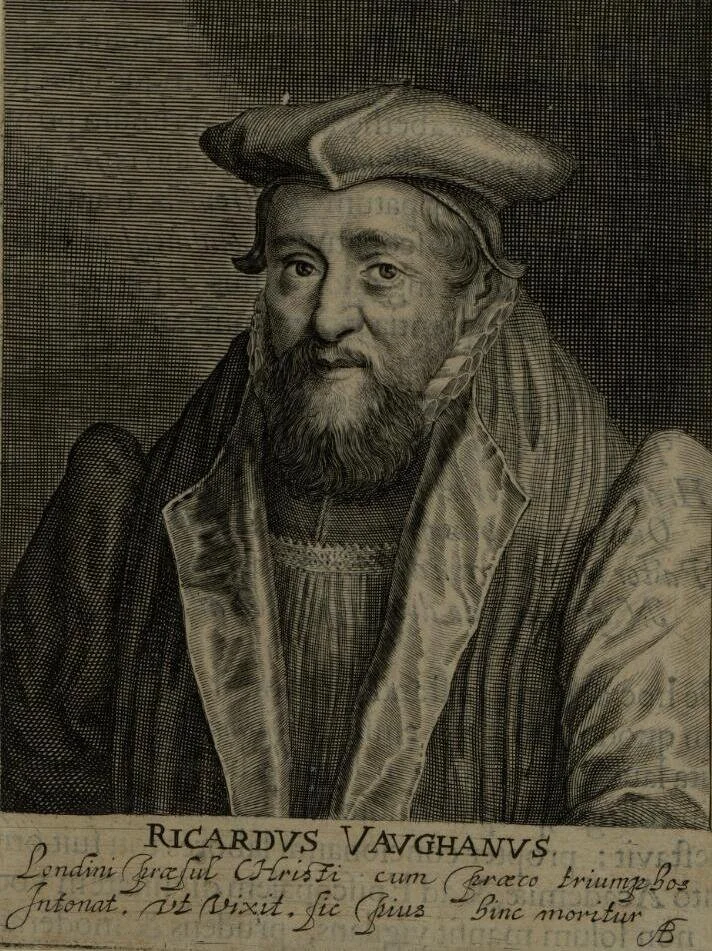
Focus and Facts: Richard Vaughan - Bishop of London 1604-1607.
Richard Vaughan
Vaughan was born in Wales circa 1550, but the precise date is unknown. He died in London in 1607.
He was educated at St John's College, Cambridge, where he graduated BA in 1574 and MA in 1577. After he earned Doctor of Divinity in 1589, he became chaplain to John Aylmer (Bishop of London from 1577 - 94). Vaughan also assisted William Morgan, Bishop of Llandaff and St Asaph, in the first version of the translation of the Bible into Welsh from Greek and Hebrew, published in 1588.
From 1578 to 1580, Vaughan was rector of Chipping Ongar. He became Bishop of Bangor in 1592 and, five years later, Bishop of Chester. King James VI promoted him to Bishopric of London on December 8, 1604. His enthronement took place on December 26 of the same year. Enthronements are most popular in religious settings, as a chair is seen as the symbol of the authority to teach. Therefore, in Christianity, bishops of almost all denominations have a ceremony of enthronement as part of their inauguration.
Vaughan’s views were Calvinist. Calvinism is a major branch of Protestantism that follows the theological tradition and forms of Christian practise set down by John Calvin and other reformation era theologians. As Bishop of London, Vaughan was generally sympathetic to moderate Puritan clergy but did take action in suspending Stephen Egerton - an English Priest and leading Puritan preacher of his time. Vaughan’s role as Bishop of London proved to be a short one; he died on March 30, 1607.
But his life was rich and varied. Vaughan had married Jane Bewers, on June 25, 1581, at Great Dunmow, Essex. The lucky couple had nine children! Which brought forth some notable descendants:
Vaughan is a ninth-great-grandfather of singer/actress Judy Garland (1922-1969).
Vaughan’s great-grandson, Henry Batte, emigrated to Prince George County, Virginia. Batte's great-great-grandson, Richard Baugh, was the great-great-grandfather of Garland's father, Frank Gumm (1886-1935).
Vaughan himself was a ninth-great-grandson of King Edward I of England through his daughter Eleanor.
Many thanks to Lee Copeland – front of house, events and tour guide volunteer - for providing such thorough research.
Object of the Month - Tour of the stables at Fulham Palace
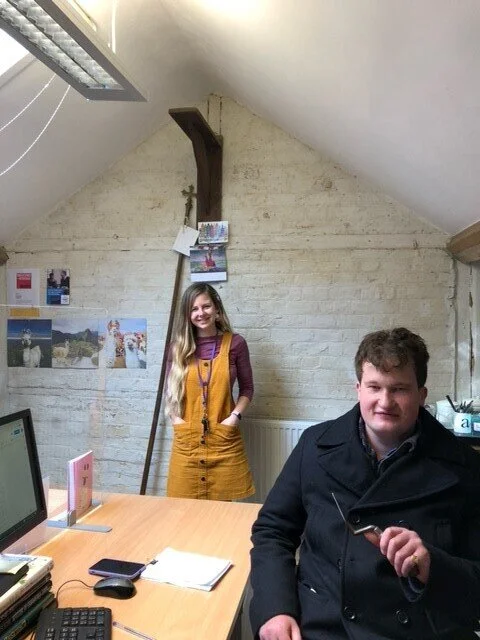
A special tour by my fantastic manager Rachel Bagnall-Bray at Fulham Palace
Front of house volunteer Alexander Ogilvie-Graham’s pair of blog entries both explore hidden objects that carry interesting pieces of the past within them. March object of the month is also about behind the scenes finds!
Every month, we post two pieces by volunteers - one focuses on an object in the Palace and the other on a specimen in the garden. It is a great way to research something that has always interested you and dig into the history of the site, and share your interests with your fellow volunteers. There is no set format so the piece can take the form of creative writing, a reflection, a poem - or anything else!
My tour took place on February 18th, 2021 at 1pm in the afternoon. I was really looking forward to this tour of the barns because it had a multi-purpose facility.
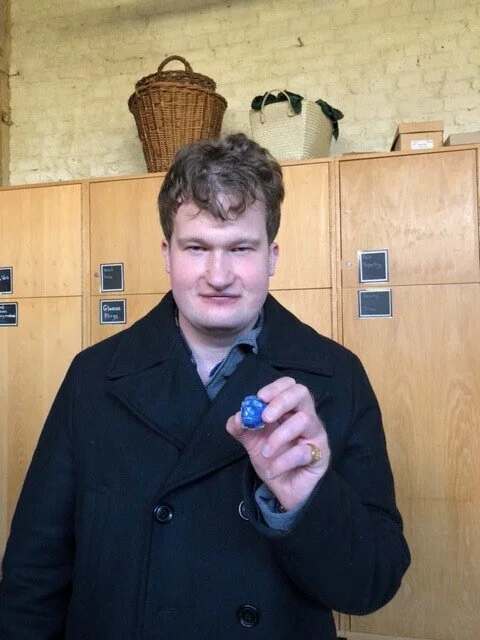
I was a lucky devil indeed as during Lockdown most museums are closed. Yet on the 18th of February 2021, I find myself holding clay pipes from as old as the 1840s to even older time periods. The oldest clay pipe stretched as far back to 1580 which is defiantly older than I am.
Is it a monkeys head or a Lion?
During the third lockdown I was a volunteer field marshal like a security guard. It was Rachel’s idea and it became so popular among the volunteers. I held the post every Sunday during the whole month.
In 2021 we hope that most museums will bounce back better after the lockdowns. The tour of the barns was really inspiring as it showed Rachel on top form. She actually killed the tour of the barn.
I had been lucky enough to have done some mud lurking last some with my team leader Alexis Haslam and now I was with this Angel Rachel doing a tad of Archaeology with her in a grade 2 listed barn.
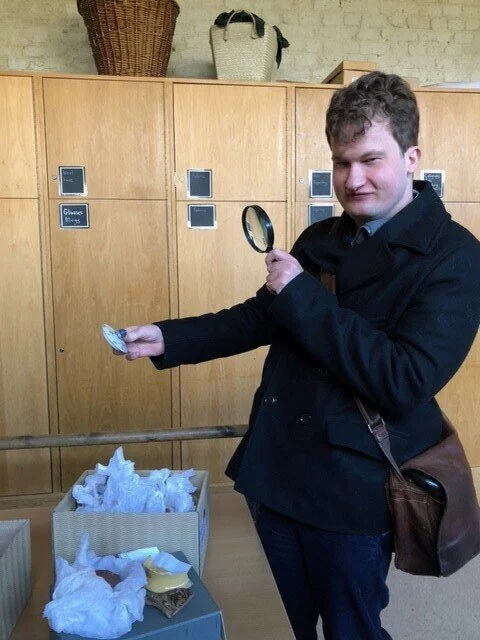
Here I am looking like an archaeologist glancing at some medieval potter that was found along the shores of Fulham Palace.
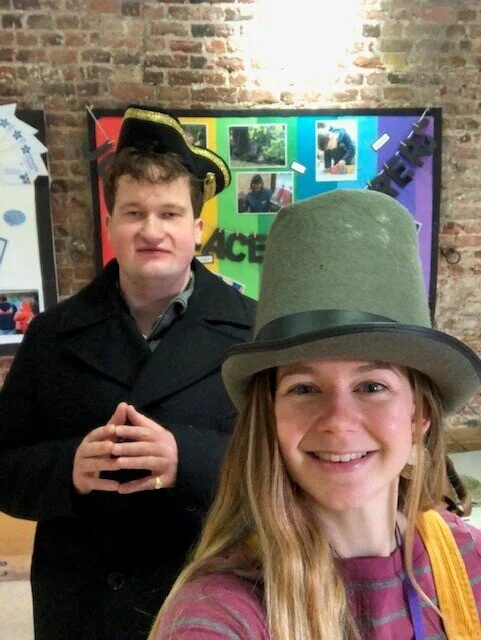
Here Rachel and I are trying on some funky hats. Keeping it cool at Fulham Palace. It’s all about the glitter and gold.
I liked the view of this window of Fulham palace. Are we in the city or in the country? Behind the scenes have their perks.
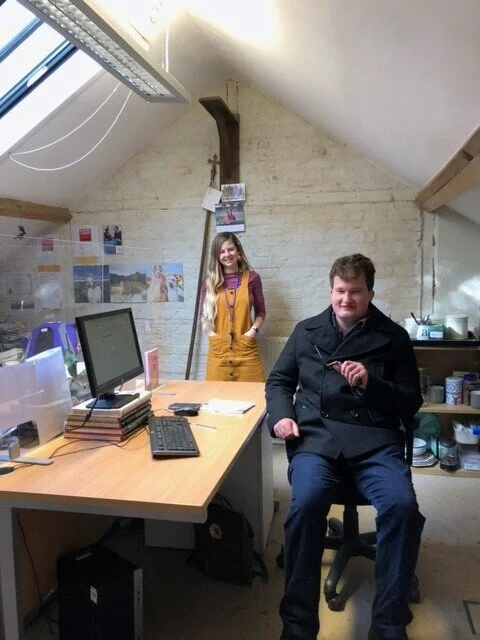
It was a privilege to have a special behind the scenes tour of the barns / the manager offices and have a thimble around the archaeology storage room
The star of Fulham palace in Lockdown is my manager Rachael Bagnall-Bray who has managed the palace and of course Edmund. She did a wicked reading of the new book about Edmund which is a must see.
Overall all it’s not every day I have a kindred spirit as a manager. Even as I was digging around with the Clay Pipes and comparing them to which century they were. I was thinking about reaching for the stars.
Add Astral
Thank you Alexander for this fantastic blog post! :)
The green meet: our newest Palace event
Introducing: The green meet
Sunday 2 May 2021, 11.00-16.00
Introducing a brand new Palace event for this Spring!
Lockdown has proved to many of us the importance of our green spaces in London, as we become ever more concerned about the climate change crisis.
At the green meet, we will introduce our biodiversity and climate change action plan and talk about the work that we’ve been putting into practice in the Fulham Palace garden.
There will be panel discussions with experts, taster talks, garden tours, children’s activities, seasonal food, music as well as a green market. Something for the whole family!
If you know of a green business which might have an interest in sponsoring the event, please email anja.herman@fulhampalace.org Sponsorships start from £750. For smaller businesses who would like to apply to sell at our event market, kindly ask them to complete this form The Green Meet market application
Of course, we will need help leading up to and on the day of the event. If you would like to volunteer please contact Anja. The green meet will be going on the events assistant rota shortly too
Assuming we are out of lockdown, The Green Meet can proceed. As the event will take place completely outside, we will follow the current government guidelines as we have for the Christmas Fair and Apple Day.