Some familiar faces...

Those of you who were able to come along to the start of season meetings may remember we played you a brand new video about customer service at Fulham Palace… for those of you who were unable to see it… here it is!!

We really appreciate you mentioning our site rules to the visitors and appreciate that at times it can be a thankless task. However, we hope that following the guidance below will make it a little easier.

We hope you’re all staying safe and well.

Happy watching!

Object of the Month: a Portrait of Bishop John King

Every month we feature two blogs written by volunteers, one describes an object in the Palace and one a plant from the Garden. It is a great way to learn more about the Palace. If you would like to contribute there is no set format so please do send in your ideas.

This March we are grateful to Naomi Jennings - O’Toole for her take on the portrait of Bishop John King, c.1620 which is on display at Fulham Palace.

bishop.jpg

Bishop John King

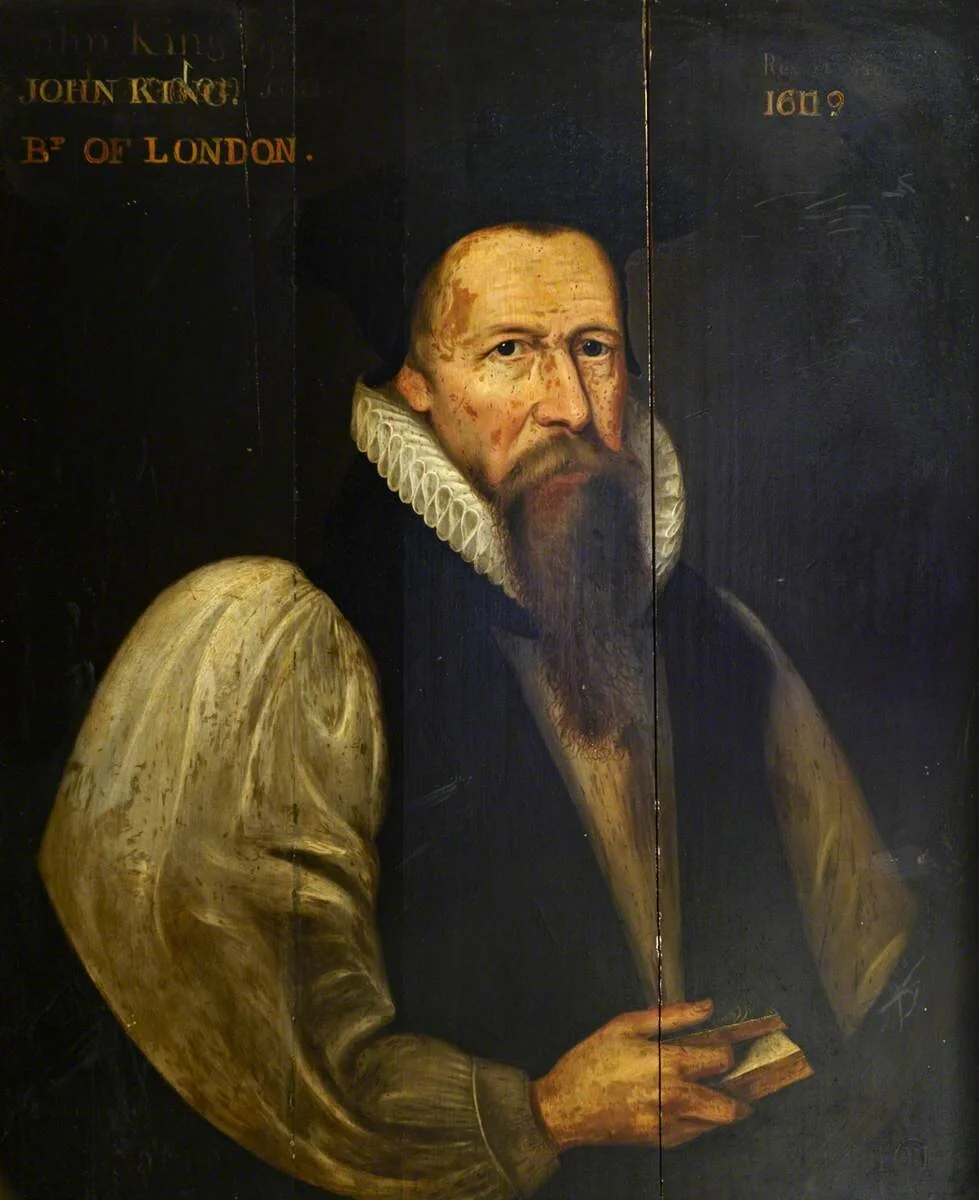
Portrait of Bishop John King, oil on wood panel, after Nicholas Lockey, c. 1620, 55.9 x 43.8 cm, Fulham Palace.

The portrait was painted on three panels of wood. The vertical cracks between the panels are visible today.

John King was born in Worminghall, Buckinghamshire. He received a broad education, at Westminster School and Christ Church, Oxford, having graduated with his BA in 1580 and an MA three years later. He started his career as a preacher to the city of York, moving across various roles, including a domestic chaplain to Thomas Egerton in London, Rector of St. Andrews in Holborn and prebend of Sneating in St. Paul’s. After having been appointed chaplain in ordinary to James I, he was then appointed as dean of Christ Church in 1605, and later consecrated as Bishop of London on 8th September 1611.

King was a well-known Calvinist and anti-Catholic. Upon his death (on Good Friday) in 1621, Roman Catholic propagandists claimed that he converted to their church on his deathbed. The cause of death was actually gall or kidney stones – but his death was used in a marketing attempt to undo his Calvinist preaching!


His portrait is the first thing a visitor sees when entering the Palace’s exhibition. Framed in a knotted gold frame, and enveloped by darkness, the Bishop seems to emerge into the viewer’s space from his shadowy surroundings. This use of tenebrism was a convention that originally stemmed from Caravaggio’s dramatic Baroque paintings. Complete darkness, lit only by a singular source of light, tenebrism is a technique that casts the subject in a particularly theatrical manner. The portrait thus declares solemnity and infuses the Bishop with respect.

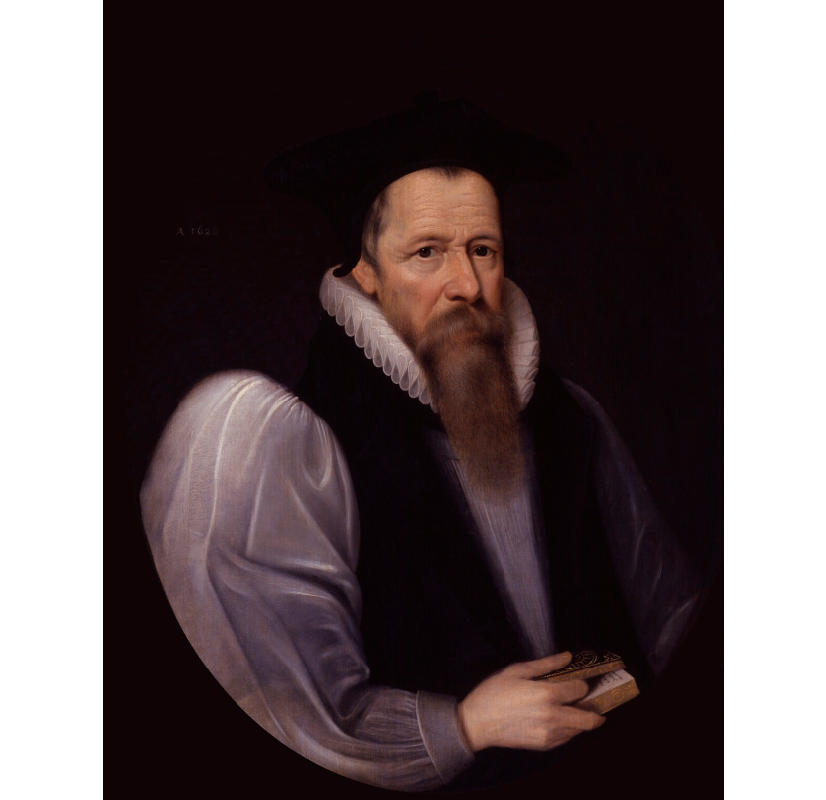
Interestingly, this piece in the Palace’s collection stems from an established ‘type’. The artist has reproduced a portrait that now hangs in the National Portrait Gallery. Painted by Nicholas Lockey in 1620, the piece became a prototype for later depictions of the Bishop, of which five are currently known.

Yet, there are a few differences in the Palace portrait that marks the hand of the artist. The tonal scheme is notably warmer than the prototype, which adds a sense of familiarity. As it stands, the National Portrait Gallery piece is tonally cool. In conjunction with the absence of eye contact with the viewer (the Bishop gazes above us as if in contemplation), this produces an effect of emotional distance. The Palace’s version seems to me to have a friendlier persona.

Portrait of Bishop John King, 1620, oil on panel, at the National Portrait Gallery.

Portrait of Bishop John King, 1620, oil on panel, at the National Portrait Gallery.

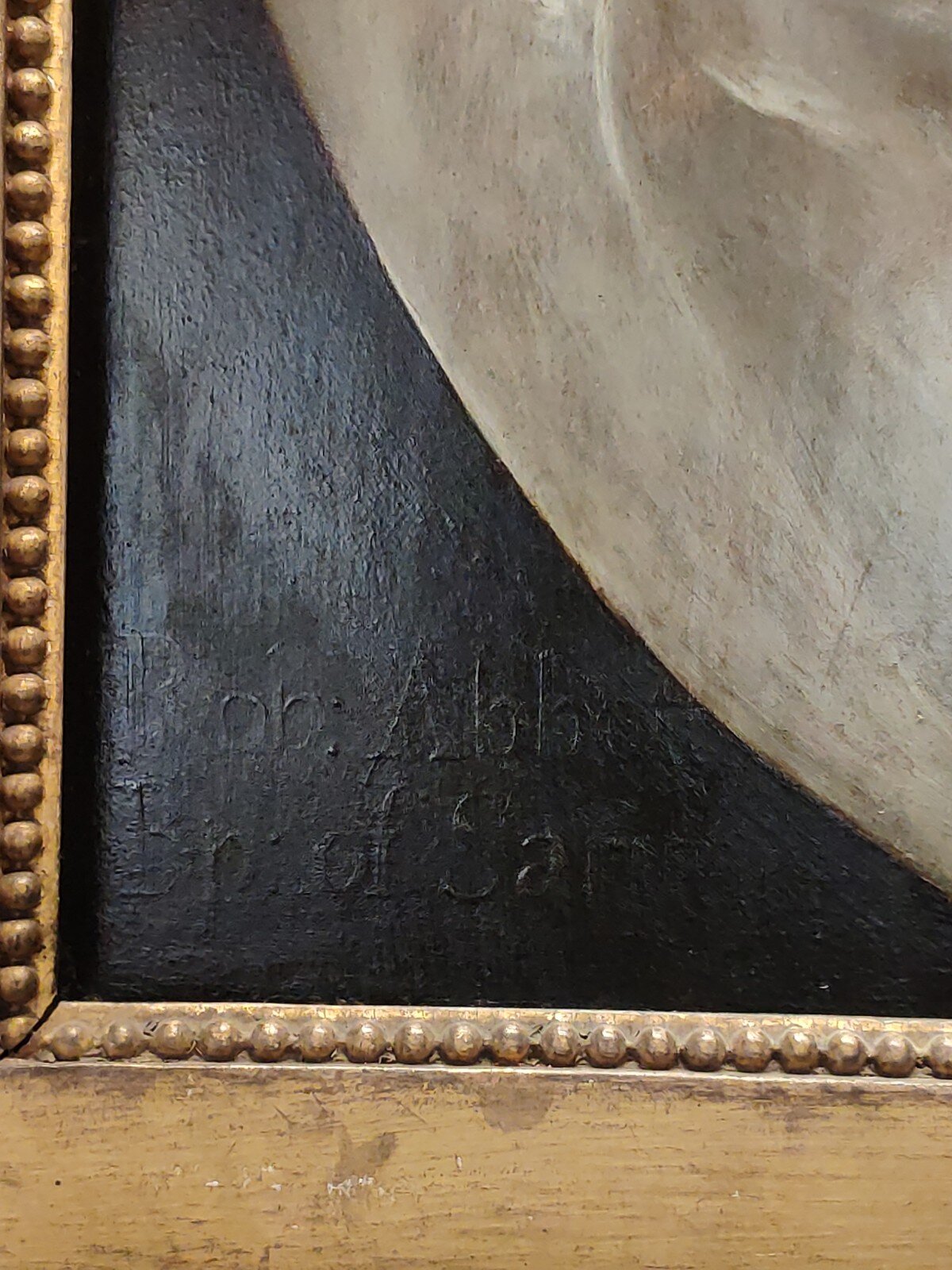
King is depicted in all his Bishophood. He wears traditional clerical clothing that announces his Calvinism. The soft rendering of his cuff collar especially struck me - it is spectacularly rendered with highlights and twisting curls that really strike the eye. He grips a Bible in his proper right hand, partly open with his fingers, symbolising his active participation with the scriptures. The artist has added snippets of information around the subject; his name painted twice in the top left corner, the year of his consecration in 1611 and mysterious embossed lettering in the bottom left that has been painted over in black.

IMG_20200317_111013_1.jpg

The embossed caption

This caption could refer to George Abbott, who was born in Surrey. He was installed as the Archbishop of Canterbury in the same year that Bishop John King was consecrated as Bishop of London (1611). Abbott was likewise known for being "[a] sincere but narrow-minded Calvinist” (Chambers Biographical Dictionary).

This painting is shown amongst a range of objects, from early photographs of the Palace, a tiny print of an old Tube map to archaeological discoveries. The curation reflects his position as an embedded and noteworthy part of the Palace’s history. The caption declares that the Bishop formed the Dr. Edwards and Bishop King’s Charity of Fulham, after having left £20 in his will to be given to the poor in bread, beef and money. This charity is still running today to relieve poverty in Fulham. The adjoining room holds a display of Bishop Compton’s botanical collections (who served as Bishop of London from 1675 - 1713). This room sensitively highlights the contribution that often overlooked people in history have made to the developments of the Gardens, such as those that collected and transported the botanical specimens back to London, often encountering danger and hardship. Between the two rooms is a display of a liturgical outfit, including a mitre, Bishop Winnington-Ingram’s cope and a pastoral staff that belonged to the first Bishop of Fulham. Visitors are invited to draw out connections between the roles of the Bishops, from being involved in charitable work for the local community to working with people on an international scale. The Bishops balanced responsibilities on a secular level to a religious level - and the curation of this exhibition juxtaposes these two natures of the life of a Bishop. The portrait of John King introduces us to the many objects held in the collection, that tell stories about the Bishops that have affected history from within the Palace walls.

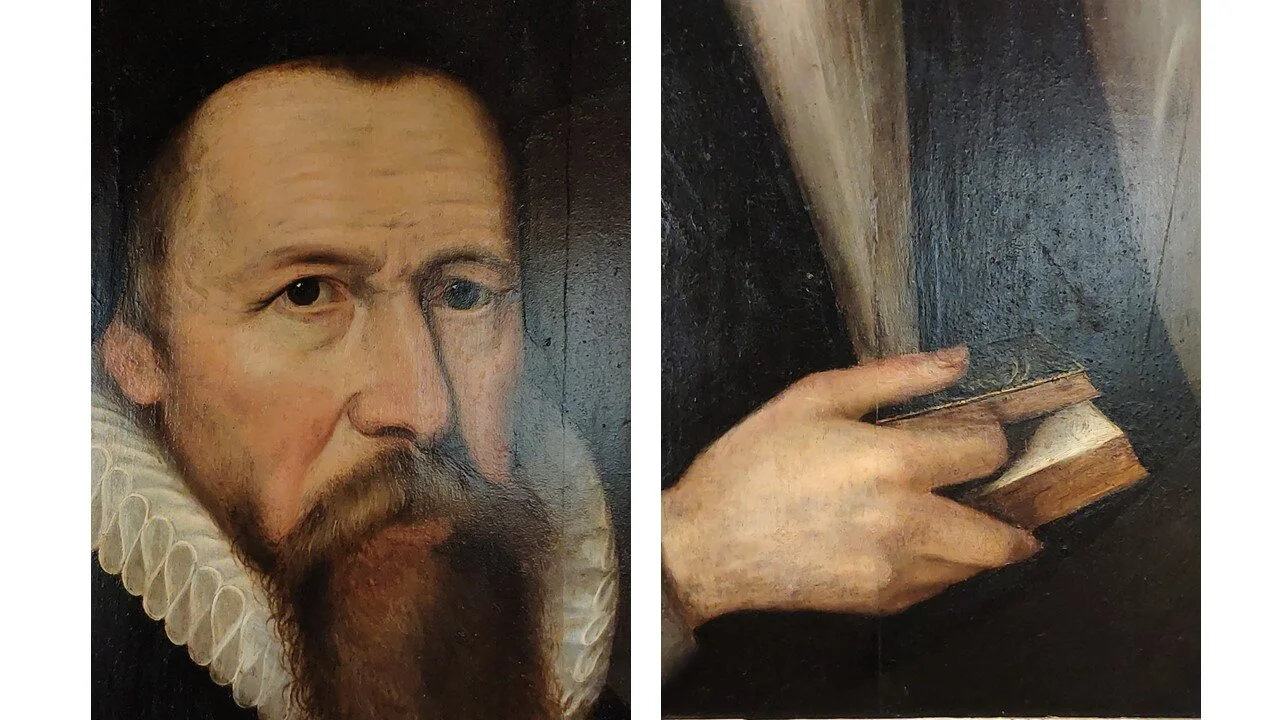
Details of the painting: the face of King is rendered with precision showing that accuracy of characterisation was a primary aim for the artist. The book that King holds in his hand is similar to the small Bible displayed in the cabinet opposite the…

Details of the painting: the face of King is rendered with precision showing that accuracy of characterisation was a primary aim for the artist. The book that King holds in his hand is similar to the small Bible displayed in the cabinet opposite the portrait.

Thank you to Naomi for this fantastic blog about the portrait of Bishop John King. Please send your ideas for object or specimen of the month blogs to rachel.bagnall-bray@fulhampalace.org. If you would like some help, please let me know.

Fulham Palace Quiz

Over the next few weeks we’ll be so sorry not to see most of you at the Palace. It is a very daunting and difficult time, so we really hope you will get in touch with us at any time, over phone or email, if you need anything or would like a chat.

We’re going to be posting lots of content on the portal so we can still come together, virtually rather than physically, over the next few weeks.

Jamie, garden volunteer, is kindly kicking us off with a quiz about Fulham Palace! Test your knowledge by answering the 10 questions below. Some, but not all, of the questions are derived from blogs on either the main website or volunteers portal.

powered by Typeform

Visit to Sir John Soane's Museum

We’re grateful to Jane Swithinbank for this excellent blog about our recent volunteers’ trip to the wonderful Sir John Soane’s Museum, Lincoln’s Inn Fields.

***

I can't believe I have lived in London for so many years and had never visited this extraordinary museum.  Thank you Rachel for organizing this eye-opening Fulham Palace Volunteers' Outing.

Our excellent guide Philip Dickson managed to bring the whole history to life in just one hour and then we were left to wander at will amongst the treasures.

Sir John Soane was born the son of a bricklayer in 1753.  He was extremely talented and hard working and rose from quite humble beginnings to become one of the foremost architects of the Regency period.  Whilst at the Royal Academy he was awarded the prestigious Gold Medal and a bursary for a Grand Tour of Europe which inspired his lifelong interest in Classical Art and Architecture.

He married the love of his life who later inherited a large sum from her uncle who had been a very successful builder.  This together with his flourishing practice enabled him to buy the first of three houses in 1792 in Lincoln's Inn Fields.  He demolished and rebuilt this and subsequently did the same with the neighbouring two houses as they became available.  The family lived in the largest, central one surrounded by the most incredible collection of objects ranging from Ancient Egyptian antiquities and Roman sculptures to models of contemporary buildings including his own.  As a Professor at the R.A. he delighted in encouraging his students to study these treasures at first hand.

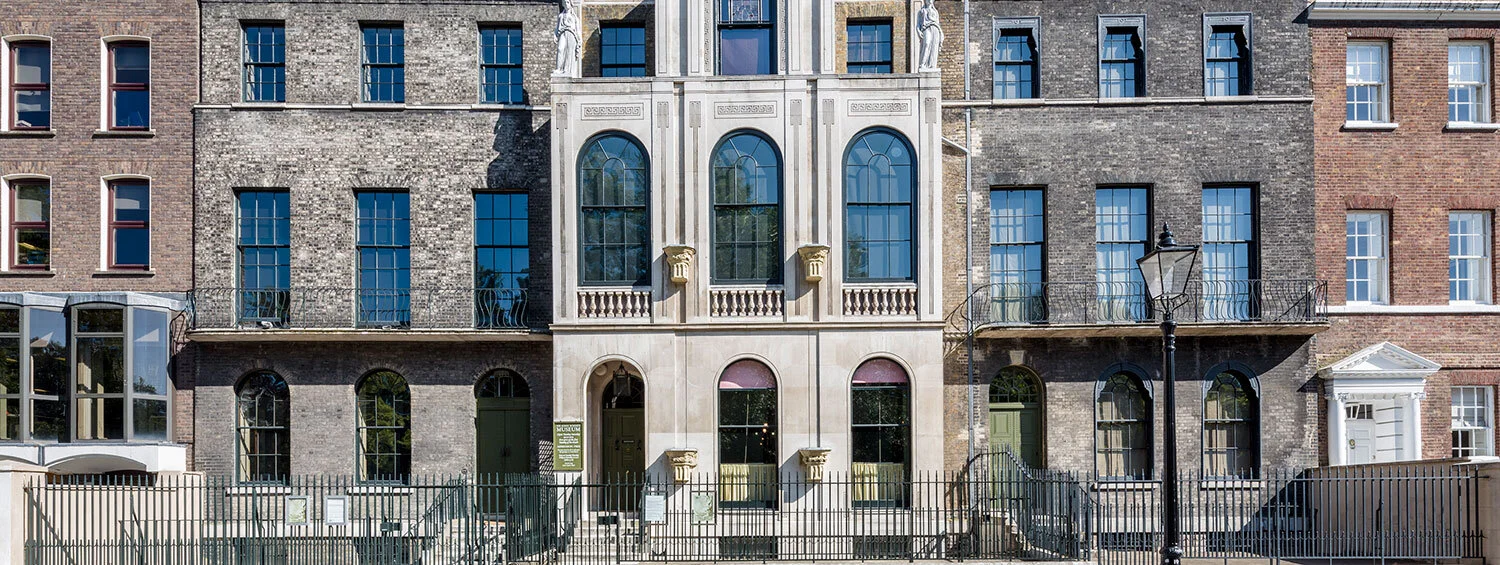
The house and museum of the British architect Sir John Soane (1753 - 1837), in Lincoln’s Inn Fields.

The house and museum of the British architect Sir John Soane (1753 - 1837), in Lincoln’s Inn Fields.

In 1824 he acquired one of the most important objects ever found in Egypt, the sarcophagus of Pharaoh Seti dating back to 1370 BC which weighs several tonnes and involved knocking down a huge chunk of the back wall of the house to get it inside!  It was meant for the British Museum but the price of £2000 was too steep so Sir John stepped in quickly.

Everywhere one looks are columns, statues and mirrors leading the eye to other exhibits which he was always changing around.

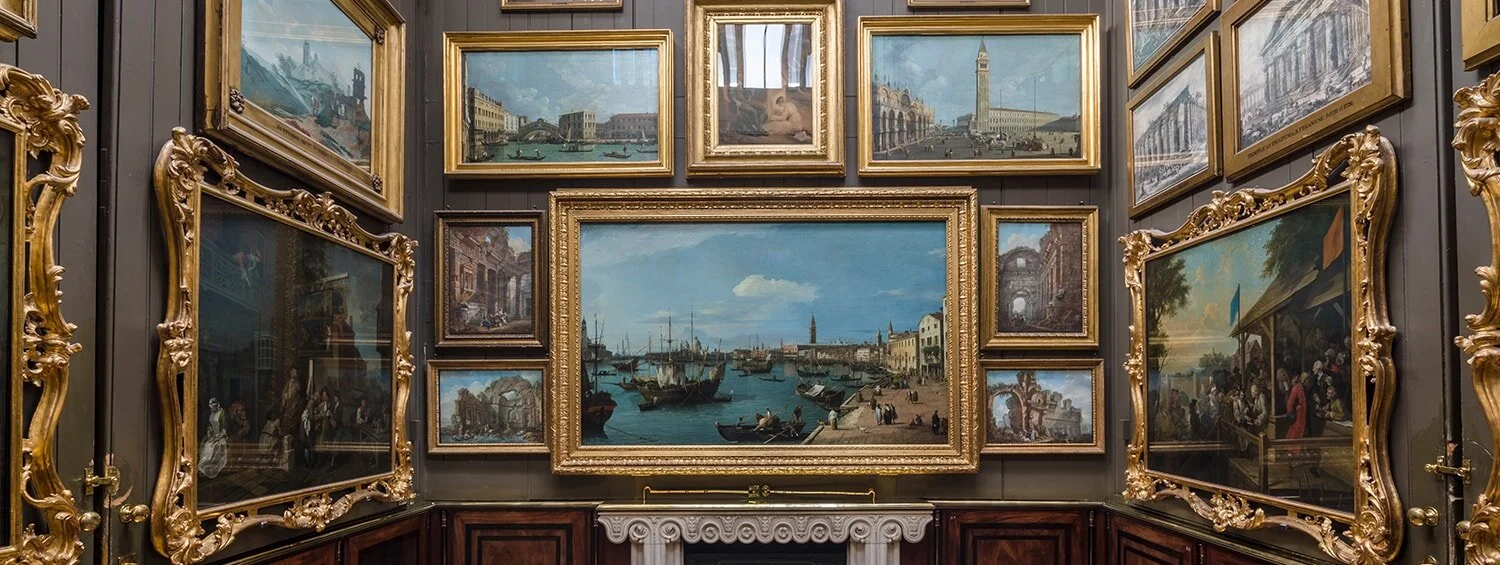
My favourite room was the 13'x12' Picture Room.  Amongst the 118 paintings are some by Turner (a personal friend) and Canaletto.  This number of pictures in a small space was achieved by the ingenious method of having panels which open to reveal yet more works on the backs of them and more panels which open up to show even more.

The Picture Room. Soane collected pieces by a range of artists, including Hogarth, Turner, Piranesi and Canaletto.

The Picture Room. Soane collected pieces by a range of artists, including Hogarth, Turner, Piranesi and Canaletto.

We are so fortunate that Soane had the foresight to leave these houses and works to the nation to be kept open and free for inspiration and education.

In my opinion it is a museum to visit often for short bursts as I did find it quite overwhelming after a couple of hours.  I am not sure how his wife and children could live normal lives permanently surrounded by so much.  One of his sons did end up in the Debtor's prison twice......but that is another story!

As a Palace volunteer you’re welcome to join us on any of our volunteer trips! The trips are complimentary and are advertised on the portal. Rachel organises four trips each year to heritage sites across London plus a coach trip to in late Summer time.

Object of the month: The Fountain

Every month we feature two blogs written by volunteers, one describes an object in the Palace and one a plant from the Garden. It is a great way to learn more about the Palace. If you would like to contribute there is no set format so please do send in your ideas.

This February we are grateful to volunteer Lee Copeland for her take on the fountain inside the Tudor courtyard at the Palace.

***

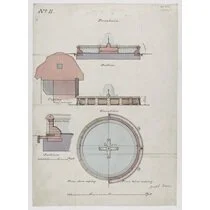
Butterfield’s designs for the fountain in the Tudor courtyard, 1885

Butterfield’s designs for the fountain in the Tudor courtyard, 1885

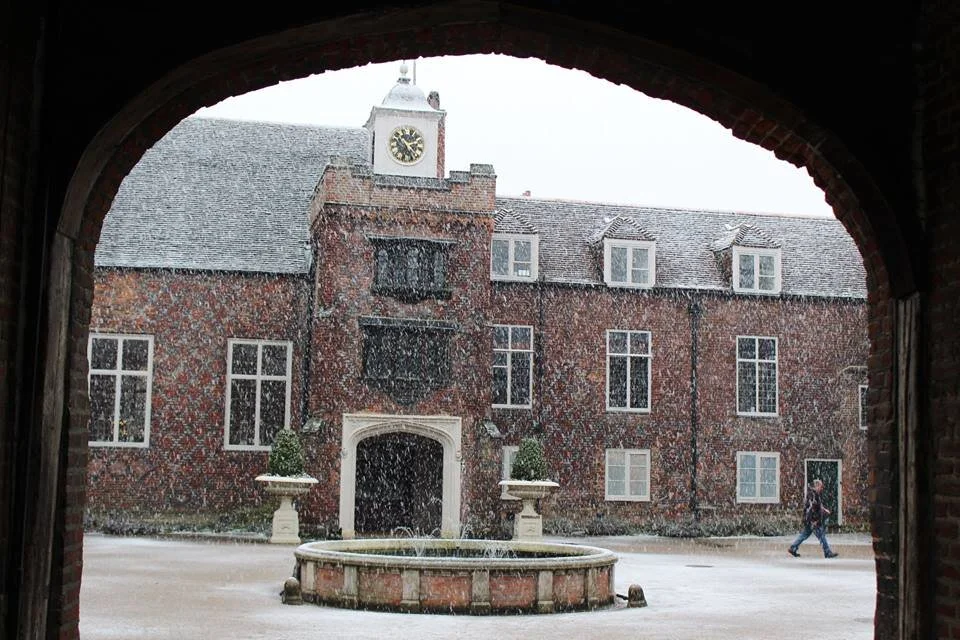
From our vantage point whilst on shift in the Visitor welcome room, we can observe the daily life of the Tudor courtyard. I am particularly fascinated by the Fountain designed by the Architect William Butterfield in 1885.

This was the second project for Butterfield at Fulham Palace, the first being the Tait Chapel 1866-1867 and the last the Coachman's Lodge 1893. Butterfield was a Gothic revival architect, and as such he reinterpreted the original Gothic style in Victorian terms. Many of his buildings were for religious use, although he also designed buildings for colleges and schools. When you consider his vast catalogue of work including the likes of Keble Collage Chapel 1876, to St Paul's Cathedral, Melbourne, Australia 1880-1891, you may question why he would design a simple object such as a small fountain. Perhaps it was the fact that it was a small project compared to others he had undertaken. Or it might have proved that his ego was not so large, that he would undertake commissions, projects, large or small, which led to him being highly regarded and sought after. But like all things in the worlds of art and architecture, the popularity of Butterfield's polychrome designs faded. After 1875 the public taste for his version of High Gothic waned, and he became less in demand.

As for Butterfield himself, he was born in London 1814 and died at the age of 85 in February 1900. He is buried in a simple Gothic tomb in Tottenham Cemetary, Haringey. His parents ran a Chemist shop in the Strand, and he was one of 9 Children. Considering his vast body of work and his skill it seems a shame that a man who so influenced architecture throughout the Victorian era is so little remembered.

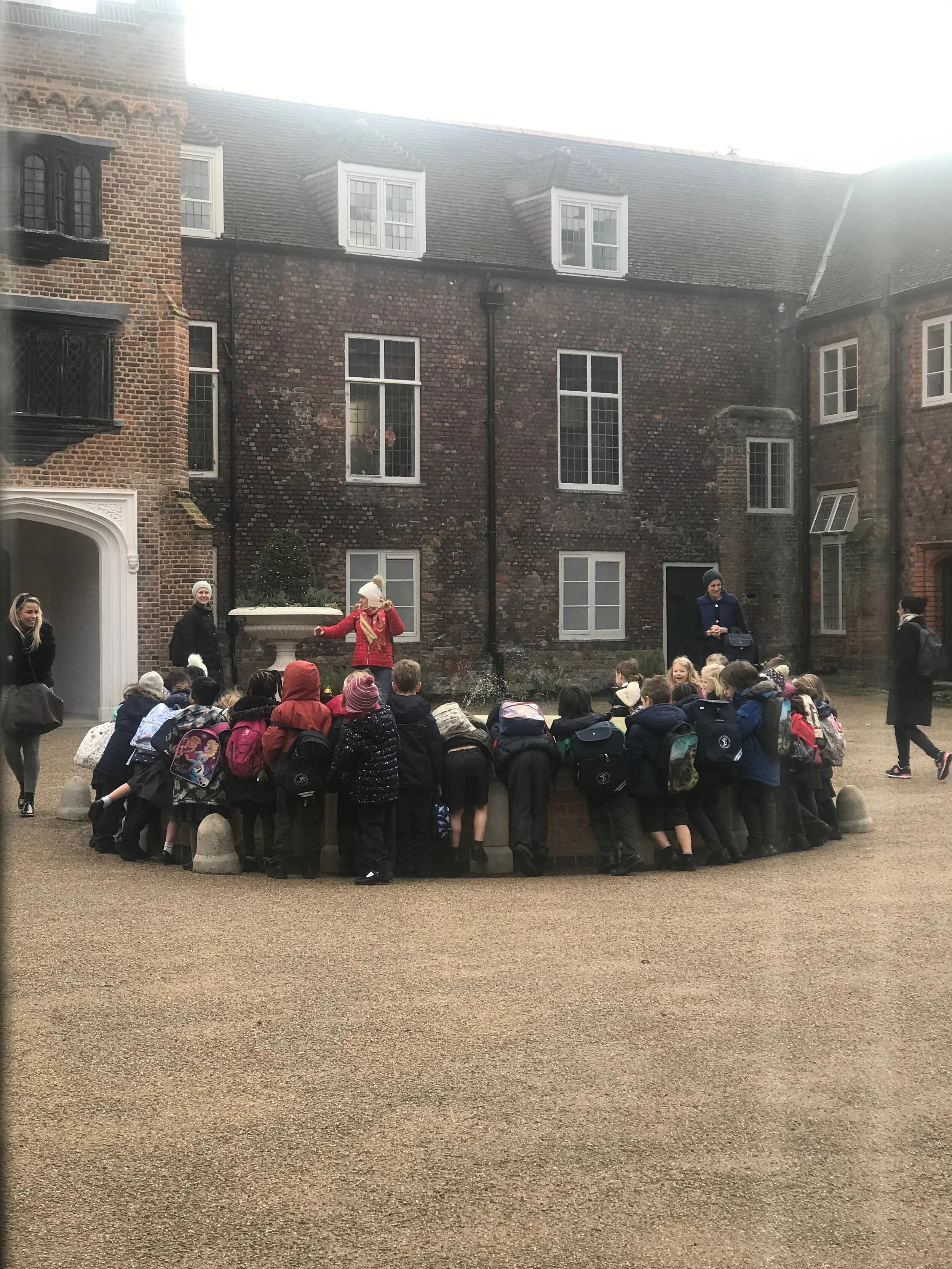
But for me the fountain holds such magic, it sits quietly in the centre of the courtyard, and is part of many stories, a centre piece at weddings, the magical draw for the many thousands of children over the years, fascinated by it's cascading water.

children around fountain.JPG

The many coins thrown in, with wishes of all kinds, how many come true I wonder! How many of those were wishes of the wounded soldiers taking comfort sitting around it, when the Palace was a war hospital during WWI. Perhaps they were wishing for their brothers in arms to return home from war, fit and well.

When Butterfield designed the Fulham Palace Fountain, I wonder, what did he wish for.

Thank you to Lee Copeland for this wonderful blog. Please send your ideas for object or specimen of the month blogs to rachel.bagnall-bray@fulhampalace.org. If you would like some help, please let me know.

Thank you to Lee Copeland for this wonderful blog. Please send your ideas for object or specimen of the month blogs to rachel.bagnall-bray@fulhampalace.org. If you would like some help, please let me know.