
Every month we feature two blogs written by volunteers, one describes an object in the Palace and one a plant from the Garden. It is a great way to learn more about the Palace. If you would like to contribute there is no set format so please do send in your ideas.
This February we are grateful to volunteer Lee Copeland for her take on the fountain inside the Tudor courtyard at the Palace.
***
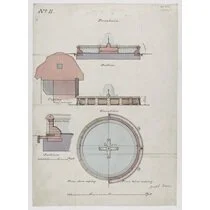
Butterfield’s designs for the fountain in the Tudor courtyard, 1885
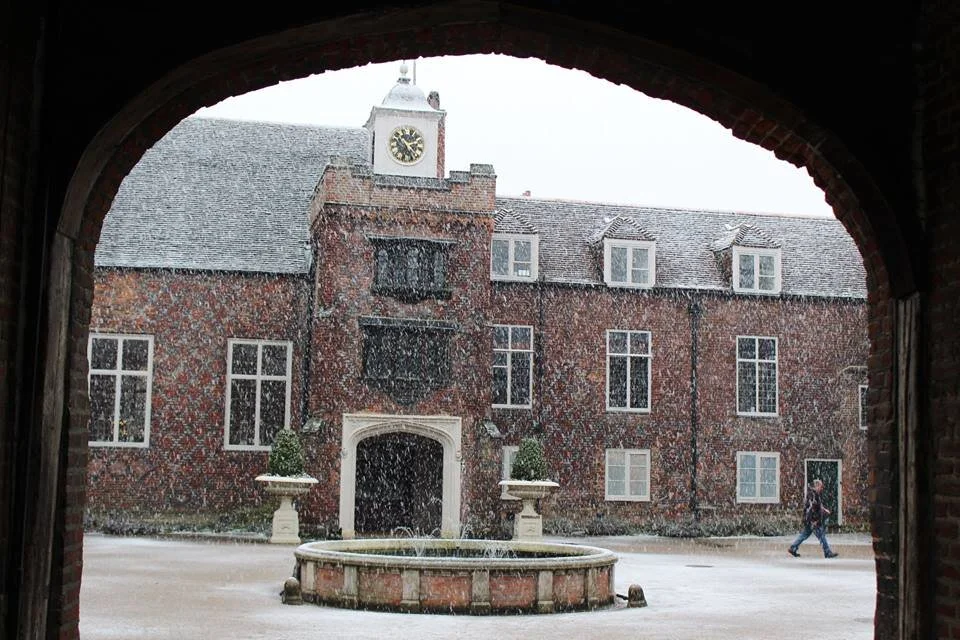
From our vantage point whilst on shift in the Visitor welcome room, we can observe the daily life of the Tudor courtyard. I am particularly fascinated by the Fountain designed by the Architect William Butterfield in 1885.
This was the second project for Butterfield at Fulham Palace, the first being the Tait Chapel 1866-1867 and the last the Coachman's Lodge 1893. Butterfield was a Gothic revival architect, and as such he reinterpreted the original Gothic style in Victorian terms. Many of his buildings were for religious use, although he also designed buildings for colleges and schools. When you consider his vast catalogue of work including the likes of Keble Collage Chapel 1876, to St Paul's Cathedral, Melbourne, Australia 1880-1891, you may question why he would design a simple object such as a small fountain. Perhaps it was the fact that it was a small project compared to others he had undertaken. Or it might have proved that his ego was not so large, that he would undertake commissions, projects, large or small, which led to him being highly regarded and sought after. But like all things in the worlds of art and architecture, the popularity of Butterfield's polychrome designs faded. After 1875 the public taste for his version of High Gothic waned, and he became less in demand.
As for Butterfield himself, he was born in London 1814 and died at the age of 85 in February 1900. He is buried in a simple Gothic tomb in Tottenham Cemetary, Haringey. His parents ran a Chemist shop in the Strand, and he was one of 9 Children. Considering his vast body of work and his skill it seems a shame that a man who so influenced architecture throughout the Victorian era is so little remembered.
But for me the fountain holds such magic, it sits quietly in the centre of the courtyard, and is part of many stories, a centre piece at weddings, the magical draw for the many thousands of children over the years, fascinated by it's cascading water.
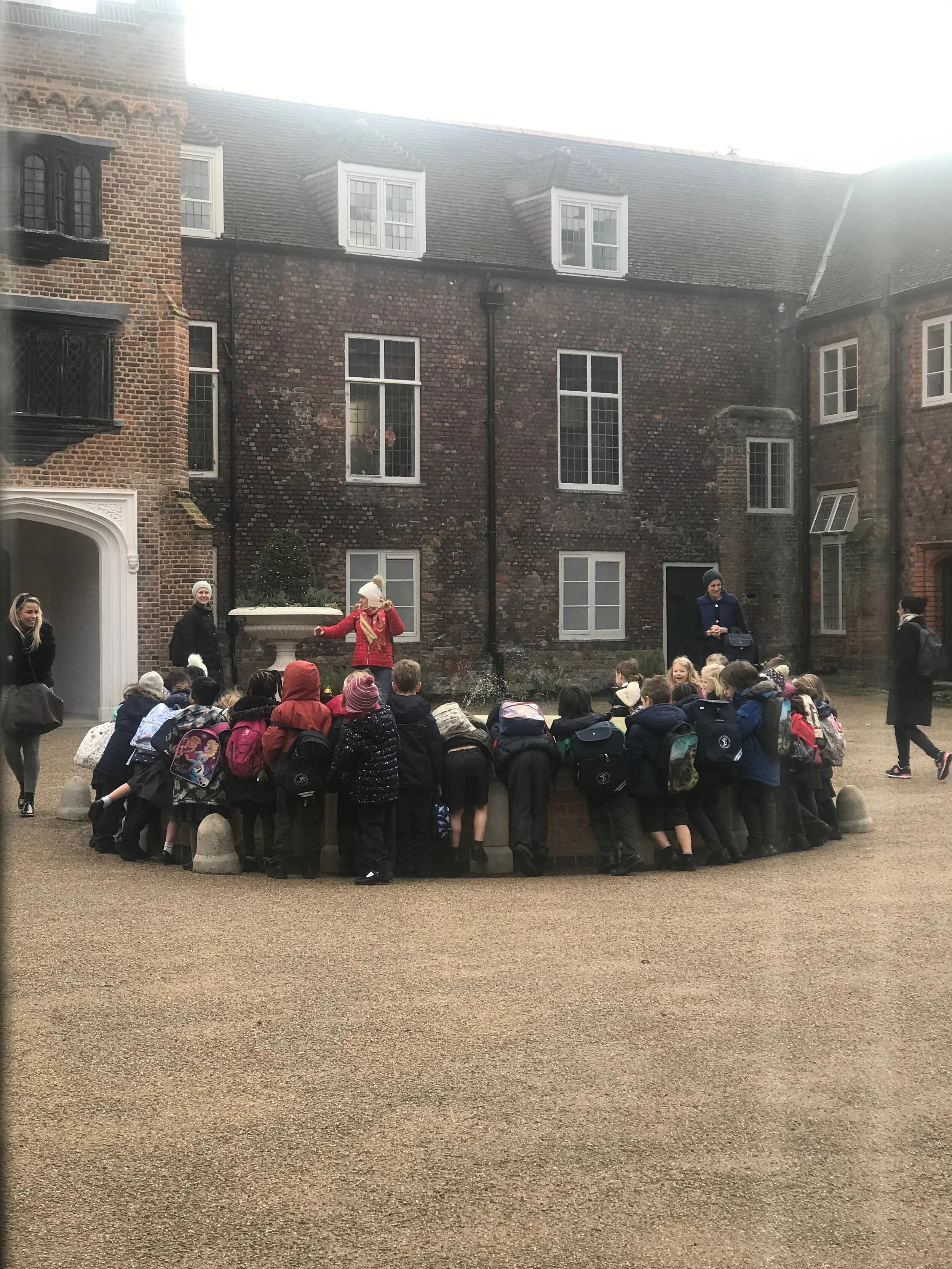
The many coins thrown in, with wishes of all kinds, how many come true I wonder! How many of those were wishes of the wounded soldiers taking comfort sitting around it, when the Palace was a war hospital during WWI. Perhaps they were wishing for their brothers in arms to return home from war, fit and well.
When Butterfield designed the Fulham Palace Fountain, I wonder, what did he wish for.
Thank you to Lee Copeland for this wonderful blog. Please send your ideas for object or specimen of the month blogs to rachel.bagnall-bray@fulhampalace.org. If you would like some help, please let me know.