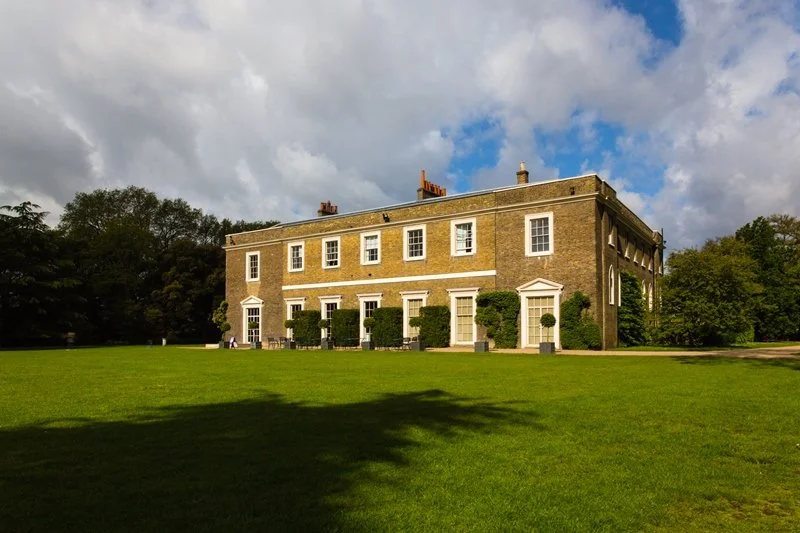
Object of the month: A pair of World War II bookends

Every month we feature two blogs written by volunteers, one describes an object in the Palace and one a plant from the Garden. It is a great way for us all to learn more about the Palace. If you would like to contribute there is no set format so please do send us your ideas.

August’s object(s!) of the month are a pair of bookends in the Porteus library. The library reopened at the end of May, and due to the fragility and importance of the book collection the room is only open when we have a volunteer available to supervise it.

The following post is written by Neyda, a volunteer who recently completed a Collections placement at the Palace, and who we’re delighted is now working as our Front of house assistant. During her time with us she spent many hours in Porteus library and the store, discovering more about some of the wonderful objects in the Palace collection. Here is Neyda’s take on these unusual bookends which are definitely worth a closer look….
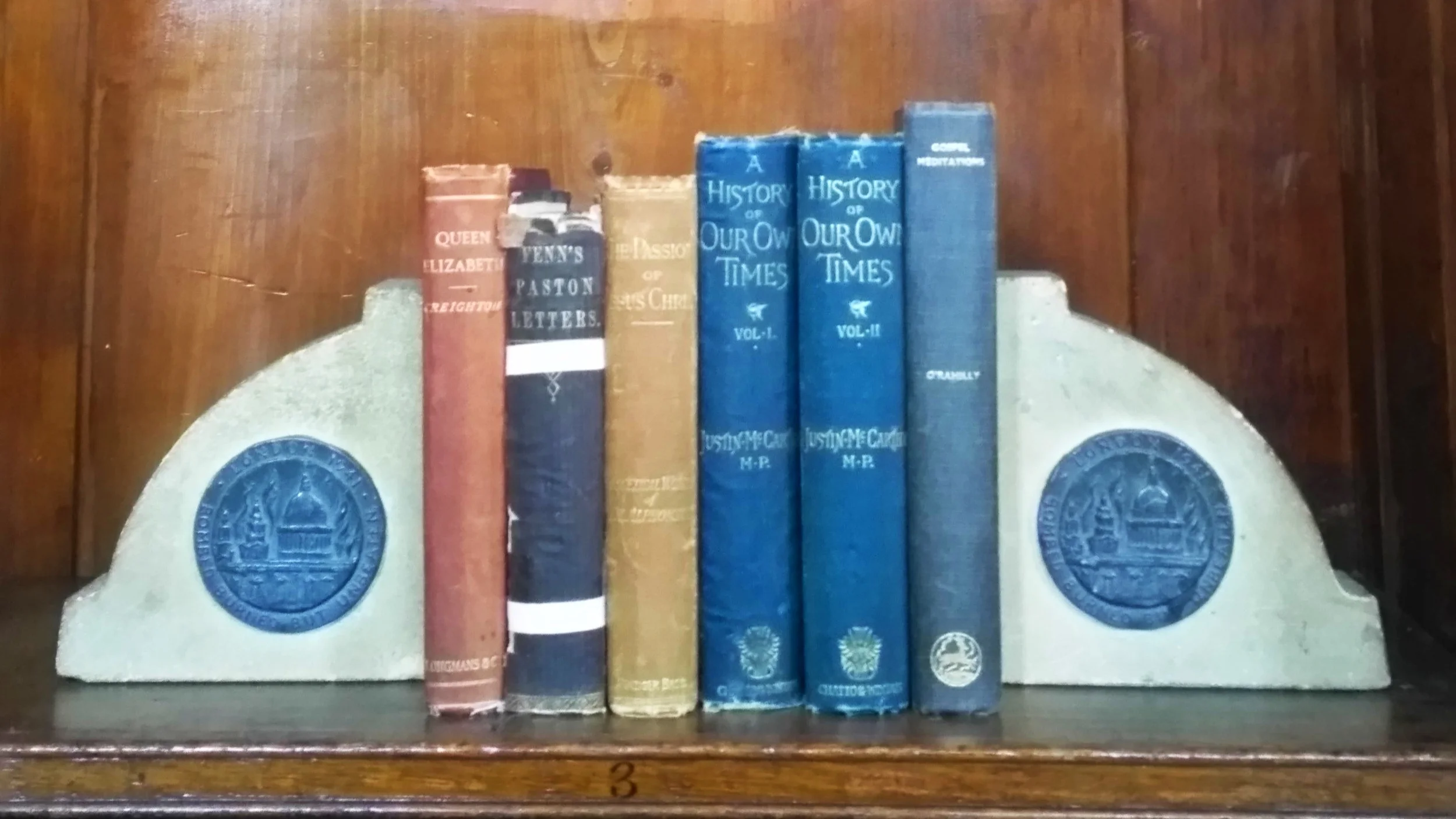
The bookends in situ in the Porteus library

The bookends in situ in the Porteus library

At first glance it is apparent that these unusual bookends are made from stone. Upon closer inspection a small tag informs us that the stone is from the Houses of Parliament when it was bombed during the Blitz. Each side has a grey metal plaque in the middle of the stone depicting St Paul’s Cathedral in flames with the emotive text around it reading “London 1941 Bombed, Burned but Unbeaten”. St Paul’s Cathedral was a symbol of Britain’s indomitable spirit, surviving the war with less damage than the surrounding buildings which were reduced to rubble by bombing.
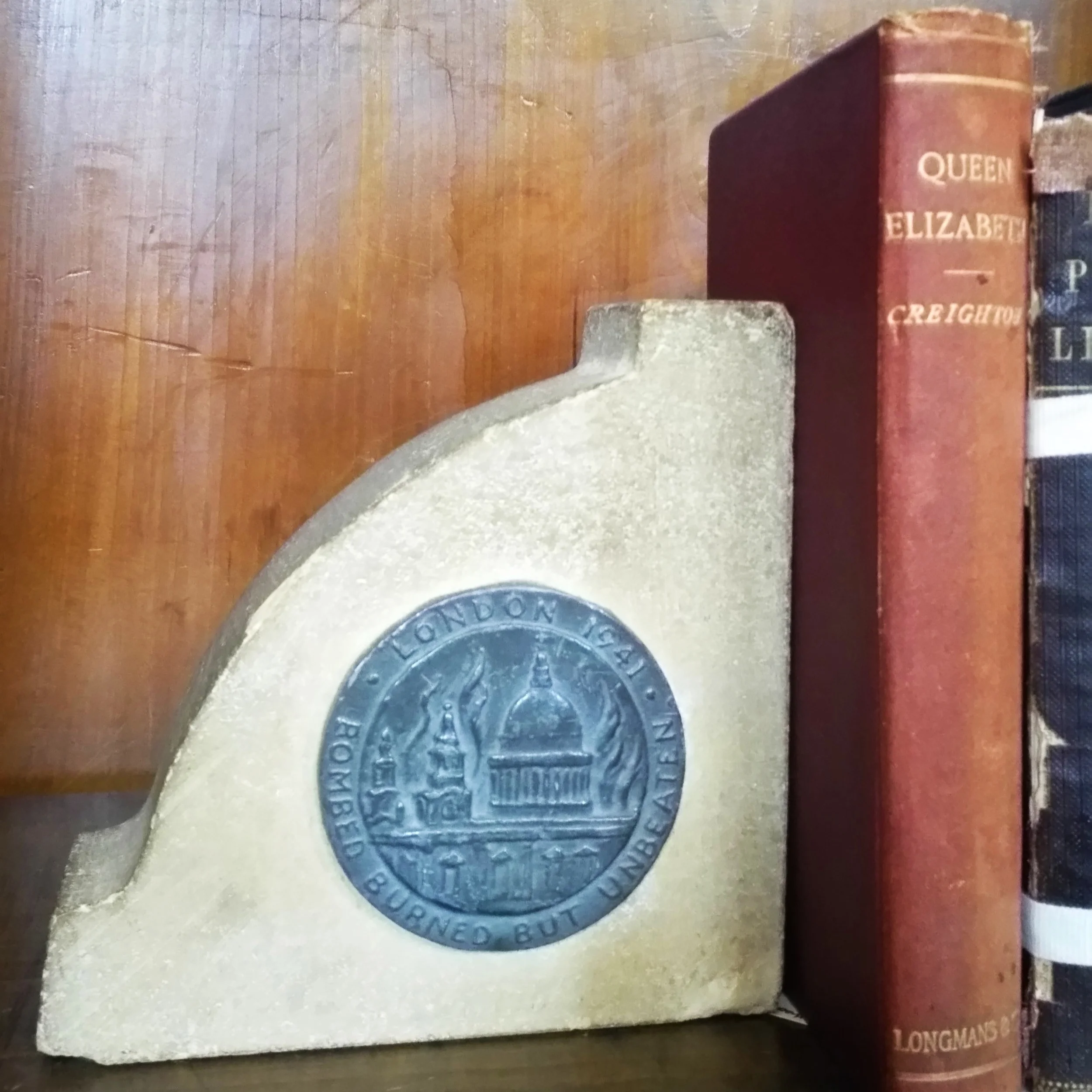
IMG_20190816_104106.jpg

The other side of each bookend has a grey metal plaque with the depiction of the crowned portcullis which is the emblem of the Houses of Parliament. The text around the plaque is: “This Stone Came from the Houses of Parliament”.

The bookends were created from the stone that could not be salvaged after the bombing because of the size, which was too small to use for repairs. They were turned into bookends and other objects as a way to raise money for the Houses of Parliament for their renovation after the war. The Imperial War Museum also have a set, and theirs have an image of the Houses of Parliament in the metal disc.

Fulham Palace was thought to be a target during WWII, but Bishop of London Geoffrey Fisher and his family stayed in the palace throughout the war. Fisher would continue to hold services in St Paul’s Cathedral, believing that it was a time when people needed to see that the heart of the city was still there, that faith had not been lost.

Neyda Vega, Collections placement volunteer and now Front of house assistant

Please send your ideas for Object / Specimen of the month blogs to rachel.bagnall-bray@fulhampalace.org. If you would like some help, please let us know.
Specimen of the month: Toadflax

Every month we feature two blogs written by volunteers, one describes an object in the Palace and one a plant from the Garden. It is a great way for us all to learn more about the Palace. If you would like to contribute there is no set format so, please do send us your ideas!

This August our Specimen of the month blog comes from Jamie Atwell, Garden volunteer and Head Gardener’s admin assistant. You need to look closely to spot this month’s dainty flowered climber.

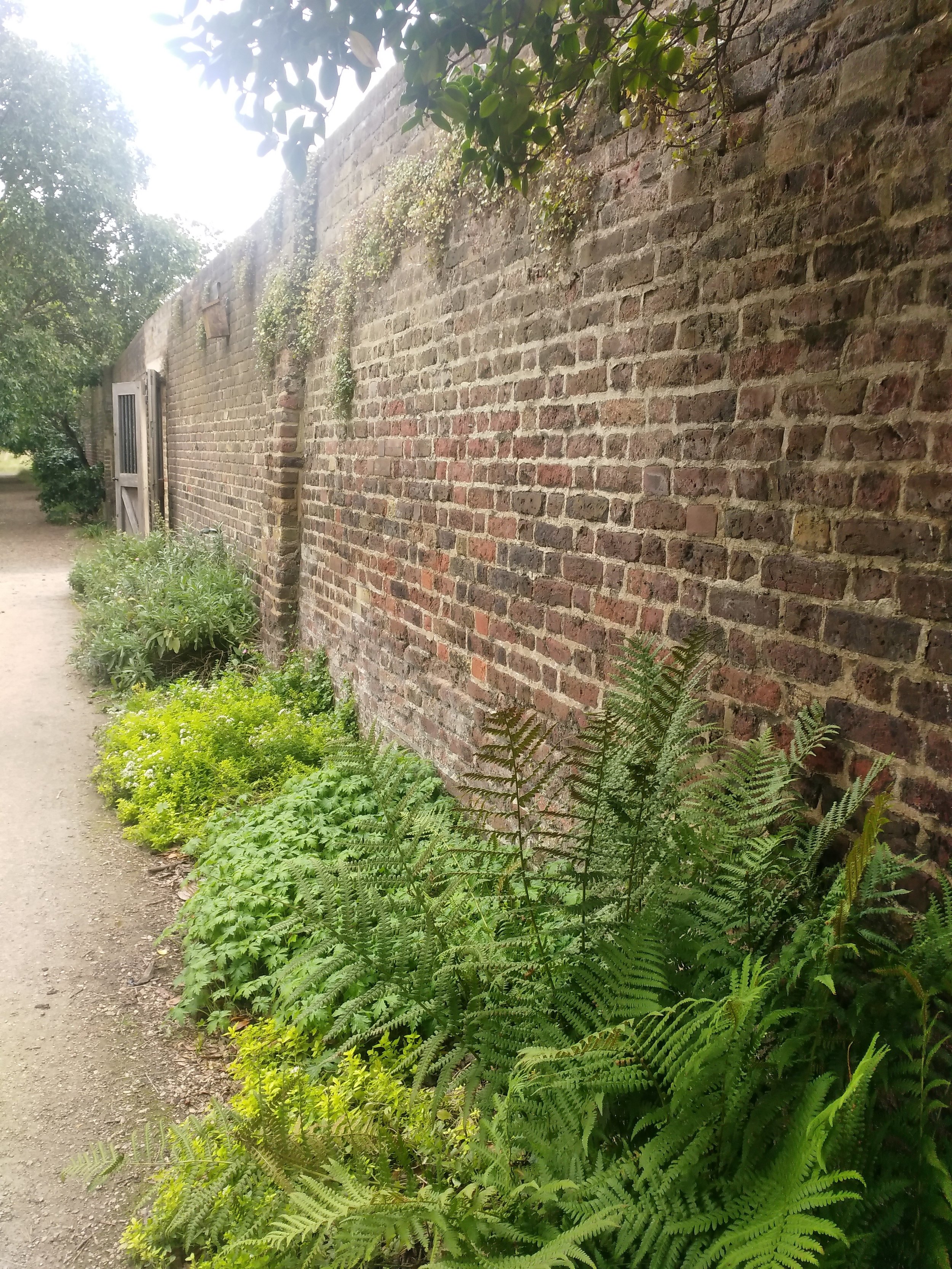
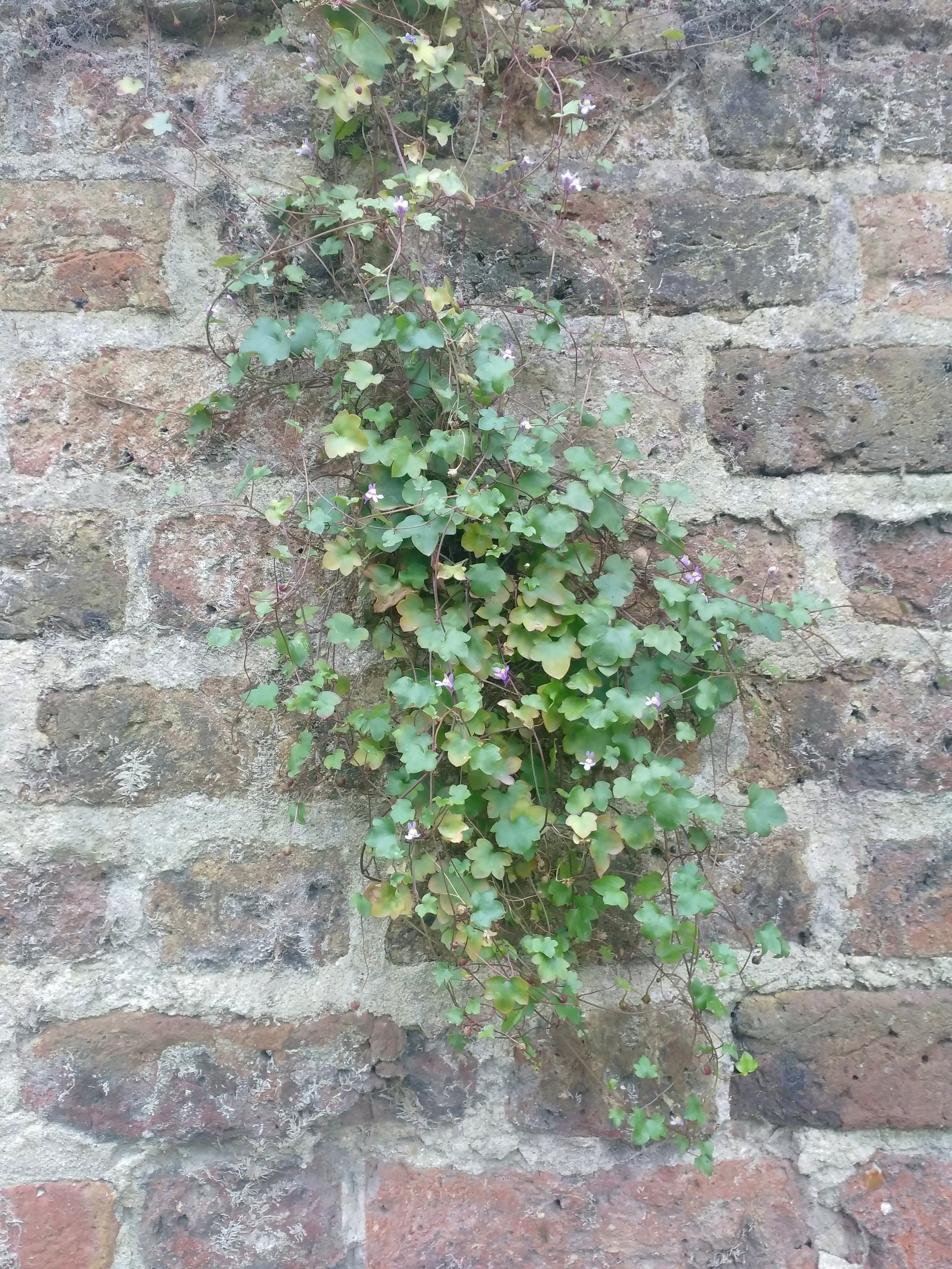
Toadflax is seen on the north exterior wall of the Walled garden, seen two thirds from the top of the wall in this photograph

Toadflax is seen on the north exterior wall of the Walled garden, seen two thirds from the top of the wall in this photograph

"Cymbalaria runneth and spreadeth on the ground and clymeth and spreadeth and hangeth on walls even as ivie or chickweed doth. The branches are very small, round and smooth, limmer and pliant." So said the C17th century botanist John Goodyer.

Next time you're in the Walled Garden and can tear yourselves away from all the wonderful flowers and produce, have a good look at the walls. Dotted around, you'll see various specimens of Ivy-leaved toadflax (Cymbalaria muralis to the learned) actually growing on the walls. Flowering between April and October, it's purple flowers look like baby snapdragons. Although not a native to the British Isles, it's known to have been growing here since the late C16th / early C17th century. One school of thought believes that it originated from Italy and arrived in this country via seeds on marble sculptures shipped to Oxford. It certainly thrived in the numerous walled gardens in the following two centuries. It is now regarded as a naturalised plant.

The name 'Cymbalaria' derives from the Latin for 'cymbals' which the leaves are thought to resemble. Although I've not tried this myself (and don't try this at home unless you're feeling brave) the leaves are said to be edible and apparently taste like watercress.

Toadflax+1.jpg

Bees love it. Once pollinated, the plant stems hunt out dark places and new seeds are pushed into nooks and crannies in brickwork where they can gain a foothold.

It rejoices in any number of other common names, such as 'climbing sailor', 'mother of thousands', 'ivy wort' and 'devil's ribbon'.

One surprising side effect of the plant is that it can supply a workout for garden volunteers. A couple of years ago, I was asked to clear away toadflax from the western wall of the Walled Garden as it was threatening to obscure the bee boles. As a result, I spent a happy afternoon shinning up and down a ladder like a monkey to do the needful.

All this goes to illustrate that our Head Gardener Lucy and her wonderful full time team are not just horizontal gardeners but vertical ones as well.

Jamie Atwell, Garden volunteer and Head Gardener’s admin assistant

Please send your ideas for Object / Specimen of the Month blogs to rachel.bagnall-bray@fulhampalace.org. If you would like some help, please let us know.
A little local knowledge is a dangerous thing  

Our thanks to Jamie Atwell for the following quiz which he’s cleverly devised. Most, though not all, of the below have been gleaned from blogs this year - either on the main website or the volunteers' website. Answers are in the comments box so you have chance to test your little grey cells.


1. Where at Fulham Palace can you see 'New Horizons'?


2. During the time of Bishop Porteus who received, respectively, £1/1s a year and 10s/6d a year?


3. Which Bishop of London was a signatory to the Treaty of Utrecht, which ended the War of the Spanish Succession?


4. What were the grounds at Fulham Palace formerly known as?


5. Apart from plants, what 17 new items have been introduced to the Garden this year?


6. Who used to park his car in the Education Centre?


7. Who translated from the Italian a life of the sister-in-law (and reputed lover) of Pope Innocent X?


8. Who walked across the Thames to Putney in 1788?


9. Where did Bishop's Wigs formerly grow?


10. Whereabouts at Fulham Palace can you find a plant used in the making of tequila?


11. Whose "Crystall Bells" were shortlisted?


12. The cobbles abutting the new drive to the Palace's main entrance come from where?


13. The name of the inventor of the first Native American alphabet is reflected in the names of three trees in the Garden. Can you name him and them?


14. What can visitors to Fulham Palace enjoy courtesy of the sign of the three bells?  (N.B. Not The Eight Bells)


15. Which Bishop of London committed treason?


16. Which prestigious award did Fulham Palace receive earlier this year?


17. I was awarded the Grand Cross of the Order of the Redeemer (Greece) and the Order of St. Sava, first class, (Serbia). Who am I?


18. Which bishop was permitted to continue to reside at Fulham Palace despite being deprived of office?


19. What is Lucy Hart's favourite predator?


20. What was the name of the first known Bishop of London?


Tiebreaker: HRH the Duchess of Cornwall visited Fulham Palace in June. What other royals have also been visitors this year?


Jamie Atwell, garden volunteer

Visitors in focus

Over the last few years the Palace has truly transformed. Now the dust has settled, what do the visitors think?

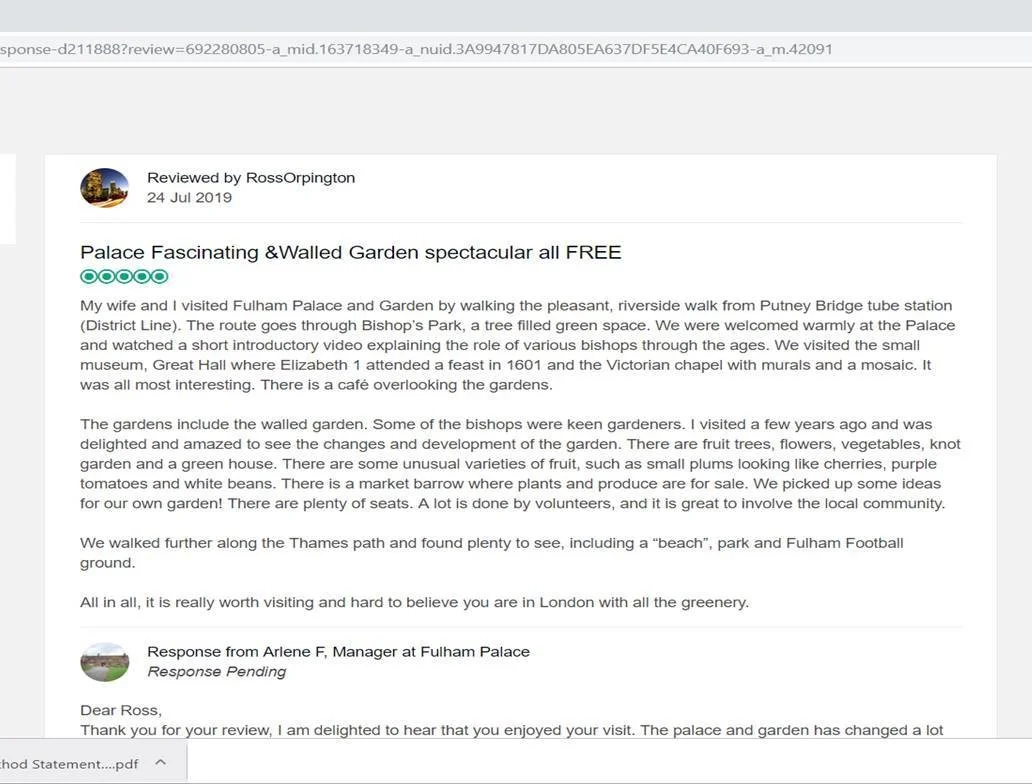
We’re going to start sharing visitor comments that we see on digital platforms such as TripAdvisor and Twitter on the blog. To kick us off we have a lovely take on the Palace from RossOrpington on TripAdvisor:

Trip Advisor Comment.jpg

Volunteers' survey live now

This year’s volunteer survey is live!

We’d love to hear your thoughts on the volunteering programme at Fulham Palace. We welcome all feedback, from the lovely positive comments that bring big smiles to our faces, to the ‘room for improvement‘ areas which help us strive for the best. Last year we had 74 responses, so that’s the number to beat!

Whether you’ve been with a few weeks, or many years, your perspective on volunteering with us this year is really important.

The survey is open for two weeks until Wednesday 6th August.

And if nothing else, taking just 5-10 minutes to fill in the survey can be your good deed for the day!

Huge thanks in advance!

Fulham Palace awarded Sandford Award with Commendation

Fulham Palace is very proud to have been awarded the Sandford Award for a second round running, this time with a Commendation!

The Sandford Award is a rigorous heritage education accreditation scheme established in 1978. The award recognises the high standard of planning, facilities, materials and teaching in Fulham Palace’s educational activities. Two learning sessions were observed for the assessment, Palace Explorers - our under 5s weekly activity, and one of our school lessons taught by a freelance facilitator. As well as praising the freelance facilitator and Jean the Education officer who currently leads Palace Explorers, our learning volunteers were celebrated for their competence, enthusiasm and initiative. Fantastic!

Sandford Winner 2019 - beveled corners (002).png

The Fulham Palace learning team are very thankful for their volunteers who are only too happy to don costumes, bring historical stories to life and hunt the gardens for mini-beasts with unparalleled enthusiasm! Without them the sessions would be much harder to run, and much less enjoyable for all involved.

 The final comment was:

Bring your students to Fulham Palace where they will discover, imagine and explore. Welcoming experts will unlock intriguing stories about the former home of the Bishops of London; take you to visit its gardens, and introduce you to its archaeological treasures. There are exciting learning opportunities and something for all ages to explore. Join their Palace Explorers creative hands-on sessions for 2-4 year olds and their adults, with a new theme to enjoy each week. Schools sessions are carefully tailored to meet curriculum requirements and learning outcomes. Students travel back in time to immerse themselves in practical, enquiry based sessions, revealing some of the Palace’s incredible stories. Dressed in authentic looking costumes, handling real objects, and making decisions in role, students are intrigued by the drama and wonder revealed on site.

If you’re feeling inspired to join the award winning learning team, then look no further! We’re looking for more learning volunteers to join our team so please get in touch with Rachel on rachel.bagnall-bray@fulhampalace.org to find out more.

Specimen of the month: The best things come in small packages

Every month we feature two blogs written by volunteers, one describes an object in the Palace and one a plant from the Garden. It is a great way for us all to learn more about the Palace. If you would like to contribute there is no set format so, please do send us your ideas!

This July our Specimen of the month blog comes from Elizabeth Bredin, Garden and Front of House Volunteer.

Elizabeth Bredin Specimen of the Month.jpg

Most everyone enjoys receiving a package in the mail. Perhaps it’s the child-like thrill of anticipation about what is inside? There’s only one way to find out … so, one Thursday this summer when boxes were delivered to the gardener’s bothies, we garden volunteers watched with curiosity as Head Gardener, Lucy Hart, cut open several small cardboard cartons. Cossetted inside was an unusual, and precious cargo—biological predators which Fulham Palace use to control pests in the glasshouses.

At Fulham Palace our lovely plants are selected not only for their historical appropriateness, but also for disease resistance and suitability for environmental controls. We eschew the use of chemicals in the glasshouses and instead, use a variety of methods which fall under the umbrella terms of Integrated Pest Management or Integrated Crop Management. To meet this goal, we work with a biological control producer who have assessed our site and can predict what pests are likely to target our plants and devise a programme which will keep those pests at bay. The result is delivered by post on a 12-month cycle, in boxes kept cool with “blue ice” blocks. The enclosed predatory pests must be distributed in the glasshouses as soon as they arrive.

Elizabeth Bredin Specimen of the Month 2.jpg

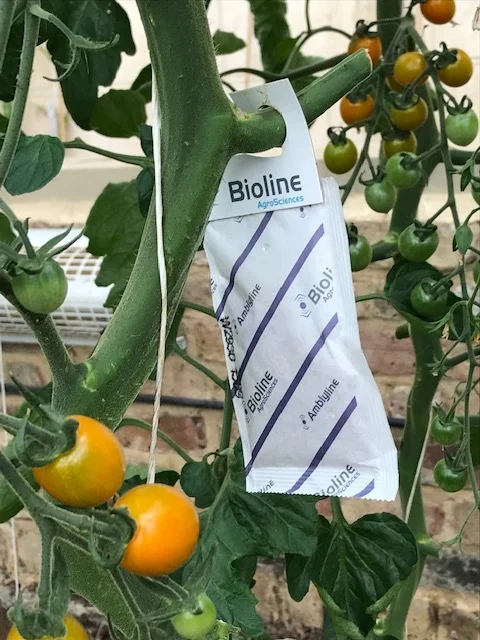
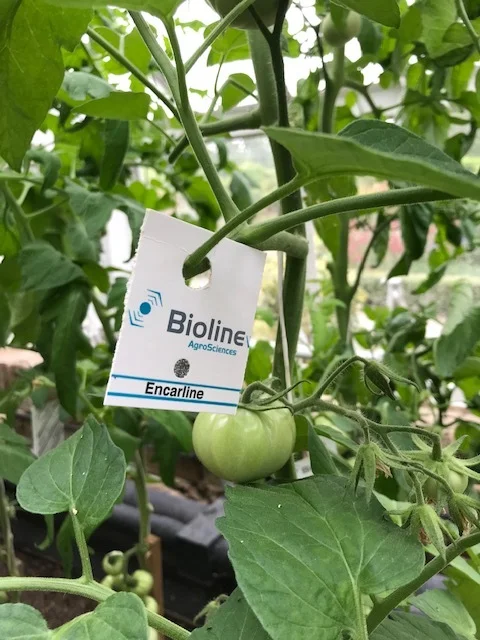
In the July shipment, we received three predators. Encarline is a white fly parisatoid, first successfully used in commercial crop management in 1926. It’s a small parasitic wasp which arrives as a tiny black scale, from which adults emerge a few days later. Amblysies californicus is a 1.25mm predatory mite, which in turn feeds on spider mites. But Lucy’s favourite is Aphidius colemani, whose reproductive lifecycle sounds like something from a sci-fi film. A colemani lays its eggs in its unsuspecting prey—aphids—without the aphids even knowing they’ve been “colonized”. Upon hatching, the infant A colemanii eat their hosts from the inside out. What a way to go…

Elizabeth Bredin Specimen of the Month 3.jpg

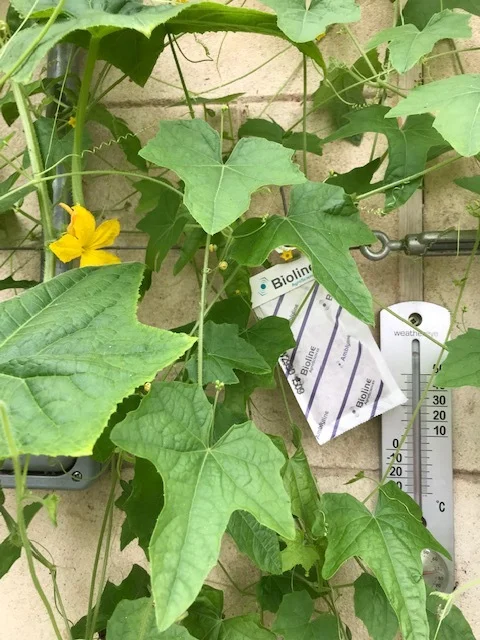
This summer in the vinery we’re growing more than 18 varieties of tomatoes, delicately favoured cucumbers and dozens of other plants which are planted throughout the gardens at Fulham Palace. These plants are protected from insect and arachnid pests by biological controls. In the glasshouse you’ll notice small paper sachets hung from the ceilings, nettings, window sashes and even the plants themselves. Although they may look somewhat like tea bags, these sachets contain the biological predators which we receive every few weeks.

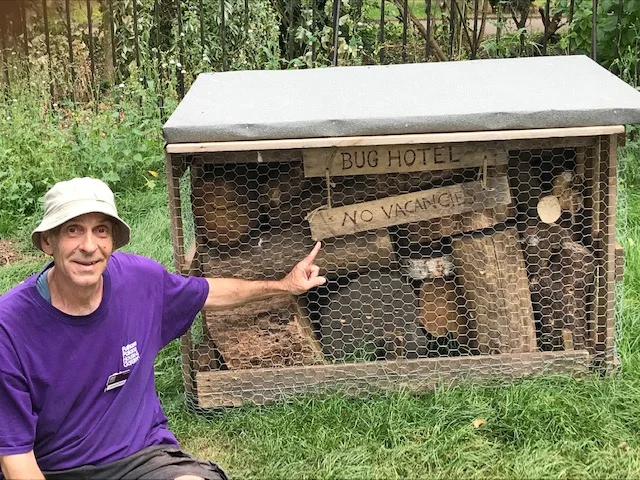
Venture out into the gardens to find another way to attract biological controls—a Bug Hotel, built by garden volunteer Chris Warner. Chris designed and built the hotel entirely out of scrap materials which he found on site. It provides a habit for lone bees, masonry bees, wood lice, and spiders as well as birds. The “hotel” is located adjacent to the All Saint’s Church fence.

There are so many ways which a home gardener can avoid using pesticides and chemicals. Try a bug hotel to attract beneficial insects and arachnids to your garden. You can purchase ladybird larvae online, as well as many of the predators which we use here at Fulham Palace. Companion planting is an effective and attractive way to discourage unwanted garden pests.  We all can have a part to play in maintaining and improving the health of our natural environment.

Elizabeth Bredin, Garden and Front of House Volunteer

Chris Warner, Garden and Bodger Volunteer

Chris Warner, Garden and Bodger Volunteer

Please send your ideas for Object / Specimen of the Month blogs to rachel.bagnall-bray@fulhampalace.org. If you would like some help, please let us know.