
Every month we feature two blogs written by volunteers, one describes an object in the Palace and one a plant from the Garden. It is a great way for us all to learn more about the Palace. If you would like to contribute there is no set format so, please do send us your ideas!
This August our Specimen of the month blog comes from Jamie Atwell, Garden volunteer and Head Gardener’s admin assistant. You need to look closely to spot this month’s dainty flowered climber.
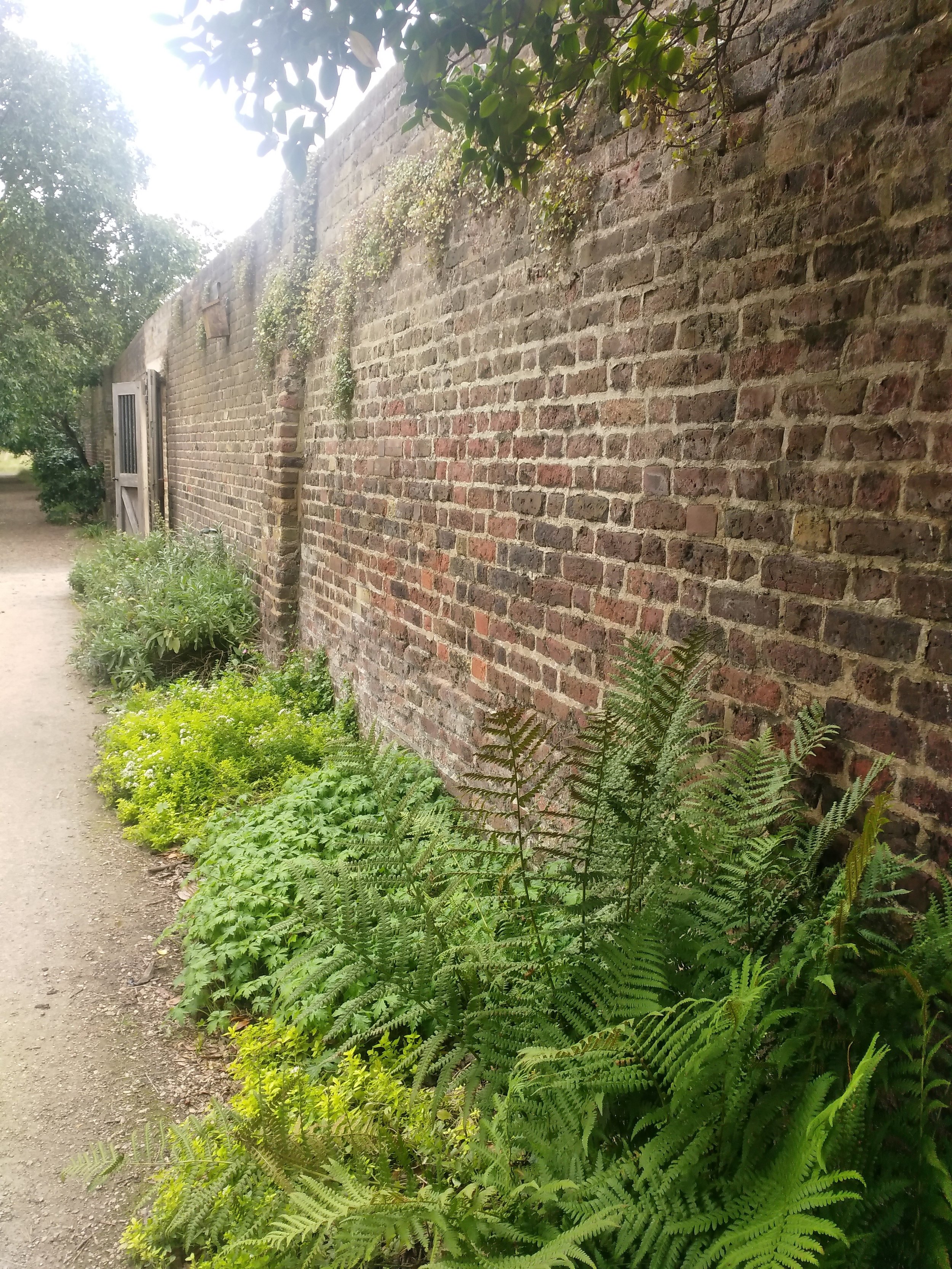
Toadflax is seen on the north exterior wall of the Walled garden, seen two thirds from the top of the wall in this photograph
"Cymbalaria runneth and spreadeth on the ground and clymeth and spreadeth and hangeth on walls even as ivie or chickweed doth. The branches are very small, round and smooth, limmer and pliant." So said the C17th century botanist John Goodyer.
Next time you're in the Walled Garden and can tear yourselves away from all the wonderful flowers and produce, have a good look at the walls. Dotted around, you'll see various specimens of Ivy-leaved toadflax (Cymbalaria muralis to the learned) actually growing on the walls. Flowering between April and October, it's purple flowers look like baby snapdragons. Although not a native to the British Isles, it's known to have been growing here since the late C16th / early C17th century. One school of thought believes that it originated from Italy and arrived in this country via seeds on marble sculptures shipped to Oxford. It certainly thrived in the numerous walled gardens in the following two centuries. It is now regarded as a naturalised plant.
The name 'Cymbalaria' derives from the Latin for 'cymbals' which the leaves are thought to resemble. Although I've not tried this myself (and don't try this at home unless you're feeling brave) the leaves are said to be edible and apparently taste like watercress.
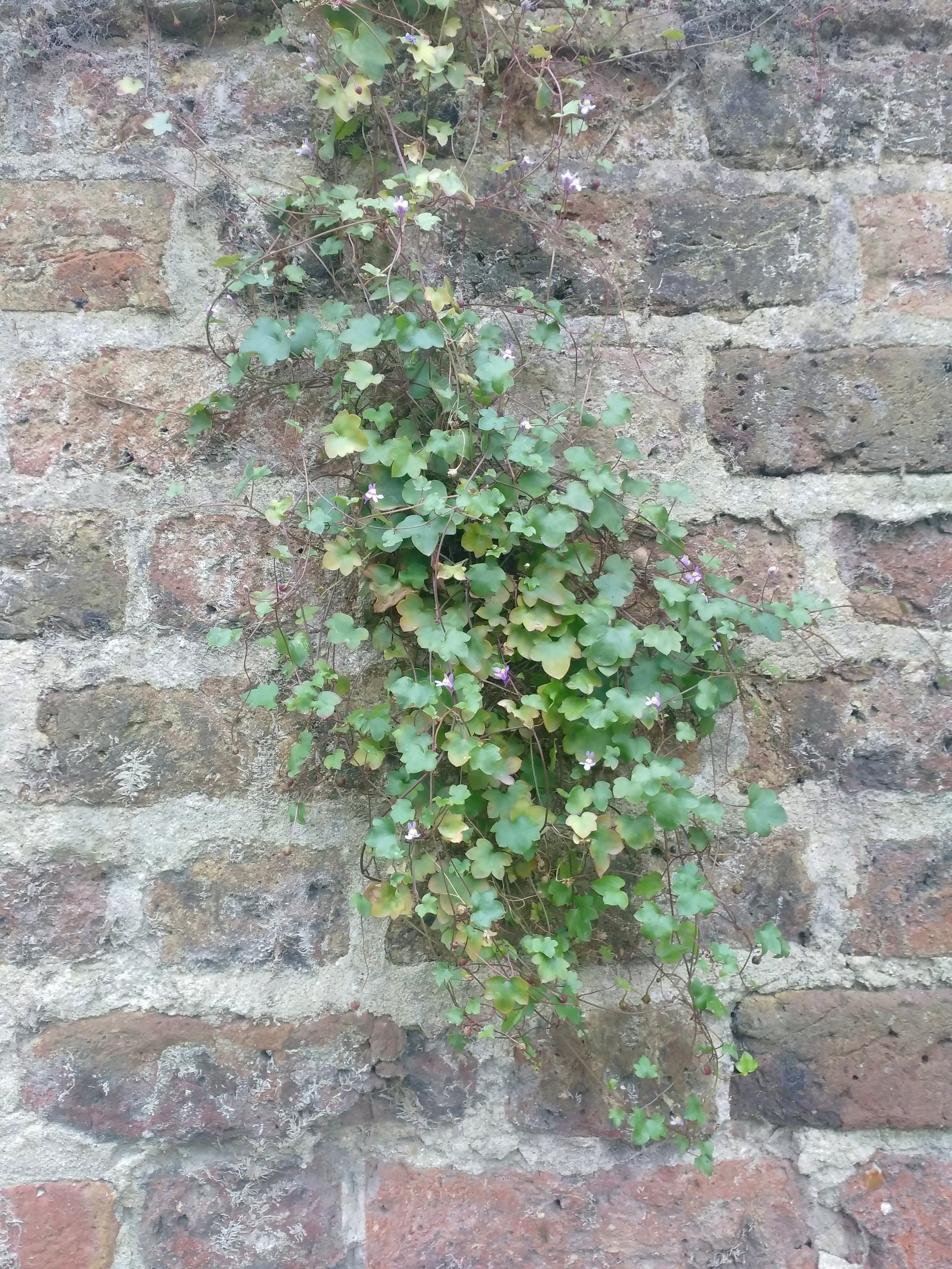
Bees love it. Once pollinated, the plant stems hunt out dark places and new seeds are pushed into nooks and crannies in brickwork where they can gain a foothold.
It rejoices in any number of other common names, such as 'climbing sailor', 'mother of thousands', 'ivy wort' and 'devil's ribbon'.
One surprising side effect of the plant is that it can supply a workout for garden volunteers. A couple of years ago, I was asked to clear away toadflax from the western wall of the Walled Garden as it was threatening to obscure the bee boles. As a result, I spent a happy afternoon shinning up and down a ladder like a monkey to do the needful.
All this goes to illustrate that our Head Gardener Lucy and her wonderful full time team are not just horizontal gardeners but vertical ones as well.
Jamie Atwell, Garden volunteer and Head Gardener’s admin assistant
Please send your ideas for Object / Specimen of the Month blogs to rachel.bagnall-bray@fulhampalace.org. If you would like some help, please let us know.