
Every month we feature two blogs written by volunteers, one describes an object in the Palace and one a plant from the Garden. It is a great way for us all to learn more about the Palace. If you would like to contribute there is no set format so please do send us your ideas.
August’s object(s!) of the month are a pair of bookends in the Porteus library. The library reopened at the end of May, and due to the fragility and importance of the book collection the room is only open when we have a volunteer available to supervise it.
The following post is written by Neyda, a volunteer who recently completed a Collections placement at the Palace, and who we’re delighted is now working as our Front of house assistant. During her time with us she spent many hours in Porteus library and the store, discovering more about some of the wonderful objects in the Palace collection. Here is Neyda’s take on these unusual bookends which are definitely worth a closer look….
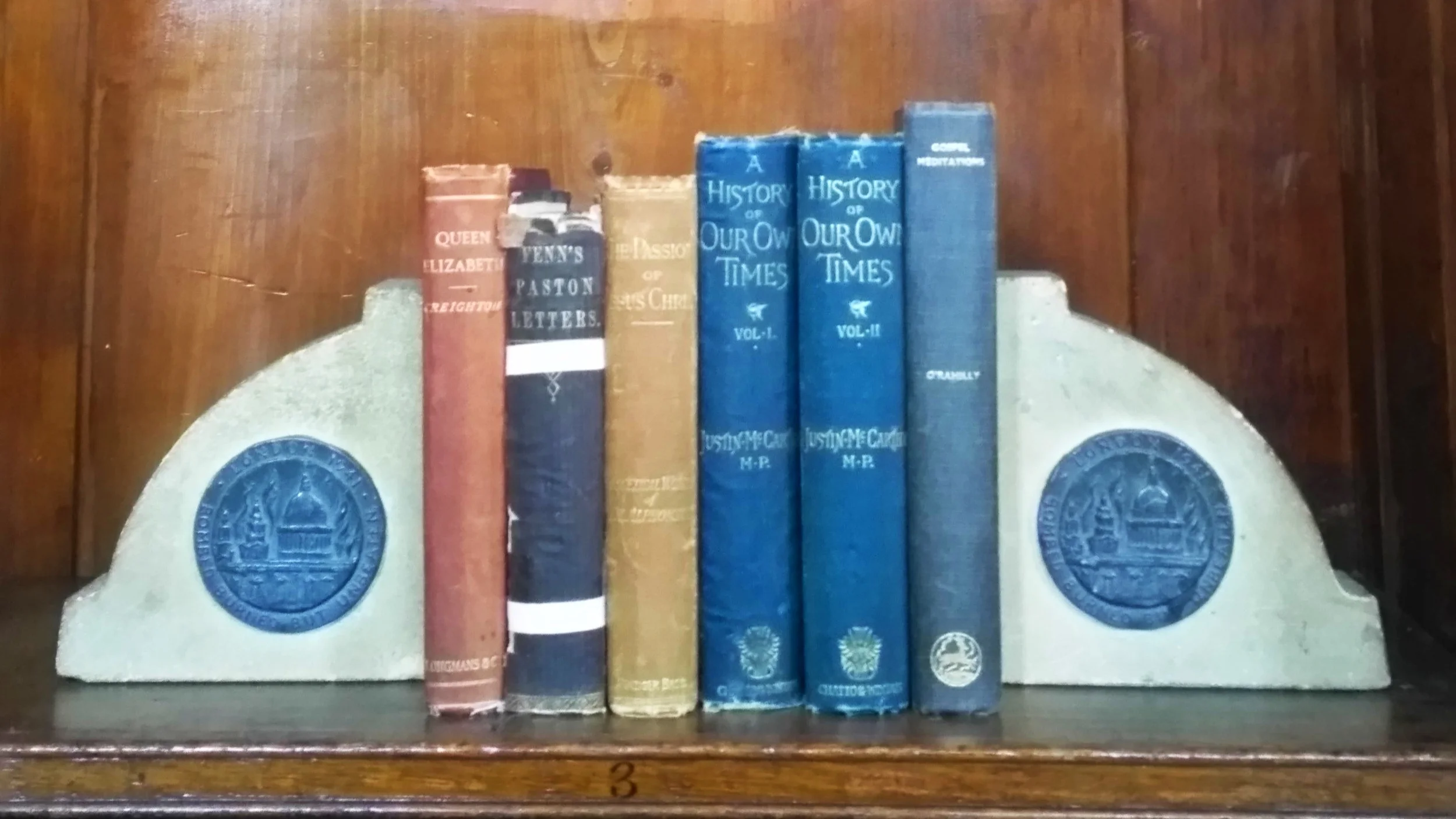
The bookends in situ in the Porteus library
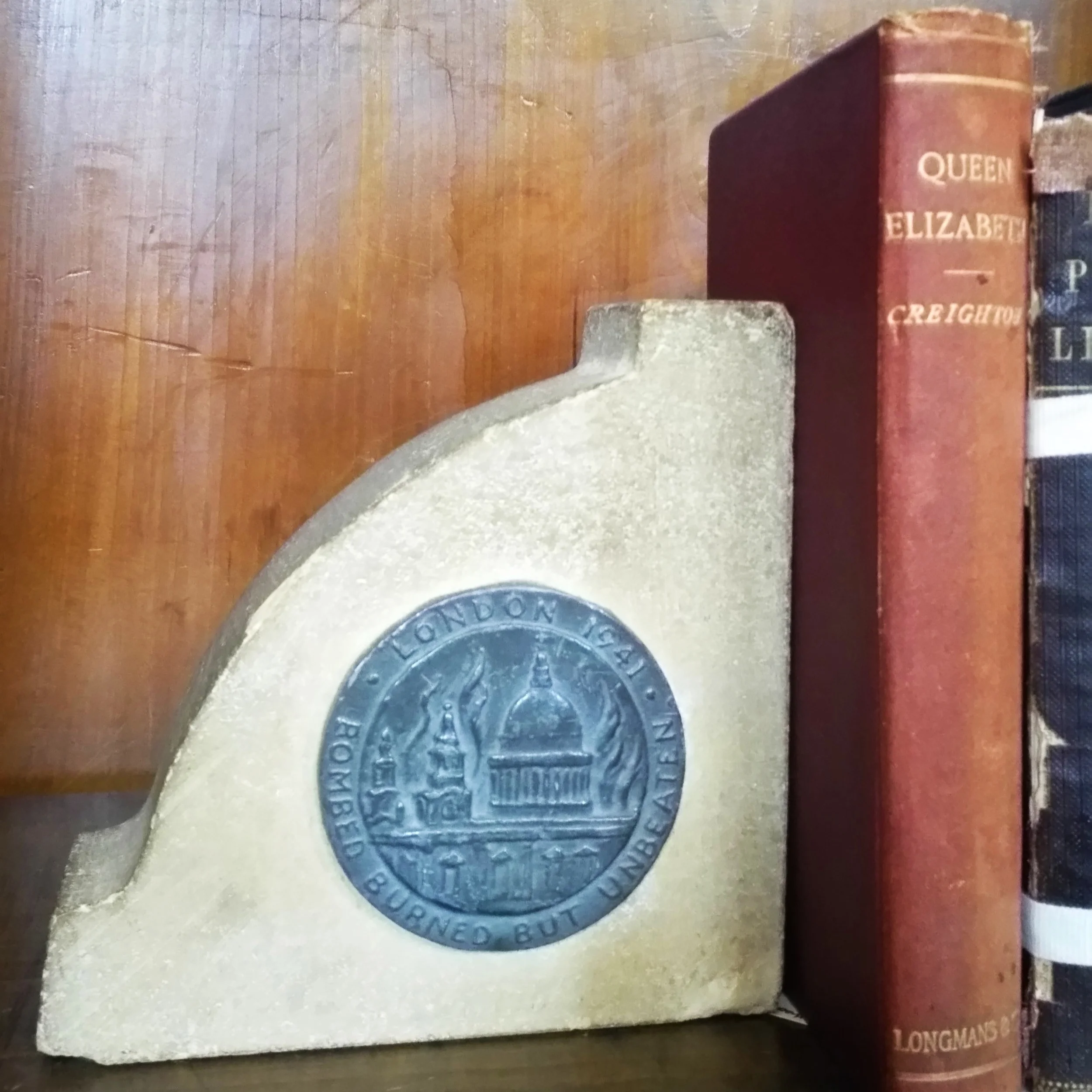
At first glance it is apparent that these unusual bookends are made from stone. Upon closer inspection a small tag informs us that the stone is from the Houses of Parliament when it was bombed during the Blitz. Each side has a grey metal plaque in the middle of the stone depicting St Paul’s Cathedral in flames with the emotive text around it reading “London 1941 Bombed, Burned but Unbeaten”. St Paul’s Cathedral was a symbol of Britain’s indomitable spirit, surviving the war with less damage than the surrounding buildings which were reduced to rubble by bombing.
The other side of each bookend has a grey metal plaque with the depiction of the crowned portcullis which is the emblem of the Houses of Parliament. The text around the plaque is: “This Stone Came from the Houses of Parliament”.
The bookends were created from the stone that could not be salvaged after the bombing because of the size, which was too small to use for repairs. They were turned into bookends and other objects as a way to raise money for the Houses of Parliament for their renovation after the war. The Imperial War Museum also have a set, and theirs have an image of the Houses of Parliament in the metal disc.
Fulham Palace was thought to be a target during WWII, but Bishop of London Geoffrey Fisher and his family stayed in the palace throughout the war. Fisher would continue to hold services in St Paul’s Cathedral, believing that it was a time when people needed to see that the heart of the city was still there, that faith had not been lost.
Neyda Vega, Collections placement volunteer and now Front of house assistant
Please send your ideas for Object / Specimen of the month blogs to rachel.bagnall-bray@fulhampalace.org. If you would like some help, please let us know.