October Object of the Month - Dog Skeleton Find

Every month we feature two blogs written by volunteers, one describes an object in the Palace and one a plant from the Garden. It is a great way for us all to learn more about the Palace. If you would like to contribute there is no set format so please do send us your ideas!

There’s a skeleton at my feet and the sky is turning yellow. The clouds have been gathering for some time now, even though the day started sunny. The light is fading although it is nowhere near dusk. The dense ochre clouds look eerie, unnatural, and a storm is presaged in the stillness of the air. People around me are trying to take photographs of the sky but can’t quite capture its strangeness in their images. Then someone says: “Is it because of something you’ve dug up?”

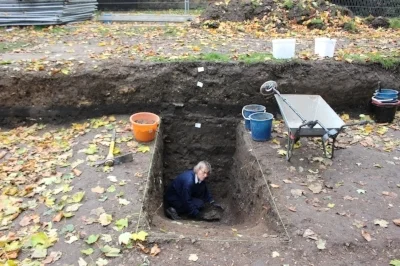
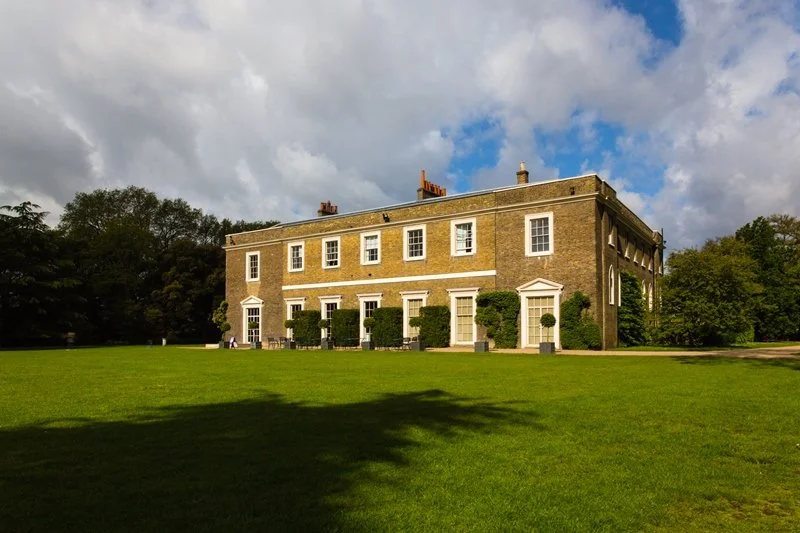
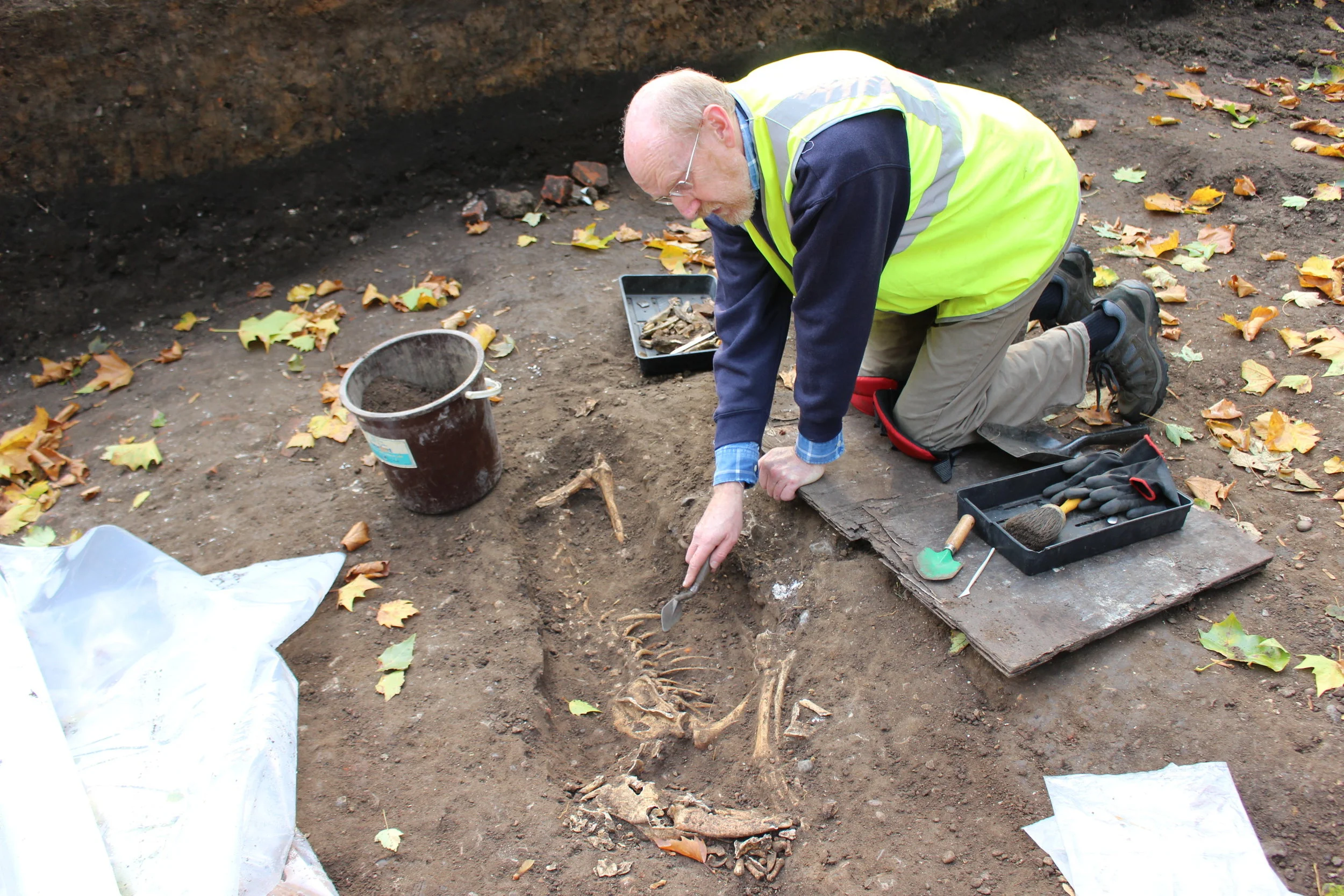
Not quite the end of the world, but an archaeological site at Fulham Palace last October, where I’m working as a volunteer. It’s just across the river from me so an easy daily walk. The skeleton is of a large dog- intact and perfectly laid out as it was buried by its owner over 200 years ago. We’ve already been asked if it’s a dinosaur by an excited small child. We’ve uncovered it about a metre from the surface, a level which is 18th century, but we have been digging further down among Tudors and Stuarts.
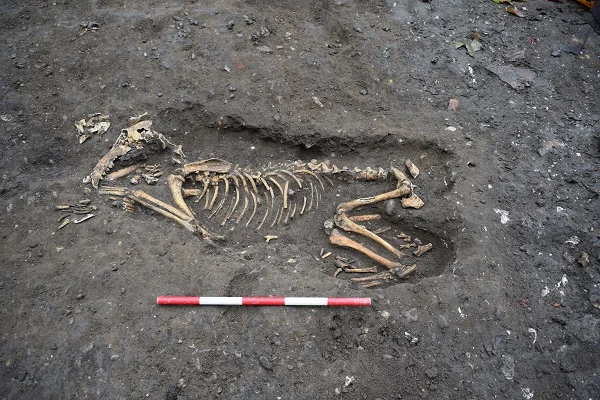
The skeleton of a large dog, found at the Fulham Palace Dovecote Dig 2017

The skeleton of a large dog, found at the Fulham Palace Dovecote Dig 2017

The ghastly sky was much commented upon in the media at the time. A quotable quip came from someone who said that it was just like living in olden times, when everything was sepia. Winds from the south had carried sand from the Sahara and smoke from forest fires in Portugal into our skies, and it had been a day of violent localised storms. In the event we avoided rain on the site: the clouds dispersed and light returned.

Our October excavation had a specific aim in view: to locate the remains of a Tudor dovecote, visible on plans from the 1700s and known to have been demolished late in that century. We were also looking for traces of an earlier manor house on the site- perhaps even foundations. We were digging in the lawns at the front of the Palace, across one area 20 metres square and another somewhat smaller and rectangular. Almost every day we were visited by parties of schoolchildren and there were advertised tours and talks for the public every afternoon. A lot of effort went into posting accounts of progress onto social media too.

A mechanical digger had taken off the topsoil down to about a metre, where it hit a layer of demolition rubble about nine inches thick: red brick; red roof tiles, some with holes in them to accommodate nails; and plaster. This layer covered about half the main site and part of the adjacent subsidiary one. It showed up very clearly as a red and white stratum in the trench wall. The discarded topsoil was searched with a metal detector at intervals and we turned up a number of coins stretching back a century or so. Most interesting among these was a Belgian coin whose design was used from the 1850s until 1917. Since the Palace was used as a training ground and convalescent hospital during World War I, the coin probably arrived with a wounded soldier from Flanders.

A large area of the rubble was systematically cleared. We found no intact bricks: they had presumably been removed for recycling. But we found a great deal of decorated plasterwork whose recovery was literally hit-and-miss since we were having to use pickaxes and mattocks to loosen the tightly compacted layer. We managed to lift intact a fair amount of layered and beaded ceiling cornicing, half of an armorial shield and two enchanting “green man” faces, of the kind one sees carved onto stone bosses in medieval churches. These were about six inches across. Sometimes we found bricks with plaster fragments still attached. Less common were pieces of shaped, cream-coloured stone- perhaps the remains of window and door surrounds. Numerous corroded iron nails kept the metal detector beeping, so much so that we stopped being excited when it went off.
IMG_0865.JPG

I wonder about that dog. One of our more experienced volunteers devoted much time to painstaking exposure of the bones, removing all the surface dirt so that they stood out against the dark soil like an X-ray in reverse. It was placed to rest with care, laid out as if sleeping, not wantonly flung into the ground to land any old how and be roughly covered up. It meant something to someone. A big dog, with a large rib cage. Something like a greyhound? A hunting dog? Or just a companion? Perhaps a bit of both, loping along beside its owner on horseback, and accelerating away on glimpsing a rabbit or a squirrel. Maybe a guard dog into the bargain, sleeping outside or in the hall and barking as strangers approached.

There are stories to be spun from all our finds.

Simon Butt, Archaeology Volunteer

Please send your ideas for Object / Specimen of the Month blogs to rachel.bagnall-bray@fulhampalace.org. If you would like some help, let us know.
October Specimen of the Month - Tamarisk Tree

Every month we feature two blogs written by volunteers, one describes an object in the Palace and one a plant from the Garden. It is a great way for us all to learn more about the Palace, if you would like to contribute there is no set format so please do send us your ideas!

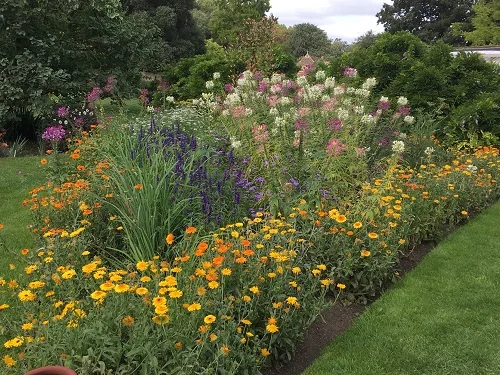
 When Bishop Grindal first introduced the Tamarisk tree to Fulham Palace from Switzerland in the sixteenth century, he remarked that the site was ideal as it was "moist and fenny". In those days there was no embankment by the river and the Thames no doubt encroached onto the Palace grounds. Now we have a vastly different proposition, with well drained soil and have had to meet the challenge of keeping the Garden well watered during the astonishing and wonderful summer we have just experienced (was the fact that the thermometer in the Vinery registered over 50C on April 19 a hint of what was to follow?). That the Garden has not only survived, but blossomed during this time is a tribute to the unrelenting hard work of Head Gardener Lucy Hart, the garden apprentices, staff and volunteer team. To go from the treats that the "Beast from the East" offered up and then to a hot, dry summer but nonetheless have the Garden in such good shape is a testament to all concerned.

bloggarden.jpg

 One further aid to success over these last few hot, dry months has been the two underground tanks located behind the Vinery. Here, all the rainwater from both the Vinery itself and the Bothies is collected and has proved a major boon in keeping the Garden well irrigated. Not enough by itself of course during these exceptional days, but a major plus.

 Bishop Grindal was also notable for sending grapes to Queen Elizabeth 1 and at the farewell party for apprentice Lizzie Mansfield (who has now moved on to Cambridge Botanic Garden), we were all treated to a delicious cocktail which included grape juice from the present day grapes in the Walled Garden - duly named by our master mixer, Lucy Hart, "The Grindal". Having bade farewell to Lizzie in fine style, we were all delighted to welcome our newest apprentice, Alfonso Moreno. Alfonso has previously been involved as a garden volunteer so is well aware of the challenges (and fun !) that Fulham Palace Garden has to offer.

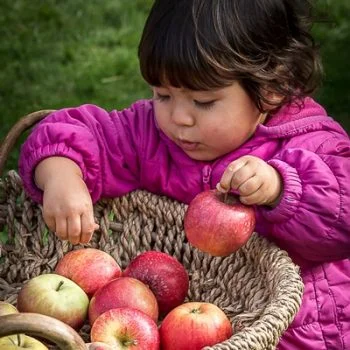
 Unbelievably (how quickly the seasons go by) it is now only a matter of a few days until one of the major events in the Fulham Palace calendar comes round again. I refer, of course, to to the Apple Day Celebration on Sunday 7 October from 11 a.m. to 3 p.m. in the Walled Garden. Loads of activities - bee keeping and wood turning demonstrations, baking competition (I don't feel I'm quite ready for this yet, but will keep practising), tastings, storytelling and more. Not forgetting the wonderful plants and produce on sale from the Barrow - come and see (and buy !) the quite wonderful results of the team's hard work over the last few months. Sales proceeds are ploughed back in to the Garden (I'm hoping that an additional sprinkler could be funded to make the Garden not exactly "moist and fenny" but at least to give the gardening team something of a break).

 Garden Volunteer, Jamie Atwell

Please send your ideas for Object / Specimen of the Month blogs to rachel.bagnall-bray@fulhampalace.org. If you would like some help, let us know.
 

Apple Day will be back this Sunday, 7th October!

Apple Day will be back this Sunday, 7th October!

Retracing the last steps of Bishop Bonner: A Visit to the Ancient Manor of Copford

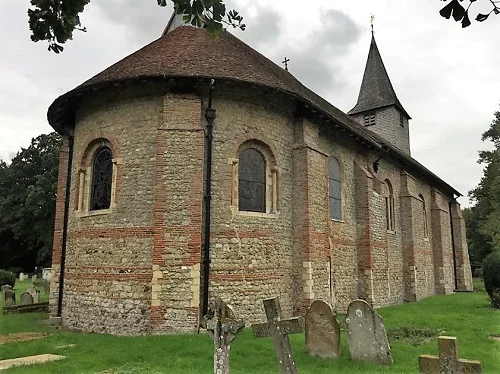
 Roughly 4 miles south west of the Essex town of Colchester is the ancient manor of Copford. The land was given by the later Saxon Kings to the Bishops of London beginning with Bishop AElfstan in 995 AD. The present Copford Hall dates from the 18th century and occupies the site of the earlier medieval manor house. Next to the house is the Norman church of St Michael and All Angels and its importance, both architecturally and decoratively, combined with its proximity to the manor house suggests this was the Chapel of the Bishops of London.

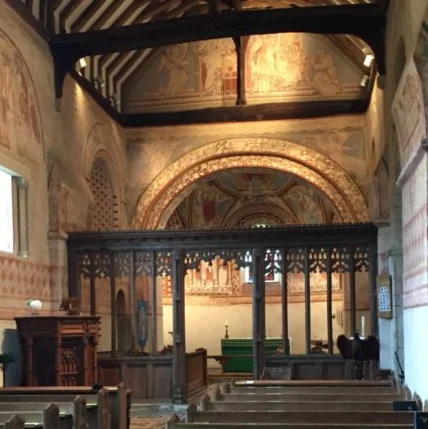
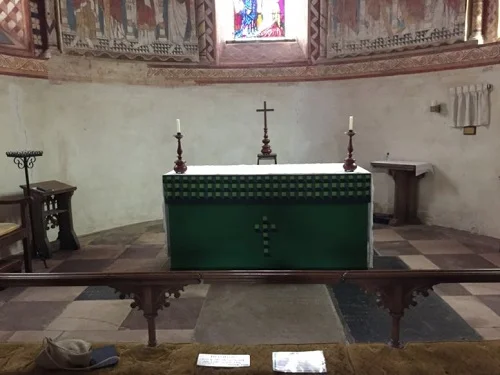
The east end of the chapel is formed into an apse, which is rare in this country. The fabric of the church includes robbed Roman bricks. These were readily available from nearby Colchester (Camulodunum) where many buildings had survived to the medieval period, including some with apsidal features.  The inside of the chapel is swathed in wall paintings and frescos in Romanesque style. The apse fresco is a magnificent Christ in Majesty which embraces the altar. Byzantine influence dominates throughout and evokes the more familiar interiors of Italian churches.

Copford Church apse interior

Copford Church apse interior

 Edmund Bonner was said to be very fond of Copford and willed that he be buried there. Perhaps the Catholic Bishop Bonner witnessed the lime washing of the wall paintings carried out at the succession of Edward VI, an event that marked the start of the ensuing Protestant restraint.  The paintings remained covered and safe from the destructive activities of the iconoclasts until the 19th century when they were revealed.

 In 1559 this beautiful chapel and its manor was lost to the Bishops of London when Bonner refused to subscribe to the Acts of Supremacy and Uniformity of the Protestant Elizabeth I. The Queen took back the manor and it was sold to a private family. Bonner was committed to Marshalsea prison for the second, and last time. St Michaels and All Angels remained the parish church of Copford.

The exterior of the Comfprd Church Apse

The exterior of the Comfprd Church Apse

 During excavation by the side of the altar for the burial of the vicar, John Kelly, in 1809, the workmen uncovered a coffin bearing the name of Edmund Bonner. Perhaps, St George’s churchyard close to Marshalsea prison wasn’t the bishop’s last resting place after all.

The altar in the Comford Church, where we can speculate that Bishop Bonner himself could be buried.

The altar in the Comford Church, where we can speculate that Bishop Bonner himself could be buried.

  Sarah Lamden, Archaeology volunteer

September Object of the Month - Favourite Find At Fulham Palace

Every month we feature two blogs written by volunteers, one describes an object in the Palace and one a plant from the Garden. It is a great way for us all to learn more about the Palace, if you would like to contribute there is no set format so please do send us your ideas!

It was late June 2017 when I first heard that Fulham Palace were looking for archaeological volunteers to find the remains of the Tudor dovecote and possibly parts of the original medieval manor of the Bishops of London. I couldn’t believe my luck when I was asked to go and meet Alexis Haslam (Community Archaeologist) and was accepted as one of the 30 volunteers to work on the excavation. Specialist training days followed and finally in October, I found myself standing on the edge of one of the two main trenches, waiting for instructions and feeling both excited and nervous. Excited because previous digs at Fulham Palace had already found Roman coins, flints from the Mesolithic to Neolithic eras, and fragments of early Saxon and Roman pottery; nervous because we were using pick axes and mattocks as well as trowels, and I didn’t want to be the one that damaged a precious find, if we were lucky enough to find one.

Alexis got us working in twos, and I was paired with another volunteer - Valerie. We were asked to dig a section, in an area thought to have been dug previously and then filled in. My nervous perspiration was soon replaced by real perspiration, as Valerie and I took it in turns to dig, fill buckets, load the wheelbarrow and then move barrow loads of waste uphill onto the spoil heap.

IMG_0945.JPG

The hard work was rewarded as very soon we started to find evidence of the early inhabitants of the site. We were digging in what must have been a midden. Virtually every layer had artefacts such as pieces of what looked like Tudor brick and tile, nails, sherds of pottery, pieces of glass, charcoal, parts of clay tobacco pipes and animal bones of all shapes and sizes. Some of these bones had butchers’ cut marks possibly indicating that we were digging up food waste from the Bishops’ kitchens. The deeper we went, the more we found and every day we had a collection of finds to document against each layer before we went home. Other excavations around us had similar finds, but in addition, other volunteers had found items such as the skeleton of a large dog, jettons, an Elizabethan coin, a gambling top (Teetotom) and some stunning pieces of architectural masonry including two faces. Although many of our finds when examined by an expert would later reveal a lot of exciting facts about the site, both Valerie and I were hoping for something special….!

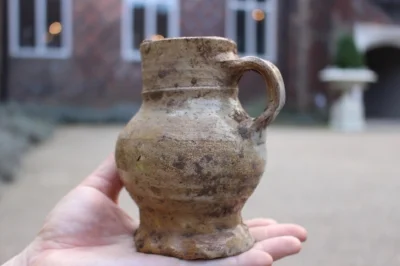
On 23rd October, just two layers away from the river gravels which would mark the end of our dig, it was my turn down our small trench. Both Valerie and I had been using a mattock but for some reason I took up my trowel and I started scraping instead. Suddenly, I found what looked like the top of a rounded yellowish pebble, so I scraped some more and found I had something made of pottery – a largish piece of pottery. By now Valerie was leaning over the pit and encouraging me to trowel faster. Very soon I revealed the side of what looked like a jug with a handle. More trowel work and it appeared that we didn’t just have a sherd, but maybe most of the pot. Proceeding with care, we finally managed to ease an almost complete drinking pot out of the soil.

IMG_0953.JPG

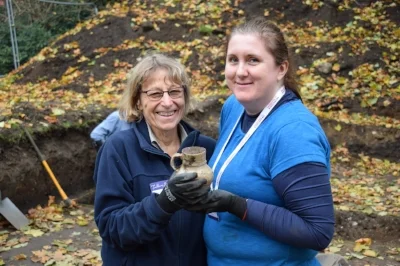
The bottom of the pot had a kind of pie crust edge and it was complete except for a small hole around the back, which was why it had been thrown away. It was full of soil which must have protected it. Valerie and I were quite restrained – no little dances -but large grins cracked our faces. It was ‘our pot’.

Alexis told us that he thought it was a drinking jug of Raeren stoneware made 1480-1610 and this was later confirmed by experts. This stoneware was imported from the Rhinelands and would have been more expensive than local pottery.  This stoneware is not rare, but could our jug have been used by one of the Bishops or someone in his household to drink the ale made at the palace? We will never know, but as this was the first major piece of pottery uncovered by my trowel at Fulham Palace, working closely with others, it is very special to me.

DSC_0147.JPG

Ann Russell, Archaeology Volunteer

Please send your ideas for Object / Specimen of the Month blogs to rachel.bray@fulhampalace.org. If you would like some help, let us know.
September Specimen of the Month - Grape Juice

Every month we feature two blogs written by volunteers, one describes an object in the Palace and one a plant from the Garden. It is a great way for us all to learn more about the Palace, if you would like to contribute there is no set format so please do send us your ideas!

It is said that Queen Elizabeth, who reportedly had quite a sweet tooth,  received a gift of grapes from Fulham Palace 500 years ago.  Fulham Palace is now in a position to repeat that historic gesture to another hard-working Elizabeth.

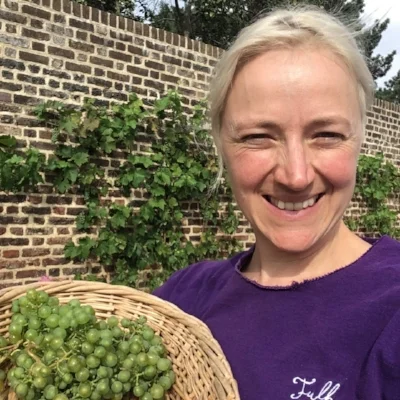
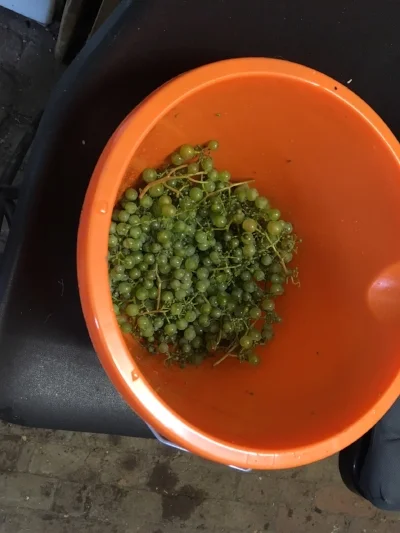
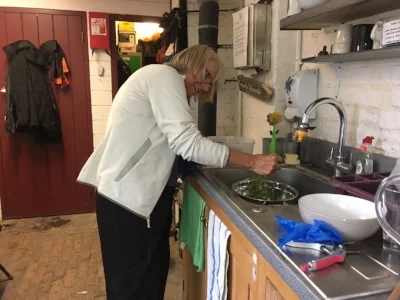
The first fruit of one of the new grapes  “Leon Millet” planted  2 years ago has now borne fruit of a delicious sweet kind and Lizzy, a gardening apprentice, was given the opportunity to partake of it.  Grape juice was squeezed from the fruit sufficient to make a punch served at Lizzy’s leaving party.  The sad goodbye took place on Friday 10 August as she left Fulham Palace to begin a new phase of her gardening career at Cambridge Botanical Garden.  

The first fruit of the vine was greeted with pleasure by Head Gardener Lucy Hart but is just the start of the grape-picking season.  The black grapes “Black Hamburg and “Fagola” are not yet ready and could provide more sweet sensations very soon.  Other fruit trees recently planted around the east, west and south facing walls of the walled garden are thriving.  Peaches have been seen as have apples, plums, cherries, pears and quince.  A truly fruitful future awaits Fulham Place. 

Thursday Garden Volunteer Moyra Gardener

Please send your ideas for Object / Specimen of the Month blogs to rachel.bray@fulhampalace.org. If you would like some help, let us know.
Tour Guide Training at Fulham Palace

Just after the Busy Christmas season, I heard a rumour Miranda was planning on running Tour Guide training, something she has not undertaken for several years. I did not want to miss this opportunity of being trained by Miranda, and as I had been doing Taster talks at Reception for some time, I was really keen to find out if I could take this further and become a full Tour Guide. I told Miranda my hope and she added me to the group. 

So training started, firstly with classes with Miranda on a Tuesday each week, learning the route, the correct format, introducing our selves, how to address the Tour, explain what our Tour covers, time scale etc, making sure we could be heard by all, we discussed the do's and don't regarding our audience, health and safety, making sure all needs were recognised, Pointing out possible resting areas, for people to sit etc.

Then in the following weeks practising each section, with notes and guidance from Miranda or one of the current Tour guides, who's advice was invaluable.

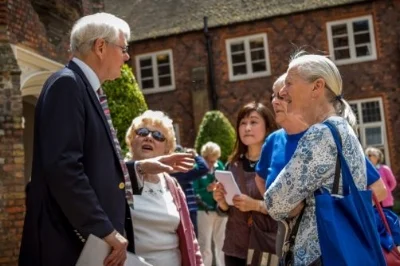
An experienced Tour Guide, Alan Malcom, with a tour group at Fulham Palace”

An experienced Tour Guide, Alan Malcom, with a tour group at Fulham Palace”

We were given home work, in the form of reading materials from Miranda on each section of the Tour route,  and encouraged to research and ask any questions from either Miranda or current Tour guides ourselves. Both I must say were so helpful, with the endless questions I myself asked them.

We then progressed onto our own practice runs, once a week several of us would get together, choose a section and do the whole tour, giving each other feedback as we went along. By this stage several of the original group had dropped out, which was something Miranda had spoken to us all about at the start, explaining it was not unusual and nothing to be concerned about. Life can get in the way and some may find they have other commitments elsewhere which take over.

In the end it came down to just two of us, myself and Chantal. We carried on with practice, each taking a turn doing the tour. 

Miranda then said she felt we were ready for assessment!  A date was fixed that suited everyone, 9th August was chosen for our assessment. All we had to do was decide between us which sections we'd do, so we worked out the tour, decided to break it up into 8 sections, taking 4 each, put each section on a piece of paper, folded and asked Val at Reception to witness us choosing from a cup.

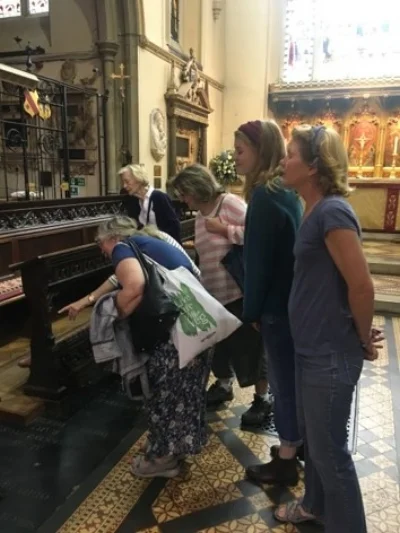
A tour group exploring a chapel on a Volunteers' day trip!

A tour group exploring a chapel on a Volunteers' day trip!

Funny thing is we each choose, the four sections we least liked, and agreed to split the difference and swap two each.

So on the 9th August we took our assessment, Miranda had arranged an assessor, Pat Astley-Cooper who is a Trustee of the Museum of Richmond. (I was pretty nervous) but she was so kind and put me at ease immediately.  And I'm happy to say we both passed. With some areas each we need to keep working on, well no one's perfect!!

Grateful thanks to Miranda, and all the Tour Guides for your knowledge and patience during this process.  

Lee Copeland, Visitor Reception Volunteer, Events Assistant and Volunteer Representative

Specimen of the Month - Cosmos

Every month we feature two blogs written by volunteers, one describes an object in the Palace and one a plant from the Garden. It is a great way for us all to learn more about the Palace, if you would like to contribute there is no set format so please do send us your ideas!

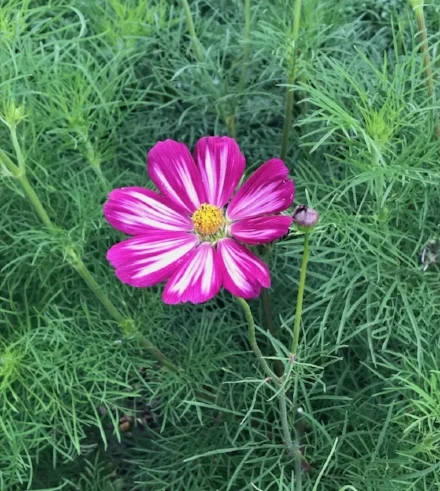
The garden houses a plethora of it, it comes in different varieties and in a range of colours... Have you guessed which flower it is? It's Cosmos - from white to pink to dark magenta, including a really pretty Candy Stripe variety.

Candy Stripe Cosmo in the Palace Garden

Candy Stripe Cosmo in the Palace Garden

Cosmos are a relatively easy plant to grow but keeping them blossoming late into the Indian summer months is another challenge. One of my jobs during the summer months is to regularly deadhead the Cosmos so that they flower into the autumn. 

Cosmos 1.jpg

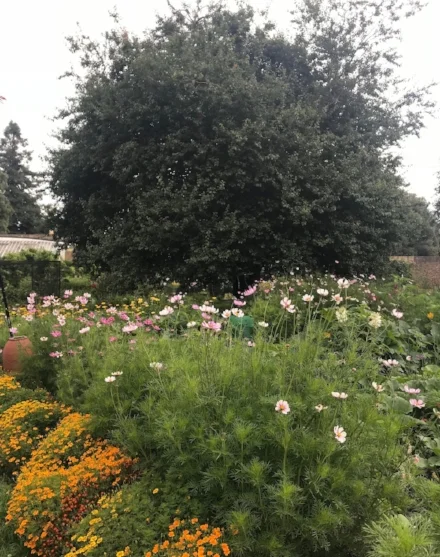
We often include Cosmos in the posies on the Barrow. I think they look particularly beautiful planted around the vegetable plots as they bring lots of colour!

Sarah Nicholl-Carne, Garden Volunteer

Please send your ideas for Object / Specimen of the Month blogs to rachel.bray@fulhampalace.org. If you would like some help, let us know.