Recipe of the Month - June

Courgettes - a favourite summer crop

Courgettes (zucchini to some) are easy to grow and many vegetable growers can find themselves with a glut - they are not highly flavoured and they do have a very high water content so careful preparation and interesting flavourings will ensure you get the best from summer courgettes. Because of their high water content don't boil them or you will end up with a mush.
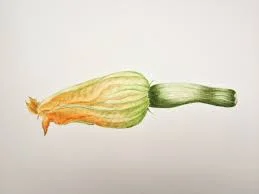
A beautiful illustration of the edible courgette flower. Taken from gaynorsflora.com

A beautiful illustration of the edible courgette flower. Taken from gaynorsflora.com

For a simple side dish or a nice addition to a salad then cooking sliced courgettes on a griddle is a very tasty way to prepare them and better than frying. Slice them quite thinly lengthwise and cook them on a hot griddle lightly brushed with olive oil, turn a few times until they are little charred in places. Once cooked add a good squeeze of lemon and salt and pepper - they can be eaten hot or cold.
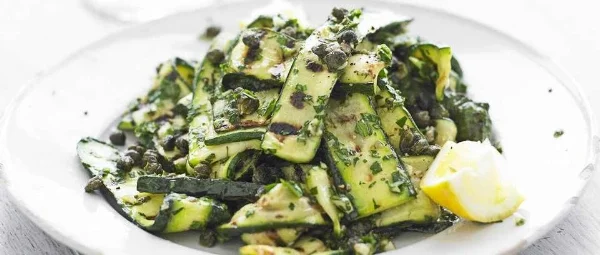
Griddled courgettes, delicious with a generous squeeze of lemon.

Griddled courgettes, delicious with a generous squeeze of lemon.

Courgetti – this is a bit of a craze at the moment, if it has passed you by - courgetti are thin strips of courgette (spaghetti shaped) created either using a special spiralizer machine or by hand using a julienne peeler/slicer. The courgetti can be substituted for pasta or eaten raw as part of a salad. If you want to eat the courgetti hot then the best thing to do is to either blanch them by putting them in a sieve,  pouring boiling water over them and then drain well alternatively flash fry them in a small amount of oil.
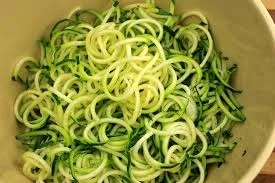
Courgetti are great with pesto or other fresh summery sauces –  try with sun-dried tomatoes, fresh pesto and mozzarella. Courgetti can be added to soups and are lovely raw in a salad – they have a mild taste so are good with a well-flavoured salad dressing.


Cheesy Baked Courgettes

Courgettes work well baked in the oven with a cheesy topping, you can create and adjust the topping according to what you have to hand.  Both the suggestions below are enough for 4 medium courgettes, pack them tightly into a roasting tin and bake in a medium/hot oven 200C/180C fan/gas 6 for about 35 minutes.

Cut the courgettes in half lengthwise, if they are particularly large then scoop out the seeds, spread the topping over the courgettes and cook till lightly browned and bubbling.

Topping 1 - Mix a tub of ricotta with the zest of a lemon along with a very finely chopped  chilli (or chilli flakes), some herbs (basil, mint or parsley are all good) and 4tbsp of dried breadcrumbs.

Topping 2 - Mix together 4 tbsp of chopped olives, 6 tbsp of grated parmesan, 2tbsp of finely chopped rosemary and 4tbsp of bread crumbs
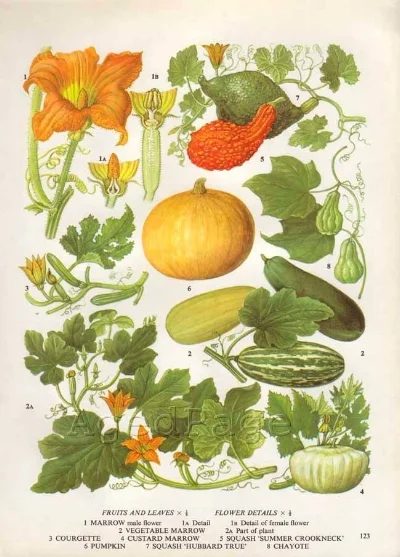
Courgettes are part of the same family as marrows and squashes.
Courgettes are part of the same family as marrows and squashes.


A Summer Day in Spring Time

Every month we are going to feature two blogs written by volunteers, one will describe an object in the Palace and one a plant from the Garden. It is great way for us all to learn more about the Palace, if you would like to contribute there is no set format so send us your ideas!


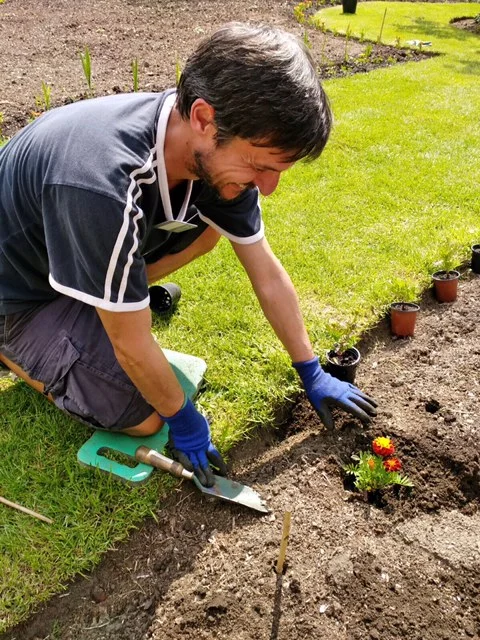
Planting Marigolds to help ward off pests

Planting Marigolds to help ward off pests

After a long time wearing trousers and jackets, finally I took my shorts and t-shirts out of the wardrobe. It is summer!! Oh no! It´s still spring!

What a lovely day to work in the Fulham Palace Gardens. Today I started working after lunch. As usual, our team got together at the mess shed and chatted a bit, but now it is time to get back to work!

Josh gave us the tasks and there we were, ready to work!

Today we planted “Marigold – Boy oh Boy, Fantasia and Loving Mix” that were sown in the garden.

Red, orange and yellow flowers, planted every 30 centimeters around the vegetables also to ward off pests – Is there any better way to control pests?

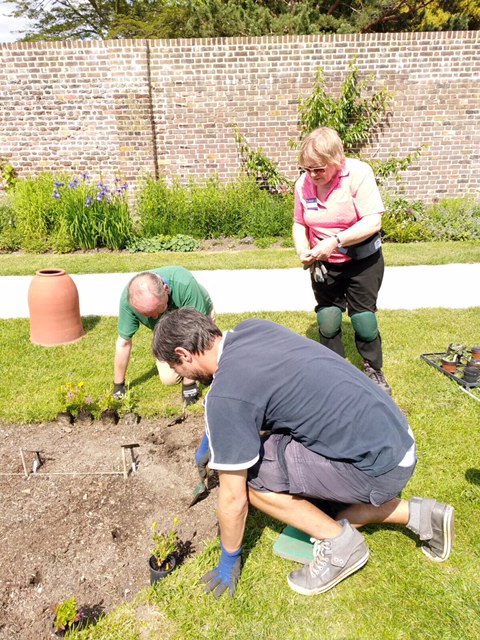
Working as part of a team is one of the great things about working in the garden

Working as part of a team is one of the great things about working in the garden

I have been working in the Gardens since September 2016 and it is amazing how the garden changes each season. First we had autumn when leaves fell and we collected them and used them to make compost. So winter was coming! No flowers, no leaves but work was still ongoing, and the garden was being prepared for the following seasons. Different kind of flowers and plants were sown to be ready in spring. And now, 24th of May, finally summer! Oh no! It is still spring! This blue sky and hot weather makes me think it´s summer!

Flowers come out, the lawn is growing, people are smiling and chilling out in the gardens! Is there any better place to be??

Michel Barinov Faria

Please send your ideas for blogs to commsvolunteer@fulhampalace.org If you would like some help, let us know.

The Fulham Palace Dolls House

Every month we are going to feature two blogs written by volunteers, one will describe an object in the Palace and one a plant from the Garden. It is great way for us all to learn more about the Palace, if you would like to contribute there is no set format so send us your ideas!

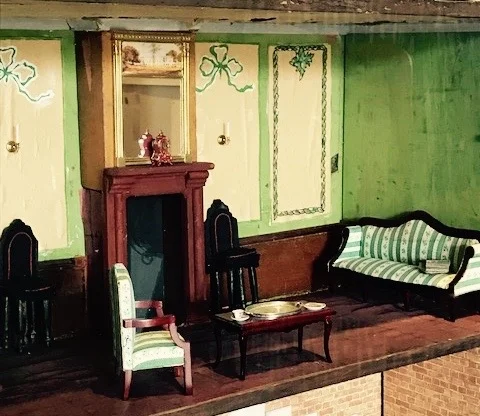
The 18th century drawing room

The 18th century drawing room

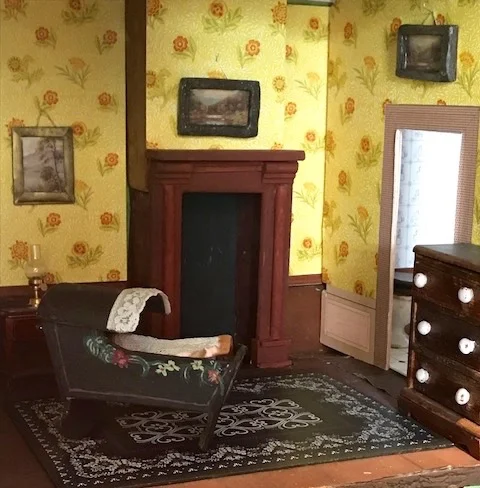
My favourite object in the Museum is the Dolls House displayed in the Main Room. I’ve always loved dolls houses and have also, over the years, collected little chairs (grownups call them miniatures!) some of which Miranda displayed as part of an exhibition of items collected by volunteers. This was quite a few years ago!

The Fulham Palace Dolls House was created in the 19th century and still has its original furnishings. The rooms illustrate how the Palace might have been furnished in different periods – a medieval kitchen, an 18th century drawing room, and a Victorian bedroom and bathroom.

I do love historical dolls houses. Modern ones are fun but not so beautiful. Only one snag as regards the Palace's Dolls' House – no families living in it! I have a look occasionally to see if anyone has crept in but no luck so far.

A decorated crib - awaiting an occupant?

A decorated crib - awaiting an occupant?


Please send your ideas for blogs to commsvolunteer@fulhampalace.org If you would like some help, let us know.

Susan Richards - Volunteer


Ponderosa Pine

Every month we are going to feature two blogs written by volunteers, one will describe an object in the Palace and one a plant from the Garden. It is great way for us all to learn more about the Palace, if you would like to contribute there is no set format so send us your ideas!


I wonder how many of you can hum the tune if I mention the 60s TV cowboy series Bonanza?  And if so do you remember the Ponderosa Ranch?  I certainly do and that was what came to mind when I was introduced to this - the Ponderosa Pine tree right here in Fulham Palace. 

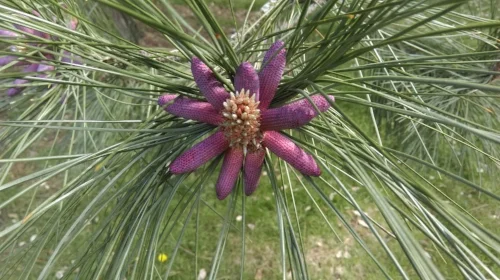
Fulham Palace's Ponderosa Pine tree

Fulham Palace's Ponderosa Pine tree

I took this photo last month just when it was producing its wonderful pink ‘flowers’.

I took this photo last month just when it was producing its wonderful pink ‘flowers’.

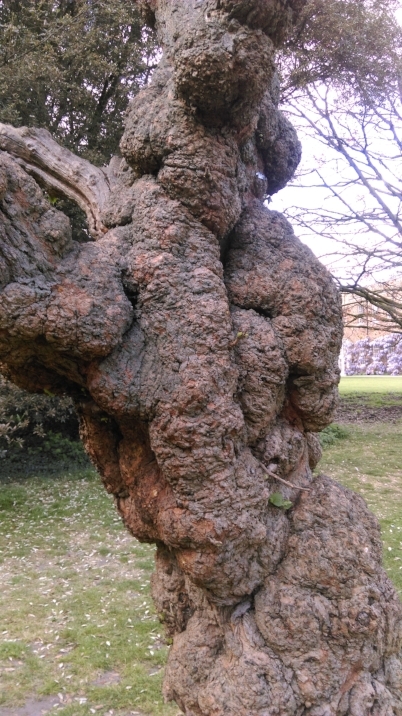
It is native to western and especially north-western America and it was named in 1829, as you might guess, because of its heavy wood.  Its other name is "Western Yellow Pine".  Some think it smells of turpentine so you might give it a hug and smell it at the same time!  Maybe when no-one is watching... In the United States there is an example 235 feet tall and 324 inches in circumference. We will have to give ours a few more years to reach that height. You can find it close to the Quercus Ilex our ‘Great Tree of London’.

- Does anyone know what year and by whom the Ponderosa Pine was planted at Fulham Palace?

Moyra Gardner
Thursday Garden Volunteer & Volunteer Rep  


Please send your ideas for blogs to commsvolunteer@fulhampalace.org If you would like some help, let us know.

Recipe of the Month - May

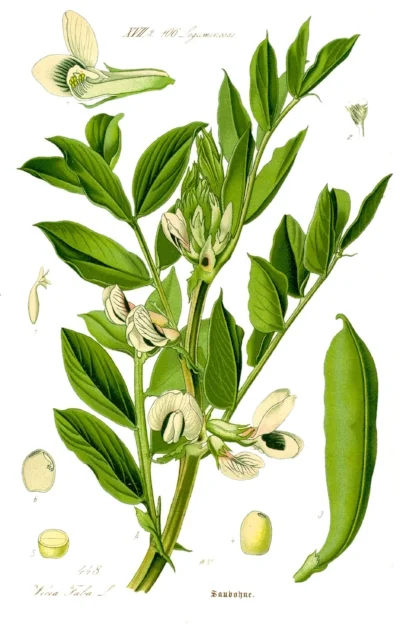
Celebrating the Broad Bean

Broad beans are the first of the early summer veg to appear. They are really adaptable and are great served with fresh summer herbs, but they do need a bit of care when cooking and larger ones are definitely best cooked for a few minutes and popped out of their skin. The flavour of broad beans is quite subtle so the addition of lemon and olive oil will add a bit of zip and they marry very well with salty foods like feta, halloumi, bacon and anchovies. The hummus recipe at the end of the blog is a great way to use up larger beans that might not be so good in a salad.

Broad beans are delicious in all kinds of salads, particularly when young and tender here is one with a Moroccan feel, based on a recipe by Jamie Oliver:

Moroccan style broad bean salad

  • 4 large handfuls podded broad beans 
  • 2 lemons 
  • extra virgin olive oil 
  • sea salt 
  • freshly ground black pepper 
  • 1 handful fresh mint , leaves picked 
  • 1 small red onion , peeled and finely chopped 
  • 1 teaspoon cumin seeds , bashed 
  • 1 pinch dried chilli 
  • 1 handful stale breadcrumbs 
  • 285 ml creamy live yoghurt or soured cream

1. First of all pod the and separate beans, put the larger ones in one bowl and the smaller ones in another – they’ll need different cooking times. Blanch the beans in unsalted boiling water for a couple of minutes, giving the large ones a bit longer (don’t add salt, as this will toughen the skins). Drain them and lay them flat on a tray to cool down slightly. This salad always works best when the beans are eaten slightly warm. If you’re making it in advance, though, you could always give them a quick flash in the microwave just before serving. Remove the skins from the larger beans if necessary. Place in a bowl and dress with the juice of 1 lemon and three times as much extra virgin olive oil. Season with salt and freshly ground black pepper to taste. Add a little more lemon juice if needed and finely slice half the mint and add it to the beans while they sit and marinate for a little while.

2. In a shallow pan, on a medium heat, fry the chopped onion, cumin seeds and chilli in a little olive oil. Stir and cook until softened. As the onions start to colour, add your breadcrumbs and mix these really well into the onions. Continue to cook until the crumbs are crispy and golden, then season them to taste and put to one side. To serve, divide the yoghurt or soured cream between four plates or bowls. Give the broad beans a final toss, add the rest of the mint leaves, and divide between the plates on top of the yoghurt. Finally, sprinkle over the warm spiced crunchy bits.


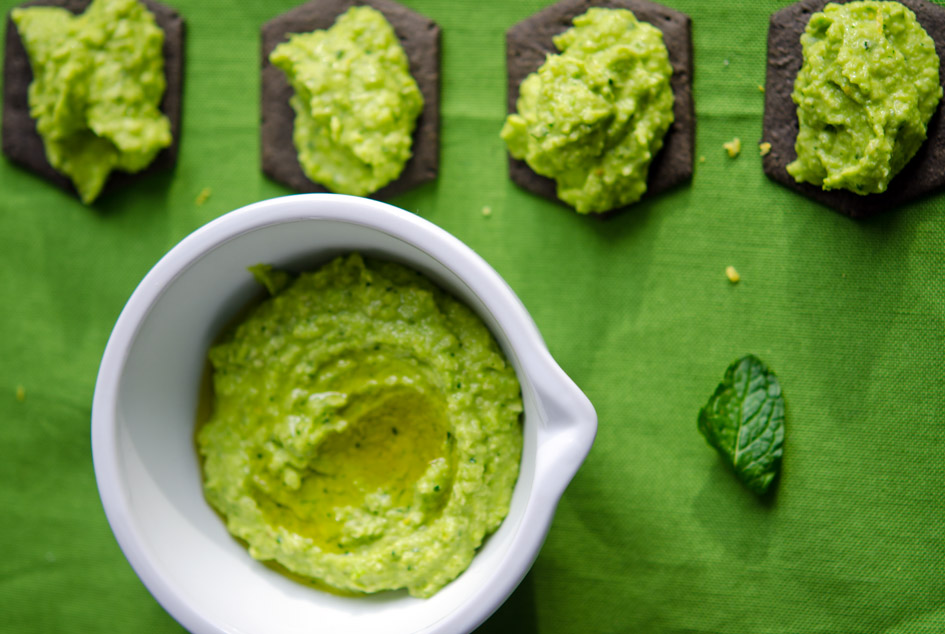
The bread bean hummus looks striking on charcoal biscuits.

The bread bean hummus looks striking on charcoal biscuits.

Broad Bean Hummus

This is an appealing, vibrant green and can be whizzed up in no time, it will also work well with frozen broad beans. This recipe is adapted from one by Nigel Slater, you can adapt it as herbs other than dill work well - mint is always a winner with broad beans, but you could try sorrel or just a mixture of soft-leafed herbs.


Serves 2-3 as a dip with bread 


shelled broad beans 400g
olive oil 4 tbsp
juice of ½ small lemon
dill a few sprigs

To serve:
soft bread or pitta

Cook the beans in boiling, lightly salted water till tender (this will take about 8-10 minutes, according to their size). Drain them, pop them out of their thin, grey-green skins, and blitz them to a thick purée in a food processor.

Pour in the olive oil, with the blender still going, adding the lemon juice and a grinding of salt. Continue until the mixture is smooth.

Finely chop the dill and stir in. Scrape into a dish then pour over a little olive oil.

A Decorative Chimneypiece

Every month we are going to feature two blogs written by volunteers, one will describe an object in the Palace and one a plant from the Garden. It is great way for us all to learn more about the Palace, if you would like to contribute there is no set format so send us your ideas!


My favourite historic object (or, at least, one that provoked research and a question)

I have no picture of the beautifully-carved wooden panel on the chimneypiece in what was the Porter’s Room to the left of the main entrance gate to the Tudor Quadrangle.  When a number of us explored “The Fireplaces of Fulham Palace” with Curator, Miranda Poliakoff, in January 2015 we were given privileged access to this room, currently occupied by one of the commercial tenants.  The next phase of restoration will open to the public, and re-imagine, this and other historic rooms around the north side of the Tudor Quadrangle.

The decorative chimneypiece I saw, displayed the coat of arms of Bishop John Robinson (1650-1723) Bishop of London from 1713 to 1723.  Museum Volunteers know that he was the successor of our ‘Gardening Bishop’, Henry Compton.  On his arrival at Fulham, Bishop Robinson had found the Palace “old and ruinous ... and too large”.  He was not interested in botany, and, sadly, allowed much of Compton’s renowned collection to be broken up.  But what is Bishop Robinson’s claim to fame?

Before he was appointed Bishop of London, he was a Diplomat for nearly 30 years, and Chaplain to the British Embassy in Stockholm.  He negotiated, and signed, the 1713 Treaty of Utrecht, which ended the War of Spanish Succession.

Normal
0


false
false
false

EN-GB
JA
X-NONE


 <w:LatentStyles DefLockedState="false" DefUnhideWhenUsed="true"
DefSemiHidden="true" DefQFormat="false" DefPriority="99"
LatentStyleCount="276">
<…

In this engraving, he is portrayed holding the Articles of the Peace.  Under the Treaty, Britain secured the monopoly (asciento) to transport slaves to the Spanish West Indies, beside which the concurrent acquisitions of Gibraltar (in the news again now) and Menorca seemed modest.

Thinking about the Treaty of Utrecht, perceived as a victory for British diplomacy, reminds me that during the previous century, a near neighbour of the Bishop of London in Fulham - Sir Nicholas Crisp (c. 1599-1666) – made his fortune by trading slaves from Guinea in West Africa.  Crisp built a fine house near the River Thames at Hammersmith, and rare glass beads have been found at his Hammersmith Embankment site.  They would have been manufactured there to be used in the slave trade, and are now on display in the ‘London, Sugar & Slavery’ Gallery of the Museum of London Docklands.

Early in the following century, Bishop Beilby Porteus (1737-1809), Bishop of London from 1787 until his death in 1809 at Fulham Palace, was a staunch campaigner in the House of Lords for the abolition of the transatlantic slave trade, achieved in 1807 two years before his death.  However, Bishop Porteus was quick to dissociate himself from proposals to abolish the institution of slavery altogether.

Reverting to Bishop Robinson, I saw this portrait by Michael Dahl (1659-1743) when visiting Charterhouse with the Friends of Fulham Palace.  From 1713, Bishop Robinson had been a Charterhouse Governor.

Unknown-3.jpeg

Finally, there is, or was – according to an early edition of the Dictionary of National Biography – “an anonymous portrait of Bishop Robinson, painted while he was in Sweden, preserved at Fulham Palace”.  It was included in the Catalogue of National Portraits exhibited at South Kensington in 1867, and I think that this may be am image of it:


Does anyone know the current whereabouts of this rather fine, though anonymous, portrait?


Jane Bowden-Dan

Volunteer Museum Steward and Historical Tour Guide


Please send your ideas for blogs to commsvolunteer@fulhampalace.org If you would like some help, let us know.

Apple Tree Arches at Fulham Palace

Garden volunteers have worked hard, alongside the gardening staff, over the winter months, widening and resurfacing the paths in the garden and installing the apple tree arches. This blog, written by Head Gardener, Lucy Hart, outlines the thinking behind the installation of the arches and tells us what we can look forward to over the coming years.

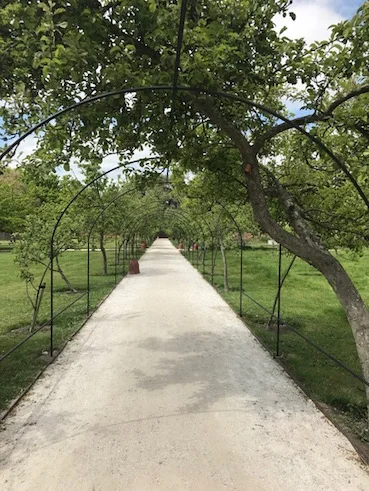
As part of the ongoing horticultural development in the walled garden, an 80m apple arch tunnel has been built along the west-east central path and apple and pear trees will be planted to train over the arches this coming autumn/winter.

The Walled Garden was built as a kitchen garden in the late 18th century in the grounds of Fulham Palace.  At that time, kitchen gardens were often located away from the main building as they would have been viewed as a garden of production and not necessarily of beauty.  Traditionally, paths through working gardens were made more appealing for the proprietor by visually blocking off the productive beds by borders backed with espaliered fruit trees.  A series of fruit tree arches to make a tunnel would also have the same affect.

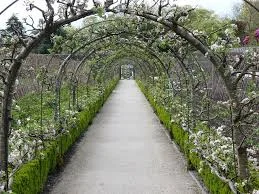
The apple tree arch at The Lost Gardens of Heligan

The apple tree arch at The Lost Gardens of Heligan


Other highly regarded gardens in Britain such as Heligan, West Dean and Eythrope have fruit arches and tunnels within their historic walled gardens, making them popular visitor attractions as well as continuing productivity.  Heligan’s apple arch represents the custom garden method of growing apple trees to provide the owner and his guests with a more pleasurable tour of the gardens.   An apple arch in the walled garden at Fulham Palace, along the central west-east axis is wonderful horticultural feature, offering visitors the chance to walk through something beautiful and home grown.  It celebrates the walk that the Bishops of London, such as the keen horticulturist Bishop Bloomfield (1828-56), would have made to All Saints Church each day. 

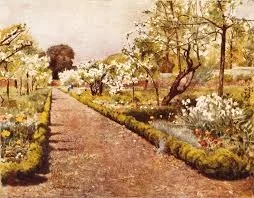
Although there are no records of the Walled Garden at Fulham Palace having apple arches along the central axis, trees have lined these paths since at least 1869, as shown in the Ordnance Survey Map.  A painting by Jessie McGregor in 1915 shows beautifully the trees planted along the path on both sides.  In the 1990s, 22 pairs of apple trees were planted along the west-east central path lining up with the gateway on the west wall (now referred to as the Meadow Gate).  The apple trees were donated by East Malling Research centre.  They are a collection of fine heritage varieties some of which are now quite rare in cultivation.

Normal
0


false
false
false

EN-GB
JA
X-NONE


 <w:LatentStyles DefLockedState="false" DefUnhideWhenUsed="true"
DefSemiHidden="true" DefQFormat="false" DefPriority="99"
LatentStyleCount="276">
<…

Painting by Jessie Macgregor, 1915

These East Malling trees are now in poor condition having not been properly maintained for many years.  Many are very one sided and leaning over.  They lack the open centred habit that encourages good cropping and tree health.  The trees are also growing into the path, making some parts very narrow for visitors.  In order not to lose our valuable apple collection, the trees have been propagated and will be replanted on the arch.  

The trees have been grafted on to dwarf rootstock M26, in house.  It has given the garden apprentices and volunteers a fantastic opportunity to learn and gain practical experience on how to graft fruit trees and then to see their successfully grafted trees grow.  Material from new varieties was also donated by RHS Wisley and then grafted in-house, giving us the opportunity to grow more pears (on a semi dwarf rootstock, Quince C), the traditional choice of fruit tree for an arch. 

By training the trees onto an arch, the tree canopies will remain small and not risk blocking the historical view to All Saints Church Tower.  The tree canopies will also not infringe on the productive beds of the vegetable garden and orchard and, being tightly pruned, would lessen the risk of injury to visitors by eliminating eye height branches along a walkway.  The trees will be supported by the arch and subsequently generate a less extensive root system which ultimately would have less impact on any possible archaeology. 

Growing the grafted trees as an arch allows us to keep the old existing trees for a few more years until the arch trained trees become established.  This means there will still be apples ready for harvesting for Apple Day and visitors will not have a bare central path whilst they wait for the new trees to grow.

Fulham Palace celebrates the apple annually at its well-attended Autumn Garden Event, Apple Day. Within the garden we grow many fruit trees.  The orchard was planted in 2014 and wall trained apples and other fruit trees were planted in March 2016.  Apple arches along the central path will provide another wonderful example of how to grow apples for visitors to admire.  With multiple seasons of interest, the apple arches should attract crowds throughout the year.  There would be the wonderful spectacle of blossom in the spring and then fruit from summer to autumn.  In late autumn the leaves will be changing colour.  In winter the fascinating trained framework will be revealed and continue to provide interest when other parts of the garden have died down. The arch will make walking through the walled garden an exciting and pleasurable experience for children, adults and private event guests alike.

This is an important new initiative for the walled garden – one that will allow us to continue to educate our garden apprentices, our volunteers, and most importantly, our public in traditional features of a walled garden and fruit tree production. 

Lucy Hart

The Apple Arches at Fulham Palace, May 2017

The Apple Arches at Fulham Palace, May 2017