Portrait of a Bishop

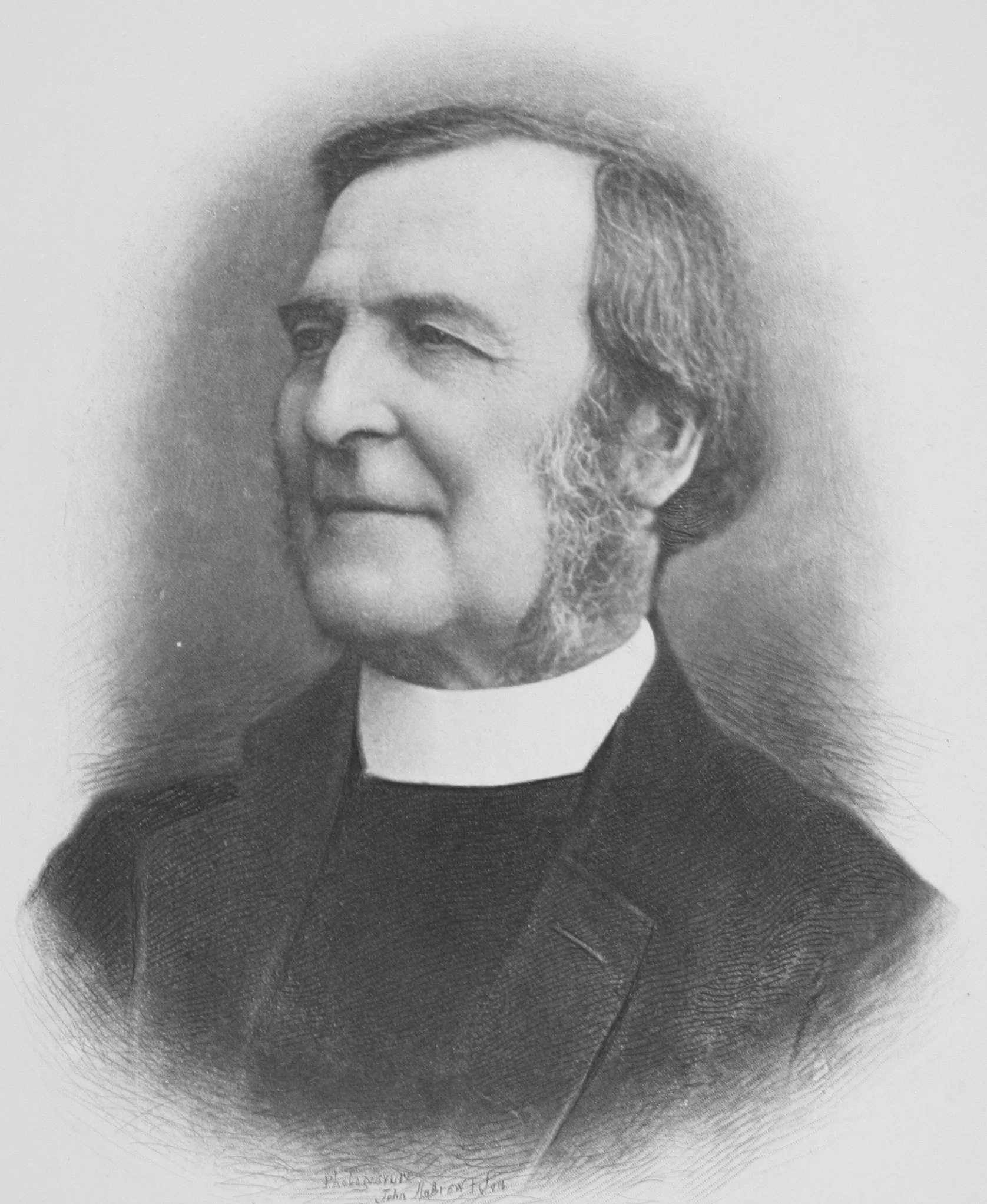
Frederick Temple - Bishop of London 1885-1896

Frederick Temple was born on the Greek island of Santa Maura in 1821 and grew up in Devon. His family was not rich and he knew early on that he would have to earn his own living. He took the first step by winning a Blundell scholarship to Balliol College Oxford. He was elected a fellow at Balliol after achieving a double first and four years later was ordained. 

The following years he held various positions including a school-inspectorship (his travelling desk is on display in the Museum) and Chaplain-in-Ordinary to Queen Victoria. In 1885 he was appointed Bishop of London and although many of his clergy criticised him for enforcing unbearable standards of accuracy, diligence and preaching efficiency, he won the hearts of many through his devotion to his work and passion for the good of the people. During his time at Fulham Palace he gave up the West Meadow to enlarge the proposed Bishop’s Park, the Bishop’s Meadow had already been given by Bishop Jackson in 1883. The new park eventually opened in 1893.

Temple worked long days, fourteen or fifteen hours, and under the strain he was rapidly going blind. Towards the end of his bishopric in London he offered to resign due to his growing blindness but was urged to reconsider. He held his position until 1896 when, upon the death of Edward White Benson, he accepted the see of Canterbury. Temple died in 1902 and is buried in Canterbury Cathedral.  William Temple, his second son, became Archbishop of Canterbury in 1942.  So far they are the only father and son to have achieved this.

Fulham Palace Volunteers Garden Party

Join us in the Walled Garden for our annual Fulham Palace Volunteers Garden Party!  Pimms, wine and soft drinks will be provided, and please bring picnic items to share (and a rug!).  We will have some chairs available in the garden, but please feel free to bring your own folding chair as well.

This is a free event for volunteers. 

Guests are welcome, and tickets for guests are £5 each, payable on the door, which includes exclusive entry into the Walled Garden and a glass of wine or Pimms.

In the case of bad weather, the party will take place in the Drawing Room Café.

We hope to see you there! 

Click here to RSVP

Museum Trainee Update

It’s probably hard to believe but I’ve now been away from everyone at Fulham Palace for about three months, and although I’m enjoying my new environment and the new experiences it offers I have really missed the intimacy of Fulham Palace.  I have found that the British Museum is a place in which you can easily get lost both figuratively and literally. 

So, what have I been involved with during my past three months at the British Museum? 

For the six months that I am based at the British Museum I am working in the department of Africa, Oceania and the Americas, and once again upon my arrival on my first day I found myself thrown into an exhibition installation.  To be precise, the ‘Indigenous Australia’ exhibition which is currently running in the Reading Room space and is definitely worth a visit.  The exhibition installation generally involved a lot of cleaning, a little bit of standing around and waiting, rearranging, some more cleaning, more waiting, a little bit of object handling and yet more cleaning.  The highlight of this for me was when I was given the chance to place an object on its plinth and no-one moved it or rearranged it in any way (just in case you do visit it’s the feather string necklace with red and green feathers acquired in Broome, Australia, in 1986).

After this I moved over to the first of my department’s storage units in Kensington.  Here I joined an ongoing project making handling frames for the larger objects, in this case canoes which were mainly from the Americas.  These are now ready to be moved to the new WCEC building at The British Museum, a recent extension to create more offices, gallery space and state of the art object storage rooms.  This was something I really enjoyed as I was getting the chance to learn new and useful skills, and the three colleagues I was working with were great fun and happy to take the time to explain things and answer all my questions.  During the two weeks that I was working on this project we were able to build five handling frames, including one for a rather tricky American Indian canoe that was over 12ft long and carved out of a single tree trunk giving it a rather prominent natural curve.  It was also extremely heavy and required two forklift trucks to manoeuvre it into the handling frame.

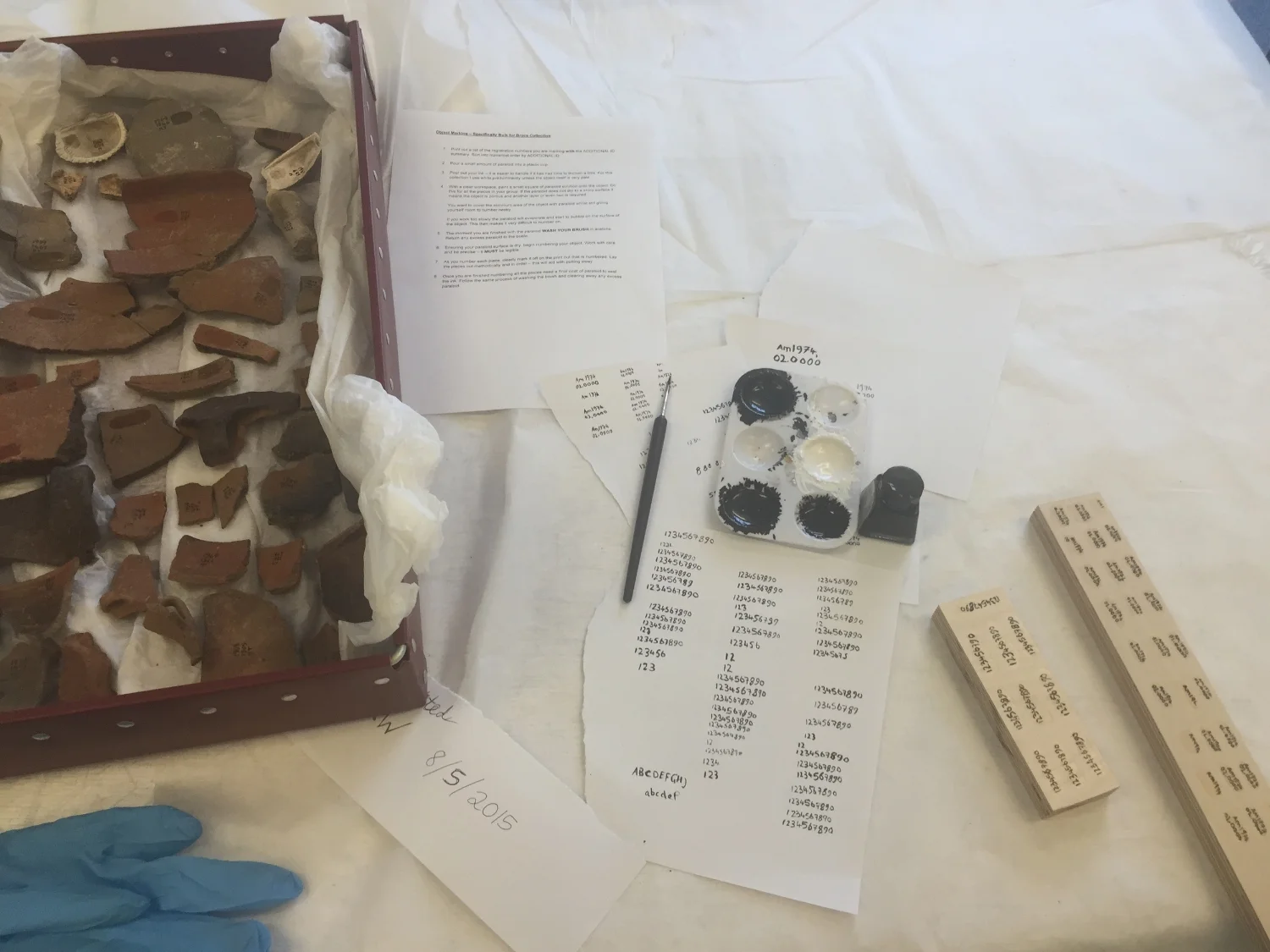
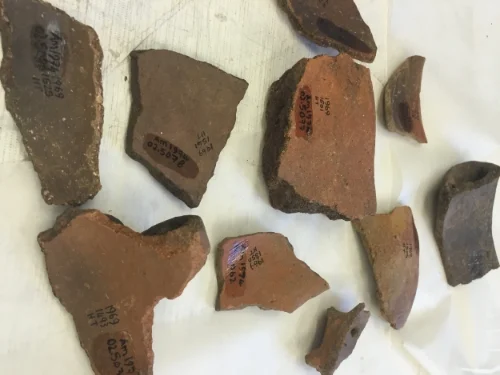
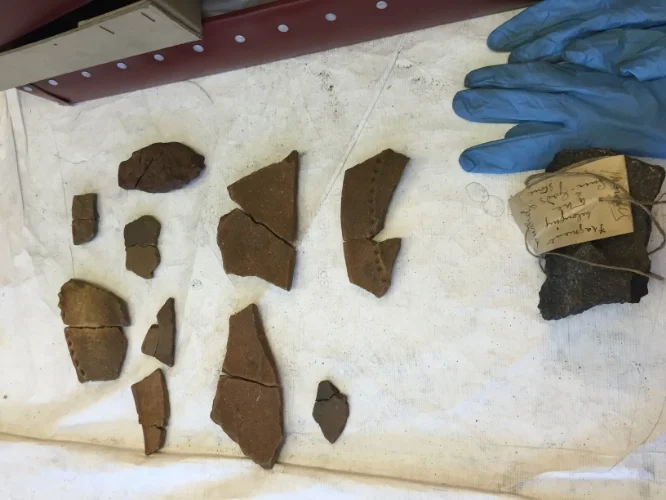
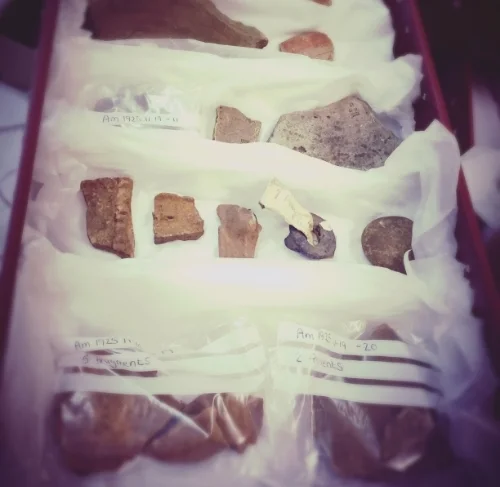
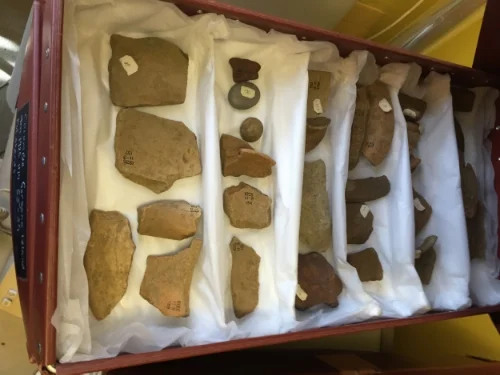
More recently over the last few weeks I have been working over at our second storage unit in Hackney, where the majority of my time so far has been spent archiving finds from an archaeological dig at Gorgona Island, Colombia, in 1924.  This collection was previously held by another department at the British Museum and has only recently been relocated to the department of Africa, Oceania and the Americas.  My task was to sort all the registered items into order and update the online records, including photographs of the items and taking new photographs where necessary.  I then placed the items into boxes ready for them to be allocated a storage space.  As for the unregistered pieces these needed to be sorted into site reference, registered, labelled and then photographed, before going through the same process as those items that had already been registered.

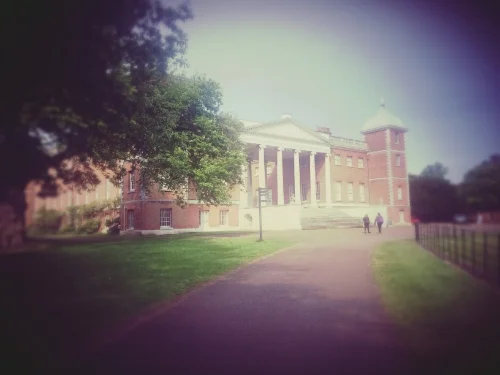
Lastly was a trip to Osterley House to observe a day in the working life of a House Steward.  While there I helped prepare the rooms for opening, which mainly consisted of cleaning (museum work mainly falls into two categories: cleaning or getting messy), met many of the volunteers, helped with the end of day shut down and joined one volunteer in the Library for the book cleaning project where I learnt lots of techniques which I hope to transfer back to Fulham Palace. 

As you can see I have plenty to keep me busy for now and I look forward to telling you all about my upcoming projects in the very near future.

 

Magna Carta and the Bishop of London

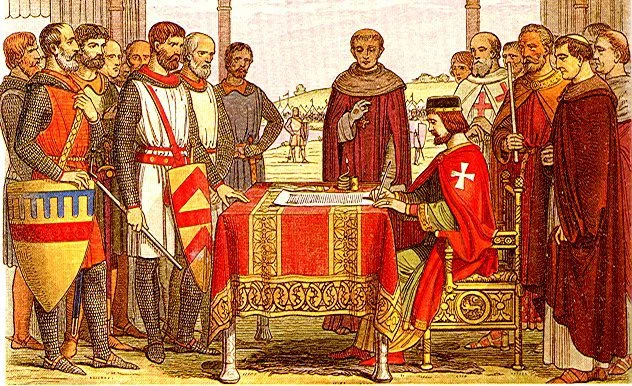
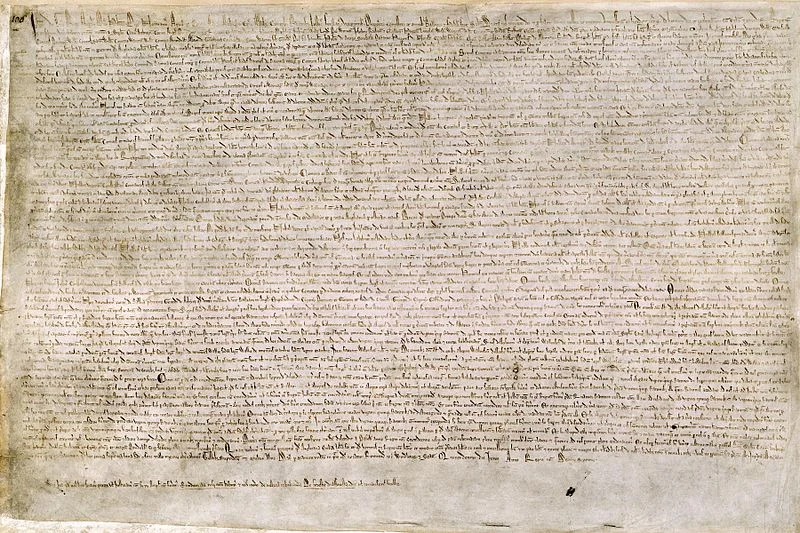
Amongst the names on the Magna Carta is “William, Bishop of London”.  William de Ste Mere- Eglise, a Norman, was Bishop of London from 1198 to 1221, and served four kings: Henry II, Richard I, John and Henry III.  His name derived from the Norman ducal manor of Ste Mere-Eglise.  

William became a trusted advisor of Henry II, and towards the end of Henry’s life he even attested royal writs.  During this lifetime, he became wealthy, and amongst the livings he was granted were the prebend of Haydour-cum-Walton in Lincoln Cathedral and the deanery of the collegiate church of Mortain.

After Henry’s death William followed Richard I to England and was frequently at court.   He accompanied Richard on his crusade as far as Vezelay.  Nothing is then known of him until he visited the captive king in Germany in 1193.  On his return William was made archdeacon of Wiltshire.  He visited Richard again in Germany several times and returned with him in March 1194.  From then until 1198 he was involved in various aspects of the judicial system and the exchequer, being rewarded with the Bishopric of London.  He participated in the coronation of King John in 1199 and served as a diplomat, representing the King on missions to Germany and Scotland.  He was also active in church affairs, earning the respect and confidence of his fellow bishops and the Pope.

William was, with other bishops, caught in the struggle between King John and Pope Innocent III in 1205 over the appointment of Stephen Langton as Archbishop of Canterbury.  He, along with the bishops of Ely and Worcester, ended up in exile for five years after imposing the Pope’s interdict upon the country in 1208.   They returned briefly to negotiate with King John, but to no avail and they were instructed by the Pope to excommunicate the king. John was only persuaded to agree to the appointment of Langton when threatened in 1212 with the prospect of a French invasion of England authorised by the Pope.  William returned in 1213.   In March 1215 King John took the cross from the Bishop of London at St Paul’s in an attempt to protect himself by obtaining the privileges of a crusader.  William  was present at Runnymede on 15 June 1215 advising the king to grant the charter to his subjects and was one of eight bishops at Oxford a month later when John met the barons’ representatives to implement Magna Carta.  Another charter of liberties was issued in 1217 during the reign of Henry III and this took place in St Paul’s Cathedral.

William was unusual in asking the Pope if he could retire due to his great age. This took place in January 1221, and he retained his episcopal status, £100 of the revenues of the see (over £50,000 in today’s money) and the custody of Colchester Castle.  Later he joined the Augustinian community at St Osyth abbey in Essex wherein died in 1224.

(Source: entry in the Oxford Dictionary of National Biography by Fred A. Cazel Jr).

Miranda Poliakoff
​Curator


Guest Blog – Ronny Nicholas, Garden Volunteer

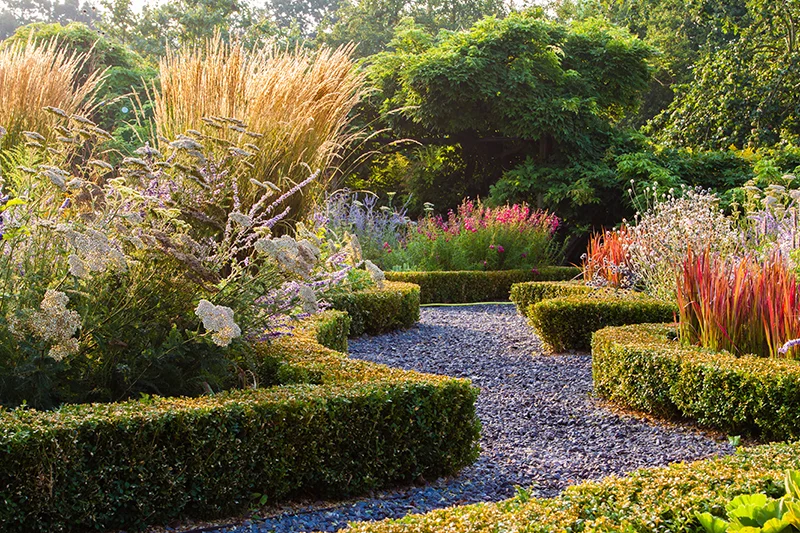
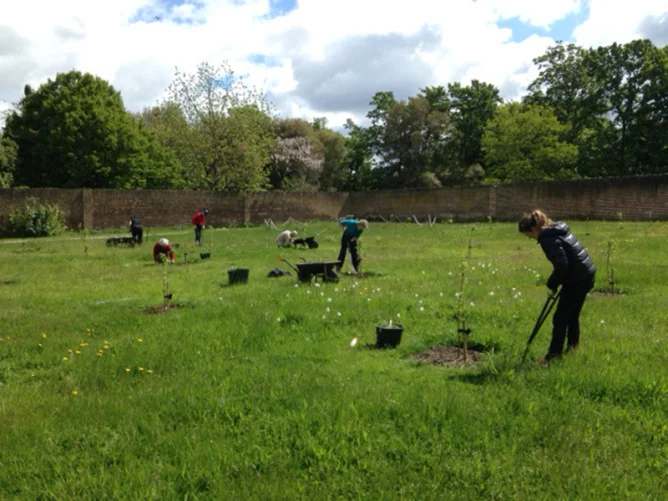
Although May was not as idyllic as I would like it to have been (or remember it being in previous years, but memory is such a trickster), we seem finally to have entered the “Fulham Palace at springtime” period. The Walled Garden is looking increasingly gorgeous – a delightful combination of the practical and the beautiful – a thriving and attractive market garden (fine work by the apprentices), the magnificent wisteria, the knot garden and our new apple orchard, to mention a few examples.

So why does the garden look so charming? It’s all down to the gardeners – full time and volunteers.  To illustrate how the Wednesday volunteers make their contribution, ask me about tree circles, go on, anything. Well, making tree circles is hard work, but so satisfying. When finally you stand back (bent over, massaging your aching back), to view that (almost) perfect circle of cleared space encompassing the lucky tree, it is a thing of beauty and symmetry, thus making the surrounding area look much better; and it’s good for the tree. What more can one ask? Now just to confuse the issue, our new apple orchard has tree squares, don’t ask me why. Nevertheless, they are also very snappy and the young trees are doing well, displaying their bright green new leaves. Roll on the first crop of delicious apples. I could also wax lyrical about path edging, long arms, half moons and raking, but not this time. Suffice it to say, that the beautification that results is worth it.

Now, something much cuddlier: Lucy, our Head Gardener, is on maternity leave, having given birth to a son. Hurrah! While she is away, Jason Peters is the Acting Head Gardener and has settled in well. We wish them both the best in their respective endeavours; I’m not sure which will be more demanding!

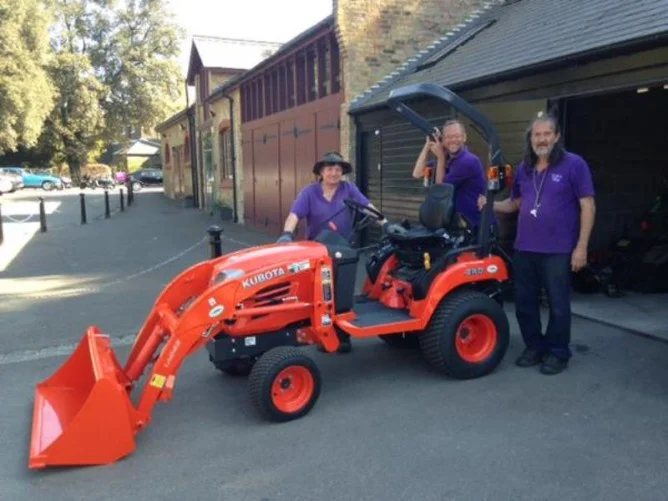
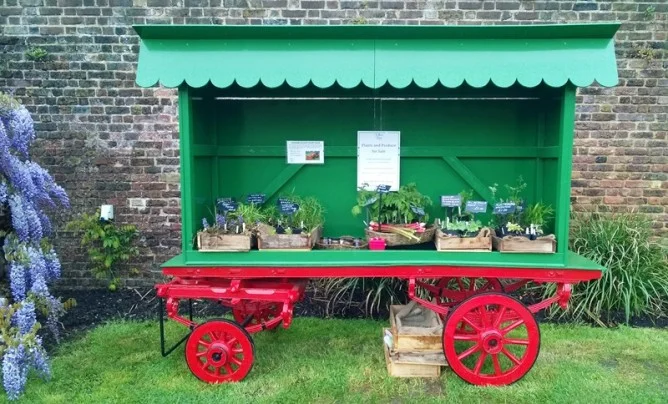
Finally, something almost as cuddly – the Fulham Palace Garden Produce Barrow (or barra’, as they say in the North End Road market). It is a thing of joy and beauty, thanks to Pauline McCormack, who found it and the volunteers who helped to repair, prepare and paint it. It resides in the Walled Garden, displaying a delightful range of edible and ornamental produce from the Walled Garden. As summer progresses, we will be selling a range of produce, freshly harvested by the volunteers from the garden. It is very satisfying and enjoyable to be part of this project. I feel a sense of pride for all those involved and it is for such a good cause – to pay for our new rufty-tufty baby tractor, all glowing orange and amazing attachments. So come along to take a look and buy some delicious, beautiful produce. All proceeds are invested in the garden. Do yourself good and help Fulham Palace achieve its noble ambitions.

Ronny Nicholas
Garden Volunteer

Volunteer Opportunity: Volunteer facilitator for family craft activities

Role Summary:

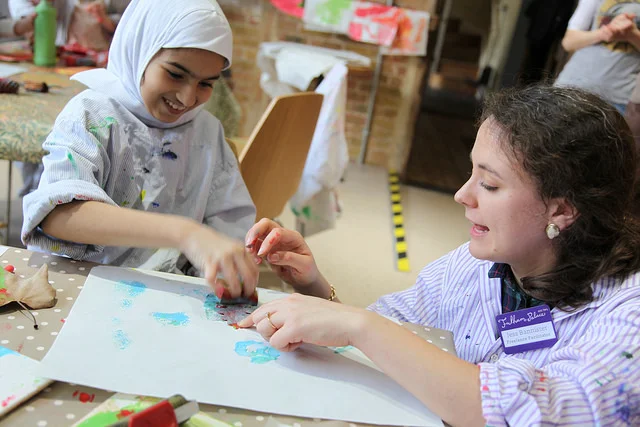
Fulham Palace run art and craft activities for families. Many of these are drop-in activities that take place in our grounds over the summer months. We are looking for an experienced volunteer to prepare and deliver workshops in August 2015.


Main activities/tasks:

  • Planning craft activities in liaison with the Learning Officer

  • Preparing materials in advance

  • Co-ordinating the event on the day; setting up and clearing away, managing volunteer helpers, dealing with the overall management of the event and activity (including evaluation and photography).

  • Reporting back to the Learning Officer on the success of the event (numbers, income, evaluation etc)

    Relevant experience/skills:

    You should have some experience of running similar workshops and of working with children. While support and training will be provided you will need to be able to be proactive, work independently and give instructions to the other volunteers assisting you.


    Training and support:

    We have an induction process, during which we give volunteers the information we believe they need to enjoy their time with us.  The Learning Officer will give volunteers any specific information they need before starting and volunteers will be able to shadow an experienced volunteer to learn 'on the job'. Volunteers will have regular meetings with the Learning Officer to allow them to give and receive feedback about their work.  They are also encouraged to bring up any concerns or questions as soon as they arise and make an input into the overall development of the programme.

    Availability:

    Ideally we are looking for a volunteer who can commit to the following dates:

    5,12,19,26 August (1pm-4pm)

    In addition you would need to commit 1 extra day per workshop for planning and preparation.

    Additional information:

    As this role involves working with children, we will need to carry out a DBS through the Criminal Records Bureau on volunteers in this role.  Having a criminal record in itself is not a barrier – we are only concerned about convictions that show a person might pose a risk to children.  Any information revealed by these checks is kept strictly confidential – we have a confidentiality policy, and are also under a legal obligation to respect this.

    Main point of contact/supervisor: 

    Learning Officer

Please contact: lettie.mckie@fulhamplace.org with your CV if you are interested to apply.