
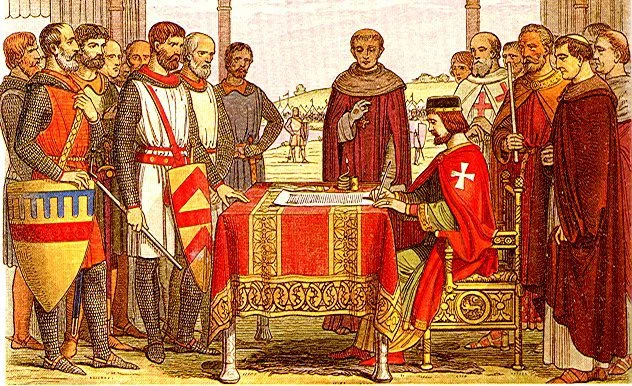
Amongst the names on the Magna Carta is “William, Bishop of London”. William de Ste Mere- Eglise, a Norman, was Bishop of London from 1198 to 1221, and served four kings: Henry II, Richard I, John and Henry III. His name derived from the Norman ducal manor of Ste Mere-Eglise.
William became a trusted advisor of Henry II, and towards the end of Henry’s life he even attested royal writs. During this lifetime, he became wealthy, and amongst the livings he was granted were the prebend of Haydour-cum-Walton in Lincoln Cathedral and the deanery of the collegiate church of Mortain.
After Henry’s death William followed Richard I to England and was frequently at court. He accompanied Richard on his crusade as far as Vezelay. Nothing is then known of him until he visited the captive king in Germany in 1193. On his return William was made archdeacon of Wiltshire. He visited Richard again in Germany several times and returned with him in March 1194. From then until 1198 he was involved in various aspects of the judicial system and the exchequer, being rewarded with the Bishopric of London. He participated in the coronation of King John in 1199 and served as a diplomat, representing the King on missions to Germany and Scotland. He was also active in church affairs, earning the respect and confidence of his fellow bishops and the Pope.
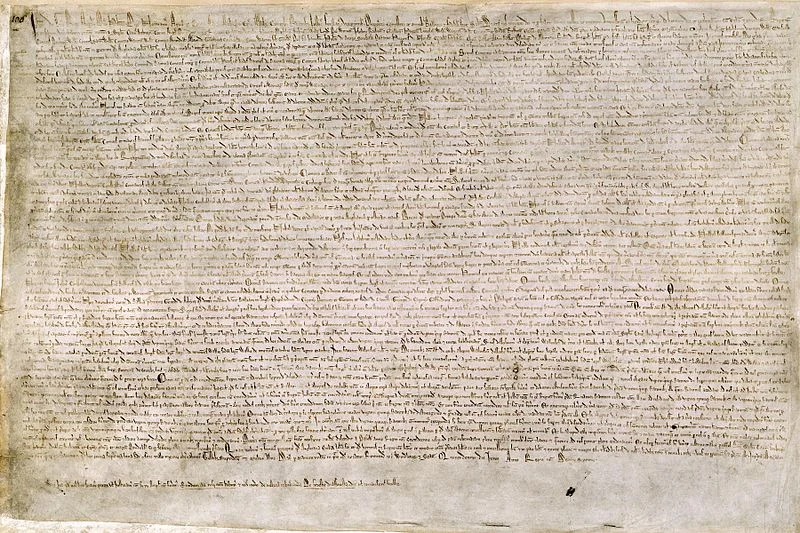
William was, with other bishops, caught in the struggle between King John and Pope Innocent III in 1205 over the appointment of Stephen Langton as Archbishop of Canterbury. He, along with the bishops of Ely and Worcester, ended up in exile for five years after imposing the Pope’s interdict upon the country in 1208. They returned briefly to negotiate with King John, but to no avail and they were instructed by the Pope to excommunicate the king. John was only persuaded to agree to the appointment of Langton when threatened in 1212 with the prospect of a French invasion of England authorised by the Pope. William returned in 1213. In March 1215 King John took the cross from the Bishop of London at St Paul’s in an attempt to protect himself by obtaining the privileges of a crusader. William was present at Runnymede on 15 June 1215 advising the king to grant the charter to his subjects and was one of eight bishops at Oxford a month later when John met the barons’ representatives to implement Magna Carta. Another charter of liberties was issued in 1217 during the reign of Henry III and this took place in St Paul’s Cathedral.
William was unusual in asking the Pope if he could retire due to his great age. This took place in January 1221, and he retained his episcopal status, £100 of the revenues of the see (over £50,000 in today’s money) and the custody of Colchester Castle. Later he joined the Augustinian community at St Osyth abbey in Essex wherein died in 1224.
(Source: entry in the Oxford Dictionary of National Biography by Fred A. Cazel Jr).
Miranda Poliakoff
Curator