The Busch Ensemble

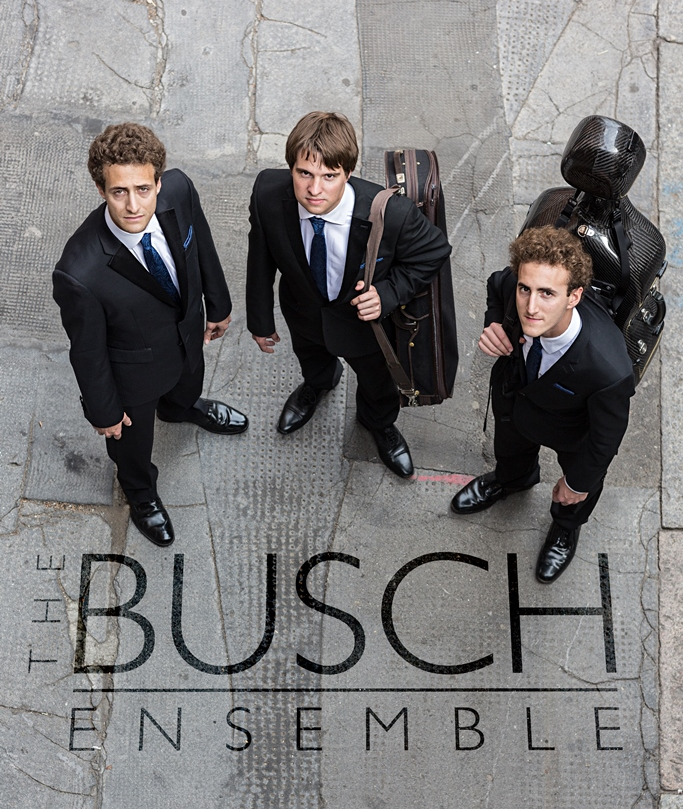
As three soloists in their own right, Omri Epstein, Mathieu van Bellen and Jonathan Bloxham have won prizes in international competitions and are graduates of the UK’s leading musical schools and institutions. Brought together by a shared passion for chamber music and inspired by the violinist Adolf Busch, the Busch Ensemble is increasingly emerging as the leading British piano trio of the new generation, lauded across Europe by critics and audiences alike. Having recently made their debut performance at the Wigmore Hall, please come down to hear the Ensemble play at Fulham Palace on Monday 16 March 2015 for what will no doubt be a spectacular private concert in the Great Hall.

This concert is open to all our volunteers, Friends, Patrons and supporters.  

For more information and to book your ticket, click here.

The Volunteers of Fulham Palace

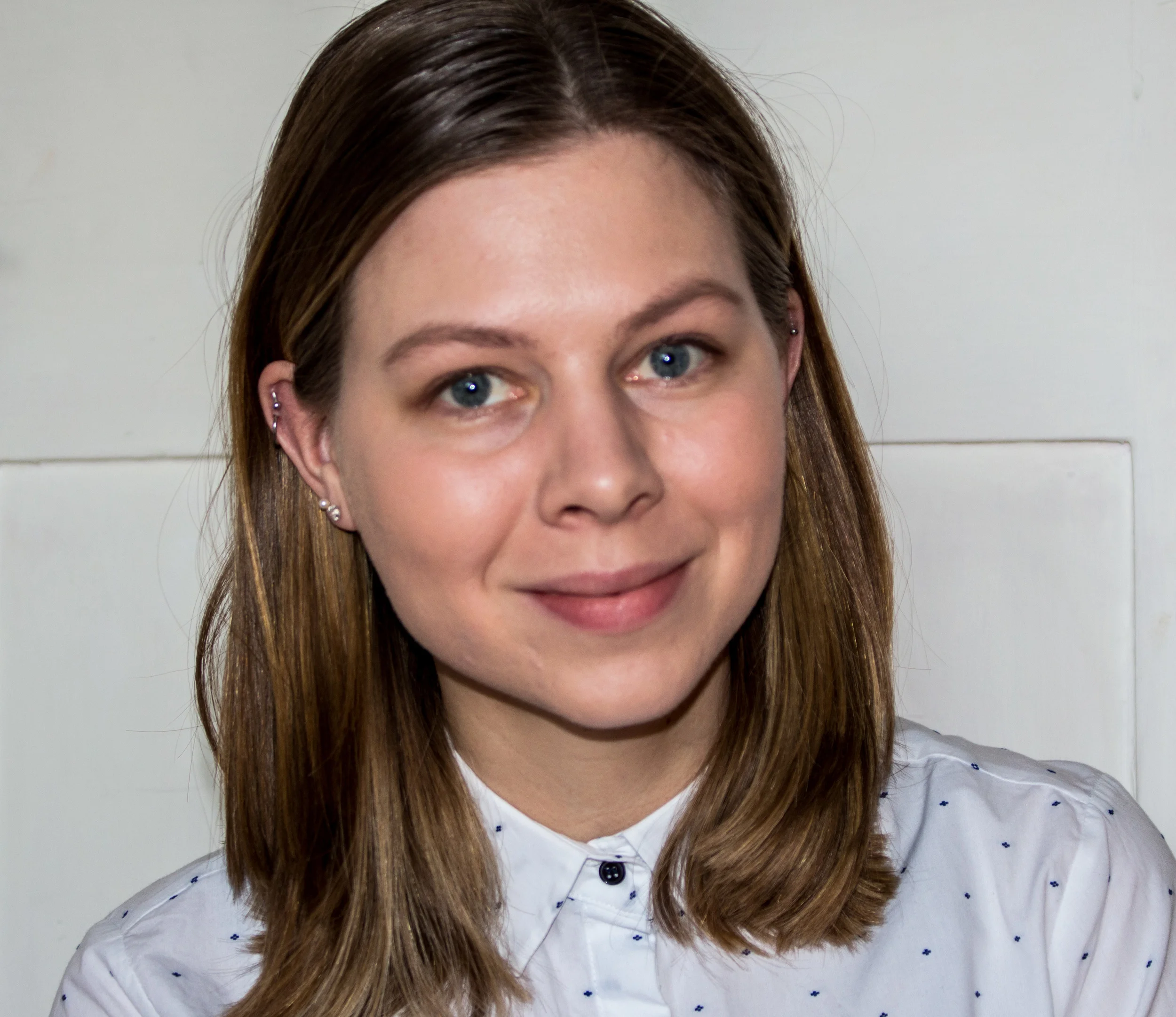
Ida May Griffiths - Admin Assistant and Volunteer Communications Assistant
 

Ida joined the volunteer team at Fulham Palace in December 2012 and started working on the newsletter right away. She is a singing teacher by profession, but has always loved to write so being involved with the newsletter, both contributing written pieces and also editing, was the perfect role.

Then in the autumn last year Beth Bishop asked Ida  to be part of the volunteer team that will now manage the new volunteer website. She is now officially a Volunteer Communications Assistant, along with three other new volunteers.


When did you first come to Fulham Palace? I more or less stumbled upon it about 3 years ago when I was out for a walk. It’s very hidden! But I loved it and kept coming back and a few months later I applied to become a volunteer.

 What is role as volunteer? They needed help with managing the volunteer newsletter and as someone who loves to write it was perfect. I also help out at events, usually tearing tickets or taking photos. From February this year I will be one of four volunteers who will manage the new volunteer website and I can’t wait to get started. I think it will be great!

 How often do you volunteer? I come in once a week, on a Friday morning.

 What do you enjoy most about volunteering? I really like the people I work with, both volunteers and staff. I feel valued and that the work I put in is appreciated. I also feel that the volunteers are given and trusted with a lot of responsibility and I like that.  And of course, Fulham Palace is a very nice place to come to once a week.

What is your favourite thing about Fulham Palace?   It has to be the gardens. Especially in the summer. You forget that you are in the middle of one of the world’s busiest cities.

Museum News

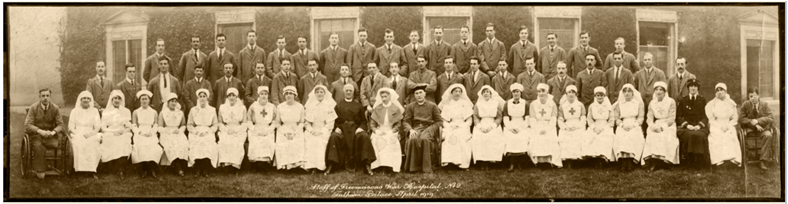
In the Museum we have mainly been concentrating on our winter exhibition “Fulham Palace through the Great War".  Amongst the exhibits is a recent acquisition; the wonderful large photograph donated by Barbara Mann showing the patients and nursing staff outside the east front in 1919.  This free exhibition is on in Bishop Sherlock’s Room during museum opening hours (Sunday 12 to 4pm; Monday to Thursday 12.30 to 3.30pm) until 16 April 2015.  We are most grateful to the wonderful team of volunteers who helped with the displays and the first of our linked events "Reflections of the Great War" which took place in the Chapel on 14 November, led by Sophie Raworth. Do look in the What's On section of the website for future talks relating to the exhibition.

Another recent addition to the collection is a newspaper article about the tea given by Bishop Winnington-Ingram to 1000 maidservants in 1902 to celebrate the Coronation of Edward VII.   This provides the context for the brooch that was acquired for the Museum earlier this year and which is on display in the Porteus Library. 

Portrait of a Bishop

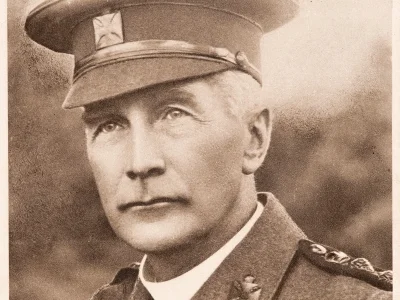
Arthur Winnington-Ingram-Bishop of London 1901-1939

Bishop Arthur Winnington-Ingram was born in Worcestershire in 1858 and read classical moderation and literae humaniores at Keble College, Oxford. He held a number of positions before being appointed Bishop of London in 1901, a post he held for 38 years. During his time as Bishop he was very vocal about the Church’s teaching on morality and opposed what he saw as birth control propaganda and spoke out against secularists. But he also highlighted the inadequate housing of the poor and the issue of unemployment. 

He is remembered today for his role during the First World War. He was Chaplain to the London Rifle Brigade and visited them in 1915 during his two weeks at the Western Front.  A year later he went to the Grand Fleet to boost their morale.  In 1917 he led the National Mission of Repentance and Hope, traveling through every diocese to stir up renewed enthusiasm for the war effort. His speeches were on occasion violent in tone, at times verging on xenophobia, something he was criticised for. Fulham Palace also played a part in the war; in 1918 the Palace was converted into a hospital funded by the Freemasons and run by the Red Cross.  The Library and Drawing Room were used as wards and the Great hall as a canteen. 

The New Apple Orchard

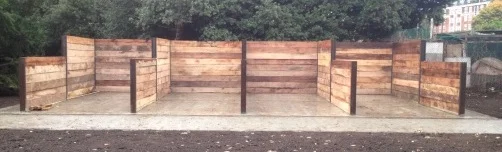
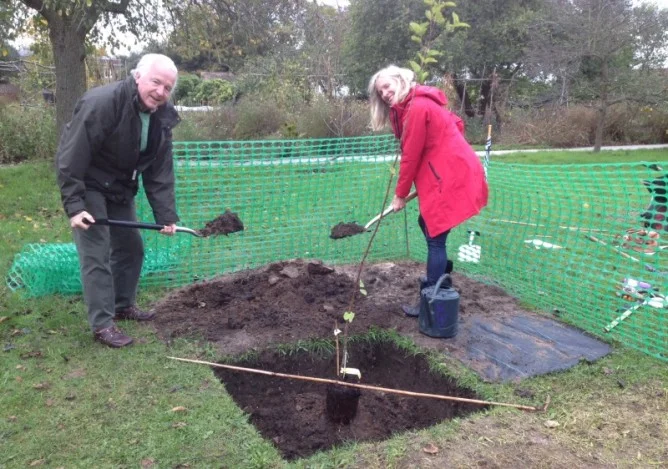
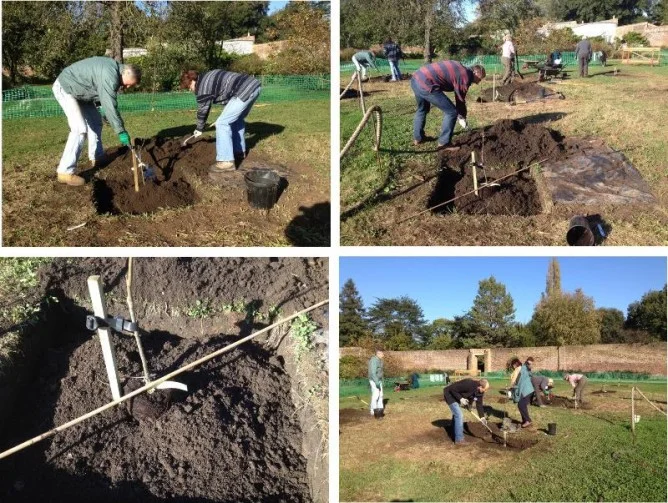
To reflect the historic orchards at Fulham Palace that were grown on the north and south side of the Palace grounds, an apple orchard has been  planted in the north east quadrant of the Walled Garden.  The orchard and archaeological dig was funded by Gordon and Paula Edington and other donors.  Gordon is the Property Trustee and Deputy Chairman of Fulham Palace.  We are very grateful for their generosity.

 The new orchard has an orthogonal layout which reflects the historical layout of the Walled Garden and allows good circulation for the public.  Forty-seven apple trees are being planted and arranged by an overriding transatlantic apple theme.  North America has no native domestic apples and so we are celebrating Fulham Palace’s North American botanical links by growing apples that were sent over to America from England in the mid 17th century. 

•Two quadrants will contain transatlantic varieties, those which were grown in England and Europe and sent to North America from the mid 1600s.  There are 23 trees of different varieties across these two quadrants (with one deducted due to the location of the bee hives).

•One quadrant will contain varieties recommended by George London and Henry Wise.  George London was Head Gardener at Fulham Palace to Bishop Compton in the late 1600s and most of these varieties were sent over to America.

•The final quadrant will have two themes: six varieties of apples that once growing in America, were bred there and then later sent back to England and apple trees that we know the Bishop grew here in the 1860s and 1870s.

fulham_palace_tree_planting9-502x376.jpg

Volunteer Survey Results

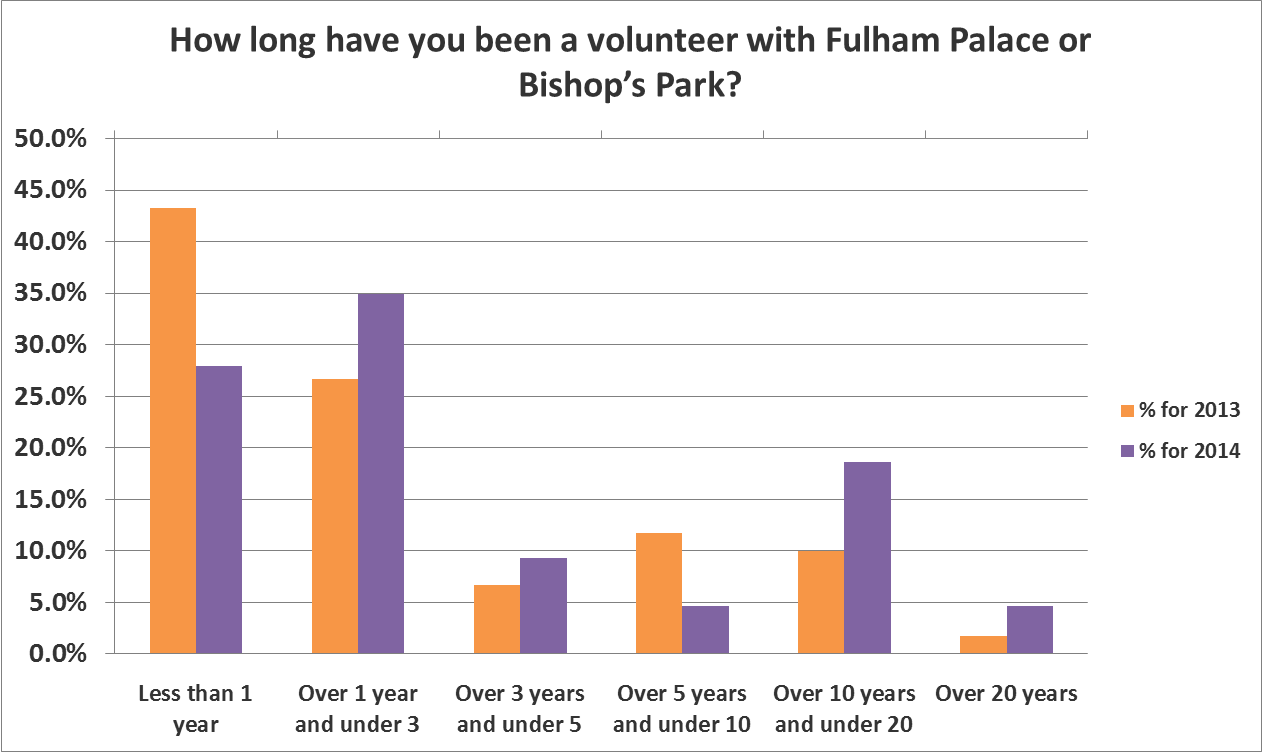
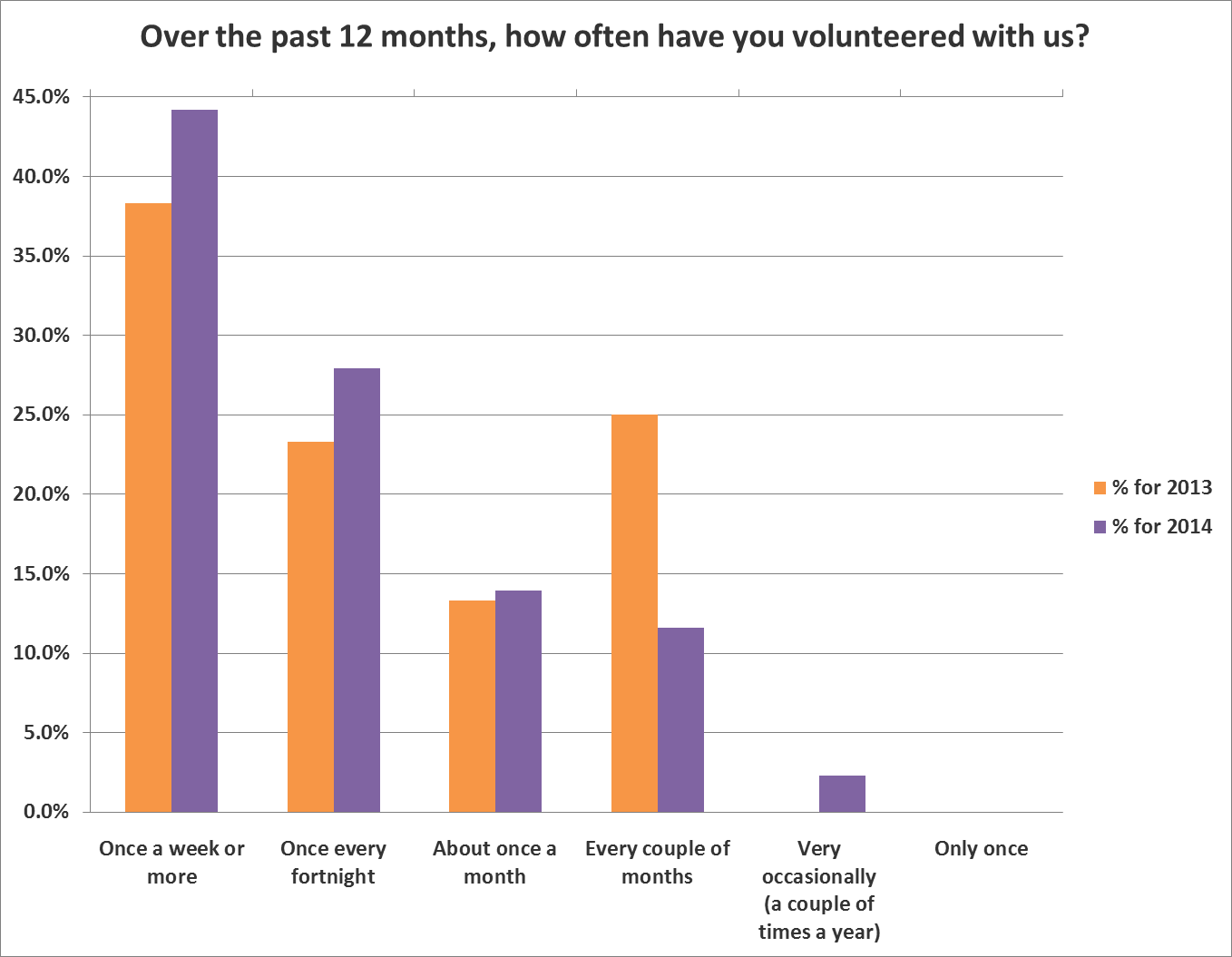
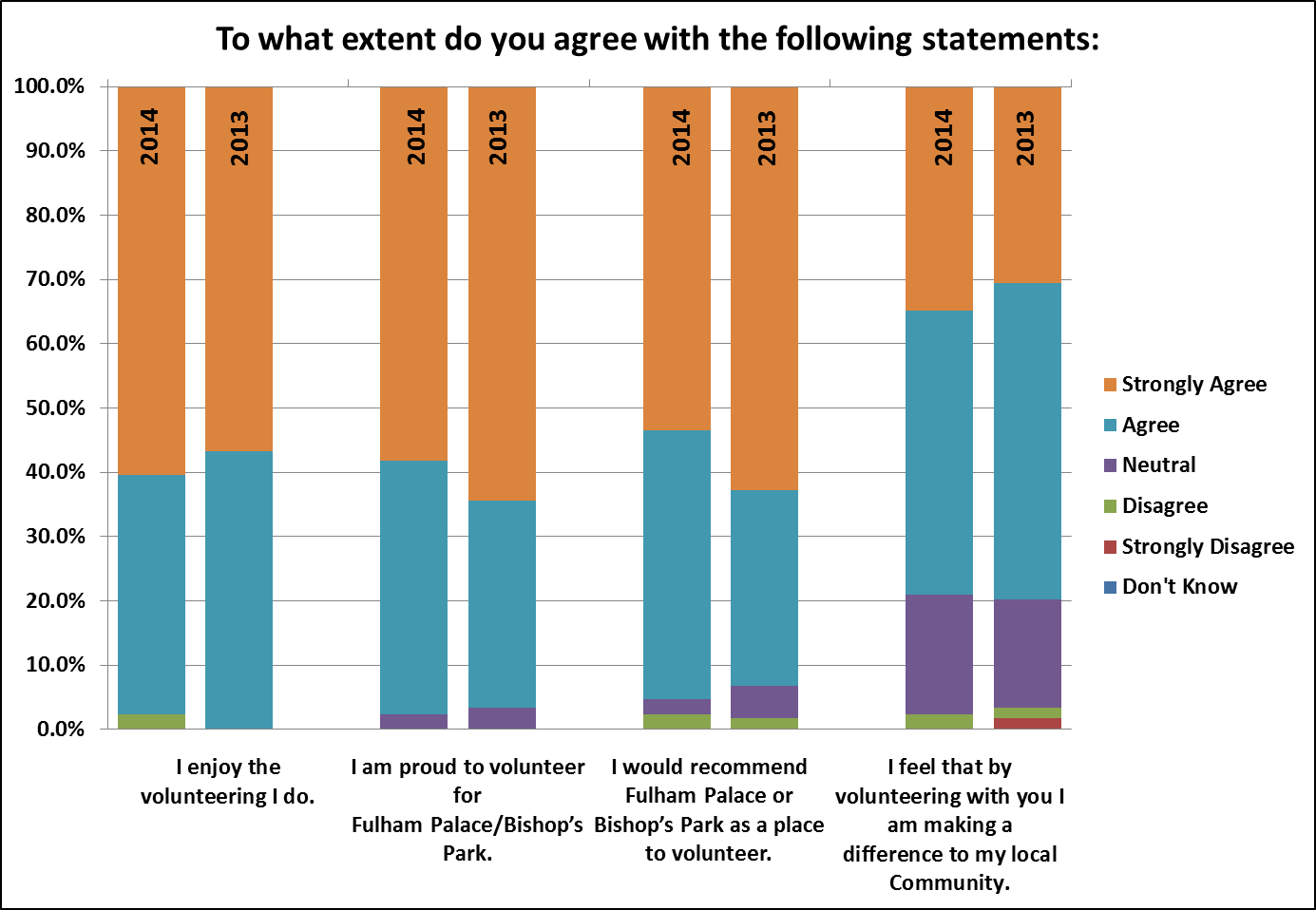
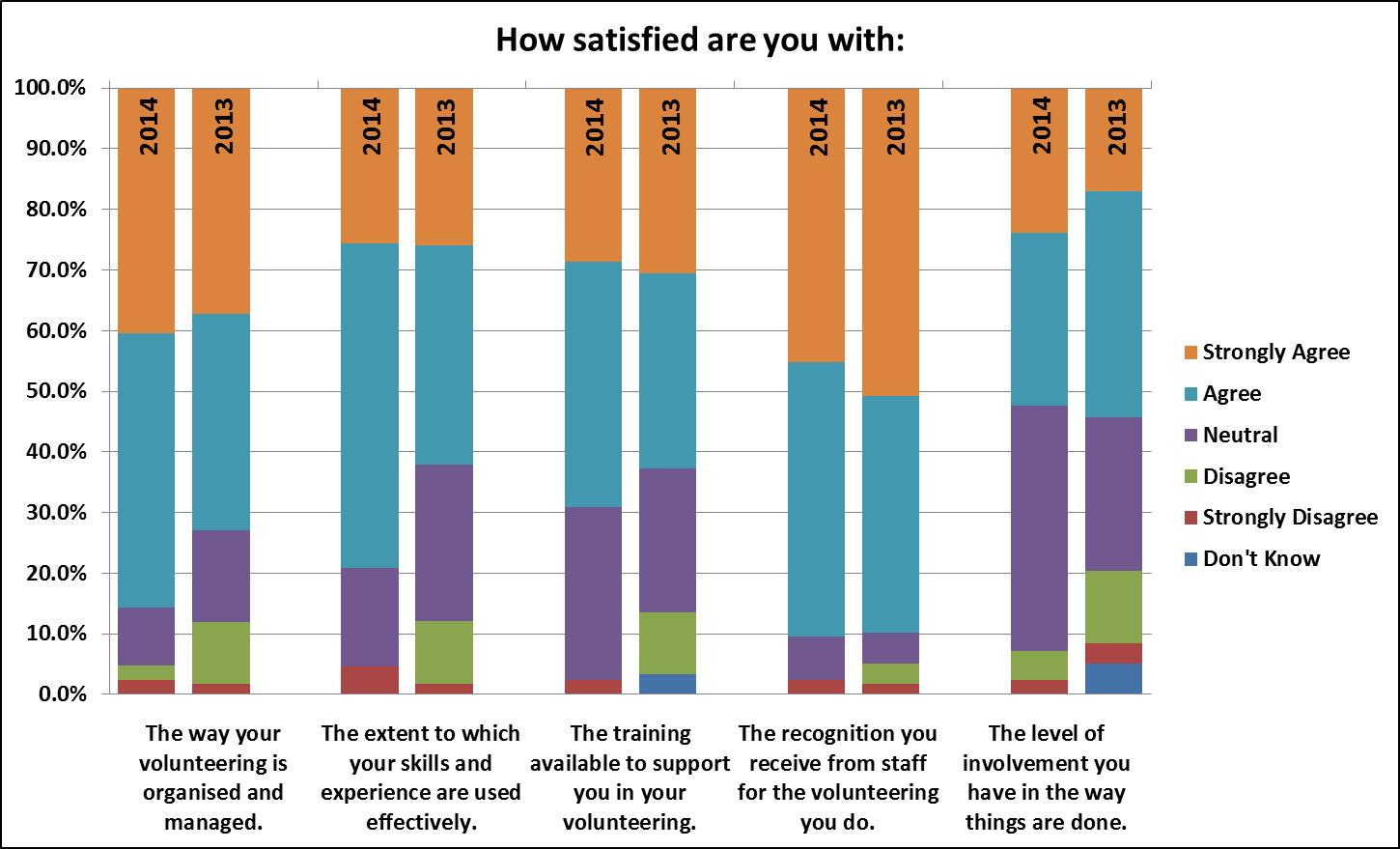
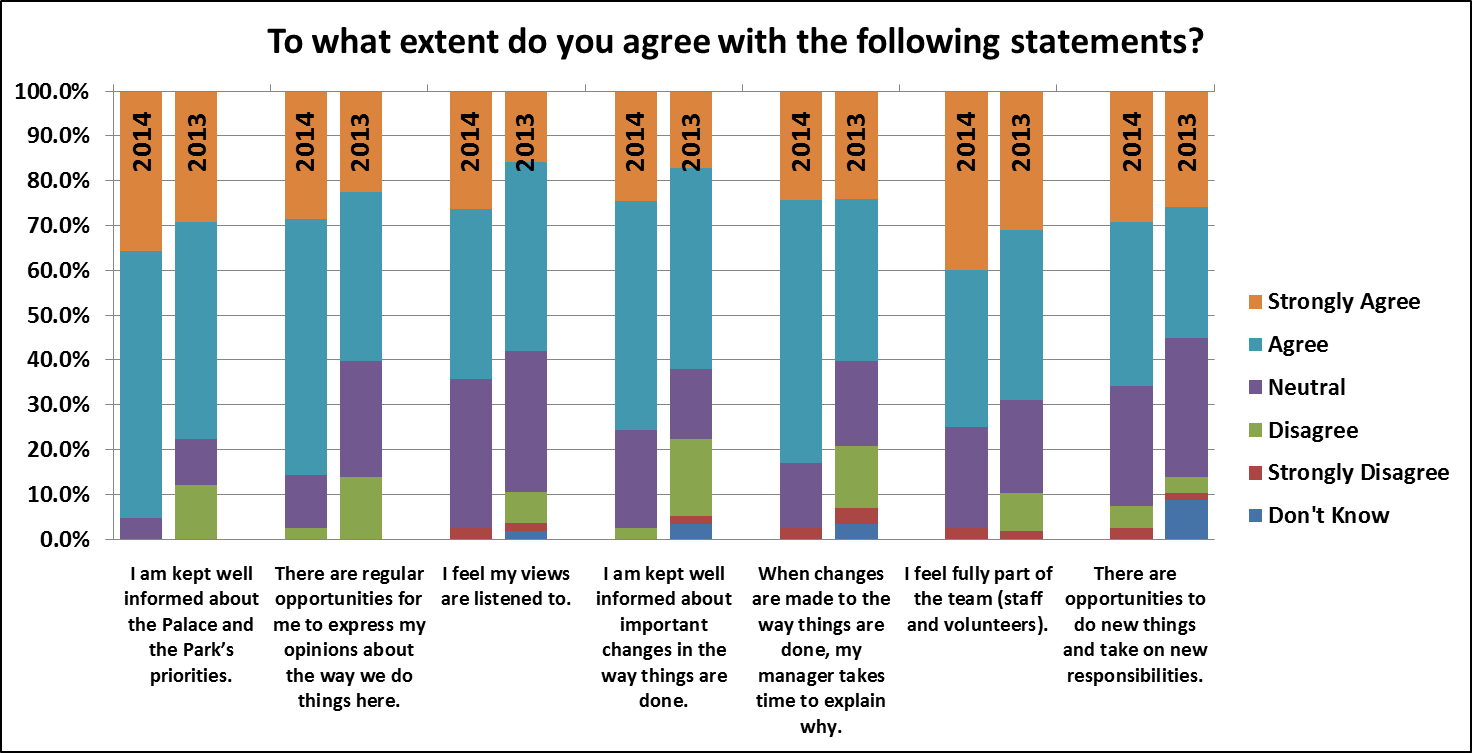
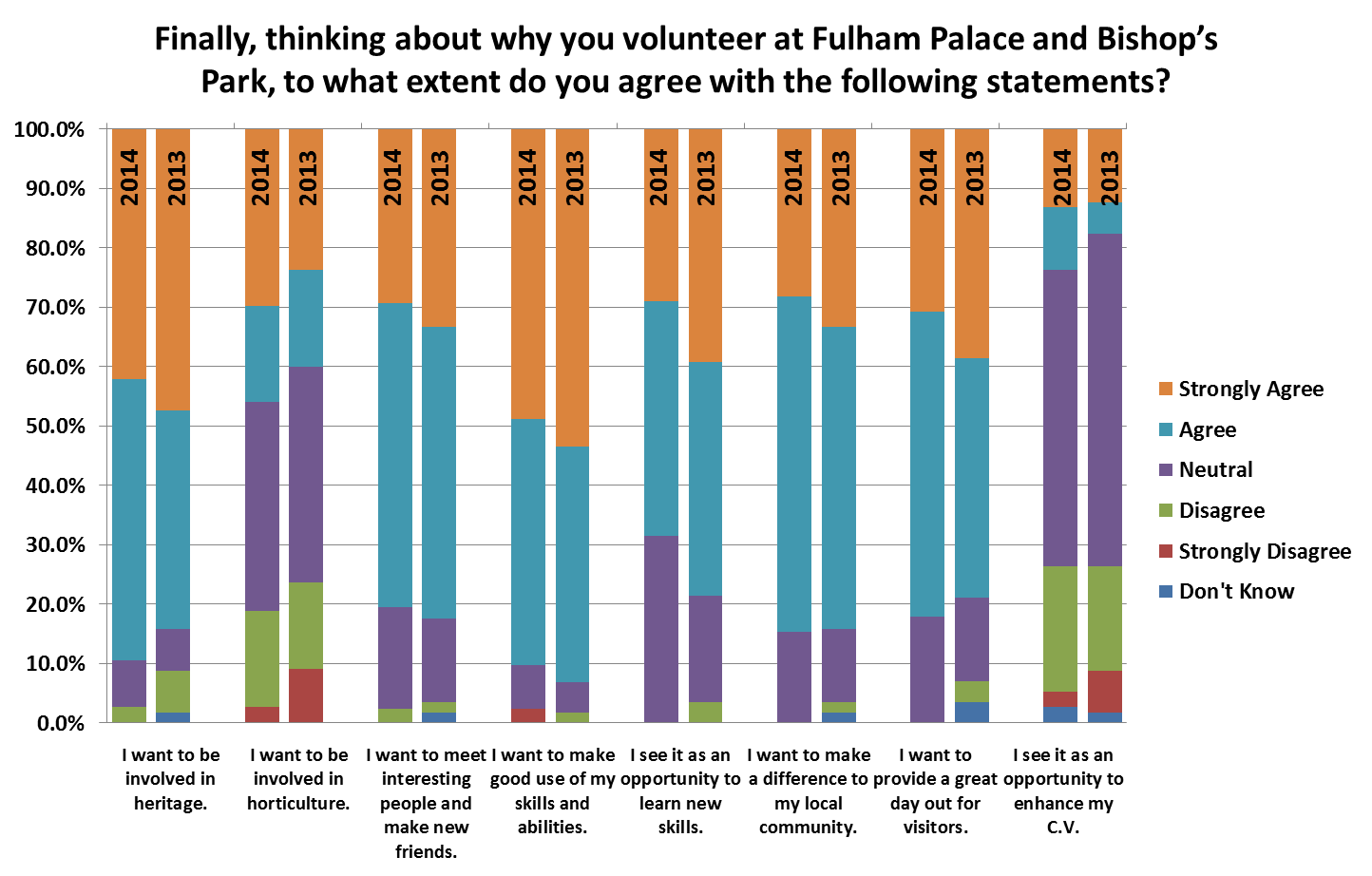
The results of the recent Volunteer Survey were revealed during the last Volunteer Forum.  For those of you didn’t attend the meeting, here is a sum-up of the results.

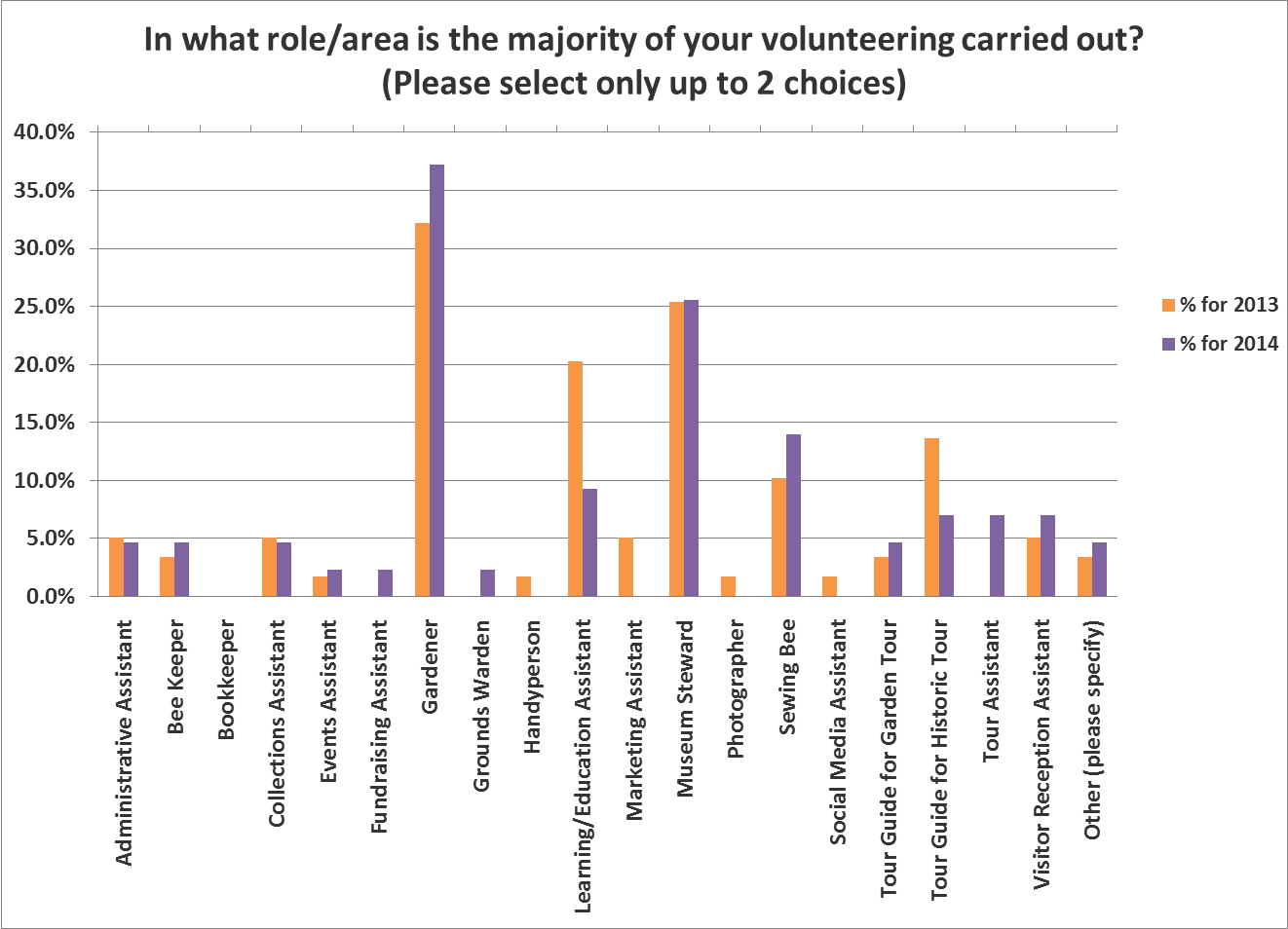
  • The number of responses from beekeeper, garden and sewing bee volunteers are up from 2013, and we now have a fundraising assistant and grounds warden whilst the numbers of learning/education assistants and tour guides for historic tours are lower than last year.
  • The number of people who have volunteered for over 10 years (but under 20) almost doubled from 2013.
  •  People volunteering more than once a week or fortnightly were also up from 2013.
  • Overall volunteers seem more pleased with their experience volunteering.
  •  The number of volunteers enjoying the work they do at the Palace rose slightly.
  •  More volunteers are satisfied with the way volunteering is organised in the 2014 survey than the previous year and also about the amount of training available to support the work they do and the extent to which their skill and experience is used effectively.
  •  More volunteers feel they are kept well informed about the Palace and the Park’s priorities in 2014 than 2013, and also about important changes in the way things are done, that managers take time explaining why and that they can express their opinion on how things are run.
  • A higher number feel there are opportunities to do new things and take on new responsibilities in the recent survey than in 2013 and that their views are listened to.
  • The number of volunteers wanting to be involved in heritage rose slightly.
  • A slightly higher number see volunteering as an opportunity to enhance their CV although a large number feel ‘neutral’ or disagree with this statement.
  • A smaller number of volunteers see volunteering as an opportunity to learn new skills in 2014 than 2013.

Click on the images below for the comparison charts.