#AskAConservatorDay

On #AskAConservatorDay 2020, conservators around the world answer questions about their work and day-to-day tasks. The Day is held in November every year, to mark the flooding of Florence on November 4, 1966, which damaged and destroyed priceless cultural heritage.

We asked our own conservator some intriguing questions. Read on to see that conservation isn’t always like it is in the movies!
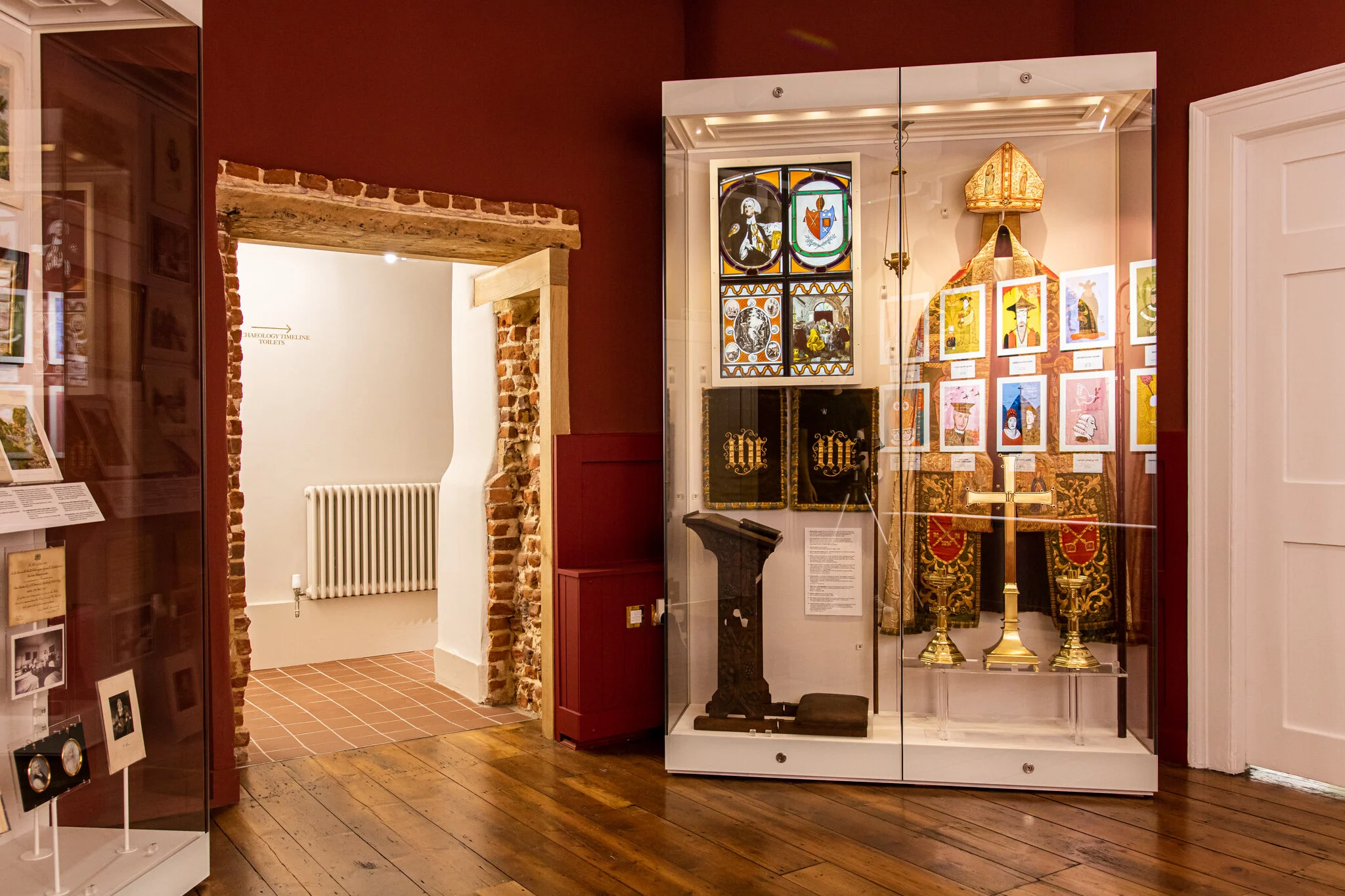
The Bishop’s cope display in the Palace Museum

The Bishop’s cope display in the Palace Museum

What is your main role at Fulham Palace? What kind of objects do you look after?

My role is to support the curator with all aspects of the collection and collection care. I am responsible for environmental monitoring, conservation cleaning and conservation engagement activities. I manage collection care volunteers and their activities, such as the Library Care team in the Porteus Library.

Fulham Palace houses a wide range of materials in its collections that aim to depict the lives of the Bishops of London and their families. This includes artefacts from archaeological excavations undertaken on Palace grounds, fine art and social history collections.

Why don’t you wear white gloves like in the movies?

There are many reasons why white gloves are unsuitable for handling heritage materials. Cotton gloves are quite porous and get dirty quickly. This means they are unable to protect you from unknown hazards, as well as being unable to protect objects from the transfer of oils and sweat on your skin. They also tend to catch on surfaces causing abrasion and flaking to fragile materials.

What is your favourite part of being a conservator?

The greatest perk of being a conservator is having access to the “behind the scenes”. It is a fantastic job being able to go into museum stores, where part of your work includes having to open boxes and check inside drawers. I really love having the opportunity of discovering something new!

What is your least favourite part about being a conservator?

Spiders, big spiders! Unfortunately, you do encounter them whilst dusting and when checking pest traps.

Why are objects always behind barriers/glass?

We aim to protect objects from the 10 agents of deterioration, for example from inappropriate environmental conditions that can damage vulnerable collections. Cases do provide that level of protection from these certain issues. The heritage sector is attempting to move away from using barriers and “do not touch” signs as these tend to put off visitors.

What happens if you touch a metal object without gloves?

Fingerprints and sweat, which is moderately acidic, can cause permanent staining and corrosion of metals. Therefore, we protect objects from us by wearing nitrile gloves.
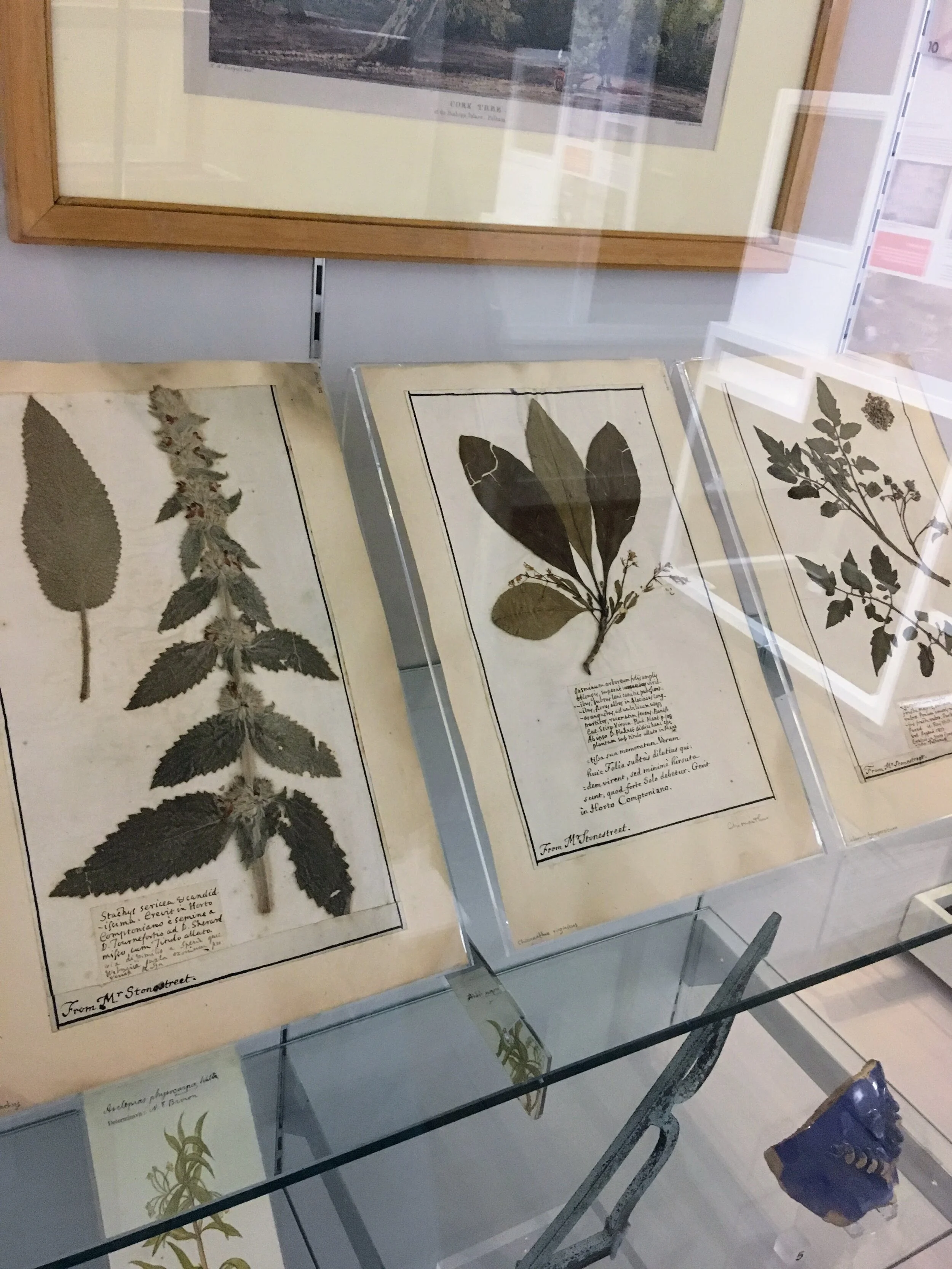
Some precious artefacts safely stored behind glass.

Some precious artefacts safely stored behind glass.

Why are museums rooms so dark sometimes?

There are materials and pigments that are particularly sensitive to light and will fade or damage over time. For paintings, discolouration and fading will greatly affect the balance of the image. Damage from light is cumulative, therefore our aim is to reduce light levels to prolong the lifespan of our objects

Do you have any book recommendations for people interested in conservation?

For people interested in knowing more about how objects are maintained and cared for in historic houses, I would suggest reading The National Trust’s Manual of Housekeeping.
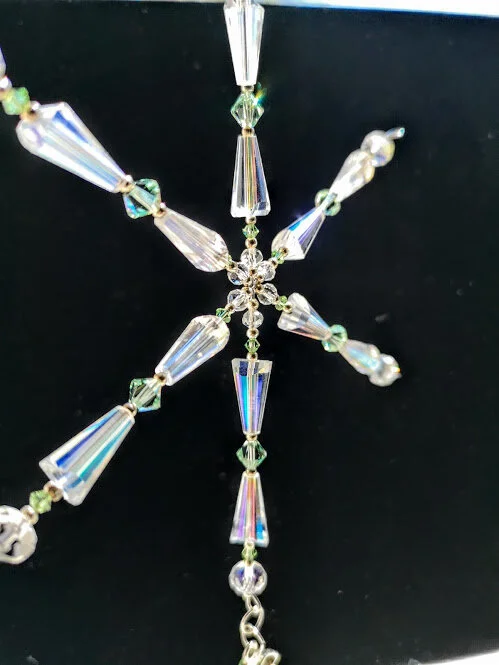
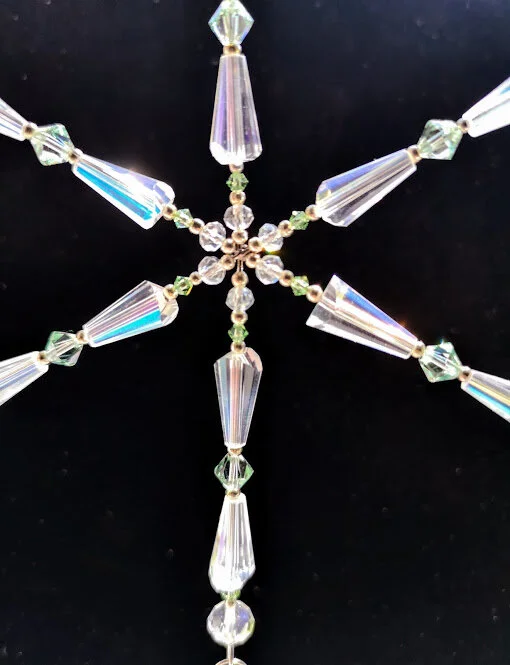
Sparkling Snowflakes

Calling all Christmas crafters!


IMG_20200624_150403_resized_20201118_034843168.jpg

Get Christmas ready with Christmas crafting

Thinking about the perfect way to get Christmassy this year?

We certainly deserve it this year! Luckily, your solution is here! Best of all, it comes with delicious mulled wine and mince pies.

On Monday 7 December 2020, you and your friends can enjoy a very spirited morning together, set in a very festive Fulham Palace, and leave with a beautiful Christmas decoration!

IMG_20200624_150824_resized_20201118_034844389.jpg
IMG_20200624_151459_resized_20201118_034844678.jpg

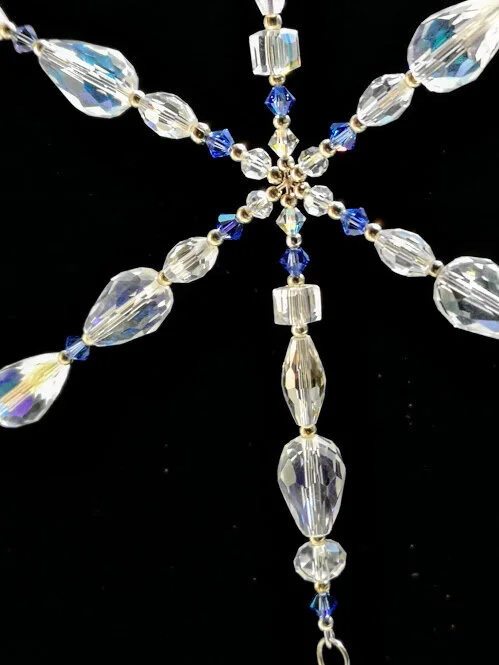
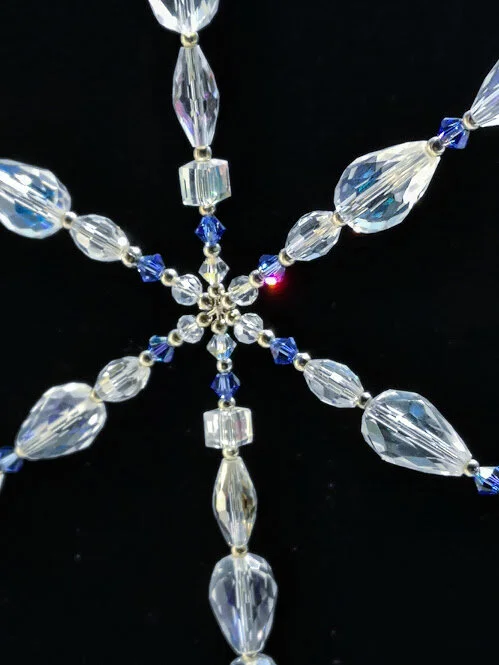
 Your very own sparkling snowflake decoration is the perfect gift for your loved one or for your beautiful tree! … and, of course, the perfect conversation starter over the festive period, or stylishly show off in your next Zoom group chat or meeting. These stunning snowflakes are each completely unique and made from crystal beads. 

The half-day workshop will run from 10.00 - 12.15 on 7 December, led by experienced facilitator Tricia Kern. The session is suitable for all abilities and is fully accessible – come and have some fun with us!


This session has been designed to help raise funds for Fulham Palace. Please help us spread the word among anyone you think might be interested – we’d really appreciate help to get the word out there.

A few more details:

  • Tickets £30

  • Age 18+

  • Includes mulled wine and mince pies


IMG_20200624_151510_resized_20201118_034844962.jpg

November's specimen of the month: pondering the Ponderosa

Every month we feature two blogs written by volunteers; one describes an object in the Palace and one a feature from the Garden. There is no set format so you are free to experiment with research, prose, poetry or anything new! It is a space for you to learn more about the Palace and share it with the volunteer community.

Many thanks to Vicky Garrard, collections volunteer, who dived straight back into volunteering after being in the States for the last seven months!

Arizona is not just BIG CACTUS ! Saguarro (pronounced Soowarrow) thrive in the southern part of the state and grow up to an elevation of 4,000 feet.

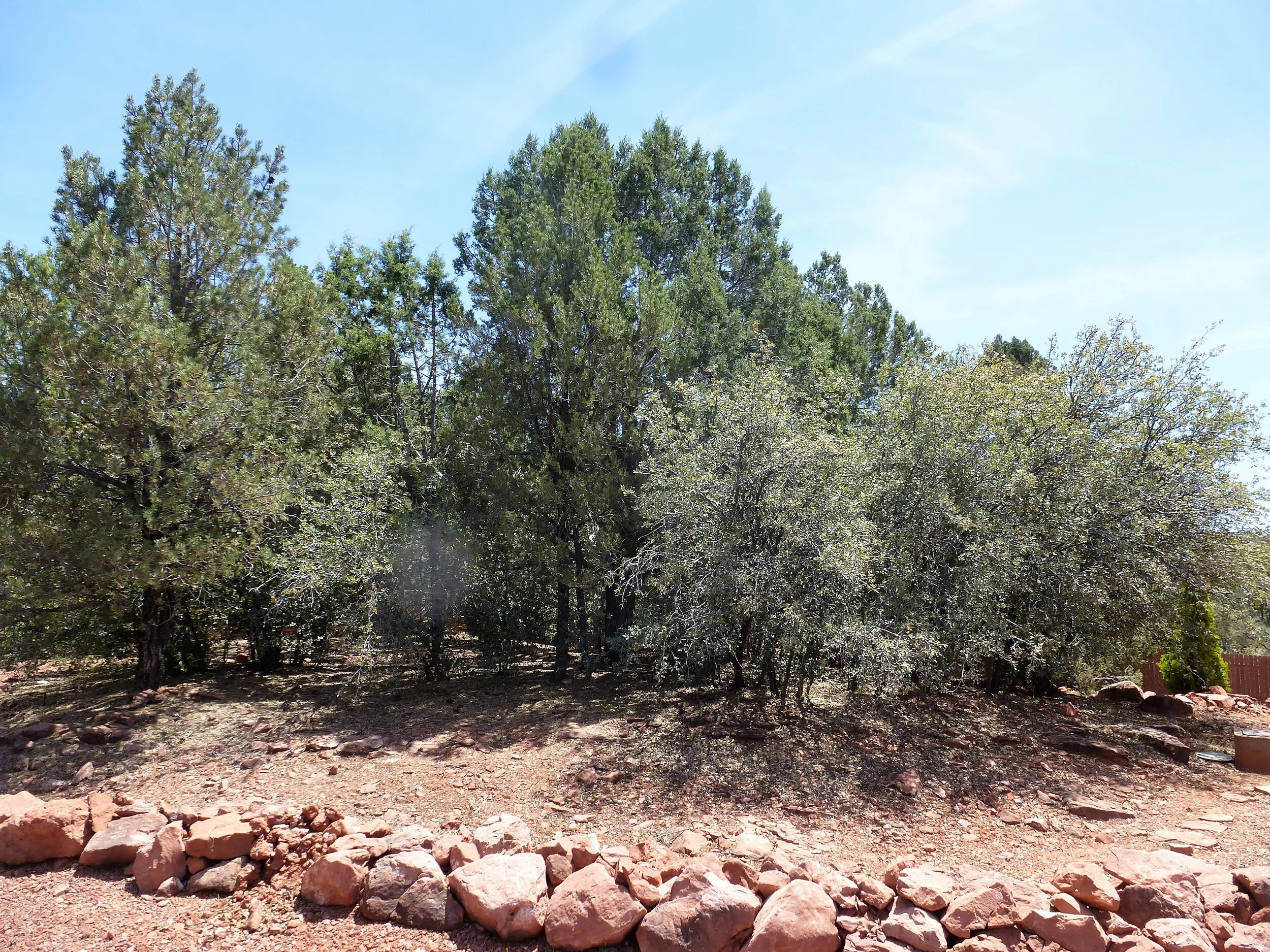
A planned five week trip to Northern Arizona in March 2020 lasted seven months. This was spent at a height of 4,500 feet in the evergreen juniper, pinon pine, scrub oak ecozone. So this means predominantly grey green trees and shrubs throughout the whole year.

Left to right: Pinon, juniper, scrub oak

Left to right: Pinon, juniper, scrub oak

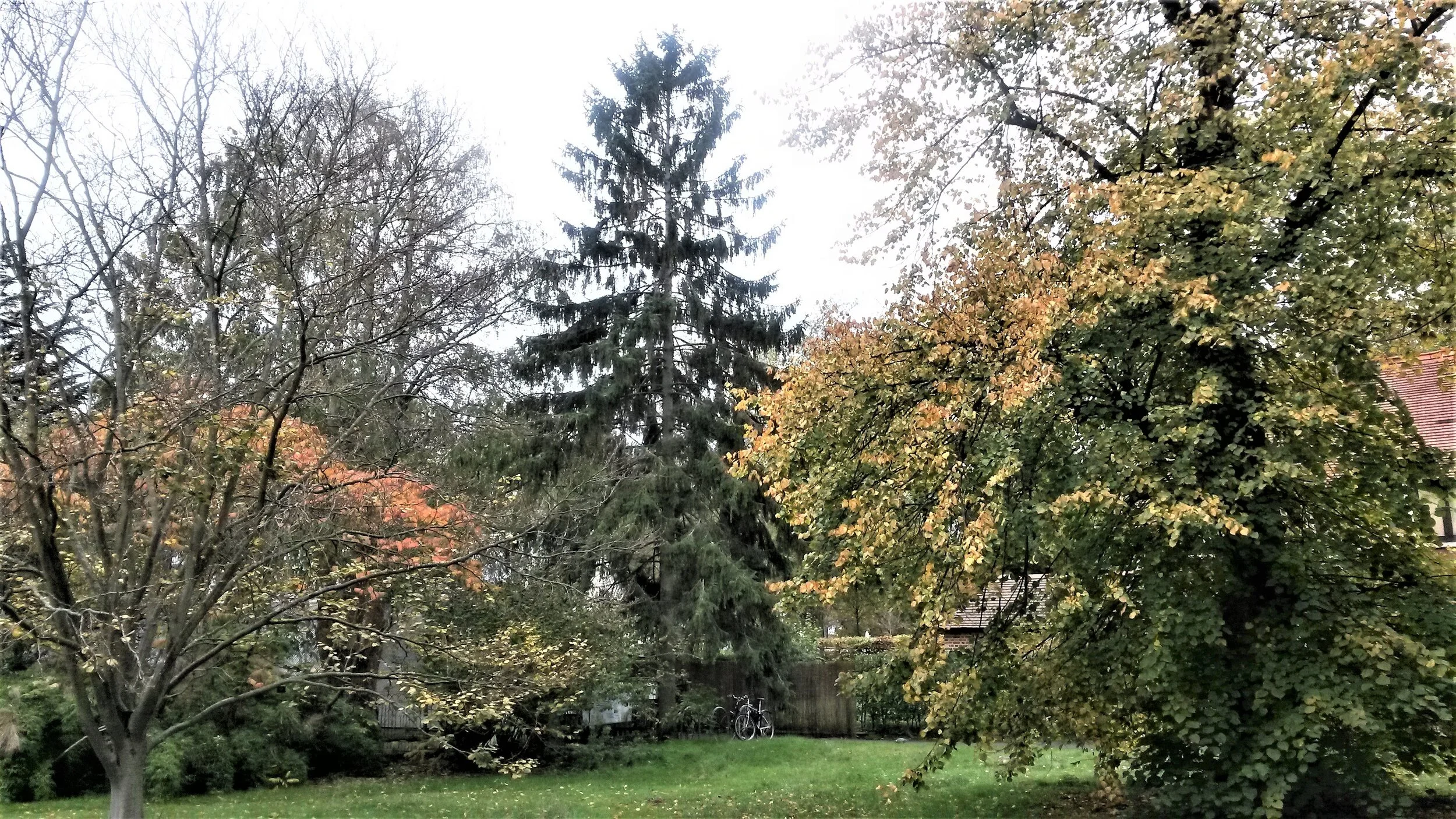
Returning to SW London in early October was a real shock and delight. The range of colours and shapes of trees, and leaves, seems astonishing. Especially so in the grounds of Fulham Palace where its unique history means that the range of trees, both native and from elsewhere, is particularly wide.

Looking towards the children’s nursery from the front drive

Looking towards the children’s nursery from the front drive

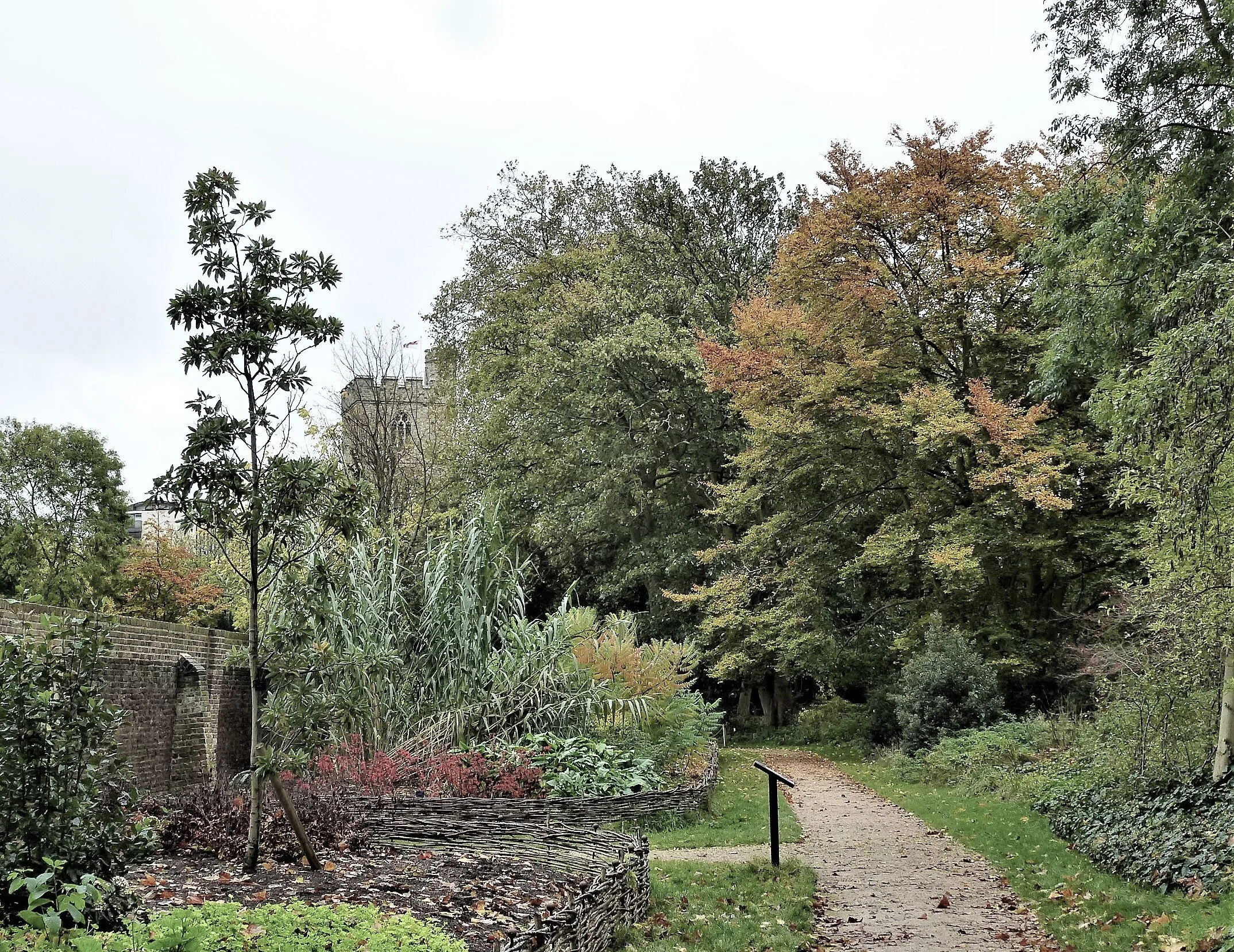
A section of the Compton Beds looking towards the church

A section of the Compton Beds looking towards the church

There are many trees and shrubs in the grounds of Fulham Palace with origins in North America. Two of the tallest evergreen trees, on the edges of the back lawn, are native to the Western US.

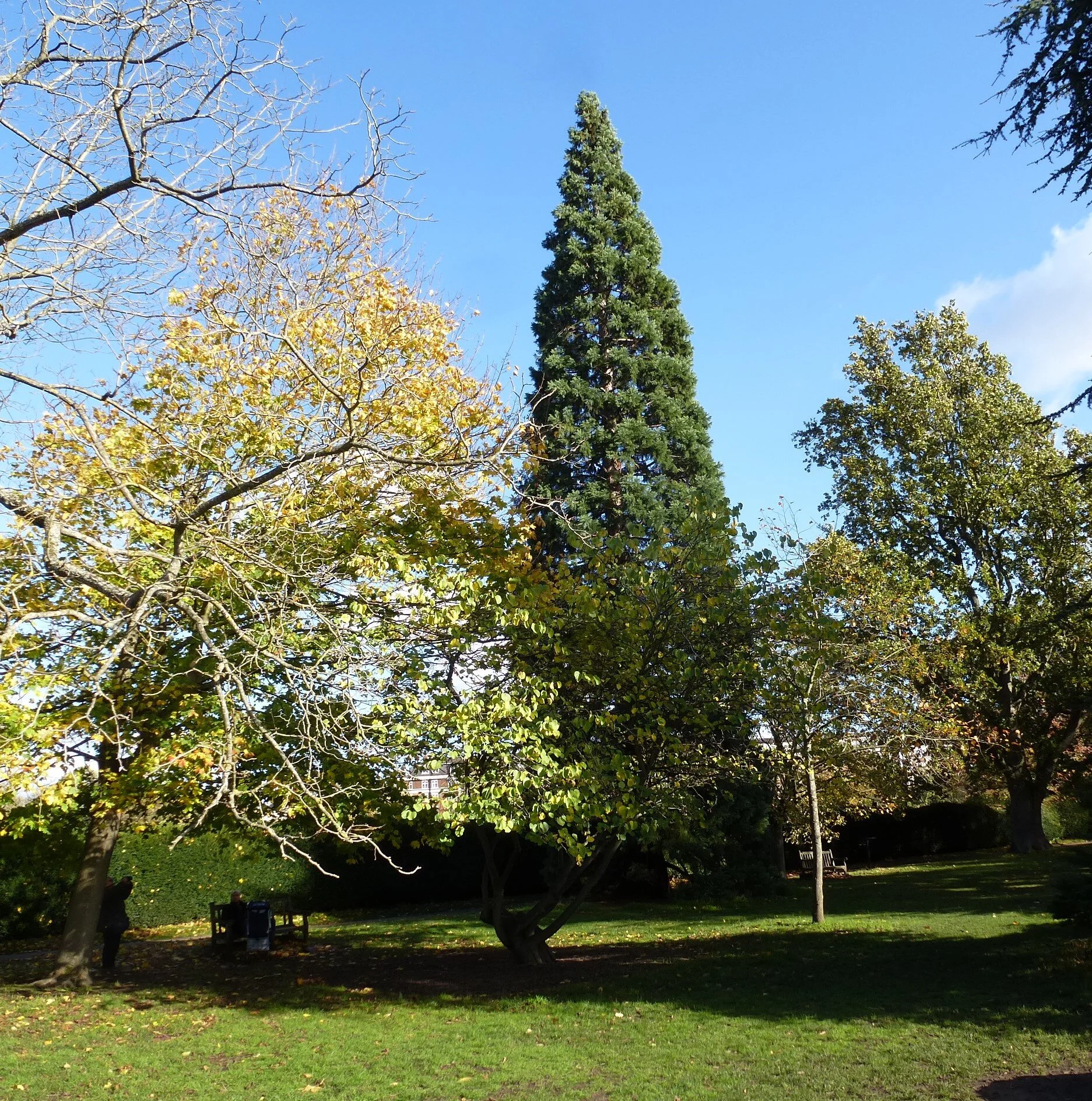
The Giant Sequoia (Sequoiadendron giganticum, tree tag 5114 ) is close to the wall adjacent to the allotments. The Giant Sequoia is native to California and naturally occurs in the range 4,600 to 7,000 feet.

The Giant Sequoia

The Giant Sequoia

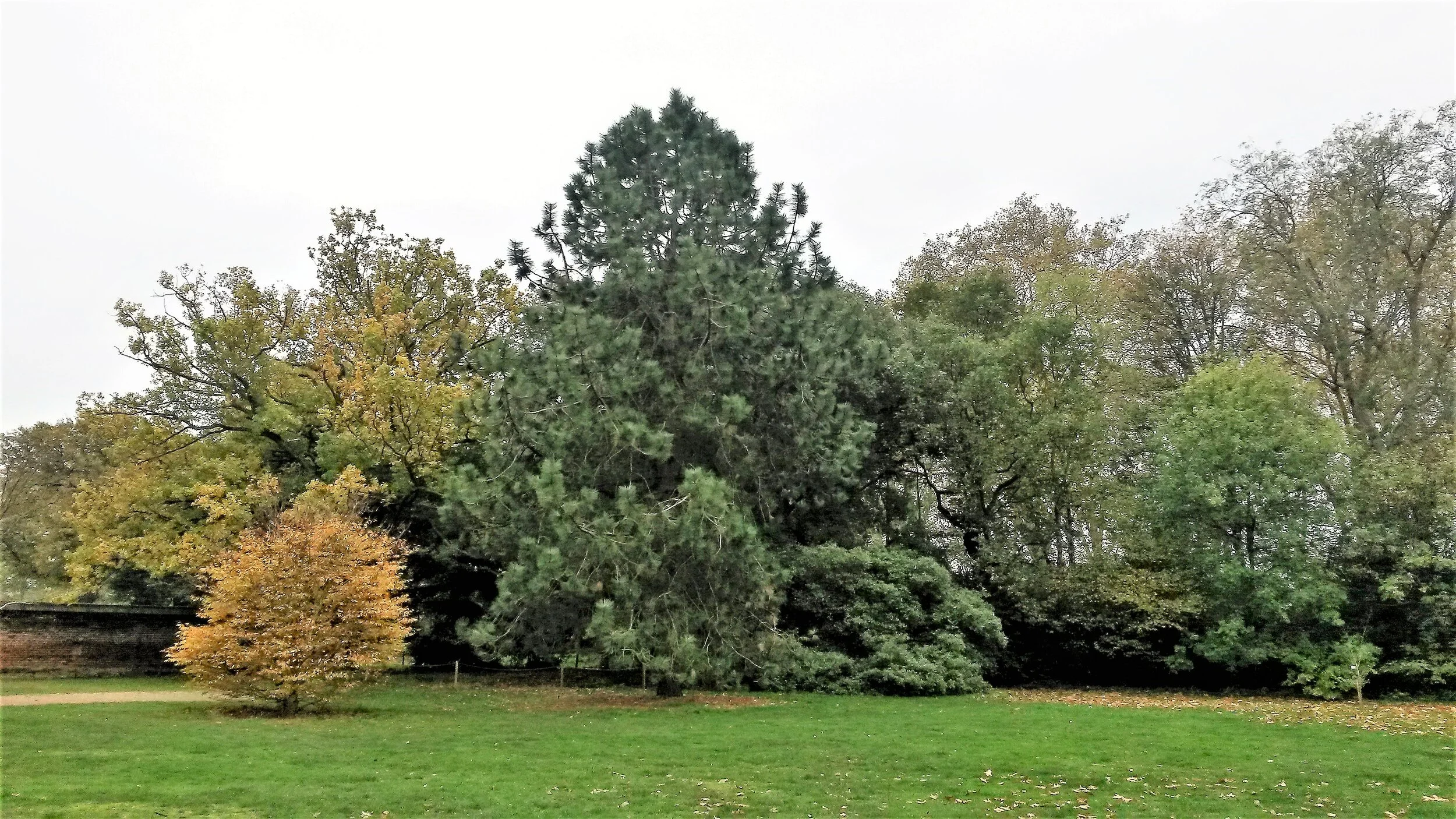
The Western Yellow Pine (Pinus ponderosa, tree tag 5350 ) is close to the old Holm Oak. This pine is native to the mountainous regions of the Western US and is known as Ponderosa Pine in Arizona. The largest stand of pure Ponderosa Pines is in Northern Arizona at a height of 6,500 to 8,000 feet.

The Ponderosa Pine

The Ponderosa Pine

I have been pondering as to why both the Giant Sequoia and the Ponderosa Pine are doing so well close to the River Thames, just above sea level, when naturally they grow at such high elevations……..?

Before and after: the Conservation in Action team

Back in early 2018, a message went around asking if any Volunteers would be interested in forming a group. This group would be involved in the upcoming, major 2-year project about to start at the Palace. The lottery funding grant had been approved and the specialist teams had all been chosen by the Palace. Now it was just a case of doing the work! So the Conservation in Action team was formed.

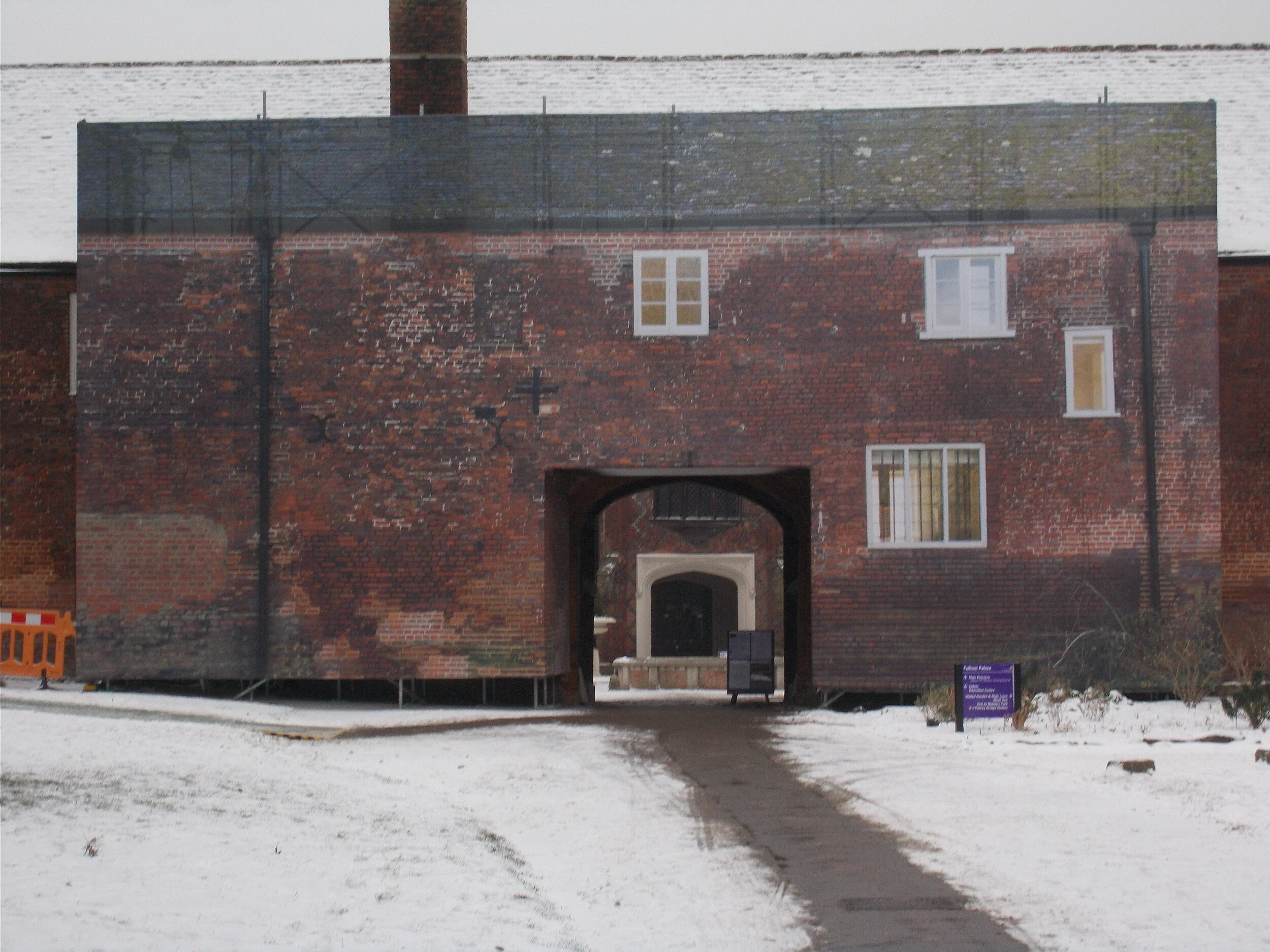
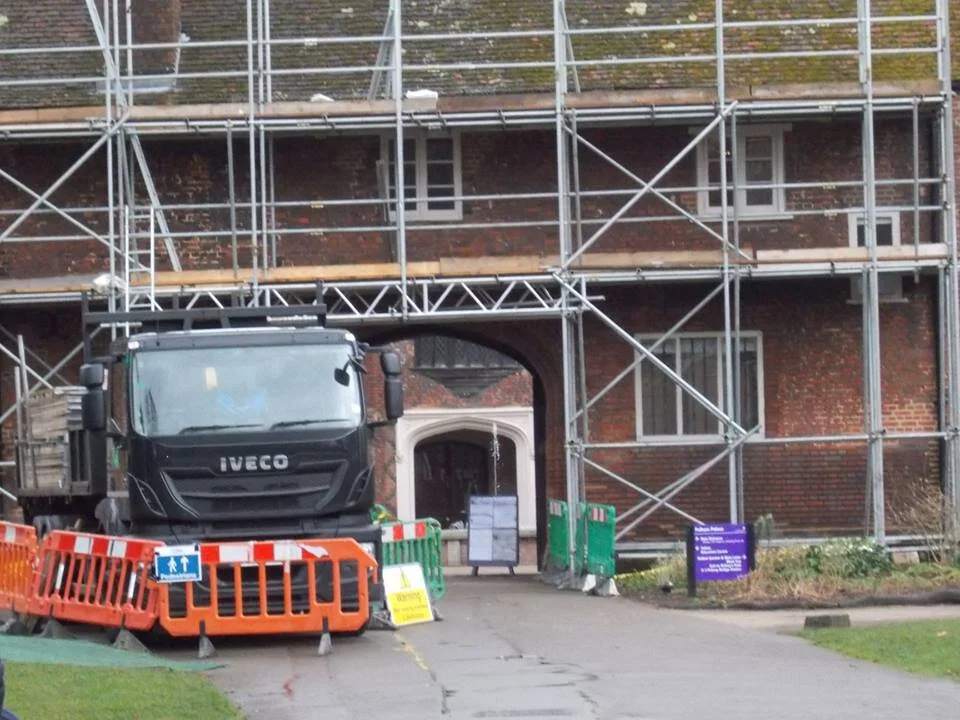
A shroud on the Palace

A shroud on the Palace

The scaffolding up in the Courtyard.

The scaffolding up in the Courtyard.

The first thing on the Agenda - call ourselves the C.I.A. Every team needs a nickname! Our first mission was to meet with the Learning and Engagement Manager, Nia McIntosh (code name ‘M’, our leader), to formally introduce ourselves and set out our Mission statement. This was the first of many meetings, which also lead to many training sessions, which we needed as probably none of us, (I know I didn't) had a clue about bricks. But, by the end of the next few weeks training, we were Brick, and all things Conservation, Construction, Hard Hat wearing Experts.

a porch.jpg

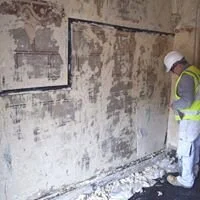
We studied the design plan and conservation documents, which were fascinating - and vast! From pages of pictures and detailed information covering many subjects, including forensic procedures, historic paint analysis spanning hundreds of years, brick surveys, detailed blueprints … we looked at it all.

a sykes bricks.jpg

And we visited the brick plant where our wonderful new Tudor bricks were being made, in the same way the actual Tudor bricks were made!

But we had little time, as our leader (M) had set the first Hard Hat tour to begin very soon. The message went out!

Volunteers' Hard Hat Tour, March 15th 2018, 3:00 PM

You may have noticed that the capital works of the Palace's Restoration Project, centred on the Tudor Quadrangle, are now underway! Volunteers are being given the opportunity to participate in one of the first Hard Hat Tours in the recently exposed spaces in the north and west ranges of the courtyard. This is a very early opportunity to view the fascinating interior spaces where construction will be taking place. It is the first time that some of these areas have been visible for many years. You will be guided through the interesting historical discoveries that have come to light and you will get a fuller understanding of the future developments and long term vision for the Quadrangle. The highly-skilled restoration of the brickwork will also be explored.

Please wear appropriate clothing and suitable footwear. The tour is free but you will need to reserve your place by emailing rachel.bray@fulhampalace.org.

And so it began, the very first tour, (those of you who know me will know that I love a bit of dressing up, so donning my first Hard Hat, strong boots and bright yellow jacket was amazing fun). The tours continued throughout the 2 years, parts of the Palace resembled a building site, and we soon became used to seeing workmen amongst us. Many of whom became friends, giving the C.I.A team so much help, not only with their knowledge but their helping hand with lifting bricks.

Steve Bevan

Steve Bevan

We had lots of help from Steve Bevan, the site manager. He joined us on many of our tours and was a font of knowledge when it came to more technical questions. (He also became famous for seeing a Ghost - check his video out on Youtube). I was sad when the project ended in a way because we had to say goodbye to Steve and his team.

Videos were made, including a visit from the Heritage Lottery. Some of us became famous. My right arm for one was filmed but the fame has not gone to its head!

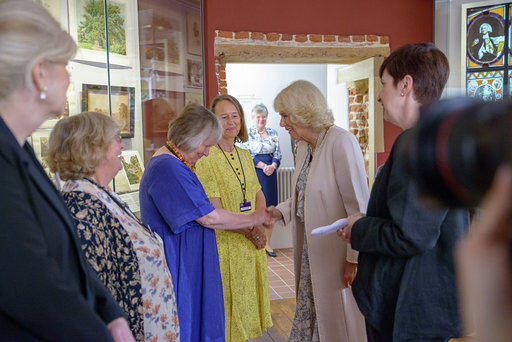
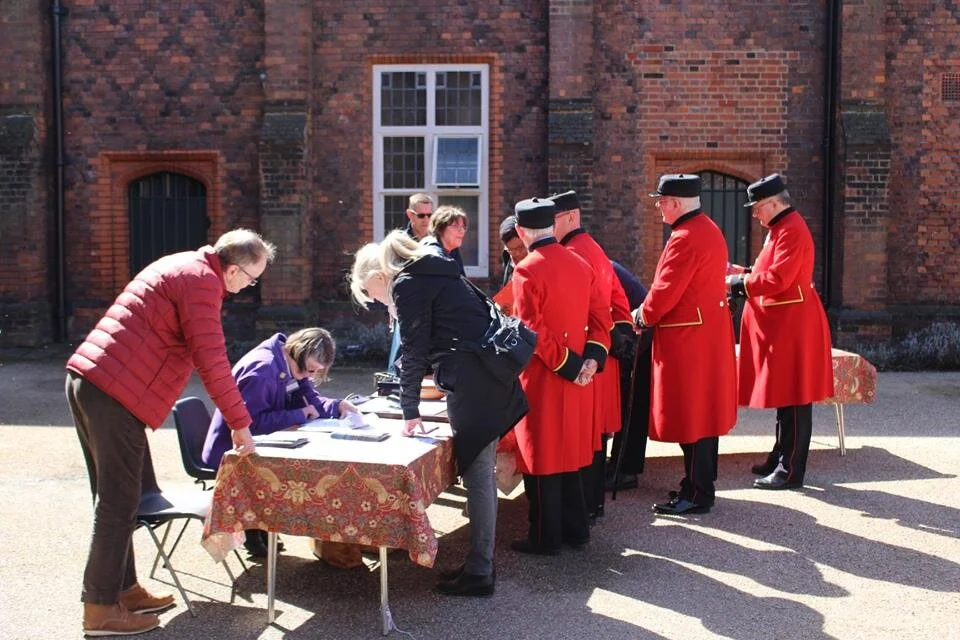
‘Sponsor a Brick’ and ‘Brick Fests’ were held with some colourful visitors attending, the Chelsea Pensioners for example. The Duchess of Cornwall, Patron of Fulham Palace, also attended the Grand Opening.

The Duchess of Cornwall at the Palace

The Duchess of Cornwall at the Palace

Day 3 of the Brick Fest

Day 3 of the Brick Fest

Lots of hard work had been done by everyone, during one of the worst winters, thanks to the Beast from the East, but the results of the two-year project are amazing! We now have a brand new Museum, newly restored brickwork, new pathways and much more. How far we've come and how much more we have to do. It was, and still is, very exciting!

This piece was kindly written by Lee Copeland.

Zoom into the history of Bishop Beilby Porteus's portrait

To keep the Palace’s activities running through the second lockdown, we have designed a series of lectures that will be delivered live through Zoom! Don’t worry if you can’t always make it to a Zoom call ; they will all be recorded to be watched later, at any time.

The first of our lectures was a fascinating insight into the portrait of Bishop Porteus that has recently returned to Bishop Sherlock’s room following conservation work. The talk was led by Lisa, curator at the Palace, Roxane Burke, collections and conservation assistant and Jim Diamond, paintings conservator, who discussed the conservation process and the Bishop’s role in abolishing the transatlantic slave trade in Britain in the late 19th century.

Click here to watch it now!

November's object of the month

Every month we feature two blogs written by volunteers; one describes an object in the Palace and one a feature from the Garden. There is no set format so you are free to experiment with research, prose, poetry or anything new! It is a space for you to learn more about the Palace and share it with the volutneer community.

Many thanks to Alexander Ogilvie-Graham, front of house volunteer and library care team volunteer, for this month’s piece!


I am Alexander Ogilvie-Graham, a volunteer at Fulham Palace. I have Aspergers and an even keener interest than most sane people in Coat of Arms and Heraldry. I am hoping that this will be the first of many articles that I post on the portal. I have always been fascinated by Heraldry. This article will talk about the life of a specific coat of arms up to the present day and will explore how it ended up in the temporary exhibition room. 

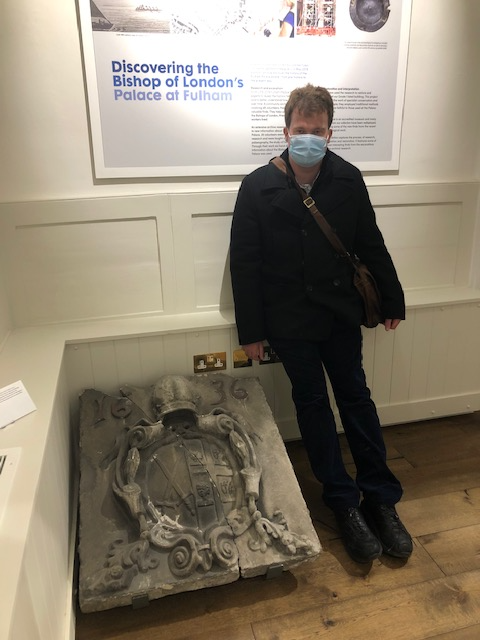
Standing with Bishop Juxon’s Coat of Arms in the exhibition room

Standing with Bishop Juxon’s Coat of Arms in the exhibition room

I have chosen the Coat of Arms that is tucked away in the corner of the temporary exhibition room - the coat of arms of the mysterious Bishop Juxon. Juxon was Bishop of London from 1633-49 and served as the Archbishop of Canterbury from 1660 until his death in 1663. Bishop Juxon studied law in Oxford and was a clever Bishop. He had a rich and varied life. He was Lord High Treasurer from 1638 to 1641. He also held the same post as Sir Winston Churchill, which was the First Sea Lord of the Admiralty in the year of 1636 to 1638, which strikes me as a very odd role to place a Bishop as the head of the Navy - but this might have been because his family were from a military background? In the year of 1632, the Bishop held the position Clark of the Closet to King Charles the First. It must have meant that he had the kings ear and was close to him. He was the last person the King spoke to before he was executed.

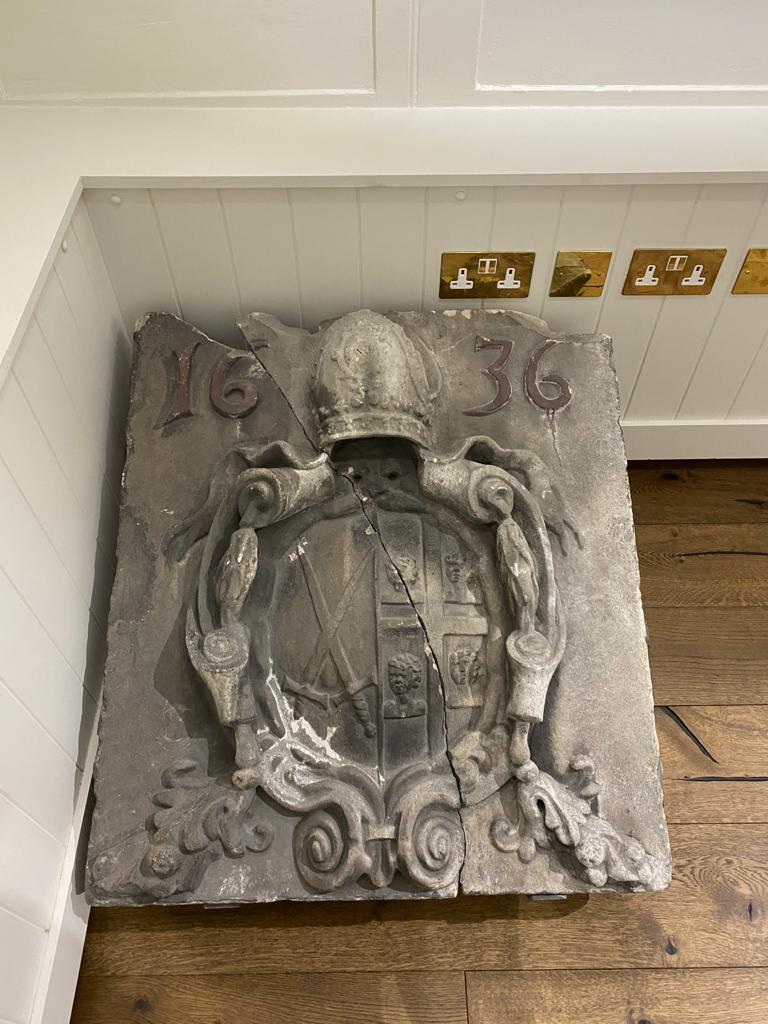
A closer look at the coat of arms

A closer look at the coat of arms

Today Juxon’s coat of arms is tucked away in the corner of the temporary exhibition room, almost unnoticed! It was commissioned in the 17th century and was made of the same decorative plasterwork that was used in the Great Hall. Its history got me thinking; What was the purpose of coats of arms? Why were they needed? Most people in medieval times did not read, so perhaps we might assume they are symbols of status?

Swords indicate that this is the coat of arms of a Bishop of London. And on the opposite side, depicting faces, are the insignia from his family’s crest. I wonder how the huge crack came to be in the middle? Will it always be in the temporary exhibition room? Where will it rest? These questions are what makes this coat of Arms so interesting to me!

Also featured in this coat of arms is the mitre - the hat at the top - a religious symbol. I think that the Bishop’s pointy hat represents the tongues of fire that appeared and rested on the apostles on the day of the Pentecost. This type of hat has been in use since the 4th century.  

When I look at the coat of arms in the temporary exhibition room, I am reminded of my favourite painting by Edmund Munch - ‘The Scream’. It reminds me to look beyond what you physically see, to reflect on what is embedded within symbols and explore the history of the person behind them.

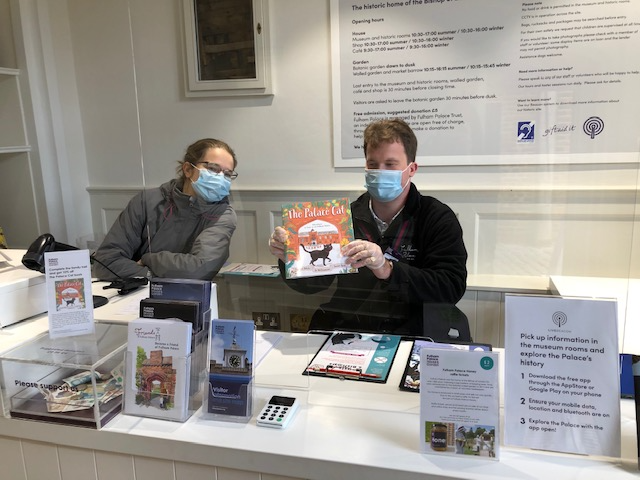
Fulham Palace exhibition shop

October's specimen of the month

Every month we feature two blogs written by volunteers; one describes an object in the Palace and one a feature from the Garden. This October, we have an exciting new format - a virtual specimen of the month!

On 29 September, our very own Matt Weston, Garden apprentice lead a special tour for our friends at Fulham Good Neighbours. The session was recorded so you too can enjoy this virtual garden tour.

Bravo to volunteer-turned-apprentice Matt, who navigates the world of live virtual tours with ease and grace – no easy feat! Expect a heartwarming tour, great views of Fulham Palace and excellent facts to impress your friends with!

Look out for cameos from Head gardener, Lucy Hart and Garden apprentice, Annette Foerger too.

Fulham Good Neighbours run an Adopt a Garden Project in Fulham but, unfortunately, due to Covid-19, they are still not able to do their usual home visits and help people enjoy the outdoors. Many of their clients have underlying health issues so most of them are still being cautious about going out. We teamed up with Fulham Good Neighbours to help bring the outdoors to them, leading their first Virtual Open Garden event.

You can find out more about Fulham Good Neighbours by clicking here!