October's object of the month

Every month we feature two blogs written by volunteers; one describes an object in the Palace and one a feature from the Garden. It is a chance to share your favourite parts of the Palace with the volunteer community and, since there is no set format, you can experiment with research, poetry, prose, or anything you are inspired to do.

Huge thanks for this blog go to Lee Copeland, tour guide, front of house and events volunteer. Lee tracked down and interviewed sculptor Daniel Miles to bring us the artist’s insight into this enigmatic sculpture which today sits proudly on the main lawn.


From Glastonbury to Fulham Palace - the Pinecone sculptures!
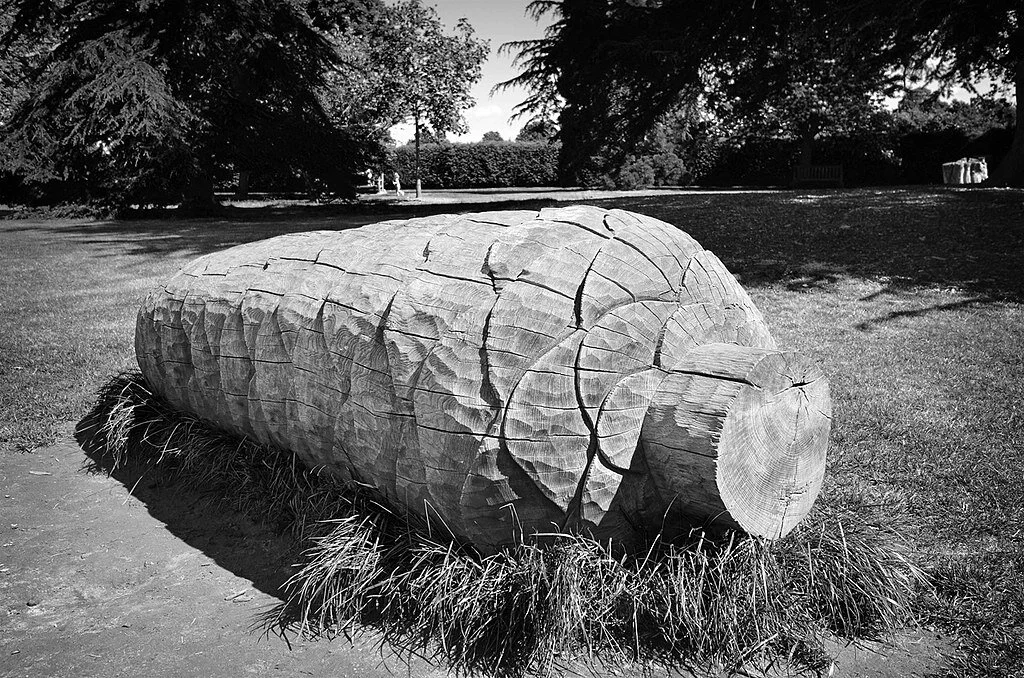
Daniel Miles’ Pinecone sculpture at the Palace

Daniel Miles’ Pinecone sculpture at the Palace

I have walked across the main lawn at Fulham Palace so many times I cannot count, often glancing at the Wooden Sculpture of a Pine Cone and the many activities it enables the visitor to enjoy. From simply sitting on top of it, to enjoying the views around the Palace, from weary travellers taking a rest (like my dear friend Leslie who visited from Texas) to the many children using their imaginations for play, it becomes a great object to climb on or to circle in a running game. I've watched them all, but it occurred to me that, as much as I know about the other wooden sculptures in the Garden (those by Andrew Frost or the throne chairs at the Bishops tree) I don't know anything about the Pinecones.
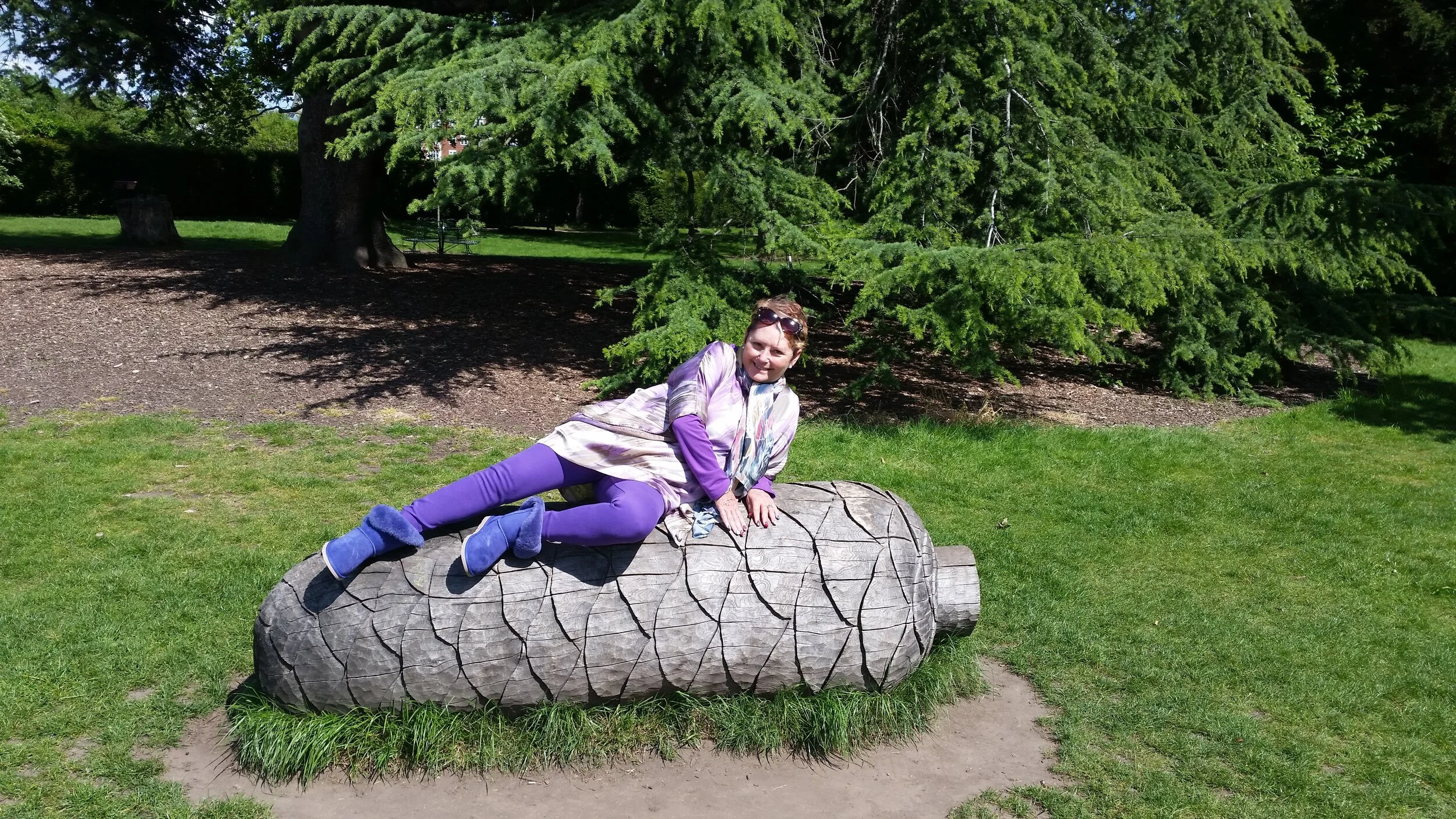
The pinecone sculpture functioning as a probably not so comfortable bench.

The pinecone sculpture functioning as a probably not so comfortable bench.

I asked Rachel if she could help. She was able to give me a small article from 2013 which mentions the Pinecone and the artist’s name. This was my starting point.

From 2011-13, the Palace hosted three Arts and Craft fairs. In the fair of 2012, amongst the many fine artists exhibiting was Daniel Miles. Miles is a self-taught carpenter and sculptor from Wadebridge, Cornwall. His father had been a carpenter so Daniel always had a strong connection with wood. He worked for Greenpeace for 18 years and perhaps this informs his choice of materials: he works in recycled materials wherever possible, working mostly in locally-sourced timber from trees that have either fallen themselves or been felled for safety reasons. He is very true to his phrase ‘Fix not Throw’.

Daniel Miles sculpting

Daniel Miles sculpting

His sculptural pieces evolve organically in a variety of different directions and often resemble micro-organisms and plant life on a large scale. Ever-evolving but often beginning with simple forms, many of the objects he creates appear calm and pleasing to the eye. Yet, the process used to create them is often incredibly noisy, dusty and aggressive.

Sometimes, I will scale up an organism beyond recognition, which offers us a warped perspective on the minute and intricate.

Miles is primarily concerned with love, interconnections with others as well as nature. His forms have a beautiful presence, acting as vessels for human emotion and, like small creatures, demand gentle touching.

The wooden pinecone sculpture

The wooden pinecone sculpture

I enjoy creating work when I have no idea what the outcome will be. That tends to inspire new directions or themes.

A group of twelve pieces were commissioned by Greenpeace for display at Glastonbury Festival in 2011. The sculptures include the Brockwell Park conker, a giant Sycamore seed, a Walnut, and the Pinecones. He made them at the festival with the assistance of a crew of chainsaw operatives, whom he had trained to make them. The group of sculptures were called the 'Seeds of Change'. This highlighted the fragility of large-scale timber deforestation. Most of the pieces were auctioned off to private collectors to raise funds for Greenpeace.

Not all the Pinecones were sold, so he brought them to Fulham Palace for display at the Palace Arts and Crafts fair. They were left behind, and there they remain on the main lawn of Fulham Palace, much enjoyed by the many visitors - and now for me too, having a better understanding of their story, much appreciated!!

Works by Daniel Miles. Please do look him up on social media if you'd like to see more of his amazing work. Here’s his Facebook page and his Instagram account

Stalls available at our new Fine Foods and Gifts market

‘Tis the season! (soon)

We have a few stalls left at our new Fine Foods & Gifts market.  If you know of a business which has lovely gifts appropriate for Christmas or sells wintery, Holiday-themed food or hampers, please have them apply for the market (see link below) or contact anja.herman@fulhampalace.org

We are also looking for businesses willing to donate a prize to our Christmas Raffle, please let me know if you’re aware of anyone who might be interested.

Our Father Christmas grotto has always been very popular but we've decided to create a fantastic weekend to also include carolling, winter workshops and a new fine food & gifts market. 

This event will run on Saturday 5 and Sunday 6 December, from 9:00-17:00.

There will be a steady stream of attendees from 9:00 as visitors come into the Grotto (which is already sold out!). Meeting Father Christmas is ticketed with specific time slots throughout the day and visitors will most likely peruse the market stalls. There will also be live a live choir carolling outside from 15:30-17:00

Winter is coming to the Palace

Winter is coming to the Palace

As the market is new this year, we are asking a discounted £100/day + VAT.  We will provide a 72"x30" table and chair, which you would be able to decorate beautifully.  If you require power or additional items these are available at extra cost.  Please have a look at our market application form for more information and complete it if you would like to join us.

There will be health & safety measures in place in keeping with the government guidelines.  If we do have to cancel, we would refund your fees.

Please do share this information with anyone looking to sell Christmas foods or gifts!

September's object of the month

September's object of the month

Every month we feature two blogs written by volunteers; one describes an object in the Palace and one a feature from the Garden. There is no set format and it can take the shape of research, poetry, prose, or anything you are inspired to do. It is a great way to learn more about the Palace and share it with other volunteers!

Today’s piece is by communications volunteer Naomi Jennings O'Toole.


This object of the month comes at the last day of September after I was finally able to visit the Palace museum again. Though it had been several months, it strangely felt like I had been there recently. My lockdown experience seemed to last forever in the moment but, in retrospect, the months feel like they flashed away so quickly. So it is hard for me to imagine the long expanse of time that the Palace went empty. There was a wedding taking place on the day I visited for the first time, with the rooms set up beautifully in white. There was also a wedding at the Palace on the first day I worked as a volunteer, and I remember being impressed by the eucalyptus bouquets in the café. It felt strangely cyclical.

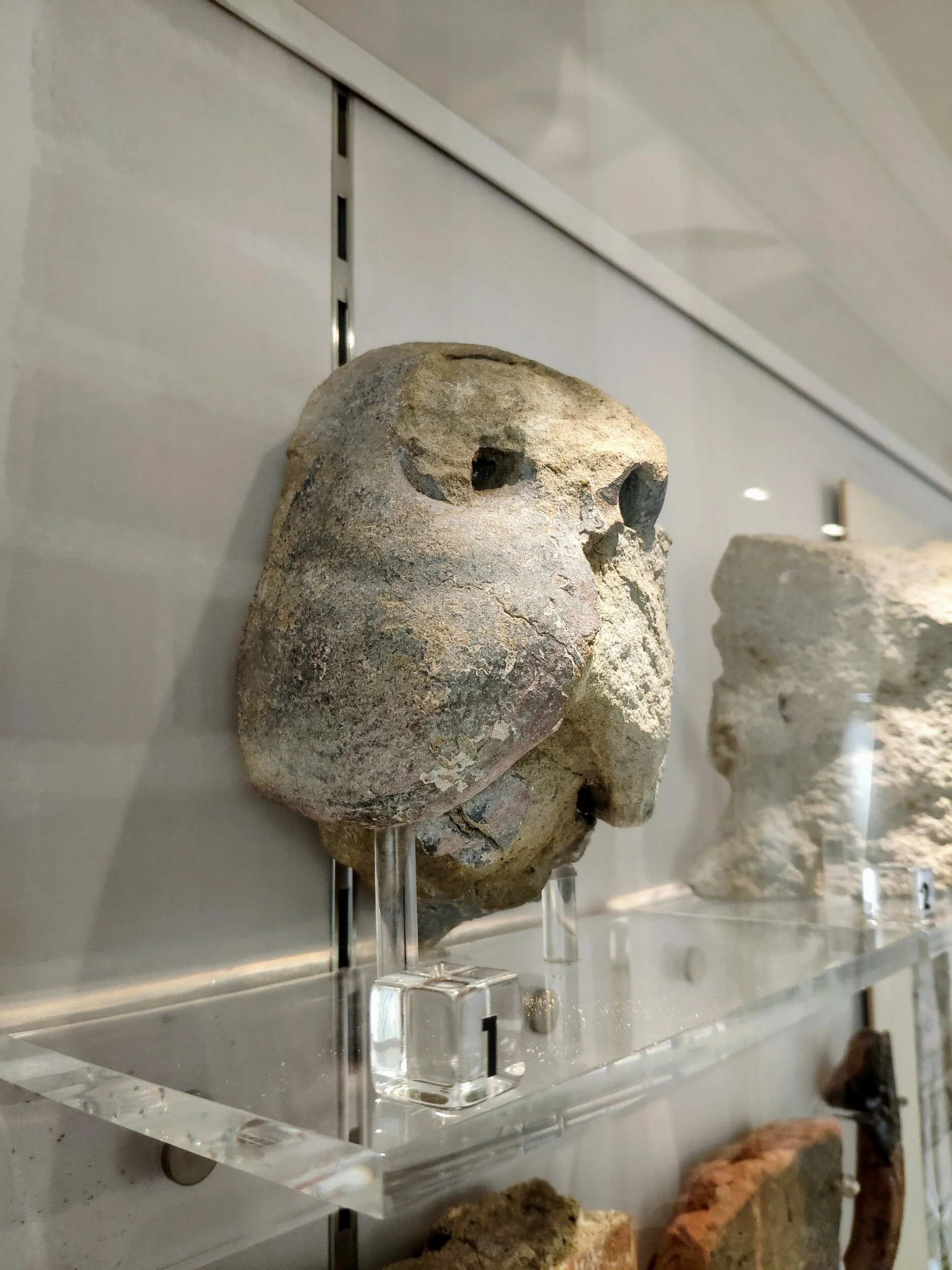
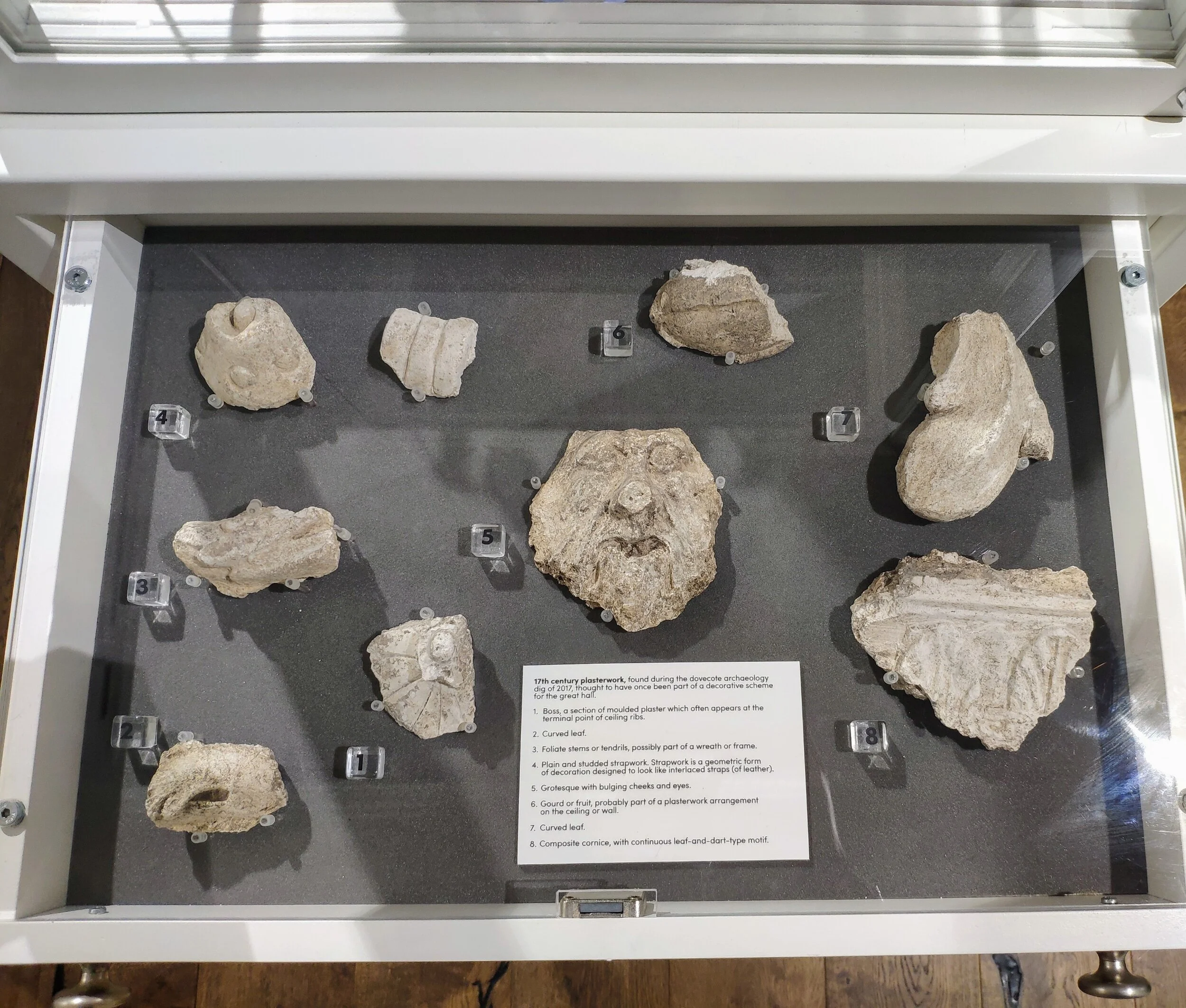
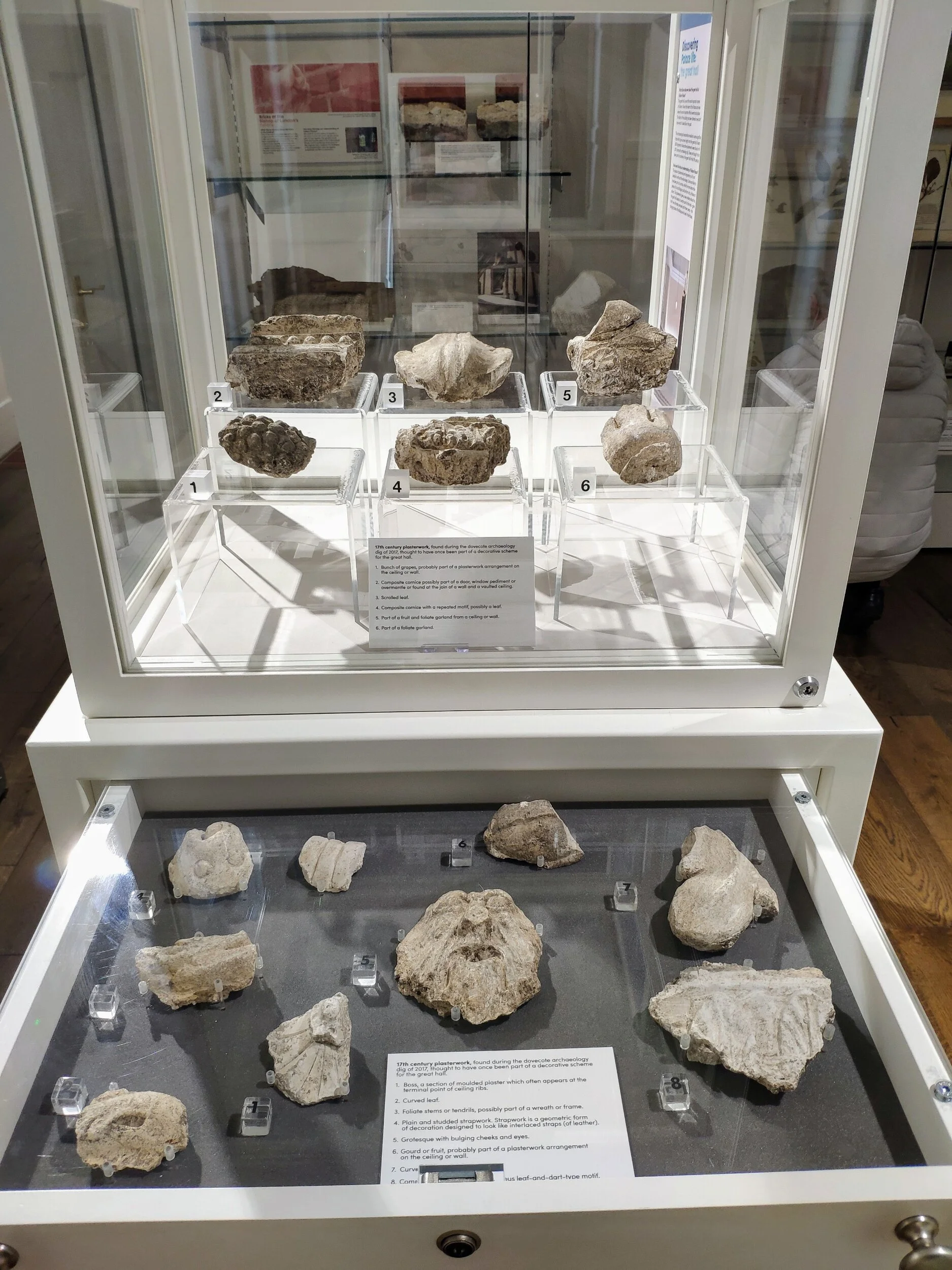
This month’s object of the month are…ceiling bosses.

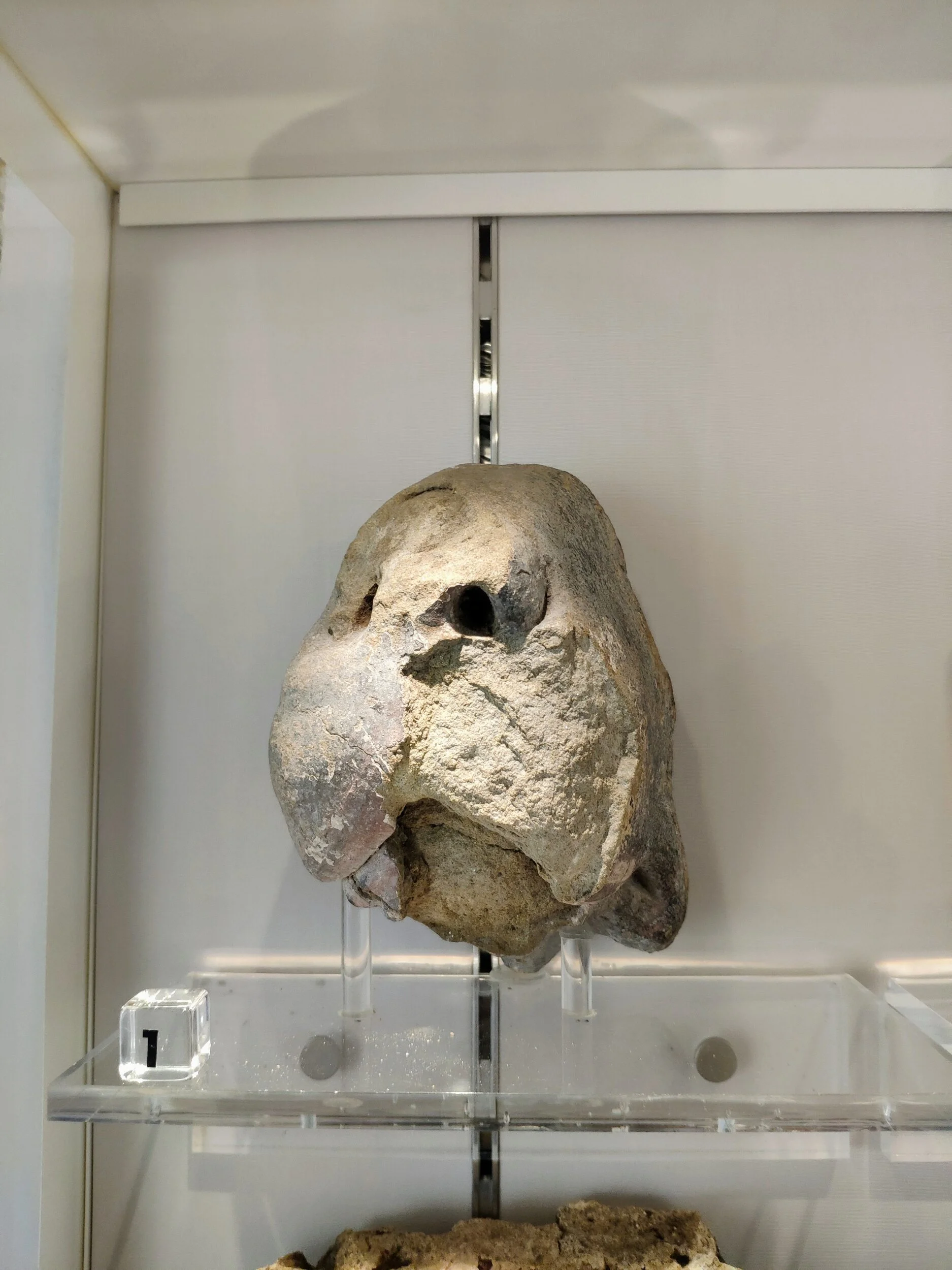
A ceiling boss seemingly carved into the shape of a lion's head, stone, medieval (1066-1485).

A ceiling boss seemingly carved into the shape of a lion's head, stone, medieval (1066-1485).

processed_IMG_20200926_124801.jpg

When I saw the ceiling bosses in the archeological section of the museum, it got me thinking about the building as a witness to the changing uses of the Palace over the centuries. The architecture itself has been amended and transformed repeatedly as each Bishop felt the need to keep up with the style of the times. However, they exuded such a sense of permanence and resistance to the fleeting events that occur below them.

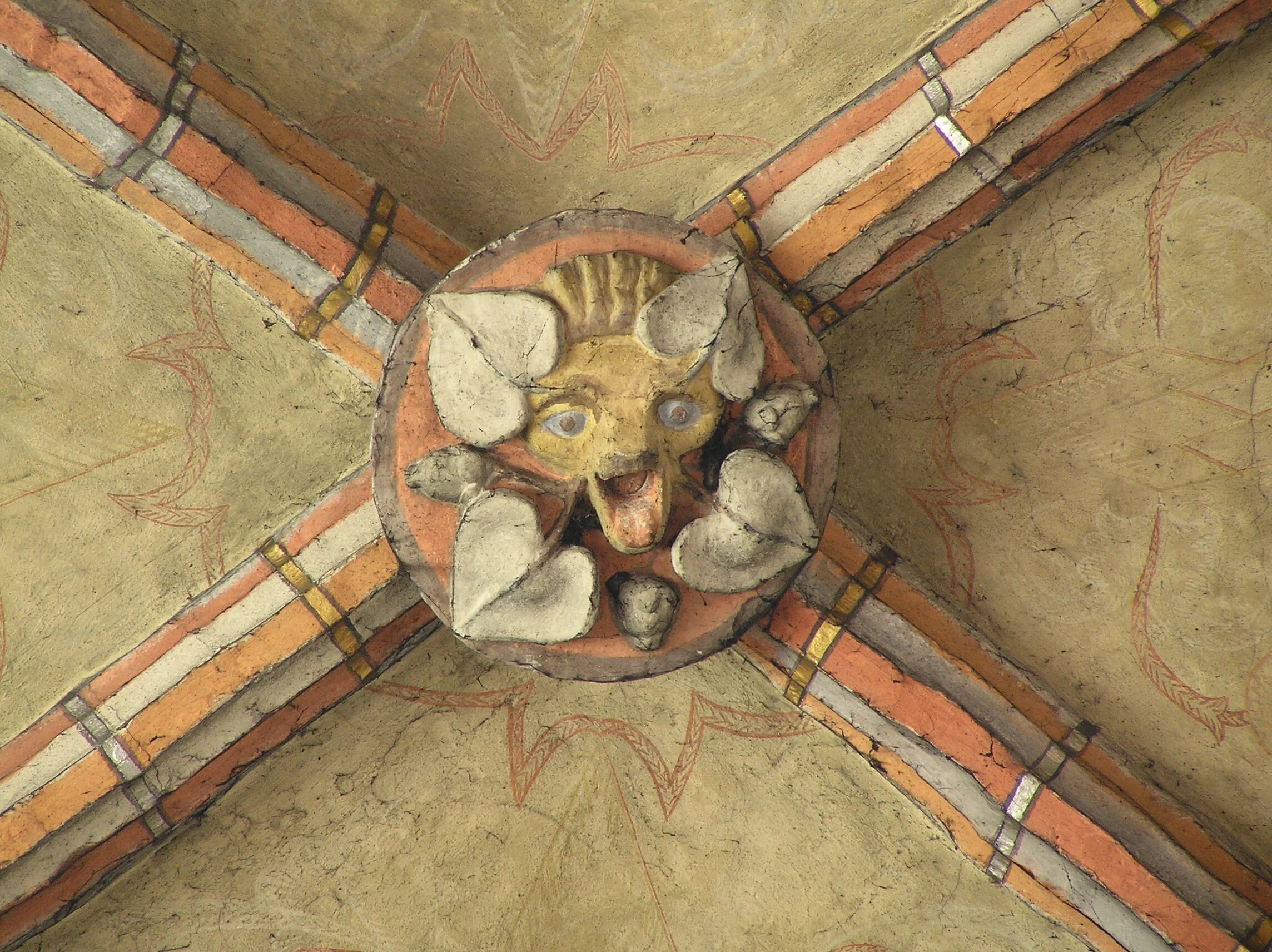
An example of a rib vault keystone with boss, in the Church of St Mary in Chełmno, Poland (source: Wikipedia).

An example of a rib vault keystone with boss, in the Church of St Mary in Chełmno, Poland (source: Wikipedia).

Ceiling bosses are common in medieval architecture and are always noticeable at the joints where vaults connect. Made of a hard material like stone or wood, they are typically carved into floral or vegetal motifs.

Bosses can also take the shape of heralds, monsters, mythical creatures or the Green Man (a metaphor for rebirth and spring, pictured as a face formed of leaves).

processed_IMG_20200926_125938.jpg
processed_IMG_20200926_125943.jpg

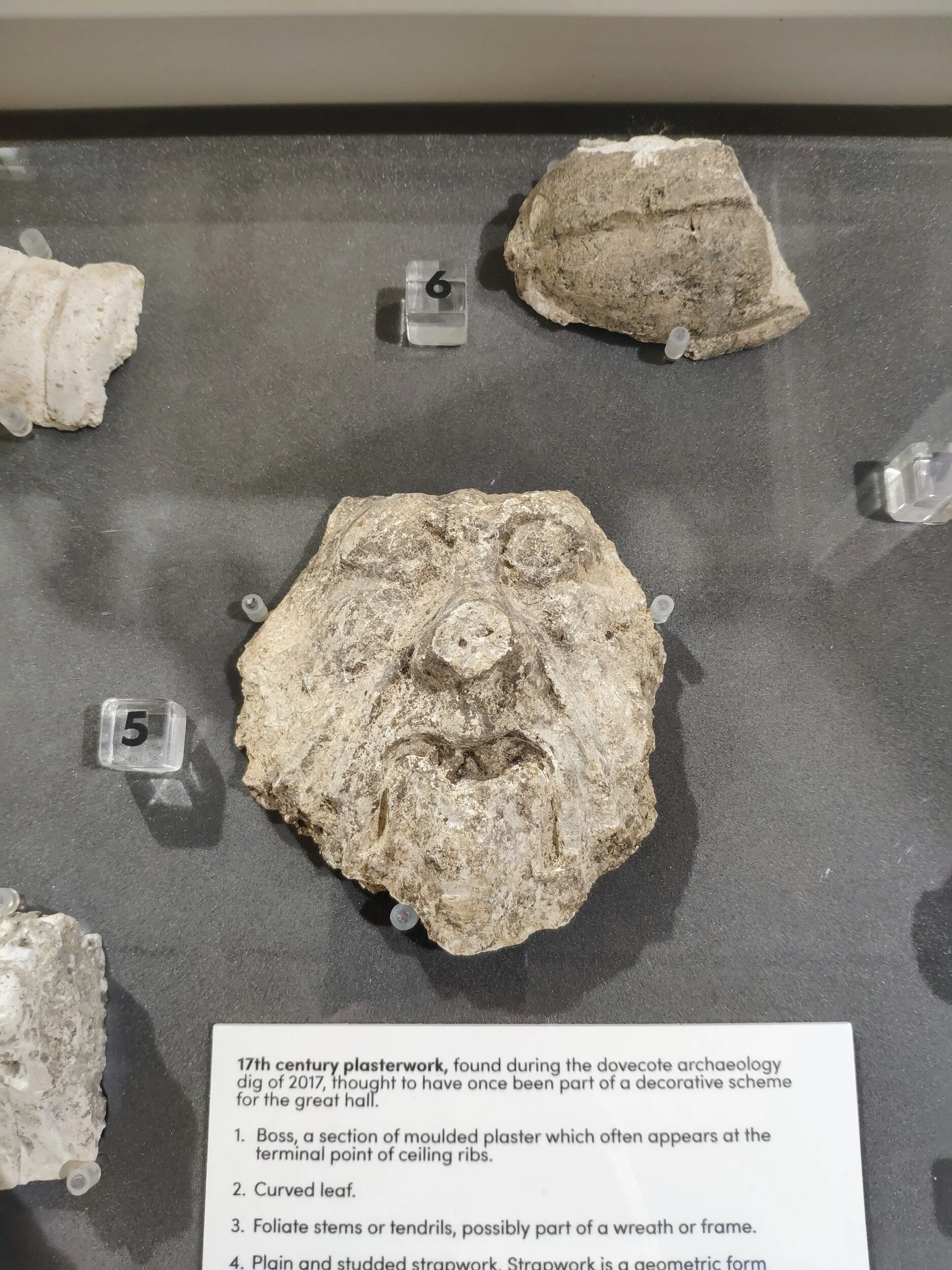
My favourite boss was the male face. He is very eroded now but his gaping mouth and deep set eyes still characterise him. The majority of his time has been spent at a commanding position, able to watch the space below him transform in function and style. People walked below him in seventeenth century costume, hurrying between the tasks that occupied their day. Perhaps only a few would have looked up to return his gaze.

processed_IMG_20200926_125934.jpg

Now his position has reversed. He sits in a (wonderfully clear) glass drawer, surrounded by his architectural peers. We look down at him and we look through the lens of historical investigation, something that is predetermined as soon as we enter the context of a museum exhibit. However, the boss as an object still witnesses and stands as evidence of the constant flux of the Palace's history.

Free cycling training with Walk and Cycle London

A wheelie-great opportunity for the cyclists (and wannabe cyclists) among you

Get cycling!

Get cycling!

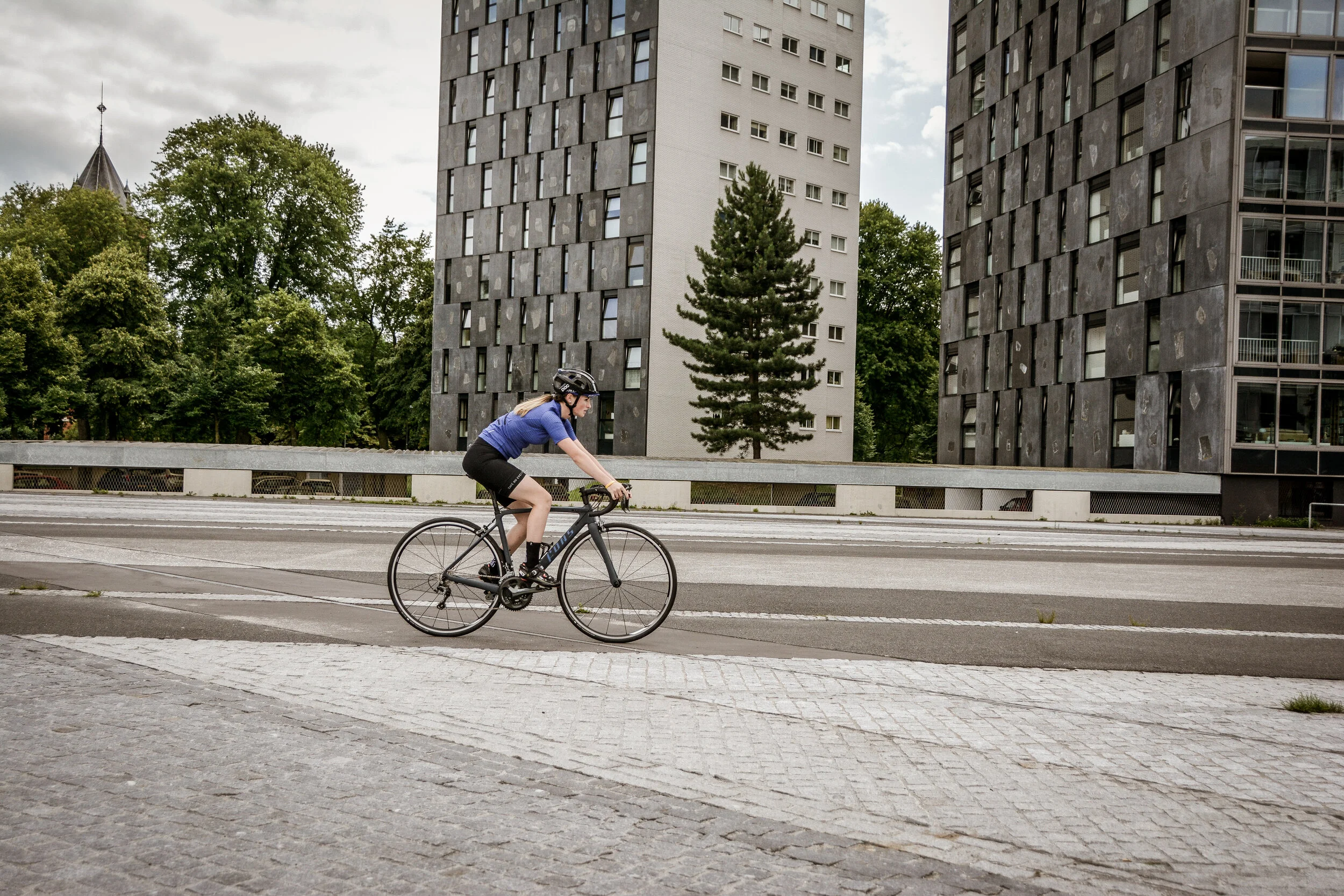
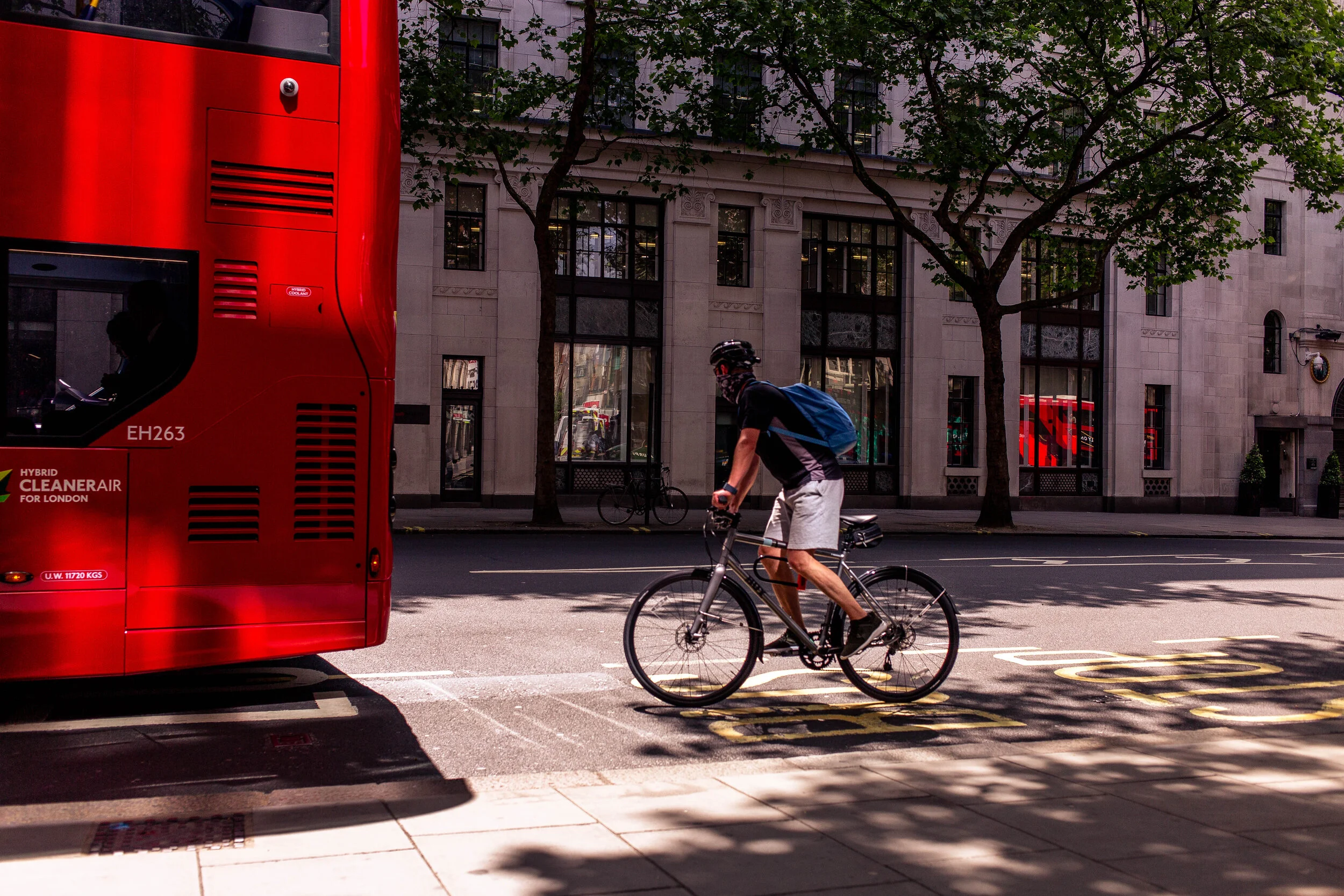
Cycling has become more popular than ever as of late, with people seeking alternatives to the gym, tube-free travelling and ways to socialise while socially distancing.

We would like to share a new Community Interest Company called Walk and Cycle London to offer you two cycling training lessons every Tuesday. Walk and Cycle London focuses on delivering community cycle training in West London, particularly the corridor from Hammersmith to Westminster.

There will be two qualified instructors to guide the sessions and ensure everybody gets the most out of the experience. Disinfected bikes can be provided for all participants, though you are, of course, welcome to bring your own bike instead.

Best of all - they’re free!

Learning to feel comfortable and confident on the road, regardless of traffic and busy roads.

Learning to feel comfortable and confident on the road, regardless of traffic and busy roads.

Every Tuesday will have a morning and afternoon session:

  • The morning sessions run from 10:30 - 12:30 and are aimed at complete beginners. Cyclists will learn key control skills that will prepare you for riding on the road with confidence. These sessions will be held in Bishop’s Park.

  • The afternoon sessions run from 13:00 - 15:00. These will be on-road skills, learning how to comfortably ride on the road and how to navigate different traffic levels on local roads.

  • Each session will have up to six spaces available to book.

These sessions are funded by the local government to get more people cycling so it would be great to see you getting involved! We are looking for sign-ups for the first session on Tuesday 29 September in Bishop’s Park.

Please contact Philippa Robb, Walking And Cycling Instructor, at philippa.robb@gmail.com or by clicking the button below!

Walk and Cycle London Fulham Palace

September's specimen of the month

Every month we feature two blogs written by volunteers; one describes an object in the Palace and one a feature from the Garden. There is no set format and it can take the shape of research, poetry, prose, or anything you are inspired to do. It is a great way to learn more about the Palace and share it with other volunteers!

Thank you to Louise Sugrue, garden volunteer, for this eloquent piece.


A colourful floral display

A colourful floral display

Among the many glorious sights in the walled garden during mid to late summer, there is one splendid species that catches the eye.  

It doesn’t have the height of the colossus Echium pininana, nor the imperial majesty of the wisteria, nor even the standup 'notice me' erectness of the hollyhock - but what it does have is flowers, a princely and prolific profusion of purple flowers from June to October. And an impressive ability to clamber up high. 

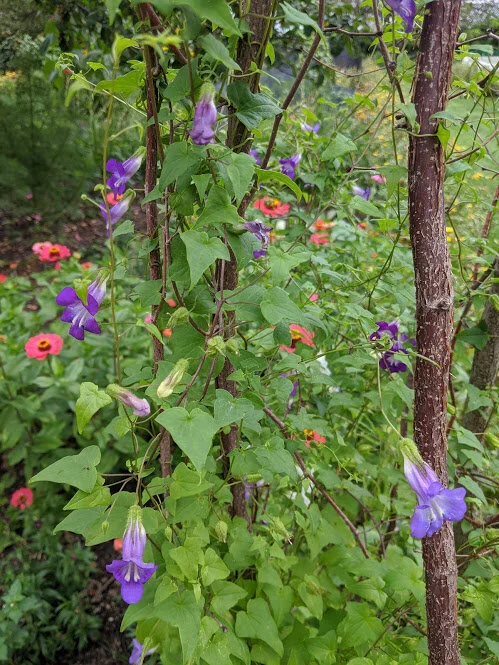
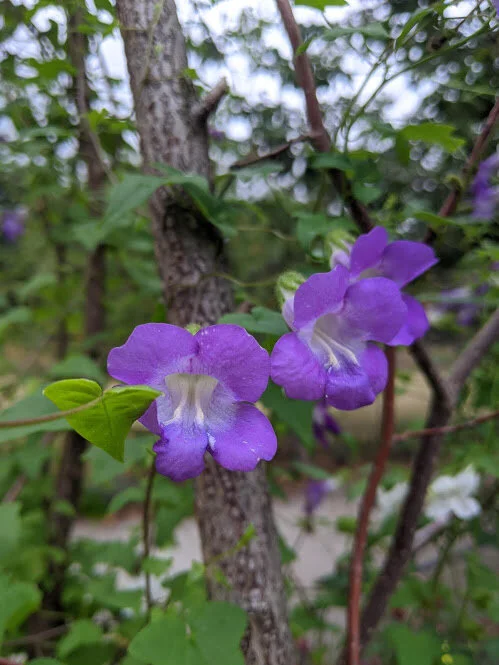
What are we talking about? The Asarina scandens, or the climbing snapdragon. 

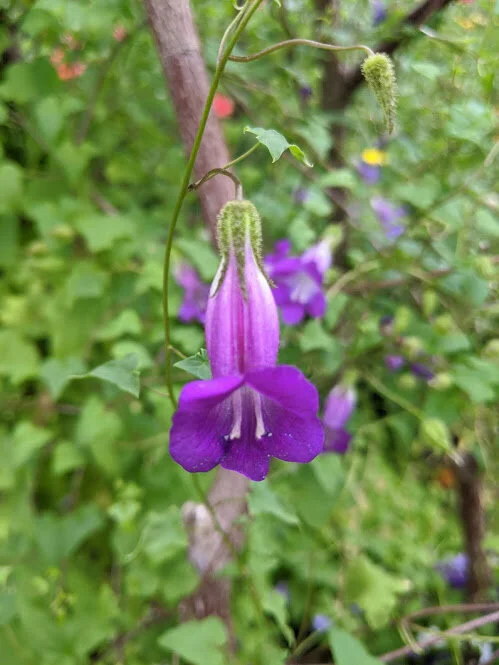
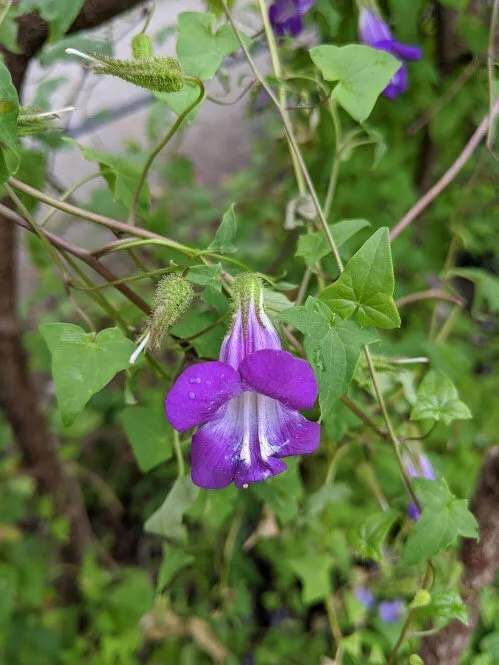
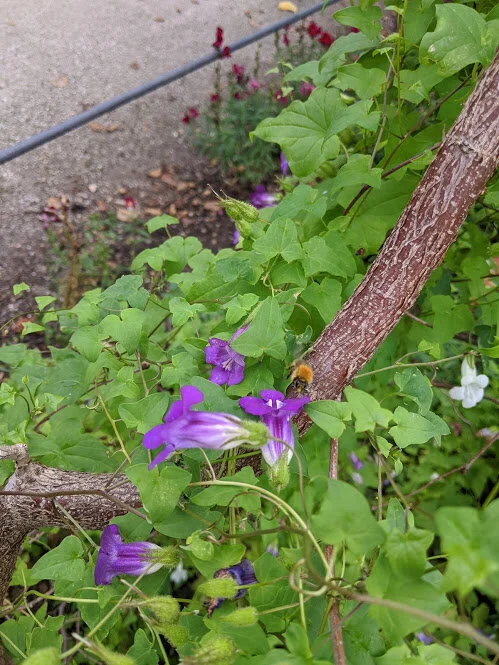
Scrambling high up the wooden wigwams within the vegetable beds, its rich purple tubular flowers stand out beautifully against the flat round heads of the red and pink zinnias and yellow black-eyed susans. 

This climber's common name may be snapdragon but its flowers, while somewhat similar, are much more showy and dramatic than the standard antirrhinum’s. The numerous, never-ending velvety purple trumpet bell flowers with white throats are rather large and spectacular, while the neat, fresh green arrowhead leaves make a great contrast with its coarser textured neighbours. It may look like a delicate plant but its vines are vigorous and strong - the ‘scandens' part of its name, meaning 'climbing', is bang on.

Snapdragons can come in a variety of colours, ranging from white and pale pastels to vivid reds, yellows and purples.

Snapdragons can come in a variety of colours, ranging from white and pale pastels to vivid reds, yellows and purples.

The flowers have a delicate trumpet shape but are deceptively resilient.

The flowers have a delicate trumpet shape but are deceptively resilient.

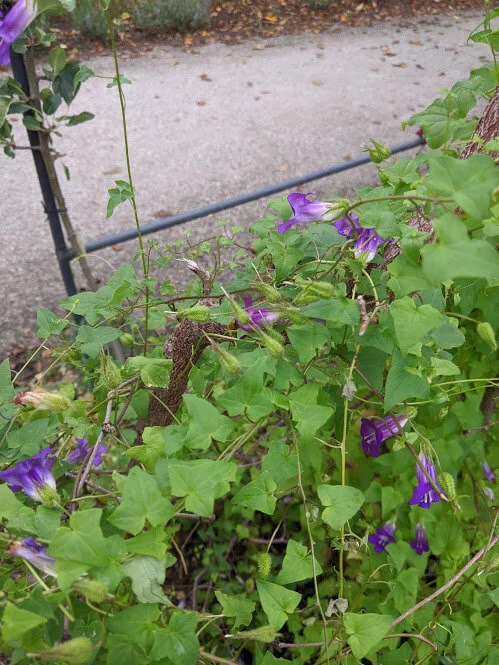
And the A. scandens doesn’t just grow up, it can tumble down. In a pot, window box or hanging basket, it will cascade down romantic waterfalls of violet flowers. Usefully, it can make an effective ground cover, too, as elegantly displayed in the walled garden, where the A. scandens, aka the Creeping snapdragon, also borders the central path, under the arch of apple trees. 

Tumbling vines of snapdragons in the Palace gardens.

Tumbling vines of snapdragons in the Palace gardens.

Tumbling vines of snapdragons in the Palace gardens.

Tumbling vines of snapdragons in the Palace gardens.

For wannabe growers, the good news is A. Scandens is apparently not fussy. Sow indoors in February-April, pot on once the seedlings establish and then plant out from June in any moist-but-well-drained soil (but not chalky) in a sunny position. Set it by a frame or anything you would like it to cling to, water regularly and leave it to do its thing. It's a fast grower. It will climb and cover trellis, walls, fences up to 8ft (3m) in one season, and it will flower incessantly.   

Not only floriferous, this prodigious climber has a long flowering period, from midsummer into early autumn, still impressively putting out clouds of flowers when a lot of plants are past their best. But it is not hardy. As a native to Mexico and SW America, the chickabiddy (as it is known across the pond) will not be able to withstand UK frosts. If it is in a pot, it can be moved indoors to a conservatory or sunny window as winter approaches. If outside, it will die down and you can simply start again with fresh seed the next year.

I must admit I hadn't come across the Asarina scandens before Fulham Palace, but it turns out that this obscure beauty is, in fact, an old bloom enjoying a 21st-century renaissance in the English garden - ‘they are very on-trend,’ confirms Lucy Hart. With new varieties being introduced on to the market in recent years, they are now available in a host of colours - vintage Pink, Lavender, White as well as Violet - and popping up in fashionable floral arrangements and bouquets across the UK; many notable nurseries are selling the seeds online. 

So pretty, so versatile, so giving (bees and butterflies also love them), it’s hard not to see A. scandens as a beautiful and useful addition to any flower wardrobe.

A close-up of the petals.

A close-up of the petals.

Moaty Mcmoatface

What is Moaty Mcmoatface, you ask?

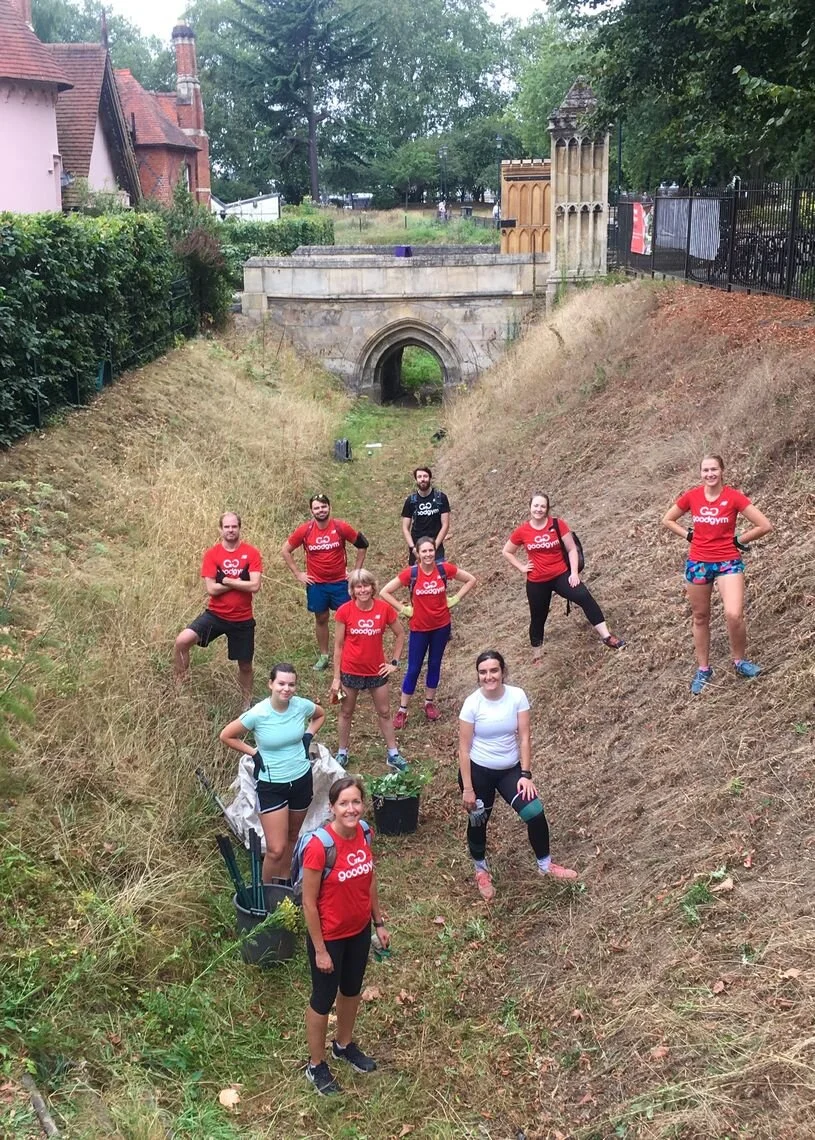
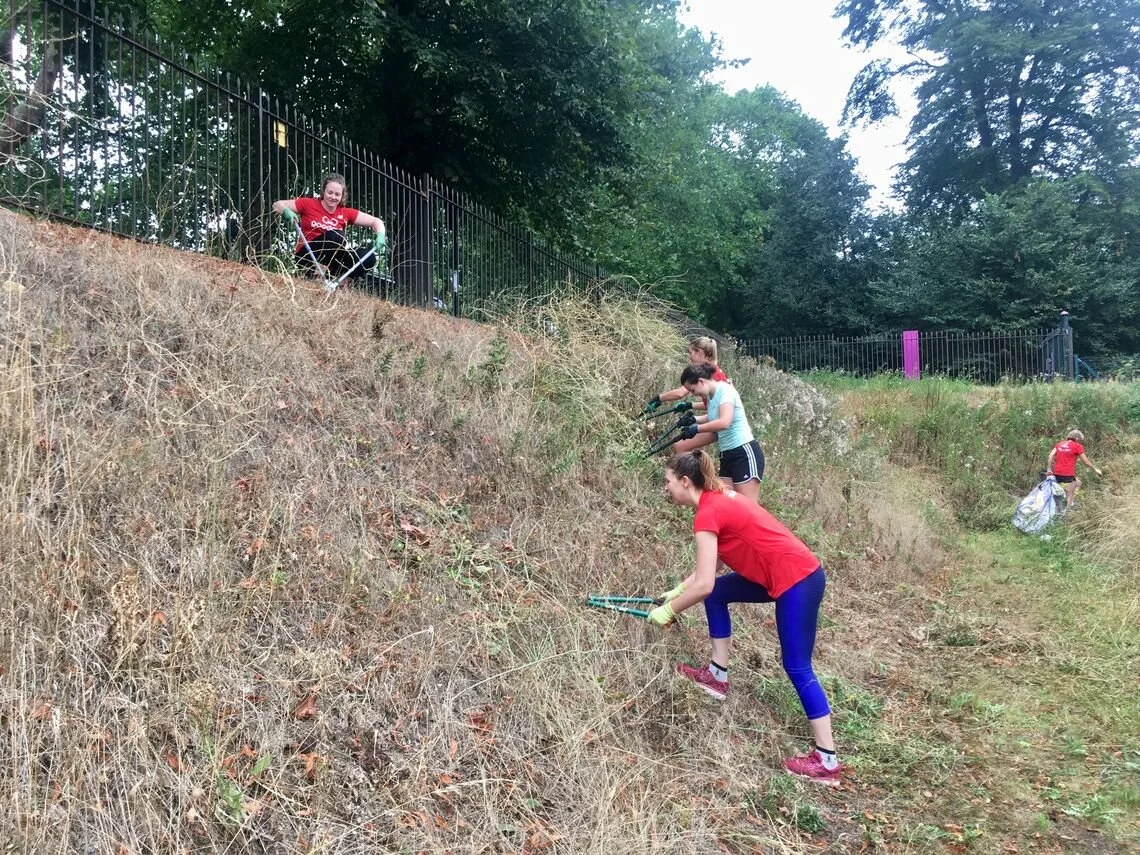
GoodGym volunteers in the moat

GoodGym volunteers in the moat

It’s the latest project between Fulham Palace and GoodGym - a wonderful team of local volunteers (and runners) who give their time and energy to community projects across Hammersmith and Fulham. Like a superhero responding to a call of need, this team runs to their latest project and burns the energy usually put into a gym by contributing to their community instead.

Trainer Beth Nelson very kindly wrote up this report of the group’s afternoon in our historic moat.

Moaty Mcmoatface

On a noticeably cooler Saturday morning, 11 GoodGymers headed to Fulham Palace to lend a hand in the historical moat. A sea of red and black GG tees gathered on the moat bridge and we headed over to the Gothic Lodge ready to meet Lucy, the Head Gardener for the Fulham Palace Trust.

Lucy, armed with a wheelbarrow of tools and large garden waste bags welcomed the group. With the register signed, we all gloved up and in true GoodGym team spirit helped get all the tools and bags down the narrow steps into the moat.

Once we were all in the moat, Lucy gave a brief history of the moat. Amazingly, Fulham Palace's moat was nearly 1.4 km (0.87 mi) in length and was the largest domestic moated site in medieval England. The moat was filled in with builders' debris in the 1920s, and exists, underground, as an unbroken circuit. In 2010, an excavation began to uncover the historical moat, which you can now see either side of the moat bridge and was what we were going to be working in today.

Recently, the moat had been botanically surveyed and it was discovered there were some really important plant and wildflower populations - some were the best north of the river! - however, the bindweed had taken hold since we were last in the moat back in January and it needed a good clear once again.

Clearing weeds in the moat

Clearing weeds in the moat

Lots of Saturday morning moativation!

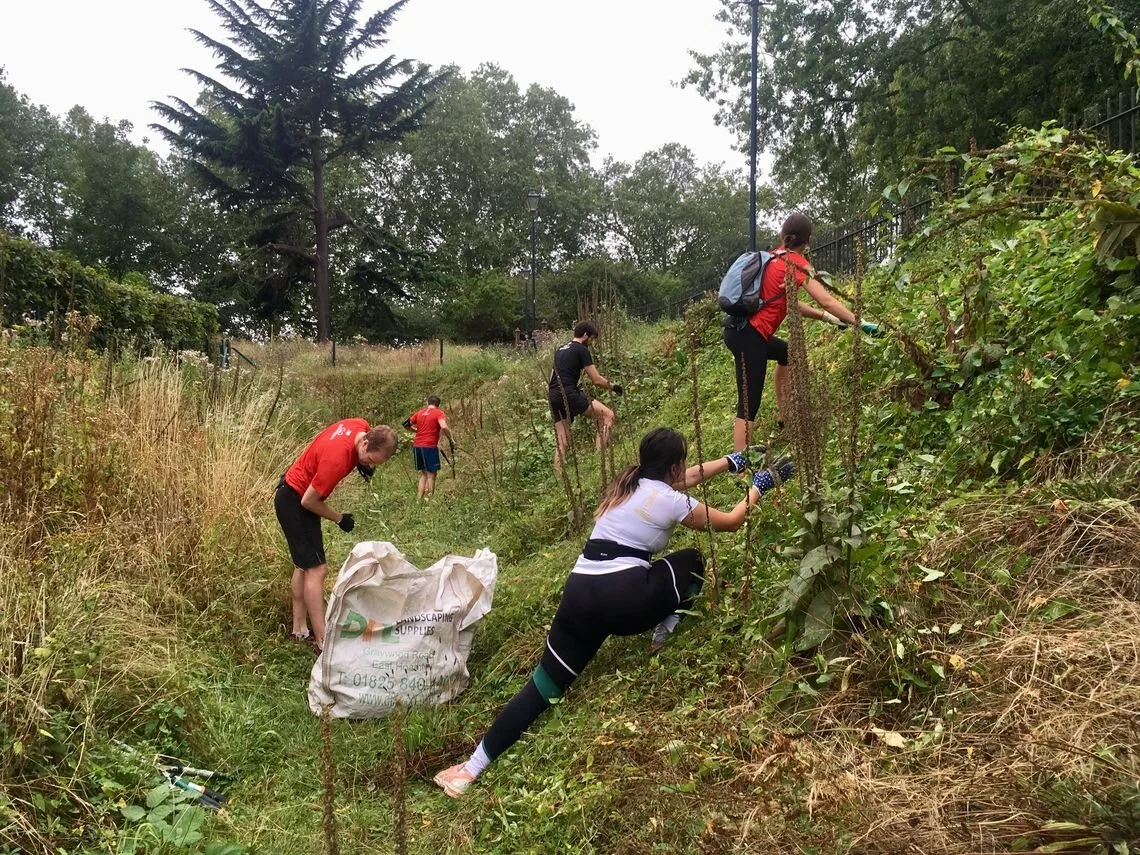
Our job today was to help clear the 'bad' weeds, bindweed, brambles and some of the thistles from the moat. Monika, Jack, Cookie, Arba, Chris, Sarah and Beth ducked through the tunnel to the other side of the moat and began pulling out handfuls of bindweed from the steep sides of the moat. Cookie picked up a pair of shears and began cutting away the brambles and bindweed ✂️, while Jack used his hands and brute strength to pull out bindweed at the foot of the moat 💪.

Sarah balanced herself halfway-up the moat as she pulled and tugged at the bindweed, displaying exquisite poise and balance. Chris and Monika made short work of scaling the steep moat right to the top, pulling out bindweed as they went! They then used their vantage point to great effect, pulling out all the bindweed that had wound itself around the other plants; while at the top in their red GG tees they also became a brilliant advertisement for GoodGym with many passers-by asking 'how do we join you?'.

Thorn to be wild!

Once most of the bindweed had been cleared, Arba and Beth focused on tackling the thick and thorny brambles, using their shears to both chop and pick-up the brambles into the large garden bags, to avoid minimal contact with the thorns! Jack and Sarah did a brilliant job of ensuring the large garden bags didn't become too full or heavy as they did quick and regular shuttles to the skip to empty out the bags and return them again for filling!

Thistle while you work

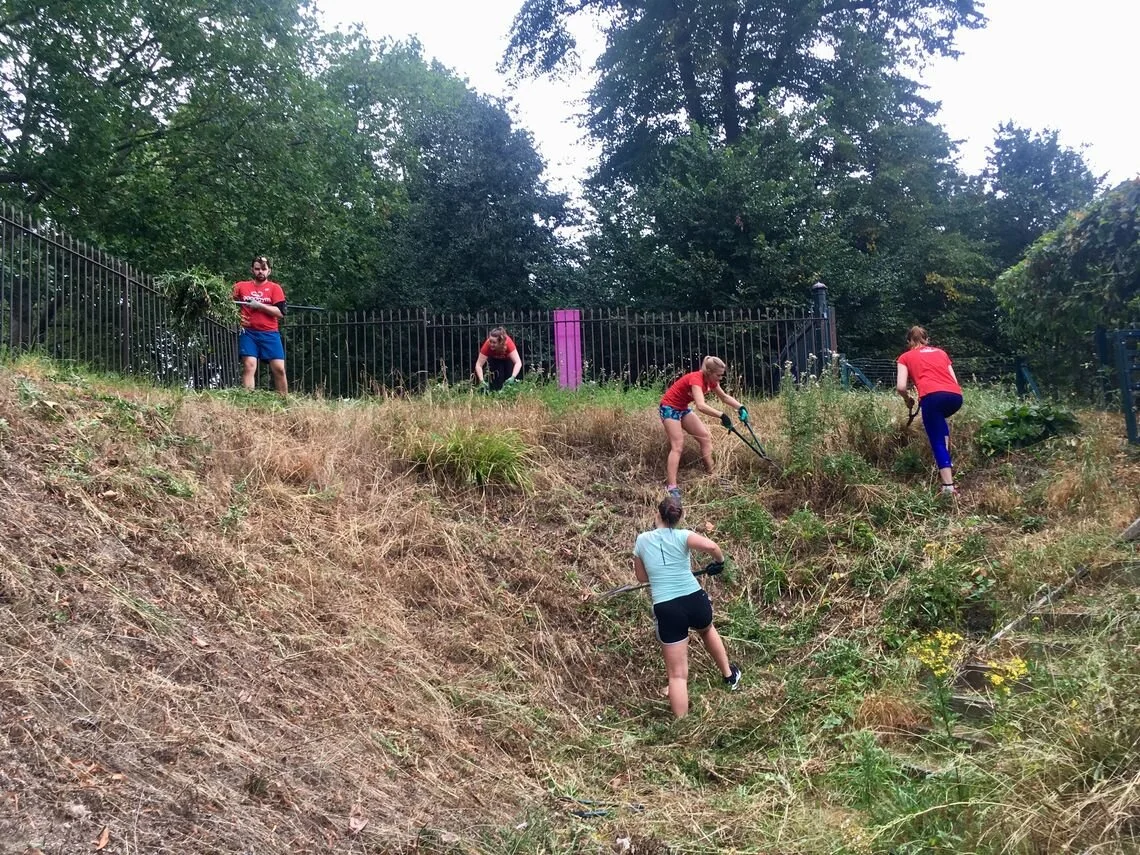
On the other side of the moat, Lucy, Katie, Jess and Rose were tackling the large population of thistles and coming out on top. Katie, Jess and Lucy chopped down the thistles as Rose efficiently raked up all the cuttings and placed the piles of cuttings into the bags, with the help of Head Gardener, Lucy. Amongst the thistles they found a small multicoloured ball hidden away, oh the treasures you find on a GoodGym task! Despite the steep slope, the team made quick work of all the thistles and completely transformed this side of the moat so that it was now thistle free! 👌

Those weeds did not stand a chance!

Those weeds did not stand a chance!

Running...our moat of transportation

After two hours of cutting, pulling, raking and clearing we had filled the skip full of bindweed, brambles and thistles. We called it a day and took a quick group photo in the moat before we said our goodbyes and headed off in different directions. Top work team! 🙌

Cutting the weeds from the moat

Cutting the weeds from the moat

Happy flowers with the freedom to grow!

Thank you again to this marvellous group of GoodGymers for all your hard work! The moat is now clear and its plant and wildflower populations are safe from the strangling weeds.

To find out more about GoodGym and the good deeds they do around Hammersmith and Fulham, check out their website here: https://www.goodgym.org/about.

This blog piece was sourced from https://www.goodgym.org/reports/moaty-mcmoatface, Saturday 15 August, 2020.

Masks, hand sanitiser and gloves: a few tips for our 'new normal'

You wouldn’t have believed an image of London in 2020 with people wearing masks and gloves to protect themselves from a virus back in January, but it’s our new normal. There’s so much changing information and seemingly contradictory advice that we’ve put together this blog with some handy tips on using that much dreaded buzz word… PPE (personal protective equipment)! These practical guidelines are compiled from various resources provided by the World Health Organisation (WHO).

Face masks

  • Face masks are essential for good respiratory hygiene. They prevent the spread of the virus from the mouth and nose;

  • Please ensure both your mouth and nose are covered with your mask and secure it around your ears or head;

  • If you are using a single-use mask, please dispose of it correctly and after each use. If reusable, wash it in line with manufacturer’s instructions at the highest temperature appropriate for the fabric;

  • Try to avoid excessive handling of the mask and try to touch just the ties or straps when wearing or removing it; and

  • Opt for multi-layered fabrics where possible. The WHO recommends 3 layers, depending on the fabric used.

Gloves

  • Gloves are best used when you are anticipating contact with a potentially infectious surface, object, open wounds or bodily fluids;

  • Gloves do not replace good hand hygiene, but they can effectively reduce cross-contamination when used effectively;

  • A very important rule about using gloves is - only use them once!

    The WHO outlines that there is no tried and tested way to completely sterilise gloves once used. Please see this guidance extract below:

As medical gloves are single-use items, glove decontamination and reprocessing are not recommended and should be avoided, even if it is common practice in many health-care settings with low resources and where glove supply is limited.

At present no standardized, validated and affordable procedure for safe glove reprocessing exists. Every possible effort should be made to prevent glove reuse in health-care settings, such as educational activities, to reduce inappropriate glove use, purchasing good quality disposable gloves and replenishing stocks in a timely manner.

  • Importantly, wash your hands with soap and water before and after putting gloves on; and

  • Avoid touching your face when wearing the gloves.

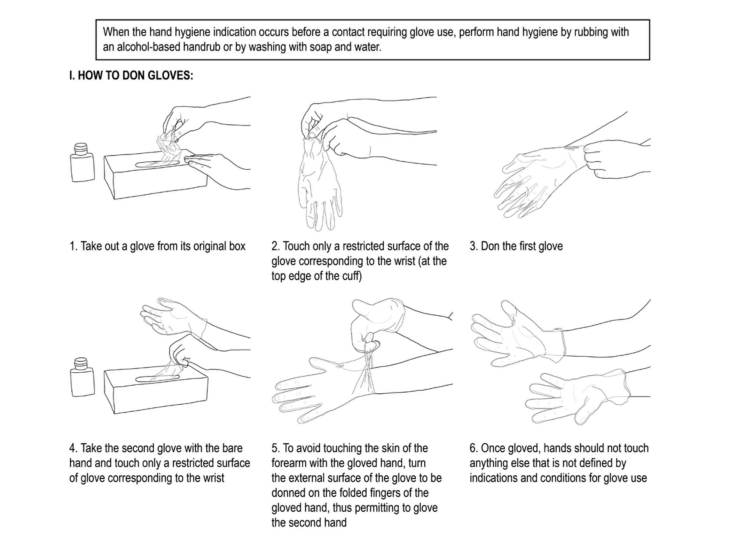
WHO advice on correctly donning gloves

WHO advice on correctly donning gloves

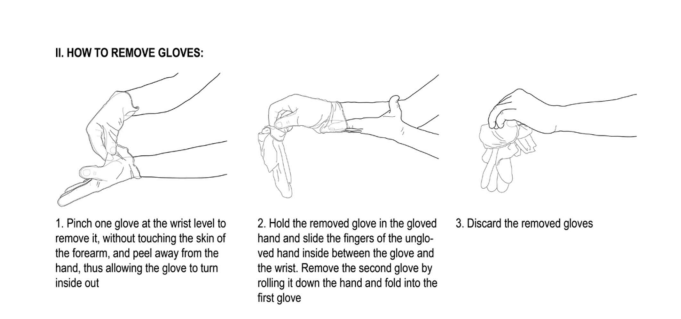
WHO advice on correctly removing gloves

WHO advice on correctly removing gloves

Hand sanitiser

Cleaning your hands frequently and thoroughly is vital to protect yourself and others against COVID-19.

  • Soap and water sufficiently removes the virus from your skin but an alcohol-based hand sanitiser is effective if hand washing is not available. Ensure your hand sanitiser is alcohol-based;

  • Please store hand sanitiser safely as it is flammable;

  • Apply a coin-sized amount on your hands. There is no need to use a large amount of the product; and

  • Avoid touching your eyes, mouth and nose immediately after using an alcohol-based hand sanitiser, as it can cause irritation.

Thanks for reading on about best use of masks, gloves and hand sanitiser. Hopefully you’ve picked up a couple of new bits of information and have more confidence about the best use of these products to keep you safe. Together, we can ensure the safety of all who come to the Palace.