
On #AskAConservatorDay 2020, conservators around the world answer questions about their work and day-to-day tasks. The Day is held in November every year, to mark the flooding of Florence on November 4, 1966, which damaged and destroyed priceless cultural heritage.
We asked our own conservator some intriguing questions. Read on to see that conservation isn’t always like it is in the movies!
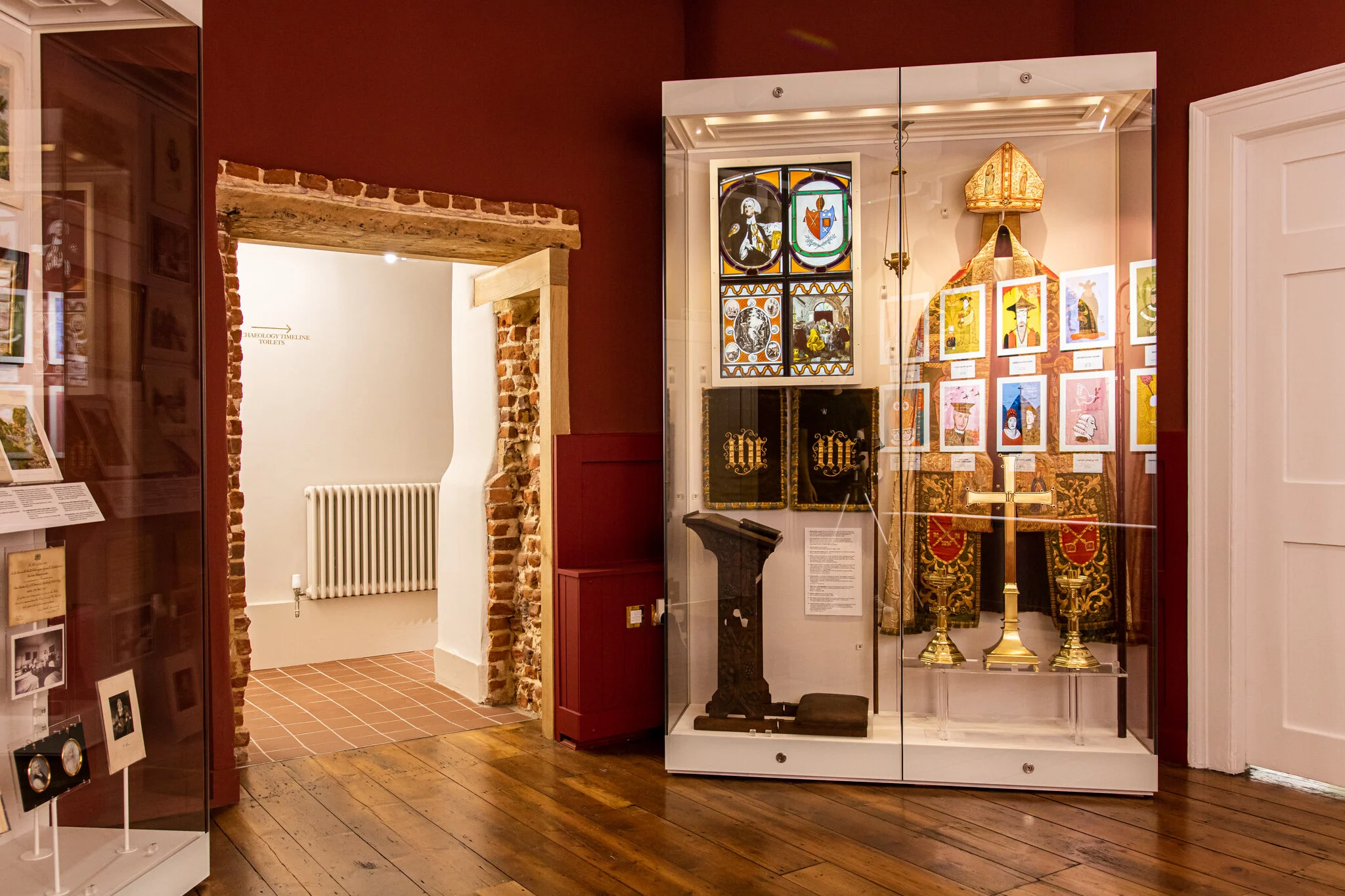
The Bishop’s cope display in the Palace Museum
What is your main role at Fulham Palace? What kind of objects do you look after?
My role is to support the curator with all aspects of the collection and collection care. I am responsible for environmental monitoring, conservation cleaning and conservation engagement activities. I manage collection care volunteers and their activities, such as the Library Care team in the Porteus Library.
Fulham Palace houses a wide range of materials in its collections that aim to depict the lives of the Bishops of London and their families. This includes artefacts from archaeological excavations undertaken on Palace grounds, fine art and social history collections.
Why don’t you wear white gloves like in the movies?
There are many reasons why white gloves are unsuitable for handling heritage materials. Cotton gloves are quite porous and get dirty quickly. This means they are unable to protect you from unknown hazards, as well as being unable to protect objects from the transfer of oils and sweat on your skin. They also tend to catch on surfaces causing abrasion and flaking to fragile materials.
What is your favourite part of being a conservator?
The greatest perk of being a conservator is having access to the “behind the scenes”. It is a fantastic job being able to go into museum stores, where part of your work includes having to open boxes and check inside drawers. I really love having the opportunity of discovering something new!
What is your least favourite part about being a conservator?
Spiders, big spiders! Unfortunately, you do encounter them whilst dusting and when checking pest traps.
Why are objects always behind barriers/glass?
We aim to protect objects from the 10 agents of deterioration, for example from inappropriate environmental conditions that can damage vulnerable collections. Cases do provide that level of protection from these certain issues. The heritage sector is attempting to move away from using barriers and “do not touch” signs as these tend to put off visitors.
What happens if you touch a metal object without gloves?
Fingerprints and sweat, which is moderately acidic, can cause permanent staining and corrosion of metals. Therefore, we protect objects from us by wearing nitrile gloves.
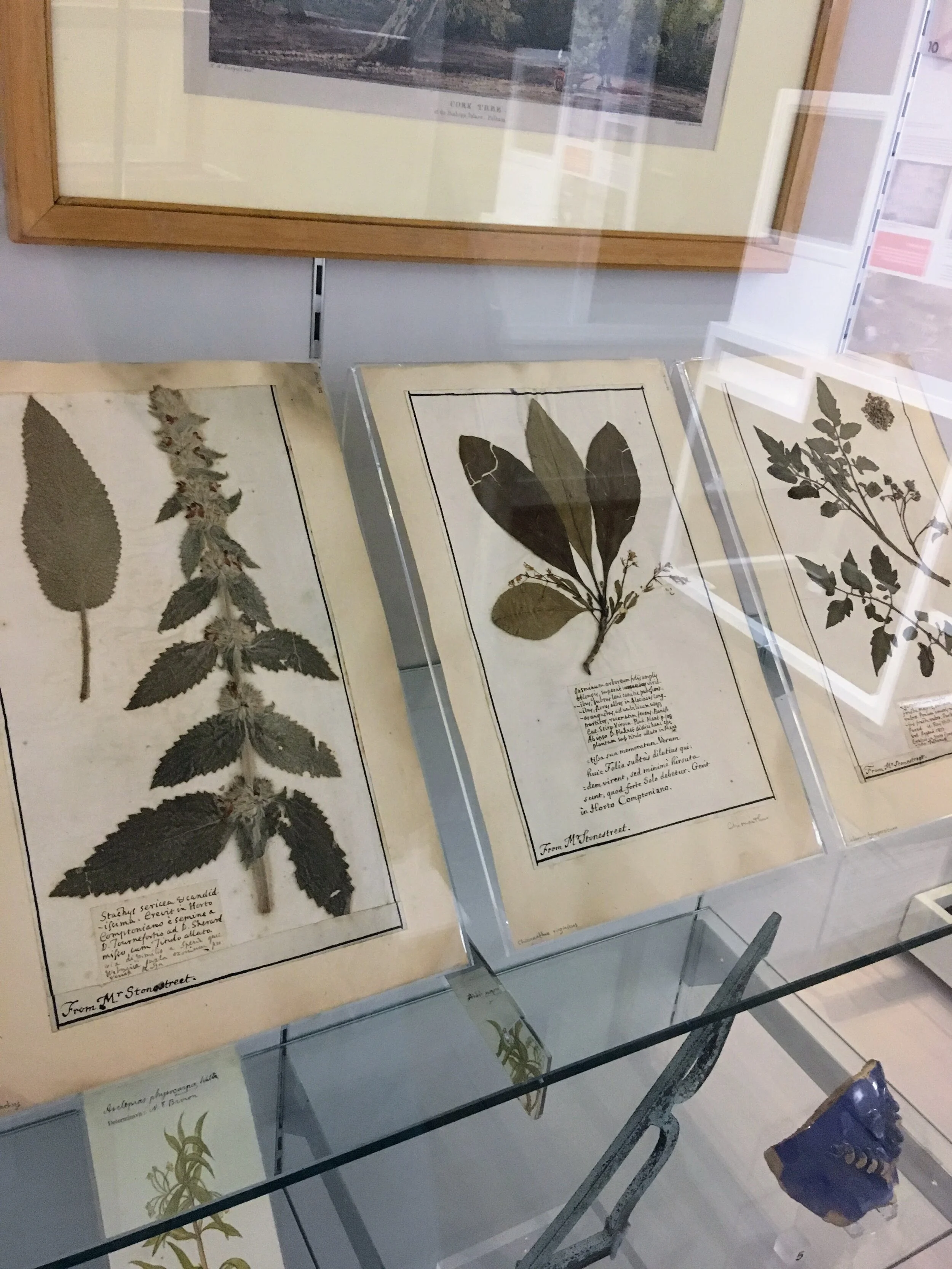
Some precious artefacts safely stored behind glass.
Why are museums rooms so dark sometimes?
There are materials and pigments that are particularly sensitive to light and will fade or damage over time. For paintings, discolouration and fading will greatly affect the balance of the image. Damage from light is cumulative, therefore our aim is to reduce light levels to prolong the lifespan of our objects
Do you have any book recommendations for people interested in conservation?
For people interested in knowing more about how objects are maintained and cared for in historic houses, I would suggest reading The National Trust’s Manual of Housekeeping.