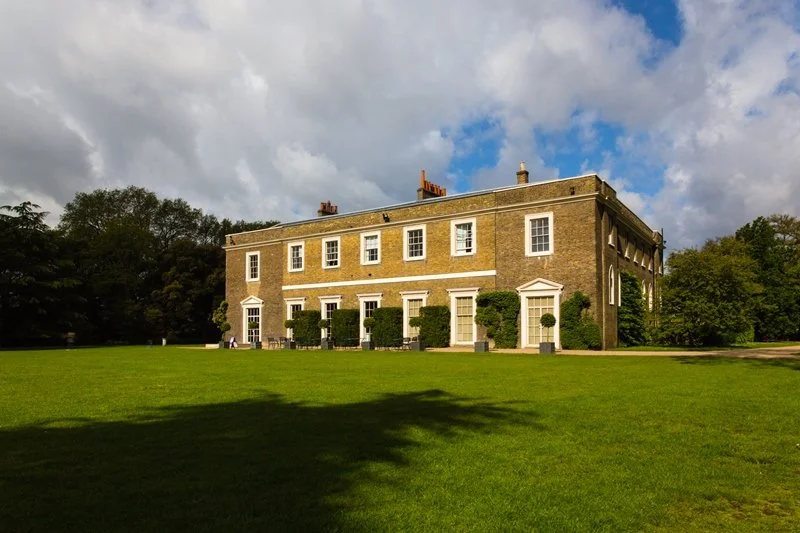
Volunteer Reflections on the Palace

May Specimen of the month: volunteer reflections on Fulham Palace

May’s Specimen of the Month is a little different in light of lockdown. Our sense of the normal is constantly being readjusted and questioned. Today’s blogs, therefore, are written by two of our volunteers as they reflect on the Palace from the new perspective.

Many thanks to Julie Mills (front of house volunteer) and Jamie Atwell (garden volunteer) for kindly writing these pieces.
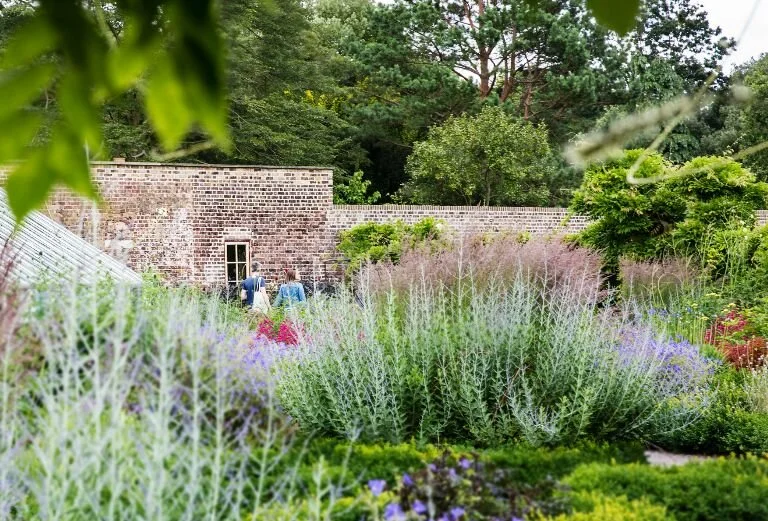
fulham-palace-knot-garden-copyright-kajsa-kax.jpg

Peering through the Railings

Julie Mills

Such strange times we are living through at the moment, unimaginable just a few weeks ago. Socially and geographically distanced, only having contact with others online ....... a few weeks ago I was volunteering regularly at Fulham Palace, on Front of House or helping with a school session. Now, of course, the Palace is closed and, like the rest of you, I can’t go in.

I miss it dreadfully, the museum, the education centre, the café. Most of all though, I miss the garden, especially at this time of year. Spring has always been my favourite season, and Spring at the Palace is particularly beautiful and life-affirming, as the trees turn green, the flowers slowly emerge and we are suddenly treated to blasts of colour and the signs of new growth.

fulham-palace-blue-and-red-flowers-knot-garden-copyright-matthew-bruce.jpg

Now, in this different world, my daily walk takes me along the river and often through Bishops Park. That’s when I find myself peering through the railings at the garden I miss so much, like a small child with her nose pressed up against the window of the sweet shop. How I wish I could be in there - showing visitors the way to the walled garden, suggesting to children that they play in the natural play area rather than climb the precious trees, bringing my friends to visit “my” garden, seeing Edmond lying in the sun or simply sitting on a bench in my lunch break listening to the birdsong.

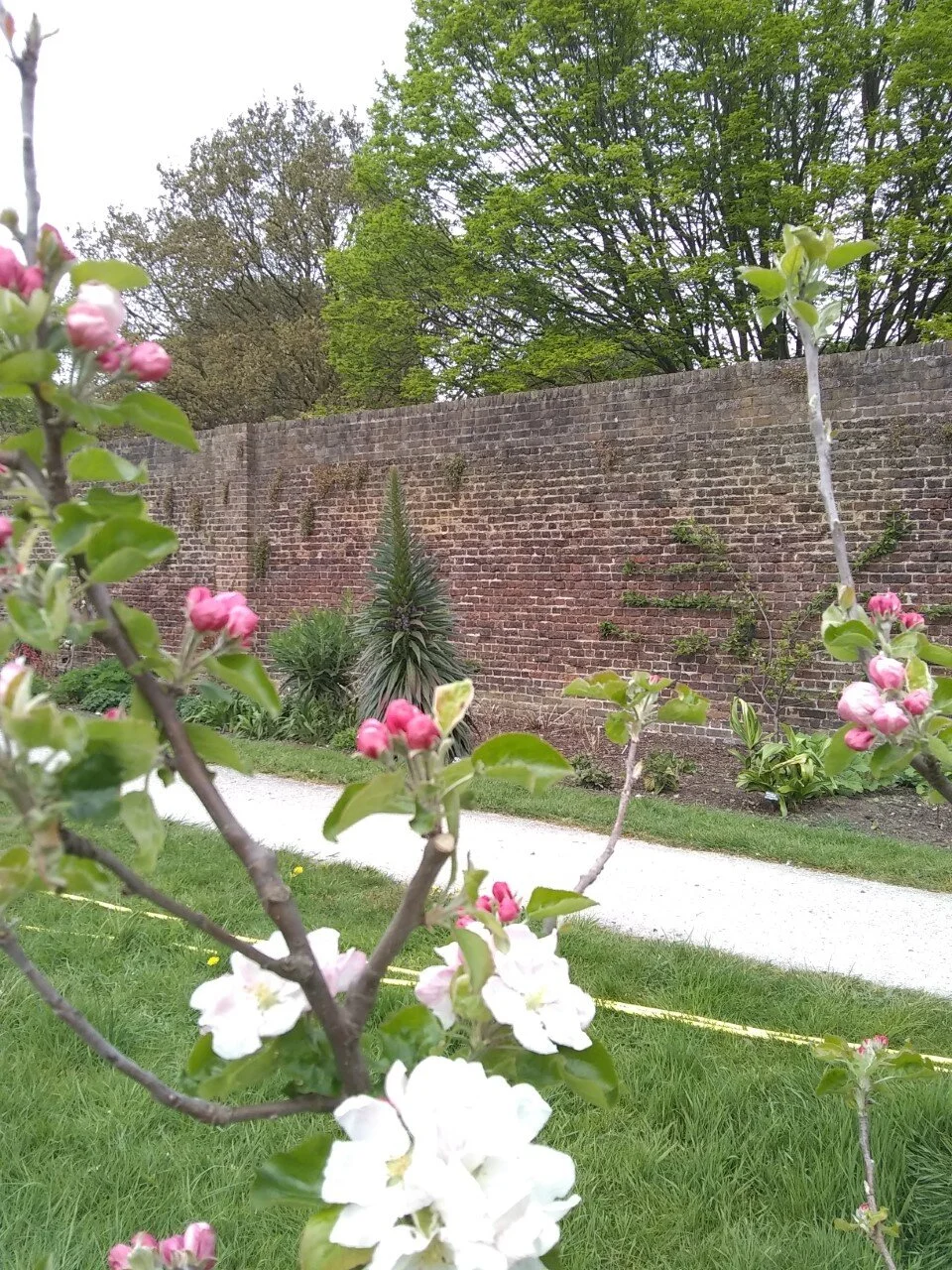
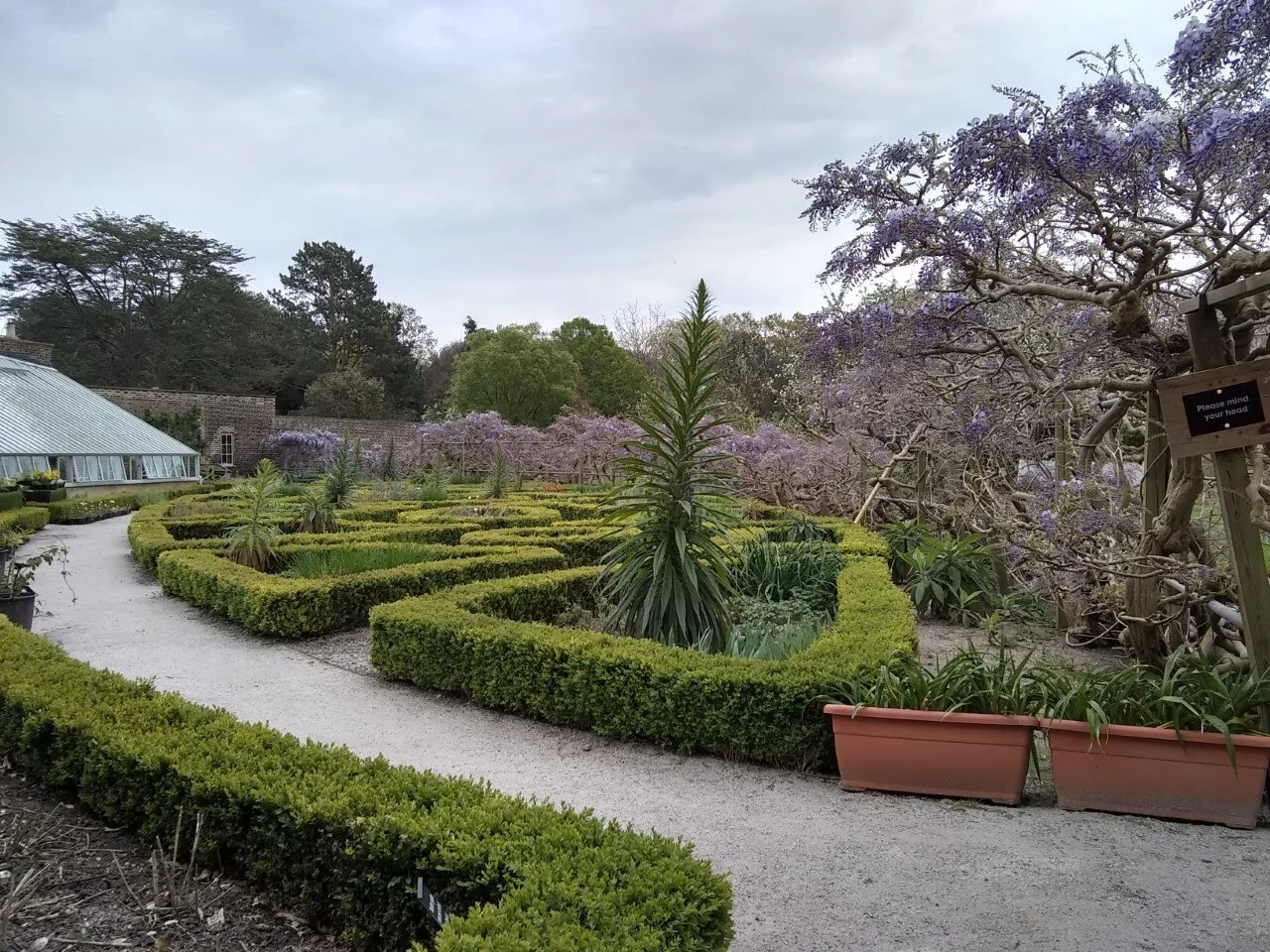
Through the railings, as the weeks begin to pass, I’ve seen the swathes of narcissi and the new blue bulbs next to the churchyard give way to the apple blossom just visible in the walled garden. Now, the wisteria on the cafe wall has burst into bloom again and it really is a sight to behold. It would be lovely to get closer and smell it too, but for now I have to be content with my distant view. It’s comforting to know that Lucy and her team are still taking care of the garden, and knowing that it will still be there when we can come back. At least I now have a little part of the garden on my balcony in the form of tomato plants (£6 for 4 from the online shop, what a bargain!) and I will make sure I take good care of them.

It will be so lovely when we’re all able to go back to the Palace, and walk in the garden again. Let’s hope we all stay safe and well until that’s possible. Until then I’ll keep my distance, wash my hands, talk to my friends via my laptop and keep peering through the railings.


Musings and Missings of a Garden Volunteer

Jamie Atwell

Like all the garden volunteers at Fulham Palace, I am currently suffering badly from withdrawal symptoms. However, ‘lockdown’ (or training to be a hermit as I like to think of it) does give the opportunity to reflect on what makes garden volunteering at Fulham Palace such a pleasure and a privilege. Here are some of the results of my musings:-

The People

You could not hope to meet a better group of people, whether that be Head Gardener Lucy Hart and her full time team (who are still nobly beavering away) or my fellow volunteers. From the day I first signed up as a volunteer, I was made to feel welcome and immediately felt part of the group. The very first blog I wrote for the Volunteers’ Website advised new starters to invest in a set of earplugs if they didn’t want to be deafened by the laughter. That holds true today, as much as it did five years ago.


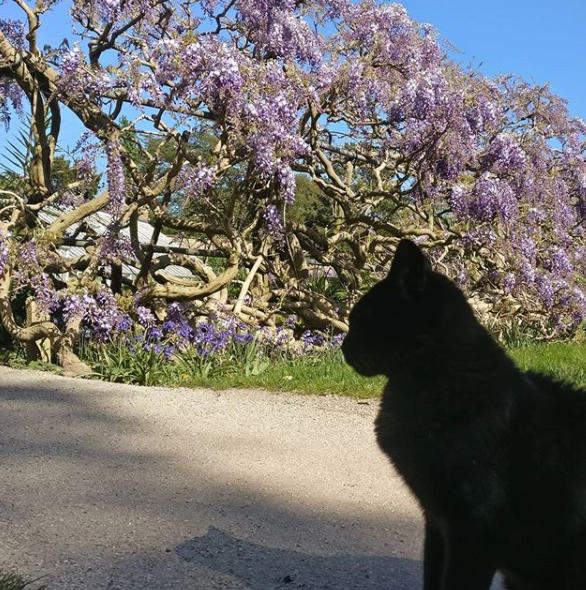
Edmund

Beyond cavil, the star of Fulham Palace. Our resident Head of Pest Control is hugely popular with both the general public and us volunteers. It is noteworthy that any photos of Edmund on social media attract more ‘hits’ than any other subject. My only slight, very slight, criticism would be that he does not catch many mice – rather he seems to invite them to tea parties. Has his new found fame gone to his head ?
Screenshot 2020-05-04 at 13.08.49.png

The Compton Beds

These are located to the south and east of the Walled Garden and are home to a number of plants from overseas that Bishop Compton (Bishop of London 1675 – 1713) was either the first, or one of the first, to propagate. We know that he was responsible for the very first Magnolia virginia to be grown in Europe – there is a wonderful specimen in the beds now. As well as my gardening role, I was lucky enough to play a minor, extremely minor, role in assisting Head Gardener Lucy Hart and Dr Mark Spencer with some research into this wonderful project – to see this through from a blank sheet of paper to today’s final results could not have been more rewarding.

The Wisteria

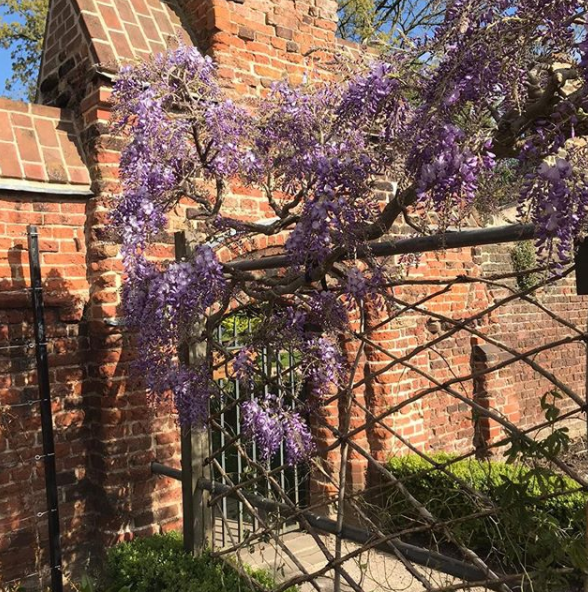
There are two specimens – one in the Walled Garden and one against the south wall of the Palace itself. Having seen apprentice Hattie Moore’s blog of 27th April and other photos on social media, it is clear that both look absolutely stunning at present. Whilst it is disappointing not to be able to see the Wisteria ‘up close and personal’ there is some consolation in reflecting on the work the whole garden team put in at the beginning of the year in pruning both specimens to ensure that they are looking so glorious now.
Screenshot 2020-05-04 at 13.09.42.png

Brains Trust

I am quite shameless about picking the brains of the full time team about tips and tricks I could usefully make use of in my own garden. Their response has always been helpful and informative, and with no sign of being spoken through gritted teeth! As and when the Garden re-opens, don’t be shy about raising your own queries with them (remembering, of course, social distancing). The full time team can be identified by their purple tops.


Job Satisfaction

No two days gardening at Fulham Palace are ever the same for us volunteers. From the beginning of the New Year until lockdown we were involved in a wide variety of tasks – pruning the yew hedge between the Palace and the allotments, seed planting, pricking out, edging the paths, weeding and ‘deep cleaning’ the Vinery to name but a few. Whatever our commissions for the day might have been , there has always been a sense of achievement in playing a tiny part in maintaining the wonderful garden at Fulham Palace – long, long may it flourish!
Digging up the Past

Read on for this fantastic piece by Elowyn, our front of house supervisor.

As anyone who has watched our introductory video in the museum will know, the site of Fulham Palace has been blessed with a long, rich history. We have our uniquely stony banks of Old Father Thames to thank for this: before the Victorians built the embankment, his shallow, rocky bed was a stark contrast to the muddy basin elsewhere in the area we now called London, which made it easy to ford the river between present-day Fulham and Putney at low tide and was therefore an attractive area for settling down.

Neolithic settlements sprung up along the bank and this is why when you visit the ‘London Before London’ gallery at the Museum of London, most of the hand axes and worked flints are from the Hammersmith area! The gorgeous jadeite Mortlake axe head is, unsurprisingly, from neighbouring Mortlake, but we have our own fine example of a polished hand axe in our museum collection which was found in the garden of the vicarage of All Saint’s Church but made with stone from as far away as the Lake District which suggests a far-flung trading network – pretty impressive stuff for 4,000-2,000 BC!

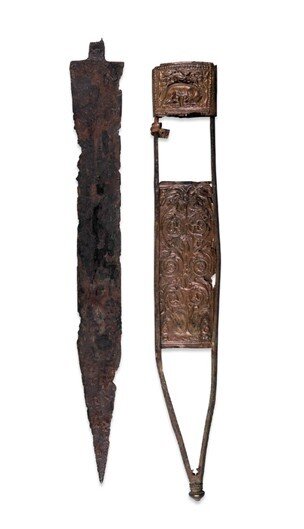
Then in AD 43 the Romans arrived in London and in 1883 archaeologists found a legionary’s gladius (sword) dated to the 1st century AD which became known as The Fulham Sword when it went on display in the British Museum. This was enough to convince experts that the Romans knew a good thing when they saw it (Fulham) and that there must have been some sort of Roman settlement here.

(Photo courtesy of the British Museum online collection catalogue)

(Photo courtesy of the British Museum online collection catalogue)

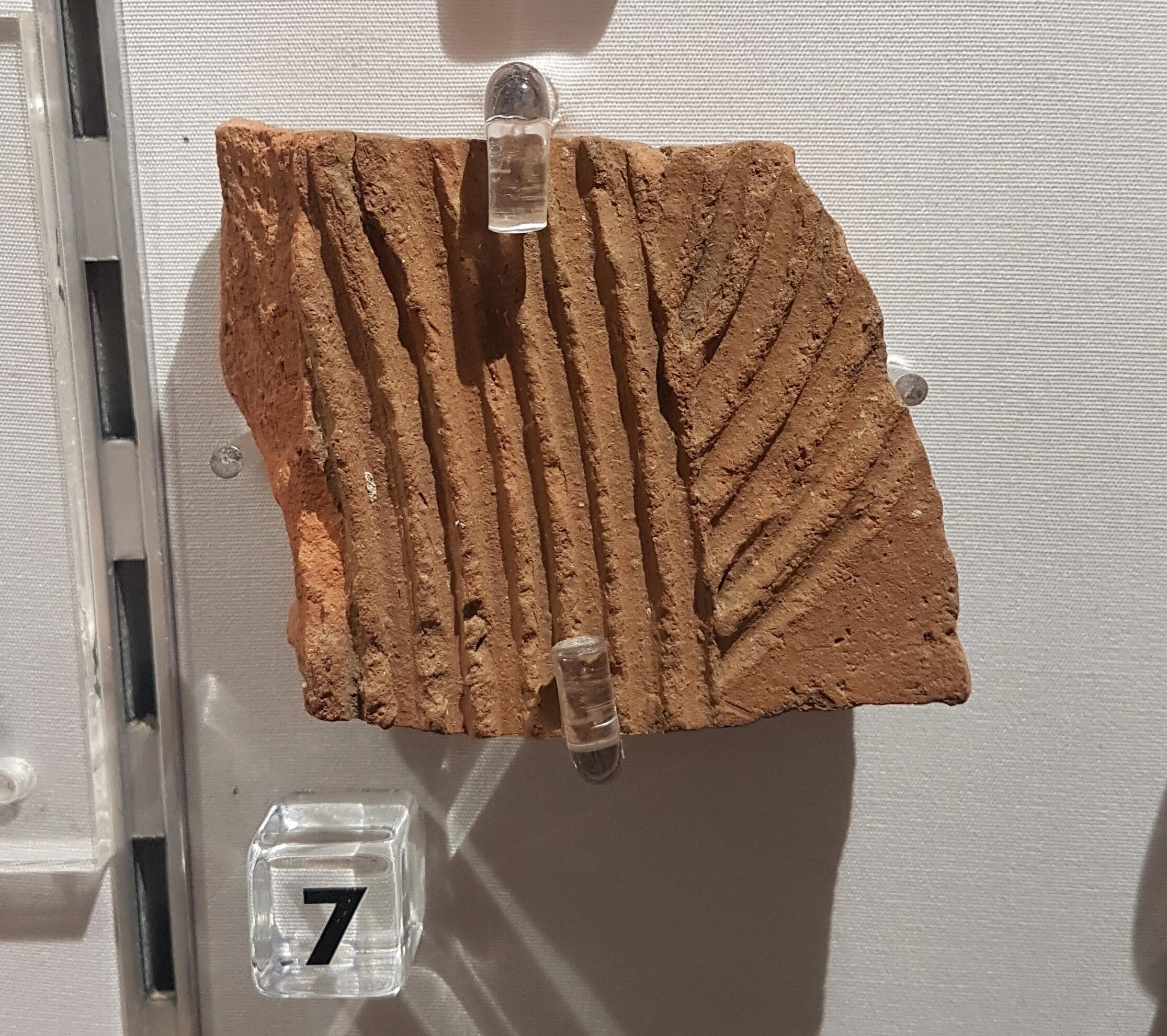
Archaeologists set out to discover the true nature of Fulham’s Roman past. The MTI excavation in 1972-73 by Fulham Archaeological Rescue Group (F.A.R.G.) on the line of the moat, south of the walled garden, turned up a piece of hypocaust tile – part of a sophisticated underfloor heating system – and fragments of mortaria (flat bowls for grinding and mixing food), jewellery and tegulae (roof tiles). Could Fulham Palace once have been the site of a Roman villa? We know that Stevenage Road was a Roman road that joined Goldhawk Road to form the ‘Devil’s Highway’ which led west to Silchester (outside Reading). What other treasures lay buried in our soil?!

Tile, designed to circulate air within a Roman hypocaust (central heating system). Found during MTI archaeology dig (AD43-410)

Tile, designed to circulate air within a Roman hypocaust (central heating system). Found during MTI archaeology dig (AD43-410)

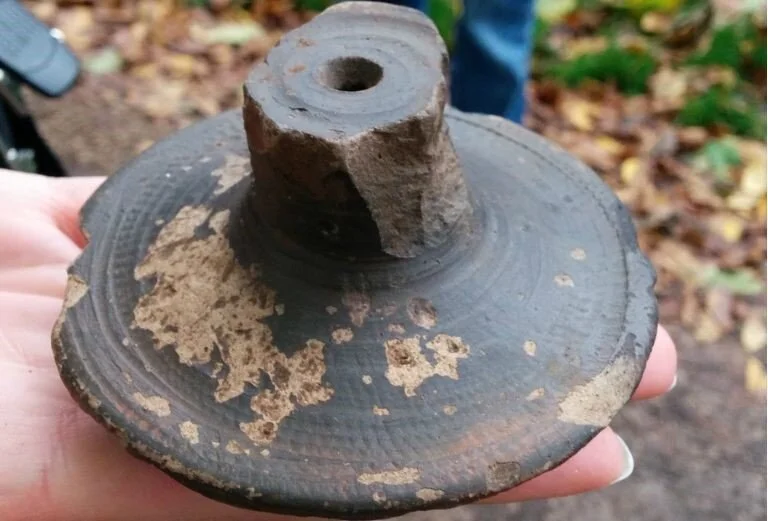
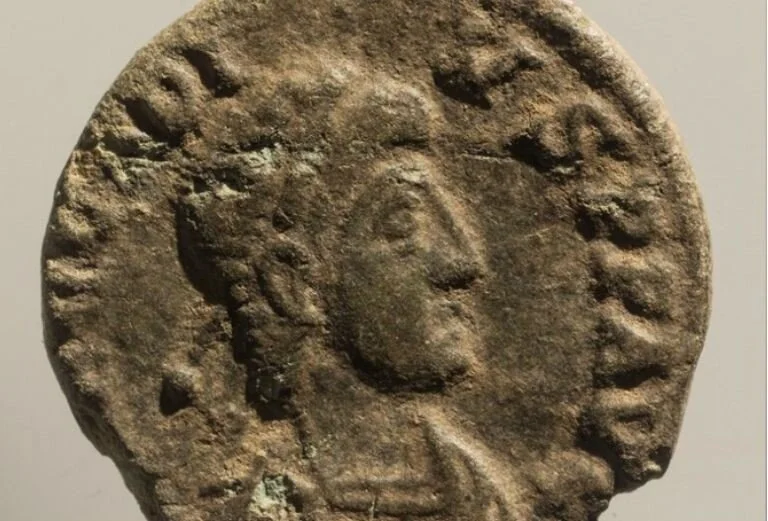
The orchard archaeological dig in 2014 turned up a lovely little decorated pot lid from the Nene Valley north of Northampton which dated between AD 200-400 and a Roman coin from the reign of Arcadius (AD 395-408). This was exciting because the last Roman coinage entered Britain in AD 402 so this proves that the site of Fulham Palace was occupied right up until the end of the 4th century. This evidence sets the scene for our other late Roman finds and the focus of this blog post…

Roman pot lid.jpg
Arcadius coin.jpg

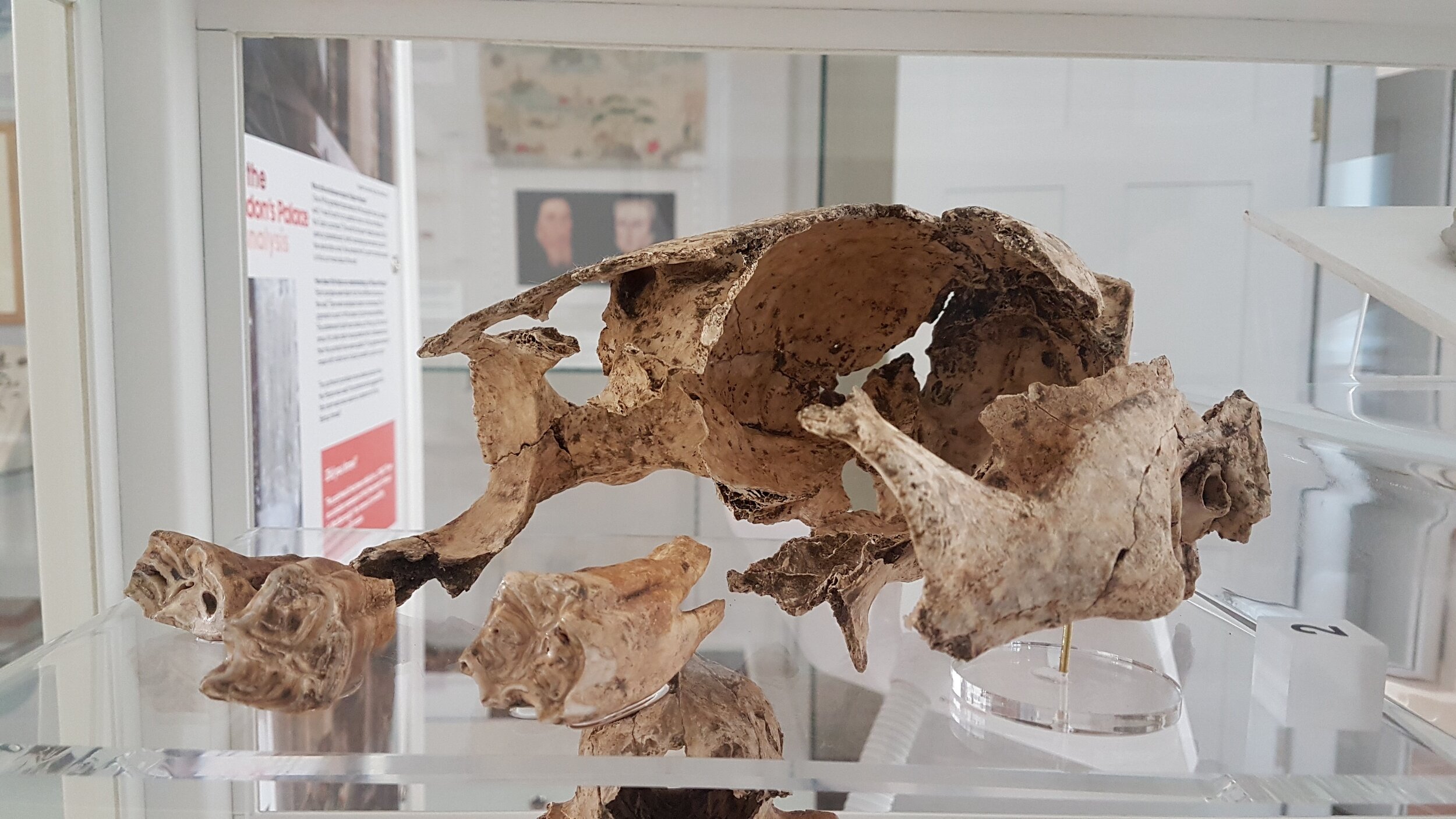
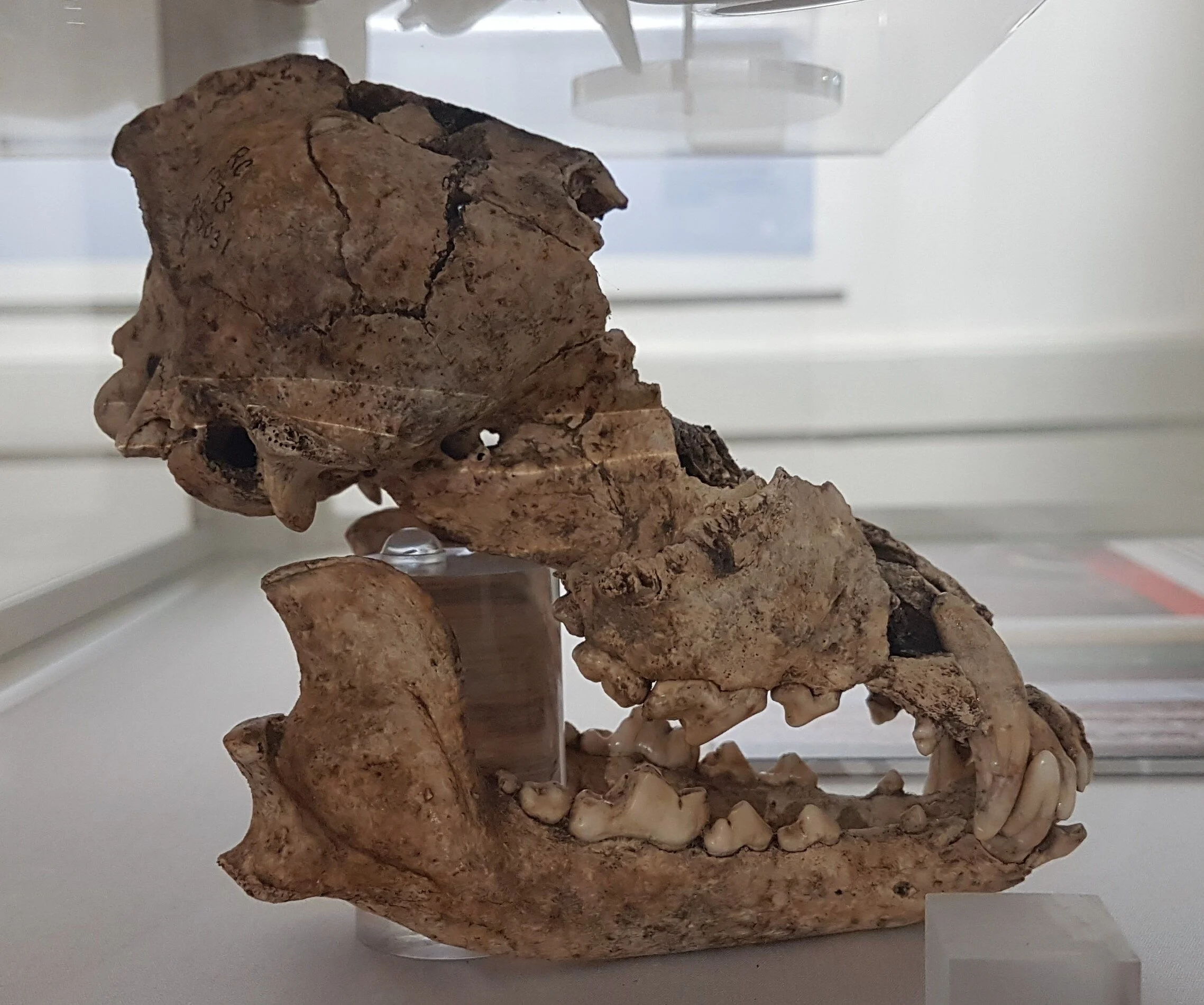
In our temporary exhibition room are two rather unassuming skulls that date to the late Roman period (AD 240-410). One belonged to a small dog and one to a horse. They were both found in the 1972-73 archaeology dig by F.A.R.G., on the line of the moat south of the walled garden. The museum label tells us that ‘dogs and horses were revered animals throughout the Iron Age and up until the end of Roman rule. As these skulls were buried closely together they may represent a votive offering to ensure a productive harvest, or perhaps to protect the threshold of the settlement from malignant spirits.’

The archaeological site report published in 1978 notes that both skulls were lying next to each other -nearly parallel - facing east, and with their crania (tops of their skulls) facing upwards and crushed, lying not far from a post-hole and gravel surface which may have once been a path. Crushed in a sacrifice, perhaps? Let’s examine the evidence!

Roman religion revolved around a series of festivals, some of which involved animal sacrifice. Dogs were sacrificed during the spring festival of Robigalia to ward off crop disease. The October Horse was a mid-October sacrifice to the god of war, Mars, wherein the winning horse in a race would have its head and tail cut off. These instances are interesting but not the norm – Romans were clever and preferred to sacrifice animals that they could then eat. Their priest was also their butcher!

Even if our Fulham Palace animals were not eaten, they certainly were useful. The analysis of these skulls notes that the dog was ‘not a very large animal; it was probably similar to an average-sized mongrel of the present-day’, older than 4 years old but had very healthy teeth without any signs of decay. The skull seems too small to have belonged to a Roman guard dog or farm dog. Perhaps it was a vulpine (dog and fox crossbreed), kept as a companion? Whatever it was, whoever owned this dog looked after it well…until the head was separated from its body (we know this because part of the vertebrae is still attached, probably held in place by skin before it decomposed).

The horse was much older – at least 15 when it died – and large (it stood at least 15 hands high). Its front premolar is worn from biting down on a metal bit. In contrast to the dog, the horse was missing its mandible (jawbone) so perhaps it had been buried not as a head, but as a de-fleshed skull! Horse burials have been found in many Iron Age sites where they have often been interpreted as ritual burials associated with Epona, the mother goddess of ancient Romano-Celtic religion.

The word ‘ritual’ has connotations of mysticism and religion, but it simply means a sequence of activities performed according to a set pattern (archaeology lecturers love to point out that this would make brushing your teeth a ‘ritual’). At similar sites such as Maiden Castle in Dorset and Lullingstone in Kent, dogs and oxen were found near ancient entrances. Could it be, that in this instance, the Fulham Palace dog and horse skull were also buried near an entrance relating to that post hole and gravel in order to ‘protect the threshold from malignant spirits’? Or, if this animal inhumation at entrances was commonplace, perhaps the Romans in Fulham buried this dog and horse skull out of sheer habit rather than anything mystical! Archaeologist J. D. Hill wrote about very similar dog and horse skulls in ‘Ritual and Rubbish’ in Iron Age Wessex and reminds us to be wary of assuming everything interesting which ends up in the archaeological record is the result of intentional ritual action – perhaps this horse skull was deliberately smashed in with a pole-axe, or perhaps it was accidentally crushed by a clumsy Roman when the pit was backfilled! What a ‘mare.

To conclude, we may never know whether or not our interesting animal skulls were the result of deliberate sacrifice or simply a commonplace ritual of adding an animal skull to the path before you pave it. The site report admits that ‘It is difficult to escape the conclusion that these skulls were buried for some ritual purpose’, and it sure is tempting to think this. The romantic notion of these ancient Romans carrying out sacrifices on our doorsteps is enough to convince us that this was the case! As always, the archaeological record is a confusing and beautiful beast, much like the mother goddess Epona, I imagine. I invite you to visit our lovely skulls when we re-open the museum, and please let me know why you think they ended up outside our walled garden!

Roman horse skull.jpg
Roman dog skull (2).jpg

Post-Winter Bee Report

We are sure you are missing the beautiful Palace garden, especially in Spring when it is blooming and the wildlife is thriving. Fortunately, the bees seem to be enjoying the quieter atmosphere and are in the very capable hands of the three Fulham Palace bee keepers, who are doing an excellent job at keeping the bees happy and healthy!

We are thankful to Kathy Stevenson for kindly writing this report. Read all about it!

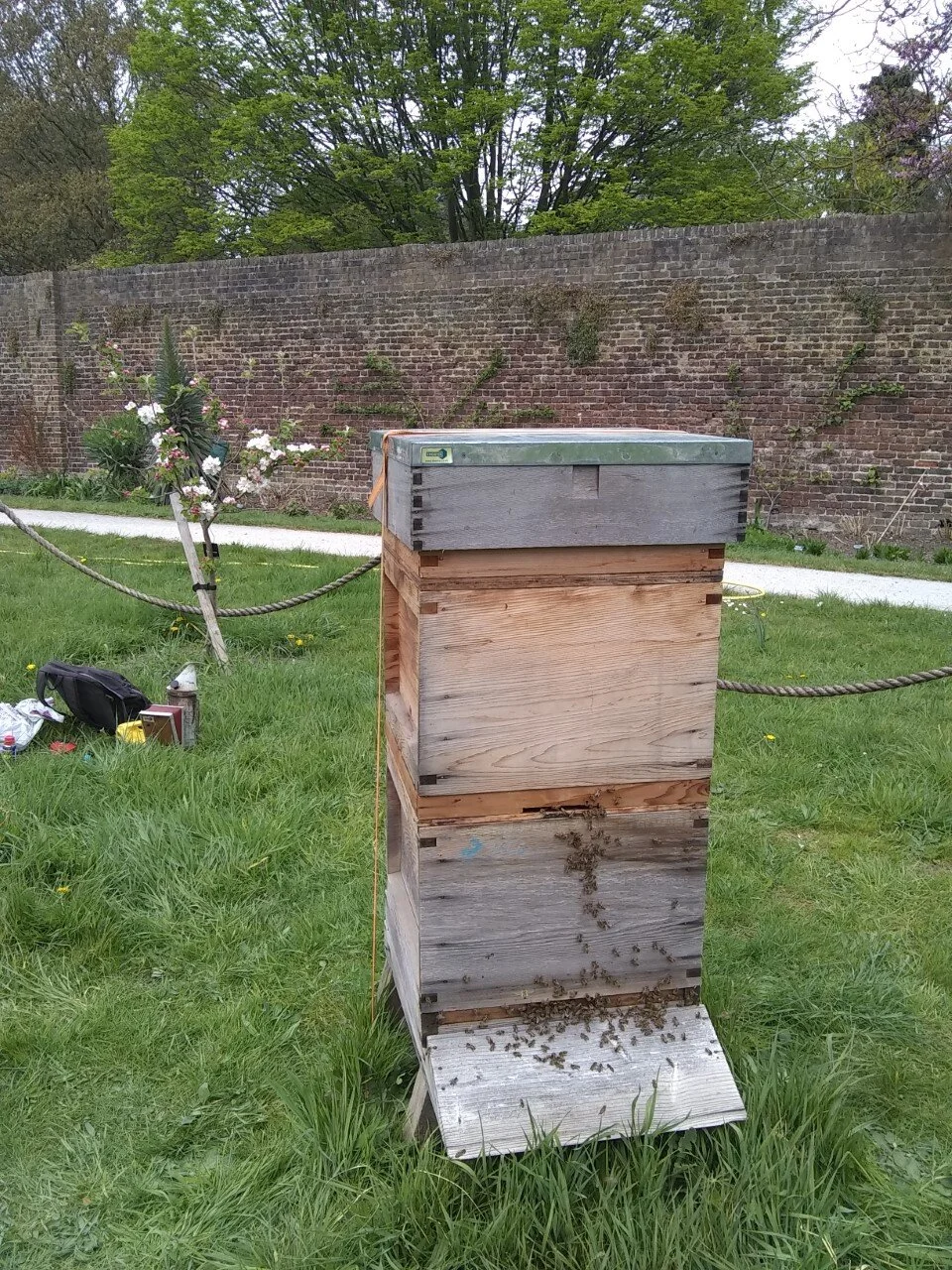
Our beehive

Our beehive

Hello, fellow volunteers! I'm one of the three Fulham Palace beekeepers and I'm here with the Post-Winter Bee Report.

After the winter months it is important to check the hives for stores of food, as late winter is a crucial time for colony survival. This we first did in February, providing a kilo of commercial pollen supplement which helps feed the new brood. The thick paste was cut into strips and placed directly on top of the frames to enable the bees to feed without leaving the warmth of the cluster. If the weather remains dry and sunny the bees can fly to collect their own food when blossoms are available and a March feed is not always necessary. This year we had a very wet winter which prevented bees flying on many days and, being confined indoors like many of us at the moment, they were eating all the food in the house. Therefore, in March we provided a kilo of fondant containing trace minerals that provide a balanced diet normally available in the local flora.

Apple Blossoms in the Garden

Apple Blossoms in the Garden

A word on winter losses: This is the term we use to describe a colony that has failed over the winter. When we looked in on our two colonies in February, it was discovered that one of the colonies hadn't survived. A possible contribution to the cause was the very wet winter conditions combined with the general weakness of the colony going into winter. It is not unusual for this to happen, but with our small apiary this left us with one colony.

Checking on the remaining colony in mid-March, it was upsetting for us to find only 3 frames of bees inside. We fed them and crossed our fingers. On 31 March the weather was still quite cool for taking up the roof and draining the central heating, but the sun was with us at 1:30pm so we donned our suits. And what an uplifting sight greeted us - the colony had grown to 5 frames! And they were not happy to see us! Good, strong bees. Who could blame them for their annoyance at the intrusion? We quickly replenished the fondant and closed up.

And now we wait for warmer weather. The plan is to get these bees into a clean hive, working on drawing fresh comb for their clean house. There are several reasons for this: 

  • To provide a healthy environment

  • To give the bees more room to expand 

  • To keep them busy building comb into the early part of the swarm season. 

We need to limit visits during lock down, and I can't think of a better way to keep bees happy than by leaving them alone for as long as possible.

You'll be hearing more about our bees later in the season, as we are on schedule to obtain some new colonies that were pre-ordered in October.

‘Til then, keep well everyone!

The wisteria is blooming in the Walled Garden.

The wisteria is blooming in the Walled Garden.

Bishops Quiz

Continuing our penchant for quizzing lately, front of house assistant Sharda has created a wonderful quiz all about Bishops. Come and have a go and test your knowledge!

Click below to take this Fulham Palace Bishops quiz!

Hint: Most of the questions are derived from blogs on either the main website or volunteers portal.

powered by Typeform

I hope you’ve enjoyed the quiz, I definitely learnt some more Bishop trivia there! Please don’t hesitate to get in touch with us at any time, by phone or email, during this difficult time. We’re always happy to hear from you, and hope you’re all keeping safe and well.

Rachel

Volunteer and communities manager

Object(s) of the month: The portrait and costume of Bishop William Warham

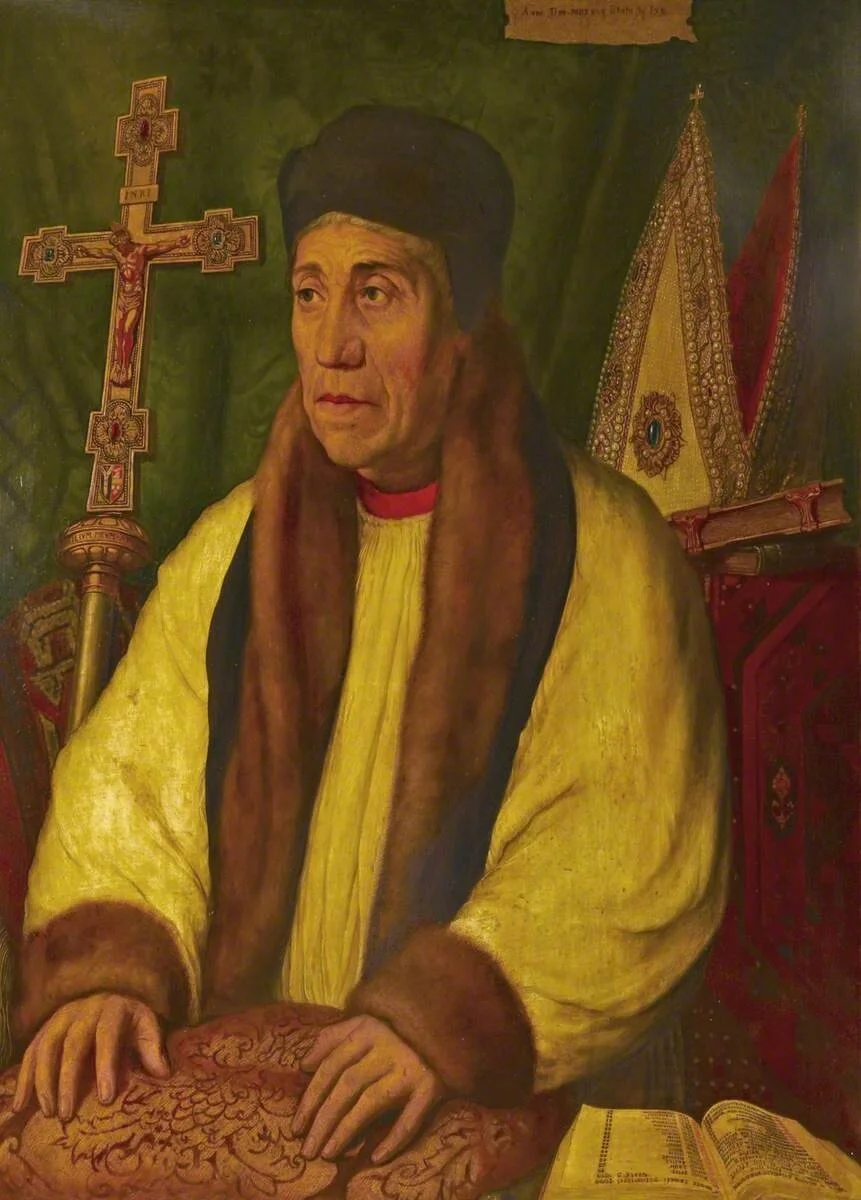
Bishop of London William Warham, Fulham Palace portrait, copy of an original by the master Holbein

Bishop of London William Warham, Fulham Palace portrait, copy of an original by the master Holbein

Every month we feature two blogs written by volunteers, one describes an object in the Palace and one a plant from the Garden. It is a great way to learn more about the Palace. If you would like to contribute there is no set format so please do send in your ideas.

This April we are grateful to Esther Dean, sewing bee volunteer.

This is going to be a double object, as the first inspired the second. When I started volunteering at Fulham Palace back in the 1990s the museum had not long opened and there were very few rooms open to the public, and nothing like the number of objects that it has now. This meant that when schools came we had to be very inventive to make their visit really exciting and informative.

We did not then have the collection of portraits of the Bishops that now adorn the walls of the Palace. However one of the prize exhibits was the portrait of Bishop Warham, a copy of an original by the master Holbein. William Warham was Bishop of London from 1501 to 1504 when he was translated to the Archbishopric of Canterbury. He must have been at Fulham Palace at a very exciting time in its history, when it was a newly built, state of the art brick building. He was instrumental in arranging the marriage of Catherine of Aragon to Arthur, Prince of Wales, the eldest son of Henry VII. After that short lived marriage, following Arthur’s untimely death, it is said that Catherine spent some time, prior to her marriage to Henry VIII at Fulham Palace. Warham later represented Catherine in the divorce proceedings with Henry, featured recently in the Hilary Mantel novel Wolf Hall. The portrait can now be seen in the Porteus Library.

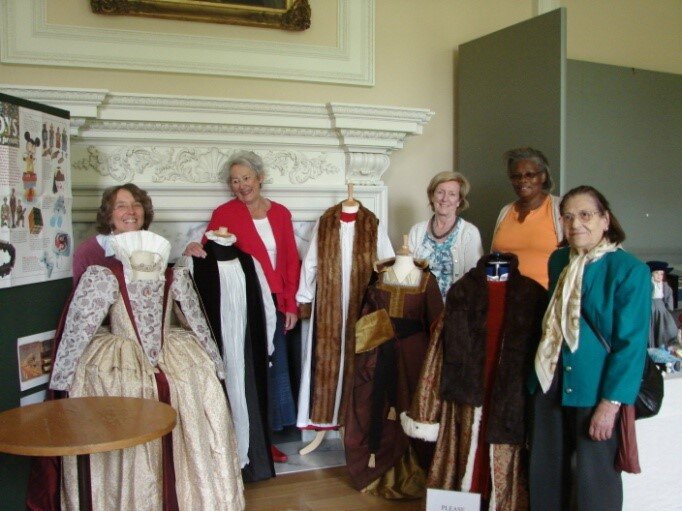
The sewing bee with the brand new costumes for the education department including the Bishop Warham costume in the centre

The sewing bee with the brand new costumes for the education department including the Bishop Warham costume in the centre

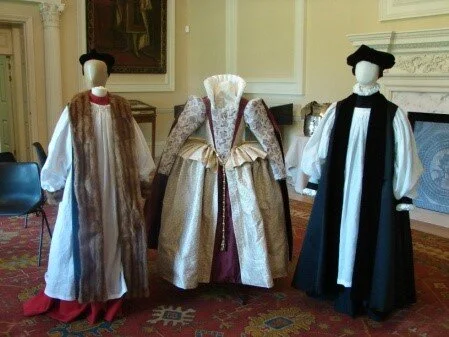
Fulham Palace costumes of Bishop Warham, Elizabeth I and Bishop Bancroft, made for educational use by the specialist company Past Pleasures

Fulham Palace costumes of Bishop Warham, Elizabeth I and Bishop Bancroft, made for educational use by the specialist company Past Pleasures

Before all the restoration works, the Education Department was building up its very extensive and popular costume collection, used for role play in school sessions, relating to the history of the Palace and its Bishops. Having the portrait of Warham, and his connection with Catherine of Aragon, it was decided to make a special reproduction of his costume in child size for use in these school sessions. We managed to raise some money, researched, worked out the design, chose the fabrics and had the costume made by Past Pleasures, a group specialising in exact reproductions of period costumes.

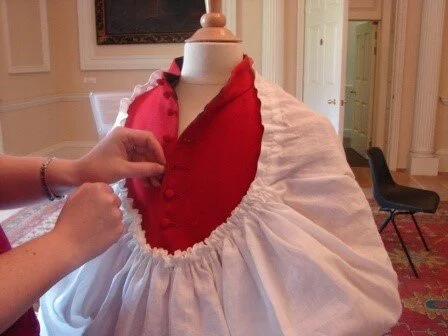
Needlework

Needlework

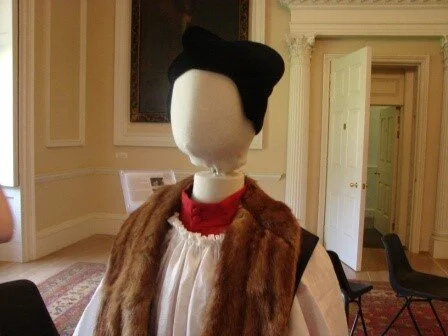
There was great excitement when the outfit arrived together with costumes for Elizabeth I and Bishop Bancroft at the Palace, and we enjoyed working out how to put them on correctly. Warham’s costume represents the Catholic Bishops prior to the Reformation with a bright red cassock. Bancroft reflects the Protestant Reformation in sober black and white.

Since its arrival the costume has been very well used in various ways: in school sessions reflecting the history of the Palace and Catherine’s possible sojourn there, in displays showing the collection to the public and also in our very popular dressing up sessions during the Family Fun Days.

Close up Bishop Warham costume detail

Close up Bishop Warham costume detail

If you catch a fleeting glimpse of a Bishop gracing the old rooms of the Palace have you seen a ghost? More likely a child playing the part of one of our bishops!

Esther Dean

April 2020

Thank you to Esther for this wonderful blog about not one but two objects at the Palace! Please send your ideas for object or specimen of the month blogs to rachel.bagnall-bray@fulhampalace.org. If you would like some help, please let me know.

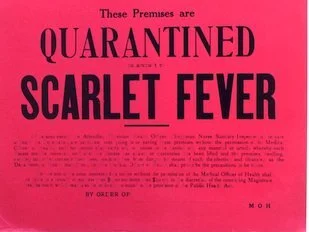
Scarlet Fever and Fulham Palace

Our thanks to Alan Malcolm for this interesting blog about the tragedies of Scarlet Fever during the Victorian times at Fulham Palace.

Once upon a time there was an infectious disease which was transmitted by people sneezing on each other and touching infected objects. 

A Field Township quarantine sign, 1922.

A Field Township quarantine sign, 1922.

There was no vaccine.

But this one killed small children, not the elderly. 

An infected person would need to be isolated from their family and everyone else.

And so it came to pass that the Bishop of London, Archibald Tait, lost five daughters, aged 2, 4, 6, 8 and 10 in five weeks.

This was scarlet fever.

There is still no vaccine. It is caused by a bacterium and antibiotics are usually the best treatment, (until we overuse these).

Bishop of London, Archibald Campbell Tait

Bishop of London, Archibald Campbell Tait

And so it came to pass that LS Lowry painted “The Fever Van” in Salford in the 1930s where an infected child would be wrenched from its family, its books and toys  burned, the wallpaper from its bedroom stripped and a sulphur candle burned to sterilize the room. It also bleached the furniture.

And so it came to pass that when I was a dedicated reader at the local library in Cheam (1952 – 1963), every book I borrowed contained a warning “If this book has been in contact with scarlet fever, you must notify the librarian, who will then burn the book”.

And so it came to pass that Archibald Tait, Bishop of London, decided to build a chapel to the memory of his deceased daughters.

And so it came to pass that never again would we have an infectious agent sweeping through the population requiring social contact to be forbidden by law.

Alan Malcolm

Tour guide, Fulham Palace

Garden Quiz

With the weather getting warmer and the sun shining for longer, get in the gardening mood with this green-fingered quiz! Many thanks to Jamie Atwell, garden volunteer, for kindly creating these questions.


Click below to begin!

Hint: Most of the questions are derived from blogs on either the main website or volunteers portal.

powered by Typeform