Read on for this fantastic piece by Elowyn, our front of house supervisor.
As anyone who has watched our introductory video in the museum will know, the site of Fulham Palace has been blessed with a long, rich history. We have our uniquely stony banks of Old Father Thames to thank for this: before the Victorians built the embankment, his shallow, rocky bed was a stark contrast to the muddy basin elsewhere in the area we now called London, which made it easy to ford the river between present-day Fulham and Putney at low tide and was therefore an attractive area for settling down.
Neolithic settlements sprung up along the bank and this is why when you visit the ‘London Before London’ gallery at the Museum of London, most of the hand axes and worked flints are from the Hammersmith area! The gorgeous jadeite Mortlake axe head is, unsurprisingly, from neighbouring Mortlake, but we have our own fine example of a polished hand axe in our museum collection which was found in the garden of the vicarage of All Saint’s Church but made with stone from as far away as the Lake District which suggests a far-flung trading network – pretty impressive stuff for 4,000-2,000 BC!
Then in AD 43 the Romans arrived in London and in 1883 archaeologists found a legionary’s gladius (sword) dated to the 1st century AD which became known as The Fulham Sword when it went on display in the British Museum. This was enough to convince experts that the Romans knew a good thing when they saw it (Fulham) and that there must have been some sort of Roman settlement here.
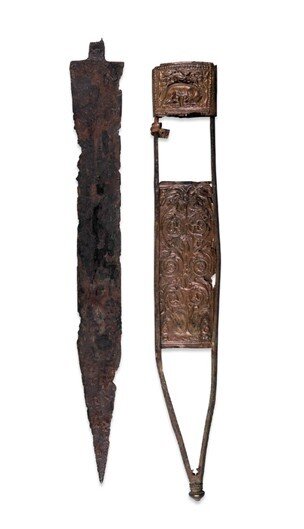
(Photo courtesy of the British Museum online collection catalogue)
Archaeologists set out to discover the true nature of Fulham’s Roman past. The MTI excavation in 1972-73 by Fulham Archaeological Rescue Group (F.A.R.G.) on the line of the moat, south of the walled garden, turned up a piece of hypocaust tile – part of a sophisticated underfloor heating system – and fragments of mortaria (flat bowls for grinding and mixing food), jewellery and tegulae (roof tiles). Could Fulham Palace once have been the site of a Roman villa? We know that Stevenage Road was a Roman road that joined Goldhawk Road to form the ‘Devil’s Highway’ which led west to Silchester (outside Reading). What other treasures lay buried in our soil?!
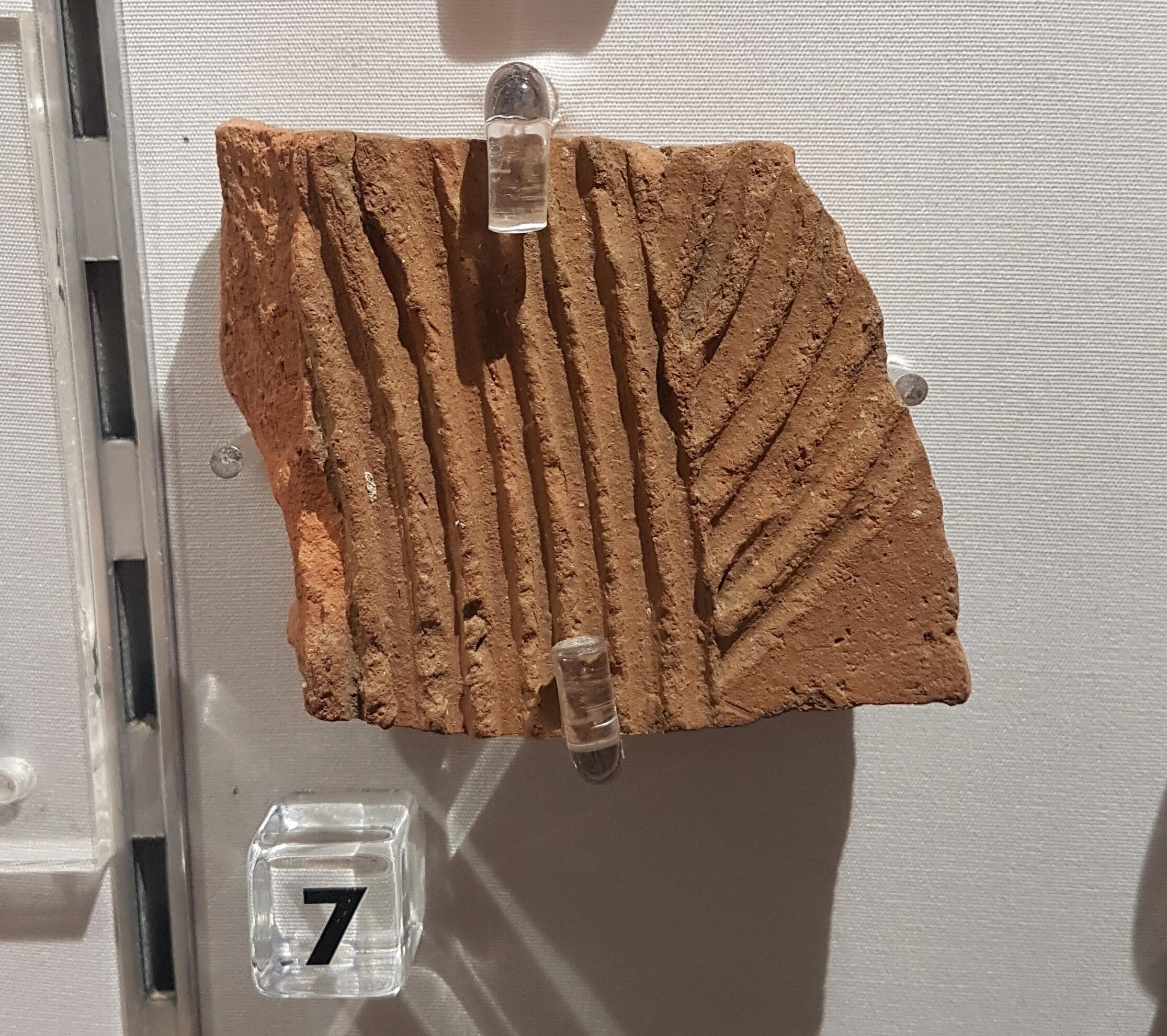
Tile, designed to circulate air within a Roman hypocaust (central heating system). Found during MTI archaeology dig (AD43-410)
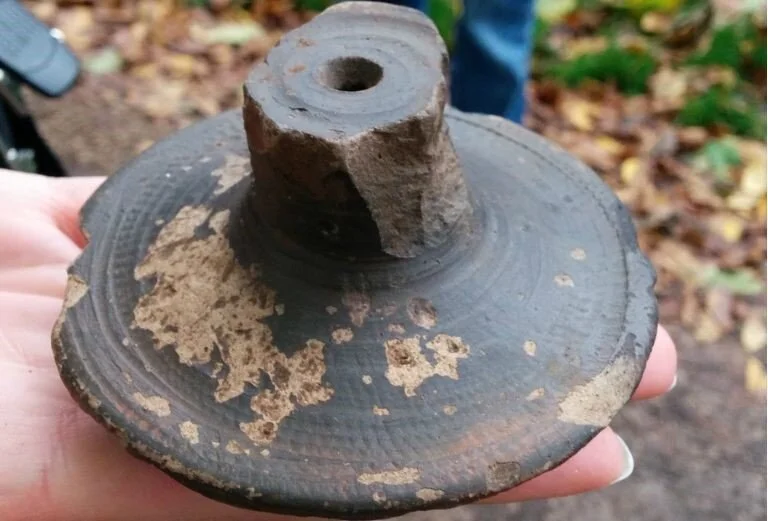
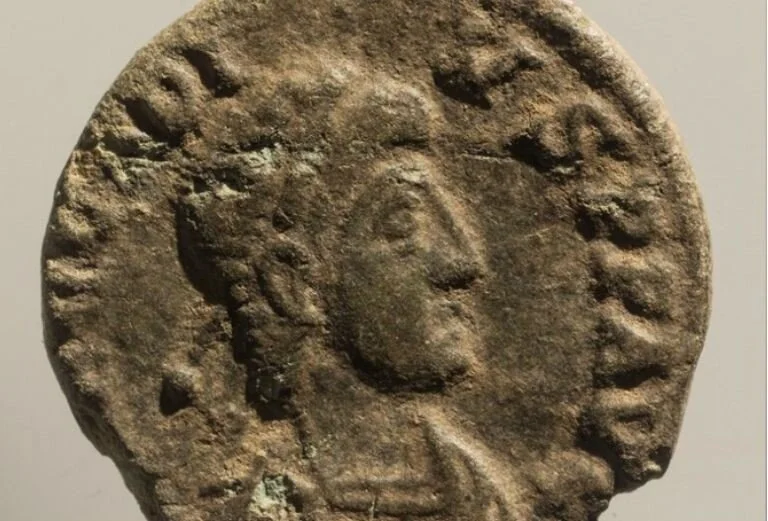
The orchard archaeological dig in 2014 turned up a lovely little decorated pot lid from the Nene Valley north of Northampton which dated between AD 200-400 and a Roman coin from the reign of Arcadius (AD 395-408). This was exciting because the last Roman coinage entered Britain in AD 402 so this proves that the site of Fulham Palace was occupied right up until the end of the 4th century. This evidence sets the scene for our other late Roman finds and the focus of this blog post…
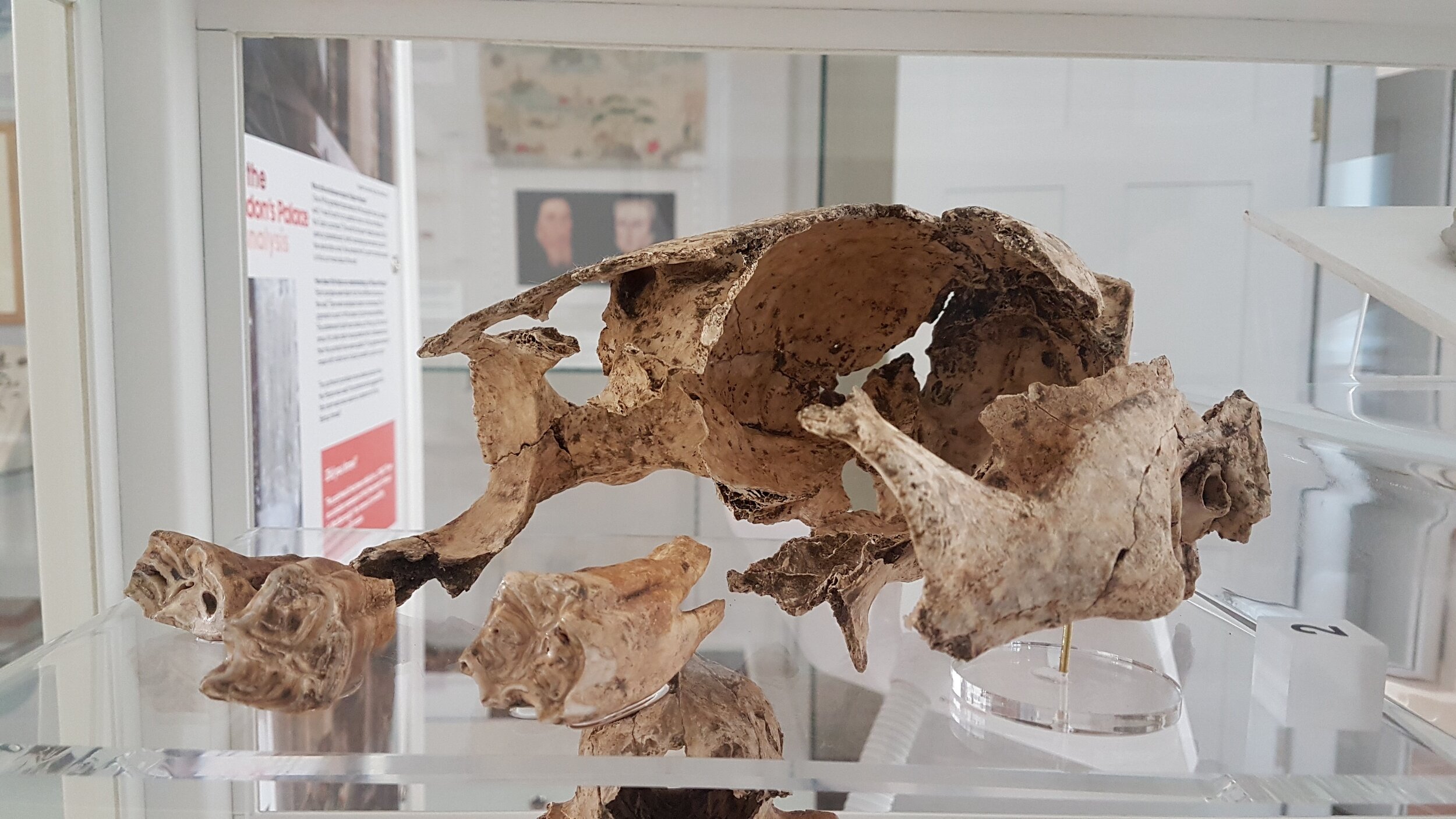
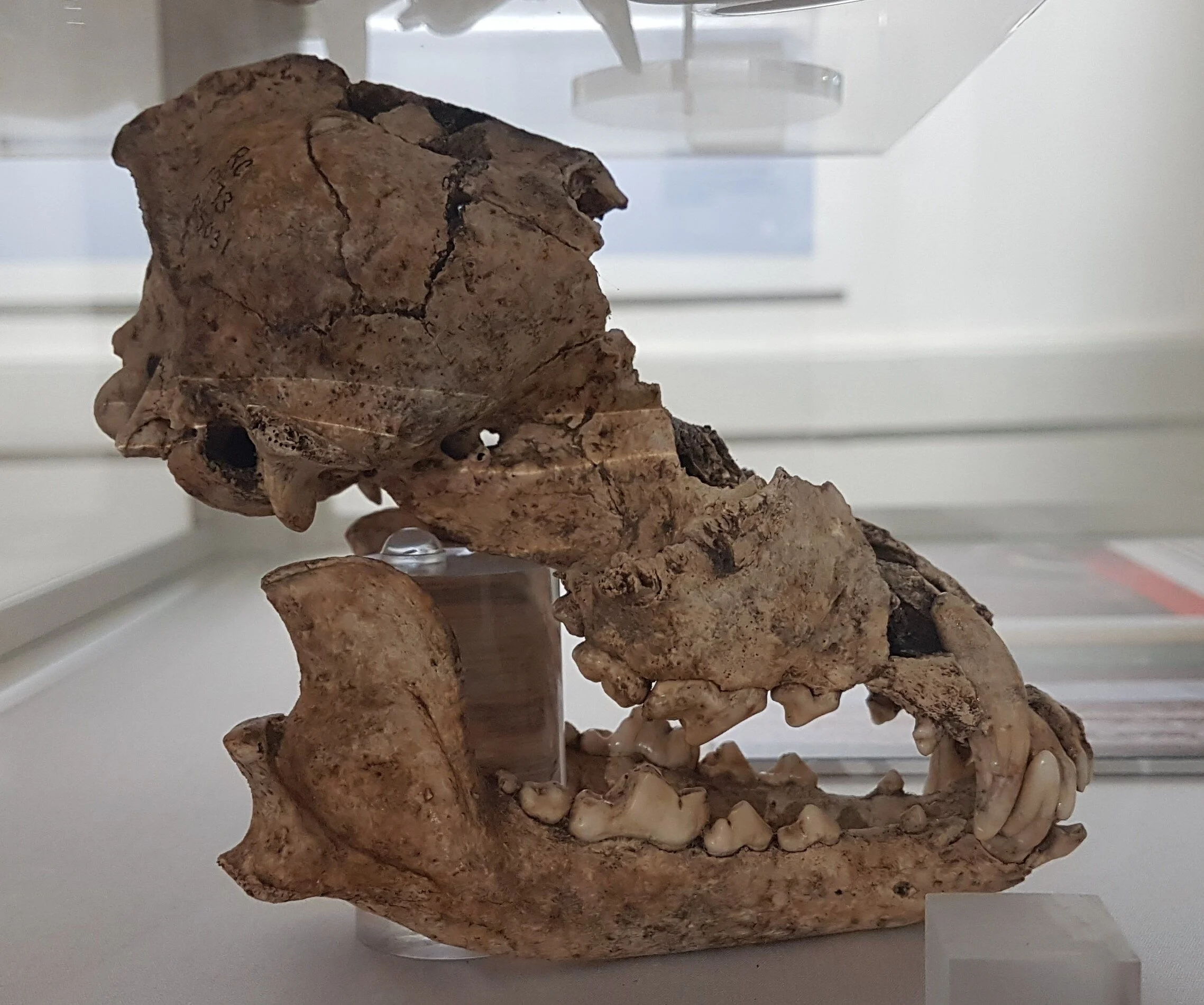
In our temporary exhibition room are two rather unassuming skulls that date to the late Roman period (AD 240-410). One belonged to a small dog and one to a horse. They were both found in the 1972-73 archaeology dig by F.A.R.G., on the line of the moat south of the walled garden. The museum label tells us that ‘dogs and horses were revered animals throughout the Iron Age and up until the end of Roman rule. As these skulls were buried closely together they may represent a votive offering to ensure a productive harvest, or perhaps to protect the threshold of the settlement from malignant spirits.’
The archaeological site report published in 1978 notes that both skulls were lying next to each other -nearly parallel - facing east, and with their crania (tops of their skulls) facing upwards and crushed, lying not far from a post-hole and gravel surface which may have once been a path. Crushed in a sacrifice, perhaps? Let’s examine the evidence!
Roman religion revolved around a series of festivals, some of which involved animal sacrifice. Dogs were sacrificed during the spring festival of Robigalia to ward off crop disease. The October Horse was a mid-October sacrifice to the god of war, Mars, wherein the winning horse in a race would have its head and tail cut off. These instances are interesting but not the norm – Romans were clever and preferred to sacrifice animals that they could then eat. Their priest was also their butcher!
Even if our Fulham Palace animals were not eaten, they certainly were useful. The analysis of these skulls notes that the dog was ‘not a very large animal; it was probably similar to an average-sized mongrel of the present-day’, older than 4 years old but had very healthy teeth without any signs of decay. The skull seems too small to have belonged to a Roman guard dog or farm dog. Perhaps it was a vulpine (dog and fox crossbreed), kept as a companion? Whatever it was, whoever owned this dog looked after it well…until the head was separated from its body (we know this because part of the vertebrae is still attached, probably held in place by skin before it decomposed).
The horse was much older – at least 15 when it died – and large (it stood at least 15 hands high). Its front premolar is worn from biting down on a metal bit. In contrast to the dog, the horse was missing its mandible (jawbone) so perhaps it had been buried not as a head, but as a de-fleshed skull! Horse burials have been found in many Iron Age sites where they have often been interpreted as ritual burials associated with Epona, the mother goddess of ancient Romano-Celtic religion.
The word ‘ritual’ has connotations of mysticism and religion, but it simply means a sequence of activities performed according to a set pattern (archaeology lecturers love to point out that this would make brushing your teeth a ‘ritual’). At similar sites such as Maiden Castle in Dorset and Lullingstone in Kent, dogs and oxen were found near ancient entrances. Could it be, that in this instance, the Fulham Palace dog and horse skull were also buried near an entrance relating to that post hole and gravel in order to ‘protect the threshold from malignant spirits’? Or, if this animal inhumation at entrances was commonplace, perhaps the Romans in Fulham buried this dog and horse skull out of sheer habit rather than anything mystical! Archaeologist J. D. Hill wrote about very similar dog and horse skulls in ‘Ritual and Rubbish’ in Iron Age Wessex and reminds us to be wary of assuming everything interesting which ends up in the archaeological record is the result of intentional ritual action – perhaps this horse skull was deliberately smashed in with a pole-axe, or perhaps it was accidentally crushed by a clumsy Roman when the pit was backfilled! What a ‘mare.
To conclude, we may never know whether or not our interesting animal skulls were the result of deliberate sacrifice or simply a commonplace ritual of adding an animal skull to the path before you pave it. The site report admits that ‘It is difficult to escape the conclusion that these skulls were buried for some ritual purpose’, and it sure is tempting to think this. The romantic notion of these ancient Romans carrying out sacrifices on our doorsteps is enough to convince us that this was the case! As always, the archaeological record is a confusing and beautiful beast, much like the mother goddess Epona, I imagine. I invite you to visit our lovely skulls when we re-open the museum, and please let me know why you think they ended up outside our walled garden!