
Our thanks to Alan Malcolm for this interesting blog about the tragedies of Scarlet Fever during the Victorian times at Fulham Palace.
Once upon a time there was an infectious disease which was transmitted by people sneezing on each other and touching infected objects.
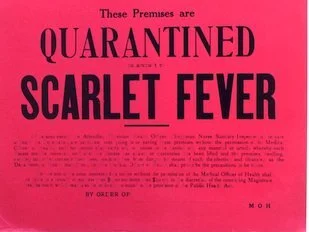
A Field Township quarantine sign, 1922.
There was no vaccine.
But this one killed small children, not the elderly.
An infected person would need to be isolated from their family and everyone else.
And so it came to pass that the Bishop of London, Archibald Tait, lost five daughters, aged 2, 4, 6, 8 and 10 in five weeks.
This was scarlet fever.
There is still no vaccine. It is caused by a bacterium and antibiotics are usually the best treatment, (until we overuse these).
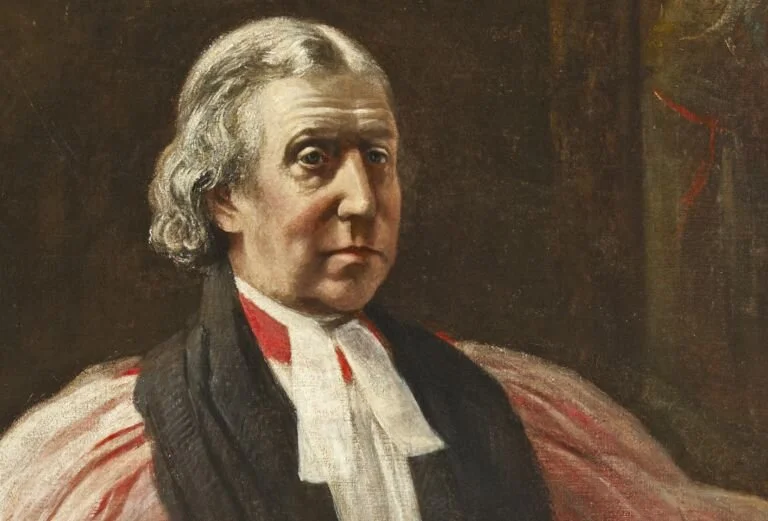
Bishop of London, Archibald Campbell Tait
And so it came to pass that LS Lowry painted “The Fever Van” in Salford in the 1930s where an infected child would be wrenched from its family, its books and toys burned, the wallpaper from its bedroom stripped and a sulphur candle burned to sterilize the room. It also bleached the furniture.
And so it came to pass that when I was a dedicated reader at the local library in Cheam (1952 – 1963), every book I borrowed contained a warning “If this book has been in contact with scarlet fever, you must notify the librarian, who will then burn the book”.
And so it came to pass that Archibald Tait, Bishop of London, decided to build a chapel to the memory of his deceased daughters.
And so it came to pass that never again would we have an infectious agent sweeping through the population requiring social contact to be forbidden by law.
Alan Malcolm
Tour guide, Fulham Palace