
Every month we feature two blogs written by volunteers, one describes an object in the Palace and one a plant from the Garden. It is a great way to learn more about the Palace. If you would like to contribute there is no set format so please do send in your ideas.
This October we are grateful to front of house volunteer Martha Heemskerk for looking into Hadrian’s Roman coin in the temporary exhibition room at the Palace.
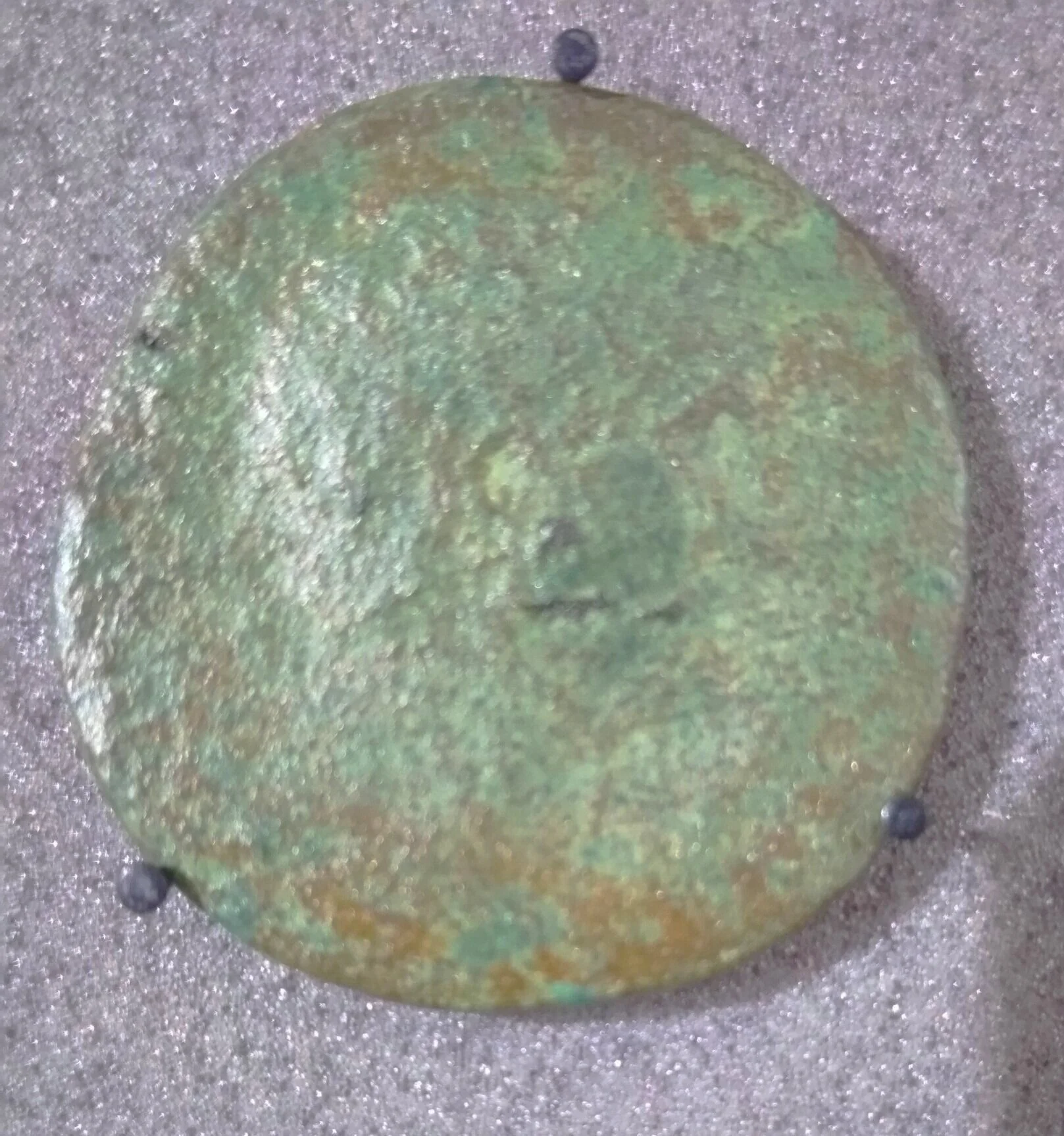
Image of the Palace’s (very eroded) coin of Hadrian
Amongst the small collection of Roman coins in the temporary exhibition room, found in the 1972-73 archaeological dig by Fulham Archaeological Rescue Group, the coin of Hadrian particularly interests me. Of all the Roman emperors, Hadrian (A.D. 117–38) is the one whose portrait is most frequently found, from Britain to Persia, from Asia Minor to Egypt, due to his extensive travels and building projects in the provinces. Although the coin has been quite badly eroded you can just about still see his signature curly hair and beard.
Coins were extremely important in establishing the image of an emperor, as they were the only medium of portraiture which spread across the Empire and beyond and went through the hands of people at almost every level of society from the merchants to the military. Therefore the choices that were made in representation on coins were often the only image of the emperor that most of the Empire would know, especially those living on the peripheries such as Britain.
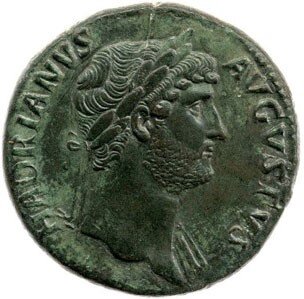
Coin of Hadrian, British Museum
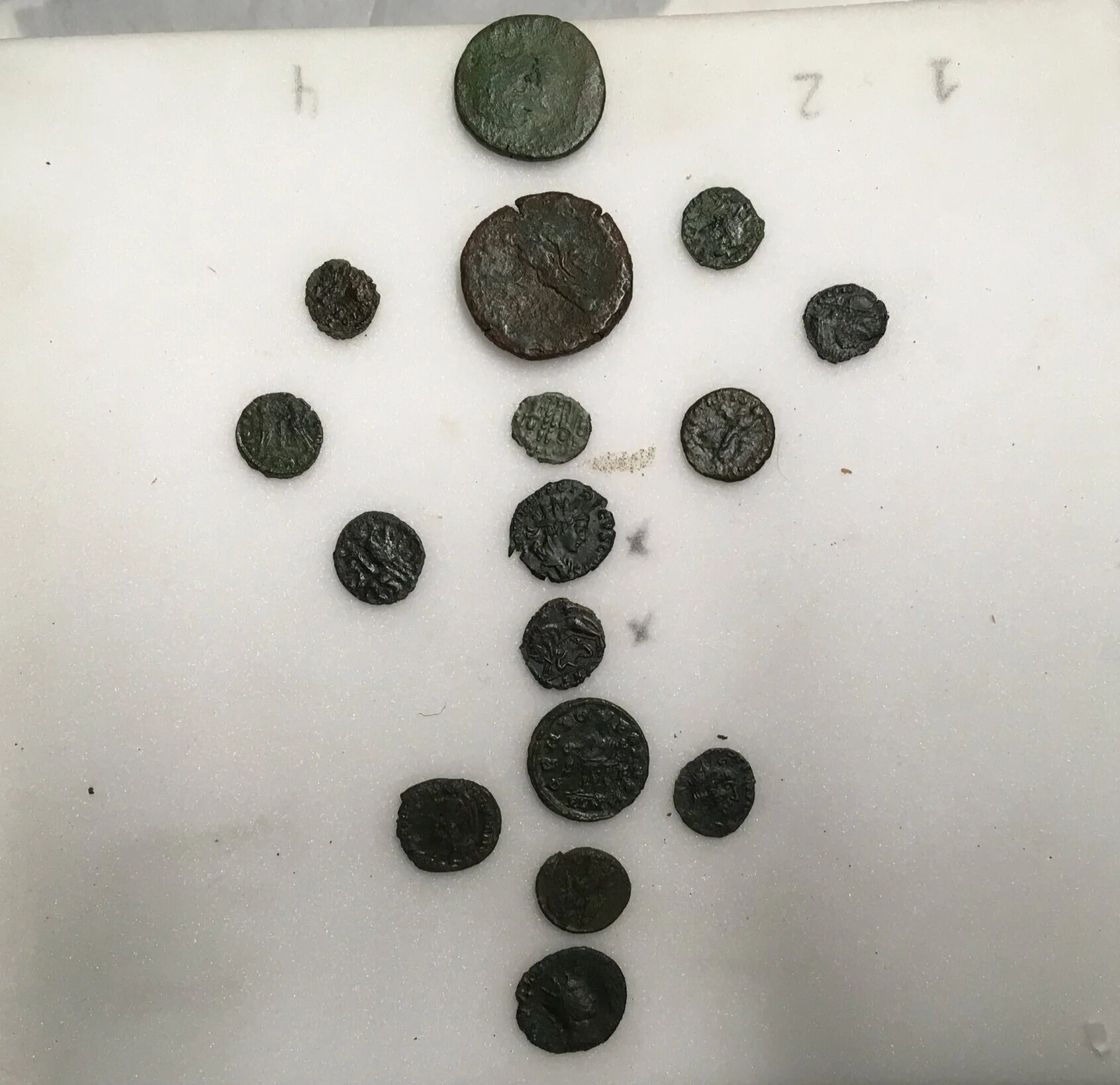
Some of Fulham Palace’s collection of Roman coins
Returning to Hadrian and his beard, Hadrian was the first of the emperors to be depicted with any facial hair at all, let alone a full, and rather luscious, beard. Although one literary source, the Historia Augusta, claims that Hadrian wore a beard to hide blemishes on his face, the more accepted reason for his departure from Roman tradition was a devotion to Greece and Greek culture. The beard was symbolic of the Greek philosopher, which previous Romans had tried to distance themselves from. However Hadrian’s political programme favoured ‘classical learning’, an attempt to return to what he believed to be a golden age of culture and civilisation. Therefore the ‘Greek’ beard became inseparable from his public and private image, and following Hadrian's success and popularity many later emperors continued the tradition.
Whether any of this would have translated to the Roman settlers of Fulham, going about their daily lives, is another question.
Martha Heemskerk, Front of House volunteer
Thank you to Martha for this interesting object of the month blog highlighting just how many stories can be told about the objects, buildings and specimens in our collection. Please send your ideas for object / specimen of the month blogs to rachel.bagnall-bray@fulhampalace.org. I’m very happy to provide help wherever needed.