
Enjoy this wonderful blog written by Summer garden volunteer, Professor Lucetta Dodi.
After Dublin, London. A school-work alternative. In the most literal sense of the expression.
In fact, at the end of the school year, I volunteered in a wonderful walled garden in London. More exactly in Fulham, in a building that from 774 to 1973 was the residence of the Bishop of London and that over the centuries has actively contributed to the history of the city.
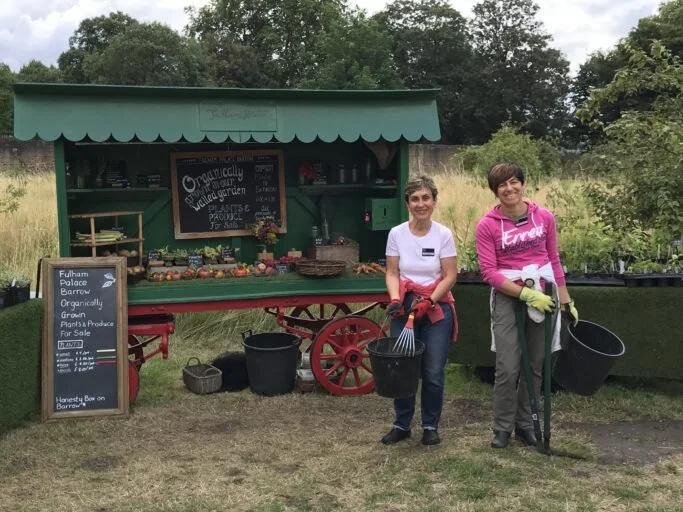
Lucetta Dodi (Left) and her friend and fellow Palace volunteer Anna Maria (right)
Like many other places of historical interest in the United Kingdom, Fulham Palace is also a charity that has received funds from the National Lottery and relies on the help of many volunteers.
I am one of them. I volunteered as a gardener at Fulham Palace, four days a week, from 10 - 4, for four weeks.
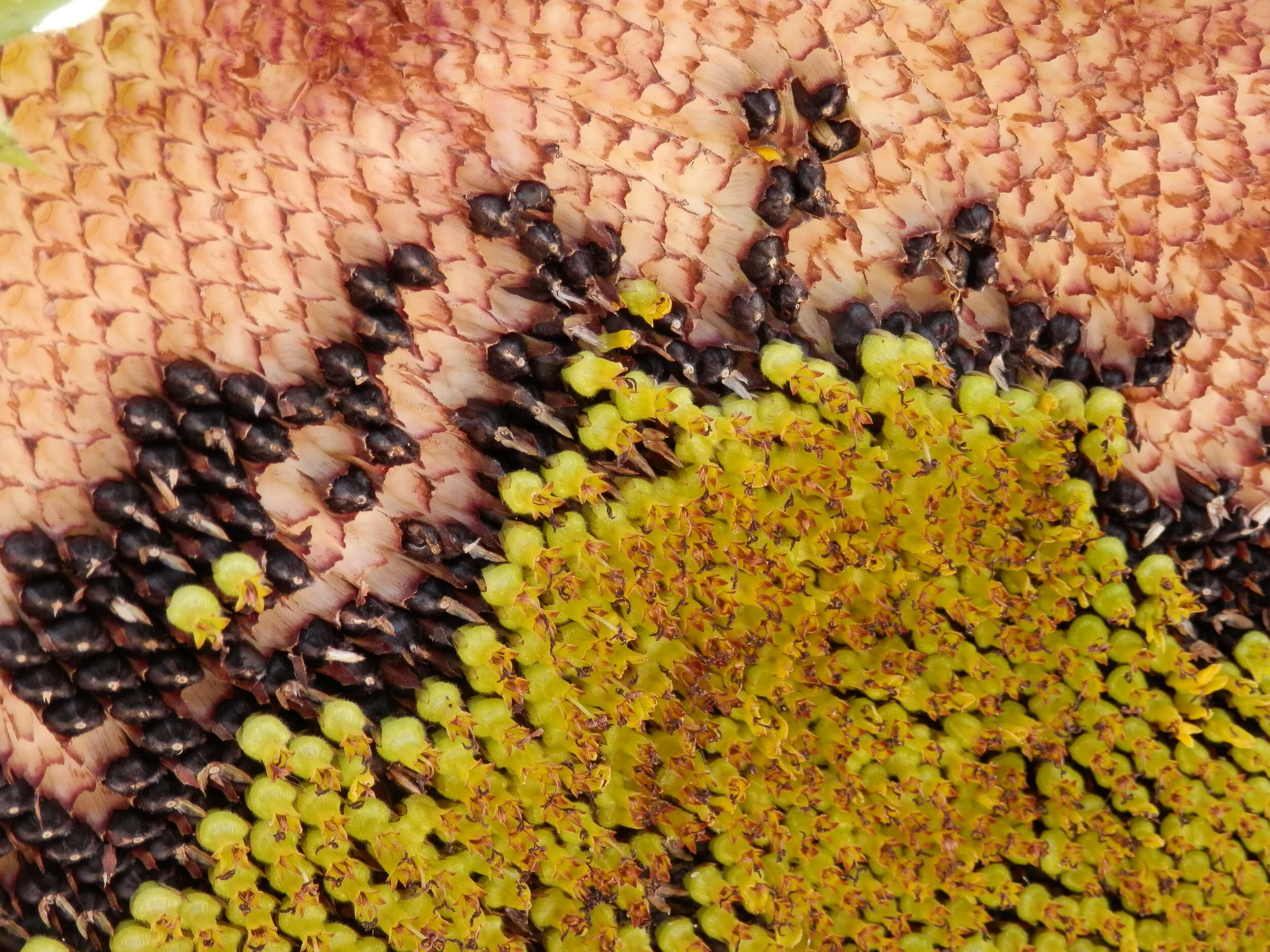
Summer sunflower, photo by Lucetta
This place felt like a real discovery, decidedly off the beaten track compared with the traditional tourist routes and so quintessentially British as to seem almost like a fairy tale with the colours of its dahlias and its red brick walls. It feels like a secret place, known only to a few.
There were many reasons to volunteer here this summer. After many years as a Red Cross Pioneer, volunteering is part of my mental universe and London is a city that I love, even in the times of Brexit.
Furthermore this is a great way to practice spoken English and to get to know new people, who have a different life experience than I do and with whom I enjoy exchanging ideas. In my travels I have always found that among good people there are many more similarities than differences.
Gardening, on the other hand, has happened by chance and is almost oxymoronic for a woman who, like me, manages to kill even the mint plants on the balcony….!
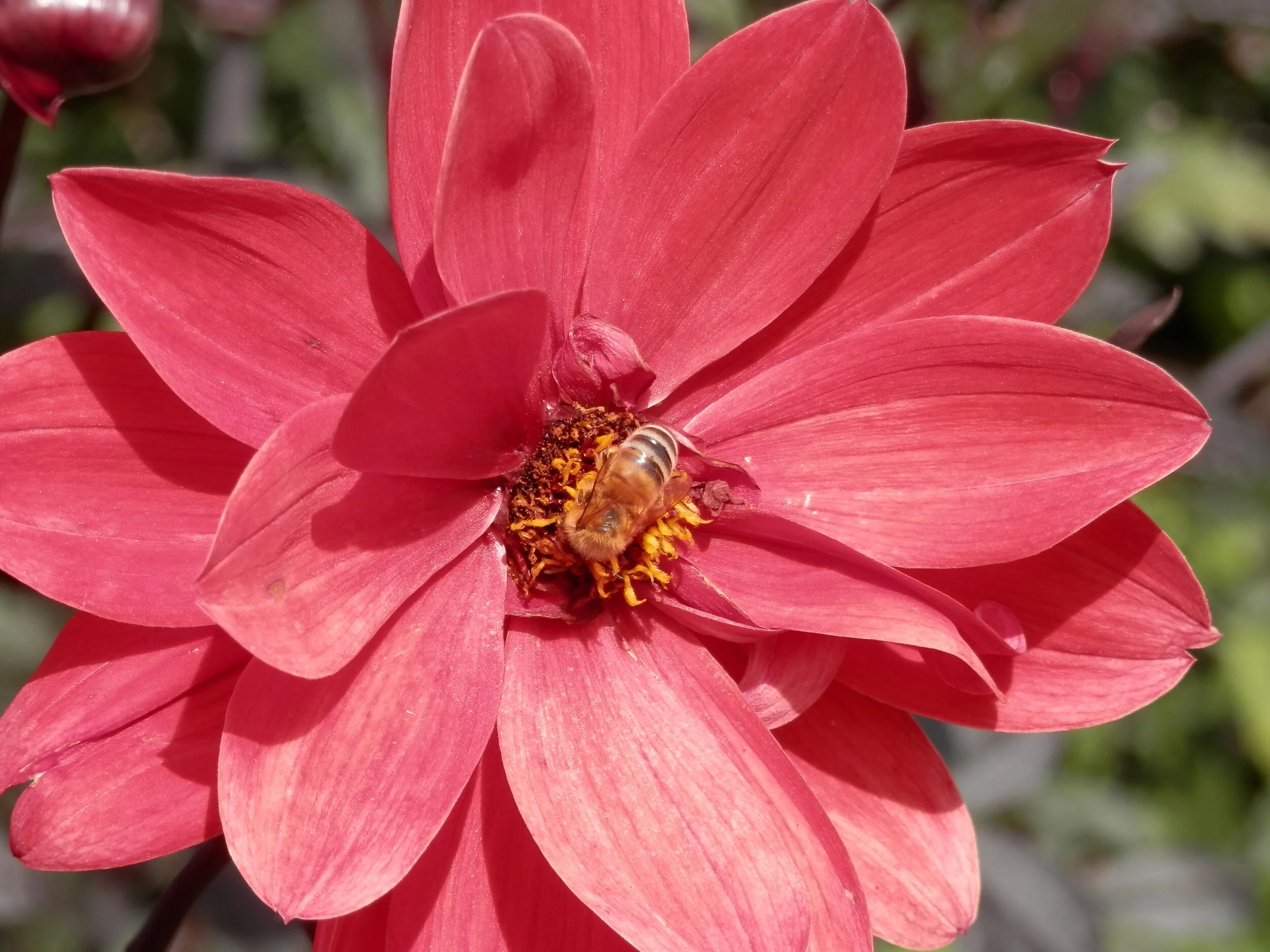
Striking photo of a dahlia and wasp captured by Lucetta
Here I received a warm welcome and, as I expected, a very meticulous Induction course on how volunteers are organised, on what behaviours to adopt and the practices to follow. A luxurious badge with my name was already ready for me, which I proudly wrote on my shirt on work days.
I had thought of picking flowers and cutting some dry twigs, as seen in the movies. I had the image of the English garden with the very green lawn that is cultivated alone and spontaneously produces flowers. The adjective "bucolic", originating from the Latin ‘bucolicus’, exists in the English language, and relates to the simple, pleasant aspects of the countryside and country life.
It is not so. Gardening requires application, and also physical commitment, and that's why I like it even more.
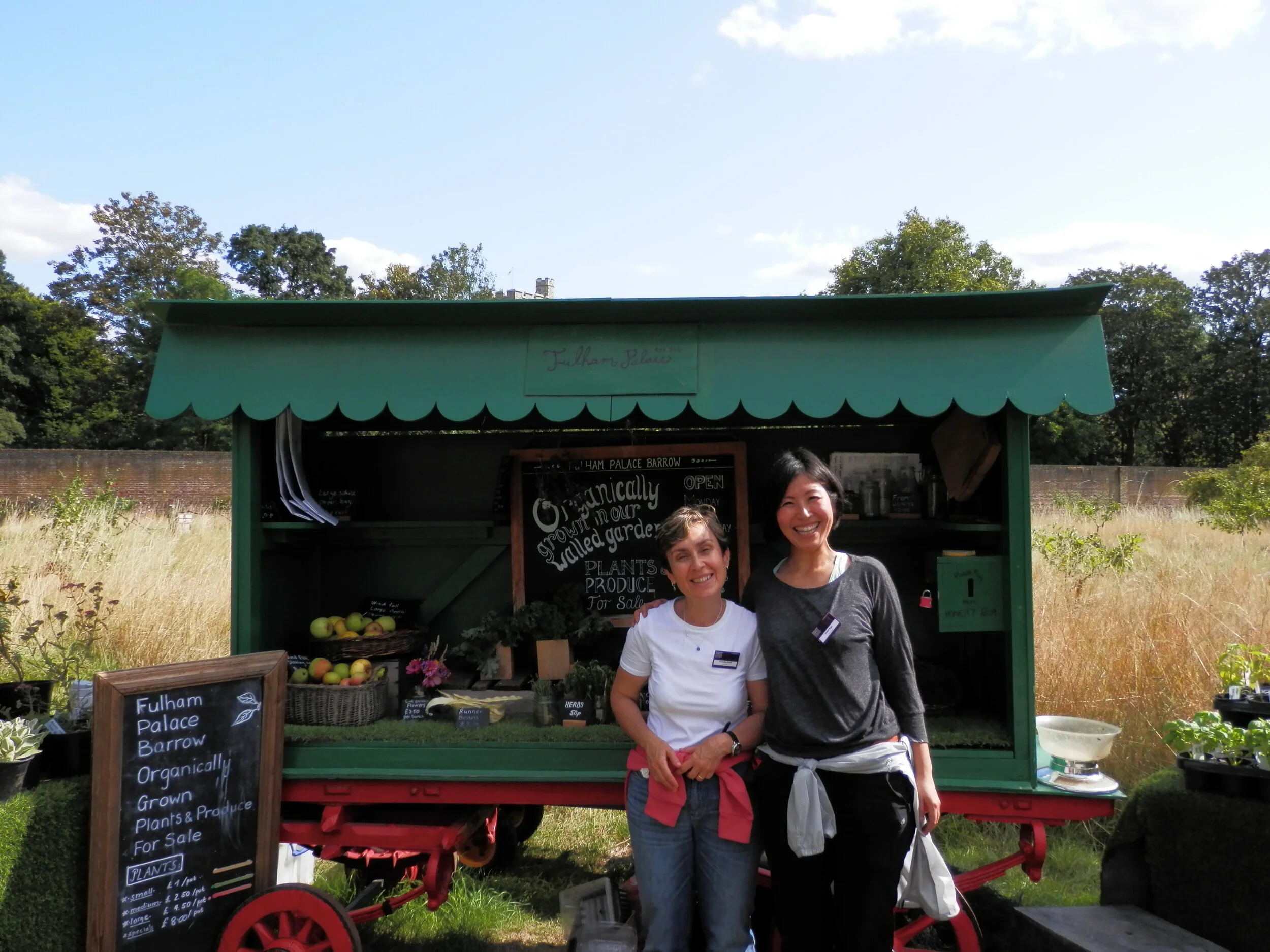
Happy at work on the barrow in the summer sun, photo by Lucetta
Edging, deadheading, digging up potatoes, weeding, potting on plants, harvesting. These are the main activities assigned to me in the morning after the briefing with the team and the Head Gardener, Lucy Hart, always very kind and encouraging.
I used gloves, secateurs, clippers, swords, shovels, buckets, wheelbarrows, forks, rakes and various other instruments whose names I've learned, just as I have learned the names of some vegetables that are quite rare with us. Kale is not exactly cabbage and tarragon is tarragon instead.
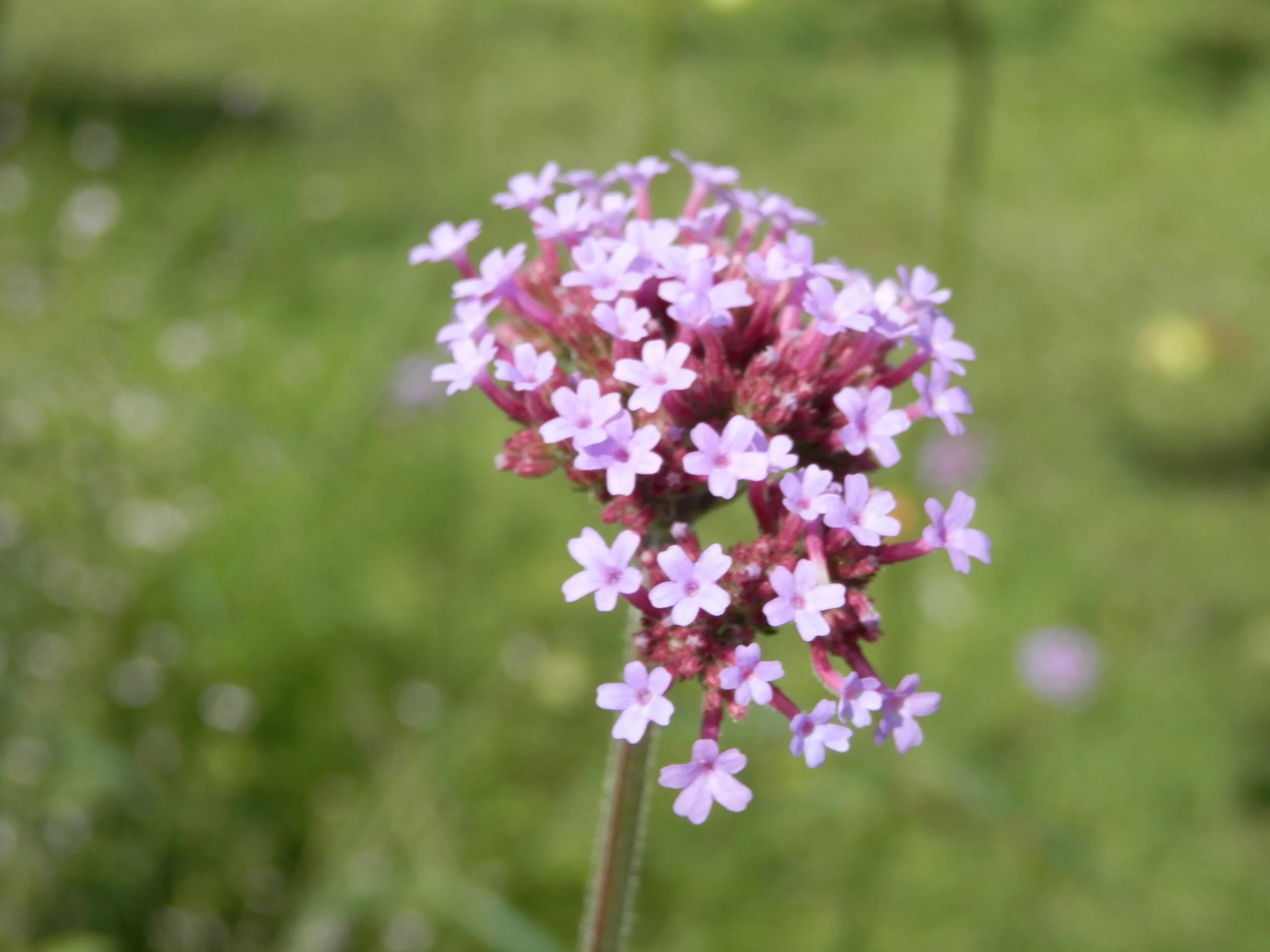
A verbena enjoying the sunshine at Fulham Palace, photo by Lucetta
I have done things here that are so far removed from my daily life that at times I found myself wondering what brought me to my age to have this experience, to put myself out there in a foreign country.
Even the volunteers were rather amazed by an Italian teacher of Latin, language in which the names of flowers and plants are inscribed on special labels, taking her summer holiday gardening in Fulham. The friendly welcome fills me with happiness as we chat under a tree during lunch. They make me feel part of the team, although many of them have known each other for several years.
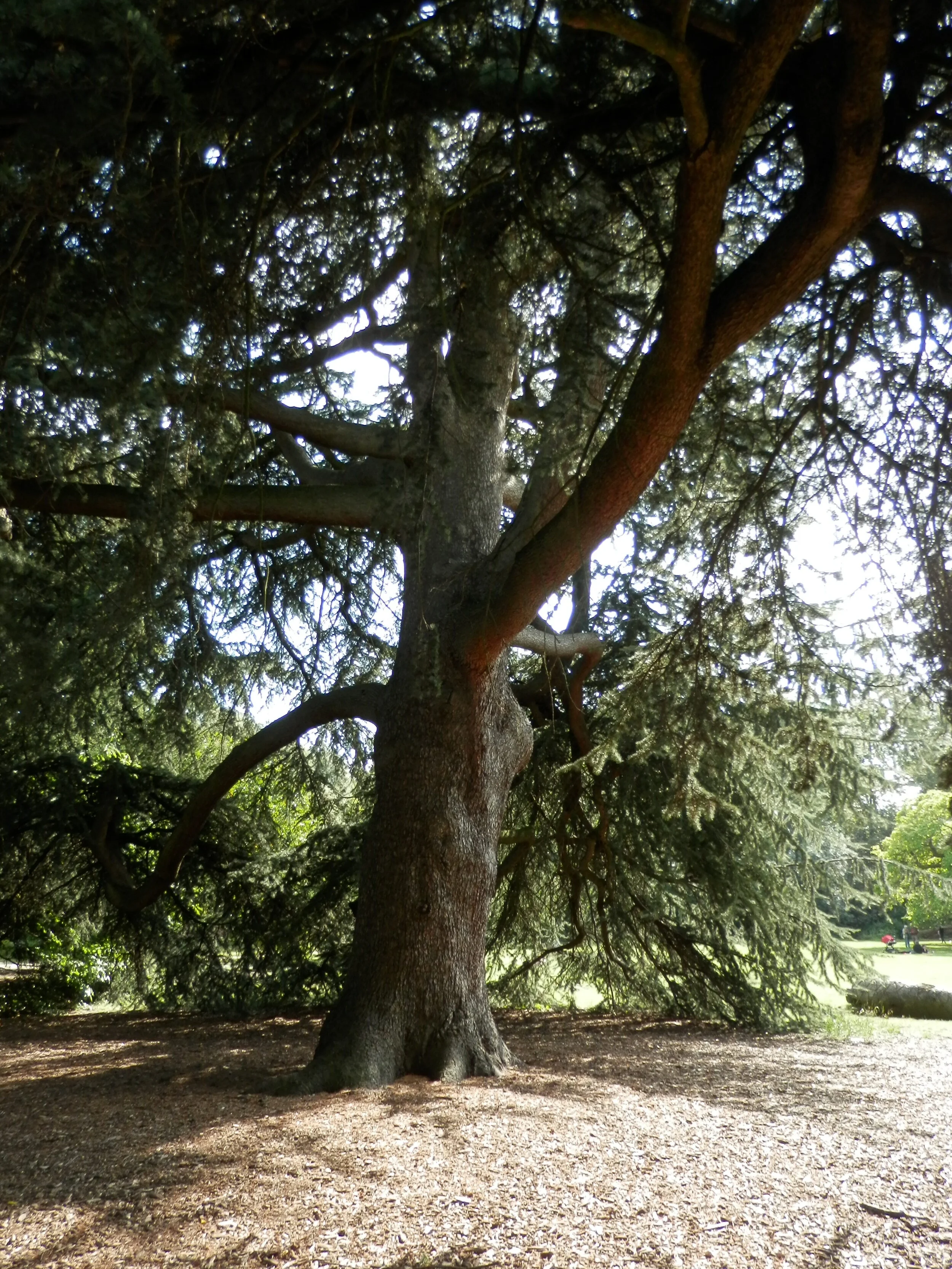
One of the many enchanting trees at Fulham Palace
I engender the same wonder in the many visitors. They see me sweating using the spade, read the name on the badge and stop with curiosity to ask what brings me here. I reply with a smile to which they smile and thank me.
They do the same with Anna Maria, my friend and fellow Project Leader at Chiesi Farmaceutici who shared this adventure with me for a week. Together we compiled the application form last year, sent the requested references and completed the telephone interview that enabled us to be accepted.
In the end, deep down like they would say here, I know because I committed to this experience, what profound motivation brought me here.
Because, as in many other occasions in my life, the concept "never stop exploring" I believe is the contemporary equivalent of humanistic knowledge to which I have dedicated most of my passionate university studies.
Do something unexpected every day, test yourself without fear of making mistakes. Leave your comfort zone every now and then.
The richness of what you will encounter will surprise you.
Lucetta Dodi