Home is where the heart is – Victorian family fun day event at Fulham Palace

As a Fulham Palace remote learning volunteer, I usually work from home but was excited to attend the “Home is where the heart is” Victorian family fun day event on Sunday 24 March.  My role was to be Miss Esther Maddox, governess to Bishop Tait’s and Mrs Tait’s children and also to the other children living on the estate in the mid1800s. A classroom was set up in the Terrick drawing room with an added play and craft area, which was supervised by learning placement Becky. 
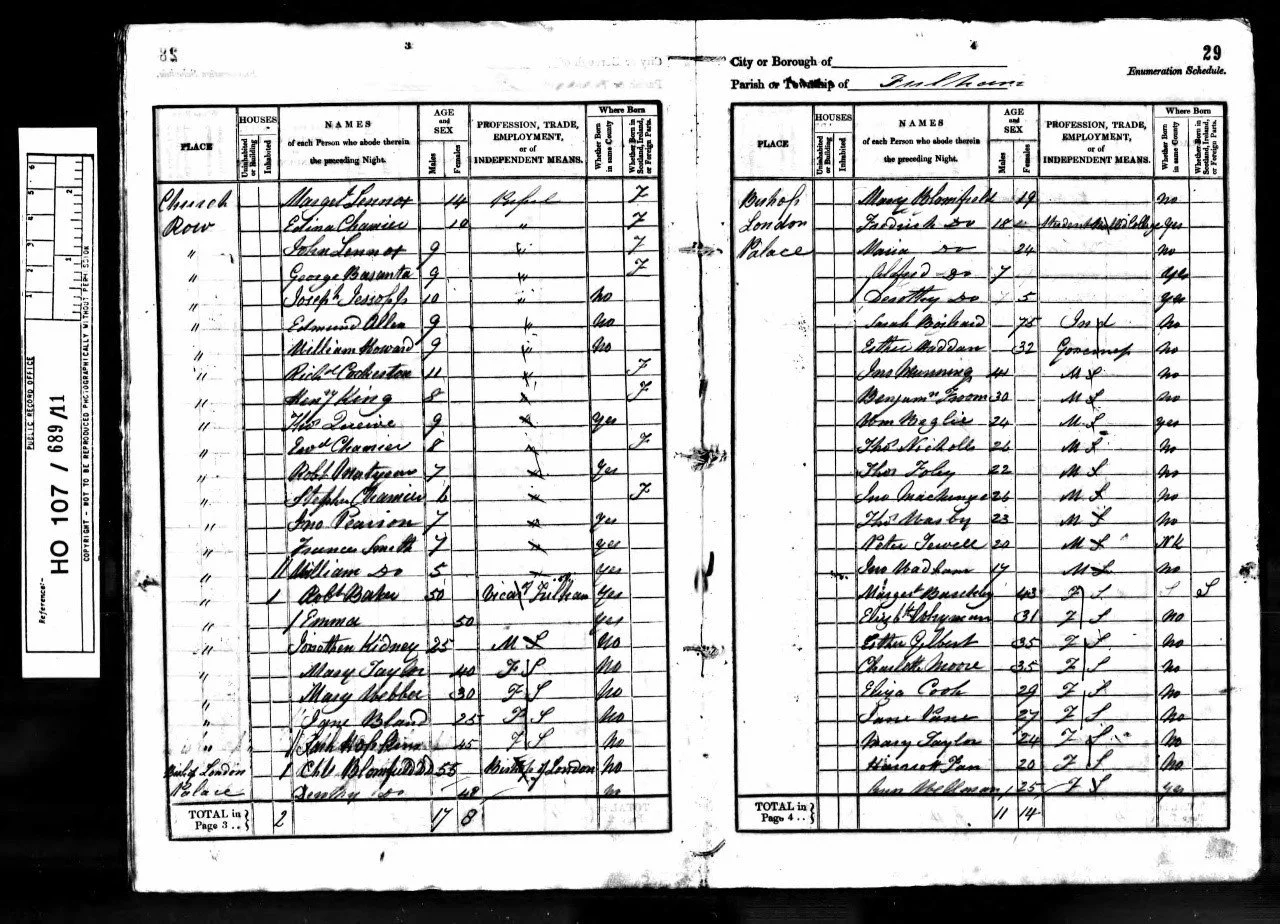
1841 census for Fulham Palace showing Esther Maddox the governess

A timetable of events was available to visitors for the occasion and were to be handed out when we opened at 11.00.   I arrived about 07.50 at Fulham Palace to make up my classroom set.  However, by 9.00 we were finding visitors were looking in on our room preparations!  By 10.30 I was still setting up my classroom and table top museum but that did not deter children from sitting down at the tables, keen to draw on the freshly cleaned slates with chalk; nor did it stop adults who were passing through, asking questions, whilst picking up my teaching resources, which delayed the proceedings more.  But who was I to stop any interested party?! 

Within a whisker of 11.00 we started the event for real and it was a full table of 12 children and parents, the only issue was I was timetabled to undertake an “English class” at 12.00!  Well in for a penny and for a pound, literally, (that was mathematics class).  

Then children of school age arrived to attend class and once again the chairs and spaces were filled up, so I was advising other children to come for the actual planned class later and that I looked forward to seeing them.  With interest obvious of the participants around my table, still before 12.00, I launched into English lesson two; but it was not a lesson as one might remember from one’s own school days nor indeed what the Victorians would have had.  The second lesson went much better than the first with far more verbal interaction from the children present, the lesson plan flowed more, we were on a roll now. 


It was then at 12.08 it was time to undertake the actual lesson that was in the event timetable! 
Some of the children present, I have seen at other events, like the World War II event last year.  Making my apologies and explanations about the poor time-keeping, we got going.  In addition to the English, the lesson ended up being a bit of maths, physics, astronomy, zoology, history, geography and basically a cracking good, all-around time.  (I suspect a visiting Ofsted official might not have been in awe though, as we drifted from one subject to another and ran over time). 
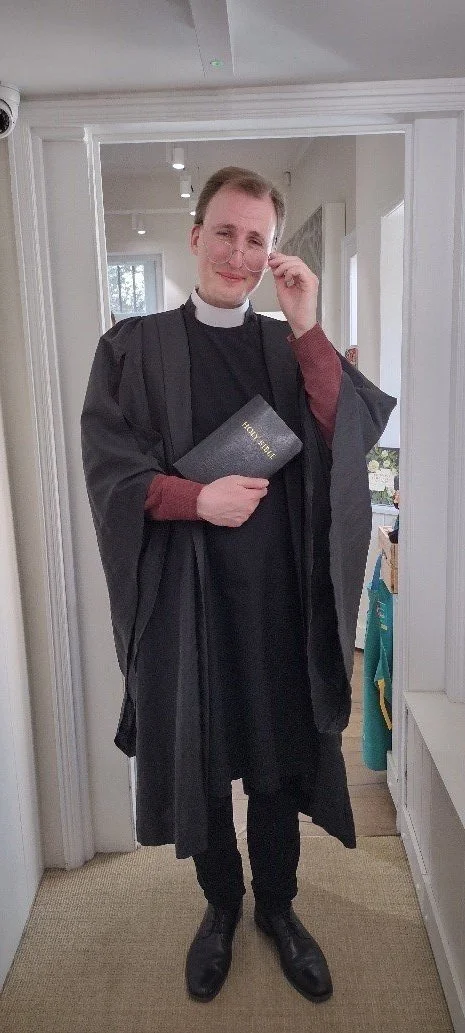
Front of house supervisor Tim as Bishop Tait

One father decided to join the class uninvited and I had his young daughter’s assurance, she would make sure he behaved; they played the part between them beautifully, just a big kid and his daughter.   As the lesson drew to a close half an hour after the allotted time, it was supposed to be my lunch break.  A few blueberries and a drink of water later, I was engaged with a family of three, from Austria.  The little boy did not speak much English and was very reluctant to join in and pulled his hat down over his face.  His mother and older sister tried to encourage him but we ended up with him being given a wooden top to decorate and if he felt confident enough to come back and show me his work of art, with his mother explaining in German what the event was about.  Sometime later, a hatless little boy came back to me with his now coloured in spinning top and he said “Thank you”.   That sort of volunteer encounter, one cannot put a price on. 
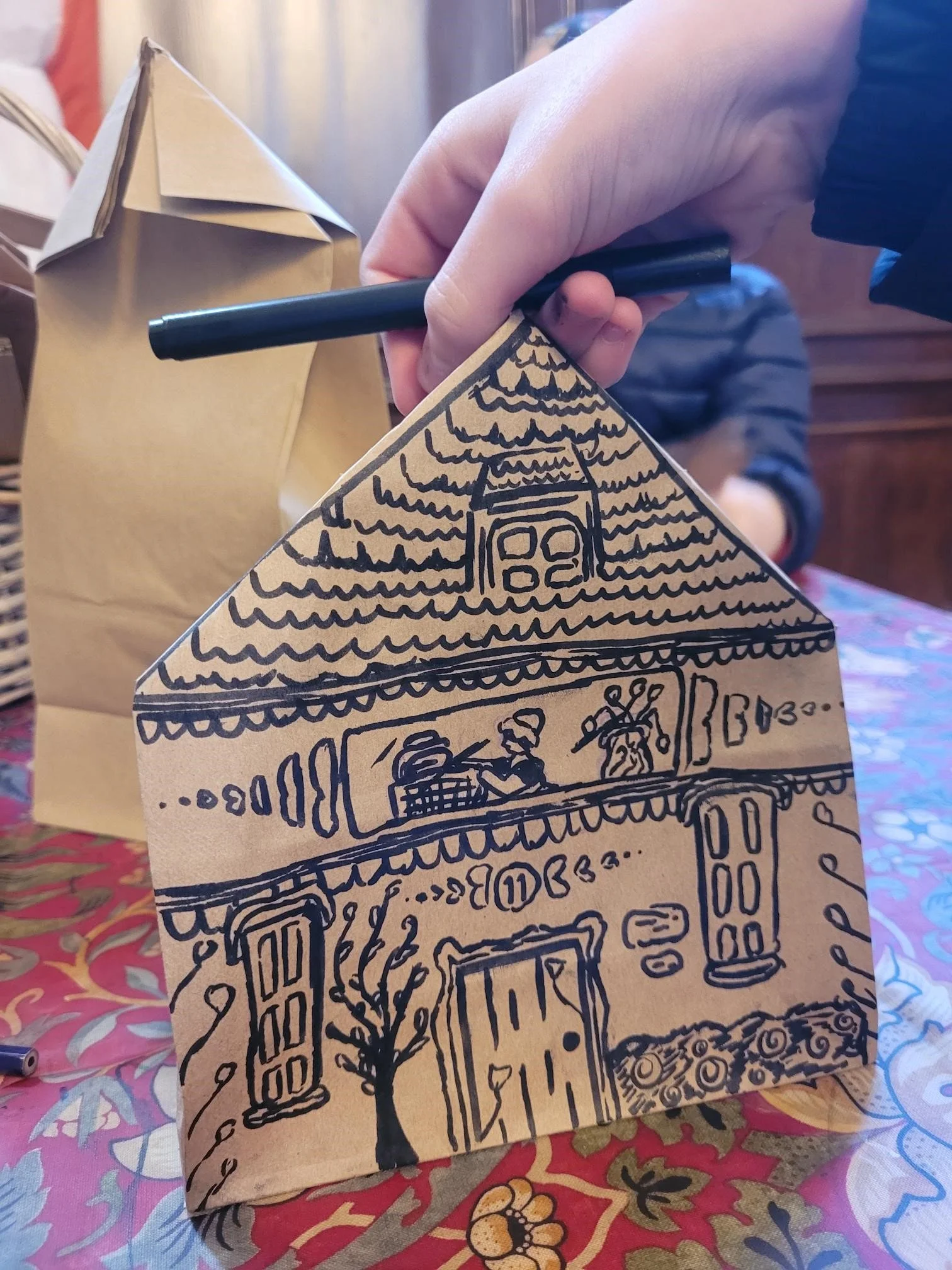
A beautiful dolls house bag created by Cherry, one of our young visitors. 

With a wink of an eye, it was time to get started on our arithmetic lesson.  Quite a few children came back from the morning lessons.  This was the time to handle Victorian money that was in circulation around the time or before the Tait family were at Fulham Palace.  Did you know there was an eighth of a farthing coin?  No, neither did I until I undertook research for this event.  We talked about the slang names for money of the time, such as florin and tanner and how they came about and which monarchs, did what and why with coinage.  Well of course the adding up included playing quoits, as a team, not as individuals.  I had help from two of the children I had seen in the morning, to get the play organised and to make it fair.  The class got to a score of 580.  In the end I realised I was not needed anymore for this lesson, while the quoits continued.  

So, by this time the Victorian coins were getting an interest from adults present.  I had visitors ask about my costume of a chatelaine, propelling pencil, folding scissors and fob watch.  Someone talked about my writing with a biro or pen and a girl visitor chipped in with, “No, it was a quill they used”!   I had someone say she would have employed me as a Governess for her children, this was as I was making noises about asking for a pay-rise to the Tait family, for undertaking more lessons than timetabled.
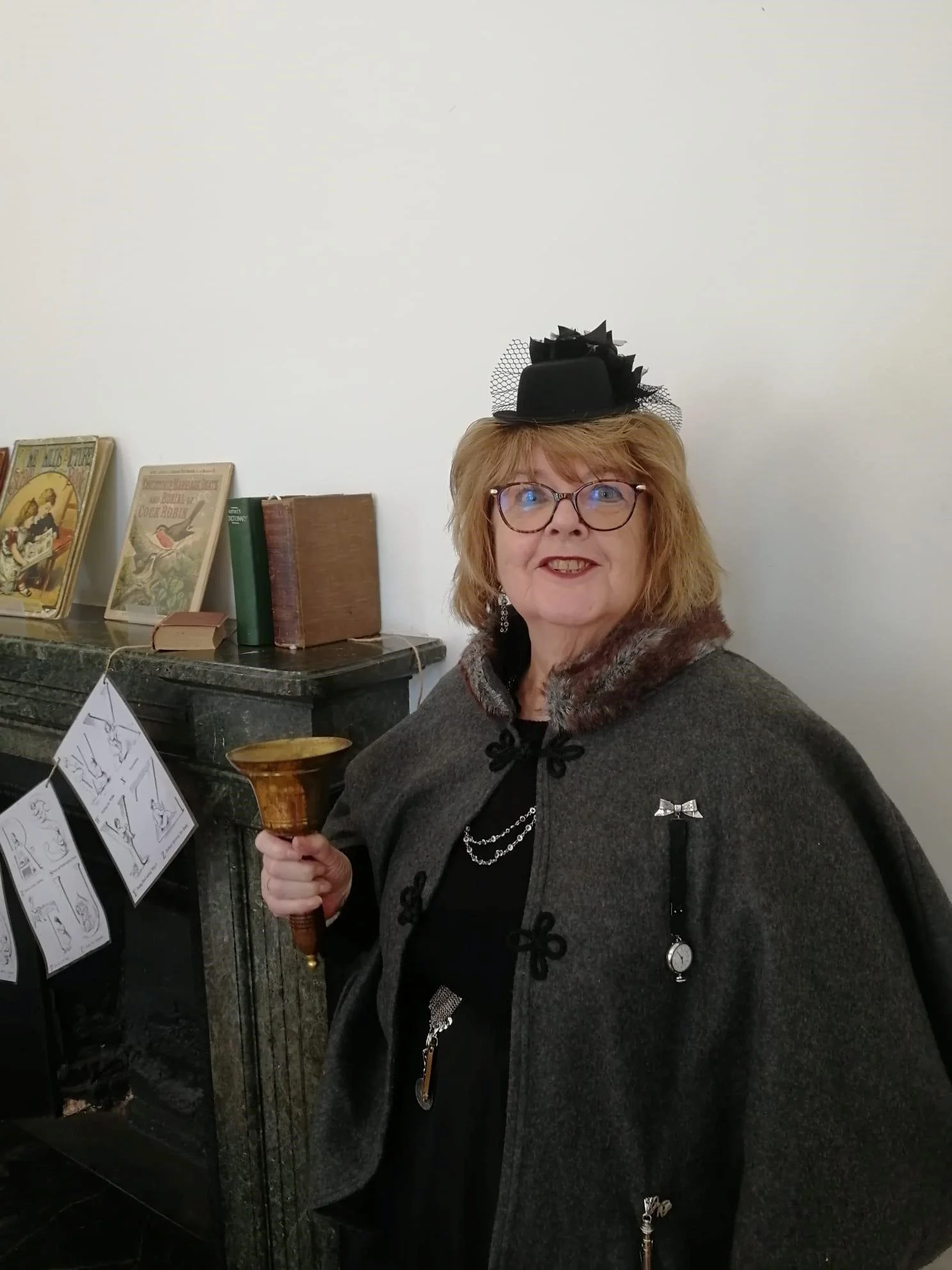
Tricia as Esther Maddox the governess

The next lesson was collective nouns, less people turned up for this but those who did, mainly adults, seemed fascinated by the handouts.  They were even more fascinated when I said that when I was at school we had to learn about collective nouns as though one’s life depended upon it!  One lady arrived saying that her husband was working at home and she dropped by, not knowing an event was on, with her two children.  They stayed at the table for about 40 mins, drawing, talking and chilling out.  The lady took away a copy of the collective nouns sheets to continue at home.  I ended up giving two one to one lesson with children who came to see me.

The final planned lesson on “Thank you letters”, to the Tait family did not happen, as those whom had lasted until the end of the event, really only wanted to talk about what was on display, including the shove halfpenny game, the farm jigsaw and the fact it had stand-alone animals, which could become another game and the cube jigsaw.  The Victorian coins were still popular by adult visitors.  During the day we had visitors from Canada, Brazil, Australia and the US who joined in with the learning.  The adult from the US told me that the atlas book has made him want to investigate when Alaska was brought from the Russians, as he and I did not know the answer.  I had two parents come up after a lesson to say how much their children had enjoyed joining in.

I had bought along a Victorian doll my great-grandfather made for my grandmother and had it on display.  That caused much interest from visitors, along with scrap books and an atlas of the time.   Other Victorian items such as a sovereign holder, vesta holder, agate snuff box cum pill box, fan and bag, mosaic brooch and clothes brush, were also on display. 
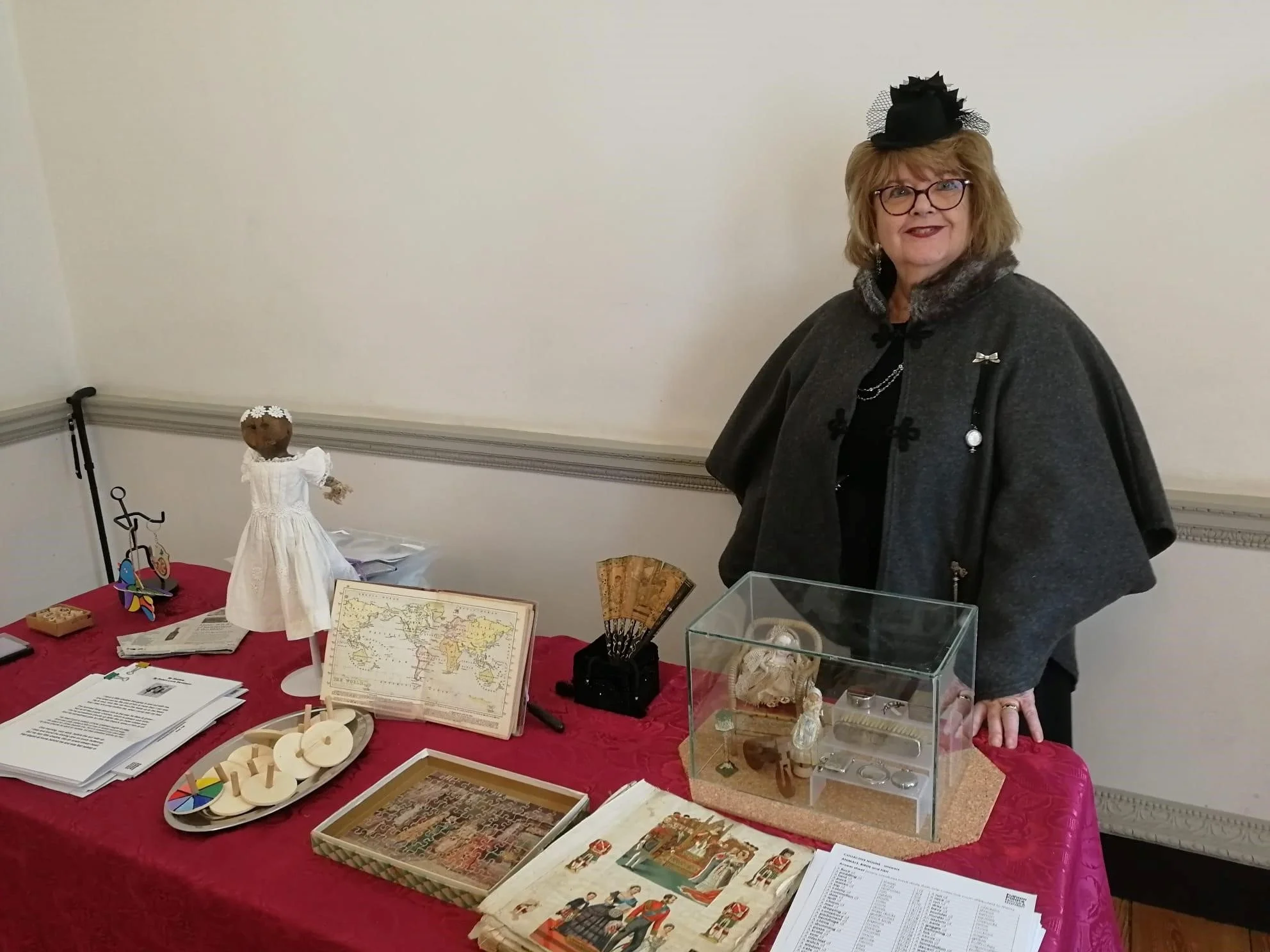
Miss Maddox and her Victorian collection.

Still, as we were obviously clearing up the room, visitors were arriving and the lasting image I have of a family from the US moving away my clearing up piles, to take a look at my display.  I was asked for an explanation of what was “happening here, today”.  I was asked what was on show in my display cabinet. I was then asked if the children were really interested in what was on show.  After my response, the visitor said, “Well that stuff should not be here like this, it should be in a museum”!   I muttered something about family heritage but in reality, I was amused, amazed and astounded, whilst also being lost for words too.
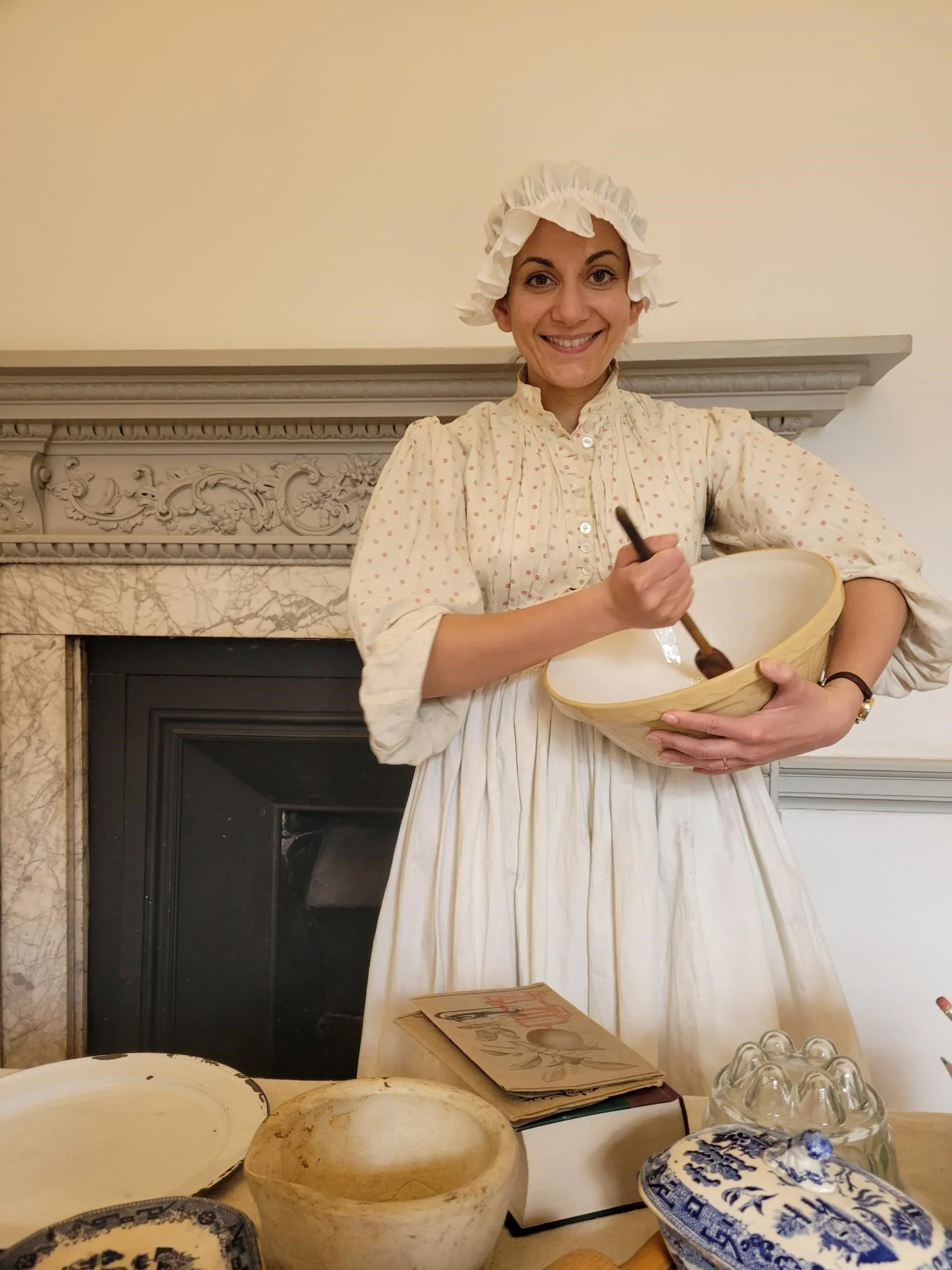
Facilitator Kayleigh as Mrs Fletcher the head cook

Why have I gone into such detail of my communications with visitors, young and older, bigger and smaller?  Well, it is to try to persuade anyone, who has an interest in heritage learning, to think about becoming a volunteer in this area of work.  It is so rewarding and the children just love having someone spend time with them and being listened to and encouraged.  One does not have to be an actor to role play, nor an expert in history or artifacts, one just has to go with the flow and inform the visitors of the things of which they express an interest.  If you do wish to take the plunge, maybe you could shadow an experienced education volunteer to gain confidence and to put aside any concerns you may have. 
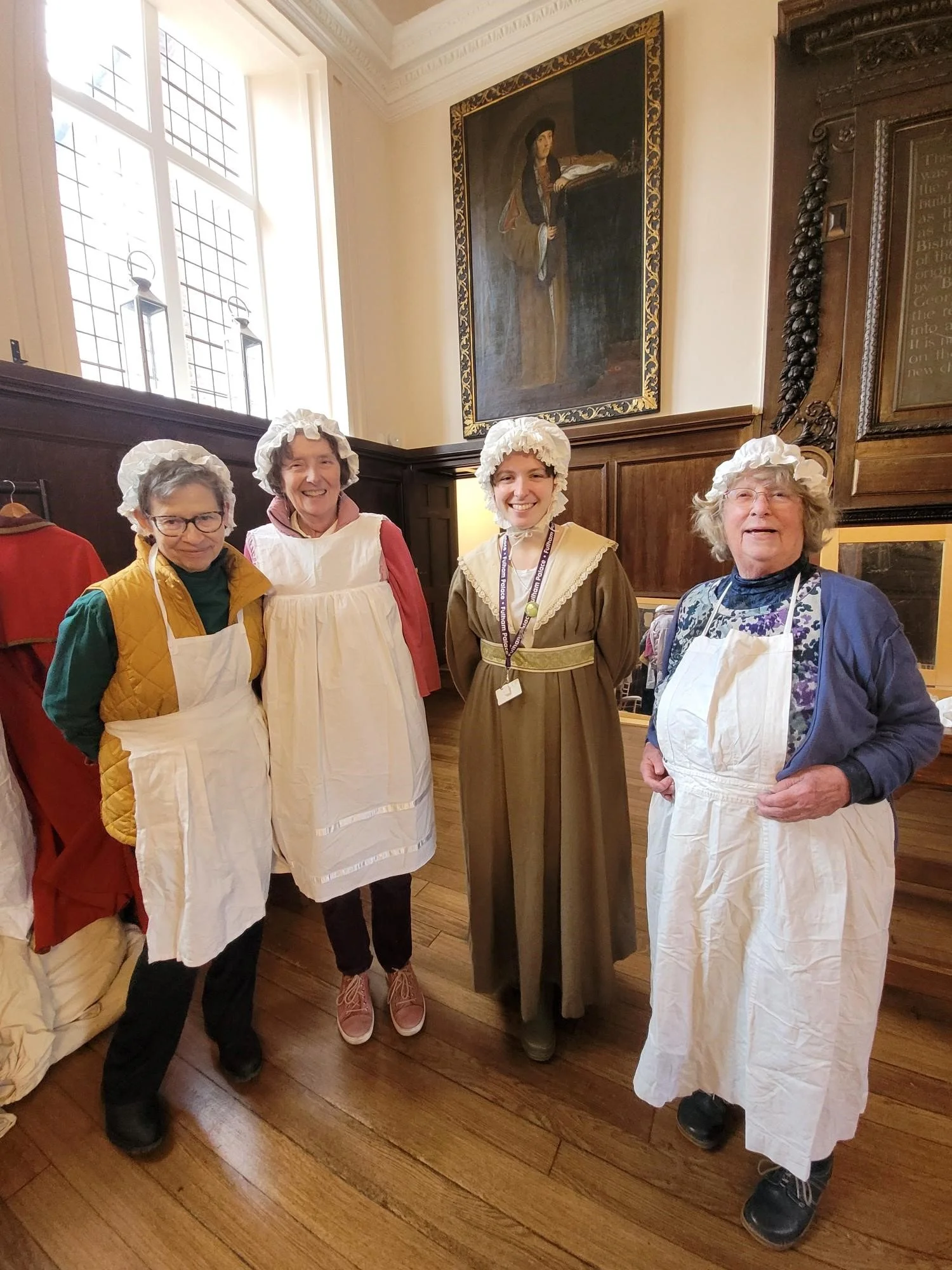
Sewing bee volunteers Lois, Vicky and Esther with learning producer Alex at the event, helping visitors to dress up as Victorians. 

I have learnt so much myself about the Tait family and the Victorians in my research for this event, I have questioned what we take for granted now and how the Tait’s family life was affected by illness and disease.  This family became very real to me as I undertook my research.  Additionally, the communicative encounters I had with so many visitors, made any time spent to be very worthwhile.  Money cannot buy the good feeling with which I left this event at Fulham Palace.  Whilst I learnt something from others during my day, I hope too, they also left Fulham Palace feeling they had learnt something interesting too.


I would like to thank, Kate, Becky, Kayleigh, Alex and Allison for all the help they generously gave me, as I had so many props to transport and clear up.  I would also like to thank Lucy for her encouraging words and Franziska for the fresh herbs.


Tricia Kern

Learning volunteer
Volunteer blog: a conversation to remember

Lee Copeland has been a volunteer at Fulham Palace since 2015 and she supports the Palace in various roles, including that of public event volunteer representative.

On Wednesday 28 February we hosted Opera at the Palace. The event took place in Bishop Sherlock’s room and is one of our most popular musical events that friends and patrons enjoy as well as visitors.

A group of four attending the opera who had never been to the Palace before, expressed their delight and enjoyment of the opera event and asked about the history of the Palace. They had noticed another event coming up when booking the opera tickets , but they were worried they were too late to book. Lee quickly checked on one lady's phone and confirmed that there was still availability. They plan to book as soon as possible for Fleetwood Mac! Their parting words to Lee were 'So excited, can't wait to come back again. So very happy we found this wonderful place’.

It is so gratifying to interact with visitors when they are enjoying themselves, and even more when you know you made a difference using your customer service skills, such as recommending another event that will be suitable for them. We hope they return for Fleetwood Mac and keep coming to Fulham Palace to enjoy our great selection of events!

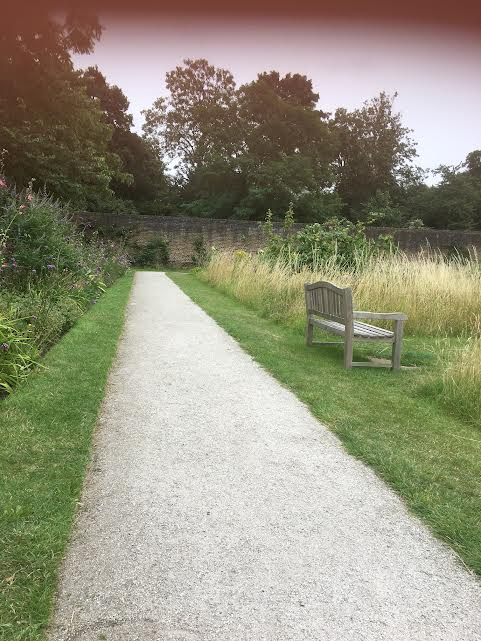
Rory Dyer's gardening blog 2

The second blog from Rory with more lovely pictures from the garden…

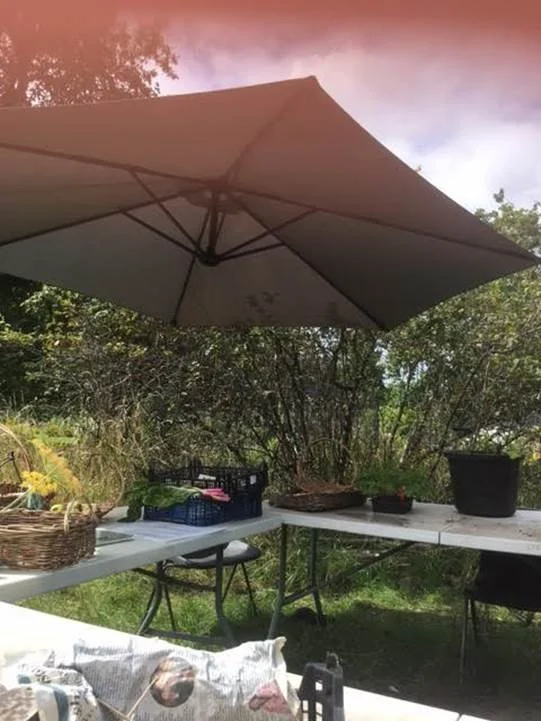
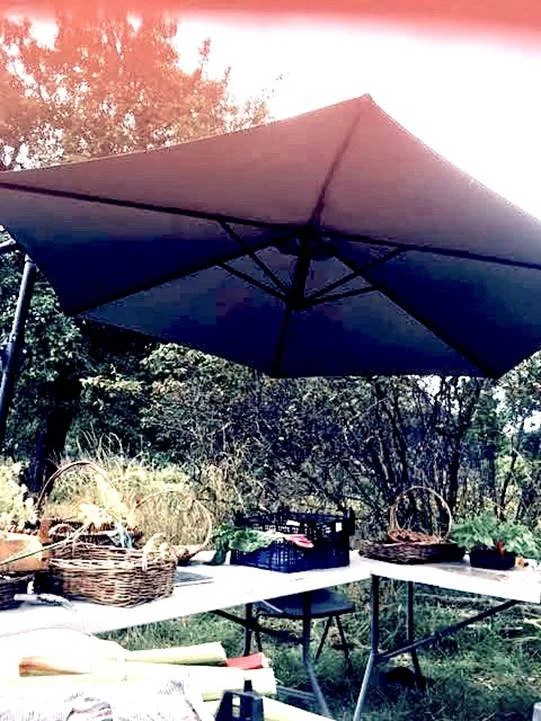
6th August 2023 - On my way to the Fulham Palace Garden with PA and friend Raul the feeling in the air suggested it would rain but it didn't at that time. Though when we arrived Francesca explained that the previous lot of rain had already done the watering. Kate was managing the plant sales on the barrow alternating with gardening.

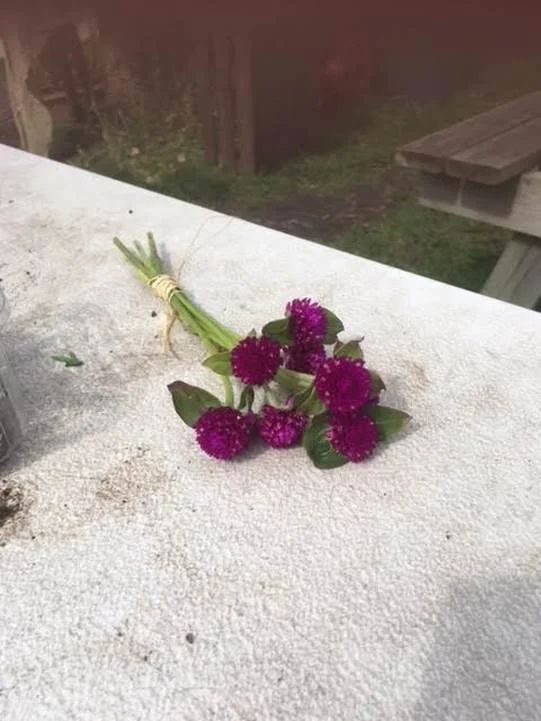
Raul was getting the seeds of Corncokle aka Agrostemma Githago out of their coverings and I was recycling the plant labels. Kate was taking up the rhubarb and carrots. She said the technique was to dig out the soil from around the plant and pull it out from the created space.

Another colleague of ours is looking to study horticulture at university. As we went about our various tasks we spoke about university contrasting with self education which is an intriguing area of interest of mine also.

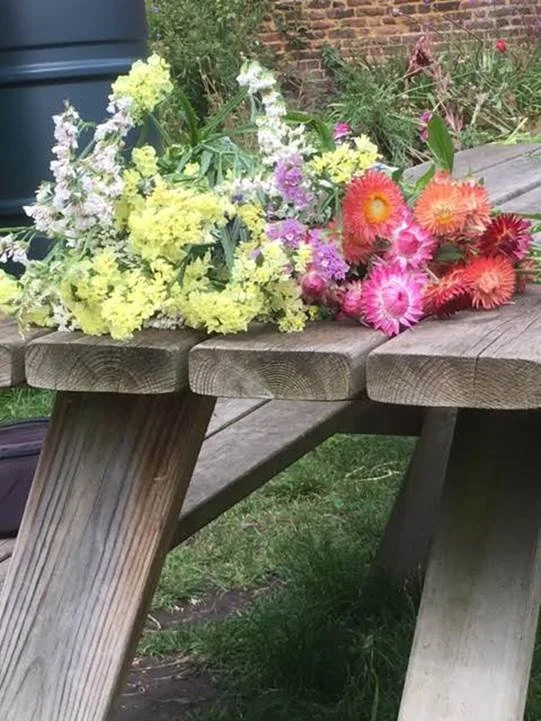
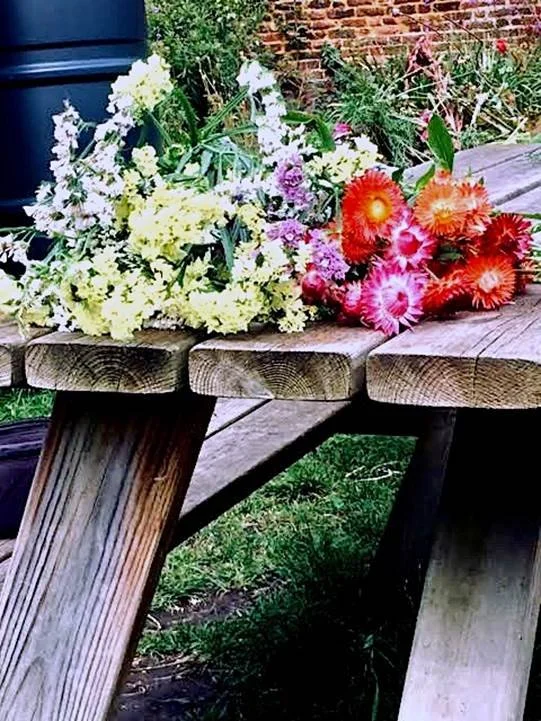
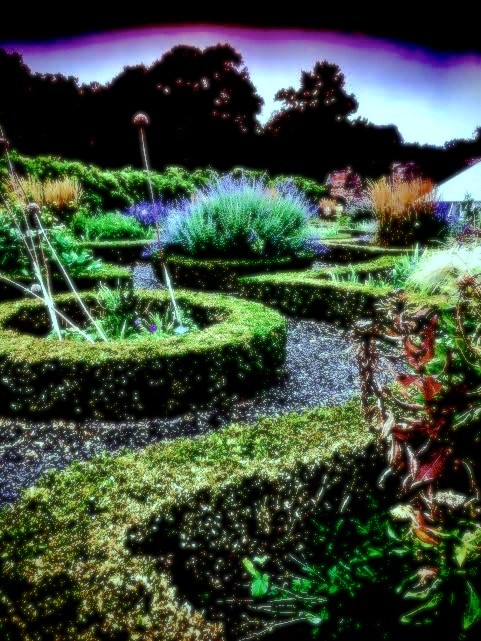
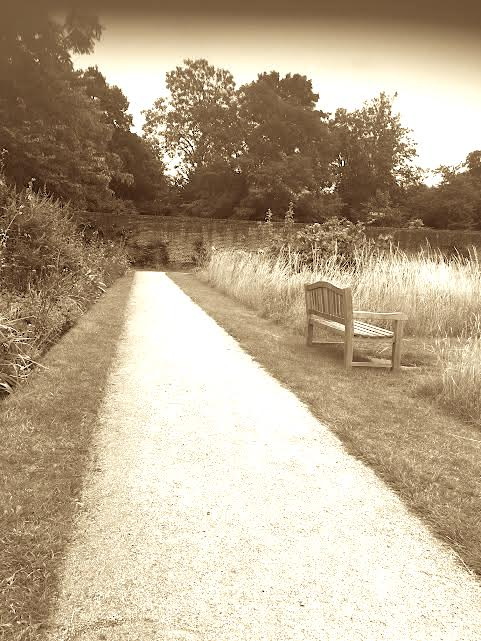
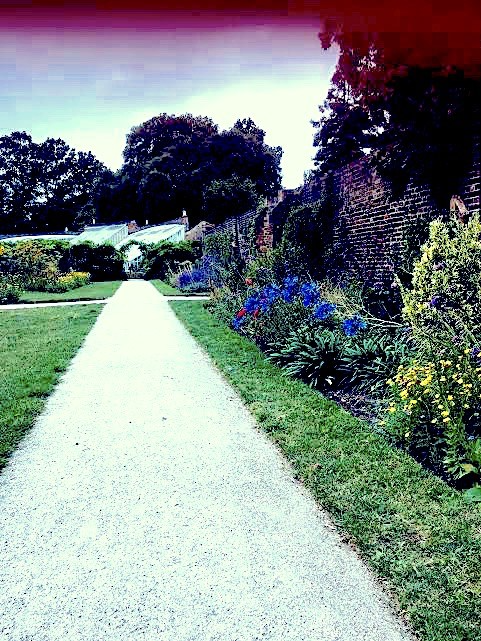
Francesca was on good form often saying what I was thinking by remarking "Oh it's raining, now the sun is out". Sitting at the table gave me a new angle for photos. Some are below. Some are as taken, some are artistically modified.

The Altar frontal – the story so far

In Esther´s account, we get a glimpse of the hard work that goes into the sewing bee´s latest project…

This is an update on the progress of the frontal which was last shared in mid-2022 when the sewing bee was just beginning to get together in person after the years of Covid lockdown.


The design for the frontal had at long last been finalised and the individual motifs for the embroideries, all based on plants, fruits and flowers to be found in the Palace Gardens, had been drawn up ready to be taken by the individual embroiderers.


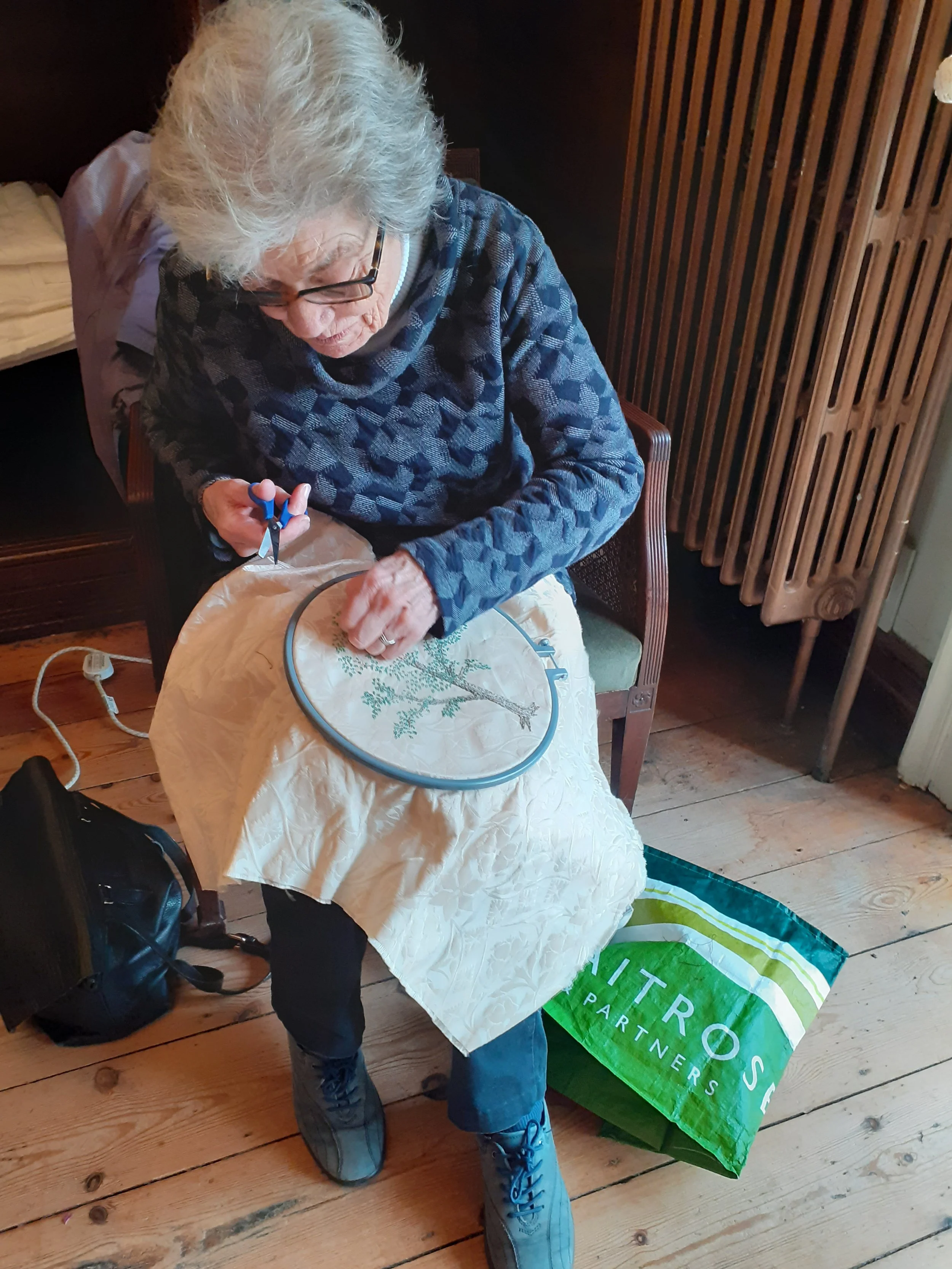
We had a lovely afternoon, when we were joined by the Merton U3A Creative Textiles Group who were introduced to us by Julie Mills, one of our learning volunteers. The motifs were all looked at and everyone picked one that they were drawn to and would enjoy sewing. They were given either a piece of the green fabric or the cream brocade that had been chosen, after much deliberation, to make up the frontal. Everyone was encouraged to use their own stitches and imaginations. The only constraint was the final size of the embroidery. We all worked at home on our embroideries and gathered together every month at the sewing bee to review our progress, get new ideas and encouragement from our fellow stitchers.


We now began cogitating what, after all this time, was supposed to be the final design. We realised the green diaper pattern was not going to hang well, so a redesign was called for. A simpler design emerged, the diaper pattern being retained in the application of the tree embroideries on the cream damask.


We had saved one of the motifs, the bay leaf and blossom, to be embroidered by anyone who wanted to contribute a stitch. In August great fun was had at a presentation in the great hall when all and sundry were encouraged to add a stitch. Over the months many more stitches were added and a display at apple day attracted many people, young and old to add their stitch. Those of you who joined in will be able to admire your efforts when we finally finish and hang the frontal!


By the autumn, most of the embroideries had been finished and we were now faced with the task of putting the whole thing together. Little did we know what a mammoth job this was going to be!


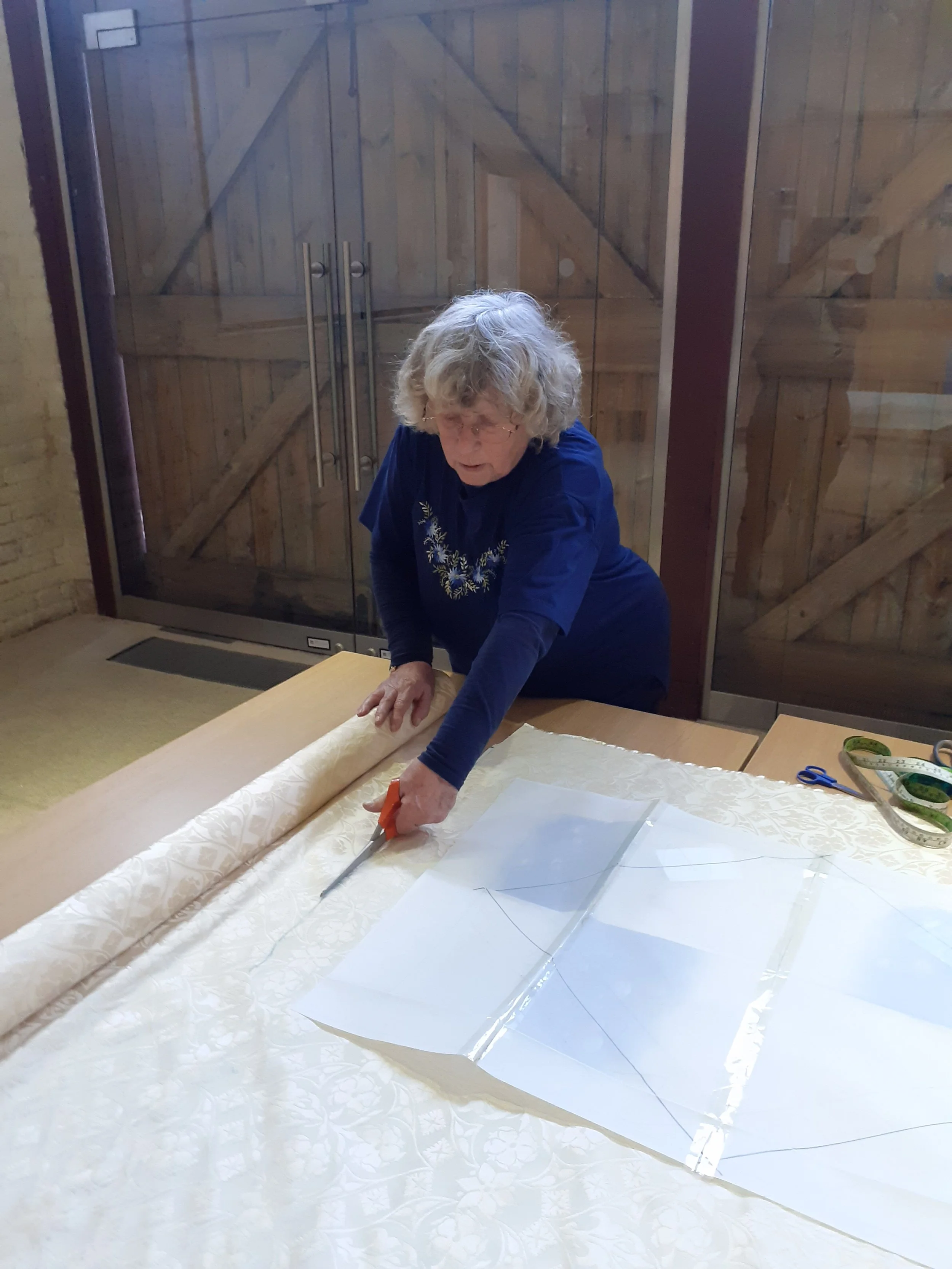
More measurement and then more measurement, more cutting of the fabric, more working out how to attach the embroideries, and then how we were to hang the whole thing. There were numerous trips to the chapel to find out how the original frontals were made and hung. This was all going to take some time and involve a team of people. Someone had the bright idea that we should have a week in which we could work continuously and not have to put the frontal away after each session. 


We were very fortunate that we were allowed to use the Porteus Library for this. Tables and lights were installed, and we brought over our sewing machine, iron, measuring implements, sewing tackle from the stables and were ready to start. The library was open to the public during all this time and we had a continuous stream of visitors to show what we were doing. Their interest and enthusiasm for the project was very gratifying. Over the months, our one week grew into several and we needed to change venue into the Terrick drawing room, once the new Bishop of London, colonialism and transatlantic slavery: resistance exhibition opened.  


The frontal is now almost finished. It has been wonderful how many people have contributed their enthusiasm and different talents to this project. We can only hope that in the future, all this will be enjoyed and appreciated by visitors to the Palace. I hope that we have given a 21st century gift to the Palace and its chapel


Esther Dean

July 2023


Esther Dean, author of this blog and member of the sewing bee

Sue Shocket, a member of the sewing bee

Rory Dyer's gardening blog 1

A short punchy account of a Sunday afternoon garden volunteering. Thank you Rory!

July 30th 2023 - With Raul in the Fulham Palace garden. Beginning with updates with Lucy and Franceska. Lucy was supervising as Raul and I watered the flowerbeds and the apple trees. A good session but the rain meant we finished early. Though this was of course good for the plants.

Here are some photos and there artistically modified equivalents.

"Dimly-lit corners...the prowlers of the PMC": Morality patrols and life in war-time air-raid shelters

The final installment of Anne Connaughton’s public morality council series- many thanks Anne for sharing all your research with us!

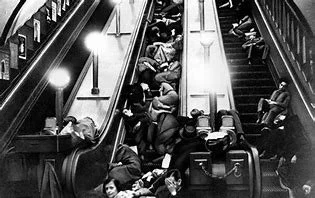
Can readers remember how London underground stations, became makeshift refuges during the Blitz?  Imagine how many lives were informed by the experience!

Meanwhile, the Public Morality Council (PMC) patrols were busy searching for evidence of  “immorality in dimly-lit corners” in public air-raid shelters. The patrols were motivated by reports that, at one London shelter, “undesirable women were using the shelter...for wrong purposes “. Reportedly, one woman would bring in “different men each time...keeping to a dark section of the shelter...and rather making a fuss if anyone attempted  to take her particular corner.”

Another shelter was patronised by “ a girl of 17...who invites boys of her own age to share her blanket “ and who “commandeers the darkest parts of the shelter “. According to a shelter marshal, “this shelter is nothing more than a  brothel “. Morality patrols observed a deterioration in moral conduct “very noticeably on the nights when drinking is heavier”, and particularly near popular thoroughfares “when on Saturday nights there is a large influx of casual visitors” and on “pay nights”.

Some shelterers enjoyed gambling, often “confined to small groups of people in secluded corners or bays, often with an audience of children.” Morality patrols notwithstanding, potential remained for “initiating many youths in gambling habits, providing such opportunities as card sharps are quick to embrace.” Sharps thrived on the seclusion of, and movement  between shelters “with youths and women easy prey”  and whose “reluctance to admit to being had, makes them shy to report offences”. 

The intrusiveness of morality patrols was often unwelcome. One shelter promised “a rough reception“ should the PMC come calling. “The prowlers of the PMC “ wrote one London clergyman, “would be better employed serving cups of tea...there would be no time to stick their noses into dimly-lit corners, except perhaps to comfort a child or mother.”

A self-described “tourist of air-raid shelters “ wrote that reported goings-on in such places were exaggerated. The war had, unquestionably,  cramped the public’s style where it concerned normal recreational outlets. The dynamics of air-raid shelters evolved when the roles of shelter and ARP wardens were reinforced. Contemporary evidence records that pastoral; educational and cultural initiatives were facilitated by a range of agencies, such as The Salvation Army. The PMC held fast to the “constant need for vigilance “, whilst acknowledging that the general standard of morals “reflected in public behaviour is on an upward trend”.

Useful Sources, including for italicised extracts:

File concerning behaviour in Air-raid Shelters 1940-1941  (LMA)

File relating to the First Annual Public Meeting 1941  (LMA)

“Immorality in Shelters”: p.10, Daily Mirror, Wednesday 6 November 1940  (BNA)

“Paul Pay on Tour”; p.10, Saturday 9 November 1940  (BNA)

“The Truth About Shelter Morals”: The Weekly News, Saturday 29 March, 1941  (BNA)

“Shelter Morals are better than ever”: Daily Mail, 8 March 1941.

Play time at Fulham Palace by Cheryl Chung

A wonderful piece on school sessions by Cheryl Chung, learning placement. If you are interested to know more about our placement schemes do take a look here: https://www.fulhampalace.org/news/professional-placements-at-the-palace/.

 There are various school sessions that the education centre at Fulham Palace organise. My favourite school session that I have helped with was the toy session. 

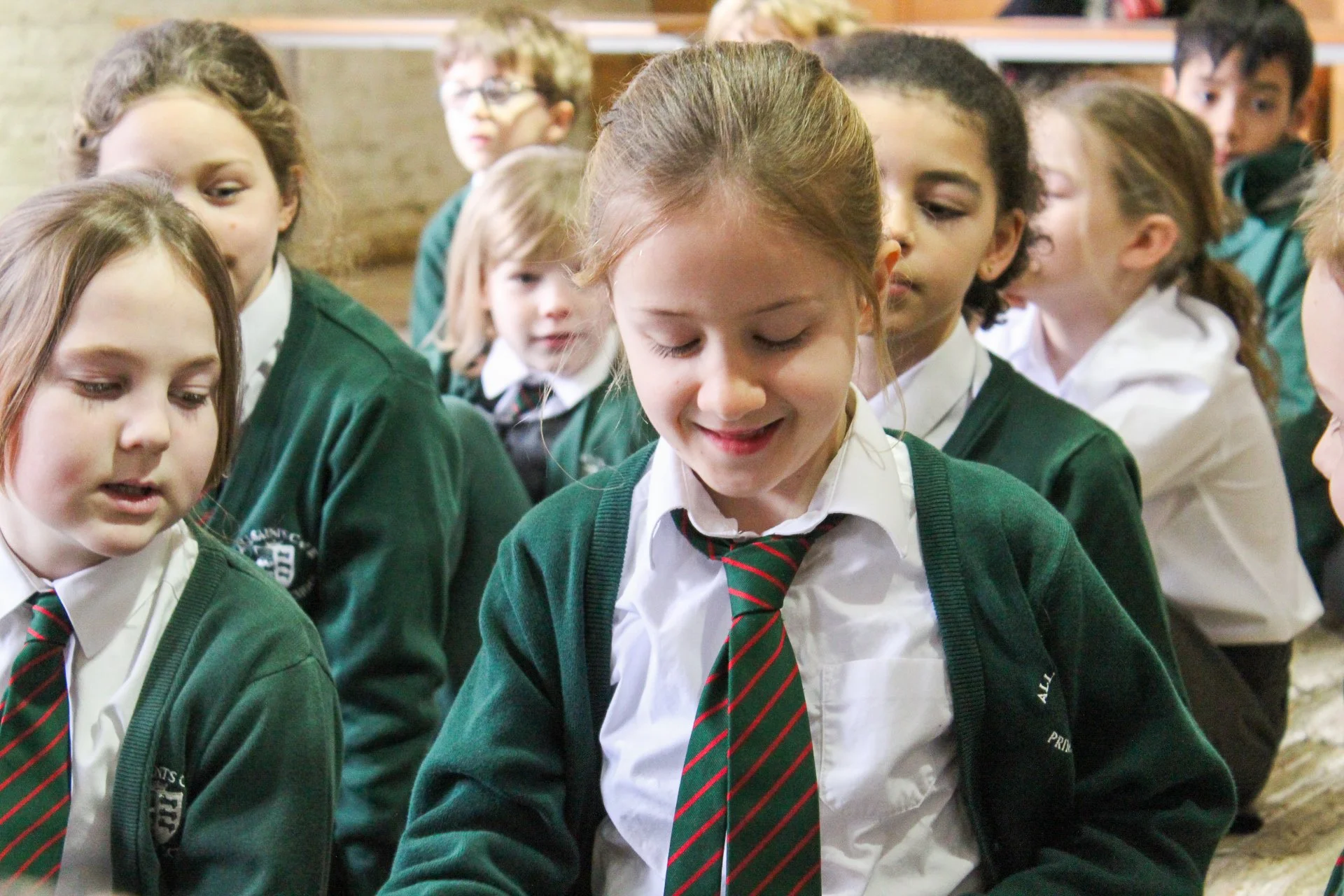
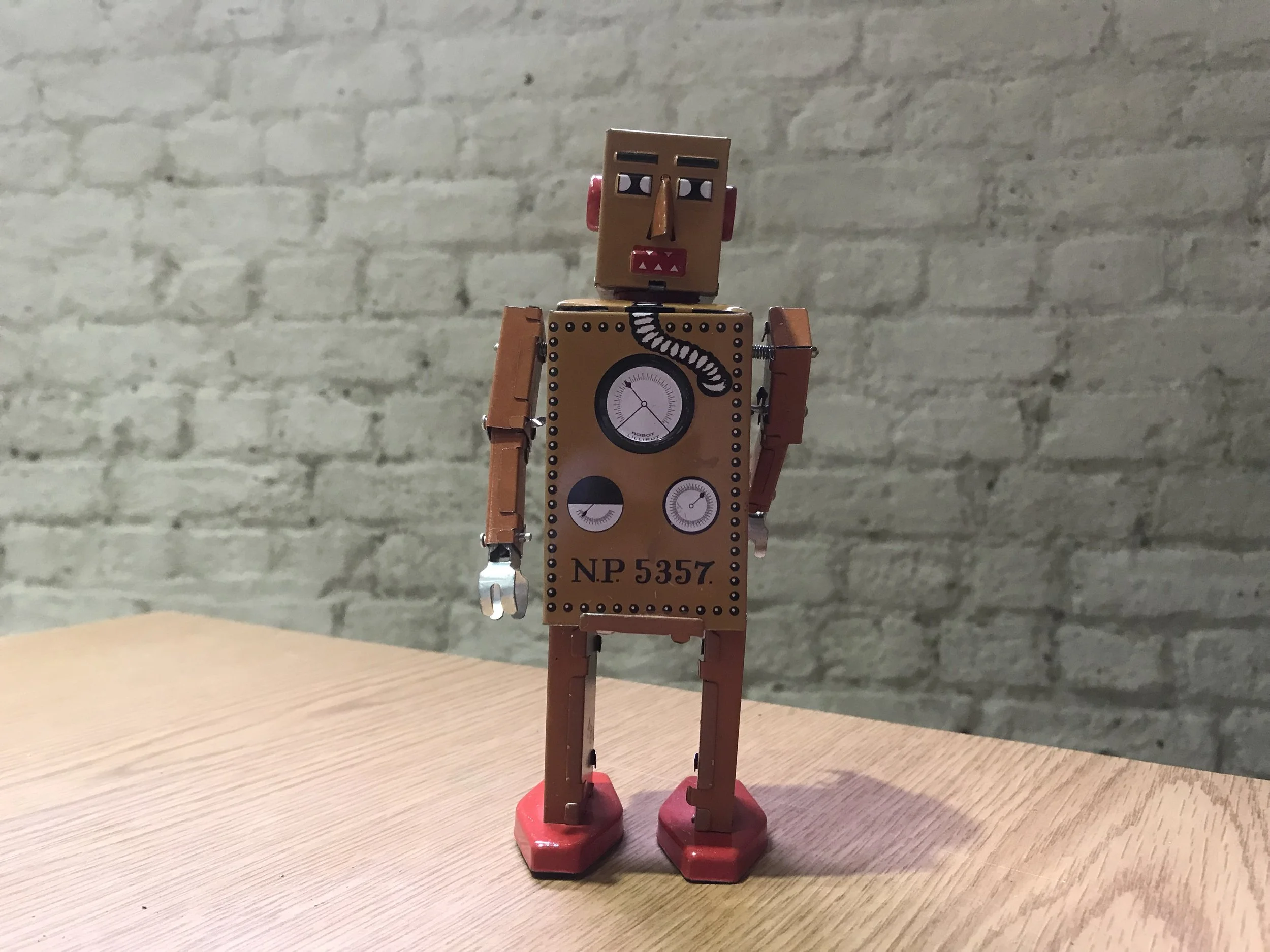
At the beginning of the session, the children were already excited about the toys display that they saw. They were asked to sit on the carpet and had a lesson with the teacher. First, the teachers showed a few old toys and asked some questions, for example, what is the toy made of and is the toy fragile? This is how the teacher maintains interaction with the children.

Then, the children got the opportunity to touch and play with some old toys that they have not seen before such as the hamming top traditional spinning toy and diabolo. They liked them very much and they kept attempting to play with the old toys.

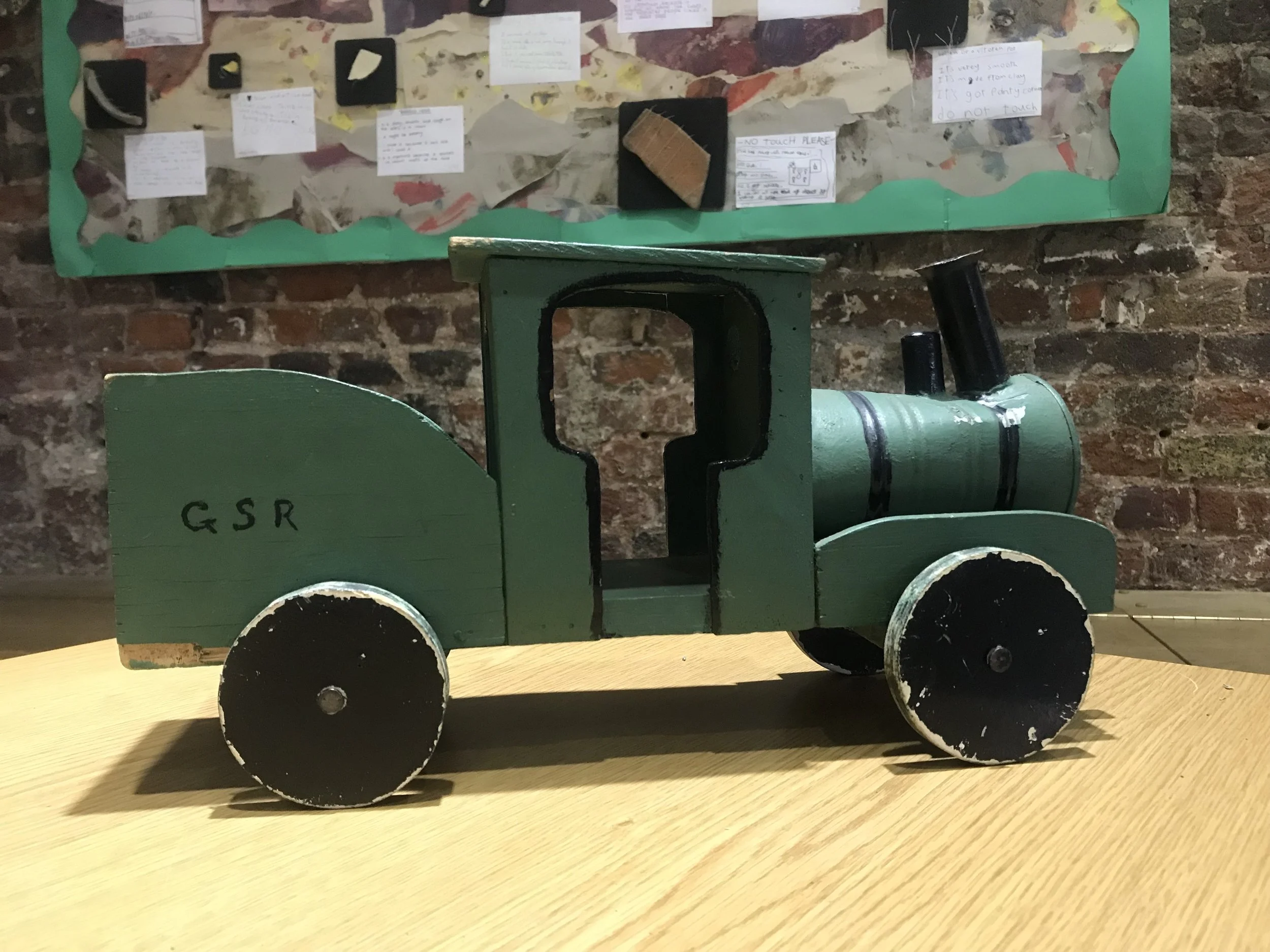
The children were also playing with toys in different eras. One of the most iconic toys was a train that was made of wood and recycled cans. The children were very creative because they invited the doll and soldier to get on the train.

Before the session ended, the children got to make their peg doll. They were very excited, ranging from choosing different clothes to drawing their own peg with different colour pens. I could feel the excitement when they completed designing their own peg, which they also shared with me. The children then brought their pegs back to school with happy faces.

I really enjoyed this session. What I found most interesting is the reactions from the children. They were very curious and active to explore more about the history of toys. It also reminds me of my childhood. Digital toys were not that popular when I was small and I enjoyed playing with the traditional toys. I really appreciate how the teacher led this session. With lots of preparation, the session went really smoothly.

Book a toys session at Fulham Palace here!