
September's object of the month
Every month we feature two blogs written by volunteers; one describes an object in the Palace and one a feature from the Garden. There is no set format and it can take the shape of research, poetry, prose, or anything you are inspired to do. It is a great way to learn more about the Palace and share it with other volunteers!
Today’s piece is by communications volunteer Naomi Jennings O'Toole.
This object of the month comes at the last day of September after I was finally able to visit the Palace museum again. Though it had been several months, it strangely felt like I had been there recently. My lockdown experience seemed to last forever in the moment but, in retrospect, the months feel like they flashed away so quickly. So it is hard for me to imagine the long expanse of time that the Palace went empty. There was a wedding taking place on the day I visited for the first time, with the rooms set up beautifully in white. There was also a wedding at the Palace on the first day I worked as a volunteer, and I remember being impressed by the eucalyptus bouquets in the café. It felt strangely cyclical.
This month’s object of the month are…ceiling bosses.
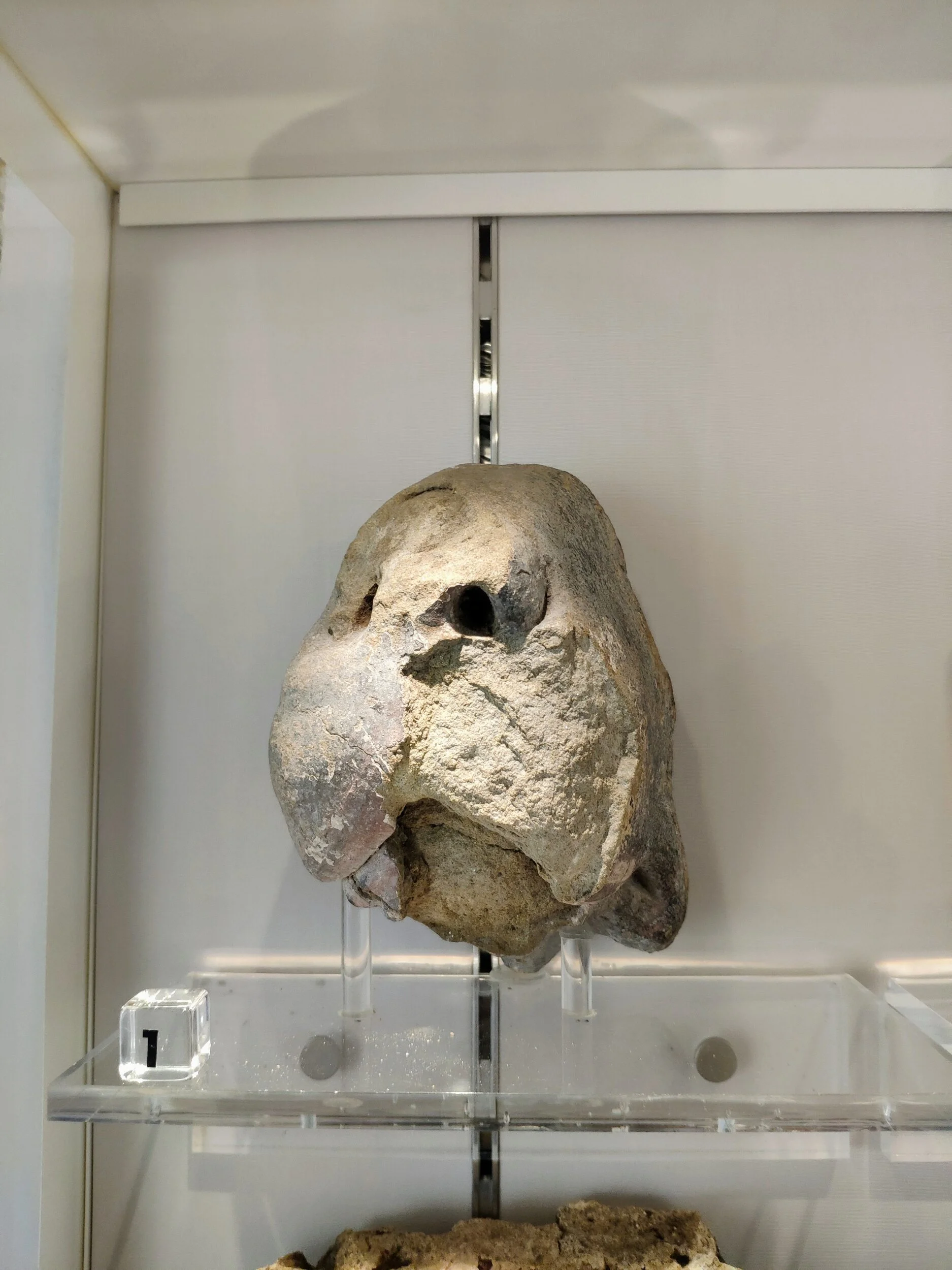
A ceiling boss seemingly carved into the shape of a lion's head, stone, medieval (1066-1485).
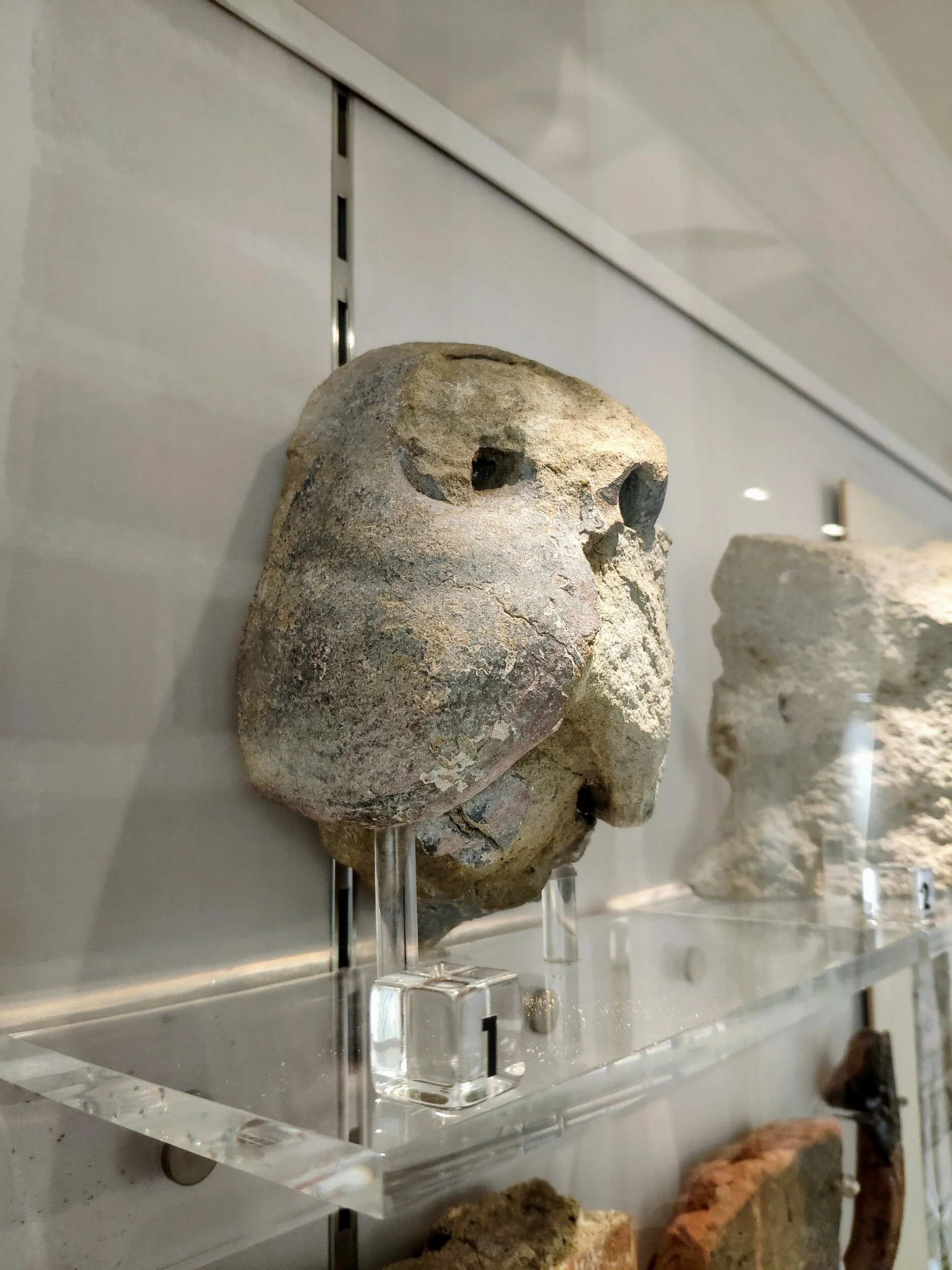
When I saw the ceiling bosses in the archeological section of the museum, it got me thinking about the building as a witness to the changing uses of the Palace over the centuries. The architecture itself has been amended and transformed repeatedly as each Bishop felt the need to keep up with the style of the times. However, they exuded such a sense of permanence and resistance to the fleeting events that occur below them.
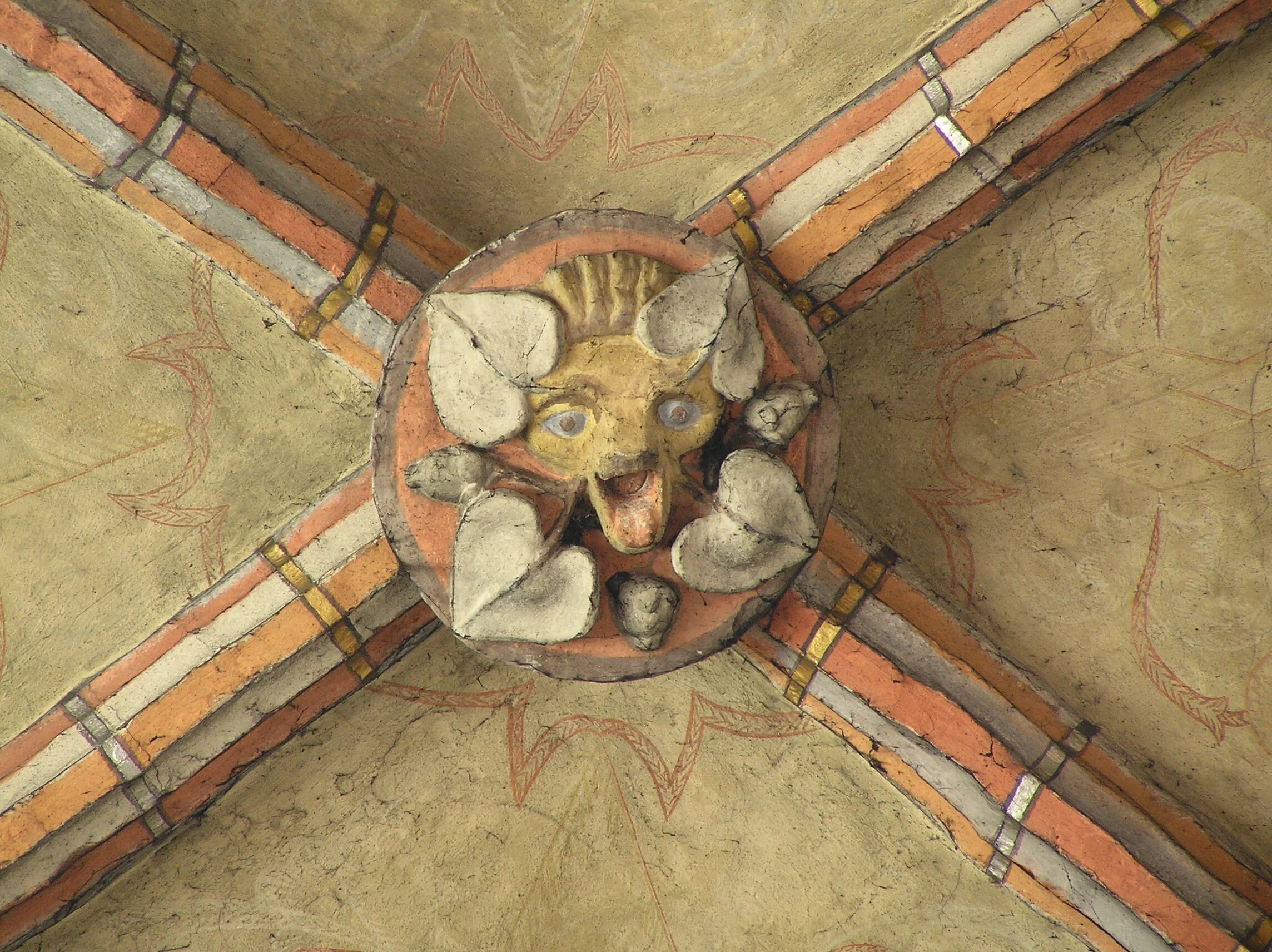
An example of a rib vault keystone with boss, in the Church of St Mary in Chełmno, Poland (source: Wikipedia).
Ceiling bosses are common in medieval architecture and are always noticeable at the joints where vaults connect. Made of a hard material like stone or wood, they are typically carved into floral or vegetal motifs.
Bosses can also take the shape of heralds, monsters, mythical creatures or the Green Man (a metaphor for rebirth and spring, pictured as a face formed of leaves).
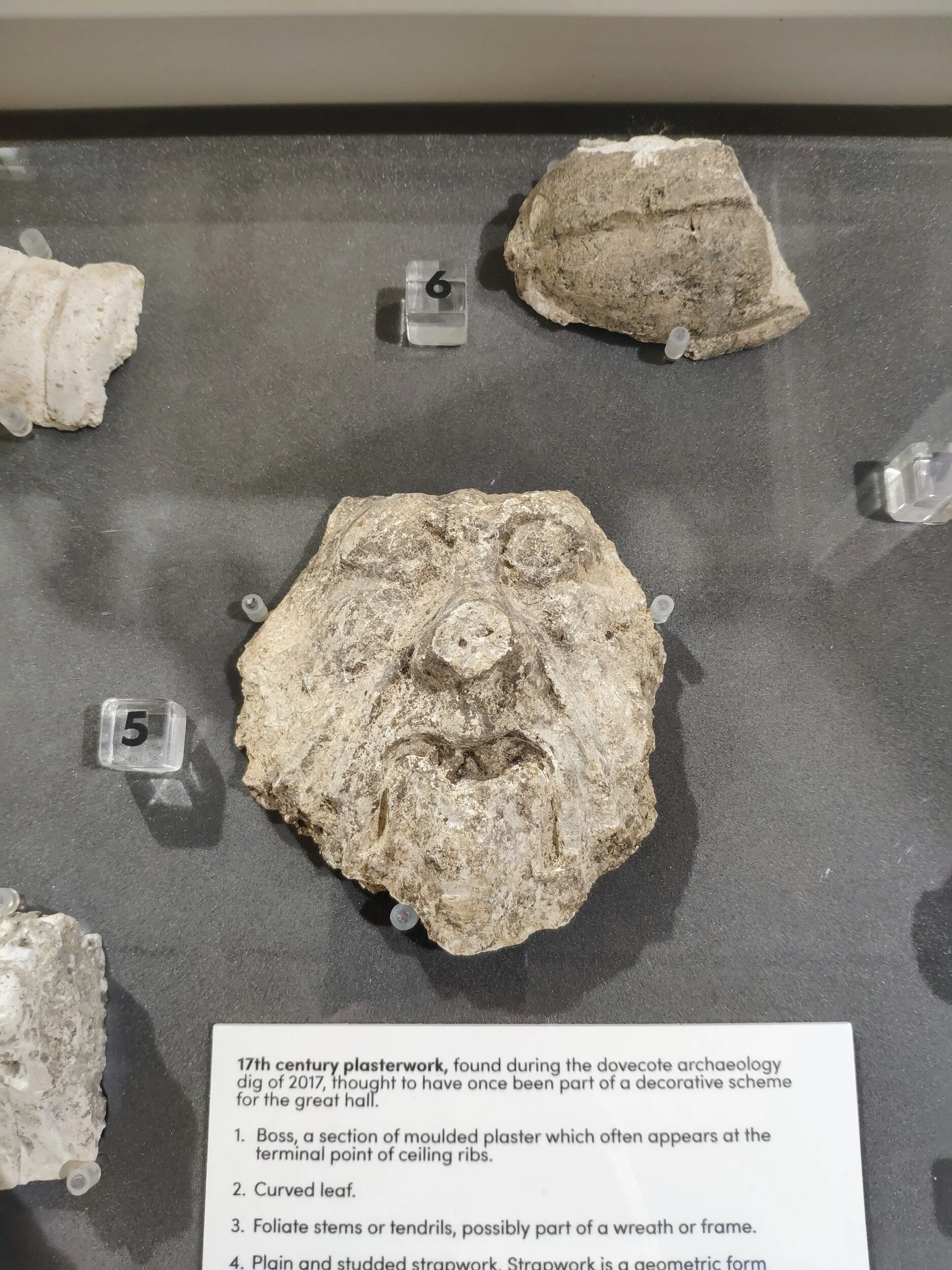
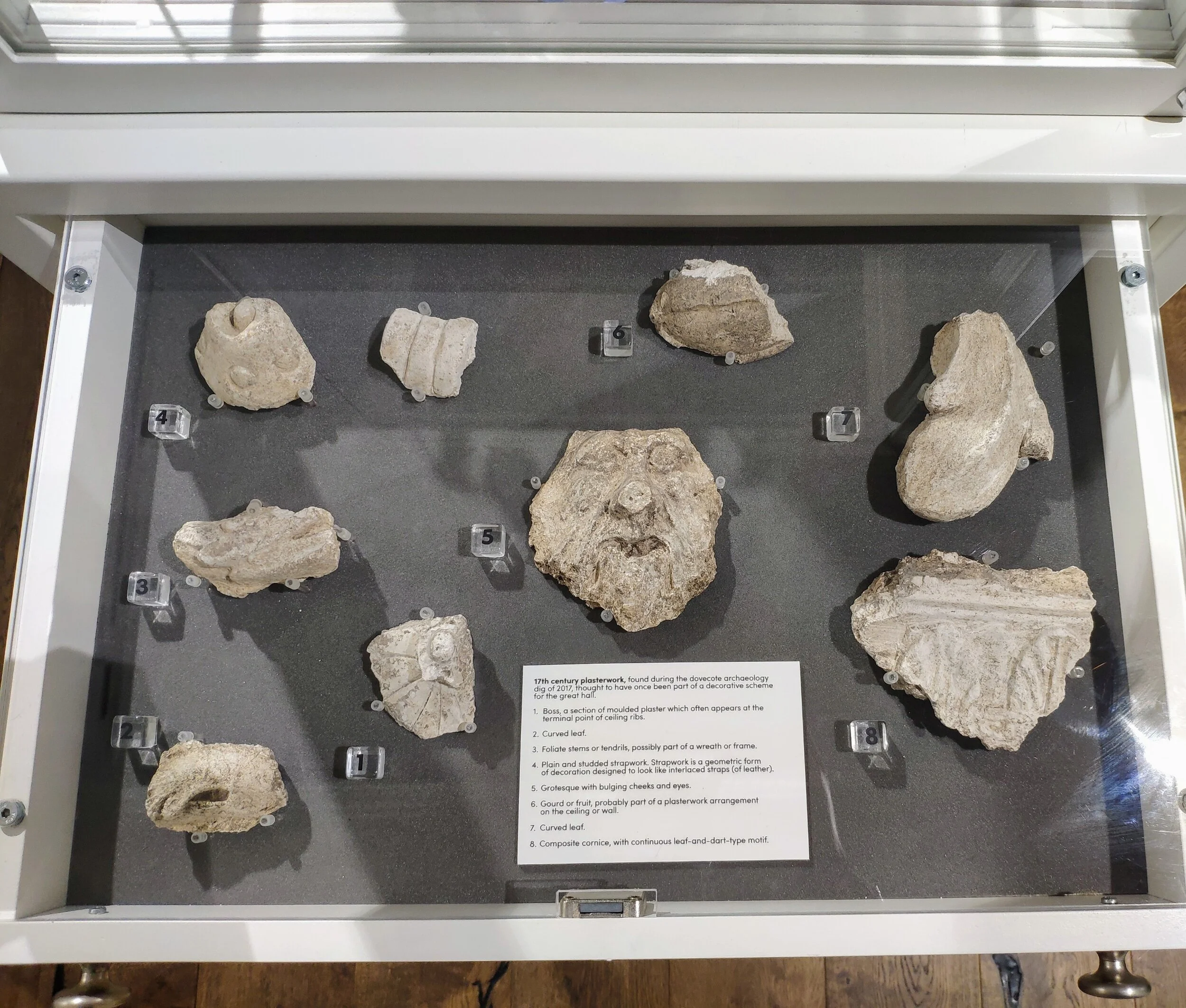
My favourite boss was the male face. He is very eroded now but his gaping mouth and deep set eyes still characterise him. The majority of his time has been spent at a commanding position, able to watch the space below him transform in function and style. People walked below him in seventeenth century costume, hurrying between the tasks that occupied their day. Perhaps only a few would have looked up to return his gaze.
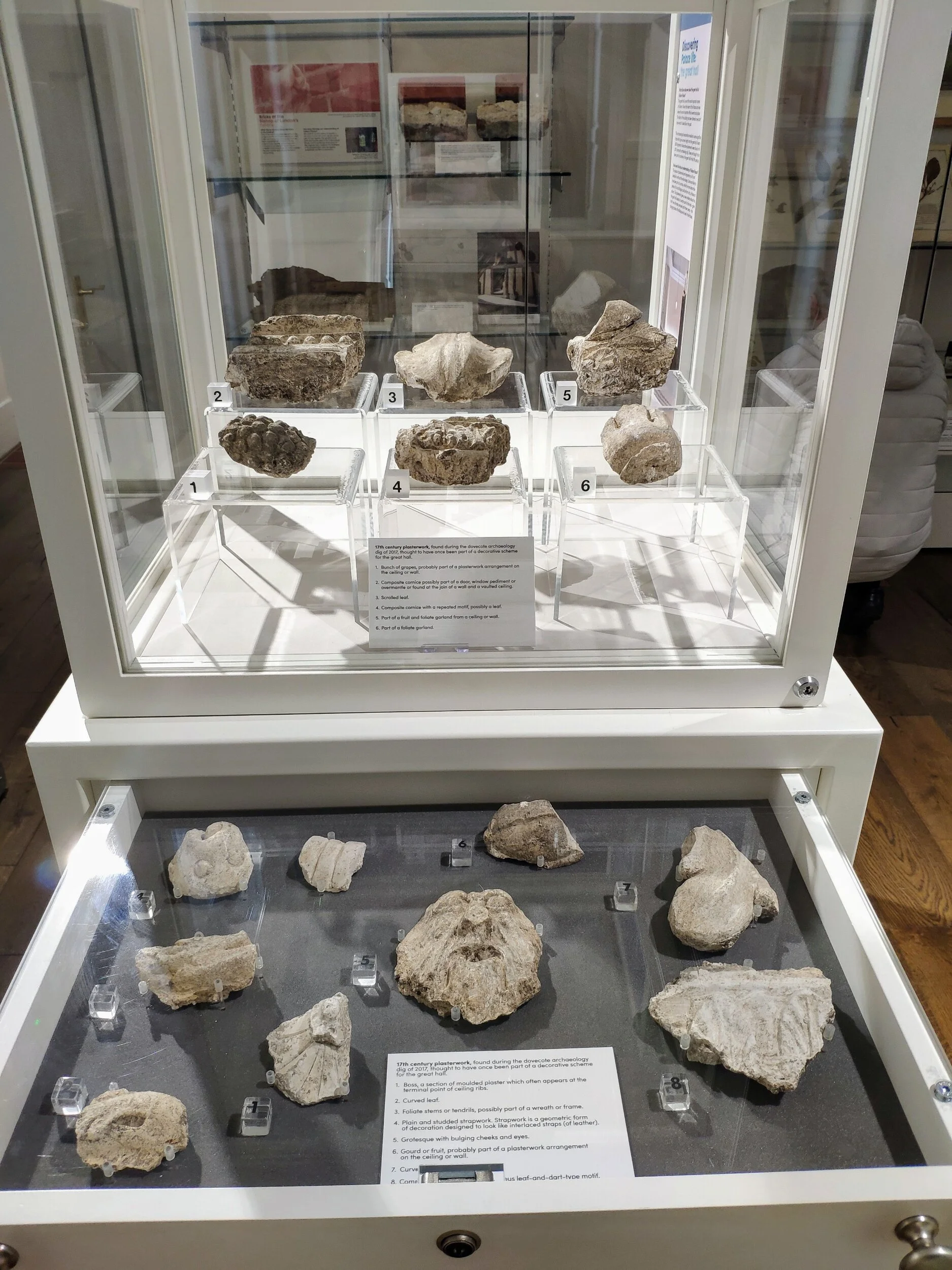
Now his position has reversed. He sits in a (wonderfully clear) glass drawer, surrounded by his architectural peers. We look down at him and we look through the lens of historical investigation, something that is predetermined as soon as we enter the context of a museum exhibit. However, the boss as an object still witnesses and stands as evidence of the constant flux of the Palace's history.