America’s Lost Literary Treasure

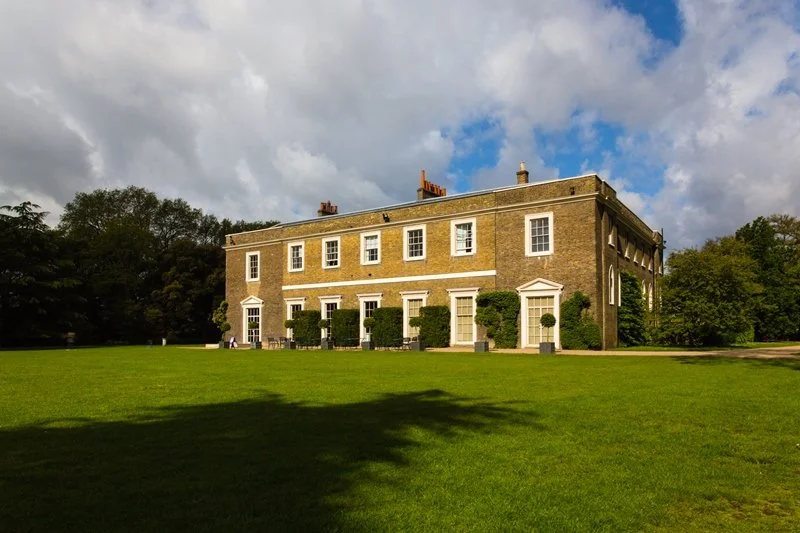
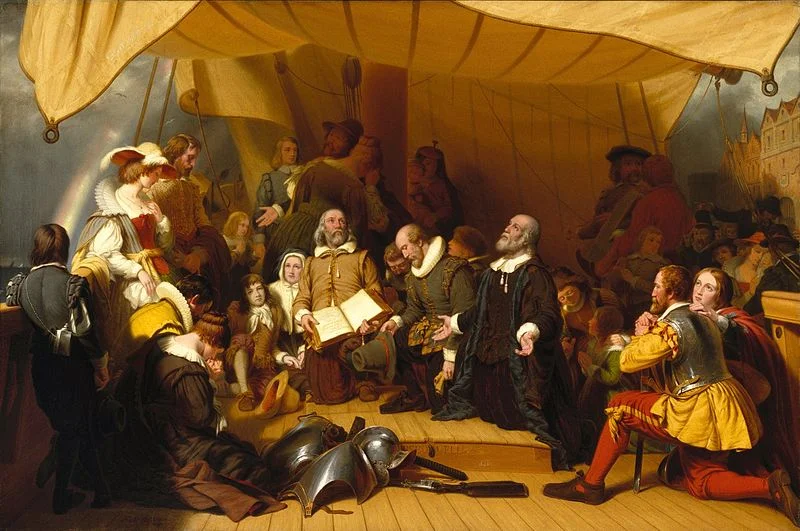
Recently, I was pleasantly surprised to learn about Fulham Palace’s links to America. I’d heard that before the Revolutionary War, the Bishop of London oversaw the spiritual welfare of British colonists in North America but was unaware of the palace’s lesser-known connection to Pilgrim William Bradford. In the mid-nineteenth century a lost manuscript of Bradford’s ‘Of Plimoth Plantation’ mysteriously turned up in the Fulham Palace library. A signatory of the Mayflower Compact and five-time governor of Plymouth (alternately spelled Plimoth) Colony, Bradford is a significant figure in early American history. Likewise, ‘Of Plimoth Plantation,’ referred to as ‘The Log of the Mayflower' by the British, is a near priceless artifact in early American history.

Plymouth Colony was the second permanent English settlement in North America. Bradford’s text is a recounting of the Pilgrim Fathers’ voyage to the ‘New World,’ and the most complete, authoritative record of the colony’s first years. Never intended for publication, after Bradford’s death the manuscript was passed-down through generations until it was acquired by Reverend Thomas Prince. He published a selection of excerpts and kept the document in his library at the Old South Church in Boston, Massachusetts. However, sometime during America’s Revolutionary War, Bradford’s manuscript of ‘Of Plimoth Plantation’ vanished. It unexpectedly reappeared in 1856, shelved in the Fulham Palace library. 
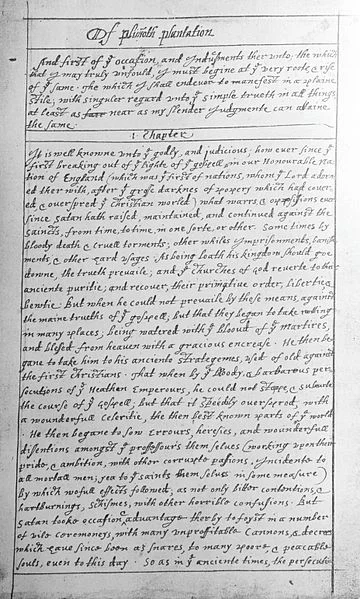
Though it’s unknown exactly how or why the book traveled from Boston, Massachusetts to London, England, there are conjectures. Two popular explanations are that it was pilfered by a British soldier or taken for safe-keeping when loyalist Governor Thomas Hutchinson fled the colony. After its discovery, the current bishop (either Charles Blomfield or Archibald Tait) granted permission for the manuscript to be copied. It was published in Boston early the following year. Finally, after years of diplomatic wrangling, the original was returned to the United States on 29 April 1897. Its celebrated return can be attributed to Bishop Creighton who, himself a historian, thought a document as significant as Bradford’s belonged in America. Today, it is treasured as an invaluable piece of early American history and has a place of prominence in the Massachusetts State House. If you’re too busy to make the transatlantic journey, a reproduction page from the manuscript can be seen on the large map panel at the Museum. To read more, check-out ‘Saints & Strangers: Lives of the Pilgrim Fathers and Their Families’ by George F. Willison and Samuel Eliot Morison’s edition of ‘Of Plymouth Plantation, 1620-1647’ by William Bradford.
Calling All Learning Assistants

With so many layers of history and human occupation on the Fulham Palace site, we are a rich brew of learning opportunity for all.

As you know, FP runs a formal education service facilitating regular visits from schools, and also lively and informal family programmes throughout term time, half term and holidays.   There are workshops and programmes for people of all ages such as free family drop-ins where children and adults alike can dress up like a Viking, a Tudor Lord or a Victorian house maid – I've seen it myself on Sundays – people really get a window into past times and it's a lot of fun.

Volunteer Learning Assistants help run these workshops and activities for schools, families, young people and other educational groups, and make a really valuable contribution towards promoting learning in the community. 

At the moment we are looking for more Volunteer Learning Assistants, particularly to work with children and school programmes.  No experience is necessary but previous work with children is an advantage.  There are two main areas of volunteering: those prepared to help the freelance teachers who provide the actual learning sessions, and those prepared to supervise pre-organised activities by themselves.  An interest in history and the arts is an advantage, though not essential.  Enjoyment of the company of children and families is important, and support and training is provided. 

School sessions take place during the week, and volunteers are needed to cover either morning or afternoon sessions.  Family activities tend to run during school holidays or weekends.  Other workshops will vary as to timing but volunteers are given notice ahead of time. 

Anyone who is interested or who knows someone who would be good for this role should contact our Learning Officer Lettie McKie:  lettie.mckie@fulhampalace.org


Introduction to Growing Vegetables Course: Free for Volunteers!

Spring has arrived so time to get out in the garden!

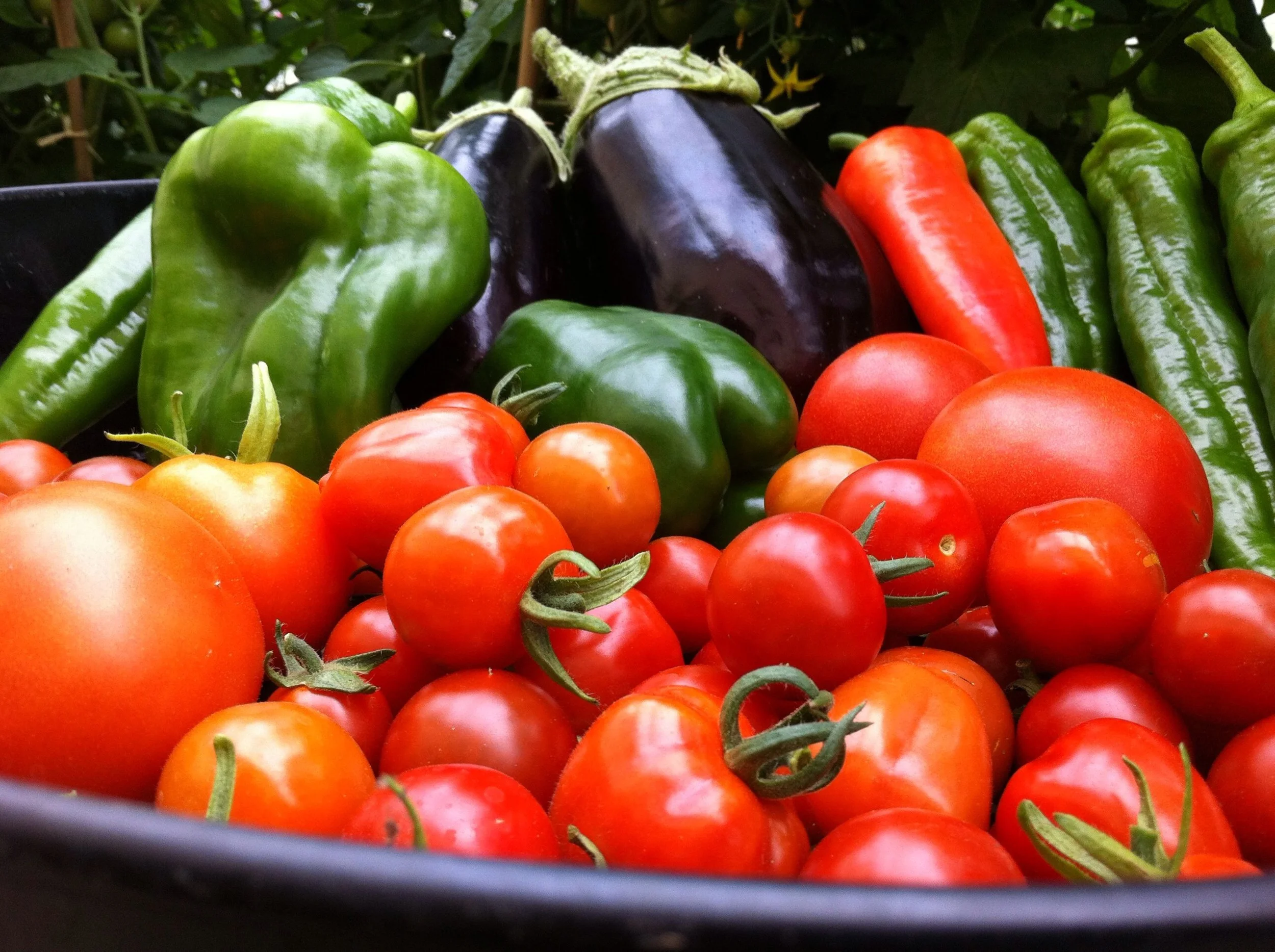
Would you like to learn how to grown your own produce? Not sure where to start? Then book onto this course of monthly workshops which will take you step by step through the process. The experienced garden tutors will help you learn practical techniques on how to grow vegetables with ease. Each workshop will cover every aspect of growing vegetables from seed sowing through to harvesting your produce.

The course is FREE for Fulham Palace Volunteers, and will run from 1:30pm to 4pm in the Walled Garden on the following dates:

  • Monday, 13 April – Seed Sowing
  • Monday, 11 May – Bed preparation and planting out
  • Monday, 15 June – Tour of the Fulham Palace Meadows Allotments
  • Monday, 13 July – Plant care and harvesting

Booking is essential and spaces are limited, so click here to book.

Volunteer Day Trip to Great Dixter House & Gardens

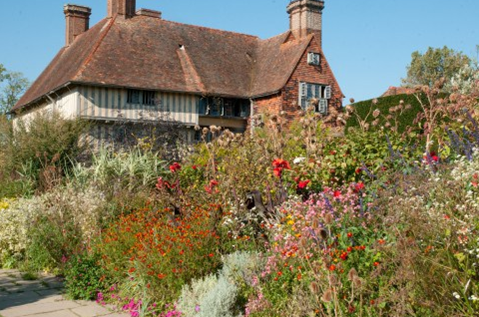
We are very excited to announce the first of what will become an Annual Volunteer Day Trip.  The visit to Great Dixter House & Gardens will take place on Sunday 7th June 2015, 8:30am-5:00pm, and will include a guided tour of the House & Gardens.

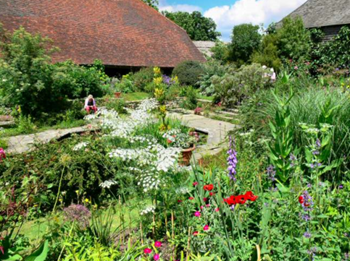
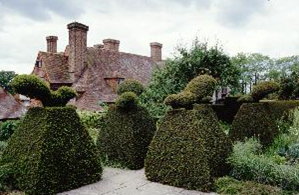
The original house at Great Dixter was built in 1450 and is noted to have one of the largest surviving timber-framed halls in the country.  It was acquired by the Lloyd family in 1909 who employed the architect Sir Edwin Lutyens to restore the House and Gardens in 1910-12.  During this time a 16th century house in a similar style was brought to the site and additional structural elements were introduced to create the house as we see it today.  Great Dixter is well known for being the birthplace, home and passion of British gardener and author Christopher Lloyd who created an experimental and constantly changing garden.  The gardens include a variety of clipped topiary, wild meadow flowers, mixed borders, ponds and an Exotic Garden.  It is now under the stewardship of Fergus Garrett and the Great Dixter Charitable Trust and is a place of pilgrimage for horticulturists from across the world.

We value the commitment and enthusiasm which you all bring to your volunteering at Fulham Palace and hope as many of you as possible will be able to join us on this day out.  It will be a great opportunity to socialise with volunteers from other areas of the Palace and to catch up with those you see more regularly.  The trip is subsidised by Fulham Palace Trust and the total cost to book a place is £15.  For more information on the itinerary for the day and to book a place please click here.

We are always keen to hear your suggestions of places that you would like to visit so if you have somewhere in mind for a future trip please do let me know.

Please note, this trip is available to Fulham Palace volunteers only.

If you have any questions or concerns, please contact Lauren Cox, Administrator, on admin@fulhampalace.org.

Exciting new volunteer recognition scheme launched in Hammersmith and Fulham

The Hammersmith and Fulham Volunteer Centre has teamed up with ValueYou, a not for profit organisation that provides a volunteer recognition scheme for people that carry out community volunteering. The organisation, which was established in 2013, initially launched the scheme in Ealing but is now expanding to Hammersmith and Fulham, Westminster and Kensington and Chelsea.

Across West London hundreds of local businesses are taking part in the scheme, providing volunteers with discounts and gift vouchers in recognition of the contribution they make through volunteering. A huge variety of shops are participating, from restaurants, furniture shops, beauty parlours and fishmongers to DIY stores, chemists, florists and more. 

It is free to join the scheme. All you need to do is complete the new Hammersmith and Fulham Volunteer Centre 100 hour recognition certificate application forms. You can download the form by clicking here

A User’s Guide to Blogs & Forums

The volunteers’ website features several ways to engage with the online community including a blog and forum. If you’re not a frequent Internet user, it may be difficult to understand the difference between the two.

Why Should I Use the Blog or Forum?

The blog and forum are ways to interact with other Fulham Palace volunteers online. You can write about events on the blog, ask questions on the forum, or share information on both!

What is a Blog?

Like the newsletter, blogs have articles. These can be about any topic, but must be submitted to and reviewed by the communications team before they are put online. Once these are online, readers can make comments.

What is a Forum?

A forum is an online discussion space. If you’d like to ask a question or share information you can write this on the forum. What you write doesn’t need to be submitted to or reviewed by the communications team first. Similar to the blog, readers can make comments, but these comments are meant to be part of an ongoing discussion about the topic.

What’s the Difference?

The main purpose of a blog is to share information via articles. The main purpose of a forum is to initiate a conversation on a particular topic.

How Can I Use a Blog?

  1. You can ‘like’ a blog post. By liking an article you are demonstrating that you enjoyed the post and perhaps would like to read more on a related topic.
  2. You can comment on a post you’ve read. You can do this by clicking the ‘comment’ button.
  3. You can write an article for the blog. If you’re interested in authoring a blog post, check out the articles ‘You’ve Got the Write Stuff’ which has information on how to submit a post and ‘Get Inspired’ for potential story ideas.

How Can I Use the Forum?

You can participate on the forum by starting a new discussion. To do this, click on the ‘Start a new topic’ box. Title your comment/question then elaborate in the section ‘body text.’ You can include pictures by clicking on the camera icon. When you’re done, click the ‘login and post’ button.

Now it’s time to get involved! We hope to see your blog posts, likes, comments, and forum discussions soon!

Farewell to Pauline McCormack

Join us all on 5th March, 4pm to 6pm in Bishop Terrick's Drawing Room, to say thankyou and farewell to Pauline McCormack, who has been working at Fulham Palace and Bishop’s Park for the last 3 years as Community Development Officer. 

Pauline came to us from the parks department of the London Borough of Hammersmith and Fulham, with a wealth of experience of working with community-led organisations in the borough.  Over the last 3 years she has established a number of initiatives that have been successful in bringing new people to the Park and Palace, such as Park Run, the Bishop’s Park Farmer’s Market, our expanded volunteering programme and the youth forum.  She received funding from Western Riverside Environmental Fund (WREF) for the Palace’s new compost heap, and funding for the establishment of the Palace’s bee hives.  We thank her for all her hard work and wish her well in her next move.

Click here to RSVP