

Preparing for my first day at placement. I had a lot of suncreen on.
Hello, my name is Helena. I am currently undertaking a Heritage Engagement placement at Fulham Palace, as part of my MA Public History work placement programme at St. Mary’s University Twickenham. I started work experience here on the 25th of May at the start of the UK’s record-breaking heatwave.
In one of my first times visiting the Palace, my friend invited me to go to the Apple Day event in 2024. I remember the lively and fun atmosphere on the day, seeing people learning to line dance and eating the baked apple goods. Reflecting on that experience, I was excited to learn at the start of 2026 that I was offered a placement opportunity at Fulham Palace. So far, the past two weeks have been non-stop, from getting to meet the wonderful team and volunteers in different departments, learning about Fulham Palace’s history and heritage, to rotating in various departments, such as Front of House, Volunteer and Learning departments. Each day has offered a different insight into how the Palace is continuously run by staff supported by a team of over 250 volunteers.
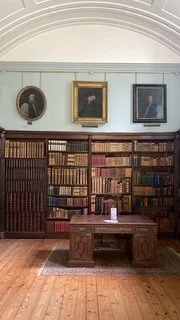
Bishop Porteus’ library
I have thoroughly enjoyed interacting with visitors and showing them the secret door in the Porteus Library, supporting the administrative side, and planning to create a Youtube video aimed at schoolchildren for the Palace. Being adaptable and having a willingness to learn is a key part of the placement. As such there have been times when I navigated visitors where to go and visit when parts of the Palace are shut for a private event, used different databases to update the volunteer's portal or volunteer information, and worked closely with a volunteer to make an engaging video about the Palace. All these tasks required a level of adaptability, efficient communication, and coffee from the Palace Cafe to ensure that tasks are done effectively for the departments.
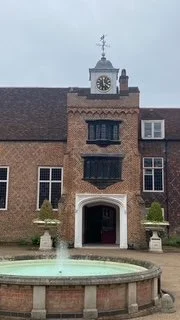
Tudor West Courtyard
I think Fulham Palace is an idyllic and unique Palace nestled by the river, as my title suggests. It was previously a summer retreat for 120 Bishops of London with a history spanning over 1,300 years. Whilst each Bishop made their own unique architectural changes to the Palace, the Tudor West Courtyard remains similar to its original 15th century appearance (If you have ever seen photos of Fulham Palace, it is most likely that you have seen the West Courtyard, as it is often used for commercial marketing). Remarkably, it is the oldest part of the palace structure. The East Courtyard on the other hand has strictly Georgian architecture, reflecting on the changing tastes of the bishops.
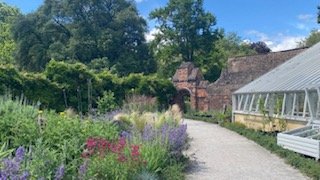
Flowers and plants in the Walled Garden
On my first day at the placement, the Tudor Courtyard was used as a wedding reception. From before the 13th century, the Palace was used to entertain important visitors, including royalty. In 1601, Queen Elizabeth I was a guest of honour for a lavish banquet there. In the 16th century, after the English Reformation the clergy were allowed to marry and have Fulham Palace as a family home. The continuation of visitors visiting Fulham Palace today makes the Palace come alive, proving it is idyllic in its preserved state, thanks to the care and compassion that the staff, volunteers and visitors provide.