
Heritage and Engagement placement Alexandra shares her thoughts on the Palace’s architecture.
Before volunteering here, I studied archaeology and one course emphasised the history of old houses. Particularly, their architecture. Architecture is influenced by the times. Whether that be in what materials were used or what styles were used. They offer an opportunity to explore history from a different angle. With Fulham Palace, you can look at 3 periods: Tudor, Georgian and Victorian. Now there is too much history and architectural features in these, so I will just focus on one part of each section. The Tudor brick work, the windows in the Georgian section and the layout of the Victorian chapel.
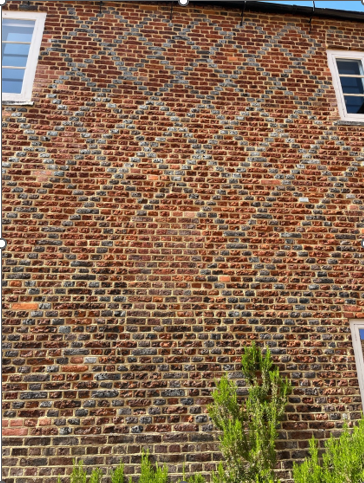
Diapers in the Fulham Palace Tudor courtyard
Starting with the oldest building, we can see the Tudor features. The Tudor period was a period of religious upheaval, and one that can be seen in its architecture. The Reformation of the church lead to England being culturally isolated from Italy. whilst European architecture was beginning to be inspired by the Romans, England developed a style independent of the European renaissance. One of the most prominent features of the Tudor courtyard is the brick work. Black bricks cross, creating diamond shapes. This is called diaper. Normally composed of geometric designs, diapers were a way for Tudor nobles to show off their power and status. Showing off the status of the Bishop of London.
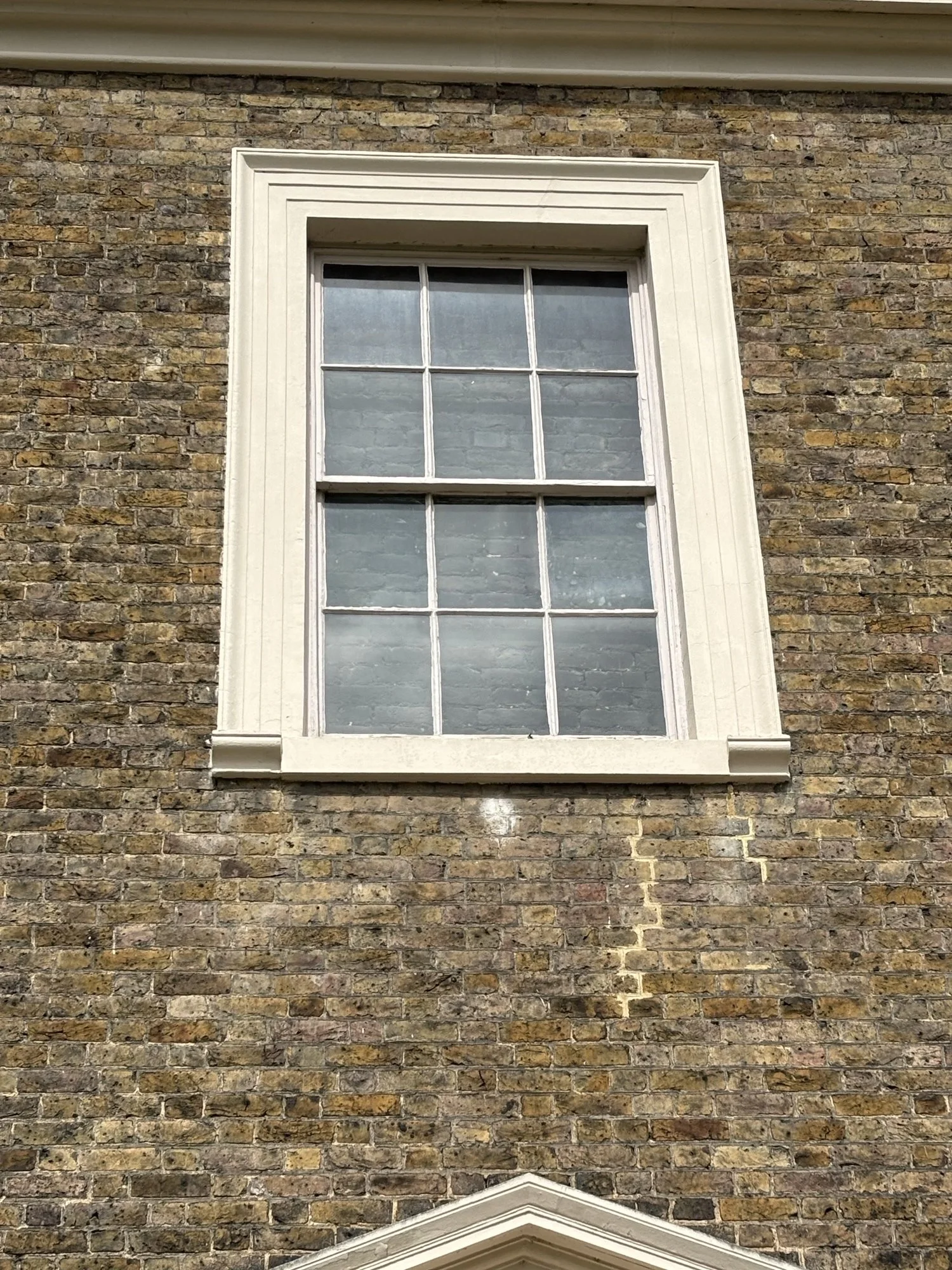
Picture of the main building’s east facade with false window
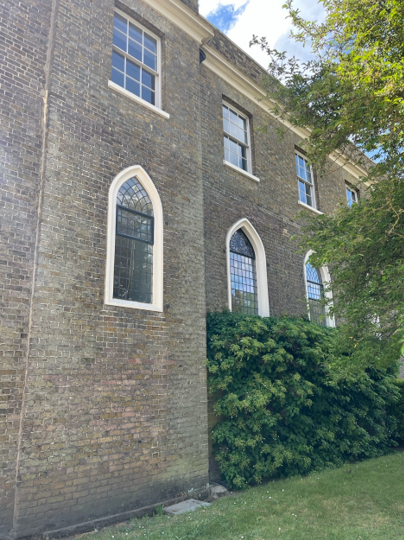
Side of the Georgian building, including old chapel windows
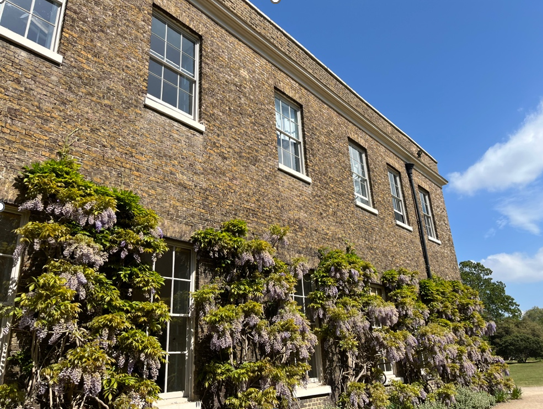
Georgian building showing sash windows on both floors.
The Georgian area was built in the 1760s and 1810s, and one of the most noticeable parts of this section is the windows. In total, there are 42 windows and one false window and three doors on the exterior of the Georgian section of the main palace building. The false window faces the lawn, above the library door. The most common window in this build is called a Sash window. There are two types of Sash windows, Yorkshire ones that slide across left to right, and vertical ones that slide open up and down. Fulham Palace has vertical sash windows, that got very popular towards the end of the 17th century when larger glass sheets started being more available.
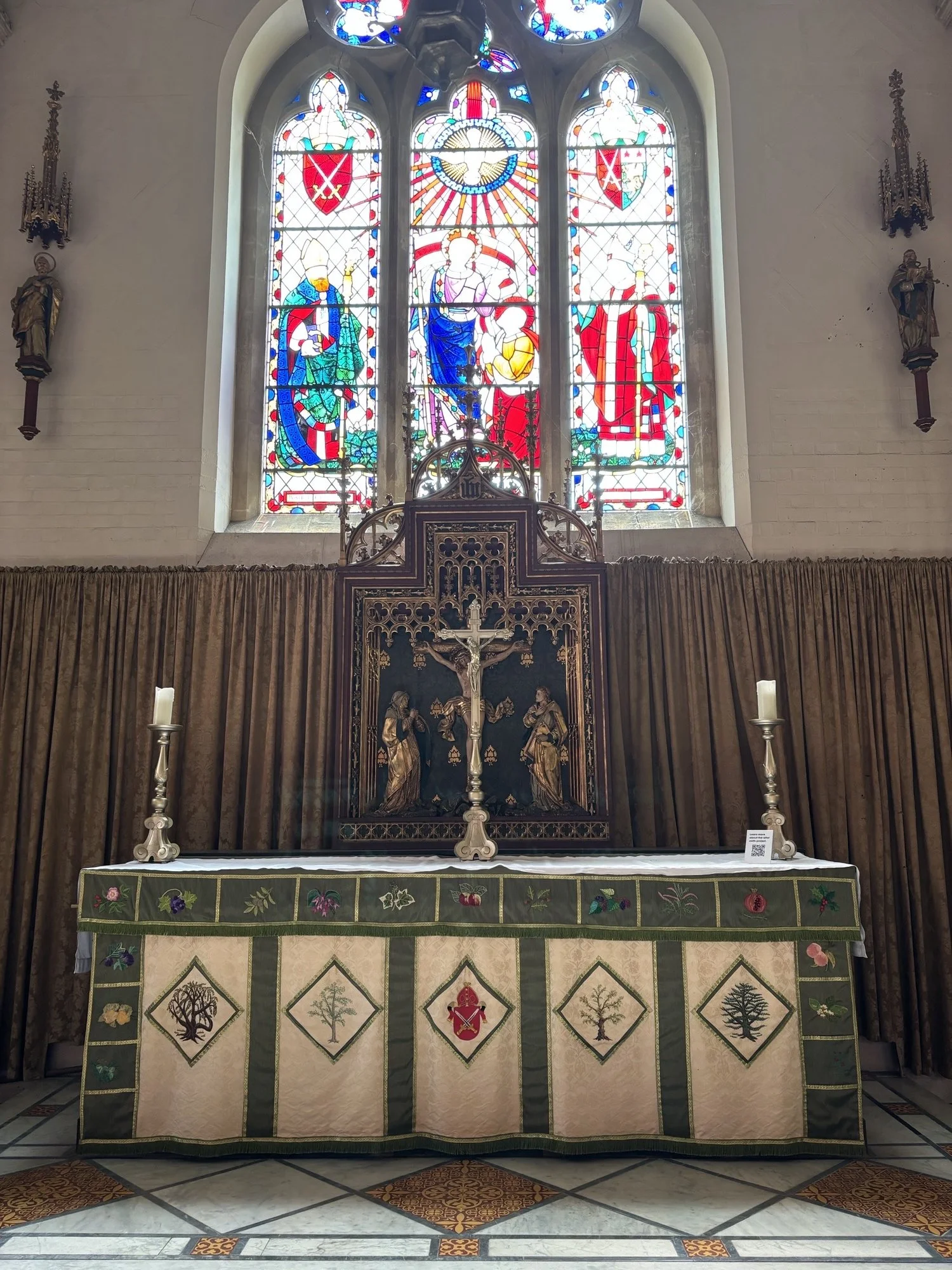
Chapel altar
The last section is the Victorian chapel. Built in 1866 by William Butterfield who was part of the Gothic Revival style. This style can be seen in the layout of the chapel. During the early years of Queen Victoria’s reign there was a battle between the High Church Anglicans and the Evangelical Christians. One stressed the Catholic parts of the Church of England, whilst the other the Protestant parts. The High Church Anglican’s movement influenced the architecture of churches, especially William Butterfield’s, who was a member of the Oxford Group. In High Anglican churches, the altar was the central point, not the pulpit. This is seen in Fulham Palace’s chapel, where, as soon as you turn into the aisle, you see the altar. Behind the altar was a mosaic of a bible scene, this is now at the other end, by the organ. The reason being that Bishop Creighton, who came 30 years after construction, didn’t like it. Originally, a curtain was put up but later on, after World War II, the mosaic was moved to where it is today.
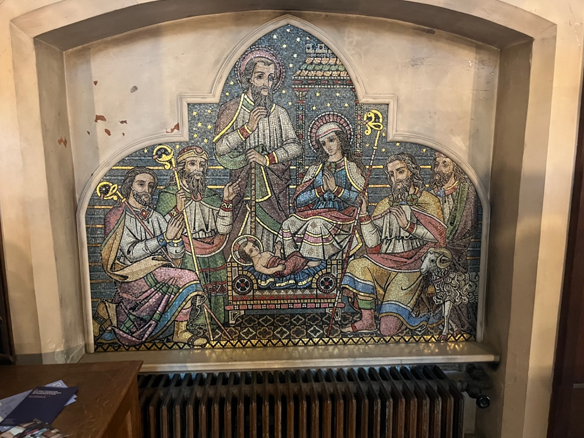
Chapel mosaic
The history of Fulham Palace is long and varied and I have only brushed the surface. With more stories to be explored, I encourage you to come visit and experience it yourself.