
Tour guide Christopher Gallop shares his interesting insights into what happened to the Bishops of London after their tenure.
I was reading about Bishop Mandell Creighton. His tenure as Bishop of London was short, just four years, but he had a significant influence on the fabric of Fulham Palace. It was his decision, prompted in part by his wife Louise, that the multi-coloured interior tiling of the Chapel should be lost to the white-washer’s brushers. It remains hidden to this day.
But his short term, ending due to his death in early 1901 from suspected stomach cancer and at the relatively young age of 57, marked the last occasion on which a Bishop of London passed away in post. With advances in medicine and the now mandatory retirement age of 70, it might happily be that the loss in office of Bishop Creighton stands as the last such ever. We can only hope and pray. Certainly everyone who has served since, up to today’s Bishop Sarah Mullally, has either retired from the post or been promoted to one of the two English Archbishoprics.
So, I decided to take a closer look at the records, and in particular at the 82 men who served substantively as Bishop of London from William the Norman in 1051 to the consecration of Bishop Sarah Mullally in 2018 almost 1,000 years later.
What happened to all of them?
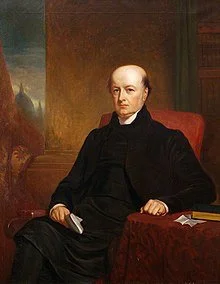
Bishop Charles Blomfield
Well, sadly, but not altogether surprisingly, most of them, 51 of the 82, did pass away in office. In fact for 226 years, from Humphrey Henchman in 1675 to the loss of Bishop Creighton, every Bishop of London was either promoted to Archbishop of Canterbury (three of them) or with one other exception, they died. The exception was Bishop Blomfield, who retired in 1856 through ill-health but went on living at Fulham Palace on a pension until his death the next year. He’s buried next door to the palace in the churchyard of All Saints Fulham, along with ten others from that long run, in tombs which are sadly in a state of great disrepair.
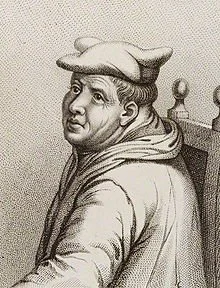
Bishop Edmund Bonner
Until the 20th century, voluntary retirement was almost unheard of. Bishop Blomfield’s was the first in over 600 years, since William of Sainte Mere Eglise left office for a simpler life in St Osyth Priory in Essex in 1221. Dismissals have also been very rare, although of high profile. Bishop Bonner, famously and uniquely served two separate terms during the years of the Reformation and was dismissed from office each time, ending his days in the Marshalsea Prison in 1569 after an enforced retirement of over ten years. Nicholas Ridley, who served between Bonner’s two terms, was forced from his post and executed as a protestant martyr. The only other dismissal was that of William Juxon in 1646 when bishops were abolished during the Commonwealth. Technically, he was reinstated momentarily on the Restoration of the Monarchy in 1660, but only so that he could be appointed Archbishop of Canterbury.
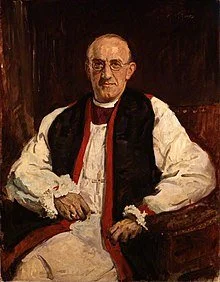
Bishop Geoffrey Fisher
Eleven Bishops of London besides Juxon have been elevated to Canterbury between Simon Sudbury in 1375 and Geoffrey Fisher in 1945. Then there’s Roger Walden who in late 1405 became the first and only man to be appointed Bishop of London having been Archbishop of Canterbury previously; but his tenure of London lasted just 27 days before his death.
Six more Bishops of London have been elevated to the Archbishopric of York, including most recently, David Hope in 1995. And there are the four men who were translated to other sees; Lincoln, Salisbury and Durham (twice), all of them powerful and prestigious appointments, so not necessarily the demotions that they might at first appear, none of them recently, and the last, George Montaigne in 1627, was soon to go on from Durham to York in any case.
So what about the 20th Century and the present day? Well, as I saw, Bishops Fisher and Hope went to Canterbury and York respectively after London. The other seven men all retired. More or less, anyhow. Several continued to serve the Church of England or the Anglican Communion in official roles. William Wand (1955), depicted opposite Creighton in our chapel’s east window, served as Canon Treasurer of St Paul’s following his term as Bishop, edited the Church Quarterly Review, and wrote and published books and articles, still working at the time of his death at the age of 92. Robert Stopford (1973), the last Bishop of London to call Fulham Palace home, served afterwards as diocesan Bishop of Bermuda, via a post as vicar-general of Jerusalem. Gerald Ellison (1981) followed him to Bermuda for a short period as vicar-general.
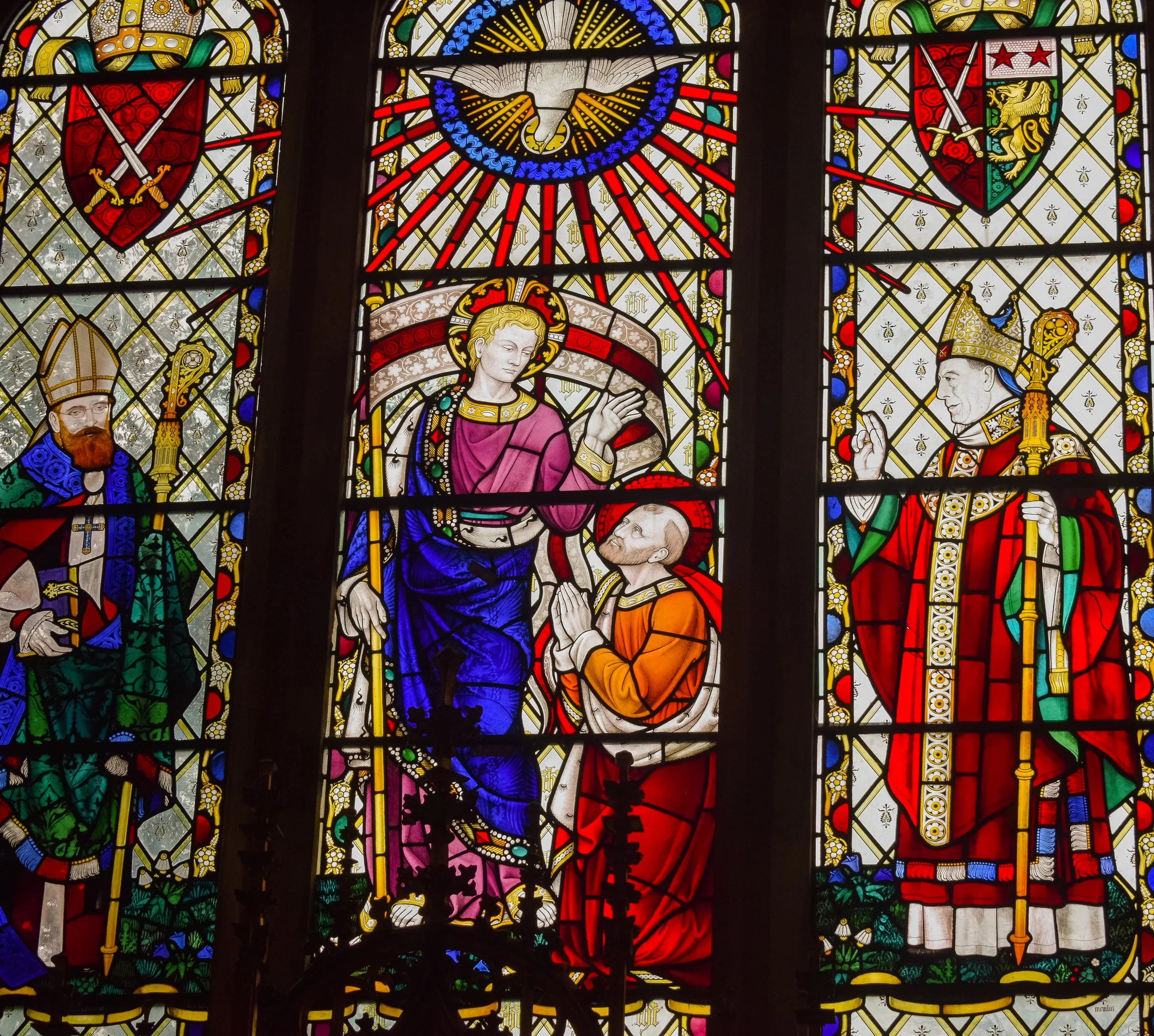
Bishop Mandell Creighton (left) and Bishop William Wand (right) depicted in the Fulham Palace chapel stained glass east window.
Then, something which for 300 years would have caused great national turmoil. Admittedly not without some controversy at the time, Graham Leonard (1991) was accepted into the Roman Catholic church as an ordained priest after standing down as Bishop of London. He was subsequently appointed a monsignor by the Pope. And finally, and uniquely to date, Richard Chartres (2017) has continued as a working Member of the House of Lords with a life peerage as Baron Chartres of Wilton.
It's been an interesting reflection on a particular aspect of “our” Bishops’ service. My next project is to work out how to calculate that Bishop Sarah Mullally is the 133rd person as well as the first woman to hold the post (spoiler: you can’t just count from the start of the list and get to 133).