
Learn something new about the Palace and share it with your fellow volunteers, with our specimen and objects of the month. Every month we feature two blogs written by volunteers; one describes an object in the Palace and the other a feature from the Garden. There is no set format so you are free to experiment with research, prose, poetry or anything new! This reflective piece was kindly written by Jamie Atwell, garden volunteer.
People Call It Holm
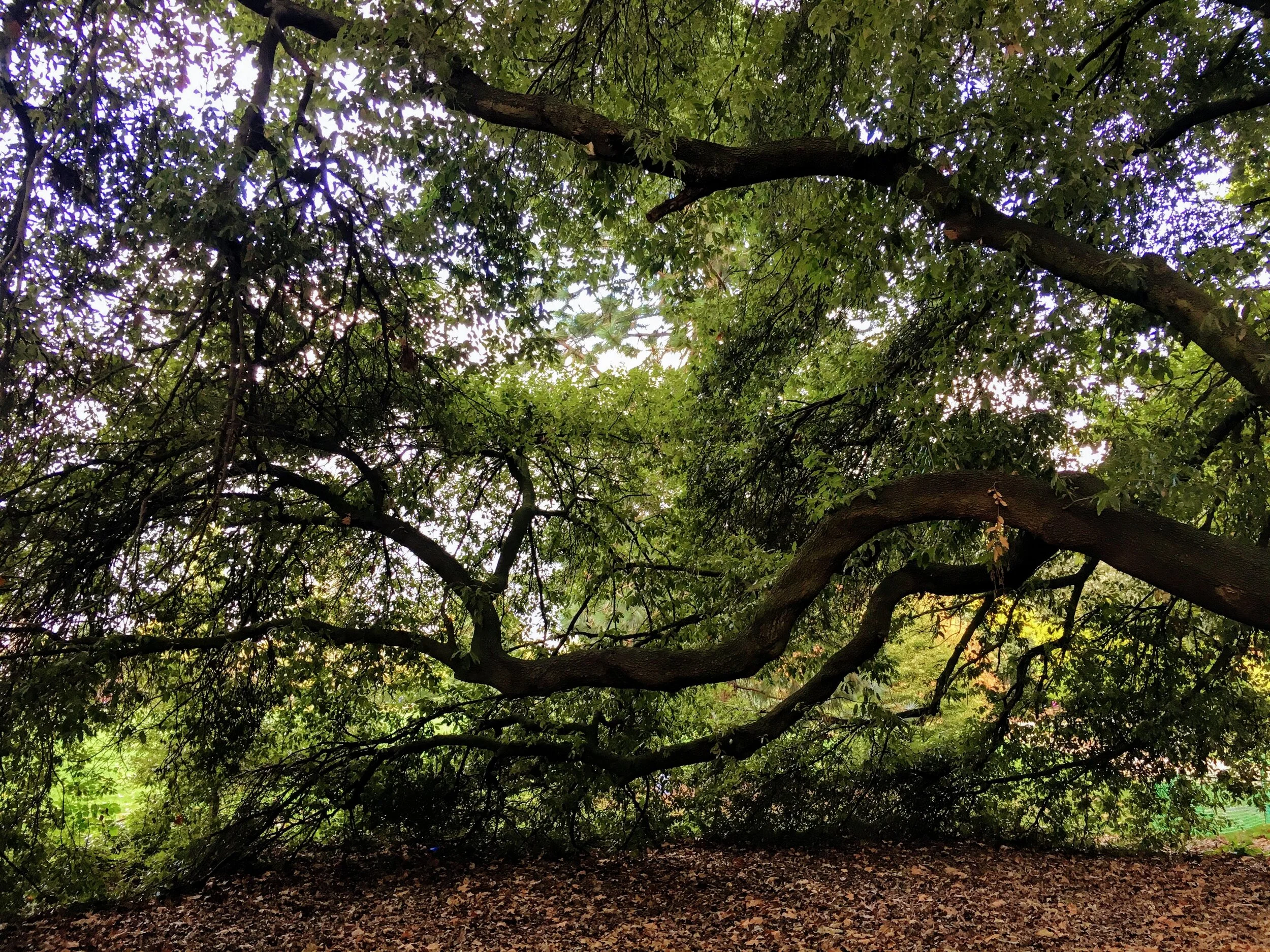
The Holm Oak. Photo credits to Kathleen McCulloch
Re-reading garden apprentice Millie Woodley’s marvellous blog on Fulham Palace’s Great Tree of London, Quercus ilex or holm oak got me thinking. What does the word ‘holm’ in holm oak actually mean? Where does it come from? Current ‘hermit regime’ (as I prefer to call lockdown) gave me the opportunity to do some rooting about.
Look up the word ‘holm’ in most dictionaries and you will find all sorts of learned definitions. The Dictionary of Nautical Terms (a new one on me until I started my investigations) says “It’s a name both on the shores of Britain and Norway for a small uninhabited island used for pasture .....” Can’t see how that connects with an oak tree myself.
Other commentators mention a river-islet or, alternatively, low flat land. Neither of those seem applicable either.
RHS Plantfinder tells me that it has “entire, lobed or toothed leaves; flowers inconspicuous, followed by characteristic acorns”. What, pray, is a “characteristic acorn”? Were I to start blethering about “characteristic acorns” to my co-volunteers, I’m pretty certain of the response I’d receive!
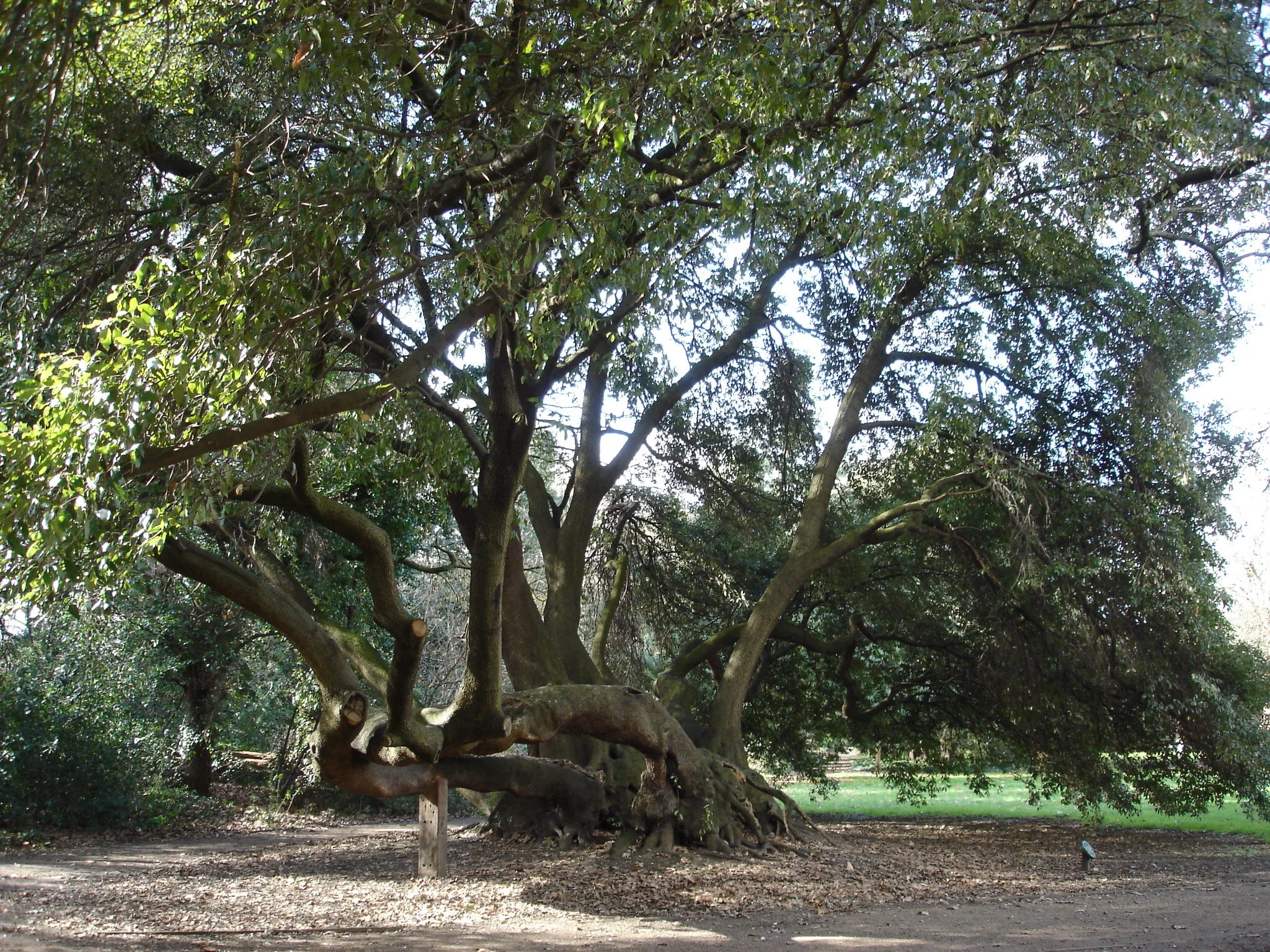
What, pray, is a “characteristic acorn”?
Perhaps a bit of lateral thinking is required. If you have a look at the leaves of the holm oak, they’re not entirely dissimilar to those of the holly. And therein lies the answer. ‘Holm’ is a corruption of the Middle English word ‘hollin’ or holly. Hollin Bank near Hathersage in Derbyshire was a favourite picnic spot of my family when I was growing up.
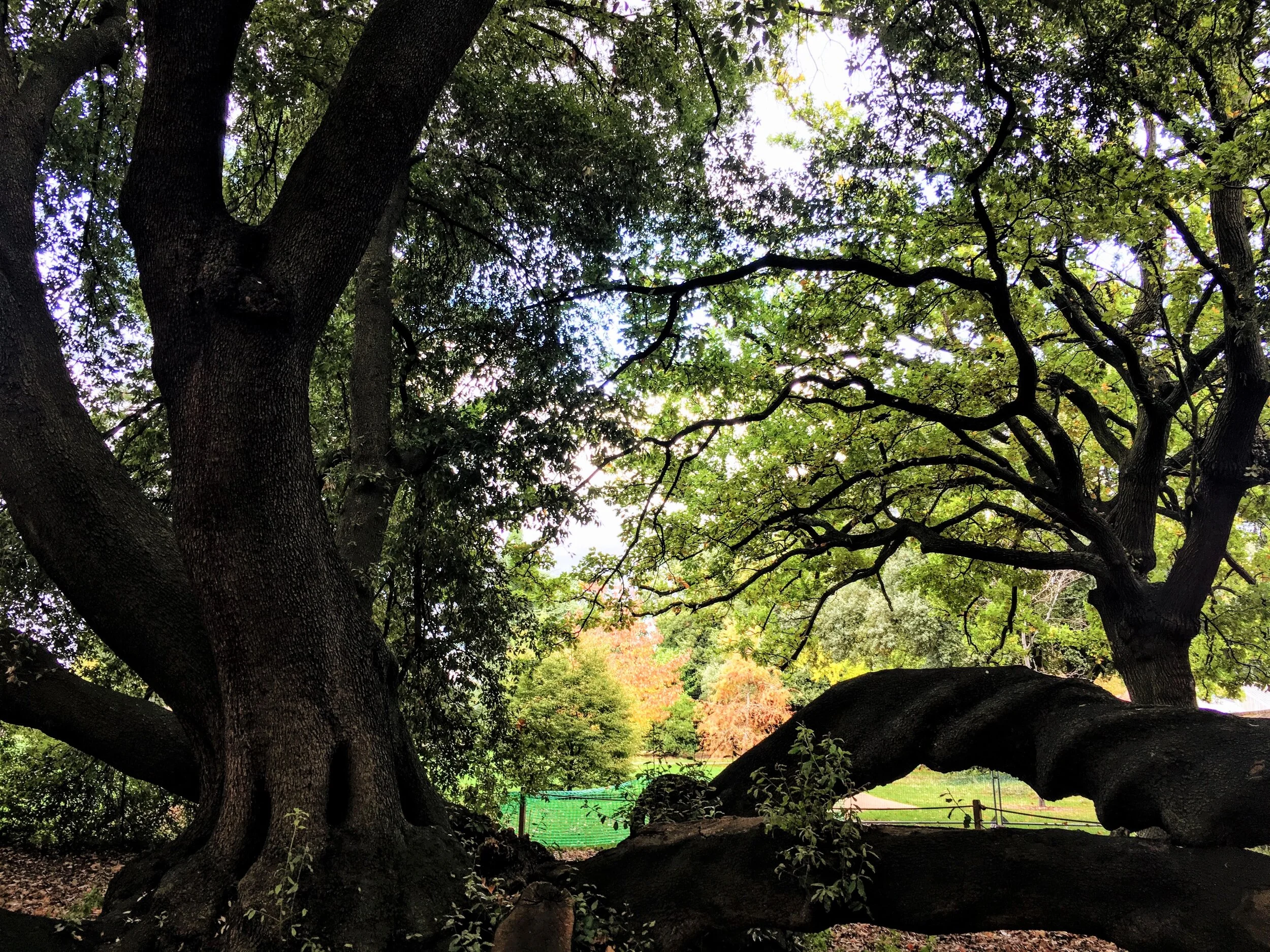
The Holm Oak. Photo credits to Kathleen McCulloch
Truth be told, if I’d read Millie’s blog more carefully I’d have spotted that her opening sentence refers to the “holm or holly oak”, so more fool me. Nonetheless, I’m grateful to Millie for setting me off on a few happy hours of ‘characteristic acorn’ research.