
Every month we feature two blogs written by volunteers; one describes an object in the Palace and the other a feature from the Garden. There is no set format so you are free to experiment with research, prose, poetry or anything new! This piece was excellently written by Louise Sugrue, garden volunteer.
Inspired by last month’s Christmassy blog about Holly, this month we are looking at Ivy
Ivy - the Marmite plant
Many of us ‘deck the halls’ with it, herbalists concoct remedies from it, brides carry it in their wedding posies… Since early times, ivy has been a popular, even highly esteemed plant, symbolising eternal life, fidelity, perseverance, wedded love, friendship, and affection. Yet, ivy, AKA Hedera helix, is also widely regarded as a pest, an almost uncontrollable, invasive weed you can never get rid of; a poisonous, pernicious parasite that strangles trees and destroys houses. There’s no middle ground here. People either love ivy, or, they really don’t!
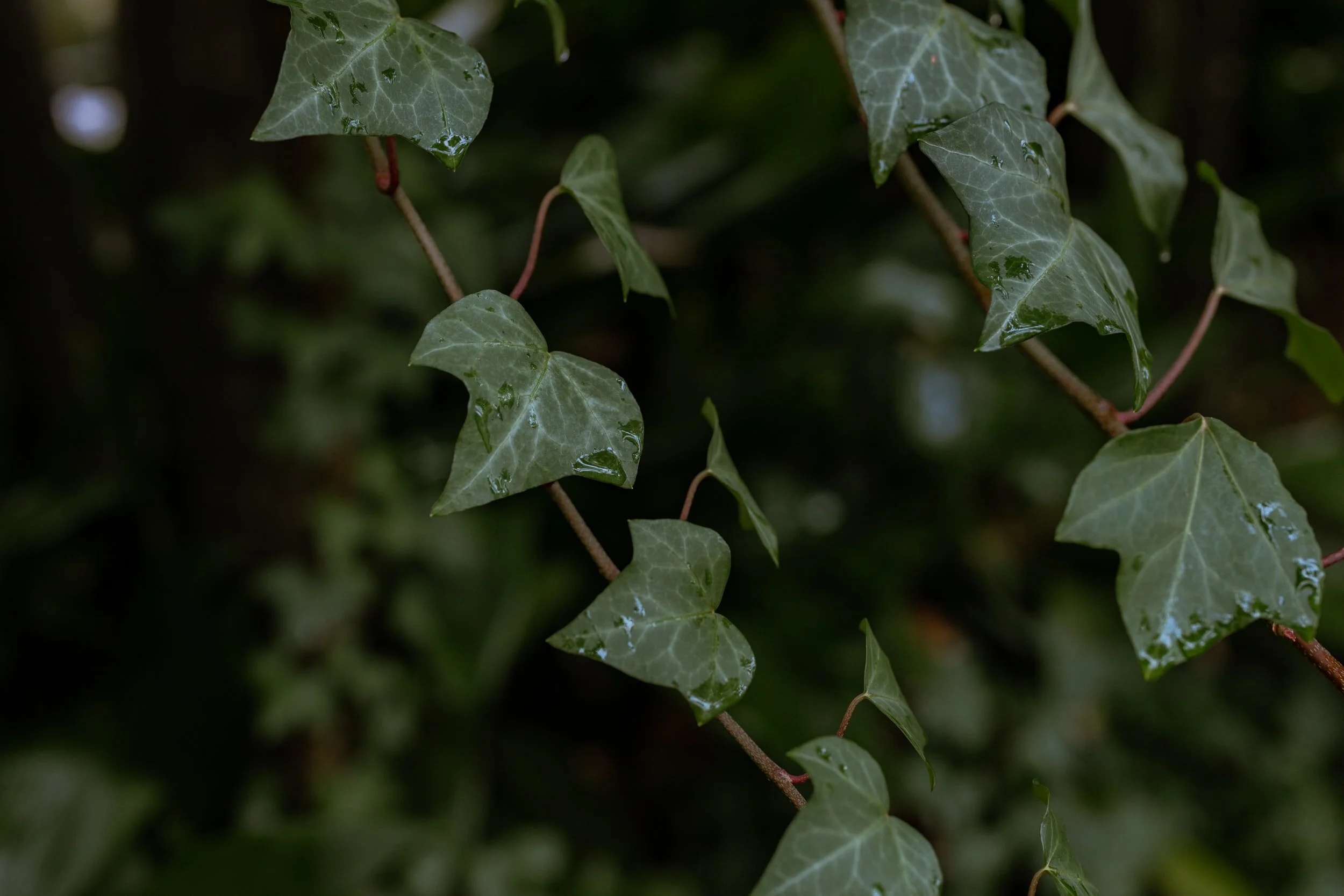
So what is this Marmite plant - can it be so bad?
English ivy, or Common ivy, is a woody evergreen climber that can grow to a height of 20-30m. Hardy and vigorous, ivy plants can live up to 500 years, and their stems can reach 2 metres in diameter; ivy’s natural habitat is woodland but, as most of us know very well, it can grow almost anywhere, in any pH soil, in shade or in full sun… quickly climbing trees and fences and spreading out generously over the earth. Even after you think you’ve hacked it to within an inch of its life...
Ivy plants don't produce flowers until ‘adulthood’, or at least a decade old… sometimes older. And when they do, the flowers are not very significant in human terms, producing small, dome-shaped umbels of greenish flowers from September to November, which are followed by smallish black fruits from November to February. While its flowers and fruits are vital to wildlife (see below for more details), it is the plant’s leaves that particularly interest us humans. Colour-wise - young ivy leaves start a beguilingly vivid spring green, with contrasting pale veins, then turn darker, and the veins disappear. Shape-wise, ivy’s foliage shape depends on the plant’s age, too. On juvenile plant forms, the leaves are palmate, with 3-5 lobes. On mature forms, the leaves are more oval or heart-shaped, with no lobes at all.
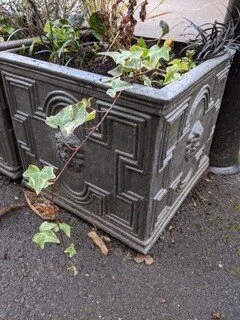
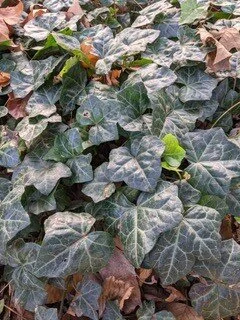
Detail of the ivy leaves growing at the Palace
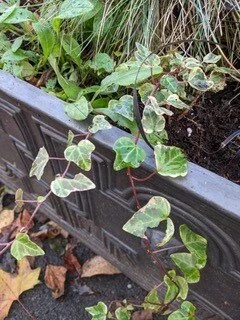
Youthful ivy leaves
There are two native subspecies in the UK: Hedera helix ssp. helix and Hedera helix ssp. Hibernica (Irish ivy). There’s not too much difference between them, but the hibernica has a sweeter scent, and it has bigger, glossier leaves than the helix. You can see both species in the garden at Fulham Palace - under the Holm oak trees on the main lawn, intertwining with the holly, and also snaking along and up the Woodland Walk.
There are also many cultivated varieties of ivy, with variegated green and white leaves, such as those seen trailing prettily out of the planters outside the Education Centre. Many of us have these kinds of varieties in pots in our homes.
Note, no variety is parasitic.
Where you won’t see ivy… is growing on the palace walls.
While self-clinging climbers such as Boston ivy and Virginia creeper (both not ivies, but in fact Parthenocissus ssp) do not usually cause damage to walls, English ivy’s sticky ‘adventitious roots’ (specialised hairs coming out from the stems to help the plants attach to surfaces), can cause structural damage to unsound masonry, penetrating cracks or joints.
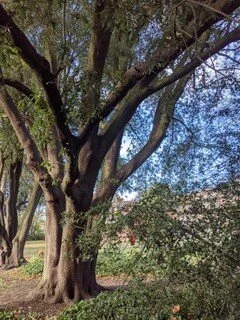
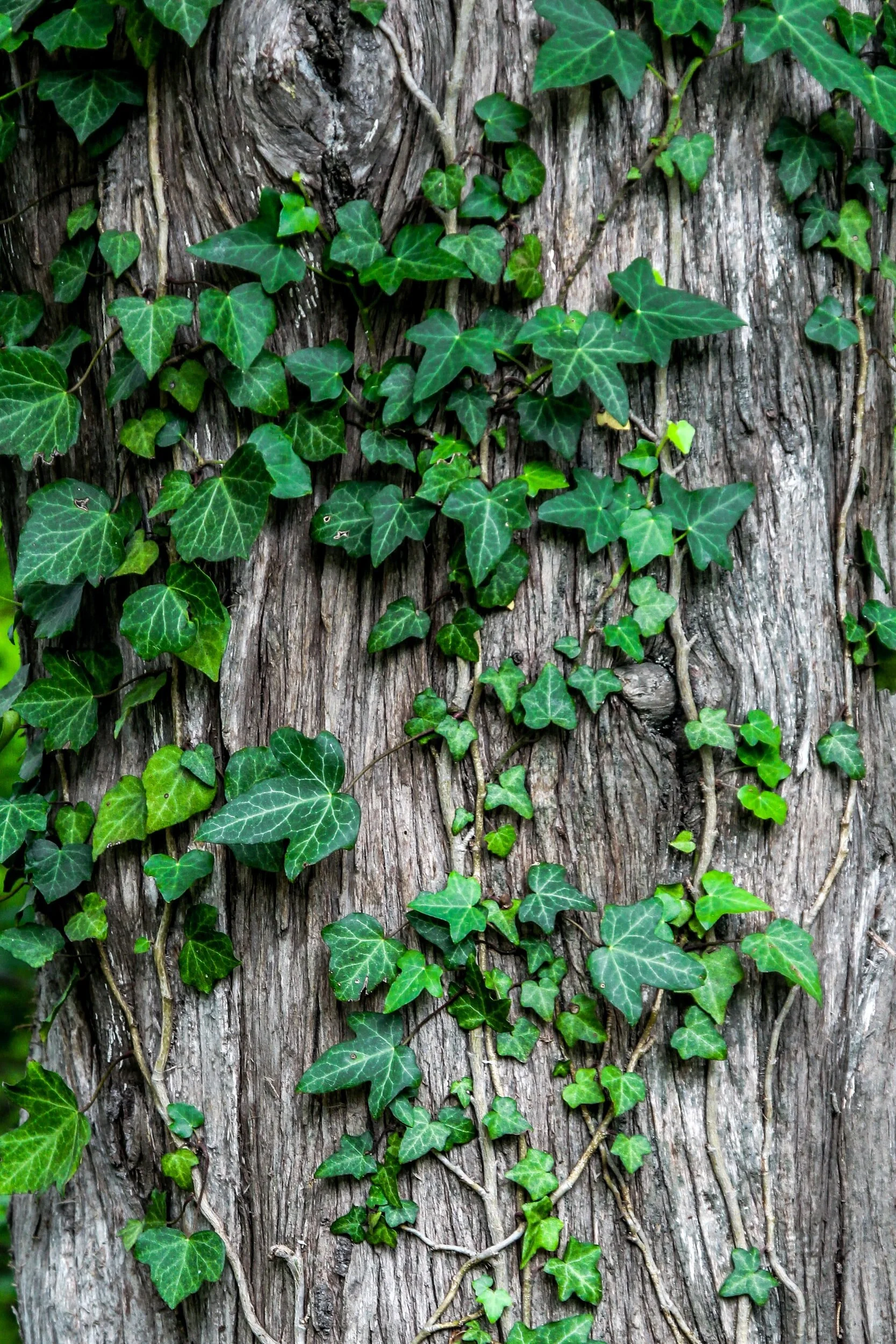
Ivy growing on the tree
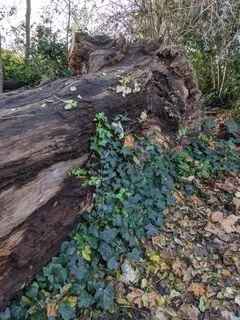
Ivy on the fallen tree. Ivy was thought to provide protection from evil when growing on or near to a dwelling. However, if it should die or fall down, then misfortune would fall upon those therein.
Tradition
Druids considered ivy to be a sacred tree, a feminine counterpart to the masculine holly. Together, the two plants would provide protection as well as balance and wisdom.
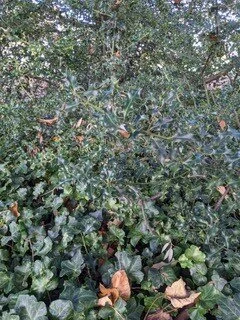
Ivy and holly. Another name for Holm oak (Quercus ilex) is Holly oak. Holm is a West Country dialect word for holly!
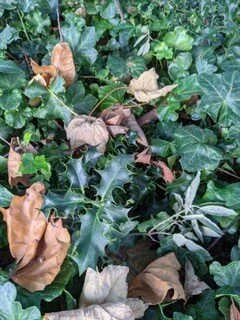
Ivy and holly close-up
Druids also believed an ivy crown would prevent the wearer from getting drunk if they drank too much wine. No, it doesn't work, but in similar faith, wine-loving revellers, Roman god Bacchus and Greek god Dionysus wore such crowns too! Poets of Ancient Rome wore ivy garlands to keep their thoughts clear. While In ancient Egypt, ivy was dedicated to Osiris, the god of immortality and fertility.
The importance or power of ivy really is due to the fact it’s evergreen. Particularly in pagan, pre-Christian Irish, Norwegian and Germanic cultures, where evergreen trees and plants were used as fertility emblems in ceremonies to mark the winter solstice. By decorating their homes and temples with plants such as holly, ivy and mistletoe, people believed that they were carrying the diminished sun through a critical period.
Ivy is also linked to the Roman feast of Saturnalia. Held in mid-to-late December, in honour of Saturn, god of agriculture, plenty and wealth, this wine-fuelled harvest-meets-solstice party would last several days.
Much later, holly and ivy became Christmas symbols - as celebrated in the carol ‘The Holly and The Ivy’, published by Cecil Sharp in 1911: with the holly’s prickly leaves representing Jesus Christ’s Crown of Thorns; the red berries, the drops of blood Christ shed; and the ivy symbolising fidelity, resurrection and eternal life in Christ.
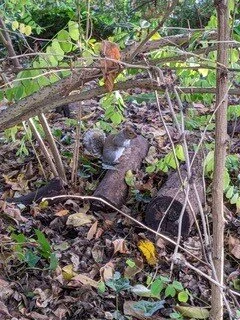
A squirrel enjoying his ivy surroundings
Wildlife
Ivy is ‘the plant equivalent of a 24/7 grocery store for animals’ (BBC Earth). Its rich nectar, pollen and high-fat-content berries are an essential food source for insects and birds during autumn and winter, while deer and sheep relish its leaves. According to the RHS, more than 140 species of insect and 17 species of bird feed on ivy in Britain, while countless others, including birds, voles and bats, appreciate its evergreen shelter. Note, dogs, cats and humans should avoid the berries.
Medicine and magic
Over the ages, ivy has formed the basis of many medicines, and is still thought to bring some relief to respiratory complaints. Renowned natural remedy brand A.Vogel produces alcoholic tincture from the fresh shoots of flowering wild ivy plants today. Ivy is still also used in spells and magic, as in the tradition of Druids.
Ivy was considered a talisman in many parts of Europe to guard cattle from evil and ensure fertility and plentiful yields of milk.
The verdict on ivy
It’s complicated!
As well as yielding beautiful foliage, disguising eyesore sheds and facades, and trailing decoratively out of pots and planters, and bridal bouquets, ivy also makes excellent groundcover, covering and brightening up difficult areas such as dry shade, while also stabilising the soil and providing year-round greenery.
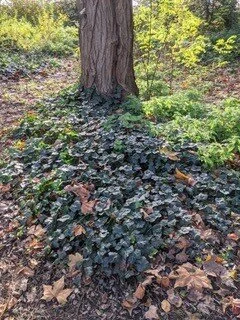
Ivy floor cover
Yes, ivy is vigorous, but when pruned correctly, and regularly, it keeps its shape, and neither sound brickwork, nor trees are damaged by it. And while not appropriate for Fulham Palace’s walls, both the RHS and English Heritage acknowledge that ivy can actually be useful to structurally sound buildings - by insulating and cooling walls, trapping pollutants and attenuating noise.
The thing to keep in mind with ivy is location - and that old gardening adage:
‘Right plant, Right place’
which in this case basically means, in the wrong place, ivy is a nightmare (vigorous weed); but in the right place, it’s a delight (a jolly useful addition to your garden)!
Not forgetting, animals depend on ivy, healers extract useful properties from it. And I cannot imagine not seeing it in garlands and wreaths at Christmas and weddings!
At once common, useful and magical, traditional yet contemporary, ivy has a lot to offer humans and wildlife. And, call me controversial, I love it. Perhaps even more than Marmite.
Ivy is the only European representative of the Araliaceae family. As such, it is a relative of the Far East's ginseng.